GK Update
 
  • Mobile Menu
HOME BUY MAGAZINEnew course icon
LOG IN SIGN UP

Sign-Up IcanDon't Have an Account?


SIGN UP


Login Icon

Have an Account?


LOG IN
 

or
By clicking on Register, you are agreeing to our Terms & Conditions.


or


GK Update

Thu 13 Aug, 2026

National News

National Cooperative Development Corporation (Amendment) Bill, 2026
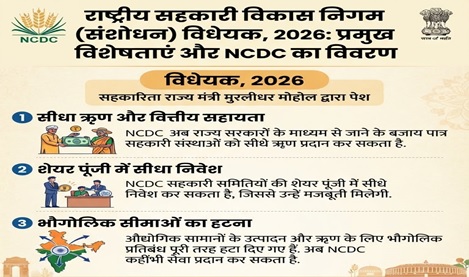
  • Parliament passed the National Cooperative Development Corporation (Amendment) Bill, 2026.

Related Facts:


  • Bill introduced by: Minister of State for Cooperation, Murlidhar Mohol
  • Objective of the Bill: To further amend the National Cooperative Development Corporation Act, 1962
  • New Power (Direct Loan): The NCDC will now be able to provide loans and financial assistance directly to eligible entities, instead of routing them through state governments.
  • Expansion of Powers: The NCDC can now make direct investments in the share capital of cooperative societies.
  • Removal of Geographical Limits: Geographical restrictions regarding the production of industrial goods and the provision of loans have been completely removed.
  • Full name of NCDC: National Cooperative Development Corporation
  • Year of Establishment: 1963 (It is a statutory body)
  • Under which Act: NCDC Act, 1962
  • Related Ministry: It falls under the Ministry of Cooperation
  • Current Minister of Cooperation: Amit Shah
  • NCDC Headquarters: New Delhi

Constitution and Cooperation:

  • Fundamental Rights: Under Article 19(1)(c), citizens have been granted the fundamental right to form 'associations or unions' as well as 'cooperative societies'.
  • Directive Principles of State Policy (DPSP): Article 43B was added to Part IV, directing the State to promote the voluntary formation, autonomous functioning, democratic control, and professional management of cooperative societies.
  • Addition of New Part: Part IX-B (Part 9B), titled "The Co-operative Societies," was added to the Constitution. It spans Articles 243ZH to 243ZT. Key legal provisions of Part IX-B:
  • Maximum number of board members (Article 243ZJ): The board of directors of any cooperative society can have a maximum of 21 members.
  • Reservation: It is mandatory to reserve one seat on the board for Scheduled Castes/Scheduled Tribes (SC/ST) and two seats for women.
  • Tenure: The term of office for elected office-bearers is five years from the date of their election.
  • Audit (Article 243ZM): It is mandatory to conduct an audit of accounts within six months of the end of the financial year.

Seventh Schedule and Legislative Powers:

  • State List (Entry 32): State legislatures have the exclusive authority to enact laws regarding cooperative societies operating within the boundaries of a single state.
  • Union List (Entry 44): Parliament has the authority to enact laws regarding cooperative societies operating in more than one state, known as multi-state cooperative societies.
  • India's first National Cooperative University: Tribhuvana Cooperative University
  • Location: Anand, Gujarat
  • Naming: This university is named after Tribhuvandas Kishibhai Patel, the pioneer of the cooperative movement in India and the founder of 'AMUL'.

Kerala (Alteration of Name) Bill, 2026
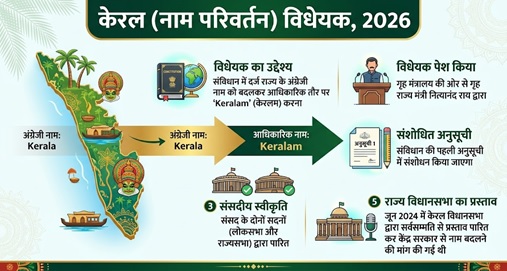
  • Parliament passed the Kerala (Alteration of Name) Bill, 2026.

Related Facts:


  • Name of the Bill: The Kerala (Alteration of Name) Bill, 2026
  • Objective of the Bill: To officially change the state's English name from 'Kerala' to 'Keralam' as recorded in the Constitution
  • Bill Introduced by: Minister of State for Home Affairs Nityanand Rai, on behalf of the Ministry of Home Affairs
  • Parliamentary Approval: Passed by both Houses of Parliament (Lok Sabha and Rajya Sabha)
  • Amended Schedule: This Bill seeks to amend the First Schedule of the Constitution
  • State Assembly Resolution: A resolution was unanimously passed by the Kerala Legislative Assembly in June 2024, requesting the Central Government to change the name

Constitutional Process for Changing a State's Name:

  • Relevant Article: Article 3 — Parliament's power to form new states and alter the areas, boundaries, or names of existing states
  • Condition for Introducing the Bill: Such a Bill can be introduced in Parliament only with the prior recommendation of the President
  • Consent of State Assembly: The President refers the Bill to the concerned state legislature for its views (however, the state's opinion is not binding on Parliament)
  • Majority Required for Passing: The Bill is passed in Parliament by a simple majority
  • Status Regarding Constitutional Amendment: According to Article 4, a name change effected under Article 3 is not considered a constitutional amendment under Article 368

Formation and History of Kerala State:

  • Name in Malayalam: In the Malayalam language and local culture, the state has always been referred to as 'Keralam'
  • Historical Mention: The region is mentioned as 'Keralaputra' in Ashoka's inscriptions (2nd Rock Edict)
  • Aikya Kerala Movement: A movement launched in the 1920s to integrate all Malayalam-speaking regions
  • Formation of Kerala State: November 1, 1956 (under the States Reorganisation Act, 1956, based on the recommendations of the Fazal Ali Commission)
  • Kerala Piravi: Kerala [celebrates this day] on November 1st every year Celebrated as Foundation Day

Major historical examples of state name changes:

  • United Provinces → Uttar Pradesh: 1950
  • Madras → Tamil Nadu: 1969
  • Mysore → Karnataka: 1973
  • Uttaranchal → Uttarakhand: 2007
  • Orissa → Odisha: 2011
  • Kerala → Keralam: 2026

Proposal to permanently freeze Lok Sabha seats at 543
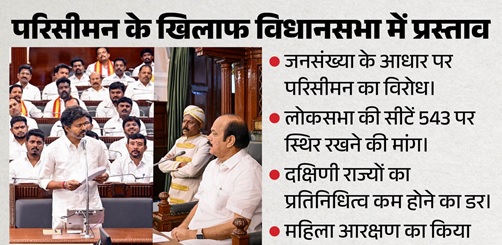
  • The Tamil Nadu Legislative Assembly passed a resolution on August 12, 2026, to permanently freeze the number of Lok Sabha seats at 543.
  • Moved by Chief Minister C. Joseph Vijay, this special resolution aims to safeguard the parliamentary representation of southern states that have succeeded in population control and to ensure the implementation of women's reservation in the 2029 elections without delay.

Related Facts:


  • Subject of the resolution: Permanently maintaining the total number of Lok Sabha seats at 543
  • State Assembly passing the resolution: Tamil Nadu Legislative Assembly
  • Main objective of the resolution: To protect the political representation of states that have successfully implemented population control policies
  • Primary concern: Apprehension that the upcoming delimitation exercise could lead to an increase in Lok Sabha seats for populous states and a proportional decrease in seats for states with successful population control (such as South Indian states)
  • Current Lok Sabha seats for Tamil Nadu: 39 seats

Constitution and Delimitation Commission:

  • Relevant Articles: Article 82 (Delimitation after each census) and Article 81 (Composition of the Lok Sabha)
  • Meaning of Delimitation: Redrawing the boundaries of Lok Sabha and Legislative Assembly constituencies to reflect changes in population
  • Freeze on seats: Seats were frozen until the year 2000 based on the 1971 census via the 42nd Constitutional Amendment (1976)
  • 84th Constitutional Amendment Act, 2002: Under this, the total number of Lok Sabha and State Assembly seats was frozen until the year 2026 (specifically, until the first census conducted after 2026)
  • Delimitation Commission: It is appointed by the President and works in collaboration with the Election Commission of India. Its orders cannot be challenged in any court.
  • Current strength of the Lok Sabha: 543 elected seats (the provision for 2 nominated seats for the Anglo-Indian community was abolished by the 104th Constitutional Amendment, 2019).
  • Continuation of SC and ST reservation: The same 104th Amendment Act extended the reservation for Scheduled Castes (SC) and Scheduled Tribes (ST) in the Lok Sabha and State Legislative Assemblies by another 10 years (until January 25, 2030).

States with the highest number of Lok Sabha seats:

  • Uttar Pradesh (80 seats)
  • Maharashtra (48 seats)
  • West Bengal (42 seats)
  • Bihar (40 seats)
  • Tamil Nadu (39 seats)

Right of Adult Children to Choose a Life Partner: Bombay High Court

  • The Nagpur Bench of the Bombay High Court clarified in a petition that adult children are not the property of their parents; they are independent individuals with the full right to choose a life partner or live according to their own wishes.
  • This ruling by the Nagpur Bench reinforces the rights to personal autonomy and privacy under Article 21 (Right to Life and Personal Liberty) of the Indian Constitution.

Related Facts:


  • Case: The court made this observation while dismissing a *habeas corpus* petition filed by a mother. The mother had sought custody of her adult daughter, who had left home of her own volition to live with her partner.
  • Court's Stance: The court clarified that if an adult is living with someone voluntarily, it cannot be considered 'illegal detention,' and a *habeas corpus* petition cannot be invoked in such cases.

Fundamental Rights:

  • Article 21: Protection of life and personal liberty.
  • Right to Privacy: In the landmark 2017 case of *K.S. Puttaswamy v. Union of India*, the Supreme Court declared the right to privacy a fundamental right under Article 21.
  • Scope of Article 21: It encompasses the right to a clean environment, the right to livelihood, the right to a speedy trial, and the right to marry a person of one's choice.
  • Part III of the Constitution: Fundamental Rights (Articles 12 to 35).
  • Source: Borrowed from the Constitution of the United States.
  • Magna Carta of the Constitution: Part III is referred to as the Magna Carta of India.
  • Nature: These are justiciable; in the event of a violation, one can directly approach the Supreme Court or the High Court.
  • The original Constitution contained 7 fundamental rights. However, the 'Right to Property' (Article 31) was removed from the list of Fundamental Rights by the 44th Constitutional Amendment (1978). It is now a legal right under Article 300A. Currently, there are only six Fundamental Rights.

In the event of a violation of Fundamental Rights, the Supreme Court issues five types of writs:

  • Habeas Corpus – To produce the person physically
  • Mandamus – We command (to ensure the performance of a duty)
  • Prohibition – To forbid (issued by a higher court to a lower court)
  • Certiorari – To be fully informed or to transfer the case to a higher court
  • Quo Warranto – By what authority/claim?
  • Impact of Emergency: During a National Emergency (Article 352), all Fundamental Rights can be suspended, except for Articles 20 and 21. These two are never suspended.
  • Rights available only to Indians: Articles 15, 16, 19, 29, and 30 are available only to Indian citizens, not to foreigners.
  • Rights available to foreigners as well: Articles 14, 20, 21, 21A, 22, 23, 24, 25, 26, 27, and 28 are available to both Indians and foreigners (except citizens of enemy countries).
  • Power to issue writs: The Supreme Court can issue writs under Article 32, and High Courts can issue writs under Article 226 for the enforcement of Fundamental Rights.

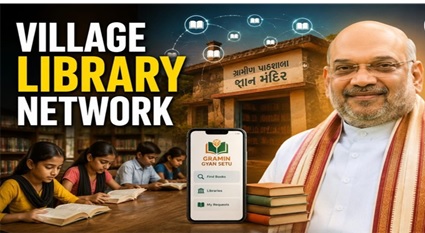
Launch of ‘Gramin Gyan Setu’ App

  • Union Home and Cooperation Minister Amit Shah launched the ‘Gramin Gyan Setu’ App.

Key Details:


  • App Name: Gramin Gyan Setu App
  • Launched by: Union Home and Cooperation Minister Amit Shah
  • Associated Ministry: Ministry of Cooperation
  • Main Objective of the App: To cultivate reading habits among children in the villages of the Gandhinagar, Kalol, and Sanand assembly constituencies and to provide them with access to extensive knowledge resources within the village itself.
  • Key Beneficiaries: Primary Agricultural Credit Societies (PACS), farmers, and individuals associated with rural cooperatives.
  • So far, 752 libraries have been linked to this app, while four large libraries—housing a collection of 280,000 books—have been connected with these rural libraries.

Economy and Banking

CPI in July 2026

  • In July 2026, the country's retail inflation rate (CPI) rose marginally to 4.45 percent on an annual basis, up from 4.38 percent in June.
  • Inflation rose to 4.84 percent in rural areas, while it stood at 3.96 percent in urban areas.
  • The food inflation rate, based on the All-India Consumer Food Price Index, rose to 5.52 percent last month, compared to 5.32 percent in June.

Retail Inflation Rate (CPI): July 2026


  • Inflation Rate (July 2026): 4.45 percent (year-on-year)
  • Previous Figure (June 2026): 4.38 percent
  • Trend: Marginal increase (rise of 0.07%)
  • Issuing Agency: National Statistical Office (NSO)
  • Related Ministry: Ministry of Statistics and Programme Implementation (MoSPI)
  • Index Basis: Consumer Price Index (CPI)
  • Base Year: 2012

Net Direct Tax in FY 2026-27

  • The Income Tax Department collected net direct taxes exceeding ₹8.11 lakh crore for the financial year 2026-27, marking a year-on-year growth of 23.09% compared to the same period last year.

Key Facts:


  • Net Direct Tax Collection: ₹8.11 lakh crore (23.09% growth)
  • Gross Direct Tax Collection: ₹9.55 lakh crore (19.75% growth)
  • Non-corporate Tax (Personal Income Tax): ₹5.07 lakh crore (approx. 23% growth)
  • Corporate Tax Collection: ₹2.70 lakh crore (19.83% growth)
  • Securities Transaction Tax (STT): ₹33,824 crore (significant 51% growth)
  • Refunds Issued: ₹1.43 lakh crore
  • Apex Body: Central Board of Direct Taxes (CBDT)
  • Related Ministry: Ministry of Finance
  • Type of Tax: Direct Tax — includes corporate tax and personal income tax
  • Definition of Direct Tax: A tax paid by the same person or entity on whom it is legally imposed (cannot be shifted to others; e.g., Income Tax, Corporate Tax)
  • Definition of Indirect Tax: A tax that is passed on to consumers (e.g., GST, Customs Duty)
  • Establishment of CBDT: As a statutory body under the Central Board of Revenue Act, 1963
  • CBIC (Central Board of Indirect Taxes and Customs): Apex body managing indirect taxes (GST, Customs, etc.) in India
  • Principle of Taxation: Direct taxes are generally progressive in nature; i.e., the tax rate increases as income rises.

Person in the News

Former Chief Justice DY Chandrachud

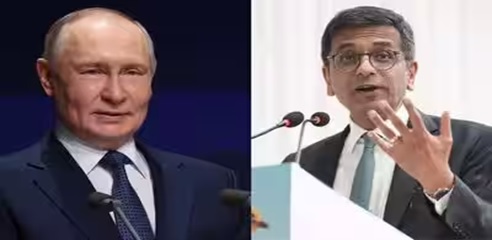
  • Russia has appointed former Chief Justice of India (CJI) Justice DY Chandrachud as its arbitrator to resolve a major investment treaty dispute involving hundreds of millions of dollars with Ukraine's state-owned bank, Oschadbank.

Related Facts:


  • Case/Dispute: Resolution of a major investment dispute with Ukraine's state-owned bank, Oschadbank
  • Arbitrator appointed by Russia: Former Chief Justice of India DY Chandrachud
  • Appointing Authority: Russian Federation
  • Core cause of dispute: A compensation claim related to the loss of assets belonging to Oschadbank following Russia's annexation of Crimea in 2014
  • Field: International investment arbitration

DY Chandrachud:

  • Full Name: Dhananjay Yashwant Chandrachud
  • Position: 50th Chief Justice of India
  • Father's Name: Y. V. Chandrachud (India's 16th and longest-serving CJI)
  • Key landmark judgments: Right to Privacy (Puttaswamy case), upholding the abrogation of Article 370, decriminalization of homosexuality (Section 377)

International Law and Arbitration:

  • International Arbitration: A process for resolving legal or commercial disputes between two countries or entities outside of court by an impartial third party
  • PCA (Permanent Court of Arbitration): A permanent arbitration court based in The Hague, Netherlands, that resolves international disputes
  • Establishment of PCA: 1899
  • Indian Arbitration and Conciliation Act: 1996
  • Note: Retired judges may participate in private or international arbitration cases, as this does not constitute holding an office of profit under the government or practicing law in Indian courts
  • Oschadbank → A Ukrainian bank
  • Arbitrator → An impartial expert who resolves mutual disputes outside of court
  • 1998 Treaty → Russia-Ukraine Bilateral Investment Treaty

Dr. Bhuma V.G.

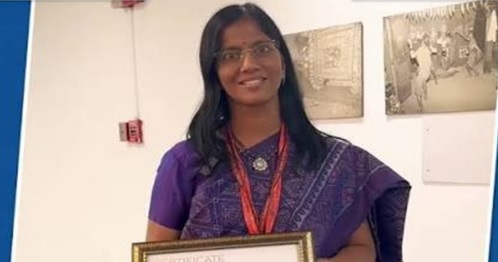
  • Retired IRPS officer Dr. Bhuma V.G. has been selected as the Vice-Chancellor of the Atal Bihari Vajpayee Institute of Public Service and Innovation (AIPSI) in Mauritius.

Related Facts:


  • Background of the Institute: AIPSI was formerly known as the 'Civil Service College, Mauritius'.
  • Inauguration: It was jointly inaugurated by the Prime Ministers of India and Mauritius in March 2025.
  • Objective: The institute is being developed as a premier public service training agency and a 'Centre of Excellence' for the entire African region.
  • Profile of Dr. Bhuma V.G.: She is a senior officer of the Indian Railway Personnel Service (IRPS) with over three decades of experience in public administration, human resources, and institutional transformation.

International News

'Golden Dome for America Ecosystem Hub' Portal

  • The US has launched a portal named 'Golden Dome for America Ecosystem Hub' with the aim of accelerating the development of the 'Golden Dome' missile defense system.

Related Facts:


  • Portal Name: 'Golden Dome for America Ecosystem Hub'
  • Primary Objective of Portal: To accelerate the development of the 'Golden Dome' project by bringing together the defense industry and commercial technology companies
  • Project Name: 'Golden Dome for America'
  • Initiating Country: United States of America (USA)
  • Nature of Missile System: A multi-layered defense shield designed to track and destroy ballistic, hypersonic, and cruise missiles
  • Source of Inspiration: Inspired by Israel's 'Iron Dome' technology, but represents a more comprehensive system operating at global and space-based levels

Major Global Missile Defense Systems:

  • Iron Dome: Israel's renowned short-range air defense system
  • S-400 (S-400 Triumf): Russia's long-range surface-to-air missile system (also imported by India)
  • THAAD (Terminal High Altitude Area Defense): USA's high-altitude anti-ballistic missile system
  • S-500 (S-500 Prometey): Russia's next-generation air and space defense system
  • Patriot: USA's long-range air defense system
  • SAMAR / S-400 (Sudarshan): Air defense systems developed and deployed by India
  • Missile Technology Control Regime (MTCR): A multilateral export control regime established in 1987 (India became its 35th member in 2016)
  • DRDO (India): Defence Research and Development Organisation, which develops the Ballistic Missile Defence (BMD) program in India
  • India's Integrated Guided Missile Development Programme (IGMDP): [Launched] in 1983 by Dr. A.P.J. It was launched under the leadership of Abdul Kalam (under which the Prithvi, Agni, Trishul, Nag, and Akash missiles were developed).

First Arab Country to Abolish the Death Penalty
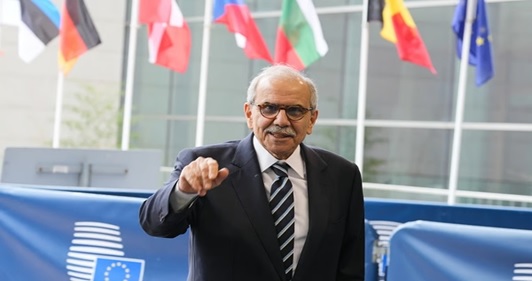
  • Lebanon has become the first country in the Arab world to abolish the death penalty.
  • In Lebanon's 128-member parliament, the majority of members—with the exception of Hezbollah's parliamentary bloc—voted in favor of abolishing the death penalty.

Lebanon:


  • A prominent Middle Eastern country located on the eastern coast of the Mediterranean Sea in Western Asia.
  • Capital: Beirut
  • Currency: Lebanese Pound (LBP)
  • President: Must always be a Maronite Christian (Current: Joseph Aoun)
  • Prime Minister: Must always be a Sunni Muslim (Current: Nawaf Salam)
  • Speaker of Parliament: Must always be a Shia Muslim (Current: Nabih Berri)
  • Parliament: It has a total of 128 seats, divided in a 50:50 ratio between Christians and Muslims.
  • Major River: Litani River

Litani River:

  • Lebanon's most important watercourse; it currently remains a central focal point of the Israel-Lebanon geopolitical dispute and military agreements.
  • Origin: The river originates west of the city of Baalbek in the fertile Bekaa Valley of eastern Lebanon.
  • Key Feature: It is the longest and largest river flowing entirely within Lebanon (it does not share a border with any other country).
  • Course: It flows south through the Bekaa Valley, takes a sharp turn westward near Marjayoun, and cuts through the mountains to empty into the Mediterranean Sea.
  • Economic Significance: It is known as Lebanon's "lifeline." The Qaraoun Dam, built on this river, is Lebanon's largest hydroelectric and irrigation project.


Latest Courses