NATIONAL NEWS
India assigned standard names to 27 places in Arunachal Pradesh
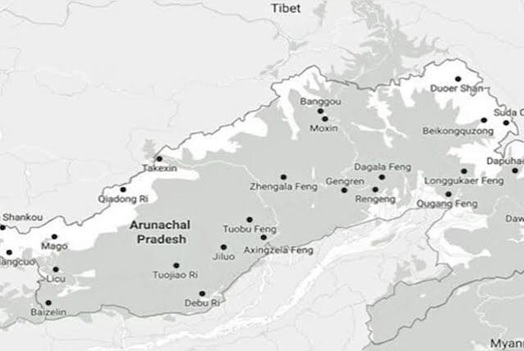
- Government of India formally assigned standard names to 27 places and geographical features in Arunachal Pradesh on the official maps of the Survey of India (SoI).
- This cartographic exercise was conducted by the Ministry of Home Affairs (MHA) in direct coordination with the state government to remove administrative ambiguity, reinforce territorial demarcation, and counter China's frequent, unilateral attempts to rename locations within the state.
Locations & Features Identified
The updated Survey of India map officially documents a mix of high-altitude passes, border settlements, water bodies, and military monuments:
- Strategic Flashpoints & Settlements: Long Ju—an early 1959 Sino-Indian clash point along the Line of Actual Control (LAC)—and the nearby Maja village in the Upper Subansiri district. It also names Jairampur (a critical logistics hub in Changlang district), Maja, and settlements like Shivaji Nagar, Sunpura, and Kamlang Nagar.
- Mountain Passes & Lakes: Notable high-altitude mountain passes such as Thag La, Dzo La, Bisa, Riza La, and Pukur La, alongside Sambho Sarovar, a high-altitude glacial lake.
- War Memorials: The Jaswant Garh war memorial on Tawang Road (honouring 1962 hero Rifleman Jaswant Singh Rawat) and the Sher-e-Thapa Memorial (honouring Havildar Shere Thapa, who heavily delayed Chinese forces at Rio Bridge).
- Other Villages: Areas including Sagar, Padma, Jyotinagar, Baisakhi, Bara Kundun, Chhota Kundun, and Dhan Bari.
China
- Official Name: People’s Republic of China (PRC)
- Capital: Beijing
- Largest City: Shanghai
- President: Xi Jinping (Holds the core power as the General Secretary of the Communist Party)
- Premier (Prime Minister): Li Qiang (Heads the State Council)
- Currency: Renminbi (RMB) (The main unit is the Yuan)
- Parliament Name: National People's Congress (NPC)
- National Bordering Countries: 14 countries (Shares the longest land border in the world alongside Russia)
Geography
- Longest River: Yangtze River (Chang Jiang) – Longest river in Asia; third-longest in the world.
- Sorrow of China: Huang He (Yellow River) – Named so due to devastating historical floods.
- Highest Point: Mount Everest (Shared border with Nepal).
- Major Deserts:
-
- Taklamakan Desert (Located entirely in the Xinjiang region)
- Gobi Desert (Shared with Mongolia)
- Famous Monument: The Great Wall of China.
Industrial Hubs & Manufacturing Zones
- Pearl River Delta (Guangdong Province): Electronic goods, IT hardware, toys, and garments. Includes major hubs like Shenzhen and Guangzhou.
- Yangtze River Delta (Shanghai, Jiangsu, Zhejiang): Heavy machinery, automobiles, chemicals, and textiles.
- Bohai Rim (Beijing, Tianjin, Hebei): Iron and steel industry, aerospace, and heavy manufacturing.
- Wuhan: Known as China's "Motor City" due to its massive automobile manufacturing ecosystem
Global Production Rankings
- China leads globally in the extraction and production of several commodities:
- Minerals & Metals: World's largest producer of Coal, Gold, Steel, and Rare Earth Elements.
- Agriculture: World's largest producer of Wheat, Potatoes, Tea, and Cotton.
-
- Note for Exams: While China historically led in Rice production, India has fiercely competed for the top position in total output.
- Manufacturing: World's leading manufacturer of Solar Panels, Electric Vehicles (EVs), Smartphones, and Cement.
India-China Relations
- Boundary Line: Macmahon Line (Specifically demarcates the frontier between Northeast India/Arunachal Pradesh and Tibet).
- De-facto Border: Line of Actual Control (LAC).
- Bordering Indian States/UTs: Ladakh, Himachal Pradesh, Uttarakhand, Sikkim, and Arunachal Pradesh.
- Joint Military Exercise: "Hand-in-Hand" (Currently suspended due to border standoffs).
- Major Disputes: Aksai Chin (Western Sector) and Arunachal Pradesh / South Tibet (Eastern Sector).
- Multilateral Groupings: Both India and China are co-members of BRICS, SCO (Shanghai Cooperation Organisation), and the G20.
- Panchsheel Treaty: Signed in 1954, setting the Five Principles of Peaceful Coexistence.
- 1962 War: Fought over territorial disputes in Aksai Chin and Arunachal Pradesh (then NEFA).
- Key Passes: Nathu La (Sikkim) reopened for border trade in 2006; Shipki La (Himachal Pradesh) and Lipulekh (Uttarakhand)
Multilateral Groupings (India & China are co-members):
- BRICS (Brazil, Russia, India, China, South Africa + expanded members).
- SCO (Shanghai Cooperation Organisation): Established in 2001 with its headquarters in Beijing, China. India and Pakistan joined as full members in 2017.
- G20 & AIIB (Asian Infrastructure Investment Bank, headquartered in Beijing).
|
Ban on renewable energy projects LoC and LAC
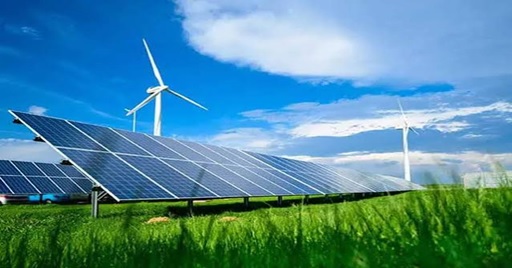
- Ministry of Home Affairs (MHA) issued strict national security guidelines imposing a blanket ban on solar, wind, and hybrid renewable energy projects within 1 km of India's international borders, the Line of Control (LoC), and the Line of Actual Control (LAC).
Key Regulations of the Guidelines
- Restricted Zone: The first 1 kilometre from the border is an absolute restricted area with zero project activity permitted.
- Buffer Zone Clearance: All projects proposed between 1 km and 50 km from the border require mandatory security clearance from the MHA and a No Objection Certificate (NOC) from the Ministry of Defence (MoD).
- Foreign Staff Restrictions: Developers are strictly prohibited from employing engineers, staff, or labourers from Pakistan, Bangladesh, and China without explicit prior permission from the MHA.
- Land Transfer Limits: Land within the 50 km buffer cannot be transferred to foreign companies without prior Central Government and MHA approval.
Line of Control (LoC) and the Line of Actual Control (LAC)
|
Line of Control (LoC)
- Definition: It is the military control line separating the Indian-administered Union Territory of Jammu & Kashmir from Pakistan-occupied Kashmir (PoK).
- Historical Evolution: It was originally known as the Ceasefire Line (CFL) established after the 1947–1948 Indo-Pakistani War. It was later redesignated as the Line of Control following the signing of the Shimla Agreement on July 2, 1972, by Indira Gandhi and Zulfikar Ali Bhutto.
- Geographical Span: It stretches for approximately 740 kilometres.
- Termination Point: It terminates in the north at a specific grid reference point known as NJ9842. The region beyond this point—stretching toward the Siachen Glacier—was left undemarcated, which eventually led to the 1984 conflict.
- Operation to Remember: Operation Meghdoot (1984) was launched by the Indian Army to secure control over the Siachen Glacier, which lies just north of the LoC's termination point.
Line of Actual Control (LAC)
- Definition: It is the effective border that separates Indian-controlled territory from Chinese-controlled territory (Aksai Chin and Tibet).
- Nature of the Line: Unlike the LoC, the LAC is not clearly demarcated on physical maps by both countries. It is a conceptual line where military personnel actively patrol to maintain their perceived positions.
- Origin Term: The term "Line of Actual Control" was first used by Chinese Premier Zhou Enlai in a 1959 letter to Indian Prime Minister Jawaharlal Nehru. It became the de facto border after the 1962 Sino-Indian War.
- Total Length: India considers the LAC to be roughly 3,488 kilometres long, while China claims a much shorter length.
- The Three Sectors: For administrative and military monitoring, the LAC is divided into three distinct sectors:
-
- Western Sector: Covers Ladakh. This is where Aksai Chin (occupied by China) is located.
- Middle Sector: Covers the states of Uttarakhand and Himachal Pradesh (the least disputed sector).
- Eastern Sector: Covers Arunachal Pradesh and Sikkim. This sector heavily aligns with the historic McMahon Line, which was negotiated at the Simla Convention of 1914 but is rejected by China.
Defence and Strategic Facts
- Guardians of the Border: The Indian Army holds the primary operational command for both the LoC and LAC Instagram. However, they are heavily supported by Central Armed Police Forces (CAPFs):
-
- Indo-Tibetan Border Police (ITBP) is the primary force dedicated to patrolling the China border (LAC) Instagram.
- Border Security Force (BSF) assists the Army along the Pakistan border (LoC) Instagram.
- The Northern Command: Headquartered at Udhampur (Jammu and Kashmir), the Indian Army's Northern Command is the pivotal strategic formation responsible for defending both the LoC in J&K and the LAC in Ladakh testbook.com.
- The Western Air Command: The largest operational command of the Indian Air Force (WAC), controlling air bases from Leh to Rajasthan, manages airspace integrity over both lines
- Shaksgam Valley Transgression: Legally a part of Jammu & Kashmir, this valley was illegally ceded by Pakistan to China in 1963 Instagram. Located near the Siachen Glacier, it presents a unique "two-front" strategic challenge because it connects Chinese-controlled infrastructure directly next to the LoC and LAC sectors Instagram.
|
DigiLocker Partners with AAERI
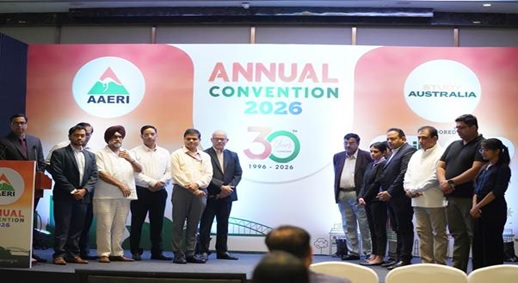
- In a major boost for Indian students aspiring to study abroad, the National e-Governance Division (NeGD) under the Ministry of Electronics and Information Technology (MeitY) has partnered with the Association of Australian Education Representatives in India (AAERI) to launch 'AAERI Verify'.
- Integrated directly with DigiLocker, this digital platform will enable secure, paperless, and consent-based verification of academic, identity, and financial documents for students applying to Australian universities.
- The platform was officially unveiled during the AAERI Annual Convention in New Delhi.
MoU Between CCRAS and BIS
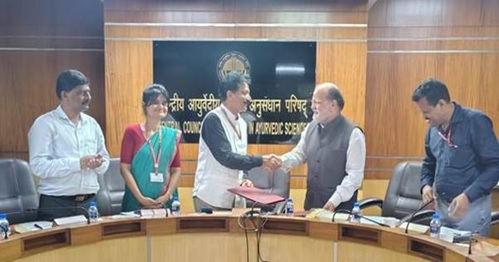
- The Central Council for Research in Ayurvedic Sciences (CCRAS) and the Bureau of Indian Standards (BIS), the National Standards Body of India, signed a Memorandum of Understanding (MoU) to jointly advance quality standards, conformity assessment, scientific research and capacity building for the Ayush sector.
|
Central Council for Research in Ayurvedic Sciences (CCRAS)
- Parent Ministry: Ministry of Ayush, Government of India.
- Headquarters: New Delhi, India.
- Head / CEO: Prof. Vd. Rabinarayan Acharya (Director General).
- Nature of Body: Autonomous apex organization.
- Core Domains: Medicinal plant research, drug standardization, clinical research, and pharmacological research in Ayurveda.
Bureau of Indian Standards (BIS)
- Predecessor Body: It was originally established on January 6, 1947 as the Indian Standards Institution (ISI).
- First Director: Dr. Lal C. Verman served as the first director of ISI.
- Establishment of BIS: BIS was established on December 23, 1986 under the BIS Act, 1986. It formally replaced ISI on April 1, 1987.
- Current Statutory Framework: It currently functions as a statutory national body under the BIS Act, 2016.
- Headquarters: New Delhi.
- Director General (DG): Shri Sanjay Garg
- The Ex-Officio President: Union Minister for Consumer Affairs, Food and Public Distribution (Pralhad Joshi)
- Administrative Ministry: It functions directly under the Ministry of Consumer Affairs, Food and Public Distribution
Functions and Certification Marks
- National Standards Body: It is officially designated as the National Standards Body of India.
- Conformity Marks: It regulates prominent quality certification marks including:
-
- ISI Mark: Industrial, electrical, and commercial goods.
- Hallmark: Purity certification for Gold and Silver jewellery.
- Eco Mark: For products conforming to environmental safety ecosystem requirements
|
STATE SPECIAL NEWS
‘Mothers Against Drugs’ Campaign in Punjab
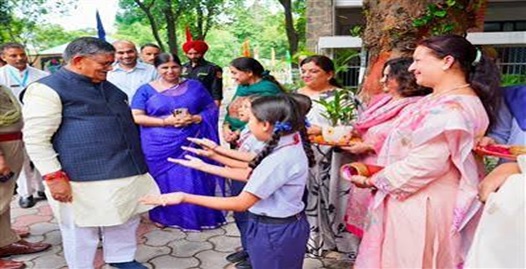
- The 'Mothers Against Drugs' campaign, major civil society initiative organized by the Punjab LIT Foundation in collaboration with the Chandigarh Department of Education to position mothers as the first line of defense against drug abuse.
- The initiative originally focused on mothers of teenagers in Class VIII and above. Following expert consultations, the focus expanded to mothers of children from Class III onwards to start preventive intervention during early formative years.
Punjab
- Capital: Chandigarh
- Lok Sabha: 13 seats
- Governor: Gulab Chand Kataria
- Chief Minister: Bhagwant Mann
|
- Name Origin: Persian for "Land of Five Rivers" (Panj-Ab)
- Major Rivers: Sutlej, Beas, Ravi, Chenab, Jhelum
- Nickname: "Breadbasket of India"
- Established: November 1, 1966
|
- Dance: Bhangra, Gidda
- Religion: Birthplace of Sikhism, home to the Golden Temple (Harmandir Sahib) in Amritsar
|
Chief Minister’s Yarn Bank Scheme in Nagaland
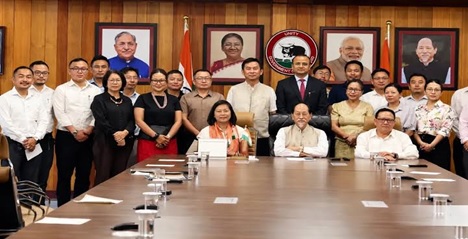
- Nagaland Chief Minister Neiphiu Rio virtually inaugurated the Chief Minister’s Yarn Bank Scheme on the occasion of National Handloom Day, an initiative aimed at strengthening the state’s handloom sector and supporting the livelihoods of weavers.
Nagaland
- Chief Minister: Neiphiu Rio
- Governor: Nand Kishore Yadav (23rd Governor, sworn in March 2026)
- First Chief Minister: P. Shilu Ao
- First Governor: Vishnu Sahay
- Capital: Kohima
- Largest City: Dimapur
Polity & Constitutional Status
- Statehood Day: 1 December 1963 (Created as the 16th state of India via the State of Nagaland Act, 1962).
- Special Provisions: Article 371A provides special constitutional privileges safeguarding Naga customary laws and land ownership.
- Legislative Assembly Seats: 60 seats
- Parliamentary Seats: 1 Lok Sabha seat, 1 Rajya Sabha seat.
- High Court Jurisdiction: Under the jurisdiction of the Gauhati High Court (Kohima Bench).
State Symbols
- State Animal: Mithun (Bos frontalis)
- State Bird: Blyth's Tragopan
- State Tree: Alder (Alnus nepalensis)
- State Flower: Rhododendron
4. Geography & Environment
- Highest Peak: Mount Saramati (Located on the India-Myanmar border in the Kiphire district).
- Major Rivers: Doyang, Dhansiri, Dikhu, and Tizu.
- National Park: Ntangki National Park (Peren District).
- Wildlife Sanctuaries: Fakim Wildlife Sanctuary, Pulie Badze Wildlife Sanctuary, and Rangapahar Wildlife Sanctuary.
- Important Milestone: Nagaland is globally celebrated as the "Amur Falcon Capital of the World" due to millions of migrating raptors roosting near the Doyang reservoir.
Culture, Festivals & Tribes
- Official Language: English (Declared the official language in 1967).
- Major Festivals:
-
- Hornbill Festival: Celebrated annually from December 1 to 10 at the Naga Heritage Village in Kisama. It is called the "Festival of Festivals".
- Moatsu Festival: Celebrated by the Ao tribe in May after the sowing season.
- Sekrenyi Festival: Celebrated by the Angami tribe in February for purification.
- Aoling Festival: Celebrated by the Konyak tribe (famous historically as headhunters) to welcome spring.
- Major Tribes: There are 17 major recognized tribes, including the Angami, Ao, Konyak, Lotha, Sema (Sumi), and Chakhesang.
- Traditional Education: The Morung system—a traditional village dormitory where youth learn folktales, warfare, and tribal customs.
Historical Landmarks
- Battle of Kohima (1944): A fierce turning point in World War II where Allied forces stopped the Japanese advance into India.
- Kohima War Cemetery: Maintained by the Commonwealth War Graves Commission, famous for its iconic epitaph: "When you go home, tell them of us and say, for your tomorrow, we gave our today.
|
INTERNATIONAL NEWS
Pakistan, Saudi Arabia, Turkiye inked defence deal
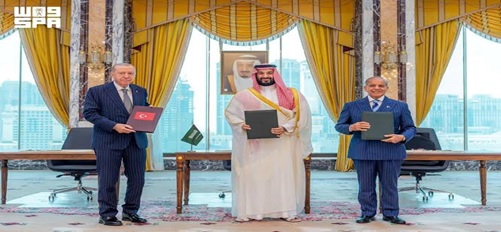
- Pakistan, Saudi Arabia, and Turkiye signed the historic Mecca Joint Defence Agreement establishing a landmark trilateral collective security alliance at t the Mecca Al-Mukarramah Summit for Joint Defence.
- The pact creates a potent strategic triangle often referred to by commentators as an emerging "Islamic NATO".
- It uniquely merges Saudi Arabia's financial liquidity, Turkiye's advanced defense manufacturing industry (and its NATO experience), and Pakistan's substantial conventional military forces alongside its nuclear deterrence capabilities.
|
Pakistan
- President: Asif Ali Zardari
- Prime Minister: Shehbaz Sharif.
- Capital & Currency: Islamabad; Pakistani Rupee (PKR).
- Major Deserts: Thar Desert (extends into Sindh), Thal Desert (Punjab), and Cholistan Desert (Punjab).
- Key Ports: Port of Karachi (largest and busiest) and Port Qasim (both in Sindh province).
- Important Places: K2 (Godwin-Austen, world's 2nd highest peak in Gilgit-Baltistan/KPK), Khyber Pass (historic mountain pass on the Afghan border), and Lahore (cultural hub).
Saudi Arabia
- Heads: King and Head of State is Salman bin Abdulaziz Al Saud; Crown Prince and Prime Minister is Mohammed bin Salman.
- Capital & Currency: Riyadh; Saudi Riyal (SAR).
- Major Deserts: Rub' al Khali (The Empty Quarter, world's largest continuous sand desert) and An-Nafud Desert.
- Key Ports: Jeddah Port (on the Red Sea, commercial capital entry) and King Abdulaziz Port (Dammam, on the Persian/Arabian Gulf).
- Important Places: Mecca (Makkah) and Medina (Madinah) (holy Islamic cities), Jubail (major industrial/petrochemical hub on the Gulf), and Yanbu (Red Sea oil terminal).
Türkiye (Turkey)
- President: Recep Tayyip Erdoğan.
- Capital & Currency: Ankara; Turkish Lira (TRY).
- Major Deserts/Arid Regions: Türkiye does not have major sand hyper-deserts, but central Anatolia features semi-arid high plateau steppes (like the Konya Plain rain shadow area).
- Key Ports: Port of Istanbul, Port of Mersin (Mediterranean), and Port of Izmir (Aegean).
- Important Places: Istanbul (transcontinental city divided by the Bosphorus Strait), Cappadocia (famous for fairy chimney rock formations), and Mount Ararat (highest peak in Türkiye, associated with biblical traditions).
|
India and Bhutan bilateral talks on trans-border river management
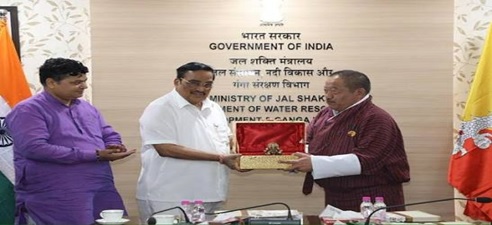
- India and Bhutan held a high-level bilateral meeting, in New Delhi to review and strengthen cooperation in trans-border river management and water resources.
- The Indian delegation was led by Union Minister for Jal Shakti C.R. Paatil, while the Bhutanese delegation was headed by Minister for Energy and Natural Resources Lyonpo Gem Tshering.
- The leadership assessed the progress of Punatsangchhu-I Hydroelectric Project joint mega-infrastructure initiative between both nations and formulated technical measures to expedite its completion.
Bhutan
- Official Name: Kingdom of Bhutan (Drukyul – meaning "Land of the Thunder Dragon").
- Head of State (King): Jigme Khesar Namgyel Wangchuck (5th Druk Gyalpo / Dragon King).
- Head of Government (Prime Minister): Tshering Tobgay (Leader of the People's Democratic Party).
- President: None (Bhutan is a Constitutional Monarchy; it has no President).
- Capital: Thimphu.
- Currency: Ngultrum (BTN) (The Indian Rupee is also widely accepted).
- Official Language: Dzongkha.
- National Bird / Animal: Raven / Takin.
Geography & Major Rivers
- Highest Peak: Gangkhar Puensum (7,570 m) – It holds the record as the highest unclimbed mountain in the world.
- Bordering Indian States: Assam (longest border), Arunachal Pradesh, West Bengal, and Sikkim.
- River System: All rivers are rain or glacier-fed and drain southward into the Brahmaputra River in India.
-
- Manas River: The longest river in Bhutan.
- Wang Chhu: Flows through Thimphu and Phuentsholing; accommodates major hydro projects.
- Sankosh River (Mo Chhu): Forms the major drainage corridor.
- Amo Chhu (Torsa): Rises in Tibet and flows through western Bhutan.
- India-Bhutan Bilateral Relations
- The Treaty of Friendship and Cooperation (1949): Forms the bedrock of bilateral ties, updated in 2007 to respect Bhutan's sovereignty over its foreign affairs.
- Development Assistance: India remains Bhutan's primary development partner. India committed ₹10,000 crore to support Bhutan’s 13th Five-Year Plan. In mid-2026, a ₹4,000 crore concessional line of credit was approved for urban infrastructure development.
- Hydropower Cooperation (Core Pillar): India has funded and developed massive hydro-electric projects (HEPs) in Bhutan.
-
- Major operational projects include Chukha, Kurichhu, and Tala.
- The 1,020 MW Punatsangchhu-II HEP successfully commissioned its units, while construction on the Punatsangchhu-I project has been fast-tracked.
- Bhutan and India signed a historic agreement to co-develop an additional 5,000 MW of clean energy capacity.
- Cross-Border Connectivity: India and Bhutan signed an Inter-Governmental MoU establishing Bhutan's first-ever cross-border railway line. It links Kokrajhar in Assam to Gelephu in Bhutan.
- Trade Relations: India handles over 80% of Bhutan's total external trade.
|
India and Sri Lanka bilateral cooperation in the power sector
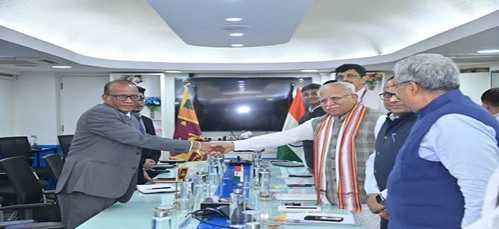
- India and Sri Lanka reviewed a meeting on bilateral cooperation in the power sector in New Delhi.
- Key Projects Reviewed: Progress on the proposed India–Sri Lanka HVDC interconnection (power grid connectivity) and the Sampur Solar Power Project was heavily evaluated.
- Areas of Cooperation: Discussions targeted cross-border electricity trade, renewable energy development, transmission infrastructure, and mutual capacity building.
- Expertise: The Ministry of Power shared its experience in developing transmission infrastructure using the Public-Private Partnership (PPP) model under the Tariff-Based Competitive Bidding (TBCB) framework.
Sri Lanka
- Location: An island country in South Asia, located in the Indian Ocean, separated from India by the Palk Strait and Gulf of Mannar.
- Capitals: Colombo (Executive & Judicial), Sri Jayewardenepura Kotte (Legislative).
- President: Anura Kumara Dissanayake
- Prime Minister: Harini Amarasuriya
- Currency: Sri Lankan rupee (Rs) (LKR)
- Highest Peak: Pidurutalagala.
- Longest River: Mahaweli River.
- Ethnic Groups: Sinhalese (majority, ~74%), Tamils, and Muslims.
- Official Languages: Sinhala and Tamil (English is the link language).
- Other Names: Formerly Ceylon (until 1972), Pearl of the Indian Ocean, Taprobane (ancient Greek), Serendib (Arab).
India-Sri Lanka Relations
- Historical Ties: Over 2,500 years of cultural and civilizational links, primarily through Buddhism (introduced by Ashoka's son Mahinda).
- 13th Amendment: Signed in 1987, it aims to create a provincial council system to devolve power to Tamils. India consistently advocates for its full implementation.
- Fishermen Dispute: Palk Bay dispute involves Indian fishermen crossing the International Maritime Boundary Line (IMBL) into Sri Lankan waters, leading to arrests and confiscation of boats.
- Katchatheevu Island: A small island ceded to Sri Lanka by India in 1974, which is a point of political dispute in Tamil Nadu.
- Development Projects: India is a major development partner, providing over US$ 3.5 billion in aid, including the Indian Housing Project (50,000 houses), restoration of the Jaffna Cultural Centre, and the 1990 Emergency Ambulance Service.
- Defence Cooperation: Joint exercises include SLINEX (Naval) and Mitra Shakti (Army).
- Connectivity: Ferry services between Nagapattinam (India) and Kankesanthurai (Sri Lanka), and Chennai-Jaffna flights.
|
Lindsey O. Graham sanctioning Russia and Iran Act of 2026
- The US Senate passed a bill named “Lindsey O. Graham sanctioning Russia and Iran Act of 2026” to punish Russia and key buyers of its petroleum products, such as China and other countries, claiming that such trade helps fuel the Ukraine war.
- The bill gives President Donald Trump the sweeping authority to impose tariffs of up to 100% on goods from countries that remain the top buyers of Russian oil and gas. This legislative package serves to honour the legacy of the late Senator Lindsey Graham, who championed the bill before his unexpected death.
United States (USA)
- Independence: July 4, 1776
- Capital: Washington, D.C.
- A federal republic of 50 states, founded in 1776 after declaring independence from Great Britain
- The Constitution, adopted in 1789, is the oldest written national constitution in use.
- Key Conflicts: American Revolutionary War (1775-1783), American Civil War (1861-1865, abolishing slavery).
- Key Leaders: George Washington (1st President), Abraham Lincoln (Civil War leader), Franklin D. Roosevelt (Great Depression/WWII).
- Lowest/Highest Points: Death Valley (86m below sea level) is the lowest; Denali (formerly Mount McKinley, 6,198m) is the highest.
- Major Mountain Ranges:
-
- Rocky Mountains: Young, jagged mountains in the West.
- Appalachian Mountains: Older, eroded mountains in the East.
- Sierra Nevada & Cascades: Located along the Pacific coast.
-
- Mississippi-Missouri System: Combined, they form the 4th longest river system in the world.
- Colorado River: Known for carving the Grand Canyon.
- Rio Grande: Forms part of the border with Mexico.
The Great Lakes: Five interconnected freshwater lakes (Superior, Michigan, Huron, Erie, Ontario). Lake Superior is the world's largest freshwater lake by surface area.
|
SUMMITS AND CONFERNCES
3rd India International FinTech Festival
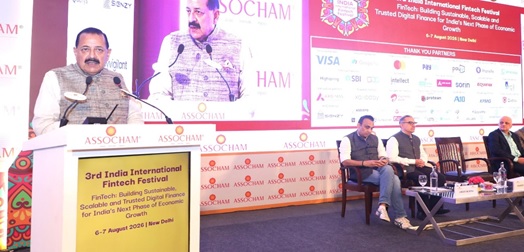
- The 3rd India International FinTech Festival was organized by ASSOCHAM in New Delhi.
- The two-day event focused on the theme "FinTech: Building Profitable, Scalable and Trusted Digital Finance for India's Next Phase of Economic Growth".
National Sports Federation Conclave 2026
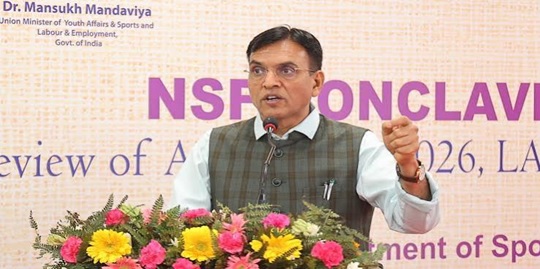
- Union Minister for Youth Affairs & Sports Dr. Mansukh Mandaviya chaired the National Sports Federation (NSF) Conclave 2026 in New Delhi.
- The meeting focused on transparency in selection trials, anti-doping measures, strengthening indigenous coaches, and reviewing preparedness for major events like the 2026 Asian Games.
REPORTS, RANKS AND INDICES
SEBI’s Annual Report 2025-26
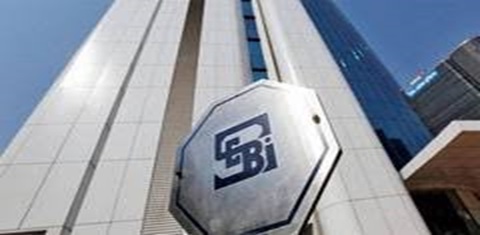
- According to SEBI’s Annual Report released, India’s capital markets remained resilient during the financial year 2025-26 despite global uncertainties, with India ranked first globally in the number of Initial Public Offerings (IPO) and ranking third in funds raised.
Report document Highlights
- IPO Leadership: India maintained the highest number of Initial Public Offerings globally.
- Fundraising Rank: India secured the third position worldwide for capital raised through public offerings.
- Public Equity Growth: Total public equity fundraising via IPOs, FPOs, and rights issues reached a record ₹2.3 lakh crore (an 11.7% increase).
- Corporate Bonds: Corporate bond mobilization saw a decline of 8.4% down to ₹9.1 lakh crore, marking the first drop in four years
Securities and Exchange Board of India (SEBI)
- Established on: 12th April 1988 (Originally established as a non-statutory body via an administrative resolution).
- Statutory Status Granted on: 30th January 1992.
- Governing Act: SEBI Act, 1992 passed by Parliament.
- Preceding Authority: SEBI replaced the Controller of Capital Issues (CCI), which derived its authority from the Capital Issues (Control) Act, 1947.
- Headquarters: Mumbai, Maharashtra
- Administrative Ministry: Ministry of Finance
- Current Chairperson: Tuhin Kanta Pandey
- First Woman Chairperson: Madhabi Puri Buch (Served from 2022 to 2025; she was also the first person from the private sector to lead SEBI)
|
ECONOMY & BANKING
UPI transactions will remain free for consumers

- The Payments Council of India (PCI) has officially clarified that UPI transactions will remain completely free for all consumers and Individual users will not pay any transaction charges for making digital payments.
- Zero Consumer Impact: Peer-to-peer (P2P) and consumer-to-merchant (P2M) payments face no transaction costs for the end-user.
- Small Merchants Exempt: Small businesses, like neighborhood kirana stores, will continue to accept UPI payments without any Merchant Discount Rate (MDR) charges.
- Commercial Arrangements: Any Merchant Service Charges (MSC) are strictly commercial agreements between large merchants and payment providers. These costs will not be passed down to consumers.
- Ecosystem Sustainability: Infrastructure costs—including cybersecurity, fraud prevention, and technology upgrades—are managed by banks, fintechs, NPCI, and the RBI.
Payments Council of India (PCI)
- Established Year: 2013
- Headquarters: Mumbai, Maharashtra
- Parent Organization: It was formed under the aegis of the Internet and Mobile Association of India (IAMAI).
- Nature of the Organization: It is a non-profit industry body
- Chairperson: Vishwas Patel
|
New office of NUCFDC in Mumbai
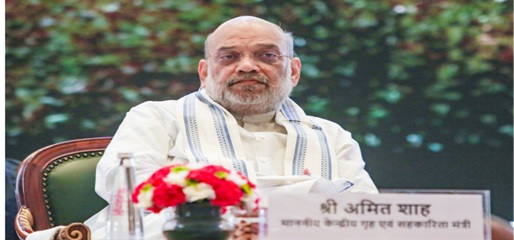
- Union Home and Cooperation Minister Amit Shah inaugurated the new office of the National Urban Co-operative Finance and Development Corporation Limited (NUCFDC) in Mumbai.
Stricter regulatory framework for Authorised Persons
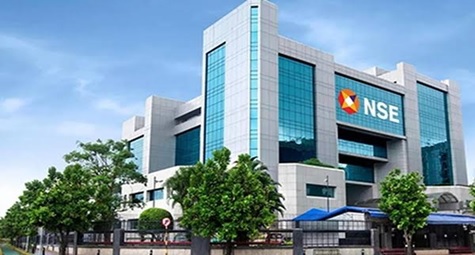
- The National Stock Exchange (NSE) and other stock exchanges, in consultation with SEBI, issued a joint consultation paper proposing a strict new regulatory framework for Authorised Persons (APs) to raise entry standards, mandate tech-driven surveillance, and increase broker accountability.
National Stock Exchange
- Year of Establishment: Incorporated in 1992; commenced operations in 1994.
- Recommended By: Pherwani Committee.
- Headquarters: Mumbai, Maharashtra.
- Regulatory Body: Securities and Exchange Board of India (SEBI).
- Managing Director & CEO: Ashishkumar Chauhan.
- Flagship Index: NIFTY 50
|
ENVIRONMENT + SCIENCE & TECHNOLOGY
India’s first private 800kN rocket engine
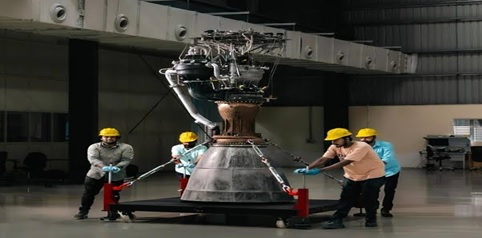
- Bengaluru-based space startup Astrobase Space Technologies officially unveiled "Everest", India’s first privately built 80-tonne-class (800 kN) Full-Flow Staged Combustion (FFSC) LOX-Methane rocket engine.
- Developing an FFSC engine is widely considered one of the hardest technical challenges in modern rocketry, placing Astrobase alongside global entities attempting to master the same ultra-efficient architecture that powers SpaceX's Raptor engine.
- This breakthrough puts India on track to join an elite group of nations—including the US, China, and the former Soviet Union—that have successfully tested high-thrust FFSC propulsion systems.
Boss Scam

- The Indian Cyber Crime Coordination Centre (I4C) under the Ministry of Home Affairs has issued an urgent public advisory warning corporate entities, Chartered Accountants, and CFOs against a highly sophisticated cross-border cyber campaign known as the "Boss Scam" or CEO impersonation fraud.
No chloride contamination in E20 fuel
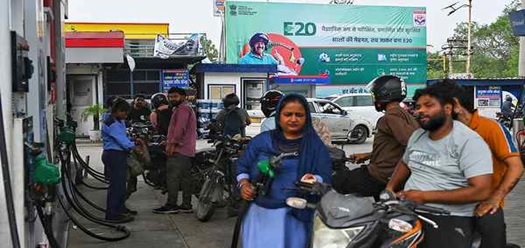
- In a joint statement State-owned oil marketing companies (OMCs), Indian Oil, Bharat Petroleum and Hindustan Petroleum rejected claims of chloride contamination in E20 fuel and allegations of excess moisture in the one-fifth ethanol blended petrol fuel validated from water-ingress testing.
- Out of over 1,000 retail samples analyzed, chloride levels measured in a safe range of 0–3 ppm. This directly debunks media allegations of concentrations hitting several hundred ppm.
- Fuel samples from over 100 refineries showed chloride content at or under 1 ppm, while ethanol from 80 distilleries stayed well below 3 ppm.
- The strict response from the OMCs came shortly after the Society of Indian Automobile Manufacturers (SIAM) initially sent a communication to the Ministry of Petroleum and Natural Gas. The industry body had expressed concerns about potential vehicle part corrosion from chloride. However, SIAM quickly withdrew the letter after recognizing that their external data lacked proper scientific authentication, reiterating that E20 remains a safe alternative.
SPORTS NEWS
Titli Maji clinched a silver medal
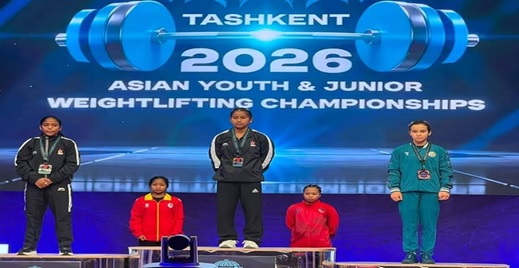
- Indian weightlifter Titli Maji clinched a silver medal in the women's 45kg category at the Asian Youth and Junior Weightlifting Championships in Tashkent, Uzbekistan.
Ariha won gold at Asian Aerobic Gymnastics
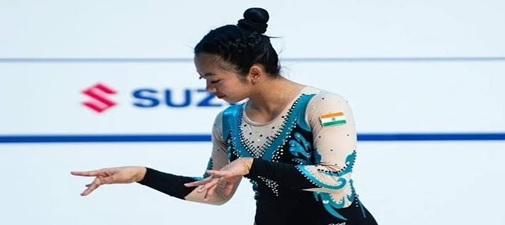
- Ariha Pangambam became the first Indian to win a gold medal in the senior women’s individual event of the Aerobic Gymnastics Asian Championships.


 Don't Have an Account?