STATE SPECIAL NEWS
Telangana Launched AI-Powered Emergency Response System 112
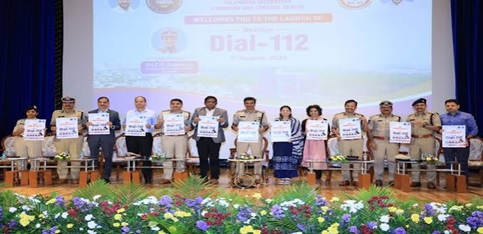
- The Telangana Police officially launched the NextGen Dial-112 Emergency Response Support System (TG-ERSS) at the Telangana Integrated Command and Control Centre (TGiCCC) in Hyderabad.
Telangana
- Capital: Hyderabad
- Formation: Officially formed on June 2, 2014, as the 29th state of India (currently 28th after Jammu & Kashmir became a UT)
- Governor- Shiv Pratap Shukla
- Chief Minister-Revanth Reddy
- Telangana has a bicameral legislature (Legislative Assembly and Legislative Council).
- Telangana was part of the Nizam’s Hyderabad state, merged with Andhra State in 1956 to form Andhra Pradesh, and separated after a long movement.
- Etymology: Derived from "Trilinga Desa" (Land of three lingas: Draksharama, Kaleshwaram, Srisailam) or "Telugu-angana" to distinguish it from Marathi-speaking Marathwada.
- Important Historic Eras: Satavahanas, Kakatiyas (Warangal Fort), Qutb Shahis (Hyderabad, Charminar), and Asaf Jahi Nizams (1724–1948).
- Key Historic Events: Operation Polo (1948 - integration with India), Telangana Rebellion (1946-51), Gentlemen’s Agreement (1956), Srikrishna Committee (2010), AP Reorganisation Act (2014).
- Forest: Kawal Tiger Reserve, Pakhal Wildlife Sanctuary, and Eturnagaram Wildlife Sanctuary
- Key irrigation projects: Kaleshwaram Lift Irrigation Project (world's largest), Palamuru-Rangareddy, and Mission Kakatiya
- Festivals: Bonalu (Goddess Mahakali), Bathukamma (Flower festival), Ramzan, and Muharram
- Arts & Crafts: Bidri craft (metalwork), Banjara needle crafts, Dokra metal crafts, and Nirmal arts.
|
₹500 Crore AI Mission in Chhattisgarh

- Chhattisgarh Cabinet, chaired by Chief Minister Vishnu Deo Sai, officially approved the Chhattisgarh State Artificial Intelligence (AI) Mission with a total financial outlay of ₹500 crore spanning over a five-year duration.
- This flagship policy initiative is strategically aligned with the Government of India's IndiaAI Mission to drive public administration efficiency, technological innovation, and skill development across the state.
Chhattisgarh
- Establishment: Formed on 1 November 2000 as the 26th state of India (carved out of Madhya Pradesh).
- Capital: Raipur (Nava Raipur Atal Nagar is the planned smart city).
- Ancient Name: Dakshin Kosala.
- High Court: Located in Bilaspur.
- Lok Sabha Seats: 11
- Rajya Sabha Seats: 5
- Legislative Assembly: Unicameral with 90 seats.
- Current Governor: Ramen Deka
- Current Chief Minister: Vishnu Deo Sai (First tribal CM from BJP).
Geography & Borders
- Landlocked State: It does not touch any international border or coastline.
- Bordering States: Shares boundaries with 7 states (Highest overlap: Odisha; Lowest overlap: Jharkhand).
- North: Uttar Pradesh
- North-West: Madhya Pradesh
- North-East: Jharkhand
- East: Odisha
- South: Andhra Pradesh and Telangana
- West: Maharashtra
- Highest Peak: Gaurlata (Samri Pat, Balrampur district) at 1,225 meters.
- Tropic of Cancer: Passes through 3 districts: Koriya, Surajpur, and Balrampur.
- Indian Standard Time (IST) Line: 82.5° E longitude passes through the state and intersects the Tropic of Cancer here.
Drainage System & Waterfalls
- Mahanadi River: The lifeline of Chhattisgarh. Originates from Sihawa hills (Dhamtari).
- Major Rivers: Indravati, Arpa, Maniyari, Sondhul, Pairi, Hasdeo, and Shivnath (largest tributary of Mahanadi).
- Chitrakote Waterfalls: Located on the Indravati River (Bastar). It is widely called the "Niagara Falls of India" due to its width.
- Tirathgarh Waterfalls: Located on the Mungabahar River (Kanger Valley National Park).
Minerals & Economy
- Rice Bowl of India: Popularly nicknamed "Dhan Ka Katora" due to extensive paddy cultivation.
- Tin Ore: Chhattisgarh is the sole commercial producer of Tin ore in India, primarily found in the Dantewada/Bastar region.
- Iron Ore: High-grade hematite iron ore is mined at the Bailadila Range. It is exported directly to Japan via Visakhapatnam Port.
- Coal: Major deposits are found in Korba (known as the power capital of the state).
Environment & Wildlife
- Indravati (Kutru) National Park: Famous for Wild Buffaloes; hosts a Tiger Reserve.
- Kanger Valley National Park: Known for the Bastar Hill Myna and Kutumsar Caves (limestone caves).
- Guru Ghasidas National Park: The largest national park in the state (formerly Sanjay National Park).
- Biosphere Reserve: Achanakmar-Amarkantak Biosphere Reserve (shared with Madhya Pradesh).
State Symbols:
-
- State Animal: Wild Buffalo (Van Bhainsa)
- State Bird: Hill Myna (Pahari Maina)
- State Tree: Sal (Sarai)
Tribes & Culture
- Major Tribes: Gonds (largest group), Baigas, Murias, Halbas, and Abujhmarias.
- Folk Dances:
-
- Pandavani: Musical narration of the Mahabharata. Teejan Bai and Ritu Verma are world-renowned exponents.
- Raut Nacha: Performed by the Yadav/Ahir community during Diwali.
- Panthi: Ritual dance of the Satnami community.
- Suva / Soowa Nacha: "Parrot Dance" performed by women during Diwali.
-
- Hareli: Celebrated by farmers to worship farm equipment and crops. It marks the start of festivals.
- Bastar Dussehra: The longest festival in the world (lasts 75 days), dedicated to Goddess Danteshwari.
- Goncha Festival: Chariot festival celebrated in the Bastar region.
- Geographical Indications (GI Tags):
-
- Bastar Dhokra (Bell-metal craft)
- Bastar Iron Craft
- Bastar Wooden Craft
- Champa Silk
- Jeerapool Rice & Nagri Dubraj Rice
|
INTERNATIONAL NEWS
Massachusetts Declares August 15 as India Day
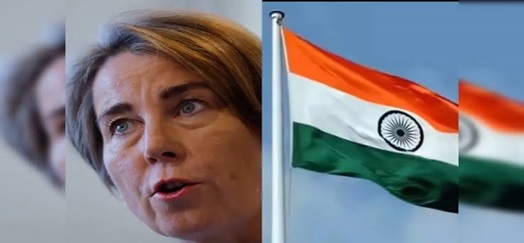
- Massachusetts Governor Maura Healey officially issued a state proclamation declaring August 15, 2026, as India Day, a milestone matched by Boston Mayor Michelle Wu who declared the same for the city.
- This historic synchronicity honors the 79th anniversary of India's independence and pays tribute to the massive economic, cultural, and civic contributions of the five-million-strong Indian-American diaspora.
SUMMITS AND CONFERNCES
Geographical Indication (GI) and Beyond 2.0 Summit
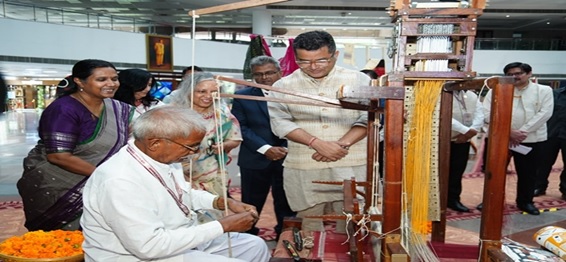
- Minister of State for Textiles Pabitra Margherita inaugurated the Geographical Indication (GI) and Beyond 2.0 Summit in New Delhi.
- Organized by the Ministry of Textiles in association with the Handloom Export Promotion Council, the summit showcased India’s rich GI-tagged handloom and handicraft products.
Geographical Indication (GI) tags
- Governing Law: Governed by the Geographical Indications of Goods (Registration and Protection) Act, 1999.
- Nodal Agency: Administered by the Controller General of Patents, Designs, and Trade Marks, who is the Registrar of Geographical Indications.
- Department: Department for Promotion of Industry and Internal Trade (DPIIT), Ministry of Commerce and Industry.
- Headquarters: The GI Registry of India is located in Chennai, Tamil Nadu.
- Validity: A GI tag is valid for a period of 10 years, which can be renewed indefinitely.
- First Product: Darjeeling Tea was the first Indian product to receive a GI tag in 2004–2005.
International Framework
- Paris Convention: GI protection is recognized under Articles 1(2) and 10 of the Paris Convention for the Protection of Industrial Property.
- TRIPS Agreement: Governed globally under Articles 22 to 24 of the Trade-Related Aspects of Intellectual Property Rights (TRIPS) Agreement of the World Trade Organization (WTO). India, as a member of the WTO, enacted its domestic GI Act to comply with TRIPS obligations.
Legal & Functional Distinctiveness
- Community vs. Individual Right: Unlike Trademarks or Patents which are owned by an individual or a single company, a GI tag is a collective/community right. It belongs to all producers within the specified geographic region who meet the defined standards.
- Categories Covered: GI tags are granted to Agricultural products (e.g., Basmati Rice), Natural goods (e.g., Makrana Marble), Manufactured items (e.g., Mysore Silk), Handicrafts (e.g., Pashmina Shawl), and Foodstuffs (e.g., Hyderabadi Haleem).
- Benefits: Prevents unauthorized use of a registered geographical indication by others, boosts exports, promotes rural development, and protects consumers from deception.
Facts
- State with Maximum GI Tags: Historically, states like Tamil Nadu, Uttar Pradesh, and Karnataka routinely compete for the highest number of registered GI tags. Keep an eye on recent economic survey data for the exact shifting rank before your prelims.
- Logo and Slogan: "Invaluable Treasures of Incredible India" (अतुल्य भारत की अमूल्य निधि).
- Darjeeling Tea Exception: It holds GI protection for both its logo and the text word "Darjeeling".
|
APPOINTMENTS
Dr. T.V. Somanathan as the Cabinet Secretary
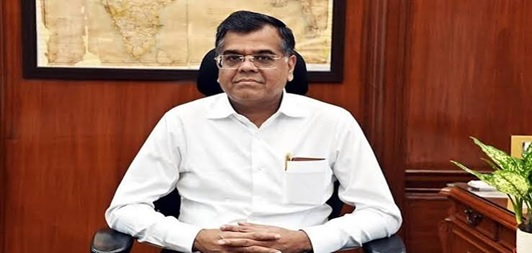
- The Appointments Committee of the Cabinet (ACC) approved a one-year extension in the service of Dr. T.V. Somanathan as India's Cabinet Secretary.
- The extension prolongs his tenure beyond August 30, 2026, keeping him at the helm of the country's top bureaucratic post until August 30, 2027.
Tewolde Gebremariam Appointsed as CEO and MD of Air India
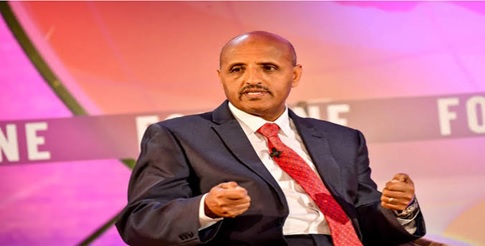
- Air India has officially appointed Tewolde Gebremariam, the former head of Ethiopian Airlines, as its new Chief Executive Officer (CEO) and Managing Director (MD).
IMPORTANT DAYS
Alaboi Ron Smriti Divas
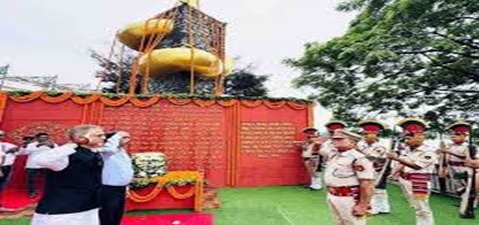
- Alaboi Ron Smriti Divas is observed annually on August 5 in Assam.
- It marks the martyrdom anniversary of 10,000 brave Ahom soldiers who gave their lives during the historic Battle of Alaboi on August 5, 1669.
Battle of Alaboi
- Date of Battle: August 5, 1669 (Saka 1591)
- Location: Alaboi, near Dadara and Pacharia in Kamrup District, Assam
- Ahom Leadership: Commanded under the orders of King Chakradhwaj Singha / generalship of Lachit Borphukan
- Mughal Leadership: Raja Ram Singh I
- Ultimate Outcome: This tactical adaptation directly facilitated Lachit Borphukan’s historic and decisive naval victory at the Battle of Saraighat two years later in 1671.
|
REPORTS, RANKS AND INDICES
Report “Reimagining Care: Strategies for Empowering Caregivers in Viksit Bharat@2047”
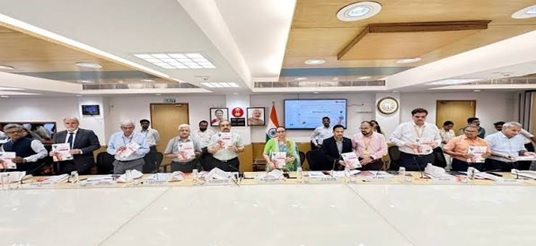
- NITI Aayog released a landmark report titled “Reimagining Care: Strategies for Empowering Caregivers in Viksit Bharat@2047”.
- The document serves as a strategic roadmap to professionalise India's care economy, empower informal caregivers, and position the country as a global hub for skilled care professionals.
- NITI Aayog (National Institution for Transforming India)
|
Established:
January 1, 2015 (via an Executive Resolution of the Union Cabinet)
Type: non-constitutional, non-statutory body
SDG Nodal Agency
Planning Horizon: 3-year Action Agenda, 7-year Strategy, 15-year Vision.
|
Structural Composition
Chairperson: The Prime Minister of India (Narendra Modi)
Vice-Chairperson: Ashok Kumar Lahiri
CEO: Ms. Nidhi Chhibber
Governing Council: Comprises the Prime Minister, Chief Ministers of all States, and Lieutenant Governors of Union Territories.
|
Major Reports/Indices: Releases the SDG India Index, State Health Index, Composite Water Management Index, and School Education Quality Index (SEQI).
Flagship Initiatives: Atal Innovation Mission (AIM), Aspirational Districts Programme
|
AWARDS AND HONOURS
COSPAR Vikram Sarabhai Medal to Annapurni Subramaniam
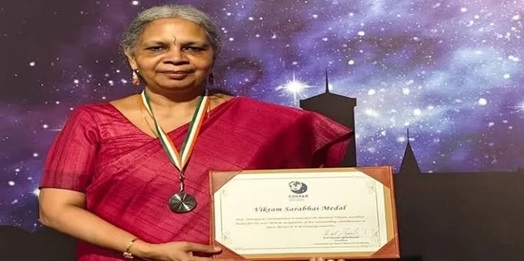
- Professor Annapurni Subramaniam has officially become the first Indian woman scientist and only the fourth Indian overall to receive the prestigious COSPAR Vikram Sarabhai Medal for 2026.
- The international honour was presented during the 46th Committee on Space Research (COSPAR) Scientific Assembly held in Florence, Italy. Globally, she is only the third woman scientist to ever win this medal.
- Prof. Subramaniam serves as the Director of the Indian Institute of Astrophysics (IIA) in Bengaluru and holds additional charge as director of the Centre for Nano and Soft Matter Sciences (CeNS).
-
- The award highlights her groundbreaking research on stellar populations, blue straggler stars, and galaxy evolution. It also celebrates her vital role as the calibration scientist for the Ultra-violet Imaging Telescope (UVIT) aboard AstroSat, India's first dedicated space observatory.
ECONOMY & BANKING
Pawan Hans signed MoU with Noemi Aerospace
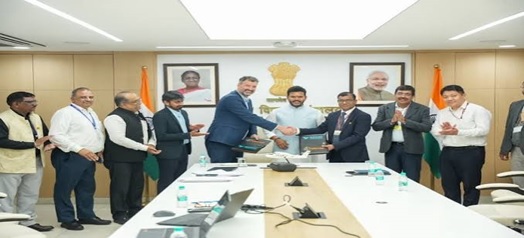
- Pawan Hans Limited signed a non-binding Memorandum of Understanding with Norway-based Noemi Aerospace in New Delhi to explore electric seaplane technology and other sustainable.
Fresh Licences for Urban Cooperative Banks
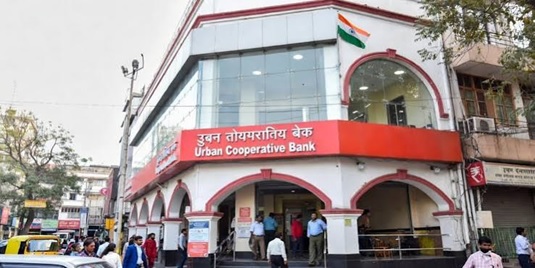
- The Reserve Bank of India (RBI) announced, that it will resume issuing fresh licences for Urban Cooperative Banks (UCBs) after a pause of more.
Urban Cooperative Banks (UCBs)
- First Co-operative Bank in India: Anyonya Sahakari Mandali (established in 1889 in Baroda, Gujarat) is recognized as the first urban cooperative credit society.
- Legal Foundation: The legal framework started with the Cooperative Credit Societies Act, 1904 under the tenure of Lord Curzon.
- Democratic Principles: They function on the concept of "One Member, One Vote". Their customers are also the shareholders/owners of the bank.
- Target Audience: Historically, UCBs were allowed to lend only for non-agricultural purposes (though this strict distinction does not hold today).
The Dual Regulation Model
UCBs operate under a Dual Regulatory Framework managed by two distinct bodies:
- The Reserve Bank of India (RBI): Regulates and supervises all core banking operations (licensing, capital adequacy, interest rates, and loan policies) under the Banking Regulation Act, 1949.
- Registrar of Cooperative Societies (RCS): Handles incorporation, registration, management elections, and administrative audits.
-
- Single-state UCBs are regulated by the respective State RCS.
- Multi-state UCBs fall under the Central RCS (Ministry of Cooperation).
The 4-Tier Regulatory Structure
The RBI classifies UCBs into four tiers based entirely on their deposit size to customize regulatory norms:
| Tier Level |
Criteria & Deposit Size |
| Tier 1 |
All Unit UCBs and Salary Earner's UCBs (regardless of size), and other UCBs with deposits up to ₹100 Crore. |
| Tier 2 |
UCBs with deposits between ₹100 Crore and ₹1,000 Crore. |
| Tier 3 |
UCBs with deposits between ₹1,000 Crore and ₹10,000 Crore. |
| Tier 4 |
Large UCBs with deposits exceeding ₹10,000 Crore. |
One-Liners
- Total Count: As of recent RBI data, there are approximately 1,457 Urban Cooperative Banks operating in India.
- Largest UCB: Saraswat Co-operative Bank Ltd. (headquartered in Mumbai) is the largest urban cooperative bank in India.
- Scheduled Status: UCBs included in the Second Schedule of the RBI Act, 1934 are called Scheduled UCBs and are eligible for financial refinancing from the RBI.
- Recent Policy Shift (2026): The RBI has recently released draft guidelines to resume fresh 'on tap' licensing for UCBs after a historical 22-year hiatus (fresh licensing was paused since 2004).
- Director Tenure Rule: Under revised governance rules, a director cannot serve on the board of a UCB continuously for more than 10 years, followed by a mandatory 3-year cooling-off period.
- Supervisory Framework: The Prompt Corrective Action (PCA) framework applies to Tiers 2, 3, and 4 UCBs to address non-performing assets (NPAs) and capital drops.
|
Rules for Cross-Border E-Commerce Exports

- The Government of India operationalised rules for inventory-based cross-border e-commerce exports through the Directorate General of Foreign Trade (DGFT) under the Ministry of Commerce.
Model Concession Agreement in Indian Railways
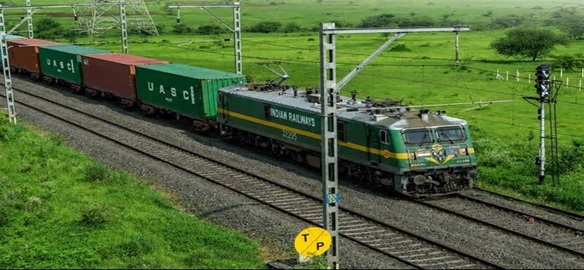
- The uniform registration fee for Container Train Operators (CTOs) under the new All India licence is ₹25 crore.
- The Ministry of Railways approved these landmark modifications to the Model Concession Agreement (MCA) to establish a simplified, uniform licensing framework across the country.
Indian Railways
- Father of Indian Railways: Lord Dalhousie is credited for his "Railway Minutes" of 1853, which initiated the network.
- First Passenger Train: Ran on April 16, 1853, between Bori Bunder (Mumbai) and Thane (34 km).
-
- Locomotives: Three steam engines named Sahib, Sindh, and Sultan.
- Operator: Great Indian Peninsula Railway (GIPR).
- First Industrial Train: The Red Hill Railway (1837) in Madras was used to transport granite, predating the passenger service.
- First Electric Train: Started on February 3, 1925, between Bombay VT and Kurla on DC traction.
- Nationalization: 1951.
- Budget Merger: Since 1924, the Railway Budget was separate until it was merged with the Union Budget in 2017.
Chairman & CEO (Railway Board): Satish Kumar
First Female Chairperson: Jaya Varma Sinha
- Global Rank: Fourth largest railway network in the world (after US, China, and Russia).
- Zonal Structure: Divided into 18 administrative zones (including Metro Railway, Kolkata) and 68 divisions.
- Fastest Train: Vande Bharat Express (Indigenous semi-high speed).
- Longest Route: Vivek Express (Dibrugarh to Kanyakumari), covering ~4,234 km.
- World Heritage Sites (UNESCO): Four sites are recognized:
-
- Darjeeling Himalayan Railway
- Nilgiri Mountain Railway
- Kalka-Shimla Railway
- Chhatrapati Shivaji Maharaj Terminus (CSMT), Mumbai.
-
- Longest Platform: Gorakhpur (UP) at ~1,366 meters.
- Highest Rail Bridge: Chenab Bridge (35m taller than the Eiffel Tower).
Milestones
- 1909: Introduction of toilets in trains (following a complaint letter by Okhil Chandra Sen).
- 1984: India’s first Metro started in Kolkata.
- 1986: First computerized reservation system launched in New Delhi.
- Mascot: Bholu, the Guard Elephant (introduced for the 150th anniversary in 2002).
|
ART & CULTURE
‘As Seen on Netflix’ on Incredible India Portal

- The Ministry of Culture and the Ministry of Tourism launched the ‘As Seen on Netflix’ section on the Incredible India portal.
- Unveiled in New Delhi by Union Minister Gajendra Singh Shekhawat and Netflix Co-CEO Ted Sarandos, the feature helps global travelers discover real filming locations, cultural traditions, and authentic sites featured in popular Netflix series and films.
ENVIRONMENT + SCIENCE & TECHNOLOGY
First Rice Crop Grown in Space
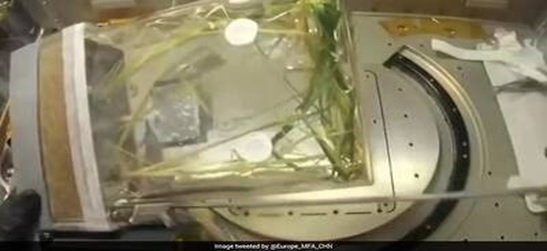
- Chinese astronauts aboard the Tiangong space station successfully harvested a breakthrough batch of space-grown rice.
- Handled by the Shenzhou-23 crew—Zhu Yangzhu, Zhang Zhiyuan, and Lai Ka-ying—the harvest is part of a world-first experiment aiming to cultivate two consecutive generations of rice entirely in orbit.
- This project builds on China's 2022 milestone, which achieved the world's first single full-lifecycle rice cultivation in space. To explore whether crops can develop a "transgenerational memory" and better adapt to zero gravity, scientists are comparing two distinct groups of japonica rice.
New Thorny Seahorse Species
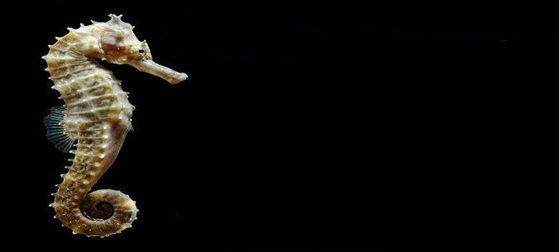
- An international research team led by the Kerala University of Fisheries and Ocean Studies (KUFOS) officially identified a new species of thorny seahorse named Hippocampus amandavincentae.
- This was named in honour of Amanda Vincent, a renowned marine biologist and pioneer in seahorse conservation.
- Published in the taxonomy journal Zootaxa, this breakthrough successfully resolved a 150-year-old scientific mystery by proving that what was historically classified as a single widespread species (Hippocampus histrix) actually comprises three separate species.
Pacific Typhoon’s impact on Indian Monsoon
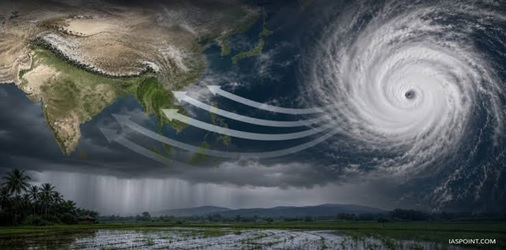
- Pacific typhoons and equatorial Pacific warming alter the Indian southwest monsoon by disrupting moisture flow, shifting wind belts, and altering cyclone activity over the Bay of Bengal and the North Indian Ocean.
- When the equatorial Pacific experiences warming (such as during an El Niño event) or when intense typhoons form near Japan or the South China Sea, they act like global atmospheric pumps. These phenomena redistribute heat and energy, directly altering India's four-month rainy season.
Indian Monsoon
|
The Indian Monsoon is fundamentally a seasonal reversal of winds driven by the differential heating of the land and sea, acting as the economic lifeblood of the subcontinent.
Mechanics
- Differential Heating: The intense summer heating of the Asian landmass (especially Northwest India) creates a deep surface low-pressure system, while the surrounding oceans remain relatively cooler with higher pressure.
- ITCZ Shift: In July, the Inter-Tropical Convergence Zone (ITCZ) shifts northwards to the Ganga plains (around 20°N–25°N), creating a thermal low-pressure trough that pulls moisture-laden winds across the equator.
- Coriolis Force: As the Southeast Trade Winds cross the equator, the Coriolis force deflects them to the right, turning them into the Southwest Monsoon winds.
- Role of Jet Streams:
-
- Subtropical Westerly Jet Stream: Must withdraw completely from the northern plains to the north of the Himalayas before the monsoon can onset over India.
- Tropical Easterly Jet Stream (TEJ): Formed due to the intense heating of the Tibetan Plateau; its presence over the peninsula ensures a strong monsoon.
-
- ENSO (El Niño & La Niña): El Niño (warming of the central/eastern Pacific) typically weakens the Indian monsoon, causing droughts. La Niña strengthens it.
- Indian Ocean Dipole (IOD): A Positive IOD (warmer western Indian Ocean) counters El Niño and enhances monsoon rains.
Branching of the Southwest Monsoon (June – September)
The advancing Southwest Monsoon splits into two main branches upon hitting the Indian landmass:
| Monsoon Branch |
Key Routing & Target Areas |
Unique Features |
| Arabian Sea Branch |
Hits the Western Ghats first, moving through Mumbai and Gujarat towards North India. |
Causes heavy orographic rainfall on the windward side of Western Ghats; leaves the Deccan Plateau in a rain shadow. |
| Bay of Bengal Branch |
Hits the Arakan Hills (Myanmar) and Northeast India, then turns west along the Ganga Plains. |
Deflected westward by the Himalayas; causes maximum rainfall in the northeast (e.g., Mawsynram) and tapers off as it moves west toward Punjab. |
Facts
- Gateway of Monsoon: Kerala is universally recognized as the official gateway where the advancing Southwest Monsoon hits the mainland, typically around June 1st.
- Rainiest Place on Earth: Mawsynram (located in the Khasi Hills of Meghalaya) receives the highest average rainfall globally due to its funnel-shaped topography.
- Tamil Nadu's Winter Rain: The state of Tamil Nadu stays dry during the Southwest Monsoon (rain shadow area) but receives the bulk of its annual rainfall from the Northeast Monsoon (Retreating Monsoon) between October and December.
- Monsoon Break: A phenomenon where rain fails for one or more weeks during July–August due to the temporary shifting of the ITCZ or unfavorable wind patterns.
- Pre-Monsoon Showers: Local thunderstorms before the main monsoon arrives. Known as Mango Showers (Kerala/Karnataka), Blossom Showers (Kerala coffee regions), and Kal Baisakhi (West Bengal/Assam).
- LPA (Long Period Average): The benchmark used by the India Meteorological Department (IMD) to predict a "normal" monsoon, calculated over a historical 50-year period.
Economic & Ecological Significance
- Kharif Crops: The sowing of core summer crops like rice, cotton, maize, sugarcane, and pulses is directly tied to the monsoon's arrival.
- Inflation Control: A poor monsoon triggers lower agricultural yields, which increases food inflation and directly dampens rural consumer demand.
- Hydro-Energy & Water Security: Monsoon rainfall fills major reservoirs and replenishes underground aquifers, sustaining both drinking supplies and hydropower projects.
|


 Don't Have an Account?