NATIONAL NEWS
Jagadguru Kripalu University at Cuttack
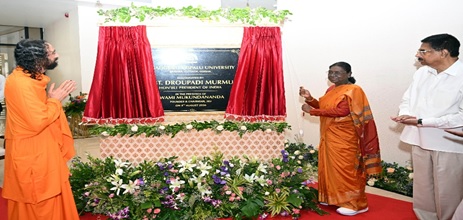
- The President of India, Smt Droupadi Murmu inaugurated the Jagadguru Kripalu University at Cuttack, Odisha.
SUMMITS AND CONFERNCES
BRICS Anti-Corruption Working Group
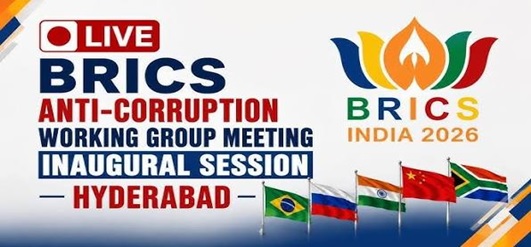
- The Second BRICS Anti-Corruption Working Group (ACWG) Meeting under India’s 2026 BRICS Presidency was organised by Department of Personnel and Training (DoPT) in Hyderabad, Telangana.
- The meeting aligns with India’s overarching presidency theme: “Building for Resilience, Innovation, Cooperation and Sustainability”.
BRICS
- An intergovernmental organization of major emerging economies that serves as a leading platform for South-South cooperation.
- Coined by: The term "BRIC" was originally coined in 2001 by Goldman Sachs economist Jim O'Neill
- Formalization: The grouping was formalized in September 2006 during the UN General Assembly in New York
- First Summit: The first official BRIC Summit was held in Yekaterinburg, Russia, in 2009.
- Original Members: Brazil, Russia, India, China (joined 2006) and South Africa (joined 2010).
- Recent Joiners (2024-2025): Egypt, Ethiopia, Iran, and the United Arab Emirates (UAE) became full members on January 1, 2024. Indonesia officially joined as a full member on January 6, 2025.
- Partnership Status: In 2024, a new "partner country" category was created. Current partners include Belarus, Bolivia, Cuba, Kazakhstan, Malaysia, Nigeria, Thailand, Uganda, Uzbekistan, and Vietnam.
- 2025 Presidency: Brazil held the chairmanship with the theme "Strengthening Global South Cooperation for More Inclusive and Sustainable Governance".
- 2026 Presidency: India assumed the BRICS Chairmanship on January 1, 2026. India is hosting the 18th BRICS Summit.
New Development Bank (NDB)
- Headquarters: Shanghai, China.
- Objective: Mobilizing resources for infrastructure and sustainable development projects in BRICS and other emerging economies.
- Contingent Reserve Arrangement (CRA): A framework created to provide mutual support against short-term balance of payments pressures.
|
APPOINTMENTS
Vishwesh Negi
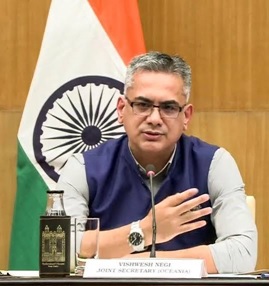
- Vishwesh Negi, an Indian Foreign Service officer, was appointed as India’s next Ambassador to the Islamic Republic of Iran.
IRAN
- Capital: Tehran
- Head of State: Supreme Leader (holds ultimate constitutional power)
- Parliamentary Body: Majlis (Islamic Consultative Assembly)
- Supreme Leader: Mojtaba Khamenei
- President: Masoud Pezeshkian
- Speaker of the Assembly: Mohammad Bagher Ghalibaf
- Currency: Iranian rial
- Land Borders (7 Countries): Armenia, Azerbaijan, and Turkmenistan to the north; Afghanistan and Pakistan to the east; Iraq and Turkey to the west.
- Maritime Borders: North: Caspian Sea (shares this with Russia, Kazakhstan, Turkmenistan, and Azerbaijan) and Persian Gulf and the Gulf of Oman in South
- Mountain Ranges: Alborz Mountains (Mount Damavand) and Zagros Mountains
- Deserts: Dasht-e Kavir (Great Salt Desert) and Dasht-e Lut
|
RBI appointed Monisha Chakraborty as Executive Director
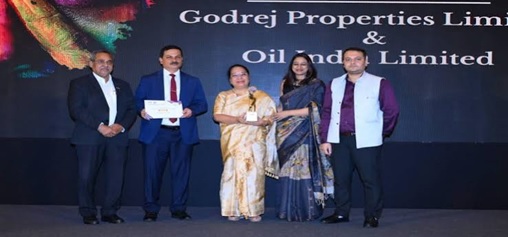
- The Reserve Bank of India (RBI) appointed Smt. Monisha Chakraborty as its new Executive Director (ED) with effect from August 3, 2026.
- In her new role as Executive Director, Chakraborty will oversee the Foreign Exchange Department and the Financial Markets Regulation Department.
RBI
- Established on the recommendation of the Hilton Young Commission (1926)
- Established: 1 April 1935 under the Reserve Bank of India Act, 1934
- Initial Headquarters: Kolkata
- Permanent Headquarters (since 1937): Mumbai
- Nationalized: 1 January 1949 under the Reserve Bank of India (Transfer to Public Ownership) Act, 1948
- First Governor: Sir Osborne Smith
- First Indian Governor: C. D. Deshmukh
- Current Governor (2026): Sanjay Malhotra
- Deputy Governors: Swaminathan J., Dr. Poonam Gupta, M. Rajeshwar Rao and T. Rabi Sankar
- Administration: Governed by the Central Board of Directors
- Accounting Year: April–March
- Currency Issuance: Issues currency notes (except ₹1 notes and coins)
- Monetary Policy: Formulates and implements monetary policy to control inflation through the Monetary Policy Committee (MPC)
- Banker to Government and Banks
- Foreign Exchange Management: Administers FEMA, 1999 and manages the country's foreign exchange reserves
|
Vice Admiral Manish Chadha
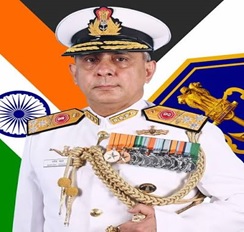
- Vice Admiral Manish Chadha, AVSM, VSM, assumed charge as the Director General Naval Operations (DGNO).
- He succeeded Vice Admiral A.N. Pramod, who has transitioned to the role of Deputy Chief of Naval Staff.
IMPORTANT DAYS
International Clouded Leopard Day
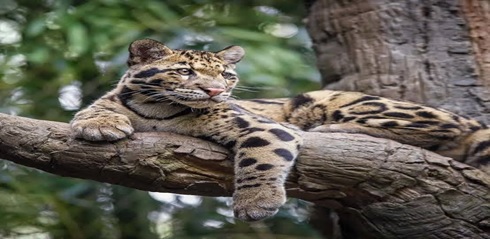
- International Clouded Leopard Day is observed annually on August 4th to raise global awareness for the protection, conservation, and unique traits of these endangered wild cats.
Clouded leopard
- Scientific Name: Neofelis nebulosa (distinct from the Sunda clouded leopard, Neofelis diardi).
- Physical Traits: Features large, cloud-like dark blotches; possesses exceptionally long canine teeth relative to body size and wide paws adapted for arboreal (tree-climbing) agility.
- Habitat: Dense subtropical and tropical lowland evergreen forests.
Conservation Status & Legal Framework
- IUCN Status: Vulnerable.
- Wildlife Protection Act, 1972 (India): Listed under Schedule I, affording it the highest degree of legal protection against hunting and poaching.
- CITES: Appendix I.
Distribution in India: Found mainly in Northeast Indian states including Arunachal Pradesh, Assam, Sikkim, Tripura, Mizoram, Manipur, Nagaland, Meghalaya, and northern West Bengal.
Clouded Leopard National Park: Located inside the Sepahijala Wildlife Sanctuary in Tripura (covering ~5.08 sq km, established in 2007).
Namdapha National Park: Located in Arunachal Pradesh, it is famously known in UPSC circles as one of the rare reserves hosting four feline big/medium cats: Tiger, Leopard, Snow Leopard, and Clouded Leopard.
|
ECONOMY & BANKING
India hiked windfall tax on fuel exports
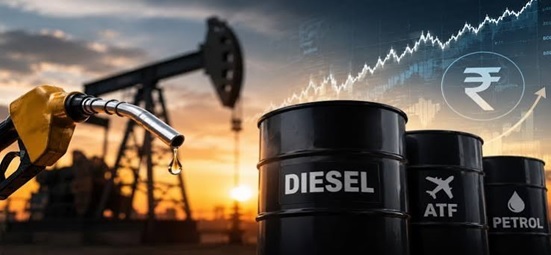
- According to notifications issued by the Ministry of Finance, Indian government increased the windfall tax on fuel exports including petrol, diesel, and aviation turbine fuel (ATF).
- These adjustments respond to heightened international crude price volatility driven by ongoing geopolitical tensions in West Asia and directly aims to curtail aggressive exports, safeguarding steady domestic inventory levels while tapping into the extraordinary profits currently being generated by private refiners.
Windfall Tax
|
A Windfall Tax is a higher, temporary tax levied by a government on specific industries or entities when they earn unforeseen, extraordinary, or "supernormal" profits.
Feature
- Economic Rent Capture: It aims to capture "economic rent"—profits earned over and above what is necessary to keep a business operating.
- Nature of Tax: In India, it is primarily collected through a Special Additional Excise Duty (SAED). Since excise duty is an indirect tax levied at the production stage, it falls under the jurisdiction of the Central Government (Union List).
- Dynamic and Temporary: It is not a permanent feature of the tax code. It is introduced during crises and is revised frequently or rolled back entirely when global market conditions normalize.
India’s Windfall Tax Regime
- First Introduction: India first introduced the windfall profit tax on July 1, 2022, following the global energy crisis triggered by the Russia-Ukraine conflict.
- Target Sectors: It primarily targeted domestically produced crude oil and the export of refined petroleum products like petrol, diesel, and Aviation Turbine Fuel (ATF).
- The B.K. Chaturvedi Committee (2008): Historically, this high-level committee on the financial situation of oil companies recommended taxing the unforeseen, windfall profits of oil producers to support fiscal needs.
- Fortnightly Review Mechanism: The Ministry of Finance revises these tax rates every 14–15 days. The adjustments depend directly on trailing international Brent crude prices and Gross Refining Margins (GRMs).
- Exemptions: To preserve regional trade relations, the government has historically exempted fuel exports by Public Sector Undertakings (PSUs) to immediate neighbors like Nepal, Bhutan, Bangladesh, Sri Lanka, Maldives, and Mauritius.
|
BEL signed MoU with Esri India
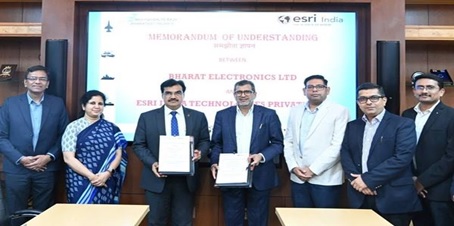
- Bharat Electronics Limited (BEL) signed a Memorandum of Understanding (MoU) with Esri India, to collaborate on Geographic Information System (GIS), Location Intelligence, and GeoAI solutions for India's defence sector.
- GeoAI (Geospatial Artificial Intelligence) in defence fuses machine learning with location data to accelerate intelligence cycles, automate battlefield surveillance, and enhance autonomous navigation. It shrinks data processing times from days to minutes, giving commanders a critical tactical advantage.
Bharat Electronics Limited (BEL)
- Established in 1954 in Bengaluru, Karnataka.
- Parent Ministry: Operates under the Department of Defence Production, Ministry of Defence.
- Classification: Conferred Navratna status in June 2007 (and previously the first MoD PSU to get Miniratna Category-I).
- Headquarters: Bengaluru, Karnataka.
- Current Head (CMD): Manoj Jain
- Manufacturing Units: Exactly 9 units across India (Bengaluru, Ghaziabad, Pune, Machilipatnam, Kotdwara, Panchkula, Chennai, Hyderabad, and Navi Mumbai).
|
Professional Tea Tasting Courses
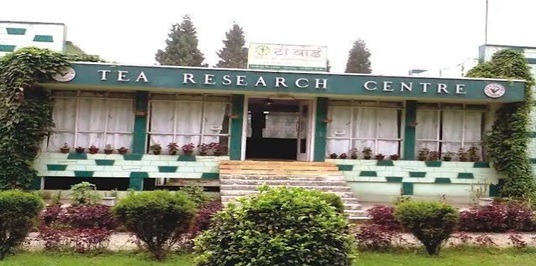
- Tea Board India commenced its inaugural batch of National Council of Vocational Education and Training (NCVET) approved professional courses at the Darjeeling Tea Research and Development Centre (DTR&DC) in Kurseong, West Bengal.
- Primary Objective of this course is to build a professional talent pool of tea tasters and sommeliers.
- This strengthens global market competitiveness, tea branding, and quality assurance for Indian teas.
Tea
|
Geographical and Climatic Conditions
- Climate: Warm and moist, frost-free climate all through the year.
- Temperature: Ideal range is 20°C to 30°C; temperatures dropping below 10°C or exceeding 35°C harm growth.
- Rainfall: Annual rainfall of 150 cm to 300 cm, evenly distributed throughout the year without water stagnation.
- Soil: Deep, fertile, well-drained, acidic soil rich in humus and organic matter. Stagnant water is fatal to tea roots.
Regions in India
- Assam: Ranks 1st in India, producing over 52% of the country's total output, primarily from the Brahmaputra and Cachar valleys.
- West Bengal: Ranks 2nd in India, famous for Darjeeling, Dooars, and Terai regions.
- Tamil Nadu & Kerala: Major Southern producers located in the Nilgiri hills.
Geographical Indication (GI) Tag: Darjeeling Tea was the first product in India to receive a GI tag in 2004. Other GI-tagged variants include Assam Tea, Nilgiri Tea, and Kangra Tea.
Tea Board of India
- A statutory body established under the Tea Act of 1953, functioning under the Ministry of Commerce and Industry, with headquarters in Kolkata.
|
Near-universal banking coverage of inhabited villages
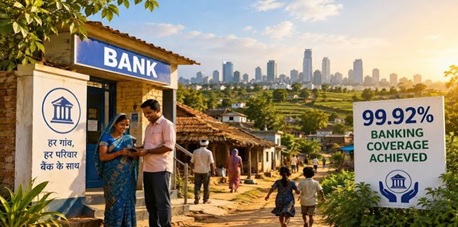
- India has achieved near-universal banking coverage, with 99.92% of inhabited villages now served by a banking outlet within a 5-km radius.
- According to an official statement by the Ministry of Finance, 6,00,868 out of the country’s 6,01,328 inhabited villages have successfully secured access to formal financial networks.
- The data, tracked via the Jan Dhan Darshak (JDD) mobile application, highlights a major milestone in closing the rural-urban financial divide across remote regions.
|
Jan Dhan Darshak App
- Developed by: Department of Financial Services (DFS) under the Ministry of Finance and the National Informatics Centre (NIC)
- Helps users find nearby bank branches, ATMs, Bank Mitras (business correspondents), post offices, and customer service points
- Banking in India
Evolution of Banking in India
- First Bank: Bank of Hindustan (1770), followed by the General Bank of India (1786).
- Presidential Banks: Bank of Bengal (1806), Bank of Bombay (1840), and Bank of Madras (1843).
- Imperial Bank of India: Amalgamation of the three Presidential Banks in 1921. It was later nationalised and renamed the State Bank of India (SBI) in 1955 under the SBI Act.
- First Fully Indian Bank: Punjab National Bank (1894), established by the efforts of Lala Lajpat Rai.
- Nationalisation:
-
- 1969: 14 major private banks with deposits over ₹50 crores were nationalised.
- 1980: 6 more private banks with deposits over ₹200 crores were nationalised.
Scheduled vs. Non-Scheduled Banks
- Scheduled Banks: Included in the Second Schedule of the RBI Act, 1934. They must maintain a minimum paid-up capital and reserves framework, and are eligible for debts/loans from the RBI at bank rate.
- Non-Scheduled Banks: Banks not listed in the Second Schedule. They cannot borrow from the RBI for regular banking needs except during extreme emergencies
Differentiated Banks (Crucial for UPSC)
- Small Finance Banks (SFBs):
-
- Recommended by the Nachiket Mor Committee.
- Target: Unserved and underserved sections (small businesses, micro industries).
- Fact: They must extend 75% of their Adjusted Net Bank Credit (ANBC) to the Priority Sector Lending (PSL) sector, compared to 40% for commercial banks.
- Payments Banks:
-
- Recommended by the Nachiket Mor Committee.
- Restrictions: Can accept deposits (up to ₹2 lakh per individual) but cannot issue loans or credit cards.
- Investment: Must invest their deposit balances in government securities.
Monitory and Regulatory Tools of RBI
The RBI regulates the banking system using quantitative and qualitative tools to maintain liquidity and inflation parity.
| Tool |
Type |
Definition & Exam Significance |
| CRR (Cash Reserve Ratio) |
Quantitative |
The share of Net Demand and Time Liabilities (NDTL) that banks must keep with RBI in cash form. Banks earn no interest on this. |
| SLR (Statutory Liquidity Ratio) |
Quantitative |
The share of NDTL that banks must maintain with themselves in liquid assets (Gold, Cash, or Government Securities). |
| Repo Rate |
Quantitative |
The rate at which the RBI lends money to commercial banks against government securities to meet short-term needs. |
| Reverse Repo Rate |
Quantitative |
The rate at which the RBI borrows money from commercial banks. It absorbs excess liquidity from the market. |
| Bank Rate |
Quantitative |
Long-term penal rate at which RBI lends money to commercial banks without collateral. |
| MSF (Marginal Standing Facility) |
Quantitative |
A window for banks to borrow overnight funds from RBI by dipping into their SLR portfolio up to a specified limit at a penal rate. |
Financial Concepts & Terminologies
- NDTL (Net Demand and Time Liabilities):
-
- Demand Liabilities: Money banks must pay on demand (Savings accounts, Current accounts).
- Time Liabilities: Money banks must pay after a fixed period (Fixed Deposits, Recurring Deposits).
- NPA (Non-Performing Assets): A loan or advance for which the principal or interest payment remains overdue for a period of 90 days or more.
-
- Sub-standard: Overdue for ≤ 12 months.
- Doubtful: Overdue for > 12 months.
- Loss Assets: Uncollectible or of little value, identified by the bank or RBI auditors.
- Capital Adequacy Ratio (CAR) / CRAR: The ratio of a bank's capital to its risk-weighted assets. Mandated by Basel Accords to ensure banks can absorb a reasonable amount of loss.
- Insolvency and Bankruptcy Code (IBC), 2016: A time-bound legal framework to resolve insolvency cases for corporate firms and individuals within 180 days (extendable by 90 days).
RBI
- Establishment: Set up on April 1, 1935, based on the recommendations of the Hilton Young Commission (Royal Commission on Indian Currency and Finance). It was nationalised on January 1, 1949.
- First Governor of RBI: Sir Osborne Smith.
- First Indian Governor of RBI: C.D. Deshmukh
- Current Governor of RBI: Sanjay Malhotra (26th Governor)
|
Aadi Perukku celebrated in Tamil Nadu
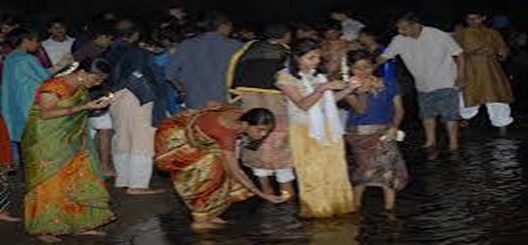
- Aadi Perukku is a traditional Tamil festival celebrated on the 18th day of the Tamil month of Aadi (usually August 3) to honor life-giving water, thank the monsoon rains, and pray for agricultural prosperity.
- People gather along major riverbanks—especially the Cauvery river in places like Trichy, Thanjavur, and Srirangam—to offer prayers.
ENVIRONMENT + SCIENCE & TECHNOLOGY
Glaw Lake in Arunachal Pradesh India’s 101st Ramsar site
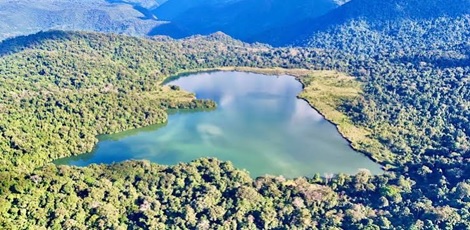
- Glaw Lake in Arunachal Pradesh was officially designated as India’s 101st Ramsar site, making it the very first Ramsar wetland in the state.
- Glaw Lake is Located inside the Kamlang Tiger Reserve & Wildlife Sanctuary in the Lohit district of Arunachal Pradesh.
Ramsar Sites and Wetland
|
Wetland? (Ramsar Definition)
- Depth Limit: Areas of marsh, fen, peatland, or water, whether natural or artificial, permanent or temporary, where the water depth at low tide does not exceed 6 metres.
- Scope: Includes both natural (lakes, rivers, underground aquifers, mangroves, coral reefs) and human-made sites (fish ponds, rice paddies, salt pans, reservoirs).
The Three Pillars of the Convention
- Wise Use: Sustainable utilization of all wetlands through national policies.
- Ramsar List: Designating "Wetlands of International Importance".
- International Cooperation: Managing transboundary wetlands and shared species.
The Montreux Record
- Definition: A register of Ramsar sites experiencing, or predicted to experience, significant ecological changes due to human interference (technology, pollution).
- Indian Sites: Currently, only Keoladeo National Park (Rajasthan) and Loktak Lake (Manipur) are listed. (Note: Chilika Lake was previously listed but removed).
Facts
| Category |
Details |
State |
| Total Sites in India |
100 Sites (as of mid-2026) |
Pan-India |
| 100th/99th Sites |
Jai Prakash Narayan (100th) & Shekha Jheel (99th) |
Uttar Pradesh |
| Highest No. of Sites |
Tamil Nadu (highest), followed by Uttar Pradesh |
Tamil Nadu |
| First Sites (1981) |
Chilika Lake & Keoladeo National Park |
Odisha & Rajasthan |
| Largest/Smallest |
Sundarban (Largest, 4230 sq km) & Renuka/Vembannur (Smallest) |
WB / HP & Tamil Nadu |
| Unique Feature |
Loktak Lake (Only floating national park - Keibul Lamjao) |
Manipur |
Key Environmental Points
- World Wetlands Day: February 2.
- India’s Accession: Joined on February 1, 1982.
- Legal Status: Ramsar listing is not legally binding; conservation relies on national laws like the Wetlands (Conservation and Management) Rules, 2017.
|
Organ transplantation in India
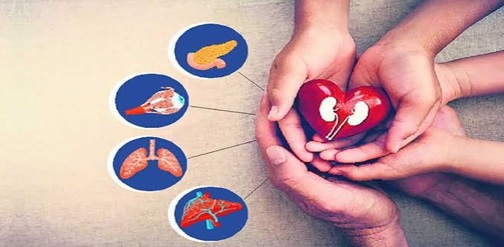
- India achieved a milestone in 2025 by performing 20,138 organ transplants, representing a 6.5% increase over 2024 and marking the first time the annual total crossed 20,000.
- According to data released by the National Organ and Tissue Transplant Organisation (NOTTO), this represents a 6.5% year-on-year increase compared to 2024 and a massive fourfold growth from the 4,990 transplants recorded in 2013.
- The country holds the third-highest rank worldwide for overall organ transplants, trailing only the United States and China.
National Organ and Tissue Transplant Organisation (NOTTO)
|
Parent Ministry: Ministry of Health and Family Welfare (MoHFW), Government of India.
Headquarters: New Delhi (located at Safdarjung Hospital campus).
Statutory/Legal Basis: Operates under the framework of the Transplantation of Human Organs and Tissues Act, 1994 and its subsequent amendments in 2011.
Key Program Implementation: Acts as the apex center for the National Organ Transplant Program (NOTP).
Organizational Hierarchy (The Three-Tier Network)
- NOTTO (National Level): Apex coordinating center for all-India networking, national registry data, and allocation protocols.
- ROTTO (Regional Level): Regional Organ and Tissue Transplant Organisations acting as mid-tier operational hubs.
- SOTTO (State Level): State Organ and Tissue Transplant Organisations handling local hospital networking and district outreach.
|
National Technothon
- The National Institute of Ocean Technology (NIOT), an autonomous institute under the Ministry of Earth Sciences, launched a National Technothon aims to find innovative, indigenous, and sustainable technologies for deep-sea mining and strategic mineral extraction to advance India's Deep Ocean Mission.
- The Technothon targets the sustainable harvesting of polymetallic nodules from the deep ocean floor (at depths of 4,500 to 6,000 metres). These potato-shaped nodules are crucial for India's transition to clean energy, containing strategic metals like nickel, cobalt, copper, and manganese used in electric vehicles and advanced batteries
India's Deep Ocean Mission
- Nodal Ministry: Ministry of Earth Sciences (MoES)
- Type of Scheme: Central Sector Scheme (100% funded by the Central Government).
- Key Project: Samudrayaan Mission, India's first unique manned deep-ocean exploration project.
- Flagship Submersible: Matsya 6000, an indigenously developed manned submersible designed to carry 3 aquanauts to a depth of 6,000 metres. It is developed by the National Institute of Ocean Technology (NIOT), Chennai.
- Strategic Exploration Right: The International Seabed Authority (ISA) has granted India a licence to explore Polymetallic Sulphides in the Carlsberg Ridge (Northwest Indian Ocean) and Polymetallic Nodules in the Central Indian Ocean Basin.
|
DEFENCE NEWS
Exercise ROTOR CLAP III

- The Indian Air Force conducted Exercise ROTOR CLAP III at the Pokhran Field Firing Range in Jaisalmer district, Rajasthan.
- The third edition of this rotary-wing exercise focused strictly on Counter-Unmanned Aerial Systems (Counter-UAS).
Indian Air Force
|
Foundation
- Establishment Date: October 8, 1932 (Celebrated annually as Air Force Day).
- Official Motto: "Nabha Sparsham Deeptam" (Touch the Sky with Glory), taken from the eleventh chapter of the Bhagavad Gita.
- Global Ranking: Fourth-largest operational air force in the world (behind the US, Russia, and China).
- Supreme Commander: The President of India.
Leadership and Ranks
- First Chief of Air Staff: Air Marshal Sir Thomas Elmhirst (1947–1948).
- First Indian Chief of Air Staff: Air Marshal Subroto Mukherjee (1954–1960)—often hailed as the Father of the Indian Air Force.
- Only Marshal of the Air Force: Arjan Singh (awarded the five-star rank in 2002).
- Highest Commissioned Rank: Air Chief Marshal (Amar Preet Singh).
Key Historical & Operational Milestones
- Origin Name: Initially known as the Royal Indian Air Force (RIAF) before "Royal" was dropped in 1950.
- Operation Meghdoot (1984): Secured the Siachen Glacier; IAF provided vital transport and logistic support.
- Operation Safed Sagar (1999): IAF's crucial deployment during the Kargil War using air power at high altitudes.
|
85th Armed Forces Headquarters Civilian Services Day
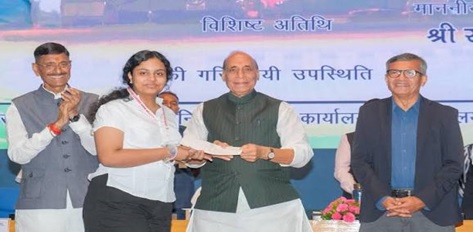
- The 85th Armed Forces Headquarters (AFHQ) Civilian Services Day was celebrated on August 3, 2026, in New Delhi.
- The event honors the vital contributions of civilian personnel working alongside India's armed forces within the Ministry of Defence.
- The annual day commemorates the historic foundation of the AFHQ Cadres established on August 1, 1942.
SPORTS
BWF Para World Circuit in Brazil
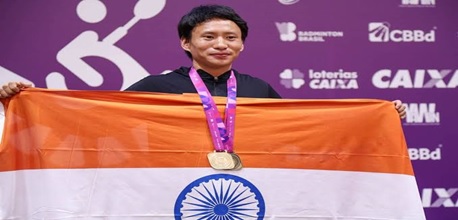
- Arunachal Pradesh's star para-shuttler Biri Takar secured a remarkable double podium finish at the Brazil Para Badminton International 2026, a prominent tournament on the BWF Para World Circuit.
- He concluded India's campaign in style by clinching the Gold medal in Men’s Doubles (SL3–SU5) and a Bronze medal in Men’s Singles (SL4).
Harshita Jakhar
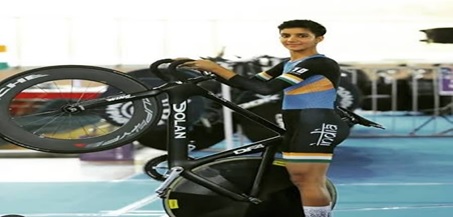
- Young cyclist Harshita Jakhar rode into history books by becoming the first Indian woman to be a part of the Tour de France Femmes in Switzerland.


 Don't Have an Account?