NATIONAL NEWS
Parliament Passes Appropriation (No. 3) Bill, 2026
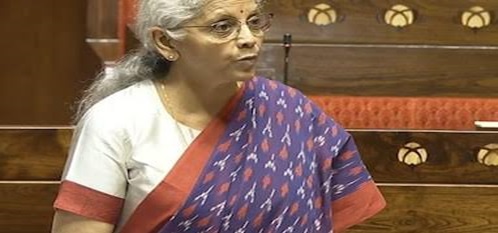
- The Lok Sabha passed the Appropriation (No. 3) Bill, 2026 which was moved by Finance Minister Nirmala Sitharaman, the legislation regularizes excess spending of ₹54,067 crore from the Consolidated Fund of India for services during the financial year that ended on March 31, 2023.
Consolidated Fund of India
- It is the central legal account where all government revenues, loans, and loan repayments are credited, and from which all public expenditures are drawn.
Constitutional Basis
- Article 266(1): Establishes the Consolidated Fund of India (and separate Consolidated Funds for each state).
- Three components under Article 266: Consolidated Fund of India, Public Account of India, and Contingency Fund of India.
Inflows and Sources
- All tax revenues (income tax, customs, GST, excise) and non-tax revenues received by the Union Government.
- All loans raised via treasury bills, market loans, and external borrowings.
- All money received by the government in repayment of loans.
Charged vs. Voted Expenditure
- Charged Expenditure: Non-votable expenses protected by the Constitution to ensure the independence of key authorities (e.g., salaries of the President, Chairman/Deputy Chairman of Rajya Sabha, Speaker/Deputy Speaker of Lok Sabha, Judges of the Supreme Court and High Courts, and the CAG). They can be discussed in Parliament, but are not put to vote.
- Voted Expenditure: All other general government expenditures that require a formal voting process (Demands for Grants) in Lok Sabha.
Facts
- Approval mandatory: The government cannot withdraw any money without an Appropriation Act passed by Parliament.
- Public Account vs Consolidated Fund: Unlike the Consolidated Fund, money in the Public Account (like Provident Funds or small savings) belongs to private individuals/trusts held in custody, and does not require parliamentary vote for withdrawal.
Appropriation Bill
- A vital money bill that legalizes the withdrawal of funds from the Consolidated Fund of India to meet government expenditure.
- Without its enactment, no money can be withdrawn or spent by the executive, making it the core legislative instrument of the budgetary process.
Constitutional Provisions
- Article 114: Deals with the introduction and passage of the Appropriation Bill in Parliament to cover voted grants and charged expenditure.
- Article 204: Governs the Appropriation Bill in State Legislatures.
- Article 114(3): Mandates that no money shall be withdrawn from the Consolidated Fund of India except under appropriation made by law passed in accordance with provisions of this article.
Key Exam-Oriented Facts
- Classification: It is categorized strictly as a Money Bill under Article 110 of the Constitution.
- Stage of Introduction: It is introduced in the Lok Sabha only after the Demands for Grants are discussed and voted upon.
- No Amendments Allowed: No amendments can be proposed to the bill in either house that will vary the amount or alter the destination of any grant, or change the amount of any charged expenditure.
- Rajya Sabha Powers: The upper house has restricted power; it cannot reject or amend the bill and must return it within 14 days with or without recommendations, which the Lok Sabha may accept or reject.
- Supplementary Grants: Governed by Article 115, supplementary, additional, or excess grants also require a separate Appropriation Bill.
|
Operation Trishul Brings Back 274 Fugitives
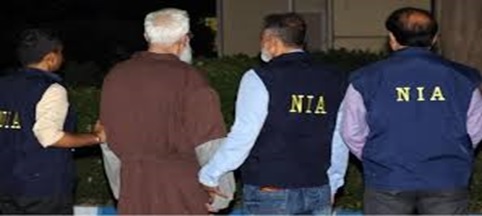
- India successfully repatriated 274 fugitive criminals from 36 countries between 2019 and July 2026 under Operation Trishul, backed by advanced digital footprint tracking, satellite surveillance, and global coordination via INTERPOL and BHARATPOL.
- Operation Trishul is designed by the CBI to geo-locate and track fugitive offenders globally through real-time international police cooperation.
BHARATPOL and INTERPOL
|
BHARATPOL Portal (The Indian Ecosystem)
- Developed By: Developed entirely by the Central Bureau of Investigation (CBI).
- Nodal Ministry: Ministry of Home Affairs (MHA).
- Decentralization: Previously, only the CBI could directly communicate with INTERPOL. Now, over 1,400 field units, including state and Union Territory (UT) police departments, can route requests seamlessly through designated INTERPOL Liaison Officers (ILOs).
- Database Power: The portal grants Indian law enforcement agencies streamlined access to 19 different INTERPOL databases (fingerprints, DNA, stolen travel documents, etc.) to analyze and prevent transnational crimes.
The 5 Core Modules of BHARATPOL
For objective and mains-oriented questions, memorize these five modules:
- Connect Module: Integrates the CBI (NCB-New Delhi) with state police chiefs, SPs, and Commissioners on one platform.
- Broadcast Module: Transmits international criminal intelligence or foreign requests directly to field officers across India.
- INTERPOL References Module: Accelerates requests sent by Indian agencies for investigations occurring outside Indian borders.
- INTERPOL Notices Module: Automates and structures the drafting and processing of Red Corner Notices and other color-coded alerts.
- Resources Module: Offers standardized investigation templates, legal documents, and capacity-building resources for frontline officers.
INTERPOL
The International Criminal Police Organization (INTERPOL) is the world’s largest international police organization, consisting of 195 member countries.
Structural & Historical Facts
- Founding: Formed in 1923 as the International Criminal Police Commission (ICPC); officially renamed INTERPOL in 1956.
- Headquarters: Located in Lyon, France.
- India's Membership: India joined INTERPOL on June 4, 1949
- Crucial Legal Constraint (Article 3): INTERPOL’s constitution strictly prohibits any intervention or activities of a political, military, religious, or racial character. It is not a global police force; it holds no powers to arrest, search, or prosecute individuals. Its role is purely information coordination.
- Core Communication Network: Operates on a highly encrypted, secure global police communication system called I-24/7.
INTERPOL Color-Coded Notices System
| Notice Color |
Purpose / Objective |
| Red Notice |
To seek the location and arrest of wanted persons for extradition or lawful action. |
| Blue Notice |
To collect additional information or identity regarding a person of interest in a criminal investigation. |
| Green Notice |
To provide warnings and intelligence about criminals who are likely to repeat offences in other countries. |
| Yellow Notice |
To help locate missing persons (often minors) or identify persons unable to identify themselves. |
| Black Notice |
To seek information on unidentified bodies. |
| Orange Notice |
To warn of an event, a person, an object, or a process representing an imminent threat to public safety. |
| Purple Notice |
To provide information on modi operandi (methods), procedures, objects, and hiding places used by criminals. |
| UN Security Council Special Notice |
Issued for entities and individuals targeted by UN Security Council Sanctions Committees. |
|
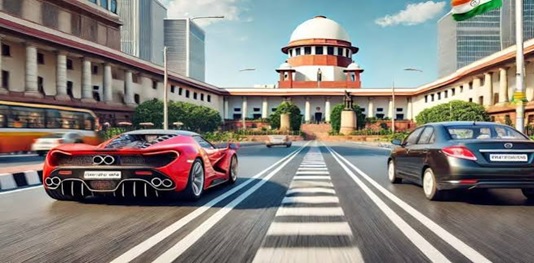
- The Supreme Court of India directed an extension of the mandatory third-party insurance period for new private cars and two-wheelers.
- Under this new directive, new private cars require four years of coverage (up from three), and new two-wheelers require six years (up from five) at the time of purchase.
- The landmark judgment addresses widespread non-compliance with Section 146 of the Motor Vehicles Act, 1988 to streamline vehicle coverage and strictly enforce the law, the Court introduced several critical mechanisms.
Supreme Court of India
| Establishment & Composition |
Jurisdiction & Powers |
Landmark Constitutional Provisions |
| Established: 26 January 1950 (Inaugurated on 28 January 1950)
Constitutional Basis: Part V, Chapter IV (Articles 124–147)
Predecessors: Federal Court of India (1937) and Privy Council (UK)
Current Strength: 34 Judges (Including CJI)
Appointment: By the President of India
Retirement Age: 65 Years
Current Strength: 34 judges, including the CJI
First CJI: Justice H. J. Kania
|
Original Jurisdiction (Art. 131): Centre–State and Interstate disputes
Writ Jurisdiction (Art. 32): Enforcement of Fundamental Rights
Appellate Jurisdiction: Civil, Criminal & Constitutional appeals
Advisory Jurisdiction (Art. 143): Advice to President
Judicial Review: Reviews laws and executive actions
Court of Record (Art. 129): Power to punish for contempt
Review Jurisdiction (Art. 137): Reviews its own judgments
Guardian of the Constitution
Final Court of Appeal in India
|
Article 21: Right to Life and Personal Liberty
Article 32: Right to Constitutional Remedies
Article 136: Special Leave Petition (SLP)
Article 141: Law declared by SC binding on all courts
Article 142: Complete Justice Powers
Article 129: Supreme Court as Court of Record
Article 145: Power to frame rules
44th Amendment (1978): Article 21 cannot be suspended during Emergency
Basic Structure Doctrine: Developed through judicial interpretation
|
Supreme Court Tightened Rules on Digital Arrest Scams

- The nationwide directions by the Supreme Court of India were passed in a suo motu case titled In Re: Victims of Digital Arrest Related to Forged Documents.
- A three-judge bench comprising Chief Justice of India Surya Kant, Justice Joymalya Bagchi, and Justice V. Mohana issued these interim directives following a status report submitted by the Indian Cyber Crime Coordination Centre (I4C).
- The case was initially triggered in October 2025 after a senior citizen couple from Haryana wrote to the apex court detailing how they were defrauded of ₹1.5 crore by scammers impersonating law enforcement officers using forged court orders.
Nationwide Directives Issued by the Court
- SOP for Mule Accounts: The Reserve Bank of India (RBI) must frame a Standard Operating Procedure (SOP) within four weeks to identify, place temporary debit holds on, and investigate mule bank accounts used to layer crime proceeds.
- Grievance and Money Restoration Modules: All States and Union Territories must immediately operationalise Grievance Redressal and Money Restoration modules to fast-track the recovery of stolen funds for victims
- State Cyber Crime Coordination Centres: All states must notify and set up these specialized centres within four weeks.
- e-Zero FIR Mechanism: States are required to implement a nationwide e-Zero FIR system in coordination with the I4C to eliminate jurisdictional delays in reporting cyber fraud.
- Victims Compensation Framework: The court instructed an inter-departmental committee to evaluate a shared liability and victim compensation framework.
- Telecom Restrictions: The Ministry of Electronics and Information Technology (MeitY) and the Department of Telecommunications (DoT) must examine the feasibility of introducing time-based restrictions on telecom audio and video calls to disrupt scam networks.
Indian Cyber Crime Coordination Centre (I4C)
|
Parent Ministry: Ministry of Home Affairs (MHA).
Status: Functioning as an attached office of the MHA (not a statutory body).
Key Components / Units under I4C:
- National Cyber Crime Reporting Portal: Allows citizens to report online crimes, with a special focus on crimes against women and children.
- National Cyber Forensic Laboratory (Investigation): Set up in New Delhi to provide early-stage cyber forensic assistance to state police.
- Joint Cyber Coordination Team (JCCT): Formed for specific cyber-fraud hotspots to improve multi-agency cooperation.
|
STATE SPECIAL NEWS
Kerala Launched AI-Led Governance Initiative

- Kerala government AI-led governance overhaul to modernise its administrative machinery and improve the ease of doing business.
Kerala
- State Formation: 1 November 1956 (Created via the States Reorganisation Act by merging Travancore-Cochin with Malabar).
- Current Chief Minister: V. D. Satheesan (assumed office May 18, 2026).
- Current Governor: Rajendra Vishwanath Arlekar.
- Legislature: Unicameral (140 Legislative Assembly seats).
- Parliamentary Representation: 20 Lok Sabha seats and 9 Rajya Sabha seats.
- Capital: Thiruvananthapuram (formerly Trivandrum).
- Official Language: Malayalam.
- Total Districts: 14 districts.
- Highest Literacy Rate: 94% (Ranked 1st in India).
- Highest Sex Ratio: 1,084 Females / 1,000 Males (Ranked 1st in India).
Official State Symbols
- State Animal: Indian Elephant.
- State Bird: Great Hornbill.
- State Tree: Coconut Tree.
Geography & Environment
- Highest Peak: Anamudi (2,695 metres) — Highest peak in the Western Ghats and all of South India.
- Longest River: Periyar River (Often called the "Lifeline of Kerala").
- Second Longest River: Bharathapuzha (also known as Nila).
- Largest Lake: Vembanad Lake (Longest lake in India; hosts the famous Nehru Trophy Boat Race).
- Freshwater Lake: Sasthamcotta Lake (Largest freshwater lake in Kerala).
- Coastline Name: Malabar Coast (Length is approximately 590 km).
Culture, Art, & Dance Forms
- Classical Dances:
- Kathakali (Stylised face-play, heavy makeup, and costumes depicting epics).
- Mohiniyattam (Traditional dance performed gracefully by women, meaning "dance of the enchantress").
- Martial Art: Kalaripayattu (One of the oldest surviving martial arts systems in the world). [1]
- Major Festivals: Onam (Harvest festival celebrating the return of King Mahabali), Vishu (Astrological New Year).
|
Maharashtra Banned Analogue Paneer
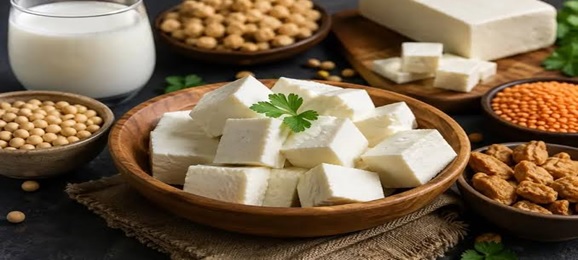
- The Maharashtra Food and Drug Administration (FDA) has imposed a complete ban on the manufacture, storage, distribution, and sale of "analogue" or non-dairy paneer across the state.
- Maharashtra imposed a state-wide one-year ban on the manufacture, storage, distribution, transportation and sale of analogue paneer, also called non-dairy paneer, from 30 July 2026.
Maharashtra
- Formation (by bifurcation): 1 May 1960
- Governor: Jishnu Dev Varma
- Chief Minister: Devendra Fadnavis (BJP)
- Parliamentary Seats: 48 seats in Lok Sabha and 19 seats in Rajya Sabha.
- Highest Peak: Kalsubai (1,646 m) in the Sahyadri range
- Festivals: Ganesh Chaturthi, Gudi Padwa (Marathi New Year), and Pola.
- Folk Arts: Lavani and Tamasha; Warli painting is a famous tribal art.
- Saint Tradition: Known as the "Land of Saints" (Sant Dnyaneshwar, Sant Tukaram, Sant Namdev).
- Major Rivers: Godavari (the longest in the state, often called the "Dakshin Ganga"), Krishna, Tapi, and Bhima.
- UNESCO World Heritage Sites: Seven sites including Ajanta Caves, Ellora Caves, Elephanta Caves, Chhatrapati Shivaji Terminus, and the Victorian Gothic and Art Deco Ensembles of Mumbai.
|
INTERNATIONAL NEWS
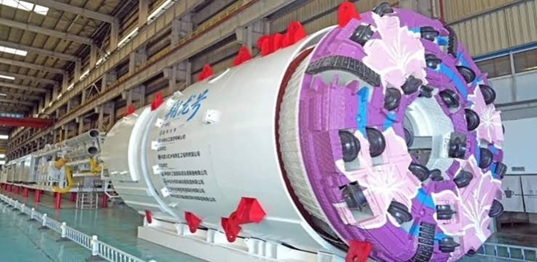
- China rolled out the "Xianglong," the world’s first self-developed integrated tunnel boring-and-blasting machine, at a manufacturing base in Wuhan.
China
- Official Name: People’s Republic of China (PRC)
- Capital: Beijing
- Largest City: Shanghai
- President: Xi Jinping (Holds the core power as the General Secretary of the Communist Party)
- Premier (Prime Minister): Li Qiang (Heads the State Council)
- Currency: Renminbi (RMB) (The main unit is the Yuan)
- Parliament Name: National People's Congress (NPC)
- National Bordering Countries: 14 countries (Shares the longest land border in the world alongside Russia)
Geography
- Longest River: Yangtze River (Chang Jiang) – Longest river in Asia; third-longest in the world.
- Sorrow of China: Huang He (Yellow River) – Named so due to devastating historical floods.
- Highest Point: Mount Everest (Shared border with Nepal).
- Major Deserts:
-
- Taklamakan Desert (Located entirely in the Xinjiang region)
- Gobi Desert (Shared with Mongolia)
- Famous Monument: The Great Wall of China.
Industrial Hubs & Manufacturing Zones
- Pearl River Delta (Guangdong Province): Electronic goods, IT hardware, toys, and garments. Includes major hubs like Shenzhen and Guangzhou.
- Yangtze River Delta (Shanghai, Jiangsu, Zhejiang): Heavy machinery, automobiles, chemicals, and textiles.
- Bohai Rim (Beijing, Tianjin, Hebei): Iron and steel industry, aerospace, and heavy manufacturing.
- Wuhan: Known as China's "Motor City" due to its massive automobile manufacturing ecosystem
Global Production Rankings
China leads globally in the extraction and production of several commodities:
- Minerals & Metals: World's largest producer of Coal, Gold, Steel, and Rare Earth Elements.
- Agriculture: World's largest producer of Wheat, Potatoes, Tea, and Cotton.
- Note for Exams: While China historically led in Rice production, India has fiercely competed for the top position in total output.
- Manufacturing: World's leading manufacturer of Solar Panels, Electric Vehicles (EVs), Smartphones, and Cement.
India-China Relations
- Boundary Line: Macmahon Line (Specifically demarcates the frontier between Northeast India/Arunachal Pradesh and Tibet).
- De-facto Border: Line of Actual Control (LAC).
- Bordering Indian States/UTs: Ladakh, Himachal Pradesh, Uttarakhand, Sikkim, and Arunachal Pradesh.
- Joint Military Exercise: "Hand-in-Hand" (Currently suspended due to border standoffs).
- Major Disputes: Aksai Chin (Western Sector) and Arunachal Pradesh / South Tibet (Eastern Sector).
- Multilateral Groupings: Both India and China are co-members of BRICS, SCO (Shanghai Cooperation Organisation), and the G20.
- Panchsheel Treaty: Signed in 1954, setting the Five Principles of Peaceful Coexistence.
- 1962 War: Fought over territorial disputes in Aksai Chin and Arunachal Pradesh (then NEFA).
- Key Passes: Nathu La (Sikkim) reopened for border trade in 2006; Shipki La (Himachal Pradesh) and Lipulekh (Uttarakhand)
Multilateral Groupings (India & China are co-members):
- BRICS (Brazil, Russia, India, China, South Africa + expanded members).
- SCO (Shanghai Cooperation Organisation): Established in 2001 with its headquarters in Beijing, China. India and Pakistan joined as full members in 2017.
- G20 & AIIB (Asian Infrastructure Investment Bank, headquartered in Beijing).
|
SUMMITS AND CONFERNCES
BRICS Education Ministers’ Meeting 2026
- The 13th BRICS Education Ministers’ Meeting and the 3rd BRICS Senior Officials’ Meeting held in Bhubaneswar, Odisha.
BRICS
- An intergovernmental organization of major emerging economies that serves as a leading platform for South-South cooperation.
- Coined by: The term "BRIC" was originally coined in 2001 by Goldman Sachs economist Jim O'Neill
- Formalization: The grouping was formalized in September 2006 during the UN General Assembly in New York
- First Summit: The first official BRIC Summit was held in Yekaterinburg, Russia, in 2009.
- Original Members: Brazil, Russia, India, China (joined 2006) and South Africa (joined 2010).
- Recent Joiners (2024-2025): Egypt, Ethiopia, Iran, and the United Arab Emirates (UAE) became full members on January 1, 2024. Indonesia officially joined as a full member on January 6, 2025.
- Partnership Status: In 2024, a new "partner country" category was created. Current partners include Belarus, Bolivia, Cuba, Kazakhstan, Malaysia, Nigeria, Thailand, Uganda, Uzbekistan, and Vietnam.
- 2025 Presidency: Brazil held the chairmanship with the theme "Strengthening Global South Cooperation for More Inclusive and Sustainable Governance".
- 2026 Presidency: India assumed the BRICS Chairmanship on January 1, 2026. India is hosting the 18th BRICS Summit.
New Development Bank (NDB)
- Headquarters: Shanghai, China.
- Objective: Mobilizing resources for infrastructure and sustainable development projects in BRICS and other emerging economies.
- Contingent Reserve Arrangement (CRA): A framework created to provide mutual support against short-term balance of payments pressures.
|
ECONOMY & BANKING
RBI Monetary Policy Keeps Repo at 5.25
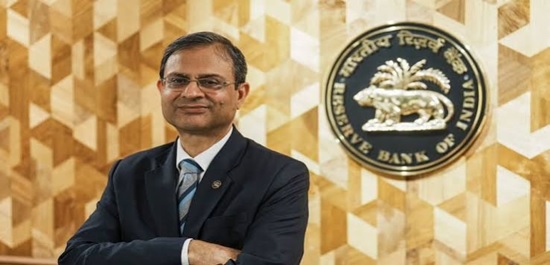
- The Reserve Bank of India’s (RBI) Monetary Policy Committee (MPC) unanimously voted to keep the policy repo rate unchanged at 5.25% and maintained its "neutral" stance.
RBI
- Established on the recommendation of the Hilton Young Commission (1926)
- Established: 1 April 1935 under the Reserve Bank of India Act, 1934
- Initial Headquarters: Kolkata
- Permanent Headquarters (since 1937): Mumbai
- Nationalized: 1 January 1949 under the Reserve Bank of India (Transfer to Public Ownership) Act, 1948
- First Governor: Sir Osborne Smith
- First Indian Governor: C. D. Deshmukh
- Current Governor (2026): Sanjay Malhotra
- Deputy Governors: Swaminathan J., Dr. Poonam Gupta, M. Rajeshwar Rao and T. Rabi Sankar
- Administration: Governed by the Central Board of Directors
- Accounting Year: April–March
- Currency Issuance: Issues currency notes (except ₹1 notes and coins)
- Monetary Policy: Formulates and implements monetary policy to control inflation through the Monetary Policy Committee (MPC)
- Banker to Government and Banks
- Foreign Exchange Management: Administers FEMA, 1999 and manages the country's foreign exchange reserves
|
ENVIRONMENT + SCIENCE & TECHNOLOGY
IARC Classified Three Medicines as Carcinogenic
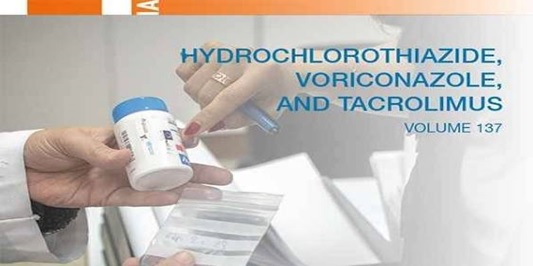
- The World Health Organization's (WHO) International Agency for Research on Cancer (IARC) has formally classified hydrochlorothiazide, voriconazole, and tacrolimus as Group 1 carcinogens ("carcinogenic to humans").
- This evaluation is documented in Volume 137 of the IARC Monographs, reflecting a comprehensive review of epidemiological and mechanistic data.
- Medical experts and health authorities emphasize that patients must not stop taking these medications without consulting their doctors, as they treat critical, potentially life-threatening conditions.
- Hydrochlorothiazide (Blood Pressure Medication): It is linked to an increased risk of squamous cell skin carcinoma and lip cancer. The mechanism is phototoxicity; the drug increases skin sensitivity to ultraviolet (UV) radiation, leading to DNA damage.
- Voriconazole (Antifungal Medication): Used for severe fungal infections, it shares a similar phototoxic mechanism and is linked to squamous cell skin carcinoma, particularly during prolonged therapy in transplant recipients.
- Tacrolimus (Immunosuppressant): Used to prevent organ transplant rejection, it is associated with non-Hodgkin lymphoma and post-transplant lymphoproliferative disorder.
International Agency for Research on Cancer (IARC)
|
Parent Organization: World Health Organization (WHO)
Establishment Date: May 20, 1965 (by a resolution of the World Health Assembly)
Headquarters: Lyon, France
Current Head/Director: Dr. Elisabete Weiderpass
Total Member Countries: 30 participating states
Primary Function: To promote international collaboration in cancer research and evaluate environmental causes of cancer (carcinogens).
World Health Organization (WHO)
- Establishment Date: 7 April 1948 ( commemorated globally as World Health Day).
- Headquarters: Geneva, Switzerland.
- Parent Organization: United Nations Economic and Social Council (ECOSOC).
- Total Member States: 194 member nations (includes all UN member states plus specific territories like Niue and the Cook Islands).
- Chief Executive / Head: Director-General (Dr. Tedros Adhanom Ghebreyesus, re-elected for a second term in 2022).
|
Buffer zone around all wetland conservation reserves
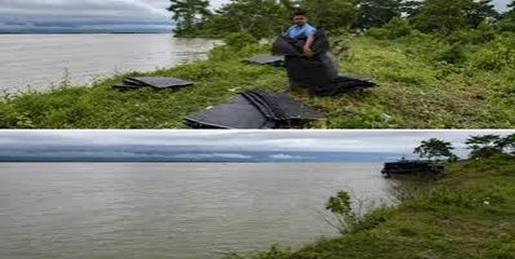
- The Supreme Court of India clarified that its previous 10-kilometre mining restriction around the Asan Wetland Conservation Reserve extends uniformly to all notified wetland conservation reserves across the country.
- No mining can occur within this radius without approval from the National Board for Wildlife or environment ministry.
Wetland
|
Wetland? (Ramsar Definition)
- Depth Limit: Areas of marsh, fen, peatland, or water, whether natural or artificial, permanent or temporary, where the water depth at low tide does not exceed 6 metres.
- Scope: Includes both natural (lakes, rivers, underground aquifers, mangroves, coral reefs) and human-made sites (fish ponds, rice paddies, salt pans, reservoirs).
The Three Pillars of the Convention
- Wise Use: Sustainable utilization of all wetlands through national policies.
- Ramsar List: Designating "Wetlands of International Importance".
- International Cooperation: Managing transboundary wetlands and shared species.
The Montreux Record
- Definition: A register of Ramsar sites experiencing, or predicted to experience, significant ecological changes due to human interference (technology, pollution).
- Indian Sites: Currently, only Keoladeo National Park (Rajasthan) and Loktak Lake (Manipur) are listed. (Note: Chilika Lake was previously listed but removed).
Facts
| Category |
Details |
State |
| Total Sites in India |
100 Sites (as of mid-2026) |
Pan-India |
| 100th/99th Sites |
Jai Prakash Narayan (100th) & Shekha Jheel (99th) |
Uttar Pradesh |
| Highest No. of Sites |
Tamil Nadu (highest), followed by Uttar Pradesh |
Tamil Nadu |
| First Sites (1981) |
Chilika Lake & Keoladeo National Park |
Odisha & Rajasthan |
| Largest/Smallest |
Sundarban (Largest, 4230 sq km) & Renuka/Vembannur (Smallest) |
WB / HP & Tamil Nadu |
| Unique Feature |
Loktak Lake (Only floating national park - Keibul Lamjao) |
Manipur |
Key Environmental Points
- World Wetlands Day: February 2.
- India’s Accession: Joined on February 1, 1982.
- Legal Status: Ramsar listing is not legally binding; conservation relies on national laws like the Wetlands (Conservation and Management) Rules, 2017.
|
Himalayan Serow Sighted in Himachal Pradesh After Two Decades
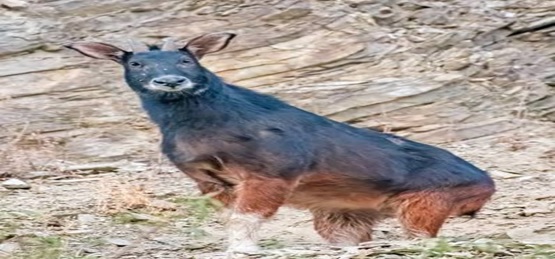
- The elusive Himalayan Serow (Capricornis thar) was captured on camera in the Dalhousie catchment forests of Himachal Pradesh after a gap of two decades.
Himalayan Serow
- Scientific Name: Capricornis thar (often classified as a subspecies Capricornis sumatraensis thar).
- Family & Order: Family Bovidae, Subfamily Caprinae, Order Artiodactyla (even-toed ungulate).
- Common Name: Goat-antelope (resembles a mix of a goat, donkey, cow, and pig).
- State Animal: Official state animal of Mizoram.
- IUCN Red List Status: Vulnerable (previously assessed as Near Threatened; updated in regional and global assessments).
- CITES Appendix: Appendix I.
- Wildlife Protection Act, 1972 (India): Schedule I (highest level of legal protection).
- Altitude Range: Found typically at high elevations between 2,000 meters and 4,000 meters on rugged, steep, and rocky hill slopes.
- Geographical Spread: Distributed across the eastern, central, and western Himalayas, but absent from the Trans-Himalayan region.
|
India’s first indigenous African Swine Fever (ASF) vaccine
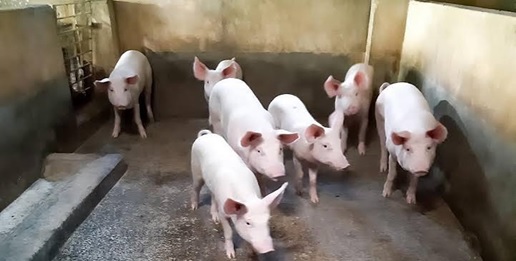
- India’s first indigenous African Swine Fever (ASF) vaccine for pigs is developed by ICAR–National Institute of High Security Animal Diseases (ICAR-NIHSAD), Bhopal.
ICAR Developed First Fully Annotated Pigeonpea T2T Genome
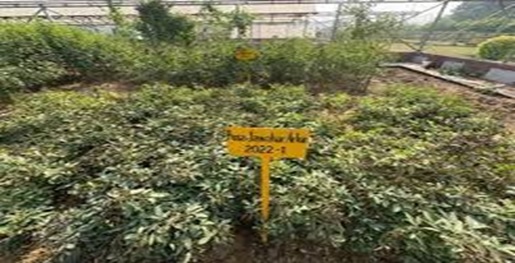
- The Indian Council of Agricultural Research (ICAR) has achieved a major milestone by developing India's first fully annotated telomere-to-telomere (T2T) reference genome for the pigeonpea (Cajanus cajan) variety 'Asha', which has also been approved as the global reference genome for the crop.
- Popularly known as Arhar or Tur, this pulse is a cornerstone of India's dietary protein and agricultural security.
Indian Council of Agricultural Research (ICAR)
- Establishment Date: July 16, 1929 (erstwhile Imperial Council of Agricultural Research).
- Legal Status: Registered Society under the Societies Registration Act, 1860.
- Parent Ministry: Ministry of Agriculture and Farmers Welfare.
- President of ICAR: Union Minister of Agriculture and Farmers Welfare (Ex-officio).
- Director General (DG): Dr. Mangi Lal Jat (also serves as Secretary, DARE).
- Headquarters: Krishi Bhavan, New Delhi.
- Genesis: Formed on the recommendation of the Royal Commission on Agriculture.
- First President (Post-Independence): Dr. Rajendra Prasad.
- Agricultural Education Day: Celebrated on December 3 (birth anniversary of Dr. Rajendra Prasad).
- Global Standing: Runs one of the largest national agricultural research and education networks in the world
|
Heatwaves and Lightning included in NDRF Protocol

- Heatwaves and lightning were officially added to the list of notified natural calamities under the operational guidelines for the State Disaster Response Fund (SDRF) and the National Disaster Response Fund (NDRF).
- Expanded List: They join 12 existing entries, including cyclones, droughts, floods, landslides, and cold waves.
- Climate Response: The shift addresses the escalating frequency, intensity, and mortality rates linked to climate change.
- Financial Access: States can now tap into centrally backed funding for direct immediate relief without procedural delays
National Disaster Response Fund (NDRF)
- Nodal Ministry: operate under the administrative control of the Ministry of Home Affairs (MHA).
- Union Home Minister: Amit Shah.
- Director General (DG) of NDRF: Shri Piyush Anand,
- Motto of NDRF: "आपदा सेवा सदैव सर्वत्र" (Saving Lives & Beyond)
SDRF vs. NDRF
| Feature |
State Disaster Response Fund (SDRF) |
National Disaster Response Fund (NDRF) |
| Statutory Provision |
Section 48 (1) (a) of the Disaster Management Act, 2005. |
Section 46 of the Disaster Management Act, 2005. |
| Primary Purpose |
Immediate relief fund available directly to State Governments. |
Apex National-level fund to supplement SDRF in severe disasters. |
| Account Placement |
Located in the Public Account of the State. |
Located in the Public Account of India under "Reserve Funds not bearing interest". |
| Parliamentary Approval |
Not Required for withdrawals. |
Not Required for withdrawals (since it sits in Public Accounts). |
| Audit Authority |
Comptroller and Auditor General (CAG) of India. |
Comptroller and Auditor General (CAG) of India. |
| Previous Nomenclature |
Calamity Relief Fund (CRF). |
National Calamity Contingency Fund (NCCF). |
|


 Don't Have an Account?