Context
Leptospirosis has once again emerged as a major public health concern in India after Kerala reported nearly 50 deaths during July 2026 alone. Although the disease has remained endemic in Kerala since 1989, the recent spike in fatalities has drawn national attention due to its rapid progression, high case fatality rate, and increasing association with monsoon-related floods. The disease has become one of Kerala's deadliest communicable diseases despite the availability of effective antibiotics, highlighting the importance of early diagnosis, timely treatment, and preventive public health interventions.
What is Leptospirosis?
- Leptospirosis is a zoonotic bacterial disease caused by pathogenic spirochetes belonging to the genus Leptospira, primarily Leptospira interrogans. It is a systemic bacterial infection that spreads from animals to humans and is strongly influenced by environmental conditions. The disease primarily affects tropical and subtropical regions experiencing heavy rainfall, flooding, and poor sanitation.
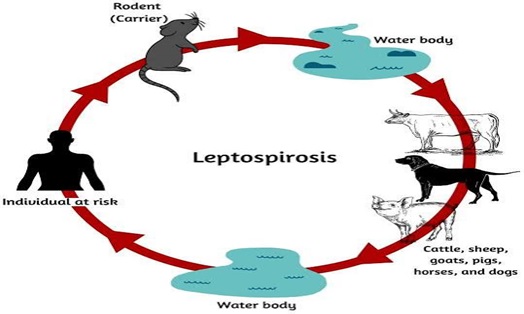
- Unlike vector-borne diseases such as dengue or malaria, leptospirosis spreads through direct or indirect contact with urine of infected animals, especially rodents. The bacteria enter the human body through cuts, abrasions, broken skin, or mucous membranes of the eyes, nose, and mouth after exposure to contaminated water or soil.
Why is Kerala Highly Vulnerable?
- Kerala possesses ideal ecological conditions for the survival and transmission of Leptospira bacteria.
- Heavy monsoon rainfall, frequent flooding, year-round humidity, extensive paddy cultivation, canal networks, and abundant rodent populations together create a highly favourable environment for disease transmission.
- Agricultural workers, sanitation workers, canal cleaners, pineapple plantation labourers, construction workers, dairy workers, and migrant labourers frequently come into contact with contaminated floodwater and muddy soil, significantly increasing occupational exposure.
- The increasing number of roadside eateries has also contributed to higher rodent populations, further contaminating the environment.
- Health authorities, however, maintain that Kerala's apparently higher disease burden also reflects better disease surveillance, wider diagnostic facilities, and systematic reporting compared to many other States where under-reporting remains common.
Transmission and Clinical Features
- Rodents, particularly rats, serve as the primary reservoir hosts, although cattle, pigs, buffaloes, and dogs can also carry the bacteria without developing disease. Infected animals shed the bacteria through urine, contaminating surrounding water bodies and soil.
The incubation period generally ranges from 2 to 30 days, following which patients commonly develop:
- High fever
- Severe muscle pain (especially calf muscles)
- Headache
- Chills
- Redness of eyes (Conjunctival suffusion)
- Vomiting and gastrointestinal disturbances
If diagnosis is delayed, approximately 5–10% of patients progress to severe disease known as Weil's Disease, characterized by:
- Acute kidney injury
- Liver failure with jaundice
- Pulmonary haemorrhage
- Multi-organ failure
- Cardiovascular collapse
Clinicians have observed that, unlike earlier years when complications appeared during the second week, severe manifestations are now developing within 4–5 days, leaving very little therapeutic window.
Diagnosis and Treatment Challenges
- One of the biggest challenges is that the initial symptoms resemble common tropical fevers such as dengue, malaria, chikungunya, or viral fever. Consequently, patients often self-medicate using painkillers and delay seeking medical attention.
- Serological investigations such as ELISA often fail to detect antibodies during the acute phase. Kerala has therefore introduced Polymerase Chain Reaction (PCR)-based molecular diagnosis for early detection, although availability remains limited across districts.
- Early administration of Doxycycline or Penicillin remains highly effective because these antibiotics inhibit bacterial multiplication before irreversible organ damage develops.
Government Initiatives for Prevention and Control
India has adopted multiple public health interventions to reduce the burden of leptospirosis.
Integrated Disease Surveillance Programme (IDSP)
The disease is actively monitored under the Integrated Disease Surveillance Programme (IDSP) for early outbreak detection, surveillance, and rapid public health response during monsoon seasons.
National Programme for Prevention and Control of Leptospirosis (NPPCL)
The programme is implemented in endemic States including Kerala, Gujarat, Tamil Nadu, Maharashtra, and other high-risk regions. It emphasizes:
- Early diagnosis
- Free treatment
- Chemoprophylaxis using Doxycycline
- Rodent control measures
- Community awareness
- Capacity building of healthcare workers
One Health Approach
India follows the One Health strategy, integrating the efforts of:
- Ministry of Health & Family Welfare
- Department of Animal Husbandry
- Environmental and Sanitation Agencies
This coordinated framework recognizes that human health, animal health, and environmental health are interconnected.
Kerala's Prevention Strategy
- Kerala administers Doxycycline prophylaxis (200 mg twice weekly) to high-risk occupational groups during monsoon months.
- The State has also instructed primary healthcare physicians to maintain a high index of suspicion in patients presenting with fever and muscle pain after exposure to floodwater.
- Experts have further recommended the distribution of protective equipment such as gumboots and heavy-duty gloves to agricultural and sanitation workers and the launch of intensive risk communication campaigns.
Significance
- Leptospirosis represents an excellent example of how climate change, urban flooding, environmental sanitation, occupational health, and zoonotic diseases intersect.
- Increasing frequency of extreme rainfall events may further expand disease transmission.
- Strengthening laboratory capacity, improving early diagnosis, expanding molecular testing, and promoting preventive behavioural practices will remain essential for reducing mortality.
Conclusion
- Leptospirosis has evolved into one of India's most significant monsoon-related public health challenges. Although it is entirely treatable through timely antibiotic therapy, delayed diagnosis continues to result in preventable deaths.
- Sustainable disease control requires stronger surveillance, environmental sanitation, rodent management, occupational safety, and community awareness under an integrated One Health framework that simultaneously protects humans, animals, and ecosystems.
Bacterial Diseases
| Disease |
Causative Bacterium |
| Tuberculosis (TB) |
Mycobacterium tuberculosis |
| Typhoid |
Salmonella Typhi |
| Cholera |
Vibrio cholerae |
| Plague |
Yersinia pestis |
| Diphtheria |
Corynebacterium diphtheriae |
| Tetanus |
Clostridium tetani |
| Whooping Cough (Pertussis) |
Bordetella pertussis |
| Pneumonia (Common Bacterial) |
Streptococcus pneumoniae |
| Gonorrhoea |
Neisseria gonorrhoeae |
| Syphilis |
Treponema pallidum |
| Leprosy (Hansen's Disease) |
Mycobacterium leprae |
| Anthrax |
Bacillus anthracis |
| Botulism |
Clostridium botulinum |
| Gas Gangrene |
Clostridium perfringens |
| Bacillary Dysentery |
Shigella dysenteriae |
| Meningococcal Meningitis |
Neisseria meningitidis |
| Lyme Disease |
Borrelia burgdorferi |
| Scrub Typhus |
Orientia tsutsugamushi |
| Brucellosis |
Brucella abortus / Brucella melitensis |


 Don't Have an Account?