GK Update
 
  • Mobile Menu
HOME BUY MAGAZINEnew course icon
LOG IN SIGN UP

Sign-Up IcanDon't Have an Account?


SIGN UP


Login Icon

Have an Account?


LOG IN
 

or
By clicking on Register, you are agreeing to our Terms & Conditions.


or


GK Update

Sat 01 Aug, 2026

National News

Commonwealth Peace Mediation Conference-2026
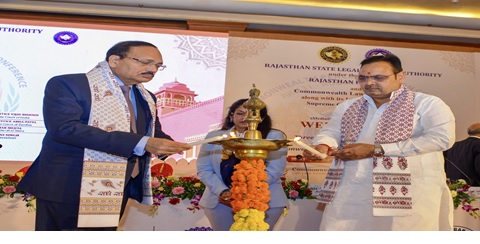
  • Chief Justice Surya Kant inaugurated the Commonwealth Peace Mediation Conference-2026 in Jaipur.

Key Details:


  • Inauguration: By Chief Justice of India (CJI) Surya Kant
  • Organizer: Rajasthan State Legal Services Authority (RSLSA)
  • Venue: Jaipur, Rajasthan
  • Duration: July 31 to August 2, 2026 (3-day conference)
  • Participation: Judges, legal experts, mediators, and representatives from Commonwealth nations
  • Conference Theme: “Peace, Mediation, and the Rule of Law”

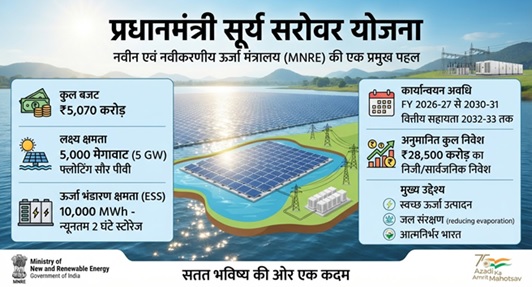
Pradhan Mantri Surya Sarovar Yojana

  • The Union Cabinet approved the 'Pradhan Mantri Surya Sarovar Yojana' on July 31, 2026.

Key Facts:


  • Total Outlay: ₹5,070 crore
  • Target Capacity: Installation of 5,000 MW (5 GW) of Floating Solar PV projects
  • Energy Storage Capacity (ESS): Mandatory addition of an Energy Storage System (ESS) of 10,000 MWh with a minimum storage capacity of 2 hours
  • Tenure: Projects will be sanctioned from the financial year 2026-27 to 2030-31, while the disbursement of financial assistance will continue until 2032-33
  • Ministry: This is a flagship initiative of the Ministry of New and Renewable Energy (MNRE)
  • Estimated Total Investment: Expected to attract private/public investment worth ₹28,500 crore

Central Financial Assistance (CFA):

  • Financial assistance of ₹1 crore per MW will be provided upon successful commissioning of the project.
  • Assistance of up to ₹50 lakh per project for feasibility studies.
  • Potential Capacity (NISE Report): According to the National Institute of Solar Energy (NISE), a floating solar energy potential of approximately 102.18 GWp is available in India's water bodies.

Environmental and Economic Impact:

  • Reduction in carbon dioxide (CO₂) emissions by approximately 10 million tonnes annually.
  • Creation of approximately 16,000 to 17,000 direct/indirect employment opportunities.
  • Better utilization of water bodies and reservoirs, addressing the issue of land scarcity.

Pradhan Mantri Kisan Samman Nidhi Yojana
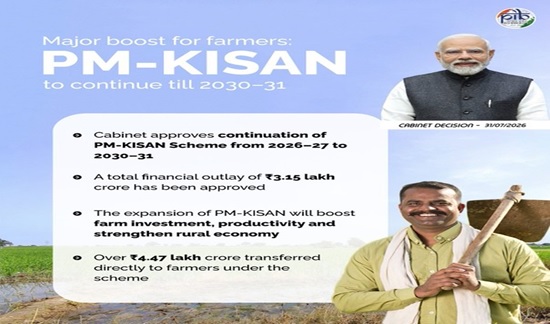
  • The Union Cabinet approved the continuation of the Pradhan Mantri Kisan Samman Nidhi Yojana from the year 2026-27 to 2030-31.

Key Facts:


  • Financial Outlay: A total of ₹3,15,000 crore has been approved for the extension over the next 5 years (2026-31).
  • Progress to Date: Since the scheme's inception, an amount exceeding ₹4.47 lakh crore has been transferred directly to farmers' accounts across 23 installments.
  • Women Empowerment: Under this scheme, women farmers have received over ₹1.06 lakh crore, representing approximately one-fourth of the total beneficiaries.
  • Extended Period: Financial years 2026-27 to 2030-31 (5 years).

PM-KISAN Yojana:

  • Launch: The scheme was launched in February 2019 (it became effective from December 1, 2018).
  • Nature: It is a Central Sector Scheme 100% funded by the Central Government.
  • Benefits: Under this scheme, eligible landholding farmer families receive financial assistance of ₹6,000 per year.
  • Disbursement: This amount is transferred directly to bank accounts in three equal installments of ₹2,000 every four months.
  • Implementing Ministry: It is administered by the Ministry of Agriculture and Farmers Welfare.
  • Identification of Beneficiaries: The responsibility for identifying eligible farmer families rests entirely with the State and Union Territory governments.

Approval for National Offshore Exploration Scheme
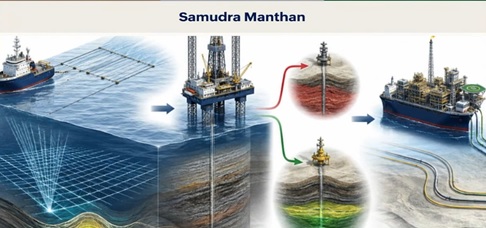
  • The Union Cabinet has approved the National Offshore Exploration Scheme ('Samudra Manthan') with an outlay of ₹84,084 crore up to the financial year 2030-31.

Key Facts:


  • Total Budget: ₹84,084 crore
  • Implementation Period: Financial years 2026-27 to 2030-31
  • Concerned Ministry: Ministry of Petroleum and Natural Gas
  • Scheme Type: Central Sector Scheme (100% funded by the Centre)
  • Objective: To explore and boost the production of hydrocarbon reserves (crude oil and natural gas) hidden within India's Exclusive Economic Zone (EEZ) and deep/ultra-deep sea areas.

Key Components and Targets of the Scheme:

  • Seismic Data Acquisition (₹28,534 crore): Generating accurate maps and data regarding oil and gas reserves beneath the seabed using modern technologies.
  • Deepwater Exploration Drilling (₹43,200 crore): Providing financial support for drilling approximately 60 exploratory wells.
  • Common Infrastructure Development (₹10,000 crore): Developing shared facilities such as integrated jetties, pipelines, and bunkers for offshore production and evacuation.
  • Manufacturing and Service Zone (₹2,000 crore): Establishing 'Integrated Oil and Gas Manufacturing and Services Zones' to promote domestic manufacturing ('Make in India') of equipment related to the oil and gas sector.
  • Reserve Accretion Target: Increasing hydrocarbon reserves by more than 600 Million Metric Tonnes of Oil Equivalent (MMTOE).
  • Annual Production Growth: Aiming to increase domestic production from 62 MMTOE to 80 MMTOE per annum.

Sports News

Expansion of the Khelo India Scheme and Increased Assistance to National Sports Federations
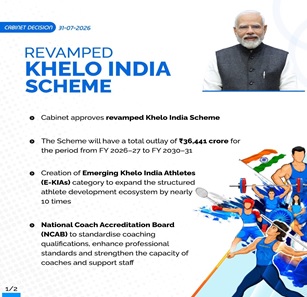
  • The Cabinet has approved the expansion of the Khelo India Scheme and increased assistance to National Sports Federations, with a combined outlay of ₹36,441 crore for the period from 2026-27 to 2030-31.

Key Facts:


  • Total Outlay: ₹36,441 crore (for the next 5 years)
  • Expanded Khelo India Scheme: ₹29,054 crore
  • Assistance to National Sports Federations (ANSF): ₹7,387 crore
  • Tenure: Financial Years 2026-27 to 2030-31
  • Increase: This outlay is approximately eight times higher than the previous Khelo India budget.
  • Concerned Ministry: Ministry of Youth Affairs and Sports

Key Features and New Initiatives of the Scheme:

  • E-KIA (Emerging Khelo India Athletes): A new category added to expand the scope of Khelo India athletes tenfold.
  • KIFS (Khelo India Feeder Schools): New schools to be established for identifying sports talent at the grassroots (school) level.
  • KIUV (Khelo India Utkrisht Vidyalaya/Centre of Excellence Schools): Schools to be identified for providing advanced training to talented students.
  • NCAB (National Coach Accreditation Board): A new board to be constituted to standardize the level and qualifications of sports coaches in the country.
  • New Athlete Category (E-KIA): The 'Emerging Khelo India Athletes' category has been introduced, which will expand the athlete base by approximately ten times.
  • Policy Alignment: The scheme has been integrated with the 'Khelo Bharat Policy 2025' and the 'National Education Policy (NEP) 2020'. Long-term goal: Preparing for the 2030 Commonwealth Games (CWG) and strengthening India's bid to host the Olympic/Paralympic Games in the future.

Glasgow Commonwealth Games 2026

  • Asmita Dey and Harsh Singh won gold medals in their respective weight categories at the Glasgow Commonwealth Games 2026.

Related Facts:


  • Asmita Dey (Women's -48 kg category): Asmita Dey, a 23-year-old from Tripura, won India's first-ever Commonwealth Games gold medal in judo by defeating Canada's Heidi Quach 2-1 in the final. With this, she became the first judoka from the country to win gold at these Games.
  • Harsh Singh (Men's -60 kg category): Just 30 minutes after Asmita's victory, 23-year-old Harsh Singh from Delhi secured the country's second gold medal by defeating Australia's Joshua Katz 10-0 (Waza-ari) in the men's final. He became the first Indian male judoka to win a gold medal.
  • Yamini Maurya (Women's -57 kg category): On the same day, India's Yamini Maurya delivered an impressive performance in the women's category and secured a silver medal.

International News

Bhutan's 13th Five-Year Plan

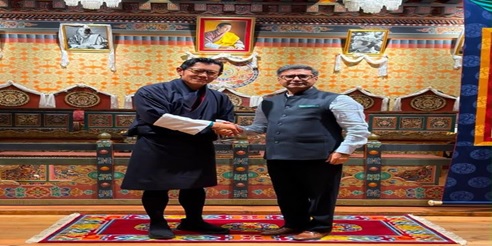
  • Foreign Secretary Vikram Misri co-chaired the fifth India-Bhutan Development Cooperation Talks regarding Bhutan's 13th Five-Year Plan.

Key Facts:


  • Co-chairs: Foreign Secretary Vikram Misri (representing India) and his counterpart, Foreign Secretary Pema Choden (representing Bhutan).
  • Context: Development assistance under Bhutan's 13th Five-Year Plan (2024–2029).
  • India's Committed Contribution: The Government of India has pledged financial assistance totaling ₹10,000 crore for Bhutan's 13th Five-Year Plan.
  • 12 New Development Projects: During the meeting, 12 new projects worth ₹332 crore—covering infrastructure, health, agriculture, urban amenities, and disaster management—were approved.

Bhutan:

  • Capital: Thimphu (also the country's largest city).
  • Official Language: Dzongkha.
  • Currency: Ngultrum.
  • National Flag: Features a 'Thunder Dragon'; the yellow color symbolizes the King's power, while the saffron-orange color represents Buddhism.
  • System: Bhutan is a democratic constitutional monarchy.
  • Head of State: King Jigme Khesar Namgyel Wangchuck (5th Druk Gyalpo).
  • Head of Government: Prime Minister (currently Dasho Tshering Tobgay).
  • Parliament: Known as the *Tshogdu*.
  • Borders: Bordered by China to the north and India (Sikkim, West Bengal, Assam, and Arunachal Pradesh) to the south, east, and west.
  • Carbon Negative: Bhutan is one of the few carbon-negative countries in the world; it absorbs significantly more carbon dioxide than it emits. Forest cover: More than 70% of the country's land is covered by forests.
  • Highest peak: Gangkhar Puensum (7,570 meters), considered the world's highest 'unclimbed' mountain.

Defence News

Extreme Weather Grade Diesel

  • Army Chief General Dhiraj Seth launched the indigenously developed Extreme Weather Grade (XWG) diesel, designed to enhance the operational capability and reliability of combat and military vehicles in extreme weather conditions.

Key Facts:


  • Launched by: General Dhiraj Seth (on behalf of the Army's top leadership)
  • Product: Indigenously developed XWG diesel
  • Technical Development: Developed by Indian defence research bodies in collaboration with domestic public sector refineries, specifically tailored to the Indian Army's requirements.
  • Usage: For combat vehicles, tanks, artillery, and military vehicles deployed in high-altitude and sub-zero border regions such as Ladakh, Siachen, and the Northeast.

Key Features and Benefits of XWG Diesel:

  • Flow at Extremely Low Temperatures (Low Pour Point): Ordinary diesel freezes or suffers from wax crystallization—which blocks fuel lines—in extreme cold (around -40°C to -50°C). XWG diesel remains in a liquid state even at these temperatures.
  • Engine Performance and Reliability: Military vehicle engines start instantly even in sub-zero temperatures, ensuring uninterrupted combat operational readiness under extreme conditions.
  • Reduced Import Dependency: Previously, there was a reliance on foreign sources for such specialized fuels or additives. Indigenous XWG diesel represents a significant step towards the 'Atmanirbhar Bharat' (Self-Reliant India) and 'Make in India' initiatives.

Former Army Chief General Vishwanath Sharma Passes Away
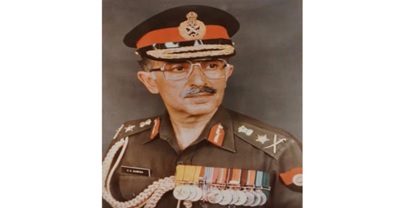
  • Former Chief of the Army Staff (COAS) of the Indian Army, General Vishwanath Sharma (V.N. Sharma), passed away in New Delhi at the age of 96.

Key Facts:


  • Position: 14th Chief of the Army Staff (COAS) of India.
  • Tenure: 1 May 1988 to 30 June 1990.
  • Demise: Passed away in New Delhi at the age of 96.
  • Historic Military Background: General V.N. Sharma was the younger brother of Major Somnath Sharma, India's first recipient of the Param Vir Chakra (PVC).
  • Major Somnath Sharma was posthumously awarded India's highest military honour, the 'Param Vir Chakra', for unparalleled valour during the 1947 Battle of Badgam.

Military Career and Achievements:

  • 16th Light Cavalry: He was commissioned into the 16th Light Cavalry (Armoured Corps) in 1948.

Major Military Operations:

  • 1965 and 1971 Indo-Pak Wars: He played an active role in both conflicts.
  • Operation Pawan (Sri Lanka): The Indian Peace Keeping Force (IPKF) operation in Sri Lanka concluded during his tenure as Army Chief.
  • Operation Meghdoot (Siachen): He played a pivotal role in strengthening the Indian Army's hold on the Siachen Glacier.
  • Distinguished Civil and Military Honours: He was awarded the Param Vishisht Seva Medal (PVSM) and the Ati Vishisht Seva Medal (AVSM) for his outstanding service.

Economy and Banking

11th Country to Launch UPI

  • The Maldives launched a real-time cross-border money transfer service to India by linking its instant payment system, 'Fawara', with India's UPI.

Related Facts:


  • Launch Date: July 30, 2026
  • Partner Institutions: Maldives Monetary Authority and India's NPCI International Payments Limited (NIPL), in collaboration with the Reserve Bank of India (RBI).
  • Currency Transfer Process: Senders can initiate payments in Maldivian Rufiyaa (MVR) or US Dollars (USD), which will be instantly credited to the beneficiary's bank account in India in Indian Rupees (INR).
  • Initial Banks: Bank of Maldives and Maldives Islamic Bank.
  • Permitted Remittances: Family care, medical treatment, educational expenses, personal gift transfers, etc.

Unified Payments Interface (UPI):

  • Launch: April 11, 2016, by the then RBI Governor Raghuram Rajan.
  • Developer: National Payments Corporation of India (NPCI).
  • Regulatory Body: Reserve Bank of India (RBI).
  • Objective: To facilitate instant, secure, and integrated banking transactions on mobile platforms.
  • Transaction Types: Person-to-Person (P2P) and Person-to-Merchant (P2M).
  • Nature of Transactions: 24×7 instant money transfer (interbank transfer), QR code-based payments.
  • Key Feature: Payments made using only a Virtual Payment Address (VPA) or mobile number.
  • Popular Apps Linked to UPI: PhonePe, Google Pay, Paytm, BHIM, Amazon Pay, etc.
  • BHIM App: A government app based on UPI, developed by NPCI (Launched: December 30, 2016).
  • Major Countries Accepting UPI: Currently, UPI services are live in the United Arab Emirates (UAE), Singapore, Bhutan, Nepal, Sri Lanka, France, Mauritius, and Qatar.

Important Days

World Breastfeeding Week

  • World Breastfeeding Week is observed annually from August 1 to 7. This year, it is being celebrated under the theme: "Breastfeeding for a Sustainable Start to Life: Strengthen What Works."

Related Facts:


  • Innocenti Declaration: This week commemorates the 'Innocenti Declaration' signed in 1990, which aimed to protect and support breastfeeding.
  • Inception: It was officially launched in 1992.
  • Coordinating Organizations: It is jointly organized by WABA (World Alliance for Breastfeeding Action), the World Health Organization (WHO), and UNICEF.

Key Objectives and Significance:

  • Infant Health and Nutrition: Providing the newborn with breast milk (colostrum—the first thick, yellow milk)—often referred to as the infant's first natural vaccine—within the first hour of birth.
  • Exclusive Breastfeeding: Breastfeeding the infant exclusively for the first six months of life (water, honey, or external milk are strictly prohibited).
  • Sustainable Development Goals (SDGs): This campaign directly contributes to achieving SDG 2 (Zero Hunger and improved nutrition) and SDG 3 (Good Health and Well-being).
  • Maternal Health: It reduces the risk of breast cancer and postpartum depression in mothers.

Reports and Indices

Environmental Performance Index (EPI) 2026
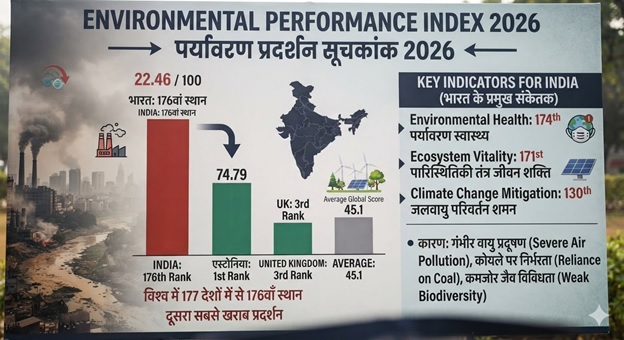
  • India ranked 176th out of 177 countries in the Environmental Performance Index (EPI) 2026, with a total score of 22.46.
  • This biennial index assesses countries globally on environmental sustainability, ecosystem vitality, and efforts to combat climate change.

Related Facts:


  • Issuing Bodies: This index is jointly released by the Yale Center for Environmental Law & Policy, Columbia University (CIESIN), and the Yale Center for Geospatial Solutions.
  • Evaluation Framework: A total of 177 countries are included in the index. They are evaluated based on 47 indicators, categorized into 12 thematic areas.

3 Key Policy Objectives:

  • Environmental Health
  • Ecosystem Vitality
  • Climate Change

Top 5 Countries:

  • Estonia, Score: 74.79 (Rank 1)
  • Luxembourg
  • United Kingdom (UK)
  • Finland
  • Netherlands

Bottom Countries:

  • 176th Place: India, Score: 22.46 (Second from the bottom)
  • 177th Place: Laos (Last place)
  • Global Status: India was the second-worst performing country in the world. India ranked 180th in 2022 and 176th in 2024. Weak areas: India's performance was most disappointing in the areas of air quality and biodiversity, where it ranked 174th.
  • Better areas: India performed relatively better in climate change (ranked 130th) and waste management and sanitation (ranked 141st).
  • Status in South Asia: India ranks 7th among the eight South Asian countries.
  • Challenges: Rapid urbanization, industrial growth, and heavy reliance on fossil fuels are driving up per capita emissions, making it difficult to strike a balance between development and the environment.


Latest Courses