National News
India Mobile Congress (IMC) 2026

- Union Minister Jyotiraditya Scindia unveiled the theme—"Scale Without Boundaries"—for the 10th edition of the India Mobile Congress (IMC) 2026 in New Delhi.
Related Facts:
- Event: India Mobile Congress (IMC) 2026
- Edition: 10th Edition
- Official Theme: "Scale Without Boundaries"
- Launched by: Jyotiraditya Scindia (Union Minister of Communications and Development of North Eastern Region)
- Venue: Yashobhoomi (IICC), New Delhi
- Dates: October 7–10, 2026
- Organizing Bodies: Department of Telecommunications (DoT) and Cellular Operators Association of India (COAI)
- Significance: It is considered Asia's largest digital technology forum.
- 5G User Target: The Government of India aims to onboard 1 billion (100 crore) 5G users by the year 2030.
- First Telecom Manufacturing Zone (TMZ): India's first Telecom Manufacturing Zone will be established in Gwalior, Madhya Pradesh.
4 Key Pillars of IMC 2026:
- Srishti: Building the Future
- Samvardhan: Accelerating Growth
- Sashakt: Expanding Opportunities
- Suraksha: Strengthening Trust
|
Approval of ₹163 Crore for Electric Traction Upgrade on Parbhani-Mudkhed Section
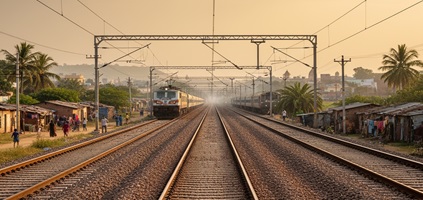
- Indian Railways has approved a project worth ₹163 crore to upgrade the electric traction system on the Parbhani-Mudkhed double-line section within the Nanded Division of South Central Railway.
Key Facts:
- The objective of this move is to enhance network capacity, boost freight transportation, and facilitate the operation of Vande Bharat Express trains.
- The approved project involves upgrading the existing 1×25 kV electric traction system to a more advanced 2×25 kV system across a 164-kilometer stretch of track.
- The Parbhani-Mudkhed section is part of the strategically important 'Highly Utilized Network' (HUN) Route-9, which connects Ajmer, Indore, Khandwa, Akola, Purna, Mudkhed, Secunderabad, Mahbubnagar, and Dhone.
- This project is also expected to contribute to Indian Railways' long-term goal of achieving a freight transportation capacity of 3,000 million tonnes by 2029-30.
Indian Railways:
- First Passenger Train: India's first passenger train ran on April 16, 1853, during the tenure of Lord Dalhousie.
- Distance and Route: This inaugural train ran between Mumbai (Bori Bunder) and Thane, covering a distance of 34 kilometers and carrying 400 passengers.
- Nationalization: 1951
- Establishment of Railway Board: The Indian Railway Board was constituted in 1905.
- Computerized Reservation: The first computerized reservation service in India was launched in New Delhi in 1986.
|
Approval Granted for Establishing NDPS Special Court and Additional Sessions & Civil Courts
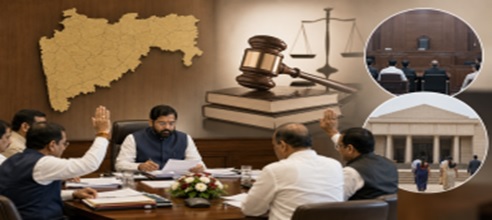
- The Maharashtra Cabinet approved the establishment of a new NDPS special court in Pune, special courts under the SC/ST (Prevention of Atrocities) Act in five districts, and two additional sessions and civil courts.
Key Facts:
- Decision: The Maharashtra Cabinet approved the establishment of new special and additional courts to strengthen the judicial infrastructure in the state.
- NDPS Special Court: A new NDPS (Narcotic Drugs and Psychotropic Substances) special court will be established in Pune.
- SC/ST (Prevention of Atrocities) Courts: Special courts under the SC/ST (Atrocities) Act will be set up in five districts—Akola, Latur, Nanded, Nandurbar, and Parbhani.
- Additional Sessions and Civil Courts: Two new courts (for the Konkan and Jalgaon regions) have been approved.
- Objective: To ensure speedy trials for cases related to NDPS (narcotics) and SC/ST atrocities.
- NDPS Act (1985): The Narcotic Drugs and Psychotropic Substances Act was enacted in 1985.
- SC/ST (Prevention of Atrocities) Act (1989): This law was passed by Parliament on September 11, 1989, and came into effect on January 30, 1990.
- High Court Jurisdiction: The High Court for the state of Maharashtra is the Bombay High Court, which has jurisdiction over Maharashtra, Goa, Dadra and Nagar Haveli, and Daman and Diu.
- Article 233 of the Constitution: District judges in the state are appointed by the Governor in consultation with the High Court.
- Constitution of Courts: Provisions regarding subordinate courts under the Indian Constitution are contained in Articles 233 to 237 of Part VI.
- Article 46 (DPSP): Directs the State to promote the educational and economic interests of SCs, STs, and other weaker sections, and to protect them from social injustice. Article 21: The Supreme Court has recognized the 'right to speedy justice' as a fundamental right under the right to life and personal liberty.
- 7th Schedule: 'Administration of justice' and 'subordinate courts' primarily fall under the State List and, in certain matters, the Concurrent List; therefore, state governments establish new courts in consultation with the High Court.
|
Inauguration of India's First Department of Military Medicine
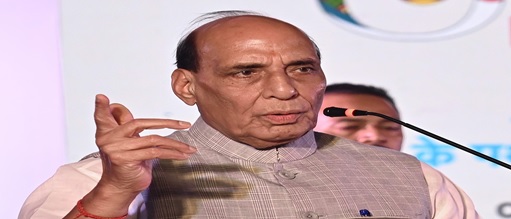
- Defence Minister Rajnath Singh inaugurated the country's first academic and operational department dedicated specifically to military medicine at the Command Hospital (Central Command) in Lucknow.
Key Details:
- Inaugurated by: Defence Minister Rajnath Singh (virtually).
- Location: Command Hospital (Central Command), Lucknow, Uttar Pradesh.
- Significance: India's first academic and operational department dedicated specifically to military medicine.
- Nodal Body: This department has been established under the Directorate General of Armed Forces Medical Services (DGMS - Army).
Main Objectives:
- To strengthen battlefield medical preparedness.
- To develop indigenous medical principles and techniques.
- To provide research and training in trauma care, combat surgery, and emergency medicine.
- Key Focus Areas: Combat psychiatry, protection against CBRNe (Chemical, Biological, Radiological, Nuclear, and Explosive) threats, telemedicine, and disaster management (HADR).
- Full form of AFMS: Armed Forces Medical Services.
- Full form of CBRNe: Chemical, Biological, Radiological, Nuclear, and Explosive.
- Central Command (Indian Army): Its headquarters is located in Lucknow, Uttar Pradesh.
- One Health Concept: An integrated concept that works by linking human, animal, and environmental health.
|
Agreement between the Ministry of Tribal Affairs and CSIR-National Botanical Research Institute
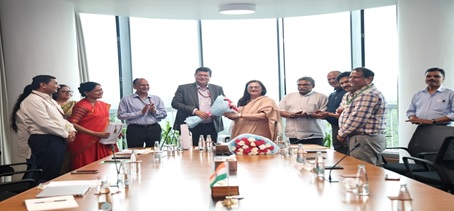
- The Ministry of Tribal Affairs signed a Memorandum of Understanding (MoU) with the CSIR-National Botanical Research Institute (NBRI), Lucknow.
Relevant Facts:
- Agreement (MoU): Between the Ministry of Tribal Affairs and CSIR-National Botanical Research Institute (NBRI), Lucknow.
- Headquarters/Location: CSIR-NBRI, Lucknow (Uttar Pradesh)
- Main Objective: To enhance livelihoods in tribal areas through the development of plant-based resources, medicinal plants, and Minor Forest Produce (MFP).
Key Focus Areas:
- Training tribal communities in the cultivation of medicinal and aromatic plants
- Preservation and scientific validation of traditional tribal knowledge
- Linking tribal products to markets and ensuring value addition through 'TRIFED'
- Full form of CSIR: Council of Scientific and Industrial Research
- Location of CSIR-NBRI: Lucknow, Uttar Pradesh
- Establishment of TRIFED: 1987 (Tribal Cooperative Marketing Development Federation of India)
- Article 338A of the Constitution: Provides for the National Commission for Scheduled Tribes (NCST) (inserted by the 89th Constitutional Amendment Act, 2003)
|
Agreement between the Ministry of Rural Development and Project Concern International India
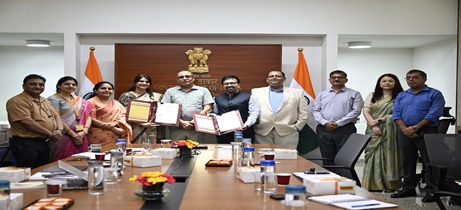
- The Ministry of Rural Development signed a non-financial Memorandum of Understanding (MoU) with Project Concern International India under the Deendayal Antyodaya Yojana-National Rural Livelihood Mission (DAY-NRLM).
Key Facts:
- Partnering Entities: Ministry of Rural Development and Project Concern International India.
- Name of the Scheme: Deendayal Antyodaya Yojana - National Rural Livelihood Mission (DAY-NRLM).
- Type of Agreement: Non-financial Memorandum of Understanding (MoU).
- Main Objectives: To promote the economic empowerment of women and new livelihood opportunities in rural areas, and to strengthen the institutional capacities of Self-Help Groups (SHGs).
- Focus Areas: Effective grassroots implementation of initiatives related to agriculture, nutrition, health, and rural entrepreneurship.
- Launch of DAY-NRLM: The scheme was launched in June 2011 under the name 'Aajeevika'; it was restructured and renamed 'Deendayal Antyodaya Yojana-National Rural Livelihood Mission' in November 2015.
- Nodal Ministry: Ministry of Rural Development, Government of India.
- Self-Help Group (SHG) Movement: A revolutionary initiative to organize the rural poor (especially women) and connect them with financial inclusion and self-employment opportunities.
- Role of NABARD: NABARD (National Bank for Agriculture and Rural Development) plays a pivotal role in microfinance and financing rural development in India (Established: 12 July 1982).
|
Public Examinations (Prevention of Unfair Means) Amendment Bill, 2026
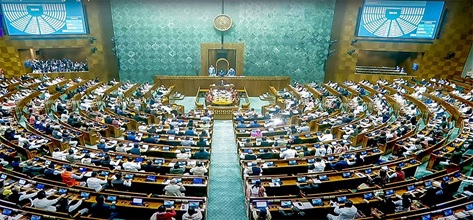
- The Lok Sabha passed the Public Examinations (Prevention of Unfair Means) Amendment Bill, 2026.
Key Facts:
- Body that passed it: Lok Sabha
- Name of the Bill: Public Examinations (Prevention of Unfair Means) Amendment Bill, 2026
- Parent Act: This Bill amends the 'Public Examinations (Prevention of Unfair Means) Act, 2024'.
- Main Objective: To curb paper leaks, the use of unfair means, and organized crimes in government recruitment and competitive examinations.
Proposed Stringent Provisions:
- Imprisonment of 5 to 10 years and a fine of up to ₹1 crore for organized paper leak gangs.
- A fine of up to ₹1 crore and a 4-year ban on examination service provider companies if irregularities are proven.
- Offenses classified as non-bailable and cognizable.
- Process of a Bill becoming an Act: A Bill becomes an Act/law when it is passed by both Houses of Parliament (Lok Sabha and Rajya Sabha) and receives the President's assent (Article 111).
- UPSC Constitutional Body: Provisions for the Union Public Service Commission (UPSC) are contained in Articles 315 to 323 (Part XIV) of the Constitution.
- Staff Selection Commission (SSC): The SSC is a non-constitutional and executive body; it was established in 1975 (as the Subordinate Services Commission) and renamed SSC in 1977.
|
Prevention of Insults to National Honour (Amendment) Bill, 2026
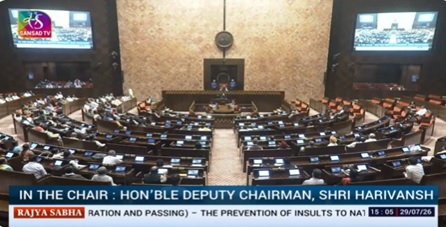
- The Rajya Sabha passed the Prevention of Insults to National Honour (Amendment) Bill, 2026, to safeguard national honour.
Key Facts:
- Body that passed the Bill: Rajya Sabha
- Name of the Bill: Prevention of Insults to National Honour (Amendment) Bill, 2026
- Parent Act: This Bill amends the 'Prevention of Insults to National Honour Act, 1971'.
- Main Objective: To prescribe stringent penalties for incidents of disrespect or insult towards the Indian National Flag, National Anthem, the map of India, and the Constitution.
- Inclusion of Digital Media: Under this amendment, the deliberate insult or distortion of national symbols on social media or internet platforms has also been brought under the ambit of severe punishment.
- Stricter Penal Provisions: Provisions regarding the term of imprisonment and the amount of fine have been made much stricter for repeat offenses.
- Original Law (1971): The Prevention of Insults to National Honour Act was passed in 1971.
- Fundamental Duty (Article 51A): According to Article 51A(a) of the Constitution, "to abide by the Constitution and respect its ideals and institutions, the National Flag and the National Anthem" is the first fundamental duty of every Indian citizen.
- Design of the Indian National Flag: The National Flag was adopted by the Constituent Assembly on July 22, 1947. Pingali Venkayya is credited with its design.
- National Anthem: 'Jana Gana Mana' was adopted as the National Anthem of India on January 24, 1950. The prescribed duration for singing it is 52 seconds.
|
Launch of Citizen Participation Initiative ‘Danveer’
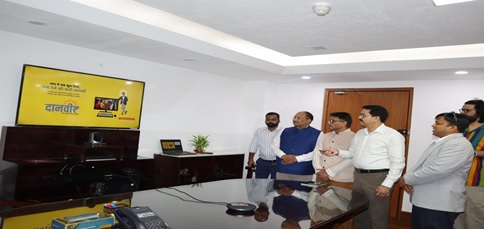
- The Ministry of Panchayati Raj launched the citizen participation initiative ‘Danveer’ in New Delhi, aiming to strengthen the digital infrastructure of Gram Panchayats across the country.
- The initiative was launched by Vivek Bhardwaj, Secretary, Ministry of Panchayati Raj.
Key Facts:
- Launched by: Ministry of Panchayati Raj
- Location: New Delhi.
- Name of Initiative: 'Danveer' Citizen Participation Initiative
- Main Objective: To strengthen the digital infrastructure of Gram Panchayats nationwide.
- Mechanism: Under this initiative, citizens, corporates (CSR), NGOs, and former residents will be encouraged to donate or contribute digital equipment (such as computers, tablets, and internet connectivity) to Gram Panchayats.
- 73rd Constitutional Amendment Act, 1992: Granted constitutional status to Panchayati Raj institutions.
- Part and Schedule: Panchayati Raj was incorporated into Part IX and the 11th Schedule (comprising 29 functional subjects) of the Constitution.
- Article 40 (DPSP): Directs the organization of Gram Panchayats under the Directive Principles of State Policy.
- National Panchayati Raj Day: Celebrated annually in India on April 24 (marking the date the 73rd Amendment came into force in 1993).
- Three-tier Structure: A system comprising Gram Panchayat, Panchayat Samiti, and Zila Parishad was implemented based on the recommendations of the Balwant Rai Mehta Committee (1957).
|
Economy and Banking
India's Merchandise Exports in the Current Financial Year

- According to Commerce and Industry Minister Piyush Goyal, India has recorded a 15% growth in merchandise exports so far in the current financial year.
Related Facts:
- Data/Growth: A robust growth of 15% has been recorded in India's merchandise exports during the current financial year.
- Announced by: Union Minister of Commerce and Industry, Piyush Goyal.
- Global Challenges: This growth has been achieved despite the Red Sea crisis, geopolitical tensions, and global economic uncertainties.
- Export Target (FY27 Target): The Government of India has set an ambitious target of $1 trillion in total exports (merchandise + services) for this financial year.
- Strategic Targets: The target for the current financial year is a 16–17% growth in merchandise exports ($530 billion) and an 11% growth in services exports ($470 billion).
- Trade Deficit: When a country's total imports exceed its total exports, it is termed a 'trade deficit'.
- DGFT (Directorate General of Foreign Trade): An attached office under the Ministry of Commerce responsible for formulating and implementing India's Foreign Trade Policy (FTP).
- Impact of Red Sea Crisis on Trade: Due to disruptions in the Red Sea and Suez Canal routes, ships are being forced to reroute via the 'Cape of Good Hope' in Africa, resulting in increased freight costs and longer transit times.
|
Defence News
Launch of the 7th Anti-Submarine Warfare Vessel Built by CSL
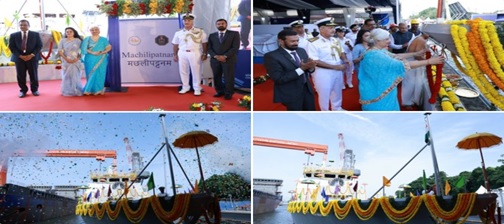
- 'Machilipatnam', the seventh of the eight Anti-Submarine Warfare (ASW) vessels built by Cochin Shipyard Limited (CSL) for the Indian Navy, has been launched.
Related Facts:
- Competition/Event: Launch of 'Machilipatnam' (BY 529), the seventh vessel in the series of eight Anti-Submarine Warfare Shallow Water Craft (ASW SWC) for the Indian Navy.
- Builder: Cochin Shipyard Limited (CSL), Kochi (Kerala).
- Naming: Named after the historic port city of 'Machilipatnam' in the Krishna district of Andhra Pradesh.
- Indigenous Content: The vessel incorporates over 80% indigenous content (under the 'Atmanirbhar Bharat' initiative).
Key Capabilities:
- Anti-submarine operations in coastal waters
- Subsurface surveillance
- Low-intensity maritime operations
- Mine-laying capability
The Indian Navy has three operational commands:
- Western Naval Command (Mumbai)
- Eastern Naval Command (Visakhapatnam)
- Southern Naval Command (Kochi)
|
Environment News
Discovery of a New Fungal Species: *Microporellus kolhapurensis*
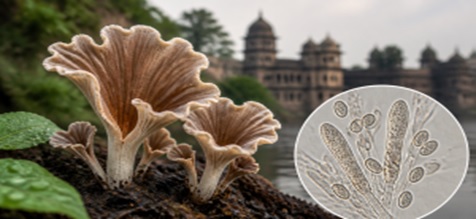
- A new species of fungus, *Microporellus kolhapurensis*, has been discovered in the Bhudargad Taluka of Kolhapur district, Maharashtra.
- This discovery came to light in July 2026, with researchers from Rajaram College identifying the fungus on decaying wood.
Related Facts:
- Species Name: Microporellus kolhapurensis
- Type: Polypore or Bracket Fungus
- Discovery Location: Bediw area, Bhudargad Taluka, Kolhapur district (Maharashtra)
- Researchers: Dr. Anjali Patil (Head of Botany, Rajaram College) and researcher Yogesh Patil
- Publication: Nelumbo, the research journal of the Botanical Survey of India (BSI)
- Fruiting Period: This fungus primarily flourishes during the monsoon season (July to September) and usually grows solitarily.
- Western Ghats Biodiversity: This discovery further reinforces the rich biodiversity of the globally significant Western Ghats ecosystem.
Fungal Characteristics and Ecological Significance:
- Habitat: It is a saprophytic species that grows on decaying wood.
- Size and Color: Its fruiting body is umbrella-shaped, with colors ranging from yellow-orange to grey-brown.
- Ecological Role: It aids in nutrient cycling within the environment by decomposing dry or decaying wood in forests.
- Globally, approximately 36 valid species of the Microporellus genus have been recorded.
|
New ESA Draft Released for Western Ghats
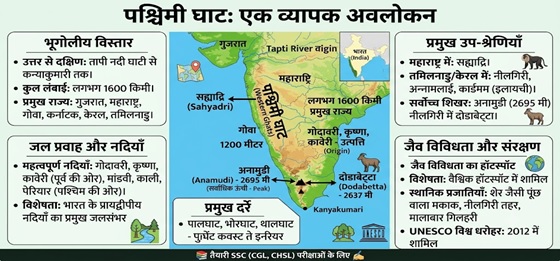
- The Central Government has released the seventh draft notification for the Ecologically Sensitive Area (ESA) of the Western Ghats, covering an area of 56,825.7 square kilometers across six states.
Western Ghats ESA Draft:
- Issuer: Union Ministry of Environment, Forest and Climate Change (MoEFCC)
- Notification: 7th draft for the Western Ghats Ecologically Sensitive Area (ESA) released.
- Total Proposed Area: 56,825.7 square kilometers.
- Number of States Involved: 6 states (Gujarat, Maharashtra, Goa, Karnataka, Kerala, and Tamil Nadu).
- Restricted Activities: There will be a complete ban on mining, thermal power plants, large-scale construction, and polluting industries in this area.
State-wise ESA Area Details:
- Karnataka: 20,668 sq km (Highest)
- Maharashtra: 17,340 sq km
- Kerala: 9,993.7 sq km
- Tamil Nadu: 6,914 sq km
- Goa: 1,461 sq km
- Gujarat: 449 sq km
- Environment Protection Act: In India, ESAs are declared under the Environment (Protection) Act, 1986.
- Madhav Gadgil Committee (2011): Recommended declaring the entire Western Ghats (approximately 1.29 lakh sq km) as an ESA and granting supreme authority to *Gram Sabhas* (village councils) regarding environmental conservation. States rejected this, deeming it "anti-development."
- K. Kasturirangan Committee (2013): Suggested bringing only 37% of the area (i.e., approximately 56,825.7 sq km) under the ESA ambit to make the Gadgil report more practical; this recommendation forms the basis of the current draft.
- UNESCO World Heritage Site: The Western Ghats were declared a UNESCO World Heritage Site in 2012. Biodiversity Hotspot: It is one of the world's 36 primary 'biodiversity hotspots'.
Western Ghats:
- Extent: From Gujarat to Tamil Nadu/Kerala, approximately 1,490 km
- Location: Between 7° N and 21° N latitude
- Total Area: Approximately 140,000 sq km
- 6 States: Gujarat, Maharashtra, Goa, Karnataka, Kerala, Tamil Nadu
- Age: Older than the Himalayas
- Period: Late Jurassic to Early Cretaceous
- Process: Formed from the faulted edges of the Deccan Plateau during the breakup of the Gondwana supercontinent
Structural Divisions (3 major passes):
- Northern, Central, and Southern divisions: Separated by the Goa, Palghat, and Shencottah passes
- 7 Sub-groups: Sahyadri, Kudremukh, Talakaveri, Nilgiri, Annamalai, Periyar, Agasthyamalai
|
Increase in Tiger Population in Rajasthan
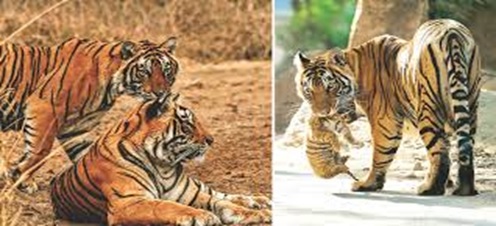
- The number of tigers across Rajasthan's five tiger reserves has risen to 149, up from 135 last year.
Key Facts:
- Current total count: 149 tigers (Year 2025-26)
- Previous count: 135 tigers (Year 2024)
- Total increase: A net increase of 14 tigers
- Total tiger reserves: There are 5 tiger reserves in Rajasthan
- Reserve with the highest number of tigers: Ranthambore Tiger Reserve
- Across the five reserves, 54 tigresses have given birth to 53 cubs
Rajasthan's 5 Tiger Reserves:
- Ranthambore Tiger Reserve: Sawai Madhopur (Rajasthan's first tiger reserve – 1973/74); houses 72 tigers (including males, females, and cubs)
- Sariska Tiger Reserve: Alwar; the tiger population here has risen to 56. This reserve recorded the highest number of births this year, with 28 cubs born.
- Mukundara Hills Tiger Reserve: Kota/Jhalawar/Bundi
- Ramgarh Vishdhari Tiger Reserve: Bundi (India's 52nd tiger reserve)
- Dholpur-Karauli Tiger Reserve: Dholpur and Karauli (Rajasthan's 5th and India's 54th tiger reserve)
- Carrying Capacity Crisis: The estimated carrying capacity of Ranthambore Tiger Reserve is 40 to 50 tigers, yet 72 tigers currently reside there. Due to this population exceeding capacity, tigers are venturing out in search of new territories (dispersal).
- Project Tiger: Launched in 1973 for the conservation of the Bengal tiger; it is now managed by the National Tiger Conservation Authority (NTCA).
- Tiger Census: A national-level tiger census is conducted in India every four years. International Tiger Day: Observed annually on July 29th across the globe to raise awareness about tiger conservation.
|
Science and Technology
Successful Construction and Testing of the World's Largest Superconducting Fusion Magnet
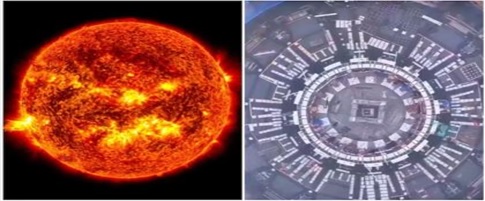
- China has successfully completed the construction and testing of the world's largest superconducting fusion magnet, weighing 582 tonnes, under its 'Artificial Sun' program.
Key Facts:
- Event: Construction and testing of the world's largest superconducting fusion magnet.
- Weight and Size: Weight of 582 tonnes and length of 21 meters.
- Type of Magnet: Toroidal-field superconducting magnet.
- Developing Institution: Institute of Plasma Physics (ASIPP) under the Chinese Academy of Sciences (CAS), Hefei.
- Associated Project/Reactor: BEST (Burning Plasma Experimental Superconducting Tokamak) (This is the successor to EAST, i.e., Experimental Advanced Superconducting Tokamak).
- Objective: To control/confine plasma at temperatures exceeding 100 million degrees Celsius (six times hotter than the Sun's core).
- Goal: To demonstrate electricity generation via controlled nuclear fusion by the year 2030.
- Shape and Dimensions: It is a toroidal-field magnet shaped like the English letter 'D', with a length of 21 meters and a width of 12 meters.
- Functionality: It is designed to operate for 60 years at extremely low temperatures of approximately -269°C (near absolute zero) and to carry an electric current exceeding 100,000 amperes.
- Nuclear Fusion: The process that generates energy in the Sun and stars, wherein light hydrogen atoms combine to form heavier helium atoms.
- Tokamak: A donut-shaped device that controls plasma using magnetic fields.
- Superconductivity: A state of zero electrical resistance at extremely low temperatures, allowing massive currents to flow without energy loss. ITER: The 'International Thermonuclear Experimental Reactor' located in France (India is also a member country).
|
India's First 'Integrated Precision Oncology Ecosystem'

- The Government of Andhra Pradesh signed a Memorandum of Understanding (MoU) with the global pharmaceutical giant AstraZeneca India to establish India's first 'Integrated Precision Oncology Ecosystem' and a Centre for Genomic Solutions in Amaravati.
Related Facts:
- Collaboration/Partnership: Between the Government of Andhra Pradesh and the multinational pharmaceutical company AstraZeneca.
- Project Name: Centre for Genomic Solutions.
- Location: Amaravati, Andhra Pradesh.
- Primary Objectives: Early-stage cancer detection, genomic sequencing, and personalized treatment.
- Focus Areas: Biomarker testing and AI-driven cancer screening technology.
- Targeted Cancers: The centre will focus on early-stage detection and biomarker testing, specifically for lung cancer and breast cancer.
- Genomics: The study of an organism's DNA and genetic structure is called 'Genomics'.
- Study of Cancer: The scientific study of cancer symptoms, diagnosis, and treatment is called 'Oncology'.
- AstraZeneca: A British-Swedish multinational biopharmaceutical company headquartered in Cambridge, UK.
|
Sports News
'6th LG Cup Horse Polo Championship'
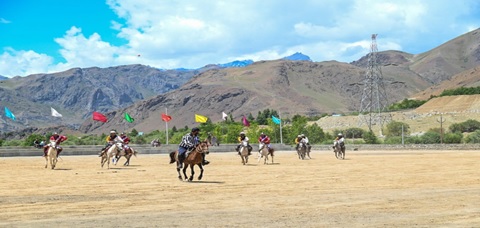
- The Ladakh Scouts Regimental Centre won the title by defeating the Animal Husbandry Department (Leh) at the '6th LG Cup Horse Polo Championship' held in Ladakh.
6th LG Cup Horse Polo Championship:
- Competition: 6th LG Cup Horse Polo Championship.
- Venue: Goshan Polo Ground, Dras, Kargil, Ladakh.
- Winner: Ladakh Scouts Regimental Centre (LSRC).
- Runner-up: Animal Husbandry Department, Leh.
- Organizers: Department of Tourism and Department of Sports & Youth Services, Ladakh Administration (in collaboration with the Ladakh Polo Promotion Committee).
- Cultural Significance: Polo is a traditional and popular sport in Ladakh. Such competitions promote the region's cultural heritage and sports tourism.
- Prize money for 2026: Increased from ₹50,000 to ₹1 lakh (runner-up received ₹50,000).
- Prize money from the upcoming season (2027): ₹2 lakh for the winner and ₹1 lakh for the runner-up.
- Participating Teams: 18 men's teams and 4 women's teams (with 'SECMOL' emerging as the winner) from various parts of Ladakh participated in this week-long tournament.
- Ladakh Scouts: Also known as 'Snow Warriors'. It is an infantry regiment of the Indian Army known for patrolling and security operations in high-altitude mountainous regions.
- Origin of Polo: The roots of the modern game of polo are believed to trace back to ancient times in the Indian state of Manipur and the Ladakh/Gilgit-Baltistan region.
|
Glasgow Commonwealth Games 2026
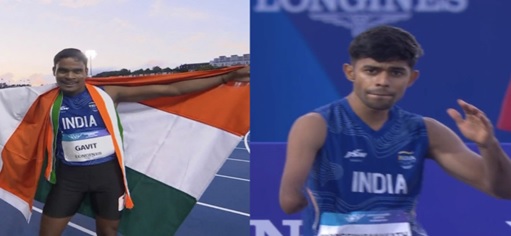
- India's Dilip Mahadu Gavit and Mohammed Basil made history by winning gold and silver, respectively, in the Para-athletics 100m (T-47) event at the Glasgow Commonwealth Games 2026.
Key Facts:
- Competition: 2026 Glasgow Commonwealth Games (23rd Commonwealth Games)
- Event: Para-athletics – Men's 100m (T-47 category)
- Gold Medal: Dilip Mahadu Gavit (India)
- Silver Medal: Mohammed Basil (India)
- Special Achievement: India created history by winning both gold and silver in this Commonwealth Games event.
- Venue: Glasgow, Scotland (UK)
- T-47 Category: A Para-athletics classification for athletes with an impairment affecting the structure of one arm below the elbow or wrist.
- Dilip Mahadu Gavit: An Indian Para-athlete from Maharashtra who had previously won a gold medal in the men's 400m (T-47) event at the Asian Para Games (2022).
- First edition of the Commonwealth Games (CWG): Held in Hamilton, Canada, in 1930.
- India's debut participation: India participated in the Commonwealth Games for the first time in 1934 in London.
|
Person In News
Passing of Gunther von Hagens

- Gunther von Hagens, the inventor of the plastination technique and creator of the famous 'Body Worlds' exhibition, has passed away at the age of 81.
Related Facts:
- Invention of the technique: Dr. Gunther von Hagens developed this technique in 1977 at Heidelberg University in Germany. Its primary objective was to make it easier for medical students to understand human body anatomy.
- Body Worlds: The first public exhibition of human bodies prepared using this technique was held in Japan in 1995. This global exhibition has been viewed by over 50 million people worldwide.
- Plastinarium: In 2006, Hagens established a laboratory named 'Plastinarium' in Guben, Germany, which serves as a major center for preserving bodies.
- Nickname: Due to his unique and often controversial work in medical science, he was also known as "Doctor Death."
- Wishes: In accordance with his final wishes, his own body will also be preserved using this same plastination technique after his death.
- Plastination: This is a scientific process for permanently preserving biological tissues (human body parts). It involves removing water and fat from the body and replacing them with liquid plastic, thereby preventing the body from decomposing.
|
Pavel Durov Accused of Promoting Terrorism
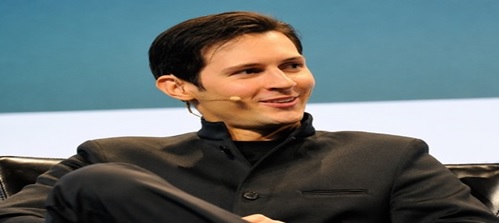
- Russia's Federal Security Service (FSB) has leveled serious allegations against Telegram founder Pavel Durov, accusing him of promoting terrorism.
- A criminal case has been registered against him, and an international arrest warrant has been issued.
Key Facts:
- Event: Russia's security agency, the FSB, made serious allegations against Telegram founder Pavel Durov.
- Main Allegations: Promoting terrorism and aiding anti-state activities.
- Primary Reason: Failure by the Telegram platform to remove channels and chats allegedly used to plot terrorist attacks and acts of sabotage.
- Action Taken: Russia issued an international arrest warrant for Pavel Durov.
- About Pavel Durov: Founder and CEO of Telegram and creator of the 'VKontakte' (VK) social media platform.
- Telegram Headquarters: Dubai (United Arab Emirates).
- FSB Full Form: Federal Security Service (Russia's primary internal security agency and the successor to the KGB).
- VKontakte (VK): Russia's most popular social media network.
- End-to-End Encryption: A security technology where messages can be read only by the sender and the recipient.
|


 Don't Have an Account?