


 Don't Have an Account?




SSC Foundation Eklavya - 2 Offline Cum Online Batch Lucknow Branch
10 September, 2026



Enter your Email ID and we'll send you a link to get back into your account.

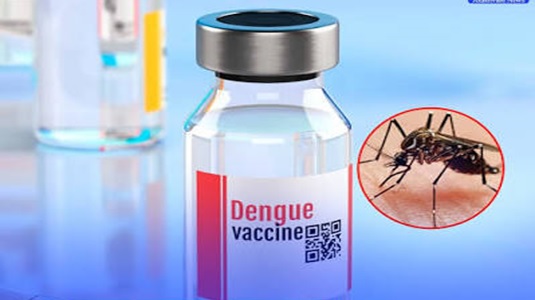

First Dengue Vaccine – Qdenga
Mon 27 Jul, 2026
Why in News?
The Central Drugs Standard Control Organisation (CDSCO) has granted marketing authorization to Qdenga, making it India's first approved dengue vaccine. Developed by the Japanese pharmaceutical company Takeda, Qdenga is a live-attenuated tetravalent vaccine designed to protect against all four dengue virus serotypes (DENV-1, DENV-2, DENV-3, and DENV-4). While the approval marks a significant breakthrough in India's fight against dengue, clinical trial data indicate important concerns regarding its effectiveness against certain virus serotypes, especially in individuals who have never been infected with dengue before.
Background
What is Qdenga?
Qdenga (TAK-003) is:
Understanding Dengue Serotypes
The dengue virus exists in four serotypes:
Each serotype behaves differently.
An individual infected with one serotype becomes immune only to that serotype but remains vulnerable to the remaining three.
Antibody-Dependent Enhancement (ADE): The Biggest Challenge
How ADE Works
Hence,
Major Concern: Protection Against DENV-3
When researchers analyzed protection against individual serotypes:
Good Protection
✔ DENV-1
✔ DENV-2
Limited Protection
❌ DENV-3
Among seronegative children, vaccinated individuals showed:
This observation raises concern that the vaccine may unintentionally create conditions favorable for Antibody-Dependent Enhancement (ADE).
Why Screening Before Vaccination Matters
This approach could substantially reduce ADE-related risks.
Way Forward
India should:
Conclusion
The approval of Qdenga represents a landmark achievement in India's public health system and offers hope against one of the country's most widespread mosquito-borne diseases. Nevertheless, the available scientific evidence indicates that protection is not uniform across all dengue virus serotypes. The observed safety signal against DENV-3 in seronegative individuals highlights the importance of cautious implementation, continued surveillance, and evidence-based vaccination strategies. A balanced approach combining vaccination, screening, mosquito control, and public awareness will be essential for effectively reducing India's dengue burden.
Dengue
| Type | Viral Disease |
| Causative Agent | Dengue Virus (Flavivirus) |
| Virus Serotypes | DENV-1, DENV-2, DENV-3, DENV-4 |
| Vector | Female Aedes aegypti mosquito (primary), Aedes albopictus |
| Incubation Period | 4–10 days |
| Peak Biting Time | Early morning and before sunset |
| Transmission | Mosquito bite (not direct person-to-person) |
| Symptoms | High fever, severe headache, retro-orbital pain, muscle and joint pain, skin rash, nausea, vomiting |
| Severe Forms | Dengue Hemorrhagic Fever (DHF), Dengue Shock Syndrome (DSS) |
| Diagnosis | NS1 Antigen Test, RT-PCR, IgM/IgG ELISA |
| Treatment | No specific antiviral; supportive care with fluids and fever management |
| Prevention | Mosquito control, eliminating stagnant water, protective clothing, repellents, vaccination where appropriate |
10 September, 2026
24 August, 2026
06 August, 2026
28 July, 2026
27 July, 2026
22 July, 2026
20 July, 2026
26 May, 2026
08 May, 2026
20 April, 2026
