GK Update
 
  • Mobile Menu
HOME BUY MAGAZINEnew course icon
LOG IN SIGN UP

Sign-Up IcanDon't Have an Account?


SIGN UP


Login Icon

Have an Account?


LOG IN
 

or
By clicking on Register, you are agreeing to our Terms & Conditions.


or


GK Update

Fri 24 Jul, 2026

National News

2nd Edition of the India Green Hydrogen Summit
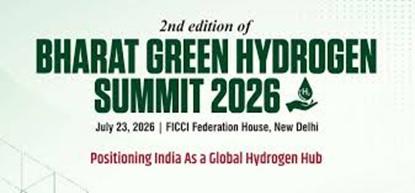
  • The second India Green Hydrogen Summit was held in New Delhi on July 23, 2026.
  • The summit was organized by FICCI, with the central theme being "Positioning India as a Global Hydrogen Hub."

Key Details:

  • pDate of Event: July 23, 2026
  • Organizer: FICCI (Federation of Indian Chambers of Commerce & Industry)
  • Venue: Federation House, New Delhi
  • Theme: "Positioning India as a Global Hydrogen Hub"
  • Key Objectives: To capture approximately 10% of the global green hydrogen market by 2030 and strengthen export infrastructure.
  • Report Launch: On this occasion, the FICCI-EY report titled 'Towards a Green Hydrogen Economy: India's Export Competitiveness and Strategic Outlook' was released.
  • FICCI:
  • Full Name: Federation of Indian Chambers of Commerce & Industry (FICCI)
  • Establishment: Year 1927
  • Headquarters: New Delhi
  • Nature: It is a non-governmental and non-profit organization.

India Emerges as a Global Leader in Railway Electrification
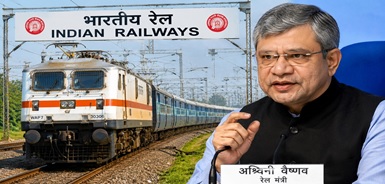
  • By completing the electrification of 99.6% of its broad-gauge network, Indian Railways has become the world's second-largest electrified railway network, ranking just behind Switzerland (100%).

Key Facts:

  • Between 2014 and 2026, 48,072 route-kilometers of electrification were added to the network, whereas only 21,801 kilometers had been electrified in the approximately 60 years prior to 2014.
  • Diesel consumption for train operations has dropped from 293 crore liters in 2015-16 to 108 crore liters in 2024-25.
  • Over 1,260 MW of solar and wind energy capacity has been commissioned to reduce carbon emissions.
  • Top Countries: Switzerland (100%), India (99.6%), China (82%), Spain (67%), Japan (64%).

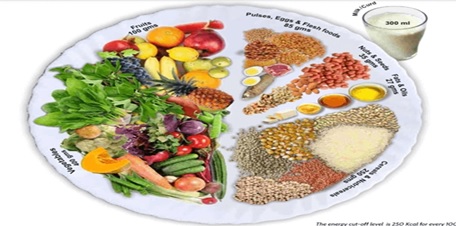
  • The 'Let's Fix Our Food' (LFOF) consortium, led by the Indian Council of Medical Research (ICMR) and the National Institute of Nutrition (NIN), released a policy document titled 'Priority Policy Actions to Promote Healthy Diets and Food Environments for Children and Adolescents in India.'

Key Facts:

  • Lead Agency: Indian Council of Medical Research-National Institute of Nutrition (ICMR-NIN)
  • Key Partners: Includes national and international institutions such as UNICEF India, Public Health Foundation of India (PHFI), World Health Organization (WHO), FSSAI, 'Resolve to Save Lives' (RTSL), and Lady Irwin College.
  • Nature: It is the outcome of approximately three years of multidisciplinary research, stakeholder consultations, and grassroots policy discussions.

Key Priorities and Recommendations of the Policy Document:

  • Healthy Food Environments in Schools: Regulating the availability of unhealthy food in school canteens and their immediate vicinity.
  • Front-of-Pack Nutritional Labeling (FOPL): Providing clear nutritional information on the front of packaged food products so consumers can easily understand the levels of fat, salt, and sugar.
  • Taxation on HFSS Foods: Implementing fiscal measures or higher taxes on unhealthy foods high in fat, sugar, and salt (HFSS)—such as junk food and soft drinks.
  • Regulation of Marketing: Enforcing legal bans or regulations on advertisements and marketing of unhealthy foods targeted at children and adolescents.
  • Nutrition Literacy: Raising awareness about healthy eating habits among youth and families through Social and Behaviour Change (SBC) initiatives.
  • Sodium Reduction: Promoting measures to reduce salt in food and introducing low-sodium salt alternatives.

Perunthalaivar Kamarajar Breakfast Scheme
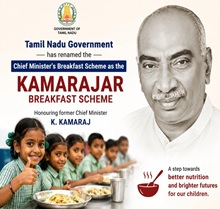
  • The Tamil Nadu government has issued an order renaming the 'Chief Minister's Breakfast Scheme' after former Chief Minister K. Kamaraj.
  • From now on, this scheme will be known as the 'Perunthalaivar Kamarajar Breakfast Scheme'.

Related Facts:

  • New Name: Perunthalaivar Kamarajar Breakfast Scheme.
  • Announcement/Order Date: July 15, 2026 (Order issued on K. Kamaraj's birth anniversary and made public on July 22).
  • Current Chief Minister: C. Joseph Vijay (TVK Government).
  • Scheme Expansion: Previously, the scheme was only for children in classes 1 to 5, but it has now been extended to include students in classes 6 to 8.
  • Expansion Implementation Date: September 17, 2026, the birth anniversary of social reformer Periyar E.V. Ramasamy.
  • Total Beneficiaries: Following the expansion, the total number of beneficiaries in the state will reach approximately 35 lakhs (3.5 million).
  • Inception: It was originally launched as the 'Chief Minister's Breakfast Scheme' in September 2022 by the then DMK government.
  • Objective: To eliminate malnutrition among primary school students in government schools and increase school attendance.
  • Nutritional Value: This breakfast provides children with approximately 293 calories, 9.85 grams of protein, iron, and calcium daily.

Kumaraswami Kamaraj:

  • Former Chief Minister of Tamil Nadu: He served as the Chief Minister of Madras State (now Tamil Nadu) from 1954 to 1963.
  • Kingmaker: He is known as a 'Kingmaker' in Indian politics because he played a pivotal role in the elevation of Lal Bahadur Shastri and Indira Gandhi to the post of Prime Minister.
  • Father of the Mid-Day Meal Scheme: K. It was Kamaraj who first introduced the free mid-day meal scheme for school children in 1956, ensuring that children from poor families would not be deprived of education.
  • Highest Honor: He was posthumously awarded India's highest civilian honor, the 'Bharat Ratna', in 1976.

Defence News

First Successful Test of ‘Kusha’ Missile

  • DRDO conducted the first successful test of the long-range ‘Kusha’ missile on April 23.

Related Facts:

  • Name of Missile/Project: Project Kusha
  • Developed by: DRDO (Defence Research and Development Organisation)
  • Type of Missile: LR-SAM (Long-Range Surface-to-Air Missile)
  • Date of First Successful Test: July 23, 2026
  • Test Location: Dr. APJ Abdul Kalam Island (off the coast of Odisha)
  • Strike Capability (Maximum Range): 350 to 400 kilometers (It is India's indigenous alternative to the S-400 missile system)
  • Speed: Its missiles can fly at Mach 5.5—that is, 5.5 times the speed of sound.
  • Mission Sudarshan Chakra: Announced by the Prime Minister, this national mission aims to establish a multi-layered air defence shield across the country by 2035. Project Kusha is part of this mission.

Defence Research and Development Organisation (DRDO):

  • Establishment: January 1, 1958
  • Headquarters: DRDO Bhawan, New Delhi
  • Ministry: It operates under the Ministry of Defence
  • Motto: 'Balasya Mulam Vigyanam' (The source of strength is science)
  • Current Chairman (2026): Dr. Samir V. Kamat (Serving since August 2022)

10% Reservation for Agniveer Soldiers: Chhattisgarh
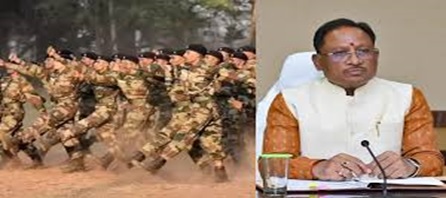
  • The Chhattisgarh government has decided to provide 10% reservation to Agniveer soldiers in direct recruitment for Class-III posts.

Relevant Facts:

  • Which state approved it? The Chhattisgarh government (under the chairmanship of Chief Minister Vishnu Deo Sai) approved the 'Chhattisgarh Agniveer Soldier Reservation Rules-2026'.
  • Extent of reservation? 10% horizontal reservation for direct recruitment posts.
  • For which posts? Class-III posts – primarily Constables, Forest Guards, and Jail Guards.
  • Eligibility? Agniveers who have completed 4 years of service in the Army.

'Agnipath Scheme':

  • Launch Date: The scheme was announced on June 14, 2022.
  • Ministry: The scheme falls under the Ministry of Defence.
  • Designation: Soldiers recruited under this scheme are called 'Agniveers'.
  • Service Period: Total service duration is 4 years (including the training period).
  • Age Limit: The prescribed age for recruitment is between 17.5 and 21 years.
  • Retention (Regularization): After 4 years, a maximum of 25% of Agniveers will be retained in the Army's regular cadre (for the next 15 years).
  • Seva Nidhi Package: A lump-sum tax-free amount of ₹11.71 lakh is provided upon completion of 4 years of service.
  • Contribution Ratio: 30% of the Agniveer's monthly salary is deducted for the Seva Nidhi, and the government contributes an equal 30%.
  • Insurance Cover: Agniveers receive a non-contributory life insurance cover of ₹48 lakh during their service.
  • Gratuity and Pension: Agniveers leaving after the 4-year contractual service will not receive any pension or gratuity.

India's First Indigenous Disposable Turbojet Engine
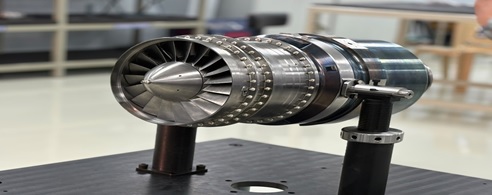
  • India has developed its first indigenous disposable turbojet engine in the 350 kg thrust category.

Key Facts:

  • What was developed? India's first indigenous disposable/expendable (single-use) turbojet engine.
  • What is the thrust capacity? 350 kg thrust category.
  • Who designed it? GTRE (Gas Turbine Research Establishment), a DRDO laboratory based in Bengaluru.
  • Who manufactured/assembled it? Azad Engineering, Hyderabad.
  • What is the primary application? Cruise missiles and long-range Unmanned Aerial Vehicles (UAVs/drones).

Science and Technology

AI-based oral cancer screening device and mobile application named 'Mukh Arogya' developed
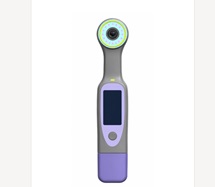
  • Gandhi Medical College (GMC), Bhopal, has developed an AI-based oral cancer screening device and a mobile application named 'Mukh Arogya', which has been granted a patent by the Government of India.

Related Facts:

  • App Name: 'Mukh Arogya'
  • Technology: Artificial Intelligence (AI)-based oral cancer screening device
  • Name of Institution: Gandhi Medical College (GMC), Bhopal (Madhya Pradesh)
  • Achievement: The design of this device has been granted a patent by the Patent Office of the Government of India.
  • Main Objective: To detect oral cancer at an early stage.
  • Target Users: ASHA workers and Community Health Officers (CHOs)
  • Where is Gandhi Medical College located? Bhopal, Madhya Pradesh (Established: 1955)
  • What is the study of cancer called? Oncology
  • When is World Cancer Day observed? February 4

International News

Three Agreements Between India and Romania
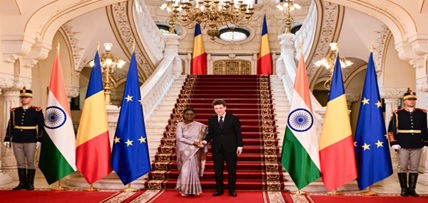
  • India and Romania signed three agreements to cooperate in the fields of science and technology, education, and sports.

Key Facts:

  • Who visited?: President of India Droupadi Murmu undertook an official state visit to Romania.
  • After how many years?: This is the first visit by an Indian President to Romania in the last 30 years (3 decades).
  • Number of agreements signed: A total of 3 Memorandums of Understanding (MoUs) were signed between the two countries.
  • Three key sectors: Science and technology, education and culture, and sports.
  • Trade target: India and Romania have set a goal to double their bilateral trade over the next 3 years.
  • Diplomatic anniversary: ​​The year 2028 will mark the completion of 80 years of diplomatic relations between India and Romania.
  • Theme for 2028: Both countries have announced that they will celebrate the year 2028 as the "India-Romania Year of Innovation."
  • ITEC seats: India has doubled the training seats for Romania under the 'Indian Technical and Economic Cooperation' (ITEC) program; these will include courses on AI (Artificial Intelligence) and cyber diplomacy.

Romania:

  • Capital: Bucharest (also known as 'Little Paris' due to its architecture)
  • Official language: Romanian (a language belonging to the Latin family)
  • Currency: Romanian Leu
  • Current President (2026): Nicușor Dan
  • Continent: Europe

33rd ASEAN Regional Forum Ministerial Meeting Held
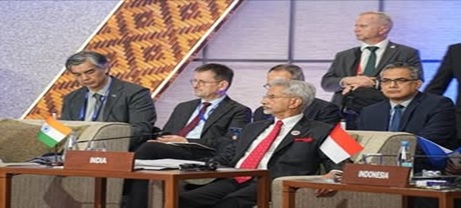
  • The 33rd ASEAN Regional Forum (ARF) Ministerial Meeting was held in Manila, the capital of the Philippines, on July 23, 2026.
  • The two-day conference was chaired by the Philippines' Foreign Secretary, Ma. Theresa Lazaro.
  • Foreign Ministers and representatives from 27 member nations—including India, the USA, China, Russia, Japan, and the European Union (EU)—participated in the meeting.

Key Facts:

  • Date and Venue: Held on July 23, 2026, in Manila, Philippines.
  • Edition: This was the 33rd edition of the ASEAN Regional Forum.
  • Philippine Chair: The proceedings were chaired by the Philippines' Foreign Secretary, Ma. Theresa P. Lazaro.
  • Newly Approved Member: A consensus was reached at the meeting to admit the United Kingdom (UK) as the 28th member of the ARF.
  • Key Agreement (Policy): The ‘Manila Plan of Action (2026–2036)’ was adopted for the coming decade.
  • Main Theme/Focus: Enhancing maritime security.
  • India's Representation: India's External Affairs Minister, Dr. S. Jaishankar, participated in the meeting.

ASEAN:

  • A major organization of Southeast Asian nations, established on August 8, 1967, in Bangkok, Thailand.
  • Its 11 member countries are Brunei, Cambodia, Indonesia, Laos, Malaysia, Myanmar, the Philippines, Singapore, Thailand, Vietnam, and Timor-Leste.
  • Its main secretariat is located in Jakarta, Indonesia. India is not a member of ASEAN because, geographically, it is part of South Asia.
  • India became a 'Regional Dialogue Partner' of ASEAN in 1992. In 2022, marking the completion of 30 years of India-ASEAN relations, the partnership was elevated to a "Comprehensive Strategic Partnership."
  • The 'ASEAN-India Free Trade Area' (AIFTA) agreement is in force between India and ASEAN.

Important days

National Thermal Engineer Day

  • National Thermal Engineer Day is celebrated every year on 24th July.
  • The day honors the work of engineers who have made significant contributions to thermal management electronics and energy systems.
  • It was started in 2014 by Advanced Thermal Solutions (ATS).

Related facts:

  • Beginning: Celebrating this day started in the year 2014.
  • Initiator: It was started by the American company 'Advanced Thermal Solutions Inc' (ATS).
  • Objective: To appreciate the contribution of heat controlling engineers in electronics, automobile and energy sectors.
  • Why only 24th July?: This time of July is considered to be one of the hottest days of the year in the Northern Hemisphere.

Other important days:

  • National Thermal Engineer Day: 24th July
  • National Engineer's Day (India): 15 September (birthday of the great Indian civil engineer Sir M. Visvesvaraya)
  • National Science Day: 28 February (to commemorate the discovery of Raman effect by CV Raman)
  • List of thermal power plants in India:
  • Vindhyachal Super Thermal Power Station: Madhya Pradesh (It is the largest thermal power plant in India)
  • Sasan Ultra Mega Power Plant: Madhya Pradesh
  • Mundra Ultra Mega Thermal Power Plant: Gujarat
  • Mundra UMPP (Adani/CGPL): Gujarat
  • Sipat Thermal Power Plant: Chhattisgarh
  • Korba Super Thermal Power Plant: Chhattisgarh
  • Talcher Super Thermal Power Station: Odisha
  • Talcher Thermal Power Station: Odisha
  • NTPC Ramagundam: Telangana
  • Maithon Thermal Power Plant (MPL): Jharkhand
  • Tata Power's Jojobera Thermal Power Plant: Jharkhand
  • Trombay Thermal Power Plant: Maharashtra
  • Prayagraj Thermal Power Plant: Uttar Pradesh

'Income Tax Day'

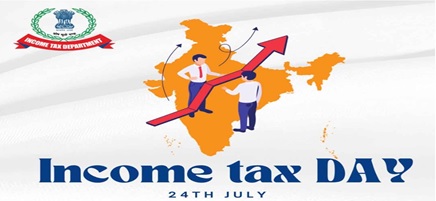
  • 'Income Tax Day' is observed annually on July 24th to commemorate the introduction of income tax in India by Sir James Wilson in 1860.

Related facts:

  • Introduction of Income Tax: The first income tax in India was implemented on July 24, 1860.
  • Person who introduced it: Sir James Wilson, the first Finance Member of the British government.
  • Reason: To compensate for the financial losses incurred due to the Revolt of 1857 (Sepoy Mutiny).
  • Inception of Income Tax Day: It was observed for the first time in 2010 (marking the completion of 150 years).
  • Type of Income Tax: It is a Direct Tax.

Tax Structure and Organization:

  • Regulatory Body: The Income Tax Department is administered by the CBDT (Central Board of Direct Taxes).
  • Ministry: It falls under the Ministry of Finance.
  • Nature of Tax: Income tax in India is progressive (the tax rate increases as income rises).
  • Agricultural Income: The Central Government in India does not levy tax on agricultural income (it is a subject under the State List).
  • Founder of the Budget System in India: Sir James Wilson (he presented India's first budget in 1860).

Exam-relevant Facts:

  • Type of GST: Indirect Tax
  • Type of Income Tax: Direct Tax
  • Date of GST Implementation: July 1, 2017 (101st Constitutional Amendment Act)
  • Income Tax Regulator: CBDT (Central Board of Direct Taxes)
  • GST Regulator: GST Council (Chairperson: Union Finance Minister)

Appointments

Anurag Jain

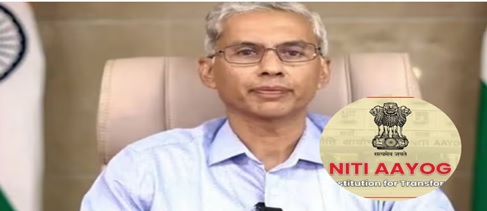
  • The Central Government has appointed Anurag Jain, a 1989-batch IAS officer of the Madhya Pradesh cadre, as the new Chief Executive Officer (CEO) of NITI Aayog.

NITI Aayog:

  • NITI Aayog: National Institution for Transforming India
  • It is the Government of India's premier policy 'think tank'.
  • Establishment: 1 January 2015
  • Predecessor body: Planning Commission
  • Nature: It is a non-constitutional and non-statutory body.
  • Headquarters: New Delhi
  • Chairperson: Prime Minister (ex-officio Chairperson)
  • Vice-Chairperson: Appointed by the Prime Minister (holds the rank of a Cabinet Minister); currently Ashok Kumar Lahiri (appointed in April 2026; he succeeded Suman K. Bery)
  • Full-time Members: Hold the rank of Minister of State
  • Ex-officio Members: Maximum of 4 ministers from the Union Council of Ministers (nominated by the Prime Minister)
  • Chief Executive Officer (CEO): Ms. Nidhi Chhibber (assigned additional charge; she succeeded B.V.R. Subrahmanyam)

Naresh Pal Gangwar

  • The Central Government has appointed Naresh Pal Gangwar, a 1994-batch IAS officer of the Rajasthan cadre, as Secretary in the Ministry of Education.
  • Prior to this appointment, he served as Secretary in the Department of Animal Husbandry and Dairying.

Related Facts:

  • Replaced whom: Naresh Pal Gangwar has succeeded Vineet Joshi, a 1992-batch IAS officer. Vineet Joshi has now been appointed as Secretary in the Ministry of Panchayati Raj.
  • Vineet Joshi has been appointed Secretary of the Ministry of Panchayati Raj.
  • Previous Post: Immediately before this assignment, he served as Secretary in the Department of Animal Husbandry and Dairying under the Ministry of Fisheries, Animal Husbandry and Dairying.
  • Appointment at a critical juncture: This change comes at a time when nationwide student protests are underway regarding alleged irregularities and paper leak controversies surrounding the NEET-UG examination.
  • T.K. Anil Kumar has been appointed as the new Secretary of the Department of School Education and Literacy.


Latest Courses