National News
International Conference on Postal Ballot System
- The Election Commission of India organized an international conference in Kolkata to make the postal ballot system more inclusive, secure, and accessible.
Related Facts:
- Organizers: Jointly organized by the 'India International Institute of Democracy and Election Management' (IIIDEM)—an institution of the Election Commission of India (ECI)—and International IDEA.
- Main Objective: To discuss global practices for making the postal ballot system more inclusive, secure, and accessible.
Eligible categories for postal ballots:
- Service Voters: Armed forces personnel and government employees deployed outside India.
- Personnel on Election Duty: Police and polling officials stationed away from their constituencies.
- Preventive Detention: Individuals held in preventive custody in jails (Note: Ordinary prisoners do not have the right to vote in India).
- Special Category (Amended Rules): Elderly citizens above the age of 85 and citizens with a disability (PwD) of more than 40%.
- What is ETPBS? It stands for 'Electronically Transmitted Postal Ballot System,' used exclusively for service voters.
Statutory Provisions and Rules:
- The Representation of the People Acts, 1950 and 1951, form the basis for electoral processes and eligibility in India.
- The entire postal ballot process is governed by the Conduct of Election Rules, 1961.
- On the day of vote counting, the counting of postal ballots begins first.
Election Commission:
- Establishment: January 25, 1950.
- Constitutional Provision: Part XV of the Indian Constitution (Articles 324-329).
- Structure: It became a multi-member body following the Election Commissioner Amendment Act, 1989. Chief Election Commissioner: Gyanesh Kumar
- Appointment: By the President
- Voting Age: The minimum voting age was reduced from 21 to 18 years by the 61st Constitutional Amendment Act (1989)
- Tenure: A fixed term of 6 years or up to the age of 65 (whichever is earlier)
- National Voters' Day: January 25
Election Commission – Constitutional Provisions:
- Part of the Constitution: Elections are mentioned in Part XV (15)
- Article 324: Grants the Election Commission the powers of superintendence, direction, and control of elections
- Article 325: No person can be excluded from the electoral roll on grounds of religion, race, caste, sex, etc.
- Article 326: Lok Sabha and Legislative Assembly elections shall be based on adult suffrage
- Article 327: Parliament may make laws regarding elections
- Article 328: State legislatures may make provisions regarding their own elections
- Article 329: Courts cannot interfere in election-related matters, except through an election petition
|
Approval for the First Dengue Vaccine
- The Drugs Controller General of India (DCGI) has approved Japanese pharmaceutical company Takeda's 'QDENGA' (TAK-003) vaccine as the country's first dengue vaccine.
Key Facts:
- Vaccine Name: QDENGA or TAK-003
- Developer: Takeda Biopharmaceuticals (a Japanese pharmaceutical company)
- Age Group: This vaccine can be administered to individuals aged 4 to 60 years.
- Key Feature: It protects against all four serotypes of the dengue virus (DENV-1, 2, 3, and 4). No prior dengue test is required before administration.
- Doses: It is a two-dose vaccine administered with a three-month interval.
- Indian Context: India accounts for approximately one-third of the global dengue disease burden, and cases have increased 11-fold over the last two decades. It is also recognized by the World Health Organization (WHO).
- Global Recognition: Prior to India, it had already received approval in over 40 countries, including the European Union, the UK, Brazil, Indonesia, and Argentina.
Dengue Virus:
- It is a mosquito-borne, single-stranded RNA virus belonging to the *Flaviviridae* family and the Flavivirus genus.
- Virus Name: Dengue is an RNA virus.
- Virus Family: It belongs to the *Flaviviridae* family.
- Alias: It is also known as 'breakbone fever' due to the severe joint and muscle pain associated with it.
- Mosquito Name: The dengue virus spreads through the bite of the female *Aedes aegypti* mosquito.
- Identification: This mosquito has white and black stripes on its body; hence, it is also known as the 'tiger mosquito'.
- Characteristics: It breeds in clean, stagnant water (such as in coolers, flower pots, and old tires) and primarily bites during the day. Blood Component: In dengue fever, the platelet (thrombocyte) count in the human body drops rapidly.
- Effect: A decrease in platelets reduces the blood's clotting ability, thereby increasing the risk of bleeding.
|
Launch of the SMILE Scheme
- The Ministry of Social Justice and Empowerment implemented the SMILE scheme for the social and economic rehabilitation of marginalized and disadvantaged sections of society.
- The objective of this scheme is to enable needy individuals to lead a life of dignity and to provide them with opportunities for sustainable livelihoods.
Related Facts:
- SMILE: Support for Marginalized Individuals for Livelihood and Enterprise
- Ministry: Ministry of Social Justice and Empowerment
- Launch Date: Launched by Union Minister Dr. Virendra Kumar on February 12, 2022
- Key Structure and Sub-schemes:
It is an umbrella scheme comprising two important sub-schemes:
- Central Sector Scheme for Comprehensive Rehabilitation for the Welfare of Transgender Persons
- Central Sector Scheme for Comprehensive Rehabilitation of Persons Engaged in the Act of Begging
- Initial Budget: ₹365 crore was allocated for the period from 2021-22 to 2025-26 (5 years)
- Expansion Target: Currently operational in 216 cities, with a target to expand coverage to 295 cities by the financial year 2030-31
- Rehabilitation Target: A target has been set to rehabilitate a total of 35,000 individuals
- Digital Tracking: The SMILE-Begging National Portal has been launched to ensure transparency
- Constitutional Linkage: The scheme realizes the constitutional principles of Article 21 (Right to live with dignity) and Article 46 (Promotion of educational and economic interests of disadvantaged sections)
- Sustainable Development Goals (SDGs): It directly contributes to achieving SDG 1 (No Poverty), SDG 8 (Decent Work and Economic Growth), and SDG 10 (Reduced Inequalities)
|
Launch of 'Indiramma Awas Yojana'
- The Telangana government has launched the 'Indiramma Awas Yojana' for the state's poor and homeless population.
- Under this scheme, financial assistance is provided for constructing a permanent house or acquiring a flat in both rural and urban areas.
Key Facts:
|
Main features of the scheme:
- Government subsidy of ₹5 lakh: Eligible beneficiaries receive financial assistance of ₹5 lakh from the government for house construction or a flat.
- Hyderabad CURE Project: The total cost of flats being constructed in the Hyderabad core urban area is approximately ₹11 lakh. After deducting the government subsidy of ₹5 lakh, the beneficiary is required to contribute only ₹6 lakh. This amount can be paid in four easy installments.
- Flat Size: The built-up area of these multi-story flats being constructed in urban areas will be 528 square feet (carpet area: 400 square feet).
- Reservation for Women: 30% of the homes across all categories of flats are reserved for women.
- Rural and Other Homeless People: Beneficiaries in rural areas who own land receive ₹5 lakh to build a house, while those without land are provided with both a free plot and ₹5 lakh.
Telangana:
- Formation: June 2, 2014
- Highest Peak: Doli Gutta; Longest River: Godavari
- State Animal: Jinka (Deer); State Bird: Palpitta
- Shares Borders with: 4 states; Governor: Jishnu Dev Varma
- Major Tribes: Savara, Konda Dora, Gadaba, Gonda, Manne Dora, Mukha Dora, Koya, etc.
- National Parks: Mrugavani, Mahavir Harina Vanasthali, Kasu Brahmananda Reddy
- Famous Folk Dances: Perini Shivatandavam, Lambadi, Dhimsa Dance, Gusadi Dance, Dappu Dance, etc.
- Lakes: Hussain Sagar, Osman Sagar, Himayat Sagar, Durgam Cheruvu, Pakhal Lake, Mir Alam Tank
|
World's Largest Curd Production Plant
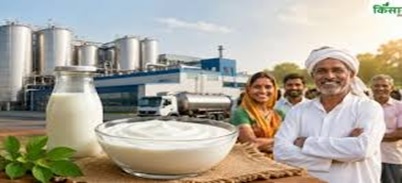
- Union Home and Cooperation Minister Amit Shah laid the foundation stone for the world's largest curd production plant at the New Town Convention Centre in Kolkata.
- This historic step has been taken to accelerate the Government of India's resolve of "Sahakar Se Samriddhi" (Prosperity through Cooperation) and "White Revolution 2.0."
Key Facts:
- Milk Processing Capacity: Total capacity to process 30 lakh (3 million) liters of milk per day.
- Curd Production: Approximately 1,000 metric tonnes (10 lakh kg) of curd and other cultured dairy products daily.
- Packaged and UHT Milk: 10 lakh liters of regular packet milk and 2 lakh liters of UHT (Ultra High Temperature) milk per day.
- Other Dairy Products: Daily production of 1 lakh liters of ice cream, 20 tonnes of paneer, 10 tonnes of ghee, and 10 tonnes of traditional sweets.
- Flavoured Milk: Approximately 2.5 lakh packs of flavoured milk daily.
- Direct Benefit to Farmers: More than 1.25 lakh milk-producing farmers in the state will directly benefit from this sustainable market.
- Women Empowerment: The beneficiaries include over 30,000 women dairy farmers.
|
'Alternative Clean Cooking Policy'
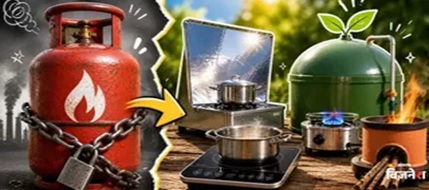
- The Central Government is working on an 'Alternative Clean Cooking Policy' for the country.
- Its primary objectives are to reduce the nation's dependence on traditional Liquefied Petroleum Gas (LPG), lower the fuel import bill, and effectively utilize surplus ethanol available domestically.
- This policy is being formulated by the Ministry of Petroleum and Natural Gas.
- India's current annual ethanol production capacity exceeds 20 billion liters, with an expected increase of an additional 4 billion liters during the current financial year.
Ethanol:
- Chemical Formula: C₂H₅OH (or CH₃CH₂OH)
- IUPAC Name: Ethanol (also known as ethyl alcohol, or simply 'alcohol' or 'spirit' in common parlance)
- Nature: It is a colorless, highly flammable, and volatile liquid.
- Litmus Test: It is neutral in nature; i.e., it does not change the color of litmus paper.
- Solubility: It is completely soluble in water.
- Ethanol is primarily produced through the fermentation process.
- Its main sources include sugarcane, maize, broken rice, and other grains.
- Role of Enzymes: Invertase and zymase enzymes play a key role during fermentation.
Ethanol Blending Programme (EBP):
- E20 Fuel: A blend of 20% ethanol and 80% petrol.
- Target: The Government of India has set a target of blending 20% ethanol into petrol by the year 2025-26 (the target was previously 2030). Flex-fuel engines: These are engines capable of running on any blend ranging from 100% petrol to 100% ethanol (E100).
- Next long-term goal (E27 Target): The government has now set a new, ambitious target of achieving 27% ethanol blending in petrol (E27) by the year 2030.
|
WTO Agreement on Fisheries Subsidies
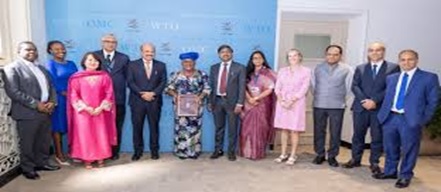
- India became a party to the World Trade Organization (WTO) Agreement on Fisheries Subsidies by depositing its instrument of acceptance on July 20, 2026.
Key Facts:
- Name of the Agreement: Agreement on Fisheries Subsidies (AFS)
- Organization: World Trade Organization (WTO)
- When did India join? July 20, 2026
- India's position: India became the 123rd member country to accept this agreement.
- Where was the document deposited? At the WTO headquarters in Geneva, Switzerland.
- When was it originally adopted? In June 2022, during the WTO's 12th Ministerial Conference (MC12).
- When did the agreement come into force? September 15, 2025 (upon approval by two-thirds of the members).
Objective of the Agreement:
- To curb Illegal, Unreported, and Unregulated (IUU) fishing at sea.
- To eliminate harmful government subsidies (financial assistance) that are depleting fish stocks.
- It is linked to the United Nations Sustainable Development Goal (SDG) 14.6 (Life Below Water).
World Trade Organization (WTO):
- Establishment: January 1, 1995
- Headquarters: Geneva, Switzerland
- Basis of formation: Uruguay Round negotiations
- Predecessor organization: GATT (General Agreement on Tariffs and Trade)
|
International News
Britain's 59th Prime Minister

- Andy Burnham, the former Mayor of Greater Manchester, assumed office as Britain's 59th Prime Minister following Keir Starmer's resignation.
Key Facts:
- Who is the new PM?: Andy Burnham (Labour Party)
- Whom did he replace?: Keir Starmer
- Which PM is he?: 59th Prime Minister
- Nickname: 'King of the North' – for vocally advocating for the rights of Northern England
- Previous Position: Served as Mayor of Greater Manchester from 2017 to 2026
- Parliamentary Seat: Won the by-election for the Makerfield seat in June 2026
- Record of Instability: Burnham has become Britain's 7th Prime Minister in the last 10 years (since the 2016 Brexit vote)
Key names in the Burnham Cabinet (appointments):
- Chancellor (Finance Minister - Chancellor of the Exchequer): John Healey (replaced Rachel Reeves)
- Foreign Secretary: Ed Miliband
- Home Secretary: Shabana Mahmood
- Defence Secretary: Wes Streeting
- Party: Both Andy Burnham and Keir Starmer belong to the Labour Party
- Who appoints the PM?: The British Monarch (currently King Charles III) formally invites the leader of the majority party to form a government at Buckingham Palace
- Policy term 'Manchesterism': Burnham uses the term 'Manchesterism' to describe his policies (such as bringing public transport under government control)
Britain (United Kingdom):
- Official Name: United Kingdom of Great Britain and Northern Ireland
- Capital: London
- Major Cities: London, Manchester, Birmingham, Glasgow, Liverpool
- Currency: Pound Sterling (£) - GBP
- Head of State: King Charles III
- Parliament: Bicameral – House of Commons and House of Lords
- Continent: Europe
- Famous Rivers: Thames, Severn
|
Belgium's National Day
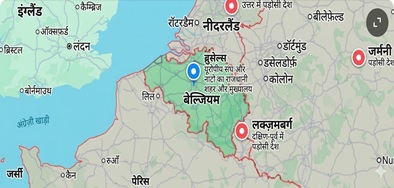
- Belgium celebrates its National Day annually on July 21st to commemorate the day in 1831 when Leopold I, the country's first king, took the oath under the new constitution, marking its establishment as an independent constitutional monarchy separate from the Netherlands.
Related Facts:
- Independence: Belgium was formerly part of the United Kingdom of the Netherlands.
- Revolution: It became an independent country following the Belgian Revolution of 1830.
- First King: On July 21, 1831, King Leopold I took the constitutional oath as the first King of Belgium.
- Significance: July 21st was designated as National Day to commemorate this historic event.
Belgium:
- Capital: Brussels, which serves as the administrative center of the European Union.
- Monarchy: It is a constitutional monarchy; the current monarch is King Philippe.
- Head of Government: The Prime Minister holds actual executive power.
- Currency: Euro; prior to 2002, the currency was the Belgian Franc.
- Neighboring Countries: It shares borders with France, Germany, Luxembourg, and the Netherlands. The North Sea lies to its northwest.
- Nickname: Belgium is known as the 'Cockpit of Europe.' Historically, many major and decisive European battles (such as the 1815 Battle of Waterloo, where Napoleon was defeated) were fought on its soil. Unified Payments Interface (UPI):
- Launch: 11 April 2016, by the then RBI Governor Raghuram Rajan
- Developing Agency: National Payments Corporation of India (NPCI)
- Regulatory Body: Reserve Bank of India (RBI)
- Objective: To facilitate instant, secure, and unified banking transactions on mobile platforms
- Transaction Types: Person-to-Person (P2P) and Person-to-Merchant (P2M)
- Nature of Transactions: 24×7 instant money transfer (inter-bank transfer), QR code-based payments
- Key Feature: Payments made using only a Virtual Payment Address (VPA) or mobile number
- Popular UPI-enabled apps: PhonePe, Google Pay, Paytm, BHIM, Amazon Pay, etc.
- BHIM App: UPI-based government app developed by NPCI (Launched: 30 December 2016)
|
Britain's First AI Minister at Cabinet Level
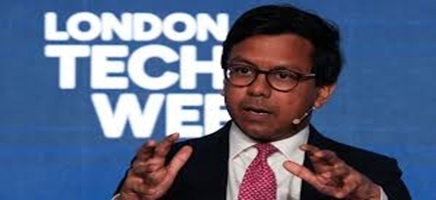
- Britain's new Prime Minister, Andy Burnham, has appointed Indian-origin MP Kanishka Narayan as the country's first Cabinet-level AI Minister.
- With this significant move, Britain has elevated Artificial Intelligence to the status of a Cabinet-level portfolio, placing it among the nation's top strategic priorities.
Kanishka Narayan:
- Birth and Background: Kanishka Narayan was born in the Indian state of Bihar (Muzaffarpur). He moved to Wales (UK) with his family at the age of 12.
- Education: He holds a degree in Philosophy, Politics, and Economics (PPE) from Oxford University and an MBA from Stanford University in the USA.
- Political Career: He is a Labour Party politician and has served as a Member of the British Parliament (House of Commons) representing the 'Vale of Glamorgan' constituency in Wales since 2024.
- Previous Experience: Prior to becoming a Cabinet-level minister, he served as the Parliamentary Under-Secretary (Junior Minister for Software and Technology) for AI and Online Safety in the UK government from September 2025 to July 2026.
|
Economy and Banking
UPI Achievements up to June 2026
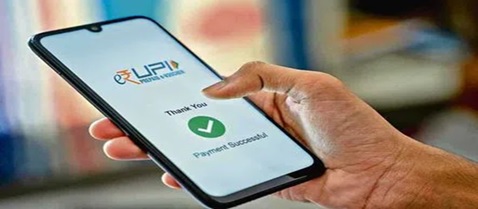
- The Central Government informed Parliament that, as of June 2026, over 55.49 crore users in the country have joined the Unified Payments Interface (UPI).
- In the 2025-26 financial year, 24,162 crore transactions worth over ₹314 lakh crore were recorded via UPI.
Related Facts:
- Total number of users: Over 55.49 crore by June 2026
- Total number of transactions: 24,162 crore (241.62 billion) transactions in the 2025-26 financial year
- Total transaction value: Digital transfers worth ₹314.23 lakh crore took place during the financial year
- Annual growth rate: Compared to the 2024-25 financial year—which saw 18,586.60 crore transactions worth ₹260.56 lakh crore—a significant increase in both the volume and value of transactions was recorded in the 2025-26 financial year.
- International connectivity: UPI has currently been linked with the payment systems of 10 countries worldwide for Person-to-Person (P2P) and Person-to-Merchant (P2M) payments.
- Active countries: UPI services are live in countries such as Bhutan, Singapore, the United Arab Emirates (UAE), France, Mauritius, Sri Lanka, Nepal, Qatar, Greece, and Cambodia.
|
Growth in India's Core Sector
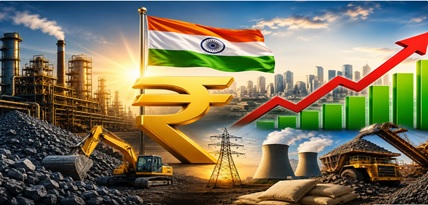
- In June 2026, the production growth rate of India's core industries reached 5%, marking the highest level in the last five months.
- This is the highest level seen in the past five months. Previously, core sector growth stood at 1.1% in June 2025, while it was recorded at 3.2% in May 2026.
- Key contributors to this growth included iron ore (43.9%), electricity (9.8%), cement (9.8%), steel (4.6%), and coal (1.4%).
Related Facts:
- Ministry: This data is released monthly by the Office of the Economic Adviser under the Ministry of Commerce and Industry.
- Change in Number: India previously had 8 core sectors, but the number increased to 9 starting in June 2026.
- New Sector: 'Iron ore' has been included as the 9th sector.
- These industries contribute approximately 40.27% to the Index of Industrial Production (IIP).
- New Base Year: The base year has been changed from 2011-12 to 2022-23.
- Share in IIP: Together, these 9 core sectors account for more than 40% of India's Index of Industrial Production (IIP).
- New order of all 9 core sectors (by weightage): Electricity (highest weightage), refinery products, steel, coal, crude oil, natural gas, cement, fertilizers, iron ore (lowest weightage).
|
RBI Concessional Dollar-Rupee Swap Facility
- According to the Reserve Bank of India, $20.72 billion in investment was attracted by July 17 under its concessional swap facility, which was launched to attract foreign currency inflows.
Related Facts:
|
Component-wise distribution of foreign currency inflows:
- FCNR(B) Deposits (Foreign Currency Non-Resident Deposits): $17.41 billion (approximately 84% of total inflows)
- OFCB (Foreign currency borrowings from overseas sources): $1.97 billion
- ECB (External Commercial Borrowings): $1.34 billion
Background and key features of the scheme:
- Announcement and implementation: The scheme was announced on June 5, 2026, to strengthen the balance of payments and encourage capital inflows, and it was implemented starting June 8, 2026.
- This window for FCNR(B) deposits is open until September 30, 2026.
- The concessional swap facility for OFCB and ECB will remain available until December 31, 2026.
Reserve Bank of India (RBI):
- Recommendation: Hilton Young Commission (1926)
- Statutory Basis: RBI Act, 1934
- Establishment: April 1, 1935
- Headquarters: Mumbai | Nationalized: 1949
- First Governor: Osborne Smith (1935-37)
- First Indian Governor: C.D. Deshmukh (1943-49)
- Current Governor: Sanjay Malhotra
|
Science and Technology
New Coronavirus Sub-variant: Omicron RF.5
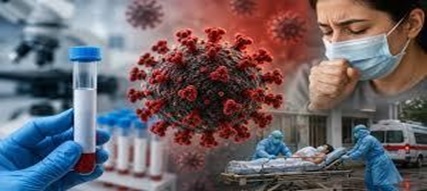
- A new sub-lineage of the Omicron variant, RF.5, has recently been confirmed in Andhra Pradesh.
Key Facts:
- Variant Name: Omicron RF.5 sub-variant of SARS-CoV-2
- Location of Discovery: This new sub-variant was first detected in India in the Kadapa district of Andhra Pradesh.
- Origin: It primarily evolved through mutation from the JN.1 sub-variant.
- Confirming Laboratory: Its presence was confirmed through genome sequencing at NIV Pune (National Institute of Virology).
- Global Presence: Prior to India, this sub-variant had been reported in Singapore and certain countries in Southeast Asia.
Coronavirus (COVID-19):
- An infectious disease caused by the SARS-CoV-2 virus. It spreads primarily from person to person through droplets released when an infected individual coughs, sneezes, or exhales.
- Official Name: SARS-CoV-2 (Severe Acute Respiratory Syndrome Coronavirus 2)
- Name of Disease: COVID-19 (Coronavirus Disease 2019)
- Virus Type: It is a single-stranded RNA virus featuring protein spikes on its surface, giving it a "crown-like" appearance.
- Origin: It was first detected in humans in Wuhan, China, in December 2019.
- RT-PCR Test: Stands for Reverse Transcription Polymerase Chain Reaction. It detects the virus's genetic material (RNA) and is considered the most accurate (Gold Standard) test.
- Rapid Antigen Test (RAT): Detects proteins (antigens) present on the virus's surface. It yields very quick results but is not as accurate as the RT-PCR test. WHO (World Health Organization): It declared this a Public Health Emergency of International Concern (PHEIC) on January 30, 2020, and a global pandemic on March 11, 2020.
- ICMR (Indian Council of Medical Research): The apex body in India for biomedical research and formulating strategies against the coronavirus (Headquarters: New Delhi).
- NIV (National Institute of Virology): India's premier virus research laboratory (Headquarters: Pune).
|
Environment News
Reduction in the number of polluted river stretches
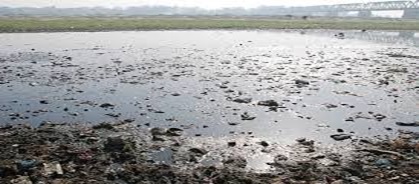
- The Central Government informed the Rajya Sabha that the number of polluted river stretches in India has decreased from 351 in 2018 to 296 in 2025.
- This information was provided based on the latest report by the Central Pollution Control Board (CPCB).
Related facts:
- According to Union Minister of State for Jal Shakti Raj Bhushan Choudhary:
- Year 2018: 351 polluted river stretches
- Year 2022: 311 polluted river stretches
- Year 2025: 296 polluted river stretches
- This assessment is based on Biochemical Oxygen Demand (BOD), which is a key indicator of organic pollution in water.
Major causes of river pollution:
- Discharge of untreated or partially treated sewage from cities and towns.
- Discharge of industrial waste.
- Lack of adequate water flow in rivers.
- Disposal of solid waste on riverbanks.
- Runoff of fertilizers and pesticides from agricultural fields.
- Natural causes and other non-point sources of pollution.
- Water quality monitoring
- The Central Pollution Control Board (CPCB), in collaboration with State Pollution Control Boards and Pollution Control Committees, monitors river water quality across the country through 2,265 monitoring stations under the National Water Quality Monitoring Programme (NWMP).
Government efforts:
- Approximately ₹11,332 crore spent under the Namami Gange Programme.
- ₹1,888 crore spent under the National River Conservation Plan (NRCP).
- Additionally, schemes related to sewage management and river conservation are being implemented by the Ministry of Housing and Urban Affairs.
|
Sports News
154th British Open Golf Championship

- New Zealand's Ryan Fox secured his first 'Major Title' by winning the 154th British Open Golf Championship held at Royal Birkdale, England.
Related Facts:
- Winner: Ryan Fox, a golfer from New Zealand.
- Tournament: 154th British Open Golf Championship 2026 (also known as 'The Open').
- Historic Record: Winning the title after recovering from 52nd place following the second round marks the biggest comeback in the history of the 36-hole era of men's golf.
- Trophy Name: The famous trophy awarded to the winner is called the 'Claret Jug'.
- New Zealand History: He became the second male player from New Zealand to win the British Open, following Sir Bob Charles (1963).
Golf:
- Objective: A player attempts to hit a small ball into a hole using a specialized club in the fewest number of shots.
- Players: It is an individual sport, but it is also played in teams (e.g., the Ryder Cup).
- Playing Field: The ground where golf is played is called a 'course'.
- Number of Holes: A standard golf course has a total of 18 holes.
4 Major Men's Tournaments:
- The Masters: In April, at Augusta National Golf Club (USA). (The winner is awarded the famous 'Green Jacket').
- PGA Championship: In May, at various courses in the USA.
- US Open: In June, in the USA.
- The Open Championship: In July, in the United Kingdom (UK). It is the oldest golf tournament in the world (started in 1860).
|
2026 Belgian Grand Prix
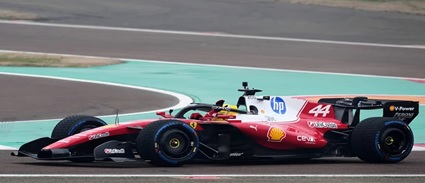
- Mercedes' 19-year-old Italian driver Kimi Antonelli won the 2026 Belgian Grand Prix held at Spa-Francorchamps on July 19.
Related Facts:
- Sixth Season Win: This marks Kimi Antonelli's sixth race victory of the 2026 Formula One (F1) season.
Podium Results:
- First Place: Kimi Antonelli (Mercedes)
- Second Place: Charles Leclerc (Ferrari)
- Third Place: Max Verstappen (Red Bull)
- Championship Lead: With this victory, Antonelli has strengthened his lead in the World Drivers' Championship standings, reaching 204 points. He holds a 45-point advantage over Ferrari's Lewis Hamilton (159 points).
- Historic Significance: Antonelli has become the first Italian driver to win the Belgian Grand Prix in the last 73 years.
|
Les Menuires International Chess Championship 2026

- Indian Grandmaster S. Rohit Krishna won the gold medal, and Grandmaster Raja Rithvik secured the silver medal at the Les Menuires International Chess Championship held in France.
- Both Indian players delivered outstanding, unbeaten performances in the tournament, which took place from July 11 to July 18, 2026, at Les Menuires in the French Alps.
|
S. Rohit Krishna: He became India's 89th Grandmaster after achieving his final norm at the Almaty Masters Kunaev Cup in Kazakhstan in August 2025.
Raja Rithvik: An established Grandmaster
from Telangana, he entered this tournament as the fourth seed.
|
Awards and Honors
'Lu Xun Literature Prize' 2026
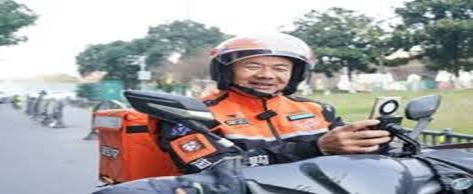
- Wang Jibing, a 56-year-old food delivery worker in China, was honored with the 'Lu Xun Literature Prize'—one of China's most prestigious literary awards—for his poetry collection, 'Low Flight'.
Related Facts:
- Winner's Name: Wang Jibing
- Age and Profession: 56-year-old food delivery rider (from Jiangsu Province, China)
- Name of Poetry Collection: 'Low Flight' (published in 2024)
- Name of Award: 'Lu Xun Literature Prize' (announced on July 15, 2026)
Lu Xun Literature Prize:
- Significance: It is considered one of China's most prestigious and top four national literary awards.
- Naming: It is named after 'Lu Xun'—the father of modern Chinese literature and one of the most influential Chinese writers of the 20th century—who was known for his social criticism and satire.
- Organizer: This award is presented by the 'China Writers Association'.
- Frequency: The award is presented once every four years.
|


 Don't Have an Account?