


 Don't Have an Account?




SSC Foundation Eklavya - 2 Offline Cum Online Batch Lucknow Branch
10 September, 2026



Enter your Email ID and we'll send you a link to get back into your account.


Portable, Self-Powered Wearable Ammonia Sensor
Wed 15 Jul, 2026
Context
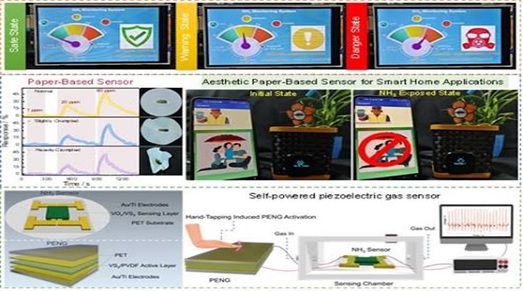
Indian scientists developed a portable, self-powered, and wearable ammonia sensing device capable of detecting extremely low concentrations of ammonia gas. The device was developed at the Centre for Nano and Soft Matter Sciences (CeNS), Bengaluru, an autonomous institute under the Department of Science and Technology (DST).
Why is it in News?
The innovation marks a significant advancement in India's indigenous sensor technology, nanotechnology, wearable electronics, and environmental monitoring systems. It offers a cost-effective, energy-efficient, and real-time solution for detecting hazardous ammonia gas in industrial, agricultural, and healthcare environments.
Features of the Ammonia Sensor
1. Ultra-High Sensitivity
2. Self-Powered Device
3. Room Temperature Operation
4. Flexible and Wearable
The sensor has been fabricated on flexible substrates such as:
This enables its integration into:
Working Principle
The sensor is based on a Vanadium Oxide–Vanadium Sulfide (VOx/VS₂) Heterostructure.
What is a Heterostructure?
A heterostructure is formed by combining two different semiconductor or functional materials to achieve superior electrical and sensing properties.
Such structures are widely used in:
Monitoring System
The device incorporates a threshold-triggered monitoring system, which categorizes ammonia concentration into:
This enables immediate alerts for timely preventive action.
Applications
The wearable ammonia sensor has wide-ranging applications in:
Significance
This innovation strengthens India's capabilities in:
It also supports the development of next-generation smart devices for industrial and environmental safety.
Ammonia (NH₃)
| Parameter | Details |
| Chemical Formula | NH₃ |
| Nature | Colourless gas with a pungent smell |
| Chemical Character | Alkaline (Basic) Gas |
| Molecular Weight | 17 g/mol |
| Density | Lighter than air |
| Solubility | Highly soluble in water |
| Discovery | Joseph Priestley (1774) |
| Industrial Production | Haber–Bosch Process |
| Raw Materials | Nitrogen (N₂) + Hydrogen (H₂) |
| Catalyst Used | Iron (Fe) Catalyst |
| Chemical Reaction | N₂ + 3H₂ ⇌ 2NH₃ |
Major Uses of Ammonia
10 September, 2026
24 August, 2026
06 August, 2026
28 July, 2026
27 July, 2026
22 July, 2026
20 July, 2026
26 May, 2026
08 May, 2026
20 April, 2026
