STATE SPECIAL NEWS
AI-powered portal to tackle air pollution
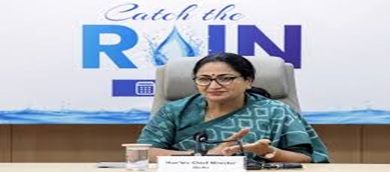
- Delhi Chief Minister Rekha Gupta launched the AI-powered ‘Dust Portal 2.0’ web platform and mobile application to monitor dust control compliance at construction and demolition sites across the national capital.
Delhi
- Official Name: National Capital Territory of Delhi (NCT of Delhi).
- Constitutional Status: Special Union Territory under Article 239AA (inserted by the 69th Constitutional Amendment Act, 1991).
- Administration: It has a legislative assembly and a council of ministers headed by a Chief Minister. However, Public Order, Police, and Land are under the jurisdiction of the Union Government (administered through the Lieutenant Governor).
- Districts: 11 districts.
- Legislature: Unicameral (70 Assembly seats).
- Parliamentary Representation: 7 Lok Sabha seats and 3 Rajya Sabha seats.
- Seismic Zone: Falls under Seismic Zone-IV (high vulnerability to earthquakes).
- Biodiversity: The Asola Bhatti Wildlife Sanctuary is located in the Aravalli hills.
- Ancient: Legend holds it was the site of Indraprastha (Mahabharata era).
- Medieval: Ruled by Delhi Sultanate (Slave, Khilji, Tughlaq, Sayyid, Lodi dynasties) and Mughal Empire.
- Modern: Capital shifted from Calcutta to Delhi in 1911 by the British.
- Designers: Designed by Edwin Lutyens and Herbert Baker.
- Incorporation: Became a Union Territory in 1956.
|
Mukhyamantri Bihar Heli-Tourism and Air Tourism Service Scheme 2026
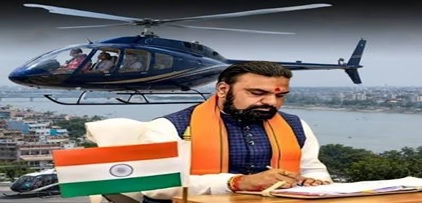
- Bihar Government launched the Mukhyamantri Bihar Heli-Tourism and Air Tourism Service Scheme 2026 in Patna, providing subsidised helicopter and air tourism services to selected destinations through a joint initiative of the Tourism and Civil Aviation Departments.
- Managed by the Bihar State Tourism Development Corporation (BSTDC), this landmark initiative aims to establish Bihar on the global tourism map by providing affordable, heavily subsidised aerial travel to key historical, ecological, and religious hotspots.
Bihar
- Bihar Diwas: 22 March
- CM: Samrat Choudhary
- Governor: Syed Ata Hasnain
- Tribes: Agaria, Baiga, Bedia, Gond, Gorait, Khond, Kora, Munda, Savar, Kawar, Kol, Tharu
- Major Protected Areas: Valmiki National Park, Kaimur Wildlife Sanctuary, Vikramshila Gangetic Dolphin Wildlife Sanctuary
- Major Places: Tomb of Sher Shah Suri, Barabar caves (oldest rock cut caves), Vikramshila Monastery, Bodhi Tree, Mahabodhi temple, Takht Sri Patna Sahib, Raigir, Nalanda, Vaishali, Ancient city of Patliputra
- Dance and Music forms: Jat-Jatin dance of the Mithila region, Bidesia, the songs of Vidyapati, Chau Tribal dances, Jhijhian dance, Kajari dance, Sohar-khilouna dance, Jhumeri dance
|
Hill Development Councils in Ladakh
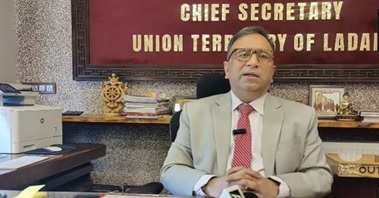
- The Ladakh administration will establish Autonomous Hill Development Councils (AHDCs) for all seven districts of the Union Territory, expanding local self-governance across the region.
- To unify these administrative layers, the administration has proposed a first-of-its-kind, apex Union Territory-level elected body to function above the seven local councils.
Uttarakhand’s First GI Products Gallery
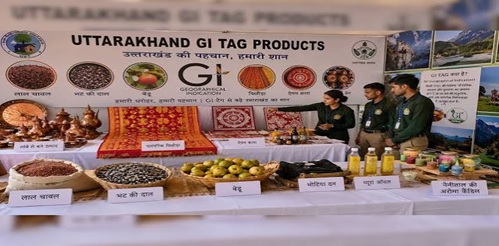
- Uttarakhand opened its first Geographical Indications (GI) Products Gallery at the Uttarakhand Forest Training Academy in Haldwani.
- This newly established gallery showcases the exceptionally rich agro-biodiversity, traditional crafts, and unique cultural heritage of the Himalayan state.
- The gallery includes items such as Bedu, Ramnagar litchi, Ramgarh peach, Tejpat, Munsiyari white rajma, Kumaon chyura oil, and Almora Lakhori chilli. It also features Aipan art, Chamoli wooden Ramman masks, and Uttarakhand Tamta copperware, which represent the state’s artisanal traditions.
Uttarakhand
- Foundation Day: 9 November 2000
- Capital: Dehradun
- Chief Minister: Pushkar Singh Dhami
- Governor: Gurmit Singh
- Highest Peak: Nandadevi
- Devprayag: Confluence of Bhagirathi and Alaknanda
- National Parks: Rajaji, Jim Corbett, Valley of Flowers, Nanda Devi, Gangotri, Govind Pashu Vihar
- Major Tectonic Faults near Joshimath: Vaikrita Thurst (VT), Main Central Thrust (MCT), and Pandukeshwar Thrust (PT)
- Major Festivals of Uttarakhand: Holi of Kumaon, Harela and Bhitauli, Magh Mela, Kumbh Ka Mela, Nanda Devi Mela, Bissu Mela
- Major Himalayan ranges in Uttarakhand: Bandarpoonch, Gangotri, Kamet, Nanda Devi, Panchchuli and Adi Kailash
|
INTERNATIONAL NEWS
India launched campaign for UN Security Council seat
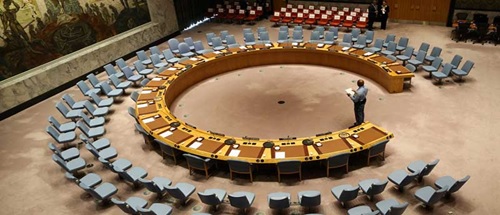
- India has officially launched its campaign for a non-permanent seat on the United Nations Security Council (UNSC) for the 2028–29 term, introducing its core SHANTI vision.
- External Affairs Minister S. Jaishankar announced the bid during a formal event at the UN Headquarters in New York.
- India will contest the single seat allocated to the Asia-Pacific Group against Tajikistan.
United Nations
- Predecessor: League of Nations (failed to prevent WWII).
- Charter Signed: 26 June 1945 in San Francisco.
- Official Inception: 24 October 1945 (celebrated annually as UN Day).
- Headquarters: New York City, USA (International territory).
- Official Languages (6): Arabic, Chinese, English, French, Russian, Spanish.
- Current Secretary-General: António Guterres (Portugal).
Six Principal Organs
1. UN General Assembly (UNGA)UN General Assembly (UNGA)
- Role: The main deliberative, policymaking, and representative organ.
- Membership: All 193 member states have equal representation (1 state = 1 vote).
- Key Fact: Admits new members upon the recommendation of the UNSC.
2. UN Security Council (UNSC)
- Role: Maintenance of international peace and security.
- Membership: 15 members (5 Permanent, 10 Non-permanent).
- P5 Members (Veto Power): US, UK, France, Russia, China.
- Non-Permanent: 10 members elected for 2-year terms by the UNGA (not eligible for immediate re-election)
3. Economic and Social Council (ECOSOC)
- Role: Coordinates economic, social, and environmental policies.
- Membership: 54 members, elected by the UNGA for overlapping 3-year terms.
4. International Court of Justice (ICJ)
- Role: The principal judicial organ of the UN.
- Location: The Hague, Netherlands (The only principal organ not in New York).
- Composition: 15 judges elected for 9-year terms by the UNGA and UNSC.
5. UN Secretariat
- Role: Carries out the day-to-day administrative work of the UN.
- Head: Secretary-General, appointed by UNGA on UNSC recommendation for a 5-year renewable term.
6. UN Trusteeship Council
- Status: Inactive. Suspended operations on 1 November 1994 following the independence of Palau (the last UN trust territory).
Specialized Agencies & Bodies
- Bretton Woods Twins: World Bank Group (WBG) and International Monetary Fund (IMF).
- UNESCO: United Nations Educational, Scientific and Cultural Organization (HQ: Paris).
- WHO: World Health Organization (HQ: Geneva).
- WIPO: World Intellectual Property Organization (HQ: Geneva).
- IAEA: International Atomic Energy Agency (HQ: Vienna) - Note: Reports to both UNGA and UNSC, not a strict specialized agency but an autonomous body.
India and the United Nations
- Founding Member: India is a charter member of the UN, having signed the declaration in 1945 before independence.
- Peacekeeping: India is historically one of the largest cumulative troop contributors to UN Peacekeeping Missions.
- G4 Nations: India is part of the G4 (India, Brazil, Germany, Japan) seeking permanent seats in a reformed UNSC.
|
Europe’s ballistic missile defence

- Ukraine and nine European nations have officially established the Anti-Ballistic Missile Coalition during a Coalition of the Willing summit in Paris.
- This joint initiative aims to create an integrated, purely defensive missile shield to protect the European continent from rapidly growing ballistic missile threats.
- The alliance will not replace sovereign European security measures but will instead complement existing national systems. At the heart of this new network is Project FREYJA, a homegrown anti-ballistic missile system developed by the defense firm Fire Point.
SUMMITS AND CONFERNCES
All India Water Secretaries’ Conference
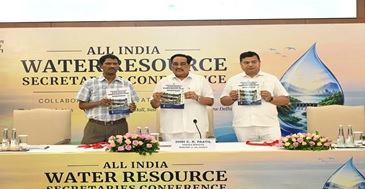
- The "All India Water Secretaries’ Conference" was organised by the Department of Water Resources, River Development & Ganga Rejuvenation, Ministry of Jal Shakti in New Delhi.
- Three important documents were also released:" City-level Action Plan for Reuse of Treated Water for Varanasi" - A Framework: Roadmap for safe reuse of treated wastewater and promoting Circular Water Economy; O&M Manual for Artificial Recharge and Ground Water Conservation Structures": Jointly developed by National Water Mission and Central Ground Water Board; "Schedule of Rates (SoR) for Drilling and Allied Works" - A Manual: Prepared by CGWB for transparency and standardisation.
IMPORTANT DAYS
3rd NAMASTE Day
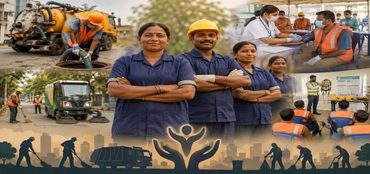
- India celebrated the 3rd NAMASTE Day on July 14, marking three years of the National Action for Mechanised Sanitation Ecosystem (NAMASTE) Scheme.
- Led by the Ministry of Social Justice & Empowerment, the main event took place at Rabindra Sadan, Kolkata, with nationwide programs by Urban Local Bodies focusing on worker safety, mechanized cleaning, and welfare.
National Action for Mechanized Sanitation Ecosystem (NAMASTE) Scheme
- Type: a Central Sector Scheme
- Launched: July 2023
- Jointly implemented by: Ministry of Social Justice and Empowerment (MoSJE) and the Ministry of Housing and Urban Affairs (MoHUA)
- Aim: To eliminate hazardous manual cleaning of sewers and septic tanks, replace manual labor with mechanization, and ensure the safety, dignity, and social security of sanitation workers
|
‘AI Champions for Digital Governance’ Summit
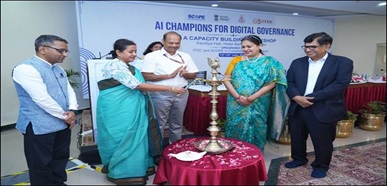
- India Tourism Development Corporation (ITDC), in collaboration with the Standing Conference of Public Enterprises (SCOPE) and the Lal Bahadur Shastri National Academy of Administration (LBSNAA), organised the three-day ‘AI Champions for Digital Governance’ Summit at Hotel Samrat, New Delhi.
- The programme has been designed to train senior leadership as well as operational teams in the practical application of artificial intelligence within their organisations, in alignment with the Government of India’s IndiaAI Mission.
ECONOMY & BANKING
India’s trade deficit
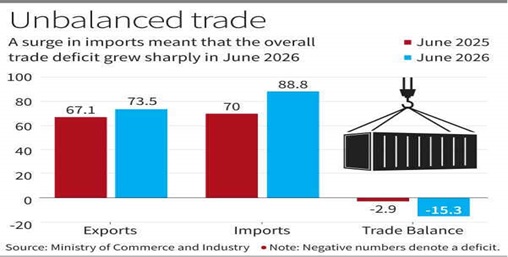
- According to released by the Ministry of Commerce and Industry, India’s trade deficit grew over fourfold to $15.3 billion in June 2026 primarily due to high growth in merchandise imports, which were skewed by a spurt in the value of imports of crude oil, electronic and electrical goods, and gold.
Trade deficit
- A trade deficit occurs when a country's total value of imported goods and services exceeds its total value of exports, leading to a negative balance of trade.
- It is the most critical component of the Current Account Deficit (CAD) within the larger double-entry system known as the Balance of Payments.
- Formula: Trade Deficit = Total Imports - Total Exports
- Balance of Payments (BoP): Trade falls specifically under the Current Account. The Current Account records visible trade (goods/merchandise) and invisibles (services, transfers, income).
- Macroeconomic Impact: A chronic trade deficit puts downward pressure on the domestic currency (e.g., INR) because it signifies more capital is leaving the country to buy foreign goods than is coming in.
- Twin Deficit Phenomenon: Excessive government borrowing to fund a fiscal deficit can spill over, driving up domestic consumption and leading to an even wider trade deficit.
Causes of a Trade Deficit
- High Domestic Demand: Strong economic growth boosts demand for foreign goods.
- Overvalued Currency: A strong domestic currency makes imports cheaper and exports more expensive.
- Structural Dependedness: High reliance on essential imports like crude oil, electronic goods, and gold.
- Low Export Competitiveness: High domestic logistics costs or poor product quality reduce global demand
Remedial Measures
- Currency Depreciation: Allowing the currency to weaken naturally makes exports cheaper and imports costlier.
- Tariffs and Quotas: Imposing import duties to protect domestic industries.
- Export Incentives: Providing subsidies, tax tax benefits, or cheaper credit to exporters.
- Import Substitution: Boosting domestic production of heavily imported items
|
India’s retail inflation at 4.38%
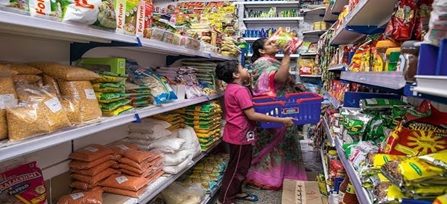
- India’s retail inflation (CPI) quickened to 4.38% in June 2026, up from 3.93% in May, crossing the Reserve Bank of India’s (RBI) medium-term 4% target for the first time in 17 months.
- Food Inflation Spike: Consumer food inflation surged to 5.32% in June, up from 4.78% in May.
- Regional Disparities: Nearly half of all Indian states and Union Territories recorded retail inflation above the RBI’s 4% threshold. Telangana topped the list at 6.36%, while Uttar Pradesh stood at 4.56%.
- Policy Outlook: Despite the headline crossing the 4% midpoint, the RBI's Monetary Policy Committee (MPC) is generally expected to maintain the status quo on benchmark interest rates while closely watching rainfall and energy prices.
Retail Inflation
|
Retail Inflation, measured by the Consumer Price Index (CPI), is the comprehensive macro-economic indicator that tracks the average change over time in the prices paid by ultimate consumers for a fixed basket of goods and services.
Framework
- Demand-Pull vs. Cost-Push Inflation: UPSC frequently asks about the causes of retail price surges. An increase in money supply or disposable income causes Demand-Pull inflation. Supply chain shocks (like uneven monsoons or geopolitical conflict) trigger Cost-Push inflation.
- Headline vs. Core Inflation:
- Headline Inflation: The total inflation figure calculated via the entire CPI basket (including highly volatile food and fuel items).
- Core Inflation: Calculated by excluding food and fuel from the headline CPI. It measures structural, long-term demand pressures in the economy.
- The Base Effect: This is a recurring conceptual trap. Inflation is calculated on a year-on-year (YoY) basis. If the index value in the corresponding month of the previous year was unusually low, even a moderate price rise in the current month will show up as a high inflation percentage.
- Divergence between CPI and WPI: It is common to see retail inflation (CPI) and wholesale inflation (WPI) move in different directions due to structural differences. For instance, a sharp spike in crude oil impacting factory gates directly drives WPI, while an increase in service fees (like education or transport) reflects solely in CPI.
Core Differences: CPI vs WPI vs PPI
Understanding the institutional variations across these indices is critical for matching and statement-based questions.
| Parameter |
Consumer Price Index (CPI) |
Wholesale Price Index (WPI) |
Producer Price Index (PPI) |
| Transaction Level |
Retail Consumer level |
Wholesale/Bulk transaction level |
Factory Gate / Production level (without taxes/transport) |
| Commodity Coverage |
Both Goods & Services |
Goods Only (No Services) |
Both Goods & Services |
| Releasing Authority |
National Statistical Office (NSO), Ministry of Statistics & Programme Implementation (MoSPI) |
Office of Economic Adviser, Ministry of Commerce & Industry |
Released gradually by the Ministry of Commerce to modernize the framework. |
| Highest Weightage |
Food and Beverages |
Manufactured Products |
Output and input frameworks |
Structural Mechanics of CPI
The NSO compiles four distinct types of CPIs to cater to different economic segments: [1]
- CPI for Industrial Workers (CPI-IW): Used for fixing dearness allowance (DA) of government employees. (Note: Compiled by the Labour Bureau, Ministry of Labour and Employment).
- CPI for Agricultural Labourers (CPI-AL): Tracks rural agrarian consumption. (Compiled by the Labour Bureau).
- CPI for Rural Labourers (CPI-RL): Tracks broader rural casual labor. (Compiled by the Labour Bureau).
- CPI (Rural/Urban/Combined): The primary macroeconomic metric. (Compiled by NSO, MoSPI).
The Macro Framework: CPI-Combined
- Monetary Policy Tool: In 2014, the Reserve Bank of India (RBI) officially adopted CPI-Combined (CPI-C) as its anchor to execute monetary policy.
- Inflation Targeting: Under the Flexible Inflation Targeting framework, the central government mandates the RBI to maintain headline CPI at 4% with a tolerance band of ± 2% (i.e., a range of 2% to 6%).
Facts & Recent Updates
- New Base Year Shift: The NSO updated the base year of the primary CPI series from 2012 to 2024 = 100.
- Updated Survey Basket: The new series derives its item weights from the Household Consumption Expenditure Survey (HCES) 2023-24. The number of items in the basket was increased to 358 items (up from 299) to capture modern consumption.
- Reduction in Food Weightage: Reflecting Engle's Law (as an economy grows, the proportion of income spent on food declines), the weightage of the Food and Beverages category in the updated CPI has dropped to 36.75% (down from the previous 45.86%).
- Digital Integration: Price collection has transitioned to digital methods, expanding coverage to include real-time transactions from online e-commerce platforms alongside traditional rural and urban markets.
|
Bharat Tex 2026
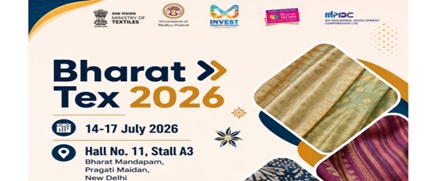
- India's largest global textile event, Bharat Tex 2026 started at Bharat Mandapam in New Delhi.
- The four-day event will showcase India's growing global leadership in textiles, fashion, sustainability, technology, innovation, investment and international trade.
NTPC Bongaigaon Signed MoA for Project SRIJAN
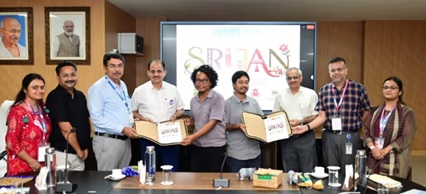
- NTPC Bongaigaon has signed a Memorandum of Agreement (MoA) with Zankla Foundation, the CSR arm of Zankla Studio, for the implementation of a unique Corporate Social Responsibility initiative named Project SRIJAN.
PERSON IN NEWS
Anil Menon

- NASA astronaut Anil Menon launched on his first mission to the International Space Station (ISS) aboard Russia's Soyuz MS-29 spacecraft from the Baikonur Cosmodrome on 14 July 2026, along with Roscosmos cosmonauts Pyotr Dubrov and Anna Kikina.
International Space Station (ISS)
- Collaborative Ownership: NASA (United States), Roscosmos (Russia), ESA (European Space Agency), JAXA (Japan), CSA (Canada)
- Governed by: 1998 Space Station Intergovernmental Agreement (IGA)
- Altitude: It orbits at an altitude between 370 km and 460 km above Earth.
- Orbit Type: Low Earth Orbit (LEO).
- Speed: Travels at approximately 27,600 km/h, completing 15.5 orbits per day (one orbit every 90 minutes)
- Timeline: The ISS is scheduled to be safely decommissioned and retired by 2030–2031.
- Final Destination: NASA plans to intentionally de-orbit the structure, directing its crash into Point Nemo (the oceanic point of inaccessibility in the South Pacific Ocean).
- US Deorbit Vehicle (USDV): Commercial space partners (like SpaceX) have been contracted to develop the spacecraft responsible for safely guiding the ISS down through Earth's atmosphere.
- Russia's Exit: Roscosmos has indicated it will withdraw from the ISS partnership post-2028 to focus on building its own independent space station (ROS).
- India’s initiative: ISRO is actively working on its own space station, the Bhartiya Antariksha Station (BAS), targeting a preliminary module deployment by 2028 and full operational capabilities by 2035.
|
ART & CULTURE
‘Naba Jaubana Darshan' of Lord Jagannath
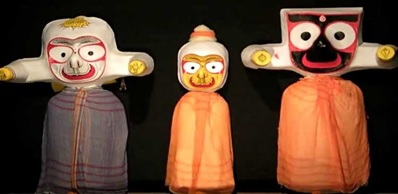
- In Odisha, the sacred 'Naba Jaubana Darshan' of Lord Jagannath, Lord Balabhadra, and Devi Subhadra held at the Shree Jagannath Temple in Puri, marking the first public appearance of the sibling deities after the fortnight-long 'Anasara' period.
Shree Jagannath Temple in Puri
|
Architectural Facts (Kalinga Style)
- Architectural Classification: Kalinga Architecture (a sub-style of Nagara temple architecture).
- Bulit by: by King Anantavarman Chodaganga Deva of the Eastern Ganga Dynasty in the 12th century
- Structural Components: The temple features a towering curvilinear main sanctuary (the Rekha Deula) and the pillared assembly hall porch (the Jagamohana or Pidha Deula).
- Compound Walls: The complex is fortified by two concentric walls: the outer wall is called the Meghnada Pacheri and the inner wall is the Kurma Bheda.
- Unique Features: Unlike most Hindu temples, it faces the east and features the Neela Chakra (a sacred blue wheel) atop the spire, along with the fluttering Patita Pavana Bana (temple flag).
Historical & Geographical Significance
- Char Dham: It is one of the four sacred Char Dham pilgrimage sites in India (along with Badrinath, Dwarka, and Rameswaram).
- Yamanika Tirtha: Ancient texts refer to Puri as Yamanika Tirtha, a place where the power of Yama (the god of death) is believed to be nullified.
- Gajapati Rule: In the 13th century, King Anangabhima III proclaimed himself the deputy of Lord Jagannath and dedicated his kingdom to the deity, signifying the concept of divine kingship.
Rituals & Trivia
- The Trinity: The wooden deities are carved from daru (margosa/neem wood).
- Nabakalebara: A sacred ritual where the wooden idols are ceremoniously replaced and buried with identical replicas. This occurs periodically (every 12 to 19 years, depending on astrological calculations).
- Rath Yatra: The grand annual Chariot Festival where the deities travel to the Gundicha Temple in massive, intricately decorated wooden chariots.
- Largest Kitchen: It is known to house one of the largest community temple kitchens in the world, where Mahaprasad is prepared in earthen pots.
|
GI Tags to Gujarat’s Unjha Cumin and Fennel
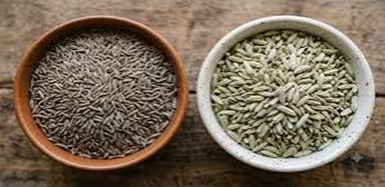
- Unjha Cumin (Jeera) and Unjha Fennel (Variyali) from North Gujarat have officially been granted Geographical Indication (GI) tags by the Government of India’s GI Registry.
- This milestone provides legal protection against identity misuse while significantly elevating the global market presence of North Gujarat's spice sector.
Geographical Indication (GI) tags
- Governing Law: Governed by the Geographical Indications of Goods (Registration and Protection) Act, 1999.
- Nodal Agency: Administered by the Controller General of Patents, Designs, and Trade Marks, who is the Registrar of Geographical Indications.
- Department: Department for Promotion of Industry and Internal Trade (DPIIT), Ministry of Commerce and Industry.
- Headquarters: The GI Registry of India is located in Chennai, Tamil Nadu.
- Validity: A GI tag is valid for a period of 10 years, which can be renewed indefinitely.
- First Product: Darjeeling Tea was the first Indian product to receive a GI tag in 2004–2005.
International Framework
- Paris Convention: GI protection is recognized under Articles 1(2) and 10 of the Paris Convention for the Protection of Industrial Property.
- TRIPS Agreement: Governed globally under Articles 22 to 24 of the Trade-Related Aspects of Intellectual Property Rights (TRIPS) Agreement of the World Trade Organization (WTO). India, as a member of the WTO, enacted its domestic GI Act to comply with TRIPS obligations.
Legal & Functional Distinctiveness
- Community vs. Individual Right: Unlike Trademarks or Patents which are owned by an individual or a single company, a GI tag is a collective/community right. It belongs to all producers within the specified geographic region who meet the defined standards.
- Categories Covered: GI tags are granted to Agricultural products (e.g., Basmati Rice), Natural goods (e.g., Makrana Marble), Manufactured items (e.g., Mysore Silk), Handicrafts (e.g., Pashmina Shawl), and Foodstuffs (e.g., Hyderabadi Haleem).
- Benefits: Prevents unauthorized use of a registered geographical indication by others, boosts exports, promotes rural development, and protects consumers from deception.
Facts
- State with Maximum GI Tags: Historically, states like Tamil Nadu, Uttar Pradesh, and Karnataka routinely compete for the highest number of registered GI tags. Keep an eye on recent economic survey data for the exact shifting rank before your prelims.
- Logo and Slogan: "Invaluable Treasures of Incredible India" (अतुल्य भारत की अमूल्य निधि).
- Darjeeling Tea Exception: It holds GI protection for both its logo and the text word "Darjeeling".
|
ENVIRONMENT + SCIENCE & TECHNOLOGY
Five-Day Editorial Workshop on WHO-ICHI Framework
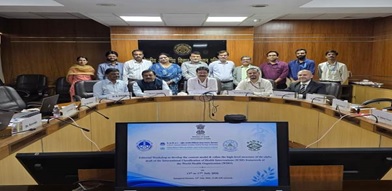
- The Ministry of Ayush, Government of India, launched the five-day "Editorial Workshop to Develop the Content Model and Refine the High-Level Structure of the Alpha Draft of the International Classification of Health Interventions (ICHI) Framework of the World Health Organization (WHO).
- The workshop is being organized by the Central Council for Research in Ayurvedic Sciences (CCRAS) through its World Health Organization Collaborating Centre, the National Institute of Indian Medical Heritage (NIIMH), Hyderabad (CC IND-177).
NIDAR 2.0 and SwaYaan initiative
|
NIDAR 2.0
- The Ministry of Electronics and Information Technology (MeitY), in collaboration with Drone Federation India (DFI), launched the second edition of the National Innovation Challenge for Drone Application and Research (NIDAR 2.0, 2026-27) under the SwaYaan initiative.
- The first edition of NIDAR 2025-26 was launched in March 2025.
SwaYaan initiative
- A capacity-building program to develop and strengthen India’s Unmanned Aircraft Systems (UAS) and drone ecosystem.
- Nodal Ministry/Body: Ministry of Electronics and Information Technology (MeitY) in collaboration with the Drone Federation of India (DFI).
- Approved: July 2022
- Implementation Model: Follows a Hub-and-Spoke model utilizing a network of 30 premier academic and R&D institutions (including IISc, IITs, NITs, C-DAC, and NIELIT centres).
|
DEFENCE NEWS
Sail Boston 2026

- The Indian Naval Sail Training Ship INS Sudarshini reached to Boston Fish Pier, as part of its 10-month, 22,000-nautical-mile Lokayan 2026 transoceanic voyage.
- Representing India as a maritime ambassador of goodwill, the three-masted barque joined a grand international fleet of over 60 tall ships from more than 20 countries for the commencement of Sail Boston 2026.
Indian Navy
- Founded: 26 January 1950
- Navy Day: 4 December
|
- Motto(s): Shaṁ No Varunaḥ
- Supreme Commander: President Droupadi Murmu
|
- Chief of the Naval Staff (CNS): Admiral Krishna Swaminathan
|
SPORTS
India-England Women’s Test Match 2026
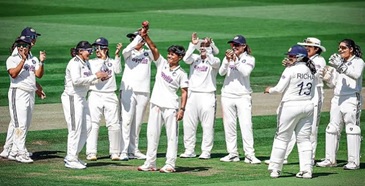
- The Indian women’s cricket team made history by registering a dominant 270-run victory over England in the first-ever women’s Test match played at the iconic Lord's Cricket Ground in London.
- First Women's Test at Lord's: The match marked the first-ever women's Test played at the "Home of Cricket," 142 years after the venue hosted its first men's Test.
- Kranti Gaud became the first female cricketer to get her name on the prestigious Lord’s Test honours board after claiming a five-wicket haul in the first innings.
- Wicketkeeper-batter Yastika Bhatia scored 113 in India's second innings, becoming the first Indian woman to score a Test century at Lord's.
1st Bishnupur District Olympic Games, 2026
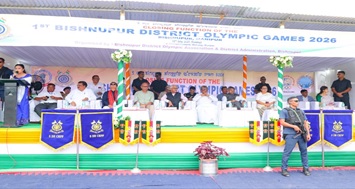
- In Manipur, the 1st Bishnupur District Olympic Games, 2026, organised by the District Administration, Bishnupur and the Bishnupur District Olympic Association, was concluded.


 Don't Have an Account?