National News
Pilot Trial of Hydrogen-Fueled Transport on 10 Major Routes
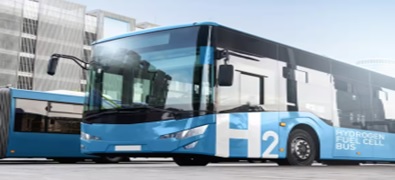
- The Government of India has launched a pilot trial for hydrogen-fueled transport on 10 major routes to reduce dependence on fossil fuels.
- Union Minister for Road Transport and Highways Nitin Gadkari announced this initiative, which aims to reduce carbon emissions from the transport sector and promote green energy.
Related Facts:
|
10 major routes selected for the trial:
- Greater Noida: Delhi–Agra
- Bhubaneswar: Konark–Puri
- Ahmedabad: Vadodara–Surat
- Sahibabad: Faridabad–Delhi
- Pune: Mumbai
- Jamshedpur: Kalinganagar
- Thiruvananthapuram: Kochi
- Kochi: Edappally
- Jamnagar: Ahmedabad
- NH-16: Visakhapatnam–Bayyavaram
Hydrogen:
- Element: It is the first element in the periodic table, with an atomic number of 1 and the chemical symbol H.
Types of Hydrogen:
- Green Hydrogen: Produced via water electrolysis using renewable energy (solar or wind). It is completely pollution-free.
- Grey Hydrogen: Produced from fossil fuels (natural gas), resulting in carbon emissions.
- Blue Hydrogen: Produced from fossil fuels, but the emitted carbon is captured and stored.
National Green Hydrogen Mission (NGHM):
- Launch: Approved by the Union Cabinet on January 4, 2023
- Nodal Ministry: Ministry of New and Renewable Energy (MNRE)
- Total Budget Allocation: ₹19,744 crore up to the financial year 2029-30
- Mission Goal: To produce 5 million tonnes of green hydrogen per annum by 2030
|
'Centre for High Altitude Medicine and Public Health Research'
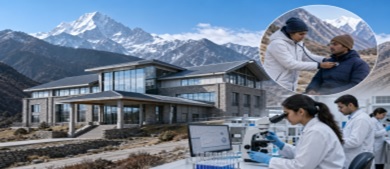
- On July 11, Union Health Minister Jagat Prakash Nadda laid the foundation stone for the Indian Council of Medical Research (ICMR) Centre for High Altitude Medicine and Public Health Research in Keylong, Lahaul and Spiti district, Himachal Pradesh.
- Keylong hosts ICMR's first dedicated centre for high-altitude medicine and public health research.
- This centre will strengthen healthcare services and biomedical research capable of addressing the impacts of climate change in India's Himalayan region.
Related Facts:
- Name of the Institute: Centre for High Altitude Medicine and Public Health Research
- Location: Keylong, Lahaul and Spiti district, Himachal Pradesh.
- Foundation Stone Laid by: Union Health Minister J.P. Nadda (Note: The foundation-laying event scheduled for July 11, 2026, has been postponed due to inclement weather).
- Nodal Agency/Institution: Indian Council of Medical Research (ICMR)
- Ministry: Department of Health Research under the Ministry of Health and Family Welfare
- Collaborating Institutions: Armed Forces Medical Services (AFMS), Defence Research and Development Organisation (DRDO), and the Government of Himachal Pradesh.
Indian Council of Medical Research (ICMR):
- Year of Establishment: Established in 1911 as the 'Indian Research Fund Association' (IRFA).
- Renaming: Renamed as ICMR in 1949.
- Headquarters: New Delhi
- Department of Health Research (DHR): Established in 2007 under the Ministry of Health and Family Welfare.
- Keylong and Geography: Keylong is connected to Manali via the Atal Tunnel (Rohtang), situated on the strategic route linking Ladakh and Himachal.
|
Inauguration of the ‘Mera Yuva-Mera Gaurav Sammelan 2026’
- The ‘Mera Yuva-Mera Gaurav Sammelan 2026’ (My Youth-My Pride Conference 2026) was inaugurated by Madhya Pradesh Chief Minister Dr. Mohan Yadav in Indore.
- Approximately 5,000 youths from across the state participated in this conference, which was based on the theme ‘One State, One Generation, One Resolve’.
Key Details:
- Date of Event: July 11, 2026
- Venue: Indore (Brilliant Convention Center), Madhya Pradesh
- Inaugurated by: Chief Minister Dr. Mohan Yadav
- Total Participants: Approximately 5,000 youths from across the state
- Document: A policy document titled “Madhya Pradesh Yuva Sankalp 2026” (Madhya Pradesh Youth Resolve 2026) will be prepared by compiling the ideas and suggestions of the youth.
Madhya Pradesh:
- Nickname: Heart of India
- Capital: Bhopal
- Largest City: Indore
- Major Dances: Mandni, Gond, Badhai, Reena
- State Sport: Mallakhamb
- State Dance: Rai
- Boundaries: Uttar Pradesh to the north, Chhattisgarh to the east, Rajasthan and Gujarat to the west, Maharashtra to the south
- Major Rivers: Narmada, Tapti, Betwa, Chambal, Shipra, Son
|
Agreement between NITI Aayog and Tata Motors Foundation
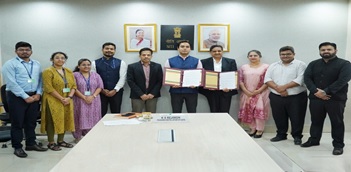
- NITI Aayog signed a Memorandum of Understanding (MoU) with the Tata Motors Foundation.
Key Facts:
- Partnership: A 'Statement of Intent' (SoI) has been signed between NITI Aayog and Tata Motors Foundation.
- Project Name: Second phase of the Integrated Village Development Project (IVDP 2.0).
- Main Objective: To promote integrated rural development in the country's Aspirational Blocks.
- Target States: This initiative will primarily be implemented in selected Aspirational Blocks of Maharashtra and Uttar Pradesh.
- Key Presence: K.S. Rejimon, Joint Secretary at NITI Aayog and Director of the Aspirational Districts and Blocks Programme, was present on the occasion.
NITI Aayog:
- NITI Aayog: National Institution for Transforming India.
- It is the Government of India's premier policy 'think tank'.
- Establishment: 1 January 2015.
- Predecessor Body: Planning Commission.
- Nature: It is a non-constitutional and non-statutory body.
- Headquarters: New Delhi.
- Chairperson: Prime Minister (Ex-officio Chairperson).
- Vice-Chairperson: Appointed by the Prime Minister (holds the rank of a Cabinet Minister); currently Ashok Kumar Lahiri (appointed in April 2026, succeeding Suman K. Bery).
- Full-time Members: Hold the rank of Minister of State.
- Ex-officio Members: Maximum of 4 ministers from the Union Council of Ministers (nominated by the Prime Minister).
- Chief Executive Officer (CEO): Ms. Nidhi Chhibber (given additional charge; succeeded B.V.R. Subrahmanyam).
Aspirational Districts Programme:
- Launch: January 2018.
- Focused on five thematic areas: Health & Nutrition, Education, Agriculture & Water Resources, Financial Inclusion & Skill Development, and Infrastructure.
Aspirational Blocks Programme:
- Launch: January 2023.
- Focused on five thematic areas: Health & Nutrition, Education, Agriculture & Allied Services, Infrastructure, and Social Development.
|
Rs 381 crore approved for rail safety and maintenance capabilities
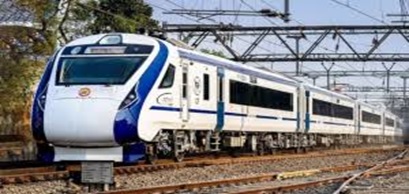
- Indian Railways approved two infrastructure projects worth a total of Rs 381 crore aimed at strengthening rail safety and maintenance capabilities.
- This includes the introduction of Kavach version 4.0 on major routes of Northern Railway and creation of additional homing facilities for electric locomotives at Raipur.
Related facts:
|
First project: Expansion of Kavach version 4.0:
- Cost: ₹206 crore
- Area/Scope: Under this, Rewari-Delhi and Shakurbasti-Bhatinda railway sections (including feeder branch lines) falling in Delhi Division of Northern Railway will be included. It will cover a total of 680 route kilometers (Rkm)
- Objective: To provide advanced digital security systems on strategic and high-density rail routes.
Second Project: 'Homing' Facilities for Electric Locomotive:
- Cost: ₹175 crore.
- Scope/Scope: Additional homing facilities for 250 three-phase electric locomotives will be created at High Horse Power (HHP) Diesel Shed located at Raipur under South East Central Railway (SECR).
- Meaning of 'Homing': Homing refers to allocating a specified shed to a locomotive, which acts as its primary maintenance centre. This shed is responsible for scheduled maintenance, safety inspection, repairs and routine care of locomotives.
Indian Railways:
- First Passenger Train: India's first passenger train ran on 16 April 1853 during the tenure of Lord Dalhousie.
- Distance and Route: This first train was run from Mumbai (Bori Bunder) to Thane for a distance of 34 kilometers, carrying 400 passengers.
- Nationalization: 1951
- Establishment of Railway Board: Indian Railway Board was formed in the year 1905.
- Computerized Reservation: The first computerized reservation service in India was started in 1986 from New Delhi.
- Introduction of Toilets: Toilets were first included in trains in the year 1909.
- Position in the world: Indian Railways is the fourth largest in the world (after USA, China and Russia).
- Headquarters: The main headquarters of Indian Railways is located in New Delhi.
- Oldest Engine: 'Fairy Queen' is the world's oldest working steam engine, recorded in the Guinness Book
- Longest platform: Currently, Sri Siddharuda Swamiji Hubli station (1,507 m) in Karnataka is the longest railway platform in the world (earlier it was Gorakhpur Junction).
- Highest railway station: Ghum railway station located in West Bengal is the highest (2,258 m) railway station in India.
UNESCO World Heritage Sites: Four sites of Indian Railways are included in the UNESCO list:
- Darjeeling Himalayan Railway
- Nilgiri Mountain Railway
- Kalka-Shimla Railway
- Chhatrapati Shivaji Maharaj Terminus (Mumbai)
|
Inauguration of the Jayaprakash Narayan (JPN) Public Library
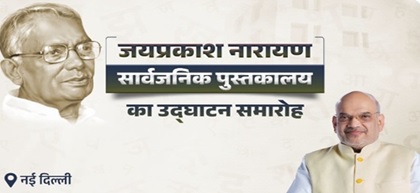
- Union Home Minister Amit Shah inaugurated the state-of-the-art Jayaprakash Narayan (JPN) Public Library in New Delhi.
Related Facts:
- Developer: This high-tech library has been developed by the New Delhi Municipal Council (NDMC).
- Area and Capacity: It is a two-story building spread across an area of 2,265 square meters, with seating arrangements for 200 readers at a time.
- Digital Resources: The library offers approximately 35,000 physical books and over 10 million (1 crore) e-books and digital resources free of cost.
- State-of-the-art Technology: It features membership registration via facial recognition systems and RFID (Radio Frequency Identification)-based automatic self-issue kiosks, ensuring 'minimal human intervention'.
Loknayak Jayaprakash Narayan:
- Birth: October 11, 1902; Sitab Diara (then Saran district, Bihar).
- He was influenced by the ideas of Karl Marx and became a Marxist.
- He quit active politics in the 1950s and joined Vinoba Bhave in the Bhoodan movement, working for the Sarvodaya movement.
- He promoted the Gandhian ideals of *Gram-Swaraj* (Village Self-Rule).
- Honour: He was posthumously awarded the Bharat Ratna (1999), India's highest civilian honour.
- Title: He was honoured with the title "Loknayak" (People's Leader).
|
Economy and Banking
Approval for Dixon (India)-Vivo (China) Joint Venture for Smartphone Manufacturing
- The Government of India has approved a joint venture between the domestic contract manufacturing company Dixon Technologies and the smartphone brand Vivo.
- Under this partnership, the new company will manufacture Vivo smartphones and other electronic products in India.
Related Facts:
- Date of Approval: The joint venture was approved by the Government of India on July 8, 2026.
- Dixon Technologies: 51% stake (majority and administrative control)
- Vivo Mobile India: 49% stake
- Initial Paid-up Share Capital: The venture will commence with an initial capital of ₹5 crore.
Make in India:
- Launch: Launched by Prime Minister Narendra Modi on September 25, 2014.
- Nodal Ministry: Ministry of Commerce and Industry
- Implementing Agency: Department for Promotion of Industry and Internal Trade (DPIIT)
Production Linked Incentive (PLI) Scheme:
- Launch: March 2020
- Main Objectives: To boost domestic manufacturing, create employment opportunities, and reduce dependence on imports.
- Initially targeted three industries: Mobile and allied component manufacturing, electrical component manufacturing, and medical devices.
- Later expanded to 14 sectors.
As of December 31, 2025, the overall performance under the scheme is as follows:
- Approved Applications: 836 applications across 14 sectors.
- Investment: Total investment exceeding ₹2.16 lakh crore.
- Production/Sales: Total sales exceeding ₹20.41 lakh crore.
- Exports: Total exports exceeding ₹8.3 lakh crore.
- Employment: Over 14.39 lakh direct and indirect jobs created. Incentive Disbursement: ₹28,748 crore disbursed up to 31 December 2025.
|
Approval for Strategic Petroleum Reserve in Karnataka
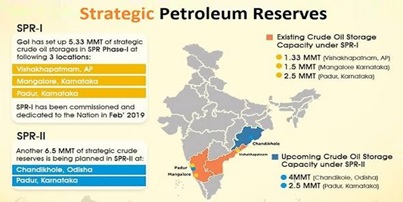
- Oil and Natural Gas Corporation (ONGC) has granted in-principle approval for the construction of a Strategic Petroleum Reserve (SPR) with a capacity of 1.75 million metric tonnes (MMT) in Mangaluru, Karnataka.
- This project of 'national importance' will strengthen energy security by enhancing India's emergency oil storage capacity.
Key Facts:
- Proposing Entity: ONGC (Oil and Natural Gas Corporation Limited), the country's first public sector energy company, is directly financing this strategic reserve.
- Proposed Location: Mangaluru, Karnataka (as a Phase-I expansion project).
- Storage Capacity: 1.75 MMT (approximately 12.8 million barrels of crude oil).
- Estimated Cost: The total budget is approximately ₹15,000 crore (comprising ₹5,000 crore for the construction of underground rock caverns and ₹10,000 crore for filling them with crude oil).
- Capacity Increase: Following this expansion, India's existing emergency storage capacity will increase by approximately 33% (one-third).
Strategic Petroleum Reserve (SPR):
- Strategic Petroleum Reserves are massive underground stockpiles of crude oil maintained for use during emergencies such as war, geopolitical tensions (e.g., the recent West Asia crisis), or sudden disruptions in global supply. Since India imports 85% to 88% of its crude oil requirements, these reserves are critically important. India's Current SPR Infrastructure (Phase-I):
- Currently, India has a total storage capacity of 5.33 MMT, sufficient to meet approximately 9.5 days of oil requirements.
It is located at three sites:
- Visakhapatnam (Andhra Pradesh): 1.33 MMT
- Mangaluru (Karnataka): 1.50 MMT
- Padur (Karnataka): 2.50 MMT
- Note: Following the new 1.75 MMT expansion, the country's total capacity will rise to 7.08 MMT. Additionally, under Phase-II, the government is working on plans for further storage facilities at Chandikhol (Odisha) with a capacity of 4 MMT and Padur (Karnataka) with a capacity of 2.5 MMT.
|
Environment News
28th Meeting of the Reconstituted WII Society
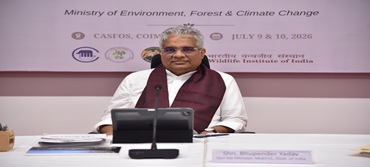
- The 28th meeting of the reconstituted Wildlife Institute of India (WII) Society was held in Coimbatore, Tamil Nadu, and was chaired by Union Environment Minister Bhupender Yadav.
Related Facts:
|
Venue: Central Academy for State Forest Service (CASFOS), Coimbatore, Tamil Nadu
Presided by: Union Minister for Environment, Forest and Climate Change, Shri Bhupender Yadav (who is also the ex-officio President of the WII Society)
- Significance: This was the first meeting following the Society's reconstitution for a three-year term, which took place after the tenure of the nominated members ended in April 2026.
- Key Vision: Aligning the institute's research, training, and policies with the national blueprint of 'Viksit Bharat @ 2047'.
- National Board for Wildlife (NBWL) Meeting: Concurrently, the 91st meeting of the Standing Committee of the National Board for Wildlife was also held in Coimbatore, where over 100 developmental projects were reviewed. Deliberations were held on including the 'Pygmy Hog' in the species recovery program.
Wildlife Institute of India (WII):
- Establishment: 1982.
- Headquarters: Dehradun, Uttarakhand.
- Nature: An autonomous institute under the Union Ministry of Environment, Forest and Climate Change (MoEFCC).
- Functions: Wildlife research, academic courses, biodiversity conservation, and training for forest officials.
National Board for Wildlife (NBWL):
- Statutory Body: A statutory body constituted under the Wildlife (Protection) Act, 1972.
- Establishment Year: Reconstituted in its current form in 2003 (following the 2002 Amendment Act).
- Ministry: Functions under the Union Ministry of Environment, Forest and Climate Change (MoEFCC).
- NBWL is an apex body comprising a total of 47 members.
- Chairperson: The Prime Minister of India is the ex-officio Chairperson.
- Vice-Chairperson: The Union Minister for Environment, Forest and Climate Change is the Vice-Chairperson. Other members: This includes Members of Parliament (3 MPs), environmentalists, conservationists, various non-governmental organizations (NGOs), and top officials from the army and the government.
|
Inauguration of the Centre of Excellence (CoE) on Human-Wildlife Conflict
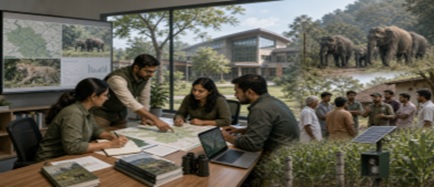
- Union Minister for Environment, Forest and Climate Change Bhupender Yadav inaugurated the Centre of Excellence (CoE) on Human-Wildlife Conflict and launched the National Human-Wildlife Conflict Portal at the Wildlife Institute of India-Sálim Ali Centre for Ornithology and Natural History (WII-SACON) in Coimbatore.
Related Facts:
|
Key Launches and Publications:
- National Human-Wildlife Conflict Portal: The Union Minister launched the country's first integrated digital human-wildlife conflict portal. This platform will facilitate live data collection of conflict incidents across the country, real-time monitoring, and rapid coordination among forest departments.
- Release of a Special Report: On this occasion, the first edition of a significant report series titled 'Current Status of Human-Wildlife Conflict in India: An Overview' was released; it presents a comprehensive analysis of the prevailing trends and challenges regarding such conflicts in India.
- Wildlife Institute of India-Sálim Ali Centre for Ornithology and Natural History (WII-SACON):
- Year of Establishment: It was established on June 5, 1990 (World Environment Day).
- Naming: It is named in memory of India's famous 'Birdman' and renowned ornithologist, Dr. Sálim Ali.
- Collaboration: The Bombay Natural History Society (BNHS) and the Ministry of Environment played a key role in its establishment.
|
Defence News
Launch of INS Mahendragiri
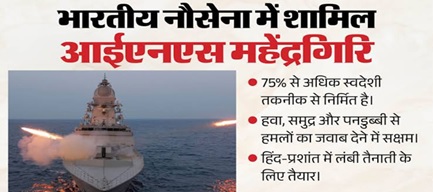
- On July 11, 2026, Defence Minister Rajnath Singh inducted the indigenous stealth frigate INS Mahendragiri into the Indian Navy's Eastern Fleet at the Naval Dockyard in Visakhapatnam.
- It is the sixth indigenous warship built under Project 17A and is named after the Mahendragiri mountain range in the Eastern Ghats of Odisha.
Related Facts:
|
Key features of INS Mahendragiri:
- It is the sixth indigenous stealth frigate constructed under Project 17A.
- The warship was designed by the Indian Navy's Warship Design Bureau (WDB) and built by the Mumbai-based Mazagon Dock Shipbuilders Limited (MDL).
- Under the 'Atmanirbhar Bharat' (Self-Reliant India) initiative, more than 75 percent indigenous components and materials were used in the construction of this warship, with significant contributions from numerous domestic MSMEs.
- It is equipped with state-of-the-art stealth technology, modern weaponry, and sensors. It is capable of simultaneously countering threats from the air, the sea surface, and underwater (submarines).
Speed and Capability:
- With a full-load displacement of approximately 6,670 tonnes, the warship has a maximum speed of 28 knots. It is fully capable of safeguarding India's strategic and maritime interests in the Indian Ocean Region (IOR). All 7 warships of Project 17A:
- INS Nilgiri – January 2025
- INS Udaygiri – August 2025
- INS Himgiri – August 2025
- INS Taragiri – April 2026
- INS Dunagiri – June 2026
- INS Mahendragiri – 11 July 2026
- INS Vindhyagiri: This is the seventh and final frigate of the series; it is currently undergoing its final phase of sea trials and outfitting. It will also be officially inducted into the Navy soon.
Indian Navy:
- Established: 26 January 1950
- Navy Day: 4 December
- Motto: "Sham No Varunah"
- Chief: Admiral Krishna Swaminathan; assumed office as the 27th Chief of the Indian Navy on 31 May 2026
Naval Commands:
- Western Naval Command (Mumbai)
- Southern Naval Command (Kochi)
- Eastern Naval Command (Visakhapatnam)
|
Reports and Indices
Global Air Powers Ranking 2026
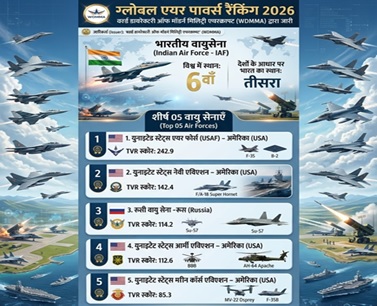
- The Indian Air Force ranks 6th globally in the 'Global Air Powers Ranking 2026' released by the 'World Directory of Modern Military Aircraft' (WDMMA).
Key Facts:
- Individual Military Service Branch: The Indian Air Force (IAF) secured the 6th position in this category, surpassing China (7th) and Japan (8th).
- Country-wise Ranking: Since the United States has multiple aviation branches (Air Force, Navy, Marine Corps) ranked separately, India holds the third position when considering countries, trailing only the US and Russia.
- Lead over China: India has maintained its lead over China's People's Liberation Army Air Force (PLAAF) in the global rankings for the fifth consecutive time.
Top 10 Air Forces:
- 1. United States Air Force (USAF) – USA (TVR Score: 242.9)
- 2. United States Navy Aviation – USA (TVR Score: 142.4)
- 3. Russian Air Force – Russia (TVR Score: 114.2)
- 4. United States Army Aviation – USA (TVR Score: 112.6)
- 5. United States Marine Corps Aviation – USA (TVR Score: 85.3)
- 6. Indian Air Force (IAF) – India (TVR Score: 69.4)
- 7. People's Liberation Army Air Force (PLAAF) – China (TVR Score: 63.8)
- 8. Japanese Air Force – Japan (TVR Score: 58.1)
- 9. Israeli Air Force – Israel (TVR Score: 56.3)
- 10. French Air Force – France (TVR Score: 55.3)
Indian Air Force's Current Fleet:
- Fighter Aircraft: A total of 542 aircraft across 7 different categories
- Helicopters: 498 helicopters (including Mi-17 and indigenous HAL Dhruv and Rudra)
- Transport Aircraft: 282 aircraft
- Training Aircraft: 374 aircraft
- According to the WDMMA 2026 report, India possesses a total of 1,716 active aircraft.
|
Person In News
Playback Singer S. Janaki Passes Away
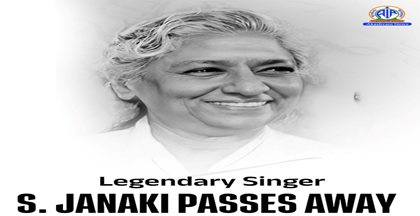
- Legendary playback singer S. Janaki, renowned as the 'Nightingale of the South', has passed away at the age of 88.
Key Facts:
- Full Name: Sistla Sriramamurthy Janaki
- Popular Name: Janaki Amma
- Famous Moniker: 'Nightingale of South India'
- Birth: April 23, 1938, Guntur (present-day Andhra Pradesh)
- Death: July 11, 2026, Mysuru (Karnataka)
- Musical Journey and Records:
- Songs Sung: She sang approximately 48,000 songs over a career spanning more than six decades.
- Linguistic Diversity: She recorded songs in over 20 Indian languages, primarily Kannada, Tamil, Telugu, and Malayalam, as well as Hindi and Odia.
- Key Collaborations: Her songs with music director Ilaiyaraaja and legendary singer S.P. Balasubrahmanyam are considered milestones in the history of Indian cinema.
Major Awards and Honors:
- National Film Awards: She received the National Award for Best Female Playback Singer a total of four times.
- State Film Awards: She was honored with a record 33 State Film Awards by various state governments (particularly in South India).
- Honorary Doctorate from University of Mysore: She was awarded an honorary doctorate for her contributions to the field of music.
- Karnataka Rajyotsava Award: She also received this prestigious civilian honor from the Government of Karnataka.
|
Sheikh Hamad bin Khalifa Al Thani
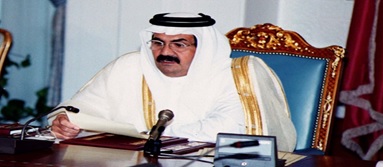
- Sheikh Hamad bin Khalifa Al Thani, the former Emir of Qatar, has passed away at the age of 74.
Key Facts:
- Death and Age: Sheikh Hamad bin Khalifa Al Thani passed away at the age of 74.
- Ruler (Emir) of Qatar: He ruled as the Emir of Qatar from 1995 to 2013 (approximately 18 years).
- Architect of Modern Qatar: He is officially referred to as the 'Father Emir' or the architect of modern Qatar.
- Transfer of Power: In 1995, he assumed power by ousting his father, Sheikh Khalifa bin Hamad Al Thani, in a bloodless coup.
- Voluntary Abdication: In 2013, he voluntarily handed over power to his fourth son and the current Emir, Sheikh Tamim bin Hamad Al Thani. Such a peaceful transfer of power is considered extremely rare in the history of Gulf nations.
Major Global Achievements:
- Al Jazeera News Network: The international news channel 'Al Jazeera' was established in 1996 through his royal decree.
- Constitutional Reforms: During his tenure, Qatar's first permanent constitution was implemented in 2004, and women were granted the right to vote and stand as candidates in municipal elections.
Qatar:
- Capital: Doha
- Currency: Qatari Riyal
- Current Emir: Sheikh Tamim bin Hamad Al Thani
- Prime Minister: Sheikh Mohammed bin Abdulrahman Al Thani
- Geographical Location: A small peninsular country in the Middle East, surrounded by the Persian Gulf, with its only land border shared with Saudi Arabia.
- Independence: It remained a British protectorate until 1971, after which it gained full independence.
|
Sports News
Wimbledon 2026 Women's Singles
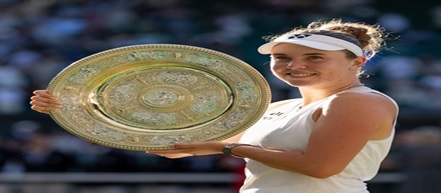
- Czech player Linda Nosková defeated her compatriot Karolína Muchová to win the Wimbledon 2026 Women's Singles title.
Related Facts:
- Winner: Linda Nosková (Czech Republic) – 9th seed
- Runner-up: Karolína Muchová (Czech Republic) – 10th seed
- Final Score: Linda Nosková won the match 6-2, 5-7, 6-3
- Venue: All England Lawn Tennis and Croquet Club, London (United Kingdom)
- Court Type: Wimbledon is played on grass courts.
- First Career Grand Slam: This is the first Grand Slam title of 21-year-old Linda Nosková's career.
- Sixth Czech Female Champion: Nosková has become the sixth female player from the Czech Republic to win the Wimbledon Women's Singles title.
- Unique Coincidence After 19 Years: This is the first time in the tournament's history in 19 years that two players from the same country faced each other in the final. Previously, the final was played between the Williams sisters (Serena and Venus) of the USA in 2009.
Sequence of the Four Grand Slams:
- Australian Open (January - Hard Court)
- French Open (May/June - Clay Court)
- Wimbledon (June/July - Grass Court)
- US Open (August/September - Hard Court)
|


 Don't Have an Account?