GK Update
 
  • Mobile Menu
HOME BUY MAGAZINEnew course icon
LOG IN SIGN UP

Sign-Up IcanDon't Have an Account?


SIGN UP


Login Icon

Have an Account?


LOG IN
 

or
By clicking on Register, you are agreeing to our Terms & Conditions.


or


GK Update

Fri 10 Jul, 2026

National News

Agreement between Quality Council of India and National Small Industries Corporation
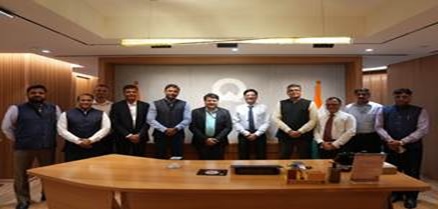
  • The Quality Council of India (QCI) and the National Small Industries Corporation (NSIC) signed a Memorandum of Understanding (MoU) in New Delhi.
  • The primary objective of this partnership is to empower Micro, Small, and Medium Enterprises (MSMEs) by enabling them to obtain ZED certification, enhancing access to digital markets, and providing financial incentives.

Related Facts:

Key points of the agreement:

  • Integrated Initiatives: Linking the MSME Sustainable (ZED) Certification, MSME Global Mart, and the 'TEAM' initiative.
  • Digital and Export Support: Providing better digital market access and export support to ZED-certified units through ONDC and AI-enabled cataloging.
  • Certification: Supporting NABL accreditation for NSIC's testing facilities and NABET-based assessment for training centers.
  • Implementation: Formation of a Joint Coordination Committee (JCC) to review progress; the committee will meet every three months.

Quality Council of India (QCI):

  • Establishment: It was established in 1997 through the joint efforts of the Government of India and the Indian industry.
  • Nature: It is an autonomous, non-profit organization based on the Public-Private Partnership (PPP) model.
  • Registration: It is registered under the Societies Registration Act, 1860.
  • Nodal Ministry: It operates under the administrative control of the Department for Promotion of Industry and Internal Trade (DPIIT) under the Ministry of Commerce and Industry.
  • Chairman: The Chairman of QCI is appointed by the Prime Minister of India for a term of three years, based on recommendations from the industry. Currently, Mr. Jaxay Shah is the Chairman.

National Small Industries Corporation (NSIC):

  • Establishment: It was established by the Government of India in 1955.
  • Nodal Ministry: It operates under the administrative control of the Ministry of Micro, Small and Medium Enterprises (MSME). Headquarters: Its corporate headquarters is located at Okhla Industrial Estate, New Delhi.
  • Certification: It is an ISO 9001:2015 certified enterprise.
  • Network: It operates through a network of branch offices and Technical Service Centers (NTSC) spread across the country.

International News

Global AI Summit 2027

  • Switzerland will host the Global AI Summit 2027.
  • The event will be held at Palexpo in Geneva on June 21–22, 2027.

Related Facts:

  • Venue: This historic summit will take place at Palexpo in Geneva, Switzerland.
  • Announcement: Swiss Federal Councillor Albert Rösti officially confirmed this during the 'AI for Good Global Summit' held on July 8, 2026.
  • Global Sequence: This is the next stage in the series of global AI summits. Previous summits were held at Bletchley Park (UK) in 2023, Seoul (South Korea) in 2024, Paris (France) in 2025, and New Delhi (India) in February 2026. Subsequently, the United Arab Emirates (UAE) will host the summit in 2028.
  • Co-hosting: This summit will be held in conjunction with the International Telecommunication Union's (ITU) 'AI for Good Global Summit'.

Switzerland:

  • Capital: Bern
  • Currency: Swiss Franc
  • President (2026): Guy Parmelin
  • Geneva: Known as the 'hub of international organizations'.
  • It houses the headquarters of global bodies such as the WHO, WTO, ILO, and UNHCR.

International Telecommunication Union (ITU):

  • Headquarters: Geneva, Switzerland
  • Establishment: May 17, 1865 (It is one of the oldest specialized agencies of the United Nations).

Launch of the Australia-Canada-India Technology and Innovation (ACITI) Partnership
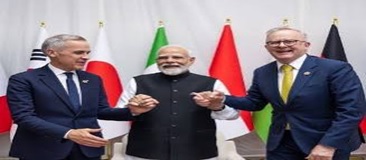
  • The Australia-Canada-India Technology and Innovation (ACITI) partnership was launched with the aim of enhancing cooperation in emerging technologies.
  • The partnership was officially announced during the G20 Summit held in Johannesburg (South Africa) in November 2025 and was formally operationalized through the signing of a Memorandum of Understanding (MoU) on July 9, 2026.

Key Facts:

Main Objectives:

  • To strengthen trilateral cooperation in critical and emerging technologies.
  • To diversify global supply chains and make them more secure and resilient.
  • To promote clean energy innovations to achieve net-zero emission targets.

Key Areas of Cooperation:

  • Artificial Intelligence (AI): Responsible development and large-scale deployment of AI to improve citizens' living standards and public services. Focus on AI startups, policy regulation, and risk mitigation.
  • Critical Minerals: Ensuring a secure supply of minerals such as lithium and cobalt, which are essential for electric vehicles, electronics, and defense systems.
  • Green Energy Technology: Promoting joint research and commercialization in sectors like green hydrogen, battery technology, and low-emission manufacturing.
  • Digital Infrastructure and Security: Development of secure technological systems, such as cybersecurity and semiconductor research.

Complementary Strengths of the Three Nations:

  • Canada: A leader in AI research, deep-tech, and clean technology.
  • India: Vast technical talent, digital infrastructure, and large-scale manufacturing capacity.
  • Australia: Abundant mineral resource reserves and commercialization capabilities.

Launch of India-Australia Sports Cooperation Roadmap
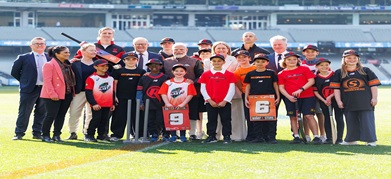
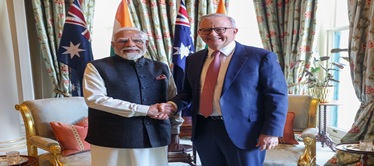
  • Prime Minister Narendra Modi and Australian Prime Minister Anthony Albanese jointly launched the 'India-Australia Sports Cooperation Roadmap' at the iconic Melbourne Cricket Ground (MCG).
  • This roadmap builds upon the 2023 Memorandum of Understanding (MoU) on sports cooperation and identifies targeted areas for collaboration aligned with the shared priorities, capabilities, and resources of both nations.

Key features of the roadmap:

  • Support for the 2036 Olympics: The roadmap supports India's ambitions to host the 2030 Commonwealth Games and the 2036 Olympic and Paralympic Games.
  • Hosting the Big Bash League (BBL): Under this initiative, the inaugural match of the prestigious Big Bash League will be played in December at the MA Chidambaram Stadium (Chepauk) in Chennai. This marks the first time a foreign cricket league match will be held in India.
  • Women's Sports Partnership: The roadmap includes bilateral tournaments for female athletes, leadership programs, and joint initiatives to promote their participation in sports.
  • Industry and Investment: Building on the sports industry summit held in Mumbai, cooperation will be enhanced in areas such as sports equipment manufacturing, sports science, coaching, and athlete welfare.
  • The roadmap proposes fostering collaboration in sports equipment manufacturing, sports media and broadcasting, event management, and sports startups, based on the Australia-funded sports industry summit scheduled for Mumbai in December 2026.

Agreement between India and Australia

  • India and Australia signed historic agreements regarding uranium supply and a dedicated critical minerals corridor.

Science and Technology

Creation of the artificial cell named 'Spudcell'
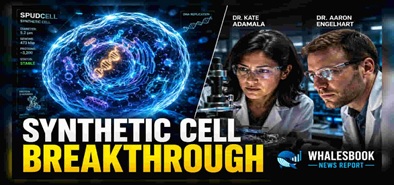
  • Scientists at the University of Minnesota have developed the world's first fully artificial cell, named 'Spudcell'.

Related Facts:

  • Naming: Inspired by the 'Sputnik' satellite; under a microscope, it resembles a small potato ('spud').
  • Structure: Artificial cell membrane composed of a microscopic lipid droplet.
  • Minimal Genome: Developed with only 36 genes (approximately 90,000 base pairs); this challenged the prevailing assumption regarding the minimum number of genes required for life.
  • Biological Capabilities: Capable of nutrient uptake (feeding), growth, DNA replication, and cell division.
  • Construction Technique: Created from scratch using a 'bottom-up approach' involving non-living chemicals, 36 enzymes, and proteins.
  • Top-Down Approach: Involves creating a minimal genome by removing genes from an existing living cell.
  • Cell Division: Division occurs due to mechanical stress generated by external proteins, without the involvement of a cytoskeleton.
  • Natural Selection: Fast-growing Spudcells outcompeted slow-growing ones over several generations, supporting the theory of evolution.
  • Limitations: Cannot synthesize its own ribosomes; relies on external nutrients and ribosomes.
  • Significance: Useful for future applications in living therapeutics, precision medicine development, and the study of the origins of life.

Weekly Insulin Shot 'Awiqli' Launched in India

  • Danish pharmaceutical company Novo Nordisk has launched 'Awiqli,' its weekly basal insulin injection, in India.
  • Novo describes Awiqli as the world's first once-weekly basal (or background long-acting) insulin approved for clinical use.
  • According to the company, this insulin is prescribed for the treatment of Type 1 and Type 2 diabetes in adults.

Related Facts:

  • What is insulin?: It is a peptide hormone produced in the human body that regulates blood glucose (sugar) levels.
  • Where is it secreted?: It is secreted by the beta cells of the 'Islets of Langerhans' in the pancreas.
  • Discoverers: Insulin was discovered in 1921 by Frederick Banting and Charles Best. (Banting's birthday, November 14, is observed as 'World Diabetes Day').

Types of Diabetes:

  • Type 1: The body's immune system destroys insulin-producing cells (complete lack of insulin).
  • Type 2: The body produces insulin, but cells do not respond to it effectively (insulin resistance).

Art and Culture

Australia to Return Ancient Indian Artifacts
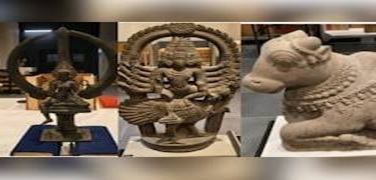
  • During the India-Australia Annual Summit, Australia announced the return to India of three valuable ancient artifacts stolen from temples in Tamil Nadu.

Related Facts:

The three historical artifacts being returned:

  • Bronze Trident of Goddess Bhadrakali: This is a traditional metal trident featuring an image of Goddess Bhadrakali—the deity of protection and power—at its apex. It originates from the Sri Kasi Viswanatha Swamy Temple (Kollu Mangudi) in Tamil Nadu's Tiruvarur district.
  • Grand Granite Statue of Nandi: This beautiful stone statue of Nandi—Lord Shiva’s mount and supreme devotee—also belongs to the Sri Kasi Viswanatha Swamy Temple.
  • Basalt Statue of Six-Faced Lord Kartikeya: This statue depicts Lord Kartikeya (Shanmukha/Murugan) with six faces. The artifact hails from the Naganathaswamy Temple (Manambadi) in Thanjavur district, which was built during the reign of King Rajendra Chola I.
  • India's Contribution: Setting a precedent for historical justice and respect, India will also hand over the remains of an Indigenous Australian (First Nations ancestor)—currently housed in the Government Museum, Chennai—to their traditional custodians with full honor.
  • Role of Institutions: These three Indian artifacts were previously part of the collections of the National Gallery of Australia and the Art Gallery of New South Wales.

Awards and Honors

‘World Summit on the Information Society’ (WSIS) 2026
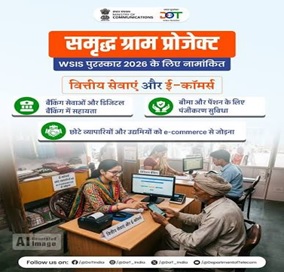
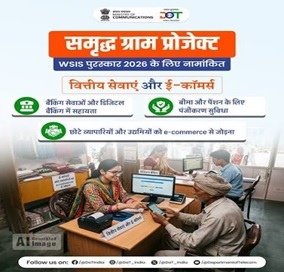
  • The Department of Telecommunications' flagship project, ‘Samriddh Gram: An Integrated Physical Service Delivery Model Supported by BharatNet,’ was declared a global winner at the ‘World Summit on the Information Society’ (WSIS) 2026.
  • This initiative was awarded under Action Line C-6, supported by the International Telecommunication Union (ITU).
  • The ‘World Summit on the Information Society’ (WSIS) 2026 awards are among the most prestigious global honors for projects that utilize Information and Communication Technology (ICT) to foster sustainable development.

Samriddh Gram Project:

  • An integrated physical-digital service delivery model designed by the Department of Telecommunications (DoT).
  • It leverages the BharatNet high-speed broadband backbone to transform rural connectivity into a platform for essential social and economic services.
  • Launch: The initiative was active in its pilot phase through 2024-25, and the first ‘Samriddh Kendra’ (Prosperity Centre) was recently inaugurated officially by the Union Minister in Umri village, Madhya Pradesh.

Objectives:

  • To bridge the gap between rural areas and the digital landscape by providing community centers that offer essential services under one roof.
  • To demonstrate the socio-economic impact of integrated service delivery in health, education, and governance.


Latest Courses