GK Update
 
  • Mobile Menu
HOME BUY MAGAZINEnew course icon
LOG IN SIGN UP

Sign-Up IcanDon't Have an Account?


SIGN UP


Login Icon

Have an Account?


LOG IN
 

or
By clicking on Register, you are agreeing to our Terms & Conditions.


or


GK Update

Thu 09 Jul, 2026

National News

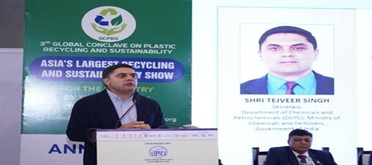
Organization of GCPRS

  • The 3rd Global Conference on Plastic Recycling and Sustainability (GCPRS) was held in New Delhi.

Key Facts:

  • Organizers: Jointly organized by the All India Plastics Manufacturers' Association (AIPMA) and the Chemicals and Petrochemicals Manufacturers' Association (CPMA).
  • Inauguration: By Tejveer Singh, Secretary, Department of Chemicals and Petrochemicals (DCPC), Ministry of Chemicals and Fertilizers.
  • Central Theme: The main objective of the conclave was to promote the circular economy, showcase state-of-the-art recycling technologies, and strengthen eco-friendly plastic waste management.
  • Significance: It is considered one of the largest platforms in Asia in the field of plastic recycling and sustainability.
  • The Indian recycled plastics market is projected to reach $3.81 billion by 2032.
  • It is growing at a Compound Annual Growth Rate (CAGR) of 10.95 percent during the 2024–2032 period.
  • The global waste plastic recycling market is expected to reach $80.5 billion by 2033.

The Country's First Indoor Botanical Garden
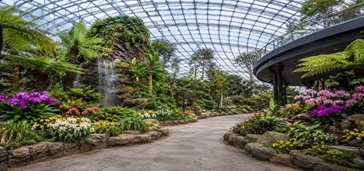
  • The country's first indoor botanical garden will be constructed in Patna, the capital of Bihar.
  • This state-of-the-art indoor botanical garden will be built on an area of ​​approximately five acres along the JP Ganga Path.

Key Facts:

  • It will be constructed along the lines of Singapore's famous indoor gardens.
  • Technology and Structure: It will be a completely enclosed structure with a roof made of tempered glass or transparent plastic, allowing natural sunlight to enter.
  • Implementing Agency: The Bihar State Road Development Corporation (BSRDC) has prepared the action plan for the project, and it has received administrative approval.

13th AITIGA Joint Committee Meeting

  • The 13th ASEAN-India Trade in Goods Agreement (AITIGA) Joint Committee meeting is being held in a hybrid format at Vanijya Bhawan in New Delhi.
  • The meeting is scheduled from July 6 to July 10, 2026.

Key Facts:

  • Co-chaired by: Nitin Kumar Yadav (India) and Mastura Ahmad Mustafa (Malaysia)
  • Participants: All 10 ASEAN member countries participated
  • Main Objectives: To accelerate the AITIGA review process, finalize pending chapters, and make the agreement modern and trade-friendly
  • Proceedings: Meetings of three key sub-committees (Customs, National Treatment, Rules of Origin) were also held

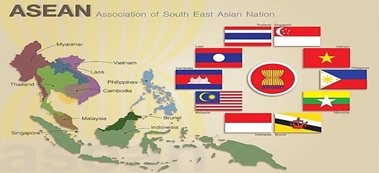
ASEAN:

  • Full Name: Association of Southeast Asian Nations
  • Establishment: August 8, 1967, in Bangkok, Thailand (hence, August 8 is celebrated as 'ASEAN Day')
  • Headquarters (Secretariat): Jakarta, Indonesia
  • Currently, there are 11 member countries in ASEAN
  • Founding Members (5 countries): Indonesia, Malaysia, Philippines, Singapore, and Thailand
  • Joined Later (6 countries): Brunei (1984), Vietnam (1995), Laos (1997), Myanmar (1997), Cambodia (1999), and Timor-Leste (joined as the 11th member in 2025)
  • The Trade in Goods Agreement (AITIGA) between India and ASEAN was signed in 2009
  • ASEAN contributes approximately 11% to India's global trade
  • Bilateral trade between India and ASEAN reached $128 billion during 2025-26

Organization of the 'BRICS Women Ministerial Meeting'
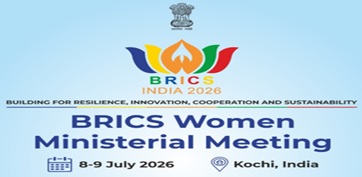
  • The 'BRICS Women Ministerial Meeting' was held in Kochi, Kerala, under India's BRICS presidency.

Related Facts:

  • Organizing Ministry: The meeting was organized by the Union Ministry of Women and Child Development (attended by Union Minister Annapurna Devi and Minister of State Savitri Thakur).
  • Preceding Meeting: The BRICS Women Working Group (WWG) meeting was held in Kochi on July 6–7, 2026, just prior to the ministerial meeting.
  • Theme under India's 2026 BRICS presidency: "Building for Resilience, Innovation, Cooperation, and Sustainability."

BRICS:

  • A group comprising the world's major emerging economies.
  • Full Name: BRICS stands for Brazil, Russia, India, China, and South Africa.
  • Concept: The term 'BRIC' was first coined in 2001 by British economist Jim O'Neill.
  • First Formal Meeting: The first meeting of foreign ministers took place in New York in September 2006.
  • First Summit: Held on June 16, 2009, in Yekaterinburg, Russia.
  • Inclusion of South Africa: South Africa joined the group in 2010, after which the name changed from BRIC to BRICS.
  • New Members (effective from January 1, 2024): Egypt, Ethiopia, Iran, and the United Arab Emirates (UAE).
  • Indonesia joined as a full member in 2025.
  • BRICS currently comprises a total of 11 full member countries.
  • New Development Bank (NDB): Also known as the 'BRICS Bank'. It was established in July 2014 (during the Fortaleza Summit).
  • NDB Headquarters: Shanghai, China
  • Contingent Reserve Arrangement (CRA): A framework created to tackle global liquidity crises.
  • BRICS accounts for 45% of the world's population and 37.3% of global GDP, figures that exceed the European Union's 14.5% and the G7's 29.3%.
  • With the inclusion of Iran, Saudi Arabia, and the United Arab Emirates (UAE), BRICS now accounts for approximately 44% of global crude oil production.

Approval for Implementation of PM-SETU Scheme
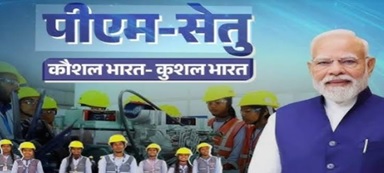
  • The Central Government has approved the nationwide implementation of the PM-SETU scheme—which has a total budget of ₹60,000 crore—across all 200 identified Industrial Training Institute (ITI) clusters, moving beyond its initial phase.
  • Additionally, strategic investment plans worth ₹1,237.58 crore have been greenlit for five ITI clusters across Odisha, Gujarat, and Telangana.

PM-SETU Scheme:

  • Full Name: 'Pradhan Mantri Skilling and Employability Transformation through Upgraded ITI' (PM-SETU)
  • Launch Date: October 4, 2025
  • Type: Central Scheme
  • Objective: To make 20 lakh youths employable over five years by modernizing 1,000 government ITI institutions across the country under a 'hub-and-spoke' model (comprising 200 hubs and 800 spokes).
  • Nodal Ministry: A flagship initiative of the Ministry of Skill Development and Entrepreneurship.

Financial Structure:

  • Central Share: ₹30,000 crore (50%)
  • State Governments' Share: ₹20,000 crore (33.3%)
  • Industry/Industrial Partners: ₹10,000 crore (16.6%)

Country's sixth fully literate state under the ULLAS program
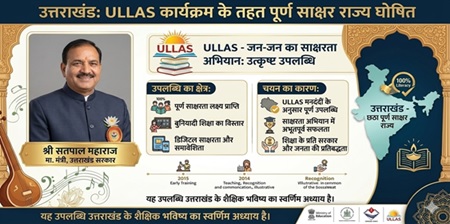
  • Uttarakhand has been declared India's sixth fully literate state under the ULLAS program.

Key Facts:

  • Current Literacy Rate: Uttarakhand has achieved an adult literacy rate of 98.7%, significantly higher than the national benchmark.
  • Progress Graph: The state's literacy rate stood at 83.8% in 2023-24, marking an unprecedented improvement of approximately 14.9 percentage points in just two years.
  • Survey Basis: Out of a total population of over 1.23 crore (aged 7 years and above), only 131,986 individuals were found to be illiterate.
  • Other states declared fully literate under the 'ULLAS' program: Mizoram (the country's first fully literate state), Goa, Tripura, Himachal Pradesh, and Sikkim.

ULLAS Program:

  • Full Name: Understanding Lifelong Learning for All in Society (Nav Bharat Literacy Program).
  • Ministry: It is a 'Centrally Sponsored Scheme' launched by the Union Ministry of Education.
  • Target Group: Citizens aged 15 years and above who could not avail the benefits of formal schooling.
  • Key Components: Beyond basic literacy and numeracy, the program aims to equip citizens with digital literacy, financial literacy, critical life skills, and legal awareness.
  • Implementation: The program is entirely based on 'volunteerism' and public participation.

Economy and Banking

'AustralianSuper' Announces Additional Investment in NIIF
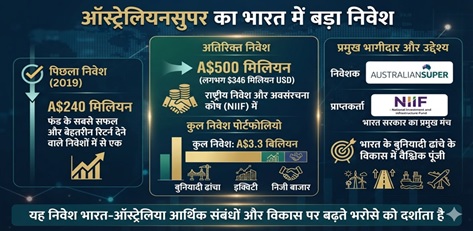
  • Australia's largest pension fund, 'AustralianSuper', has announced an additional investment of $500 million in India's 'National Investment and Infrastructure Fund' (NIIF).

Related Facts:

  • Investor: Australia's largest pension fund, 'AustralianSuper'
  • Investment Amount: $500 million (additional investment). AustralianSuper had previously invested in NIIF's Master Fund as well.
  • Recipient: India's National Investment and Infrastructure Fund (NIIF)
  • Objective: To provide long-term capital for large-scale infrastructure projects in India (roads, ports, clean energy, etc.)

National Investment and Infrastructure Fund (NIIF):

  • Establishment: It was established by the Government of India in 2015 as a 'Sovereign Wealth Fund'.
  • Registration: It is registered as an Alternative Investment Fund (AIF) with the Securities and Exchange Board of India (SEBI).
  • Ownership: The Government of India holds a 49% stake, while the remaining 51% is held by foreign and domestic institutional investors (such as pension funds, sovereign funds, and banks).
  • Function: Its primary objective is to invest in commercially viable infrastructure projects.
  • Three Key Funds: NIIF operates three distinct funds:
  • Master Fund: Primarily invests in core infrastructure (roads, power, ports).
  • Fund of Funds: Invests in other private equity funds linked to infrastructure.
  • Strategic Investment Fund: Invests in economically significant and large-scale industries.

India's Growth Rate: IMF Projections

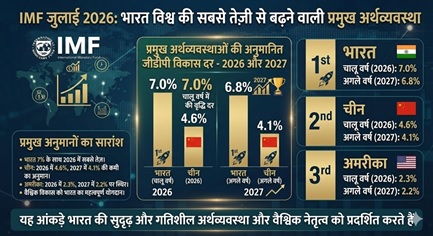
  • According to the 'World Economic Outlook' (WEO) update released by the International Monetary Fund (IMF) in July 2026, India remains the world's fastest-growing major economy, with a projected growth rate of 7% for the calendar year 2026.
  • However, for the current fiscal year (FY 2026-27), the IMF has projected India's growth rate at 6.4%.

Related Facts:

  • Key Figures: Global Comparison (Calendar Year 2026):
  • India: 7.0% (World's fastest-growing major economy)
  • China: 4.6% (Second fastest-growing major economy)
  • USA: 2.3%
  • European Union (EU): 0.9%
  • Global Growth Rate: 3.0%
  • According to the IMF, the European Union (EU) economy is projected to grow by 0.9 percent this year and 1.2 percent next year.
  • In a report released last month, the World Bank projected India's growth rate at 6.6 percent for the current fiscal year and 7.2 percent for the next fiscal year.
  • The United Nations has also projected India's economic growth rate to be 6.4 percent this year.
  • The Reserve Bank of India (RBI) also projected India's growth rate at 6.6 percent for the current fiscal year last month.
  • A Bank of America report stated that India's GDP growth rate could reach 7 percent in 2026, up from its April projection of 6.2 percent.
  • Goldman Sachs also raised its projection for India's GDP growth rate for the calendar year 2026 from 6.5 percent to 6.8 percent late last month.

Art and Culture

'Alpona' Included in the Oxford English Dictionary
  • The Oxford English Dictionary (OED) has officially included the word 'Alpona'—a traditional folk art form from West Bengal—in its latest edition.

Related Facts:

  • Origin and Meaning: The word 'Alpona' originates from the Sanskrit word 'Alimpana', which means 'to smear' or 'to coat'.
  • Materials: This art form is primarily created using a mixture of rice flour paste (*Pithuli*) and water. No artificial colors are used.
  • Type of Art: It is a traditional floor painting created in home courtyards and at entrances during festivals (such as Durga Puja and Lakshmi Puja) and auspicious occasions.
  • Distinctive Feature: It is drawn using only the fingers—without brushes or stencils—featuring intricate geometric or natural designs (such as lotuses or stalks of paddy).

Other Regional Floor Paintings:

  • West Bengal: Alpona
  • Maharashtra and Karnataka: Rangoli
  • Tamil Nadu: Kolam
  • Andhra Pradesh: Muggu
  • Uttarakhand: Aipan
  • Uttar Pradesh: Chowk Poorna
  • Bihar: Aripan
  • Kerala: Kalam (Kalamezhuthu)

Reports and Indices

Happy City Index 2026: Global Media Outlet
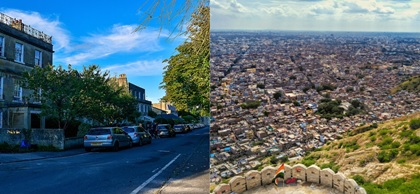
  • Global Media Outlet has released the Happy City Index 2026.
  • Several distinct aspects were considered for the survey, including each city's culture, parks and green spaces, friendly neighborhoods, and recreational streets.

According to the report:

  • In total, over 24,000 people from around the world participated in this extensive annual survey.
  • Jaipur, the capital of Rajasthan, India, secured a place on this list, ranking sixth.
  • Bath, a city in England famous for its Roman-era baths, took the top spot.
  • More than 93% of the survey respondents felt that the city brings them happiness.
  • 83% of Bath's locals stated that it is easy to find a sense of community in the city.

World's 10 Happiest Cities 2026:

  • Bath: England
  • Panama City: Panama
  • Guadalajara: Mexico
  • Medellín: Colombia
  • Kraków: Poland
  • Jaipur: India
  • Chicago: United States
  • Cape Town: South Africa
  • Shanghai: China
  • Gothenburg: Sweden

Awards and Honors

Ustad Bismillah Khan Yuva Puraskar 2025
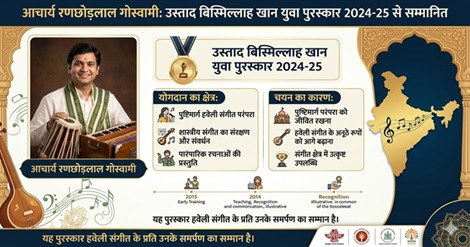
  • Acharya Ranchhodlal Goswami has been selected for the Ustad Bismillah Khan Yuva Puraskar 2025 (for the year 2024-25) for his contribution to the preservation of the Pushtimarg Haveli Sangeet tradition.

Related Facts:

Ustad Bismillah Khan Yuva Puraskar 2025:

  • Establishment: Instituted by the Sangeet Natak Akademi in 2006 in memory of the renowned Shehnai maestro and Bharat Ratna awardee Ustad Bismillah Khan.
  • Age Limit: Awarded to exceptionally talented young artists under the age of 40. Age is calculated as of April 1st of the award year.
  • Prize Money: Winners receive a cash prize of ₹25,000, a *Tamrapatra* (citation plaque), and an *Angavastram* (ceremonial stole).
  • Presenter: The award is presented by the Chairperson of the Sangeet Natak Akademi at a special ceremony (Note: Akademi Fellowships and the main Akademi Awards are presented by the President).

Designated Fields:

  • Awarded in 5 categories: Music, Dance, Theatre, Traditional/Folk/Tribal Arts & Puppetry, and Contribution/Scholarship in Performing Arts.

Sangeet Natak Akademi:

  • It is the national academy of India for music, dance, and drama, functioning under the Ministry of Culture, Government of India.
  • Its main 'Akademi Awards' have been conferred since 1952.
  • Pushtimarg and Haveli Sangeet Tradition:
  • An extremely rich form of Indian classical and devotional music, dedicated specifically to the worship of Lord Shri Krishna.
  • Origin and Sect: Haveli Sangeet is deeply associated with the Pushtimarg sect of Vaishnavism, founded by Mahaprabhu Vallabhacharya in the 15th–16th century. Origin of the Name 'Haveli': During the medieval period (particularly under the Mughal ruler Aurangzeb), due to threats facing grand temples, idols of Lord Krishna were kept safe within large mansions or 'havelis'. The music performed in these havelis came to be known as 'Haveli Sangeet'.
  • Major Centers: Currently, Nathdwara in Rajasthan (Shrinathji Temple) is considered its largest and most vibrant center. It is also widely prevalent in Gujarat and the Braj region (Mathura-Vrindavan).
  • Musical Style: It incorporates classical music styles such as Dhrupad, Dhamar, Khayal, Thumri, and Vishnupad. It also influenced the later development of the 'Khayal' singing style.
  • Ashtachhap Poets: This tradition involves singing devotional verses and hymns composed by 'Ashtachhap' poets such as Surdas, Parmananddas, and Kumbhandas.
  • Language: Most of its verses are composed in Braj Bhasha; some verses are also found in Sanskrit and Marwari.

Contribution of Acharya Ranchhodlal Goswami:

  • Background: He is the 16th Acharya of the historic Goswami Haveli located in Kalupur, Ahmedabad.
  • Historic Achievement: He is the first practitioner of Haveli Sangeet in post-independence India to receive this prestigious national-level award.
  • Cultural Work: By the age of approximately 31–32, he had composed over 20,000 original verses/hymns in seven languages—including Braj Bhasha, Sanskrit, and Charni—and authored several books.

Other Award Winners from Gujarat (2024–25):

  • Tvisha Vyas: In the field of Garba art.
  • Kishorbhai Somabhai Mistry: For the art of Rudra Veena making.
  • Kapildev Shukla: In the field of theatre direction.


Latest Courses