GK Update
 
  • Mobile Menu
HOME BUY MAGAZINEnew course icon
LOG IN SIGN UP

Sign-Up IcanDon't Have an Account?


SIGN UP


Login Icon

Have an Account?


LOG IN
 

or
By clicking on Register, you are agreeing to our Terms & Conditions.


or


GK Update

Sat 04 Jul, 2026

National News

5th Executive Committee Meeting of CCRAS
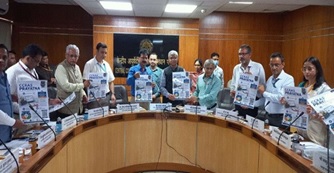
  • The 5th Executive Committee meeting of the Central Council for Research in Ayurvedic Sciences (CCRAS) was held in New Delhi under the chairmanship of Vaidya Rajesh Kotecha, Secretary, Ministry of AYUSH.

Key Details:


  • Event: 5th Executive Committee meeting of the Central Council for Research in Ayurvedic Sciences (CCRAS).
  • Venue: New Delhi
  • Chairperson: Vaidya Rajesh Kotecha (Secretary, Ministry of AYUSH)
  • Nature of CCRAS: It is India's apex autonomous body under the Ministry of AYUSH for the coordination, development, and dissemination of scientific research in Ayurveda.

What is CCRAS?:

  • It is the apex autonomous body under the Ministry of AYUSH, Government of India, that conducts research in Ayurveda on a scientific basis.
  • CCRAS Headquarters: New Delhi

Full Form of AYUSH:

  • A - Ayurveda
  • Y - Yoga & Naturopathy
  • U - Unani
  • S - Siddha
  • H - Homeopathy

Appointment of Three Additional Judges to the Andhra Pradesh High Court
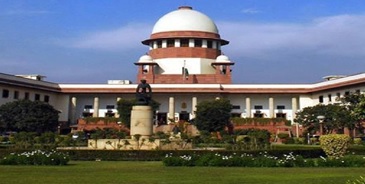
  • The President has appointed three additional judges to the Andhra Pradesh High Court following consultation with the Chief Justice of India.
  • The appointed additional judges are Sunita Gandham, Alapati Giridhar, and Purushottam Kumar Chintalapudi.

Related Facts:


Appointment Process for High Court Judges:

  • The proposal for appointment is initiated by the Chief Justice of the concerned High Court.
  • If the Chief Minister wishes to recommend a name, they forward it to the Chief Justice.
  • Subsequently, the Governor, acting on the advice of the Chief Minister, sends their recommendations to the Union Minister of Law and Justice.
  • The Central Government forwards this proposal to the Chief Justice of India (CJI). The CJI then prepares the final recommendation after consulting the collegium comprising the two senior-most judges of the Supreme Court.
  • Following the collegium's recommendation, the file is routed back through the Ministry of Law to the President, who signs the warrant of appointment.

Article 224:

  • Under Article 224(1) of the Indian Constitution, the President of India may appoint additional judges if there is a temporary increase in the business of a High Court or if there are significant arrears of work.
  • A person appointed to this post must possess all the qualifications required to become a High Court judge, as prescribed in Article 217 for the Chief Justice or other judges.
  • This appointment is purely temporary and can be made for a maximum period of two years.
  • Furthermore, in accordance with age-limit regulations, no additional judge can continue in office after attaining the age of 62.

International News

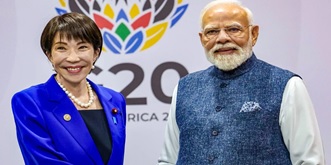
16th India-Japan Annual Summit

  • The 16th India-Japan Annual Summit was held in New Delhi from July 1 to 3, 2026.
  • During the summit, Japanese Prime Minister Sanae Takaichi held bilateral talks with Prime Minister Narendra Modi during her first official visit to India.

Related Facts:


Key Administrative Details:

  • Date: July 1–3, 2026
  • Venue: Hyderabad House, New Delhi
  • Key Participants: Prime Minister of India Narendra Modi and the newly appointed Prime Minister of Japan, Sanae Takaichi
  • Significance: This is Prime Minister Takaichi's first official visit to India.
  • Shared Vision Theme: Strategic synergy for shared progress, prosperity, and strength.

Defense and Security Cooperation:

  • UNICORN Project: Agreement in principle on the technical specifications of the state-of-the-art antenna system ('UNICORN') for Indian Navy warships. (This is the first defense co-development program between the two countries.)
  • 2+2 Dialogue: Decision to hold the fourth '2+2' Foreign and Defense Ministers' meeting in Tokyo by the end of 2026.
  • Military Exercises: Appreciation for the success of the bilateral naval exercise 'JAIMEX 25' and welcoming of Japan's participation in the 'International Fleet Review 2026' in Visakhapatnam.
  • MRO Cooperation: Expansion of cooperation in the Maintenance, Repair, and Overhaul (MRO) of naval vessels under the 'Make in India' initiative.
  • Japan has announced an investment of over 2 trillion Japanese Yen (₹1.18 lakh crore) in India.
  • Japan also announced funding of ₹88,000 crore for the Mumbai-Ahmedabad bullet train project. The total cost of this project is ₹2 lakh crore. Economic and Commercial Relations: India-Japan bilateral trade reached $27.48 billion in the 2025–26 fiscal year, comprising $6.04 billion in Indian exports and $21.44 billion in imports; Japan is the fifth-largest source of FDI in India.
  • Disaster Management: Japan will support India in hosting the 4th UN World Conference on Disaster Risk Reduction in 2030.

Economic Security and Supply Chains:

  • Joint Declaration: 'India-Japan Joint Declaration on Economic Security Cooperation' adopted.
  • Focus Areas: Emphasis on semiconductors, critical minerals, ICT, pharmaceuticals, and battery technology to reduce over-reliance on China and mitigate global disruptions.
  • Investment Roadmap: Reaffirmation of the target for 10 trillion yen (~$68 billion) in Japanese investment in India over the next decade.
  • MoU Signing: Memorandum of Cooperation (MoC) for a $10 billion special investment package and to facilitate the operations of Japanese financial institutions in the Indian banking sector.
  • CEPA Review: Agreement to accelerate the review of the 15-year-old Comprehensive Economic Partnership Agreement (CEPA).

Clean Energy and Emerging Technologies:

  • Energy Resilience: 'Joint Statement on Energy Resilience' issued; enhanced cooperation on Strategic Petroleum Reserves (SPR) and maritime energy transport.
  • Biomass Initiative: Launch of the 'India-Japan Cooperative Biogas Development (CBG) Initiative' to establish 1,000 biogas and organic fertilizer plants in India.
  • AI and Space: Launch of the inaugural 'India-Japan AI Strategic Dialogue'. Commitment reaffirmed for the joint Lunar Polar Exploration (LUPEX) mission for the year 2026-27

Evolution of diplomatic relations between India and Japan:

  • 1952: Establishment of official diplomatic relations
  • 2000: Bilateral relations elevated to the level of 'Global Partnership'
  • 2006: Initiation of the 'Annual Summit Mechanism' between the two countries
  • 2011: Signing of the Comprehensive Economic Partnership Agreement (CEPA)
  • 2014: Relations further strengthened and upgraded to a 'Special Strategic and Global Partnership'
  • 2025 (Vision): Emergence of the pinnacle of the partnership in the form of the 'Japan-India Vision 2025 for Peace and Prosperity in the Indo-Pacific'

India-France Economic and Financial Dialogue Held
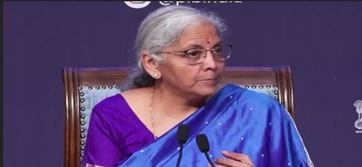
  • The India-France Economic and Financial Dialogue was held in France, co-chaired by French Minister Roland Lescure and Finance Minister Nirmala Sitharaman.

Key Facts:


  • Venue: Aix-en-Provence, France
  • Co-chairs: India's Finance Minister Nirmala Sitharaman and France's Minister for Economy and Finance Roland Lescure
  • Background: Held in fulfillment of the commitment made by PM Modi during French President Emmanuel Macron's visit to India in February 2026
  • Partnership Level: Strengthening the 'Special Global Strategic Partnership'

Key Areas of Bilateral Cooperation:

  • Critical Minerals: Discussion on the roadmap for the India-France critical minerals partnership to enhance economic sovereignty and security
  • High-Speed ​​Railway: Scaling up infrastructure investment, building upon the previously signed 'Declaration of Intent'
  • Financial Industry Engagement: Interconnecting the financial markets of both nations to facilitate trade, investment, and technical cooperation
  • Agence Française de Développement (AFD): Appreciation for contributions to urban infrastructure, climate action, and clean energy projects in India

Peru Presidential Election

  • Keiko Fujimori has been declared the winner of the second round of the presidential election in Peru.
  • The 51-year-old Fujimori is the daughter of former President Alberto Fujimori and was contesting the presidential election for the fourth time.

Related Facts:


  • Upon assuming office later this month, she will become Peru's ninth president in the last 10 years.
  • Fujimori defeated Sánchez in the second round of the election on June 7.
  • In the first round of voting, both candidates had outperformed 33 other contenders.
  • Crime was a major issue in this election.
  • During her campaign, Fujimori pledged to deal strictly with crime.

Peru:

  • A highly diverse and historic country located in the western part of the South American continent.
  • Capital: Lima
  • Official Languages: Spanish and Quechua
  • Currency: Sol (formerly known as Nuevo Sol)
  • Borders: It is bordered by Ecuador and Colombia to the north, Brazil to the east, Bolivia to the southeast, and Chile to the south. The Pacific Ocean lies to its west.

Ban on 7 Chinese Apps

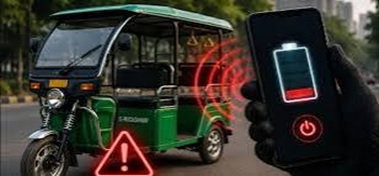
  • The Government of India has banned seven Chinese apps (such as BAT-BMS, Lossigy, and Epoch-i-ion) used to control batteries in e-rickshaws and electric vehicles, citing security concerns and misuse.

Relevant Facts:


Reason for the ban:

  • Misuse of apps: E-rickshaws are equipped with lithium-ion batteries, which are managed using Battery Management System (BMS) apps. These Chinese apps lacked basic authentication (security) features, allowing anyone to connect to the e-rickshaw via Bluetooth and cut off its power supply.
  • Social media trends: Some individuals were misusing these apps on social media for "fun" or "pranks," causing moving e-rickshaws to shut down in the middle of the road.

List of banned apps:

  • BAT-BMS (Developer: Shenzhen Grenergy Technology Co. Ltd., China)
  • Lossigy
  • Epoch-i-ion (or Epoch Li-ion)
  • SMART BMS
  • (Note: The other 3 apps are also technical clones or variants belonging to the same category.)

Economy and Banking

India's Total Export Target for the Current Financial Year
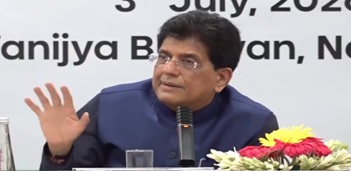
  • According to Union Minister of Commerce and Industry Piyush Goyal, India has set an ambitious target of $1 trillion (approximately ₹84 lakh crore) for total exports in the current financial year.
  • To achieve this goal, the government is emphasizing a rapid increase in the export of both goods and services.

Key Facts:


  • Total Target: $1,000 billion ($1 trillion)
  • Approximately 15 percent of the annual export target has already been achieved in the first quarter alone.
  • Past Performance: India's total exports stood at $863 billion in the previous financial year.
  • To meet the target, goods exports need to rise from $440 billion to approximately $530 billion (16–17% growth), and services exports need to increase from $421 billion to approximately $470 billion (11% growth).

Unveiling of the First EXIM Shipping Container
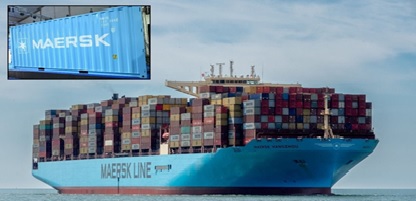
  • Union Minister Sarbananda Sonowal unveiled India's first domestically manufactured Export-Import (EXIM) shipping container at the Maersk-CONCOR depot in Dadri, Uttar Pradesh.

Key Details:


  • Date: July 3, 2026
  • Location: Maersk-CONCOR ICD, Dadri, Uttar Pradesh
  • Unveiled by: Union Minister Sarbananda Sonowal
  • Product: India's first indigenous EXIM shipping container
  • Manufacturer: DCM Shriram Group
  • First Major Order: Order for 1,000 containers from global shipping company 'Maersk'

Underlying Policy and Objectives:

  • Scheme: Container Manufacturing Promotion Scheme (CMPS)
  • Budget Allocation: ₹10,000 crore
  • Type of Support: Both capital and operational
  • Strategic Goal: To increase capacity tenfold to 7.5 lakh TEUs
  • Standards: ISO and CSC (International Convention for Safe Containers) certified

Key Impacts:

  • Global Dependency: Will reduce reliance on China
  • Costs: Will lower the country's logistics and freight costs
  • Foreign Currency: Will save dollars spent on leasing foreign containers
  • Alignment: Direct boost to 'Make in India' and 'PM Gati Shakti'

First India-Mali Export Promotion Forum
  • Bilateral trade between India and Mali rose by 55% to reach $326.61 million in the 2025-26 fiscal year.

Key Details:


  • Event Dates: July 2 and 3, 2026 (two-day event)
  • Venue: Bamako, the capital of Mali
  • Main Theme: "Reinforcing Trade and Strategic Partnerships"
  • Chaired by: Major General Abdoulaye Maïga (Prime Minister of Mali's interim government)
  • Co-organizing Bodies: Ministry of Industry and Trade of Mali, Embassy of India in Bamako, and the Mali Export Promotion Agency (APEX-Mali)
  • Indian Delegation Led by: Mr. Amit Kumar [Joint Secretary (FT-Africa), Department of Commerce, Government of India]
  • Representation of Indian Mission: Dr. N. Nandakumar (Ambassador of India to Mali)
  • Participants: Senior officials from both governments and approximately 30 Indian business leaders

Trade Data and Economic Indicators:

  • Bilateral Trade: Trade between the two countries exceeded $326.61 million in the 2025-26 fiscal year.
  • Annual Growth: A significant growth of 55% was recorded compared to the previous fiscal year.
  • Key Catalyst Policy: India's Duty-Free Tariff Preference (DFTP) scheme played the most crucial role in boosting this trade.
  • Untapped Export Potential: Mali's total global exports stand at approximately $4 billion; of this, untapped potential worth ~$3.96 billion has been estimated for the Indian market.

Mali:

  • A landlocked country located in West Africa.
  • It is the eighth-largest country in Africa by area.
  • Capital: Bamako
  • Currency: West African CFA franc (XOF)
  • Official Language: Bambara and 12 other local languages. (In 2022, the French language was stripped of its status as an official language under a new constitution).
  • Independence Day: October 22, 1960 (Independence from France)
  • Mali is a landlocked country bordered by Algeria to the north, Niger to the east, Burkina Faso to the southeast, Côte d'Ivoire to the south, Guinea to the southwest, and Senegal and Mauritania to the west.

Important Day

America's 250th Independence Day

  • The United States of America is celebrating the 250th anniversary of the Declaration of Independence on July 4, 2026.
  • It has been officially designated as the American Semiquincentennial or 'America250'.

Related Facts:


  • Declaration of Independence (1776): On July 4, 1776, the 'Continental Congress' adopted the declaration drafted by Thomas Jefferson in Philadelphia. Through this, America's 13 British colonies declared themselves independent of British rule.
  • American Revolutionary War (1775–1783): This independence was the result of a prolonged military conflict. The war formally ended with the Treaty of Paris in 1783, after which Britain recognized America's sovereignty.
  • Role of Lord Cornwallis: Lord Cornwallis, who led the British forces in the American Revolutionary War, was forced to surrender to the American-French army at Yorktown in 1781. Following this defeat, Cornwallis was sent to India, where he assumed the office of Governor-General in 1786 and implemented systems such as the 'Cornwallis Code' and the Permanent Settlement.
  • Global Geopolitics: France openly supported the American colonies to weaken Britain.

America:

  • Capital: Washington D.C.
  • Largest City: New York City
  • Continent: North America
  • Head of State: President
  • Parliament: Congress (House of Representatives, Senate)
  • Currency: US Dollar (USD)
  • Major Rivers: Mississippi, Missouri, Colorado
  • Major Mountain Ranges: Rocky Mountains, Appalachian Mountains
  • Official Language: English (Donald Trump issued an executive order in March 2025 officially recognizing it at the federal level)

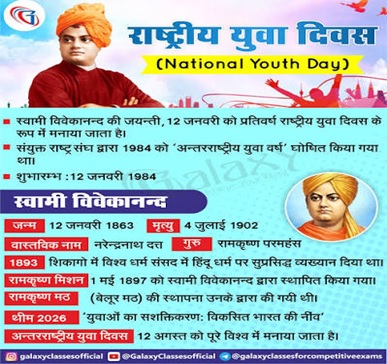
Swami Vivekananda's Death Anniversary

  • Swami Vivekananda's death anniversary (Mahasamadhi) is observed every year on July 4.
  • He passed away at the age of 39 on July 4, 1902, at Belur Math near Kolkata.
  • He is considered the father of modern Indian nationalism.

Swami Vivekananda:


  • Birth — January 12, 1863
  • Death — July 4, 1902
  • Real Name — Narendranath Datta
  • Guru — Ramakrishna Paramahansa
  • 1893 — Delivered a renowned speech on Hinduism at the Parliament of the World's Religions in Chicago.
  • Ramakrishna Mission — Established by Swami Vivekananda on May 1, 1897.
  • Ramakrishna Math — (Belur Math) was established by him.
  • Theme 2026 — 'Empowerment of Youth: Foundation of a Developed India'
  • International Youth Day — Observed globally on August 12.

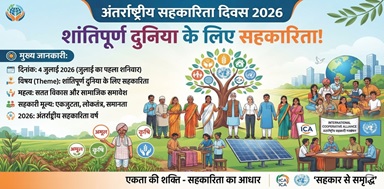
'International Day of Cooperatives'

  • The theme for this year's 'International Day of Cooperatives', observed annually on July 4, is "Cooperatives for a Peaceful World."

Related Facts:


  • Global Nodal Bodies: International Co-operative Alliance (ICA) and the United Nations (UN).
  • Inception (History): It was first celebrated by the international cooperative movement in 1923. The UN General Assembly officially recognized it through a resolution on December 16, 1992.
  • It was celebrated under the aegis of the United Nations for the first time in 1995.
  • The UN declared 2025 as the International Year of Cooperatives.
  • Cooperatives in the Indian Context:
  • New Ministry: The Government of India constituted a separate 'Ministry of Cooperation' in July 2021, with the vision of "Sahakar se Samriddhi" (Prosperity through Cooperation).
  • Constitutional Provisions:
  • Article 19(1)(c): The right to form cooperative societies is a fundamental right.
  • Article 43B (DPSP): The State shall promote the voluntary formation and democratic control of cooperative societies.
  • Part IXB: Added to the Constitution by the 97th Constitutional Amendment Act, 2011.

Awards and Honors

UNESCO Asia-Pacific Awards for Cultural Heritage Conservation 2025
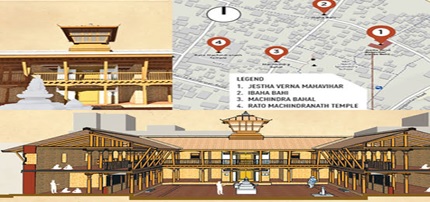
  • The 17th-century Jyestha Varna Mahavihar, located in Lalitpur, Nepal, was honored with the UNESCO Asia-Pacific Award for Cultural Heritage Conservation 2025.

Related Facts:


  • Winning Site: Jyestha Varna Mahavihar
  • Location: Lalitpur (outskirts of Kathmandu), Nepal
  • Historical Period: 17th-century historic Buddhist monastery
  • Award Name: UNESCO Asia-Pacific Award for Cultural Heritage Conservation 2025 (Category: 'Award of Merit')
  • Presentation Date: July 2026 (Official certificate and metal plaque handed over)
  • Award Presenter: Jaco Du Toit (UNESCO Representative in Nepal)
  • Award Recipient: Jyestha Varna Mahavihar User Committee

Jyestha Varna Mahavihar:

  • Geographical Location: This Mahavihar is situated near Patan Durbar Square (a UNESCO World Heritage Site) in Lalitpur, Nepal.
  • Local Name: It is also known locally as 'Jyaba Bahi'.
  • Historical Significance: Its foundation was laid around the 15th–16th century (during the Malla Dynasty). The earliest written evidence of its renovation dates back to the 17th century (Nepal Sambat 772). Background: This Buddhist monastery was severely damaged in the devastating 2015 Gorkha earthquake.
  • Financial Cost: It was reconstructed at a cost of 13.78 crore Nepalese Rupees under the Government of India's Post-Earthquake Reconstruction Grant.
  • Major Commitment: India has pledged a total of US$ 1 billion for Nepal's reconstruction, covering the restoration of houses, schools, and 17 cultural heritage sites.
  • Project Management Consultant (PMC): India's premier organization, INTACH (Indian National Trust for Art and Cultural Heritage), was appointed to provide technical expertise.
  • Collaborating Nepalese Entities: The Government of Nepal's Central Level Project Implementation Unit (CLPIU) and the local community.
  • Inauguration: The reconstructed building was officially inaugurated on March 22, 2024, by Naveen Srivastava, India's Ambassador to Nepal, and Dhan Bahadur Budha, Nepal's then-Minister for Urban Development.


Latest Courses