GK Update
 
  • Mobile Menu
HOME BUY MAGAZINEnew course icon
LOG IN SIGN UP

Sign-Up IcanDon't Have an Account?


SIGN UP


Login Icon

Have an Account?


LOG IN
 

or
By clicking on Register, you are agreeing to our Terms & Conditions.


or


GK Update

Fri 03 Jul, 2026

National News

'Employees' Provident Fund Scheme, 2026'
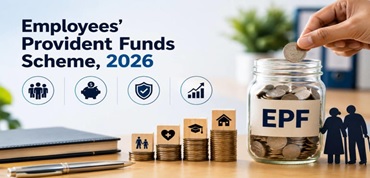
  • The Central Government has notified the 'Employees' Provident Fund Scheme, 2026' under the implementation of the Code on Social Security, 2020; it is effective from June 29, 2026.
  • This new scheme will replace the decades-old Employees' Provident Fund Scheme, 1952.

Related Facts:

Key Features and Changes:

  • Aligned with Labour Reforms: It has been introduced under the legal framework of new labour laws, specifically the Code on Social Security, 2020.
  • Mandatory EPF contribution: It will remain at 12% of the salary from both the employee and the employer.
  • This mandatory contribution applies only up to the statutory wage ceiling of ₹15,000 per month. This means the mandatory monthly contribution remains fixed at ₹1,800.
  • Any additional contribution made on a basic salary exceeding ₹15,000 will now fall entirely under the voluntary category and can be reduced or stopped at any time.
  • Categories for partial withdrawal have been reduced from 13 to just 3: (1) Essential needs (illness, education, marriage), (2) Housing needs, and (3) Special circumstances.
  • Minimum balance condition: After any partial withdrawal, it is mandatory to retain at least 25% of the total accumulated fund in the member's account as a minimum balance.
  • Partial withdrawal is permitted after 12 months of membership—subject to eligibility conditions—in situations such as illness, education, and marriage.

Employees' Provident Fund Organisation (EPFO):

  • It is a major social security institution of the Government of India. It administers Provident Fund (PF), pension, and life insurance schemes for employees in the organized sector. It was established on March 4, 1952. Its headquarters is located in New Delhi.

Launch of Air Suvidha 2.0 Portal

  • The Ministry of Civil Aviation has launched the Air Suvidha 2.0 portal for Ebola health screening across the country.

Related Facts:

How it works:

  • Mandatory Self-Declaration: All international travelers arriving in India from Ebola-affected countries are required to fill out a digital 'Self-Declaration Form' on this portal before boarding their flight.
  • Travel History: Travelers must provide details regarding their travel history and health status for the preceding 21 days (the incubation period of Ebola).
  • Digital SOP: This will assist health officials (APHOs) stationed at airports in promptly identifying and quarantining suspected travelers.
  • Air Suvidha 1.0: This portal was originally launched in 2020 during the COVID-19 pandemic to facilitate the management of health data and contact tracing for international travelers. The 2.0 version has now been introduced as an upgrade to address Ebola.

Ebola:

  • It is a highly lethal and infectious viral disease.
  • Virus Name: It is caused by viruses belonging to the *Orthoebolavirus* group.
  • Virus Family: It is a member of the *Filoviridae* family.
  • Genetic Material: The Ebola virus contains single-stranded RNA.
  • Type of Disease: It is a zoonotic disease, meaning it spreads from animals to humans.
  • Other Names: It is also known as Ebola Hemorrhagic Fever.
  • First Discovery: The Ebola virus was first identified in 1976.
  • Naming: It was named after the Ebola River in the Democratic Republic of the Congo (DRC), near which the first case was detected. Natural Host: Fruit bats living in forests are considered the primary natural reservoirs of this virus.
  • Spread to humans: Through direct contact with infected animals (bats, monkeys, chimpanzees).
  • Human-to-human transmission: Through direct contact with the blood, saliva, sweat, vomit, or other bodily fluids of an infected person.

Launch of 'Durga Suraksha Squad'

  • West Bengal Chief Minister Suvendu Adhikari launched the 'Durga Suraksha Squad' with the aim of strengthening women's safety.

West Bengal:

  • This state is located in the eastern part of India. It extends from the Himalayas to the Bay of Bengal.
  • International Borders: West Bengal shares borders with three countries: Bangladesh (longest border), Nepal, and Bhutan.
  • Inter-state Borders: It is surrounded by five Indian states: Odisha, Jharkhand, Bihar, Sikkim, and Assam.
  • Chicken's Neck: The state's Siliguri Corridor connects the Indian mainland to the North-Eastern states. It is extremely sensitive and crucial for the country's internal security.
  • Capital: Kolkata (also known as 'The City of Joy').
  • High Court: Calcutta High Court – It is India's oldest High Court (established in 1862). Its jurisdiction also covers the Andaman and Nicobar Islands.

Launch of 'Chief Minister Mawan-Dhiyan Satkar Yojana'
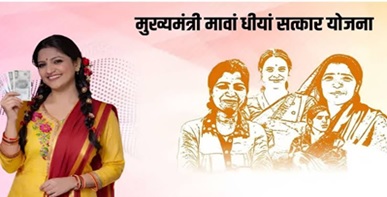
  • The Punjab government launched the 'Chief Minister Mawan-Dhiyan Satkar Yojana' with the aim of economically empowering women.

Punjab:

  • Origin of the name: The word 'Punjab' is derived from two Persian words—'Panj' (five) and 'Aab' (water/river)—meaning "the land of five rivers." These rivers are the Sutlej, Beas, Ravi, Chenab, and Jhelum (post-partition, the Sutlej, Beas, and Ravi primarily flow through present-day Indian Punjab).
  • International border: Punjab shares a highly sensitive international border with Pakistan to the west.
  • Inter-state borders: It is bordered by Jammu & Kashmir (Union Territory) to the north, Himachal Pradesh to the northeast, and Haryana and Rajasthan to the south and southeast.
  • Chandigarh: It is the joint capital of both Punjab and Haryana and is itself a Union Territory (UT).
  • Legislature: Unicameral – it has only a Legislative Assembly (117 seats).
  • Parliamentary representation: 13 seats in the Lok Sabha and 7 seats in the Rajya Sabha.
  • High Court: Punjab and Haryana High Court (located in Chandigarh) – a joint court for Punjab, Haryana, and Chandigarh.

Launch of 'PaleoIndia Portal'

  • The Ministry of Environment, Forest and Climate Change has launched the 'PaleoIndia Portal' to preserve the country's fossil history.

Related Facts:

  • Joint Initiative: This digital platform has been jointly developed by the Zoological Survey of India (ZSI) and the Chennai-based National Centre for Sustainable Coastal Management (NCSCM).
  • Geological Mapping: Data and maps for the dynamic geological maps displayed on the portal have been provided by the Geological Survey of India (GSI).
  • Comprehensive Coverage: The portal documents fossil life across all 28 states and 8 Union Territories of the country.
  • Extensive Database: Information on more than 5,000 fossil specimens is currently available on the portal.

International News

12th Sub-Committee Meeting on Military Cooperation between India and Malaysia
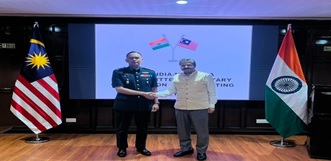
  • India and Malaysia reviewed the entire spectrum of bilateral defense relations during the 12th Sub-Committee on Military Cooperation (SCMC) meeting held in New Delhi.
  • Both sides reiterated their shared commitment to peace, security, and freedom of navigation in the Indo-Pacific region.

Key Facts:

  • Co-chairs: The meeting was co-chaired by Amitabh Prasad, Joint Secretary in the Ministry of Defence (India), and Major General Amer Mahmud bin Abdul Rahman of the Malaysian Armed Forces.
  • New Areas of Cooperation: Both countries agreed to enhance cooperation in defense manufacturing, defense technology, cybersecurity, and Humanitarian Assistance and Disaster Relief (HADR).
  • Focus on Indo-Pacific: Both nations reaffirmed their commitment to maintaining peace, stability, security, and freedom of navigation in the Indo-Pacific region in accordance with international law.

Malaysia:

  • Location: Southeast Asia
  • Capital: Kuala Lumpur
  • Official Language: Malay
  • System of Government: Constitutional Monarchy
  • Head of State: Yang di-Pertuan Agong (King)
  • Head of Government: Prime Minister
  • Neighboring Countries: Thailand, Indonesia, Brunei, Singapore
  • Sea: South China Sea
  • Currency: Malaysian Ringgit (MYR)

Announcement of Energy Partnership between India and Japan
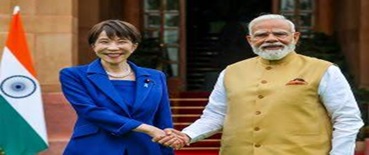
  • India and Japan announced an energy partnership aimed at expanding strategic oil reserves and facilitating maritime transport.

Key Facts:

Main Objectives of the Agreement:

  • Strategic Petroleum Reserves (SPR): Both countries will cooperate on developing strategic petroleum reserves and sharing technology to ensure oil supplies during emergencies.
  • Maritime Transport: Ensuring the smooth and safe movement of vessels along maritime routes (such as the Strait of Malacca and the Indian Ocean region) for the secure transport of energy.
  • Free and Open Indo-Pacific (FOIP): This partnership is part of a shared vision to balance China's growing influence in the Indo-Pacific region and to keep international maritime trade routes free and open.

India's Strategic Petroleum Reserves:

  • India currently possesses underground strategic oil reserves at three main locations under Phase-1:
  • Visakhapatnam (Andhra Pradesh)
  • Mangaluru (Karnataka)
  • Padur (Karnataka)
  • Note: Additional storage capacity is being developed at Chandikhol (Odisha) and Padur (Karnataka) under Phase-2.

India's Bilateral Military Exercises with Japan:

  • JIMEX: Naval exercise
  • Dharma Guardian: Army exercise
  • Shinyuu Maitri: Air Force exercise

Awards and Honors

'Most Improved State' under the TB-Free India Campaign
  • Gujarat secured the first place in the country in the 'Most Improved State' category for the year 2025 under the Centre's TB-Free India campaign.
  • The state recorded a significant 34% reduction in new TB cases and a 37% decline in TB-related deaths compared to 2015.

Related Facts:

  • Achievements: The recovery rate of TB patients in the state stood at 91.74%.
  • According to the Centre's latest report, 186 estimated TB cases per lakh population were recorded in Gujarat in 2024.
  • Based on TB cases, Gujarat ranked sixth among all states with the lowest TB burden and fourth among large states.

TB (Tuberculosis):

  • TB or Tuberculosis is an infectious disease caused by the bacterium *Mycobacterium tuberculosis*.
  • It primarily affects the lungs but can also impact other parts of the body, such as bones, kidneys, the brain, and the spine.

Transmission:

  • The disease spreads through the air when an infected person coughs, sneezes, or speaks.
  • Individuals in close contact with an infected person can contract the infection.
  • The risk of infection is higher in crowded, poorly ventilated spaces.
  • TB Day: March 24; on March 24, 1882, Dr. Robert Koch announced the discovery of the TB bacterium.
  • Vaccine: The BCG (Bacille Calmette-Guérin) vaccine is administered to newborns to protect against TB.

Economy and Banking

Indian Railways' Achievement

  • Indian Railways recorded a robust 4% growth in freight loading in June 2026, transporting 142.21 million tonnes of cargo compared to the previous year.

Related Facts:

Freight Loading Figures:

  • Total freight loading in June 2026: 142.21 million tonnes (MT). (It was 136.71 MT in June 2025 — a 4% increase)
  • Additional revenue (earnings) in June 2026: Approximately ₹430 crore in additional revenue generated from freight (a 3% increase compared to June 2025)
  • Highest growth among commodities: Fertilizer loading recorded the highest growth at 19.1% in June 2026
  • Coal supply to power plants: Domestic coal supply to power plants was increased by 7% due to severe heat conditions
  • Figures for the first quarter (April–June 2026) of the 2026-27 financial year:
  • Total freight transport in Q1: 419.08 million tonnes (MT). (It was 413.05 MT during the same period of the previous financial year).
  • Growth in key commodities during the quarter: Iron ore recorded a year-on-year growth of 7.44%, and clinker recorded 6.54%

Passenger traffic figures:

  • Total number of passengers in June 2026: 63.81 crore. (It was 62.37 crore in June 2025)
  • Non-suburban (long/short-distance) passengers: The number reached 30.04 crore, marking a 3.9% increase.
  • Suburban (local train) passengers: The number reached 33.77 crore, marking a 0.9% increase.
  • Expansion of premium and affordable train networks (Most Important):
  • Vande Bharat Express: The total number of Vande Bharat trains in the country has risen to 164.
  • Vande Bharat Sleeper Service: A new Vande Bharat Sleeper service was recently launched between Howrah and Kamakhya (Assam).
  • Amrit Bharat Express: The total number of trains in the Amrit Bharat network—launched for affordable long-distance travel—has increased to 72 (4 new trains were added in June 2026).

Indian Railways:

  • First passenger train: India's first passenger train ran on April 16, 1853, during the tenure of Lord Dalhousie.
  • Distance and route: This first train operated between Mumbai (Bori Bunder) and Thane, covering a distance of 34 kilometers and carrying 400 passengers.
  • Nationalization: 1951
  • Establishment of Railway Board: The Indian Railway Board was constituted in 1905.
  • Computerized reservation: The first computerized reservation service in India was launched in New Delhi in 1986.

Science and Technology

First chromosome-level genome map of tamarind prepared
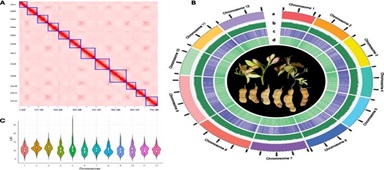
  • Scientists at the Indian Institute of Science Education and Research (IISER Bhopal) have prepared the first chromosome-level genome map of tamarind (Tamarindus indica).

Key Facts:

Discovery and Institution:

  • Developed by: Researchers at IISER Bhopal
  • Discovery: The first high-quality, chromosome-level genome sequencing of tamarind
  • Genome Size: The study revealed that the tamarind genome consists of 11 chromosomes, with a total size of approximately 289 megabases (Mb).
  • Understanding Medicinal Properties: Tamarind contains high levels of tartaric acid and antioxidants. Genome mapping will help understand how tamarind produces these medicinal and nutritional compounds.

Tamarind:

  • Scientific Name: Tamarindus indica
  • Family: It belongs to the Fabaceae family (the pea and legume family).
  • Chemical Constituents: Tartaric acid is the primary component found in tamarind pulp, giving it a sour taste. Additionally, it is rich in Vitamin C, potassium, and fiber.
  • Origin: It is native to tropical Africa.

Reports and Indices

'Sustainable Development Report 2026'

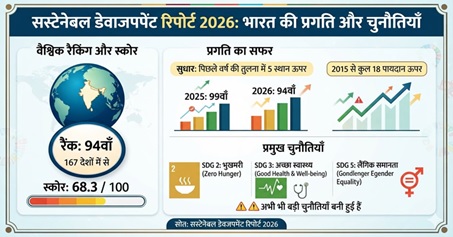
  • India has secured the 94th position out of 167 countries in the 'Sustainable Development Report 2026' released by the United Nations.
  • This marks a significant improvement compared to the 99th position held in 2025.

Key Facts:

  • Improvement in Ranking: India has achieved a notable improvement of 5 places compared to its 99th rank in 2025.
  • Long-term Leap: Between 2015 (112th position) and 2026 (94th position), India has improved its global ranking by 18 places.
  • Rapid Progress: According to the report, India is among the fastest-growing major economies globally in the field of sustainable development.
  • Top-ranking Countries: Finland secured the first position in this index, while Sweden and Denmark hold the second and third positions, respectively.
  • Lowest-ranking Countries: Chad, the Central African Republic, and South Sudan—nations grappling with conflict and instability—rank at the bottom.
  • Comparison with Neighboring Countries: Despite this significant improvement, India continues to lag behind its South Asian neighbors such as Bhutan, the Maldives, Nepal, and Sri Lanka.

Major Challenges Facing India:

  • According to the report, only 33.3% of India's SDG targets are on track to meet the 2030 deadline; limited progress has been made on 42.7% of the targets, while the status of 24% of the targets has deteriorated.
  • SDG 2 (Zero Hunger): This poses the most critical challenge for India, with child wasting, malnutrition, and rising obesity emerging as major concerns. Other challenging areas: India still has a long way to go regarding SDG 3 (Good Health), SDG 5 (Gender Equality), SDG 11 (Sustainable Cities), SDG 14 (Life Below Water), SDG 15 (Life on Land), and SDG 16 (Peace and Justice).

Defence News

Indian Navy Eastern Fleet Ships Arrive at Changi Naval Base

  • Indian Navy Eastern Fleet ships—INS Udaygiri, INS Kavaratti, and INS Shakti—arrived at Singapore's Changi Naval Base yesterday.

Related Facts:

Types and Classes of Ships:

  • INS Udaygiri: A stealth frigate. It is a Nilgiri-class (Project 17A) warship designed to evade radar detection.
  • INS Kavaratti: An indigenously built anti-submarine warfare corvette. It belongs to the Kamorta-class (Project 28), with the primary role of hunting submarines.
  • INS Shakti: A fleet tanker/replenishment ship that supplies fuel, food, and ammunition to other combat ships at sea.

Mission and Command:

  • Fleet: All three ships are part of the Indian Navy's Eastern Fleet, headquartered in Visakhapatnam (Andhra Pradesh).
  • Objective: This visit is part of the 'Eastern Fleet's operational deployment,' aimed at enhancing military cooperation with friendly nations in Southeast Asia and strengthening maritime security and interoperability.
  • Location: Changi Naval Base (Singapore) is strategically located near the Strait of Malacca, a vital waterway for global trade.

India-Singapore Defence Relations:

  • SIMBEX: The annual bilateral maritime exercise between the Indian and Singaporean navies is known as SIMBEX (Singapore-India Maritime Bilateral Exercise).
  • SITMEX: A trilateral naval exercise involving India, Singapore, and Thailand. Indian Navy:
  • Established: 26 January 1950
  • Navy Day: 4 December
  • Motto: "Sham No Varunah"
  • Chief: Admiral Krishna Swaminathan; assumed office as the 27th Chief of the Indian Navy on 31 May 2026

Naval Commands:

  • Western Naval Command (Mumbai)
  • Southern Naval Command (Kochi)
  • Eastern Naval Command (Visakhapatnam)


Latest Courses