GK Update
 
  • Mobile Menu
HOME BUY MAGAZINEnew course icon
LOG IN SIGN UP

Sign-Up IcanDon't Have an Account?


SIGN UP


Login Icon

Have an Account?


LOG IN
 

or
By clicking on Register, you are agreeing to our Terms & Conditions.


or


GK Update

Sat 27 Jun, 2026

National News

Inauguration of the World's First Nuclear-Heat Based Hydrogen Production Plant
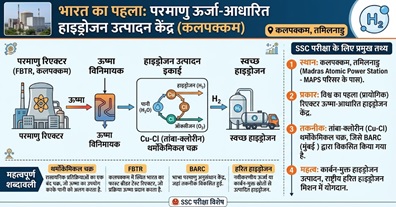
  • India inaugurated the world's first 'hydrogen production plant' utilizing heat from a nuclear reactor at Kalpakkam, Tamil Nadu.

Related Facts:

  • Location: Indira Gandhi Centre for Atomic Research (IGCAR), Kalpakkam, Tamil Nadu
  • Inaugurated by: Ajit Kumar Mohanty, Secretary, Department of Atomic Energy (DAE) and Chairman, Atomic Energy Commission
  • Heat Source: The plant derives the necessary heat from the Fast Breeder Test Reactor (FBTR)
  • Technology: The plant employs the Copper-Chlorine (Cu-Cl) thermochemical cycle process
  • Developer: This indigenous technology was developed by the Mumbai-based Bhabha Atomic Research Centre (BARC)

Indira Gandhi Centre for Atomic Research (IGCAR):

  • Location/Headquarters: Kalpakkam, Tamil Nadu
  • Key Fact: Established in 1971; the centre primarily focuses on research and development of fast breeder reactor technology

Bhabha Atomic Research Centre (BARC):

  • Location/Headquarters: Trombay, Mumbai (Maharashtra)
  • Key Fact: Established in 1954
  • Its founder was the eminent Indian nuclear scientist Dr. Homi Jehangir Bhabha
  • It is India's premier nuclear research centre

Fast Breeder Test Reactor (FBTR):

  • Location/Headquarters: Kalpakkam, Tamil Nadu
  • Key Fact: It is a sodium-cooled fast reactor used for research and testing of plutonium-uranium carbide fuel
  • The Kalpakkam hydrogen plant derives its heat from this reactor

Atomic Energy Commission (AEC):

  • Location/Headquarters: Mumbai, Maharashtra
  • Key Fact: It is the apex body responsible for approving all policies and programs related to nuclear energy in India
  • Established in August 1948

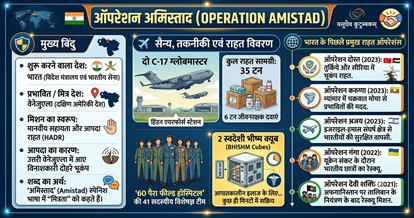
Launch of ‘Operation Amistad’

  • India launched ‘Operation Amistad’ to assist earthquake-affected Venezuela.

Related Facts:

  • What is it?: A Humanitarian Assistance and Disaster Relief (HADR) mission undertaken by the Government of India.
  • Objective: To assist Venezuela following a recent devastating earthquake and to deliver relief supplies.
  • Meaning of the name: 'Amistad' is a Spanish word meaning "friendship." It reflects the strong bilateral ties between India and Venezuela.
  • India's contribution: Under this operation, India has sent medicines, medical equipment, tents, food supplies, and other essential relief materials to Venezuela.

Other major Indian operations:

  • Operation Dost: Relief mission launched by India during the earthquakes in Türkiye and Syria.
  • Operation Ajay: Mission to safely evacuate Indian citizens from Israel during the Israel-Hamas conflict.
  • Operation Karuna: To assist people affected by Cyclone Mocha in Myanmar.
  • Operation Ganga: To evacuate Indian students from Ukraine during the Ukraine-Russia war.

Venezuela:

  • A prominent and historic country located on the northern coast of the South American continent.
  • Capital: Caracas.
  • Geographical boundaries: Bordered by the Caribbean Sea and the Atlantic Ocean to the north; Colombia to the west, Brazil to the south, and Guyana to the east.
  • Angel Falls: The world's highest waterfall, with a height of 979 meters. It is located on the Churun ​​River within Venezuela's Canaima National Park.
  • Orinoco River: One of South America's longest river systems, serving as a lifeline for the country's hydrology and environment. Lake Maracaibo: It is one of South America's largest lakes, with vast oil reserves beneath it.
  • Currency: Venezuelan Bolívar Soberano (VES)

Launch of "Vision Document on Drug Control 2026-2029"
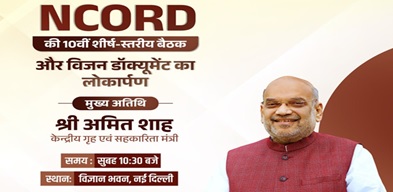
  • Union Home Minister Amit Shah launched the "Vision Document on Drug Control 2026-2029."

Related Facts:

"Vision Document on Drug Control 2026-2029":

  • Objective: To achieve the goal of making India completely 'Drug-Free' by the year 2029.
  • Duration: A three-year, time-bound national strategy effective from 2026 to 2029.
  • Key Mantra/Strategy: The Home Minister has given the mantra "Detect, Disrupt, and Destroy" to make this vision a success.
  • Where was it released?: During the 10th apex-level meeting of the Narco-Coordination Centre (NCORD) held at Vigyan Bhawan, New Delhi.

4 Key Pillars of the Vision Document:

  • Enforcement, Intelligence, and Operations: Focuses on dismantling the entire network of drug traffickers and international cartels.
  • Precursor and Synthetic Drug Control: Involves preventing the illicit diversion of drugs/chemicals and cracking down on synthetic drugs (such as methamphetamine).
  • Demand Reduction and Rehabilitation: Reducing the demand for drugs among the youth and focusing on the treatment and rehabilitation of victims of addiction with an empathetic approach.
  • Capacity Building, Coordination, and Monitoring: Enhancing synergy among various ministries (approximately 40+ ministries and departments) and state governments.

SOP for Notification of Threatened Species
  • The National Biodiversity Authority (NBA) issued a Standard Operating Procedure (SOP) for the notification of threatened species under Section 38 of the Biological Diversity Act, 2002.
  • The objective of this SOP is to facilitate a uniform, transparent, and scientifically sound process for the identification, assessment, and notification of threatened species by States and Union Territories.

Relevant Facts:

  • Section 38 of the Biological Diversity Act, 2002, empowers the Central Government—in consultation with the concerned State Government—to notify any species as a "threatened species" if it is on the verge of extinction or likely to become extinct in the near future.
  • The notification regulates or prohibits the collection of such species and prescribes appropriate measures for their rehabilitation and conservation.
  • The Central Government may also delegate these powers to State Governments.
  • To date, the Ministry of Environment, Forest and Climate Change has notified 159 plant species and 173 animal species across 17 States and 3 Union Territories as threatened species.

National Biodiversity Authority (NBA):

  • Year of Establishment: 2003 (to implement the Biological Diversity Act, 2002)
  • Headquarters: Chennai, Tamil Nadu
  • Nature: It is an autonomous and statutory body under the Ministry of Environment, Forest and Climate Change.

Important Environmental Acts:

  • Wildlife Protection Act: 1972
  • Water (Prevention and Control of Pollution) Act: 1974
  • Forest Conservation Act: 1980
  • Air (Prevention and Control of Pollution) Act: 1981
  • Environment Protection Act: 1986 (also known as the 'Umbrella Act')
  • Biological Diversity Act: 2002

First 'National Rural Development Conference'
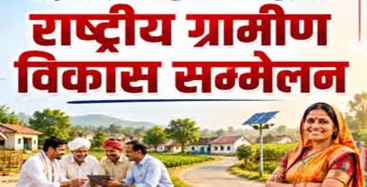
  • The first 'National Rural Development Conference 2026' was organized in New Delhi with the aim of giving a new direction to the holistic development of rural India.

Key Details:

  • When and Where: June 28–29, 2026, at the Bharat Ratna C. Subramaniam Auditorium, Pusa, New Delhi.
  • Main Vision/Theme: "Developed Village, Developed India" (Viksit Gram, Viksit Bharat). The objective is to place the role of villages at the center of making India a developed nation by the year 2047.
  • Presided by: Union Minister for Rural Development and Agriculture & Farmers Welfare, Shivraj Singh Chouhan.
  • Significance: This is the first comprehensive national rural development conference of its kind, bringing the Centre and all States/Union Territories onto a common platform. Rural Development Ministers from all states, policymakers, and subject matter experts are participating in the event.

Reports and Indices

'NCB Annual Report 2025'

  • Union Home Minister Amit Shah released the 'NCB Annual Report 2025', which presents crucial data and revelations regarding drug trafficking, seizures, and emerging security threats associated with the issue in India.

Key Facts:

  • Total Drug Seizures: A total of 133,965 kg (approximately 1.34 lakh kg) of narcotics were seized across the country in 2025, with a total market value of around ₹1,980 crore.
  • Arrests: To dismantle drug networks, 994 traffickers were arrested—including 25 foreign nationals—and a total of 447 cases were registered.
  • Rise in Conviction Rate: Due to the NCB's robust follow-up, the conviction rate for offenders rose to 66.8%, up from 60.8% in 2024. In 2025, 265 offenders were convicted, with 39 receiving the maximum sentence of 20 years.
  • Freezing of Illicit Assets: To cripple the operations of traffickers, illicit assets worth ₹96.69 crore were frozen (seized).
  • Destruction of Illegal Opium Cultivation: A record 42,282 acres of illegal opium cultivation were destroyed in 2025 (compared to just 10,000 acres in 2020).

New Threats Highlighted in the Report:

  • Myanmar Emerges as a New Hub: According to the report, following the ban on opium imposed by the Taliban in Afghanistan in 2022, Myanmar has now emerged as the primary source of global opium supply. New Route: Due to ongoing ethnic tensions in Manipur, smugglers have adopted a new route to traffic drugs (specifically Amphetamine-Type Stimulants – ATS) across India's eastern border via Mizoram. In 2025, out of a total of 3,485 kg of ATS seized nationwide, 1,477 kg was seized in Mizoram alone.
  • High-tech Smuggling: Moving away from traditional methods, smugglers are now utilizing drones, darknet platforms, cryptocurrency payments, and courier/parcel networks. To counter this, the NCB has signed a Memorandum of Understanding (MoU) with the 'Rashtriya Raksha University, Gandhinagar'.

Comparative Data (Last Decade: 2004-14 vs. 2014-26):

  • Synthetic Drug Seizures: While 26 lakh kilograms of drugs were seized between 2004 and 2014, this figure rose to 1.18 crore kilograms between 2014 and 2026.
  • Value of Drugs: The value of seized drugs stood at approximately ₹40,000 crore during 2004-2014, rising to ₹1.84 lakh crore between 2014 and 2026.

Appointments

Prabhjeet Singh: OpenAI's First MD for India
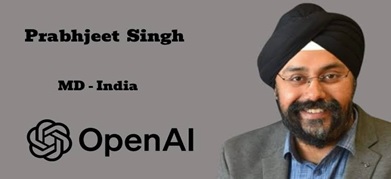
  • OpenAI has appointed Prabhjeet Singh, the former head of Uber India, as its first Managing Director for India.

Related Facts:

  • Why is this significant?: This marks the first time OpenAI (the company behind ChatGPT) has appointed a local head or Managing Director for India.
  • Role: Prabhjeet Singh will lead OpenAI's operations, strategic government relations, engagement with the country's tech ecosystem, and business expansion in India.
  • Prior to joining OpenAI, Prabhjeet Singh served as the President (India and South Asia) for the ride-hailing company Uber.
  • He has also worked as an Associate Partner at McKinsey & Company.
  • What is OpenAI?: It is a US-based (San Francisco) artificial intelligence (AI) research and deployment company.
  • Why is it in the news?: The company gained global fame after launching ChatGPT, the world's most popular AI chatbot, in November 2022.
  • OpenAI CEO: Sam Altman
  • Year of Establishment: 2015 (It began as a non-profit organization; co-founders included Elon Musk).

Economy and Banking

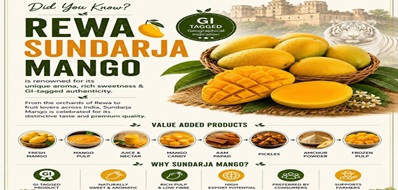
'Rewa Sundarja Mango'

  • The first commercial consignment of the GI-tagged 'Rewa Sundarja mango' from Madhya Pradesh has been shipped to the United Arab Emirates (UAE).
  • This historic step has been taken by the Agricultural and Processed Food Products Export Development Authority (APEDA), with the aim of gaining global recognition for Indian agricultural products.

Related Facts:

'Rewa Sundarja Mango':

  • Production Area: Primarily found in the Govindgarh town and fort orchards of Rewa district.
  • A special postage stamp featuring the Sundarja mango was issued in 1968.
  • It has been selected for Rewa district under the Central Government's 'One District One Product' scheme.
  • The type of natural sugar it contains allows even diabetic patients to consume it.
  • GI Tag: Awarded in 2023.
  • Fiber-free: This mango contains absolutely no fiber.

Agricultural and Processed Food Products Export Development Authority (APEDA):

  • A statutory body under the Government of India.
  • Establishment: February 13, 1986, under the 'APEDA Act, 1985'.
  • Nodal Ministry: Ministry of Commerce and Industry.
  • Headquarters: New Delhi; it has 15 regional offices.
  • Predecessor Body: 'Processed Food Export Promotion Council' (PFEPC).
  • Key Functions: Export of scheduled products, registration of exporters, setting standards, organic certification, monitoring sugar imports.

United Arab Emirates (UAE):

  • A federal semi-constitutional monarchy located at the eastern end of the Arabian Peninsula in the Middle East (West Asia).
  • Capital: Abu Dhabi.
  • Largest City: Dubai.
  • Currency: UAE Dirham (AED).
  • Official Language: Arabic.
  • President: Mohamed bin Zayed Al Nahyan.
  • Continent: Asia.
  • System of Government: Federal Monarchy.
  • Establishment: December 2, 1971.
  • Number of Emirates: 7.
  • Major Emirates: Abu Dhabi, Dubai, Sharjah, Ajman, Fujairah, Ras Al Khaimah, Umm Al Quwain.
  • National Airlines: Emirates and Etihad Airways.
  • Major Landmark: Burj Khalifa — the world's tallest building.
  • Borders: Oman to the east and north-east; Saudi Arabia to the west and south.

India's Foreign Exchange Reserves: For the week ending June 19
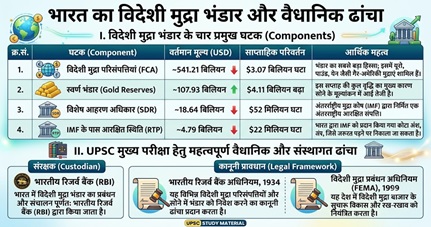
  • In the week ending June 19, India's foreign exchange reserves rose by US$963 million to reach the level of US$672.587 billion.

Related Facts:

  • India's total foreign exchange reserves increased by US$963 million to reach US$672.587 billion.
  • Main reason for the increase: The primary driver of the rise in reserves this week was a significant surge in the value of gold reserves. Gold reserves rose by US$4.11 billion to reach US$107.93 billion, offsetting declines in other components.

Four main components of foreign exchange reserves:

  • Foreign Currency Assets (FCA): This constitutes the largest portion of the reserves (comprising the dollar, euro, pound, yen, etc.). It declined by US$3.072 billion this week, standing at US$541.217 billion.
  • Gold Reserves: As mentioned above, these saw a substantial increase of US$4.11 billion, reaching US$107.93 billion.
  • Special Drawing Rights (SDR): This is a virtual currency of the International Monetary Fund (IMF). It fell by US$52 million this week to US$18.647 billion.
  • Reserve Position in the IMF: This represents India's secured quota with the IMF. It also saw a decline of US$22 million, standing at US$4.793 billion.

Awards and Honors

UK-India Awards 2026

  • Union Minister Piyush Goyal was honored with a special award at the UK-India Awards 2026 held in London.

Related Facts:

  • Who was honored?: Union Minister of Commerce and Industry, Piyush Goyal
  • Where was it held?: London (United Kingdom)
  • Which award was received?: He was honored with a special award for promoting bilateral relations and trade.
  • Presented by whom?: The award was presented at the annual edition of the UK-India Awards organized by the India Global Forum (IGF).

Significance and Background of the Award:

  • Trade Relations: Piyush Goyal received this honor for his significant contribution to taking economic and trade relations between India and the UK to new heights, particularly in advancing negotiations for the India-UK Free Trade Agreement (FTA).
  • India Global Forum (IGF): This organization is a prominent global platform that promotes trade, investment, and diplomacy between India and other countries of the world.

United Kingdom (UK):

  • Official Name: United Kingdom of Great Britain and Northern Ireland
  • Capital: London
  • Major Cities: London, Manchester, Birmingham, Glasgow, Liverpool
  • Currency: Pound Sterling (£) - GBP
  • Head of State: King Charles III
  • Parliament: Bicameral – House of Commons and House of Lords
  • Continent: Europe
  • Famous Rivers: Thames, Severn

World's Best School Prizes 2026

  • A record seven schools from India have been included in the top 10 shortlist for the World's Best School Prizes 2026.

Related Facts:

  • What is the record?: A record seven Indian schools have made it to the top-10 shortlist for the 'World's Best School Prizes 2026'. This marks the highest number of schools shortlisted from any single country in the award's four-year history.
  • Who presents it?: This prestigious award is presented by the UK-based organization 'T4 Education'. It was launched in 2022, following the COVID-19 pandemic.
  • Announcement of winners: The final winners will be announced in November 2026. The total prize money is 50,000 US dollars.

The 7 shortlisted Indian schools (by category):

Innovation Category:

  • PCMC Chhatrapati Shahu Ji Maharaj English Medium School — Pune, Maharashtra (A public school)
  • Army Goodwill School, Wuzur — Anantnag, Jammu & Kashmir

Community Collaboration Category:

  • Healthy Planet TGA Early Years School — Noida, Uttar Pradesh
  • Inventure Academy — Bengaluru, Karnataka
  • Seth M.R. Jaipuria School (Vineet Khand) — Lucknow, Uttar Pradesh

Environmental Action Category:

  • EuroSchool Bannerghatta — Bengaluru, Karnataka (Selected for its efforts in environmental protection and awareness)

Promoting Healthy Lives Category:

  • Seth Anandram Jaipuria School (Shaheed Path) — Lucknow, Uttar Pradesh (Shortlisted for 'Project Alchemy', which focuses on children's lifestyle and mental health)

International News

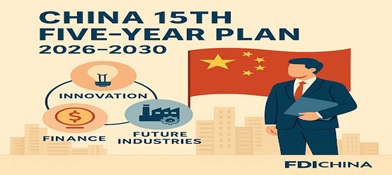
China's 15th Five-Year Plan

  • Under its 15th Five-Year Plan, China has set a target to derive 50% of its total electricity generation from non-fossil sources (such as solar, wind, nuclear, and hydroelectric power) by 2030.

China's New Energy Vision 2030 (15th Five-Year Plan):

Expanding scope of non-fossil sources:

  • New Target (2030): China aims to generate half (50%) of its electricity from non-fossil sources (solar, wind, nuclear, hydroelectric) by 2030.
  • Previous Target (2025): This target is significantly higher than the 42.3% goal set for 2025.
  • Contribution of wind and solar energy:
  • Share in electricity generation: By 2030, wind and solar energy alone will account for 30% of China's total electricity generation (up from 22% in 2025).
  • Installed capacity: By 2030, the installed capacity of wind and solar energy will exceed 50% of the total, reaching 2,700 gigawatts (GW) (compared to 47% at the end of 2025).

Reduction in carbon emission intensity:

  • Binding target: China has set a binding target to reduce carbon emission intensity in the power sector by more than 10% over the next five years.
  • What is carbon intensity?: It measures carbon emissions per unit of electricity generated. China is the world's largest producer of renewable energy as well as the largest source of carbon emissions.

Expansion of energy storage:

  • New Target (2030): China aims to increase non-pumped hydro energy storage capacity to 300 gigawatts (GW). Previous Target: Previously, the target was set at only 180 gigawatts by 2027; this has now been significantly increased.

Renewable Hydrogen Production:

  • Massive Surge in Production: The plan aims to increase renewable hydrogen production to 2 million metric tonnes per annum by 2030.
  • Previous Target (2025): Previously, the target was set at only 100,000 to 200,000 tonnes per annum by 2025.

China:

  • Official Name: People's Republic of China
  • Capital: Beijing (Financial Hub: Shanghai)
  • System of Government: One-party socialist state led by the Communist Party of China (CPC)
  • Geo-strategic Boundaries: Located in East Asia, China shares land borders with 14 countries—the highest number in the world (e.g., India, Russia, Mongolia, Vietnam, etc.).
  • India and China share a 3,488-kilometer-long border, which is primarily divided into three sectors.
  • McMahon Line: A boundary line determined under the 1914 Simla Convention, located in the Eastern Sector (Arunachal Pradesh); China does not fully accept it.
  • Line of Actual Control (LAC): The de facto military boundary between the two countries, spanning Ladakh, Uttarakhand, Himachal Pradesh, Sikkim, and Arunachal Pradesh.

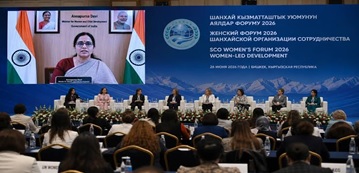
SCO Women's Forum 2026

  • India presented its 'women-led development' model at the Shanghai Cooperation Organisation (SCO) Women's Forum 2026, held in Bishkek, Kyrgyzstan.

Key Facts:

  • Venue: Bishkek, Kyrgyzstan.
  • India's Representation: India showcased its 'women-led development' model to the world at this forum.
  • Core Vision: India clarified that the country's focus has shifted from mere 'women's development' to 'women-led development,' where women are the primary drivers of the nation's progress.

Key Pillars of India's 'Women-Led Development':

  • Nari Shakti Vandan Adhiniyam (Women's Reservation Act): A historic move to reserve 33% of seats for women in Parliament and State Legislative Assemblies.
  • Drone Didi Scheme: A modern initiative to train women in the agricultural sector to fly drones and integrate them with technology.
  • Lakhpati Didi Scheme: An initiative aiming to raise the annual income of rural women above ₹1 lakh with the help of Self-Help Groups (SHGs).
  • Mudra Scheme: Over 70% of the business loans disbursed under this scheme have been granted to women entrepreneurs.
  • Increasing Participation in STEM: India is among the top countries globally where women's participation in STEM (Science, Technology, Engineering, and Mathematics) education has grown most rapidly.

Shanghai Cooperation Organisation (SCO):

  • Established: June 15, 2001.
  • Headquarters: Beijing, China.
  • When did India become a member?: India and Pakistan became full-time members of the SCO in 2017 (Astana Summit).
  • Total Member Countries: Currently, India, China, Russia, Pakistan, Kazakhstan, Kyrgyzstan, Tajikistan, Uzbekistan, Iran, and Belarus are its members.

Kyrgyzstan:

  • Capital: Bishkek
  • Currency: Kyrgyzstani Som
  • Military exercise with India: The joint military exercise between India and Kyrgyzstan is named 'Khanjar'.


Latest Courses