National News
23rd Installment of PM Kisan Samman Nidhi Scheme
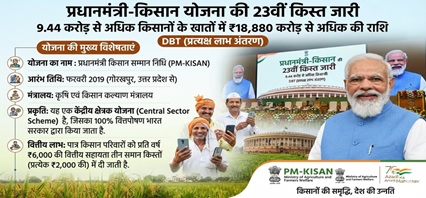
- Prime Minister Narendra Modi released the 23rd installment of the PM Kisan Samman Nidhi scheme from Tarakeswar in the Hooghly district of West Bengal.
Key Facts:
- Location: Tarakeswar, Hooghly district, West Bengal
- Total Amount Transferred: Over ₹18,880 crore transferred directly via Direct Benefit Transfer (DBT)
- Total Beneficiaries: More than 9.44 crore farmer families across the country
- Benefit to West Bengal: Over ₹907 crore received by more than 45.35 lakh farmers in the state
Pradhan Mantri Kisan Samman Nidhi (PM-KISAN):
- Type: Central Sector Scheme; 100% funding by the Central Government
- Launch Date: 24 February 2019 (Effective date: 1 December 2018)
- Nodal Ministry: Ministry of Agriculture and Farmers Welfare
- Financial Assistance: Financial assistance of ₹6,000 per year is provided to eligible farmer families
- Responsibility for Identification: The entire responsibility for identifying eligible farmer families lies with the State and Union Territory (UT) governments
|
'Water-Conserved Haryana' Project
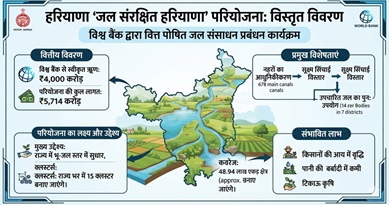
- The World Bank has approved a loan of ₹4,000 crore for the 'Water-Conserved Haryana' project.
Key Facts:
- Budget allocated for the project: ₹5,714 crore
- Objective: To make Haryana completely self-reliant in the water sector and ensure sustainable water security
- Duration: This ambitious program will be implemented in phases between 2026 and 2032
- Geographical Scope: 15 clusters have been formed covering an area of 48.94 lakh acres across the state
Key Components and Strategies:
- Modernization of canal network: Renovation and strengthening of the state's remaining 678 canals
- Micro-irrigation: Upgradation of 120 canal-based micro-irrigation projects for efficient water use
- Groundwater recharge: Development of 147 water bodies across 7 districts—Bhiwani, Jind, Kaithal, Mahendragarh, Rewari, Charkhi Dadri, and Sirsa—to improve depleting groundwater levels
- Established: 1944 (Bretton Woods Conference)
- HeaWorld Bank:
- 5 Institutions of the World Bank Group:
- dquarters: Washington, D.C., USA
- Operations began: 1946
- President: Ajay Banga
- IBRD – International Bank for Reconstruction and Development
- IDA – International Development Association
- IFC – International Finance Corporation
- MIGA – Multilateral Investment Guarantee Agency
- ICSID – International Centre for Settlement of Investment Disputes
|
Launch of a Centralized Online Software Named 'Bhavishya'
- To streamline the retirement process for central civil servants, the Department of Pension & Pensioners' Welfare (DoPPW) has launched a centralized online software named 'Bhavishya'.
- This platform works to prevent delays in pension sanctioning, clerical errors, and financial losses for employees.
Launch of Projects Worth Over ₹47,600 Crore in Odisha
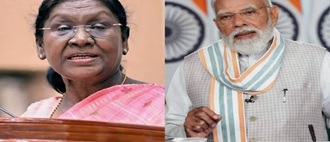
- President Smt. Droupadi Murmu and Prime Minister Narendra Modi visited Pahadpur village in Mayurbhanj district.
- The President and the Prime Minister offered prayers at the sacred sites of ‘Santhali Jahera’ and ‘Ho Jahera’ and visited the skill center and Pahadpur School.
- The President and the Prime Minister participated in a program held in Rairangpur, Mayurbhanj district, to mark the completion of two years of the Odisha government.
- The theme of the program is "Vikas Ra Dhara, Odisha Sara" (The Stream of Development Across Odisha).
- Modi inaugurated and laid the foundation stones for various development projects worth over ₹47,600 crore.
Key Details:
- Location: Rairangpur, Mayurbhanj district, Odisha
- Event: Celebration of the completion of 2 years of the Odisha government
- Theme: "Vikas Ra Dhara, Odisha Sara"
- Chief Guests: President Droupadi Murmu and Prime Minister Narendra Modi
- Inaugurated/Foundation-laid Projects: Worth over ₹47,600 crore
- The Prime Minister offered prayers at Santhali Jahera and Ho Jahera.
- Pahadpur village (Mayurbhanj) will be developed as a 'Solar Village'.
- Solar energy generation will be promoted in every household.
- Investment proposals worth approximately ₹20 lakh crore received under the 'Utkarsh Odisha' initiative.
- Projects worth over ₹3.5 lakh crore are in the implementation stage.
- Investment of over ₹6,000 crore in the power sector.
|
Inauguration of the Jowai-Nartiang-Kdiap-Khanduli Road Project
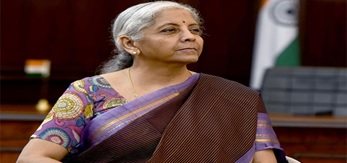
- Union Finance Minister Nirmala Sitharaman inaugurated the Jowai-Nartiang-Kdiap-Khanduli (JNKK) road project, spanning approximately 60 kilometers (exact length: 59.955 km), in the West Jaintia Hills district of Meghalaya.
Key Facts:
- Total Cost and Funding: This significant road project was constructed at a cost of approximately ₹59.48 crore.
- Funding Agency: The project is externally aided by the New Development Bank (NDB), also known as the BRICS Bank.
|
Inauguration of the Karveer Niwasini Ambabai Temple Development Project
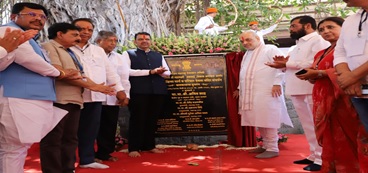
- Union Home and Cooperation Minister Amit Shah inaugurated and laid the foundation stone for the Karveer Niwasini Ambabai (Mahalakshmi) Temple development project in Kolhapur, Maharashtra, at a cost of ₹1,445.97 crore (approximately ₹1,446 crore).
Key Facts:
- Cost: ₹1,445.97 crore (approximately ₹1,500 crore)
- Inaugurated by: Union Home Minister Amit Shah (in the presence of Maharashtra Chief Minister Devendra Fadnavis and Deputy Chief Minister Eknath Shinde)
- Phased Implementation: This ambitious mega-project will be completed in three distinct phases.
- Conservation and Restoration: Structural conservation and repair work on the original temple structure is being carried out in accordance with the guidelines of the Archaeology Department. Additionally, 41 smaller temples located around the main complex will also be restored.
- City Circumambulation Route: The traditional 'Nagar Pradakshina Marg' (city circumambulation route) and a new *parikrama* (circumambulation) path will be beautified and constructed.
- Architectural Style: The temple is renowned for its unique and ancient Hemadpanthi architectural style, known for its carved stone structures.
- Historical Evidence: The temple's history is estimated to date back approximately 1,700 to 1,800 years. A historical reference to the temple is also found in the Sanjan copper plates (871 CE) of the Rashtrakuta King Amoghavarsha I.
- Geographical Location: The temple is situated in the city of Kolhapur, Maharashtra, a region historically known as 'Karveer'.
|
Ban on the manufacture, sale, and distribution of 16 Fixed-Dose Combination (FDC) drugs

- The Union Ministry of Health and Family Welfare has banned the manufacture, sale, and distribution of 16 Fixed-Dose Combination (FDC) drugs with immediate effect.
Related Facts:
- Under which law? This ban has been imposed under the Drugs and Cosmetics Act, 1940.
- Which legal section is involved? The Union Health Ministry issued this notification invoking Section 26A of the Act.
- Full form of FDC: FDC stands for Fixed-Dose Combination, in which two or more active ingredients (APIs) are combined in a fixed ratio.
- Which ministry took the decision? The decision was taken by the Union Ministry of Health and Family Welfare.
- On the recommendation of which apex body? The decision was based on a review by the expert committee of the DTAB (Drugs Technical Advisory Board).
- Main reason for the ban: There was no sound therapeutic justification for the combination of these drugs, and their use posed significant health risks (side effects).
- Which key drugs are included? The banned list primarily includes penicillin-class antibiotics (such as Amoxicillin + Serratiopeptidase), painkillers, and 10 aloe vera-based over-the-counter (OTC) products related to dermatological conditions.
- Responsibility for implementation: The Central Government has directed State Drug Controllers and regulatory agencies to strictly enforce this ban.
- CDSCO (Central Drugs Standard Control Organization): It is the primary national regulatory body for drugs in India. Its headquarters is in New Delhi.
- DTAB: It is a statutory body constituted under the Drugs and Cosmetics Act, 1940, which advises the Central Government on technical matters.
|
'PM-Kisan-Annadatha Sukhibhava' Scheme: Andhra Pradesh
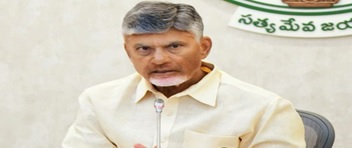
- Andhra Pradesh Chief Minister N. Chandrababu Naidu released the first installment of ₹3,125 crore under the 'PM-Kisan-Annadatha Sukhibhava' scheme for the Kharif season.
- This financial assistance—amounting to ₹7,000 per farmer and comprising contributions from both the state and the Centre—was directly deposited into the bank accounts of over 46.85 lakh farmers in the state.
Related Facts:
- This scheme is a key election promise of the Telugu Desam Party (TDP)-led NDA government in Andhra Pradesh; it was originally launched in August 2025.
- Unified Integrated Approach: It is an integrated welfare scheme formed by combining the Central Government's Pradhan Mantri Kisan Samman Nidhi (PM-KISAN) with the State Government's financial assistance.
- Total Annual Assistance: Under this scheme, eligible farmer families receive financial assistance of ₹20,000 per year.
- Funding Share: Of the total ₹20,000, the State Government bears ₹14,000, while the remaining ₹6,000 is provided through the Central Government's PM-KISAN scheme.
|
Science and Technology
Installation of the Reactor Pressure Vessel (RPV)
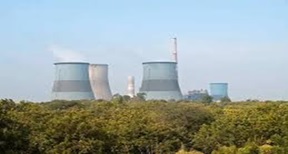
- The Nuclear Power Corporation of India Limited (NPCIL) has successfully completed the installation of the Reactor Pressure Vessel (RPV) for Unit-5 of the Kudankulam Nuclear Power Project (KKNPP) in Tamil Nadu.
Key Facts:
- Heart of the Reactor: The Reactor Pressure Vessel (RPV) is referred to as the 'heart' of the nuclear power plant. It houses the reactor core, where the process of nuclear fission takes place.
- Weight: The total weight of this massive steel component is approximately 320 tonnes.
- International Collaboration: This project is being executed with technical collaboration from Russia's state nuclear energy corporation (Rosatom) and its engineering division, 'Atomstroyexport' (ASE). This partnership is based on a historic inter-governmental agreement signed in 1988.
- Technology Used: The project utilizes the Russian-developed VVER-1000 (Water-Water Energetic Reactor) technology, which is a type of Pressurized Water Reactor (PWR).
- Regulatory Approval: The installation was completed after receiving the green signal from the Atomic Energy Regulatory Board (AERB).
Kudankulam Nuclear Power Project (KKNPP):
- Location: The project is situated on the coast of the Gulf of Mannar in the Tirunelveli district of Tamil Nadu.
- Technical Collaboration: The project is being developed under a historic Inter-Governmental Agreement (IGA) signed between India and Russia in 1988. Russia's state nuclear energy corporation (Rosatom) and its subsidiary, Atomstroyexport (ASE), are providing technical assistance.
Project Capacity:
- A total of 6 reactors (units), each with a capacity of 1,000 MW, are planned at this site.
- Unit-1 and Unit-2 are currently operational at full capacity. Units 3, 4, 5, and 6 are currently in various stages of construction.
- Upon the completion of all six units, its total capacity will reach 6,000 MW, making it India's largest nuclear power station.
|
Reports and Indices
Live Water Storage in the Country
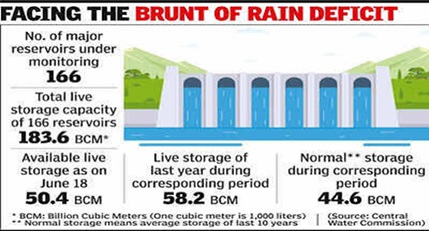
- According to the Central Water Commission (CWC) report, 51.92 billion cubic meters (BCM) of live water storage was available across 166 major reservoirs in the country as of June 11, 2026.
Related Facts:
- Report Issuer: Central Water Commission (CWC)
- Report Date: June 11, 2026
- Monitored Reservoirs: 166 major reservoirs
- Total Live Storage Capacity: 183.56 billion cubic meters (BCM)
- Available Water Storage: 51.92 BCM
- Filled Portion of Total Capacity: 28.28%
- Unfilled Capacity: Approximately 72%
Region-wise Water Storage:
- Northern Region: 11 reservoirs, 19.84 BCM capacity, 6.67 BCM water storage (33.64%)
- Western Region: 53 reservoirs, 38.09 BCM capacity, 11.86 BCM water storage (31.13%)
- Central Region: 28 reservoirs, 48.59 BCM capacity, 17.05 BCM water storage (35.09%)
- Eastern Region: 27 reservoirs, 21.76 BCM capacity, 4.74 BCM water storage (21.77%)
- Southern Region: 47 reservoirs, 55.29 BCM capacity, 11.60 BCM water storage (20.98%)
- Highest Water Storage: Central Region (35.09%)
- Lowest Water Storage: Southern Region (20.98%)
- National storage is 8.17% lower compared to the previous year.
- National storage is 15.8% higher than the normal level. Nearly empty reservoirs:
- Chandan Dam (Jharkhand)
- Bhima-Ujjani (Maharashtra)
- Maudaha (Uttar Pradesh)
- Nanak Sagar (Uttarakhand)
Major reservoirs with low water levels:
- Bhadra (Karnataka) – 3.17%
- Vaigai (Tamil Nadu) – 10.88%
- Kabini (Karnataka) – 17.08%
- Krishnaraja Sagar (Karnataka) – 33.47%
- Tungabhadra (Karnataka) – 36.53%
Basins with above-normal storage:
- Ganga, Indus, Narmada, Tapi, Mahi, Sabarmati, Godavari, Brahmaputra, Pennar, Mahanadi
- Basins with below-normal storage:
- East-flowing rivers between Mahanadi and Pennar
- Barak and other river basins
- Hydroelectric projects:
- Out of the reservoirs associated with 20 hydroelectric projects, 9 have water levels at or below normal.
- This is likely to impact hydroelectric power generation.
|
Defence News
Unveiling of Three Naval Ships
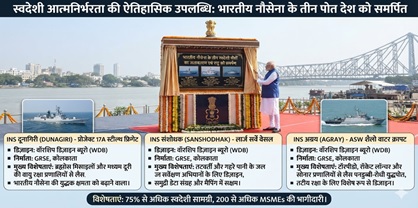
- Prime Minister Narendra Modi unveiled three indigenously built naval ships in Kolkata.
Key Facts:
|
Three indigenous vessels:
- INS Dunagiri, Sanshodhak, and Agray
- Designer: Warship Design Bureau (WDB)
- Manufacturer: Kolkata-based Defence Public Sector Undertaking, Garden Reach Shipbuilders & Engineers (GRSE) Limited
- INS Dunagiri is equipped with BrahMos missiles and medium-range air defence systems.
- INS Sanshodhak is designed for coastal and deep-water hydrographic survey operations.
- INS Agray is an anti-submarine warfare ship equipped with torpedoes, rocket launchers, and sonar systems for coastal defence.
- The Navy stated that these vessels utilize over 75 percent indigenous content and involved the participation of more than 200 Micro, Small, and Medium Enterprises (MSMEs).
Indian Navy:
- Established: 26 January 1950
- Navy Day: 4 December
- Motto: "Sham No Varunah"
- Chief: Admiral Krishna Swaminathan; assumed office as the 27th Chief of the Indian Navy on 31 May 2026
Naval Commands:
- Western Naval Command (Mumbai)
- Southern Naval Command (Kochi)
- Eastern Naval Command (Visakhapatnam)
|
Important Day
'International Day of Yoga'
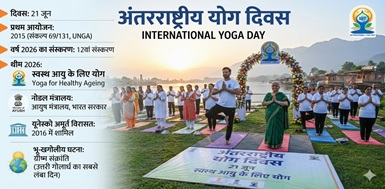
- 'International Day of Yoga' is observed annually on June 21; this year's theme is "Yoga for Healthy Aging."
International Day of Yoga 2026:
- Theme: "Yoga for Healthy Aging"
- Main Event: Kolkata, West Bengal
International Day of Yoga:
- Historical Background: Prime Minister Narendra Modi proposed this day during the 69th session of the United Nations General Assembly (UNGA) on September 27, 2014. Subsequently, on December 11, 2014, the resolution was passed unanimously with the co-sponsorship of a record 177 UN member nations.
- First Event: The inaugural International Day of Yoga was celebrated worldwide on June 21, 2015.
- Significance of June 21: This date marks the longest day of the year in the Northern Hemisphere, symbolizing longevity and enduring energy.
- UNESCO: In 2016, Yoga was inscribed on the list of the Intangible Cultural Heritage of Humanity.
|
International News
Declaration of State of Emergency in Bolivia

- Bolivian President Rodrigo Paz has declared a nationwide state of emergency following rising inflation, a fuel crisis, and intense anti-government protests and economic blockades that have persisted for nearly 50 days.
Bolivia:
- Official Name: Plurinational State of Bolivia
- Continent: South America
- Landlocked Country: It is one of two landlocked countries in South America (the other being Paraguay). It has no coastline.
Capital: Bolivia has two capitals:
- Sucre: Constitutional and judicial capital
- La Paz: Administrative and seat of government — It is considered the highest capital city in the world (approximately 3,650 meters above sea level).
- Currency: Boliviano (BOB)
- Bolivia is bordered by a total of 5 countries:
- North and East: Brazil
- Southeast: Paraguay
- South: Argentina
- West: Chile and Peru
- Lake Titicaca: Located on the border between Peru and Bolivia; it is the highest navigable lake in the world.
- Salar de Uyuni: The world's largest salt flat, located in Bolivia.
- Andes Mountain Range: The Andes, the world's longest mountain range, passes through the western part of Bolivia.
- Amazon Basin: The northern and eastern parts of Bolivia are covered by Amazon rainforests.
- Lithium Triangle: Bolivia, Argentina, and Chile together form the "Lithium Triangle." Bolivia holds the world's largest lithium reserves (beneath Salar de Uyuni). Lithium is used in the manufacture of mobile phone and EV batteries.
|


 Don't Have an Account?