GK Update
 
  • Mobile Menu
HOME BUY MAGAZINEnew course icon
LOG IN SIGN UP

Sign-Up IcanDon't Have an Account?


SIGN UP


Login Icon

Have an Account?


LOG IN
 

or
By clicking on Register, you are agreeing to our Terms & Conditions.


or


GK Update

Sat 20 Jun, 2026

National News

Incentive amount released under PM-VBRY
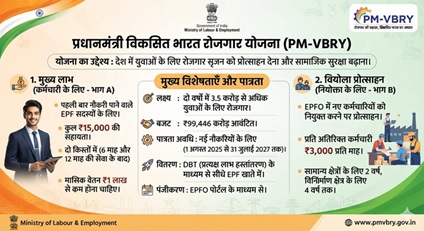
  • Prime Minister Narendra Modi released an incentive amount of ₹2,400 crore under the 'Pradhan Mantri Viksit Bharat Rozgar Yojana' (PM-VBRY).

Related Facts:


  • Amount disbursed: Approximately ₹2,400 crore
  • Total financial outlay: The total budget for this ambitious scheme is ₹99,446 crore
  • Scheme duration: It has been implemented for a period of two years, from August 1, 2025, to July 31, 2027
  • Number of beneficiaries: Incentives were provided to over 15 lakh beneficiaries (newly recruited youth and employers) under this specific program

'Pradhan Mantri Viksit Bharat Rozgar Yojana' (PM-VBRY):

  • It is a major employment-oriented incentive scheme of the Government of India.
  • It has been implemented effective from August 1, 2025, replacing the 'Employment Linked Incentive' (ELI) scheme announced in the Union Budget 2024-25.
  • Nodal Ministry: Ministry of Labour and Employment (MoLE)
  • Implementing Agency: Employees' Provident Fund Organisation (EPFO)
  • Total budget allocation: ₹99,446 crore
  • Scheme duration: August 1, 2025, to July 31, 2027 (two years)

It is divided into two categories:

Part 'A' – Incentives for Employees:

  • Financial assistance: A direct incentive of up to ₹15,000 is provided in two installments to new employees registering with the EPFO ​​for the first time.
  • Installment structure: The first installment is provided after the completion of 6 months of service, and the second installment is provided after 12 months, subject to the completion of a mandatory financial literacy program.
  • The employee's monthly salary must be up to ₹1,00,000.
  • The date of joining the establishment must be between 01.08.2025 and 31.07.2027.

Part 'B' – Incentives for Employers:

  • Financial Assistance: Employers creating new employment opportunities receive an incentive of up to ₹3,000 per month for each additional employee.
  • Manufacturing Sector: Given the strategic importance of this sector, employers will receive the incentive for a period of 4 years.
  • All Other Sectors: Employers will be eligible for this benefit for a period of 2 years.
  • Payment Method: Payments to employers are made directly into bank accounts linked to their PAN (Permanent Account Number).

Exports to BRICS Member and Partner Nations
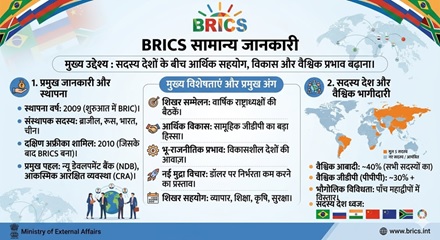
  • In the 2025-26 financial year, the Uttar Pradesh government exported goods worth over $5.36 billion to BRICS member and partner nations.
  • Bhupendra Singh Chaudhary, the state's Minister for Micro, Small, and Medium Enterprises (MSME), shared these figures during the three-day BRICS MSME Forum held in Agra.

Related Facts:


Key Export Highlights:

  • Exports to Member Nations: Goods worth approximately $3.94 billion were shipped to BRICS member nations.
  • Exports to Partner Nations: Exports worth $1.43 billion were made to allied and partner nations.
  • Major Products: The state has exported significant quantities of machinery, apparel, leather goods, carpets, and precious gems.
  • Significant Scheme: The 'One District-One Product' (ODOP) scheme has played a pivotal role in taking local crafts to international markets.

Exam-Relevant Information:

  • 2017 Baseline: In 2017, Uttar Pradesh's total exports stood at just ₹88,000 crore.
  • 2025-26 Surge: By 2025-26, UP's exports had risen to over ₹2 lakh crore.
  • Record Growth: The state's exports have increased by more than ₹1 lakh crore, demonstrating its robust manufacturing capacity and policy-driven growth.
  • Key Driving Sectors: This massive growth is primarily attributed to the expansion of high-potential sectors such as textiles, electronics, food processing, and handicrafts.

Key Achievements of the ODOP Scheme:

  • E-commerce Presence: Local ODOP products have been made available on reputed domestic and international e-commerce platforms. Toolkit Distribution: Over 1.50 lakh modern toolkits have been distributed to enhance the efficiency of artisans.
  • Financial Assistance: Loans exceeding ₹7,000 crore have been disbursed to promote small-scale industries.
  • Marketing Support: More than 8,000 beneficiaries have received assistance for the effective branding and sale of their products.
  • CFC Approval: 30 Common Facility Centres (CFCs) have been approved to strengthen shared facility infrastructure.
  • Geographical Indication (GI Tag): 44 products from Uttar Pradesh have received the GI Tag, establishing a distinct identity for these traditional products.

Key Districts and their ODOP Products:

  • Meerut: Sports goods and indoor games (International manufacturing hub)
  • Azamgarh: Black clay artifacts (pots, water jugs, and flower vases)
  • Gautam Buddha Nagar: Readymade garments (Noida's 'City of Apparel')
  • Pilibhit: Flutes (The country's sole hub for flute manufacturing)
  • Farrukhabad: Block printing (Wooden and brass printing blocks)
  • Moradabad: Metal craft products (Brass utensils and statues)
  • Lalitpur: Zari silk sarees (Traditional attire)
  • Shamli: Rims and axles (Vehicle components)
  • Prayagraj: Moonj products (Eco-friendly decorative items)
  • Saharanpur: Carved wooden furniture and decorative items
  • Kanpur: Leather products
  • Varanasi: Banarasi silk sarees (World-famous Banarasi sarees)
  • Baghpat: Home decor items (Handloom-made bedsheets, towels, etc.)
  • Hardoi: Handloom (Handloom textiles)
  • Aligarh: Locks and brass lamps ('City of Locks')
  • Lucknow: Chikankari (Traditional needle-and-thread embroidery)
  • Kannauj: Ittar/Perfume (Natural aromatic fragrances)
  • Shravasti: Crafts and furniture (Traditional crafts)
  • Jaunpur: Imarti (Traditional delicacy) and woolen carpets
  • Amroha: Musical instruments (Dholak and other musical instruments)

Inauguration of the North-East Region's Largest 'Organic Spice Processing Unit'
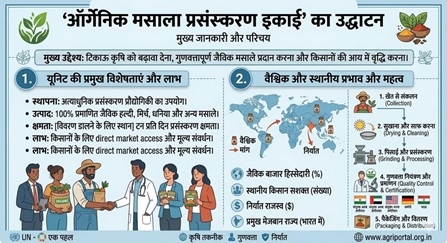
  • Union Finance Minister Nirmala Sitharaman inaugurated the North-East region's largest 'organic spice processing unit' in Meghalaya.

Key Facts:


  • Location: Bhoirymbong, Ri-Bhoi district, Meghalaya
  • Developer: 'Eastern Ri-Bhoi Organic Farmer Producer Company'
  • Cost and Capacity: Built at a cost of approximately ₹32 crore, the plant has an annual processing capacity of 10,346 metric tonnes (MT) of spices.
  • Key Spices Processed: It will process high-value organic spices such as ginger, turmeric, black pepper, and chili.
  • Certification: The unit is certified under NPOP (National Programme for Organic Production) and European Union (EU) organic standards, granting it direct access to global markets.

Spices Board:

  • A statutory body functioning under the administrative control of the Ministry of Commerce and Industry.
  • Its primary function is the development, regulation, and export promotion of Indian spices on a global scale.
  • Act: It was constituted under the Spices Board Act, 1986.
  • Date of Formation: The board came into existence on February 26, 1987.
  • Merger: This single board was formed by merging the erstwhile Cardamom Board (1968) and the Spices Export Promotion Council (1960).
  • Headquarters: Kochi, Kerala
  • Madhya Pradesh: First in total production (garlic, coriander, ginger)
  • Rajasthan: Hub of seed spices (cumin, coriander, fenugreek, fennel)
  • Gujarat: Major producer of cumin and fennel (Unjha market)
  • Andhra Pradesh: Largest producer of red chili (Guntur market)
  • Telangana: Leader in turmeric and chili production. Kerala: "Spice Garden of India" (Black pepper and small cardamom)

Leading producer states for specific spices:

  • Black pepper: Kerala, Karnataka, Tamil Nadu
  • Small cardamom: Kerala, Karnataka, Tamil Nadu
  • Large cardamom: Sikkim (India's largest producer)
  • Red chili: Andhra Pradesh, Telangana, Karnataka
  • Turmeric: Telangana, Maharashtra, Tamil Nadu
  • Cumin: Gujarat, Rajasthan
  • Coriander: Madhya Pradesh, Gujarat, Rajasthan
  • Ginger and Garlic: Madhya Pradesh, West Bengal, Assam

Economy and Banking

Net Direct Tax Collection

  • According to data released by the Income Tax Department, India's net direct tax collection rose by 14.64 percent to ₹5.21 lakh crore up to June 17 in the 2026-27 financial year.

Related Facts:


  • Net direct tax collection: ₹5,21,024.82 crore (compared to ₹4,54,499.18 crore during the same period last year)
  • Gross direct tax collection: ₹6.10 lakh crore, marking a growth of 12.46%
  • Advance tax collection: Reached ₹1.78 lakh crore, a growth of 15.30%
  • Securities Transaction Tax (STT): Recorded at ₹18,856.12 crore, showing a sharp surge of approximately 45%
  • Tax refunds: ₹89,025.71 crore issued (a marginal increase of 1.19%)

Important Day

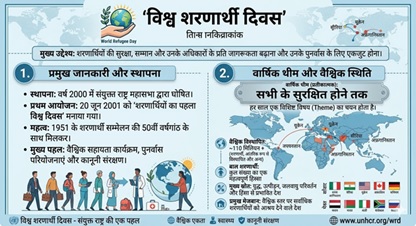
'World Refugee Day'

  • 'World Refugee Day' is observed annually on June 20; this year's theme is "Everyone is safe until everyone is safe."

Related Facts:


  • Declaration: The United Nations General Assembly (UNGA) passed a resolution in December 2000 to observe this day.
  • First Observance: The day was first observed on June 20, 2001, marking the 50th anniversary of the 1951 'Refugee Convention'.
  • Nodal Agency: The United Nations High Commissioner for Refugees (UNHCR) leads this initiative.

Global Refugee Statistics (2025):

  • Total number of forcibly displaced people: 117.3 million
  • Refugees: 36.4 million
  • Internally Displaced Persons (IDPs): 73.5 million
  • Asylum seekers: 8.4 million
  • Stateless persons: 4.4 million
  • Children under 18 years of age: 49 million (40% of the displaced population)
  • Low- and middle-income countries host 71% of refugees, while least developed countries host 25% of the total refugee population.
  • Major displacement situation: Sudan (13.4 million)
  • 66% of refugees live in countries neighboring their country of origin.

Who is a Refugee:

According to the UN's 1951 Refugee Convention, a refugee is a person who:

  • Forced to leave the country: Is outside their country of nationality.
  • Fear of severe persecution: Suffers from a well-founded fear of persecution based on race, religion, nationality, membership of a particular social group, or political opinion.
  • Lack of protection: Is unable to obtain protection from their country's government or is unwilling to seek such protection due to that fear. Risk of return: Unable to return to one's home country due to war, violence, or widespread human rights violations.

West Bengal Day

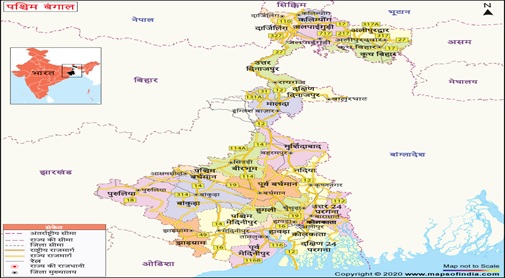
  • On June 20, 2026, the West Bengal government officially celebrated 'Paschim Banga Diwas' (West Bengal Day) for the first time.
  • Prime Minister Narendra Modi participated in the main state-level ceremony held at Tarakeswar in the Hooghly district.
  • On June 20, 1947, members of the Bengal Legislative Assembly voted in favor of creating a separate province during the partition of India.
  • This decision led to the formation of West Bengal, and Dr. Syama Prasad Mookerjee played a historic role in ensuring it remained an integral part of India.

Related Facts:


Historical Background:

  • Event of June 20, 1947: On this day, a meeting of the undivided Bengal province's Legislative Assembly took place. During this meeting, the historic resolution for the partition of Bengal was officially passed.
  • Decision on Partition: Following this vote, it was decided that the Muslim-majority region would become East Pakistan (now Bangladesh) and the Hindu-majority region would become the state of West Bengal within the Indian Union.
  • Key Personality: Dr. Syama Prasad Mookerjee played the most crucial role in this partition and the proposal to keep West Bengal a part of India.
  • New Decision (Year 2026): In June 2026, the West Bengal government officially announced that, henceforth, June 20 would be celebrated annually as State Day.
  • Previous Controversy/Change: Previously, the state government used to observe 'West Bengal Day' on the first day of the Bengali New Year, known as 'Poila Baisakh' (April 14/15); this has now been changed back to the historic date of June 20.

West Bengal:

  • Capital: Kolkata, situated on the banks of the Hooghly River
  • State Animal: Fishing Cat
  • State Bird: White-throated Kingfisher
  • Major National Parks: Sundarbans (UNESCO World Heritage Site), Buxa, Gorumara, Neora Valley, Jaldapara, and Singalila National Parks
  • Major Folk Dances: Chhau, Jatra, Kathi, Gambhira, and Dhali
  • Famous Festival: Durga Puja, which has been included in the UNESCO Intangible Cultural Heritage list

Appointments

Vivek Aggarwal

  • Union Culture Secretary Vivek Aggarwal has been elected as the Vice President of the Financial Action Task Force (FATF) for the year 2026-27.
  • Giles Thomson of the UK has been appointed as the new President of the FATF.
  • This historic appointment was announced during the FATF plenary meeting held in Paris.
  • This marks the first time India has secured a position in the top leadership (Vice Presidency) of the FATF.

Vivek Aggarwal's Administrative Experience and Tenure:


  • Tenure: His term as Vice President will be for one year, spanning from July 2026 to June 2027.
  • Succession: He will succeed Giles Thomson of the United Kingdom (Giles Thomson will now assume the role of the next FATF President).
  • Key Background: Prior to becoming Culture Secretary, Vivek Aggarwal served as the Director of India's Financial Intelligence Unit (FIU-IND) and successfully led the Indian delegation during the FATF mutual evaluation process.

Financial Action Task Force (FATF):

  • An independent inter-governmental body that sets policies and standards to safeguard the global financial system against money laundering, terrorist financing, and the proliferation of weapons of mass destruction (WMD).
  • Establishment: Established during the G7 summit held in Paris in 1989.
  • Headquarters/Secretariat: Located at the Organisation for Economic Co-operation and Development (OECD) headquarters in Paris, France.
  • Mandate: Initially, its mandate was limited to combating money laundering. Terrorist financing was added in 2001 (following the 9/11 attacks), and nuclear proliferation financing was included in 2012.
  • Membership: Currently, it has 40 members (38 countries and 2 regional organizations—the European Union and the Gulf Cooperation Council).
  • India and FATF: India became a full member of the FATF in 2010. India strongly supports policies aimed at combating money laundering and terror financing.

Two key FATF lists:

  • Grey List: This includes countries whose financial systems pose a high risk of money laundering and terror financing but which have committed to working with the FATF to address these deficiencies. Countries on this list face difficulties in securing loans from international banks and institutions (such as the IMF and World Bank), and foreign investment is adversely affected.
  • Black List: This comprises non-cooperative countries that fail completely to curb terror financing and money laundering activities and do not cooperate with the FATF. Currently, this list includes Iran, North Korea, and Myanmar.

Miscellaneous

Gifts Presented to Slovak Leaders as Part of Cultural Diplomacy
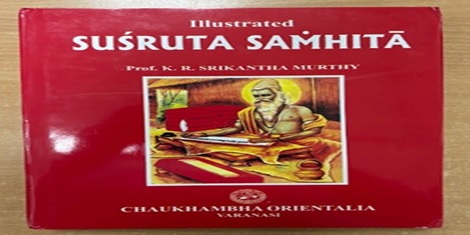
  • During his visit to France and Slovakia in June 2026, Prime Minister Narendra Modi presented several traditional gifts reflecting India's rich art, literature, and culinary heritage to Slovak leaders as a gesture of cultural diplomacy.

Related Facts:


Thewa Motif Cufflinks:

  • Presented to: Slovak President Peter Pellegrini
  • Art Form: A highly distinctive and traditional jewelry art form from Pratapgarh, Rajasthan.
  • Technique: It involves fusing an intricately carved sheet of gold onto a base of colored glass (primarily Belgian glass). The designs are often inspired by nature, hunting scenes, and mythology.

Himroo Silk Tie and Pocket Square:

  • Presented to: Slovak President Peter Pellegrini
  • Art Form: A traditional weaving style from Chhatrapati Sambhajinagar (Aurangabad, Maharashtra).
  • Specialty: A fabric made from a blend of silk and cotton, known for its reversible weave, soft texture, and intricate floral or paisley (*butedar*) designs. This art form is protected under the GI (Geographical Indication) tag and the 'One District-One Product' (ODOP) initiative.

Dokra Antelope/Deer Set:

  • Presented to: Slovak President Peter Pellegrini
  • Art Form: A metal art form from the tribal regions of Chhattisgarh, Odisha, Jharkhand, and West Bengal.
  • Technique: Dokra art employs the 'lost-wax casting' technique. It is one of India's oldest known metal casting techniques, with a history dating back to the Indus Valley Civilization (e.g., the 'Dancing Girl' figurine).

Kashmiri Silk Carpet:

  • Presented to: Slovak Prime Minister Robert Fico
  • Art Form: A world-renowned handmade craft from the Kashmir Valley (specifically Srinagar)
  • Special Feature: Crafted from pure natural silk, it is celebrated for its highly intricate knotted patterns, as well as paisley and floral vine motifs.
  • Charaka Samhita and Sushruta Samhita:
  • Presented to: Slovak Parliament Speaker Richard Raši

Thekua:

  • Presented to: Slovak Speaker Richard Raši
  • Cultural Significance: A highly popular traditional sweet delicacy from Bihar and Jharkhand, primarily prepared as *Prasad* (offering) during the auspicious occasion of Chhath Puja. It is made using wheat flour, jaggery or sugar, fennel seeds, and ghee.

Unique Gifts Presented at the 52nd G7 Summit
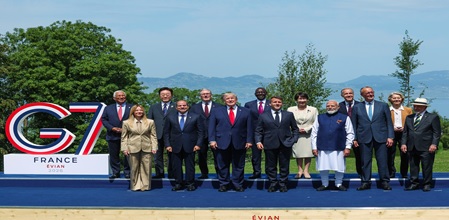
  • At the 52nd G7 Summit held in Evian, France (June 2026), Prime Minister Narendra Modi presented special gifts to global leaders that showcased India's rich cultural heritage, traditional medical practices (Ayurveda), and GI-tagged products.

Related Facts:


Banarasi Silk Stole:

  • Associated State: Uttar Pradesh (Varanasi)
  • Exam Fact: It is one of India's most prestigious textile crafts and holds a Geographical Indication (GI) tag. It features intricate *Zari* (gold/silver thread) work.

Nagauri Ashwagandha:

  • Associated State: Rajasthan (Nagaur)
  • Exam Fact: In Ayurveda, it is considered a 'Rasayana' (rejuvenating) herb. It is renowned for its high quality and medicinal properties that enhance mental clarity and boost immunity.

Ramban Honey:

  • Associated State: Jammu & Kashmir (Ramban District)
  • Exam Fact: It symbolizes the rich biodiversity and traditional beekeeping practices of the Himalayan region; it is rich in natural antioxidants and enzymes.

Lakadong Turmeric:

  • Associated State: Meghalaya (Jaintia Hills)
  • Exam Fact: This turmeric boasts one of the highest curcumin contents in the world, making it rich in excellent antioxidant and anti-inflammatory properties.

Kalamkari Painting:

  • Associated State: Andhra Pradesh
  • Exam Fact: It is a traditional art form involving hand-block printing or pen-painting on cotton fabric, utilizing only natural dyes.

Thewa Art:

  • Associated State: Rajasthan (Pratapgarh)
  • Exam Fact: This art form involves intricate gold carving on glass and is celebrated for its unparalleled craftsmanship.

Defence News

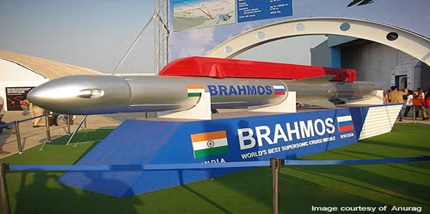
BrahMos Supersonic Cruise Missile


  • Russia is seriously considering inducting the BrahMos supersonic cruise missile into its armed forces.
  • According to the CEO of BrahMos Aerospace, bilateral discussions between the two nations regarding this matter have reached a very advanced stage.

BrahMos Missile System:


  • Type: Medium-range supersonic cruise missile (two-stage)
  • Joint Development: DRDO (India) + NPO Mashinostroyenia (Russia)
  • Naming: Brahmaputra River (India) + Moskva River (Russia)
  • Speed: Mach 2.8 to 3.0 (approximately three times the speed of sound)
  • Principle: Fire-and-Forget
  • Launch Platforms: Land, sea, air, submarine
  • Propulsion: Stage 1 – Solid-fuel booster; Stage 2 – Liquid-fuel ramjet
  • Strike Range: 290 km


Latest Courses