GK Update
 
  • Mobile Menu
HOME BUY MAGAZINEnew course icon
LOG IN SIGN UP

Sign-Up IcanDon't Have an Account?


SIGN UP


Login Icon

Have an Account?


LOG IN
 

or
By clicking on Register, you are agreeing to our Terms & Conditions.


or


GK Update

Fri 19 Jun, 2026

National News

Target for Rural Road Construction

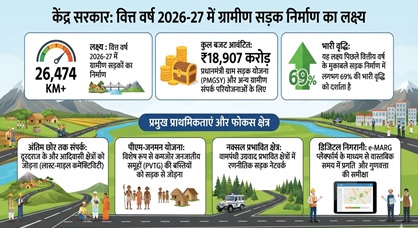
  • The Central Government has set a target to construct 26,474 kilometers of rural roads during the financial year 2026-27 under the Pradhan Mantri Gram Sadak Yojana (PMGSY) and other related initiatives.
  • According to the Union Ministry of Rural Development, the government has allocated a total of ₹18,907 crore to complete this ambitious infrastructure project.

Key Facts:


  • Road construction target: A total of 26,474 kilometers of rural roads for the financial year 2026-27 (FY27).
  • Total budget allocation: The government has allocated ₹18,907 crore for this project.
  • Concerned Ministry: This scheme falls under the Union Ministry of Rural Development.
  • Special focus schemes: Under this initiative, roads are being constructed specifically under the PM-JANMAN scheme for Particularly Vulnerable Tribal Groups (PVTGs) and the RCPLWEA scheme for Left-Wing Extremism (LWE) affected areas.

Pradhan Mantri Gram Sadak Yojana (PMGSY):

  • Launch: PMGSY was launched on December 25, 2000, by the then Prime Minister Atal Bihari Vajpayee.
  • Type of scheme: It is a Centrally Sponsored Scheme.

Funding ratio:

  • For general/plain states: 60% (Centre) : 40% (State)
  • For North-Eastern and Himalayan states: 90% (Centre) : 10% (State)

Agreement between GeM and Common Service Centres
  • Government e-Marketplace (GeM) signed a strategic Memorandum of Understanding (MoU) with Common Service Centres (CSC-SPV) to enhance access to government procurement opportunities in India.

Key Facts:


  • Date and Venue: This MoU was signed on June 18, 2026, at the GeM office in New Delhi.
  • Nodal Ministry: GeM is India's national public procurement portal under the Ministry of Commerce and Industry.
  • Expansion of Partnership: This agreement marks a significant expansion of the GeM-CSC collaboration established in 2022.
  • New Scope: While the focus was previously limited to 'seller registration,' the scope now includes seller assessment, brand approval, and the creation of product/service catalogues.

e-Marketplace (GeM):

  • An online platform of the Government of India.
  • Objective: To ensure transparent, efficient, and rapid procurement of goods and services by government departments, ministries, Public Sector Undertakings (PSUs), etc.
  • Inception: 2016.
  • Launching Agency: Ministry of Commerce and Industry, Government of India.
  • Developed by: National e-Governance Division (NeGD), Ministry of Electronics and IT.
  • Current Operations: Managed by GeM SPV (Special Purpose Vehicle).
  • Approximately 97% of transactions via GeM are now free of charges, thereby enhancing transparency, efficiency, and inclusivity in the government procurement process.

Achievements of PMBJP over 12 Years

  • The network of the Pradhan Mantri Bhartiya Janaushadhi Pariyojana (PMBJP) has expanded rapidly over the last 12 years (2014–2026), surpassing the 19,200 mark.

Pradhan Mantri Bhartiya Janaushadhi Pariyojana (PMBJP):


  • Launch: November 2008 (Restructured as PMJAY in 2015 and subsequently as PMBJP in 2016)
  • Nodal Ministry: Ministry of Chemicals and Fertilizers
  • Implementing Agency: Pharmaceuticals & Medical Devices Bureau of India (PMBI) [Formerly: Bureau of Pharma PSUs of India (BPPI)]
  • Scheme Type: Central Sector Scheme
  • Official Tagline: "Jan Aushadhi – Seva Bhi, Rozgar Bhi" (Jan Aushadhi – Service as well as Employment)

Key Achievements:

  • Starting with approximately 84 operational Jan Aushadhi Kendras in 2014, the network has grown to over 19,200 centers across the country by 2026.
  • Includes the eight North-Eastern states, where the number of centers rose from just one in 2014 to 417 in 2026.
  • Uttar Pradesh leads the country with 4,042 Jan Aushadhi Kendras, followed by Kerala (1,791), Karnataka (1,665), Tamil Nadu (1,591), Bihar (1,183), West Bengal (937), Gujarat (918), Odisha (852), Rajasthan (718), and Maharashtra (741). In the national capital, New Delhi, the number of centers rose from 4 in 2014 to 645 in 2026.
  • The number of centers increased from 6 to 358 in Jammu & Kashmir, from 8 to 76 in Himachal Pradesh, from 20 to 556 in Punjab, and from 1 to 33 in Tripura.
  • The Production-Linked Incentive (PLI) scheme for pharmaceuticals and medical devices was launched in 2020-21.
  • The PLI scheme for pharmaceuticals has attracted a cumulative investment of ₹42,694.89 crore and generated cumulative sales of ₹3,43,215.27 crore, while also creating employment for over 1.13 lakh people.

Agreement between IITM and ARIES

  • The Indian Institute of Tropical Meteorology (IITM), Pune, signed a Memorandum of Understanding (MoU) with the Nainital-based Aryabhatta Research Institute of Observational Sciences (ARIES).

Key objectives of the agreement:


  • Long-term monitoring center: Under this agreement, a state-of-the-art climate observation station will be established at Devasthal (an ARIES center) in Uttarakhand.
  • Data collection: The primary function of this station is to collect high-accuracy, long-term data on meteorological parameters, greenhouse gases (GHGs), short-lived climate forcers (SLCFs), and soil moisture.
  • Mission Mausam: This initiative strengthens collaboration under the 'Mission Mausam' of the Ministry of Earth Sciences (MoES), Government of India.

Ranks and Indices

QS World University Rankings 2027

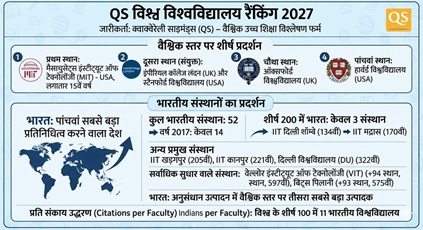
  • The US-based Massachusetts Institute of Technology (MIT) has retained the top spot globally in the QS World University Rankings 2027 for the 15th consecutive year.

QS World University Rankings 2027:


  • Released by: Global higher education analytics firm Quacquarelli Symonds (QS)

Top global performers:

  • 1st place: Massachusetts Institute of Technology (MIT), USA (for the 15th consecutive year)
  • 2nd place: Imperial College London (UK) and Stanford University (USA) – joint ranking
  • 4th place: University of Oxford (UK)
  • 5th place: Harvard University (USA)

Performance of Indian institutions:

  • India has strengthened its position in this year's rankings, becoming the country with the fifth-largest representation in the global higher education system.
  • Total Indian institutions: 52 Indian institutions have featured in the rankings this year (compared to just 14 in 2017).

India in the top 200: Only three Indian institutions are among the world's top 200 universities:

  • IIT Delhi: Ranked 118th globally, remaining India's highest-ranked institution for the second consecutive year.
  • IIT Bombay: Ranked 134th globally.
  • IIT Madras: Ranked 170th globally.
  • Other prominent institutions: IIT Kharagpur (205th), IIT Kanpur (221st), and the University of Delhi (DU), which improved to secure the 322nd spot.
  • Institutions with the most improvement: Vellore Institute of Technology (VIT) jumped 94 places (to rank 597), and BITS Pilani jumped 93 places to secure the 575th spot.
  • India has now become the third-largest producer globally in terms of research output. Eleven Indian universities feature among the world's top 100 institutions in the 'Citations per Faculty' index, reflecting the rising quality of research.

International News

First Arab country to impose a social media ban on children

  • The United Arab Emirates (UAE) has set the minimum age for social media usage at 15 years.

Key Facts:


  • First Arab Nation: The UAE is the first country in the entire Arab world to implement such a strict law.
  • Approval: This proposal was approved by the UAE Cabinet under the chairmanship of Prime Minister Sheikh Mohammed bin Rashid Al Maktoum.
  • Compliance Timeline: Social media companies (such as Facebook, Instagram, and TikTok) have been given 12 months (1 year) to fully implement these regulations.
  • Monitoring Bodies: Compliance with this rule will be monitored by the UAE's 'National Media Authority' (NMA) and the 'Telecommunications and Digital Government Regulatory Authority' (TDRA).
  • Parental Consent Invalid: Even if parents grant permission, children under the age of 15 will not be legally permitted to use social media.

United Arab Emirates (UAE):

  • A prominent country located in the Middle East (West Asia).
  • Capital: Abu Dhabi
  • Largest City: Dubai
  • Number of Emirates: It is a federation of 7 emirates—Abu Dhabi, Dubai, Sharjah, Ajman, Umm Al-Quwain, Ras Al-Khaimah, and Fujairah.
  • System of Government: Federal constitutional monarchy
  • Bordering Countries: Saudi Arabia (south and west) and Oman (east and northeast)
  • Maritime Borders: Its northern border lies along the Persian Gulf, and its eastern border lies along the Gulf of Oman.
  • Currency: UAE Dirham (AED)

Science and Technology

TRISHNA Satellite

  • India and France will jointly launch the TRISHNA satellite in 2027; it is designed to contribute to global water and food security.

Related Facts:


  • Full name of TRISHNA: Thermal Infrared Imaging Satellite for High-resolution Natural Resource Assessment
  • It is a joint Earth observation satellite mission between the Indian Space Research Organisation (ISRO) and the French space agency (CNES).
  • Launch year: 2027
  • Main objective: Its primary objective is to assess climate change and improve global water and food security.
  • Orbit: It will be placed in a low Earth polar orbit at an altitude of approximately 761 km.

Appointments

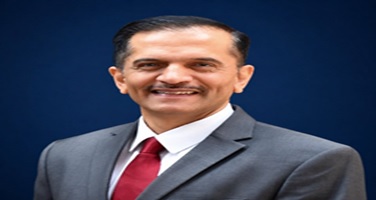
Professor Bimal N. Patel

  • India's candidate, Professor Bimal N. Patel, was elected as a judge of the International Tribunal for the Law of the Sea (ITLOS) for the 2026–2035 term.

Related Facts:


  • Votes Received: Professor Patel secured 115 out of the 168 valid votes cast by member states.
  • Winners from the Asian Region: Elections were held for two seats allocated to the Asian region under the United Nations Convention on the Law of the Sea (UNCLOS); India's Bimal Patel and Vietnam's Nguyen Lan-Anh Thi emerged victorious.
  • Current Position: Professor Patel currently serves as the Vice-Chancellor of Rashtriya Raksha University (RRU) and is also a member of the United Nations International Law Commission (ILC).

International Tribunal for the Law of the Sea (ITLOS):

  • Establishment: It was established under the 1982 United Nations Convention on the Law of the Sea (UNCLOS).
  • Headquarters: Its headquarters is located in Hamburg, Germany.
  • Composition: The tribunal consists of a total of 21 independent judges.
  • Selection and Tenure: Judges are elected by secret ballot for a nine-year term and are eligible for re-election.
  • Geographical Distribution: To ensure fair representation of different parts of the world, judges' seats are divided among five regional groups (Africa, Asia, Latin America, Western Europe, and Eastern Europe).
  • India's Representation: India's Dr. Neeru Chadha is currently serving as the Vice-President of ITLOS.

Important Day

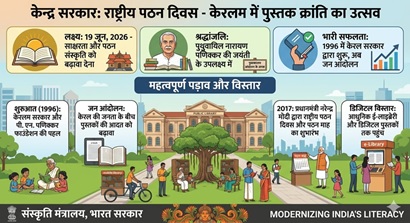
National Reading Day

  • 'National Reading Day' is observed annually on June 19th to commemorate the birth anniversary of Puthuvayil Narayana Panicker.

Related Facts:


  • It is celebrated to mark the birth anniversary of Puthuvayil Narayana Panicker, the father of the library movement in Kerala.
  • Initiated by the Government of Kerala in collaboration with the P. N. Panicker Foundation on June 19, 1996, this initiative has evolved into a mass movement aimed at promoting literacy and fostering the habit of reading among the people of the state.
  • In 2017, Prime Minister Narendra Modi inaugurated the programs associated with National Reading Day and Reading Month during his visit to Kochi.

'World Sickle Cell Awareness Day'

  • 'World Sickle Cell Awareness Day' is observed annually on June 19th with the aim of raising global awareness about sickle cell disease.

Related Facts:


  • Date: June 19th every year
  • Inception: The United Nations General Assembly (UNGA) declared its observance by passing a resolution on December 22, 2008. It was observed for the first time in 2009.
  • Color of Awareness: Burgundy (or deep red) is the symbol associated with sickle cell awareness.

Sickle Cell Disease:

  • Type of Disease: It is a genetic (inherited) blood disorder passed from parents to children.
  • Affected Organ/Cell: It primarily affects red blood cells (RBCs) and hemoglobin molecules.
  • Cell Shape: In this disease, normal round red blood cells become distorted and take on a sickle shape.
  • Abnormality: It involves the presence of an abnormal hemoglobin molecule known as Hemoglobin S (HbS).
  • Diagnostic Method: High-Performance Liquid Chromatography (HPLC) or genetic testing is conducted to confirm sickle cell disease.

Defence News

Agreement between the Ministry of Defence and Bharat Forge Limited
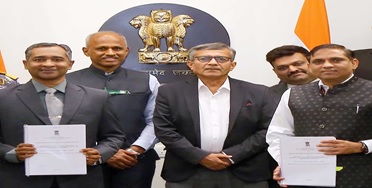
  • The Ministry of Defence signed a contract with Pune-based Bharat Forge Limited for the procurement of 12 Marine Gas Turbine Generator (MGTG) sets—each with a capacity of 1.25 MW—for the Navy, at a total cost of approximately ₹425 crore.

Key Facts:


  • Agreement: The Ministry of Defence (MoD) has signed a contract with the private sector company Bharat Forge Limited (based in Pune).
  • Cost: The total estimated cost of this entire deal is approximately ₹425 crore.
  • Equipment: Under this agreement, 12 Marine Gas Turbine Generator (MGTG) sets will be procured for the Navy.
  • Capacity: Each generator set has a capacity of 1.25 MW.
  • Category: This procurement has been made under the 'Buy (Indian)' category, which promotes domestic manufacturing.

Indian Navy:

  • Establishment: 26 January 1950
  • Navy Day: 4 December
  • Motto: "Sham No Varunah"
  • Chief: Admiral Krishna Swaminathan; assumed charge as the 27th Chief of the Indian Navy on 31 May 2026.

Naval Commands:

  • Western Naval Command (Mumbai)
  • Southern Naval Command (Kochi)
  • Eastern Naval Command (Visakhapatnam)


Latest Courses