GK Update
 
  • Mobile Menu
HOME BUY MAGAZINEnew course icon
LOG IN SIGN UP

Sign-Up IcanDon't Have an Account?


SIGN UP


Login Icon

Have an Account?


LOG IN
 

or
By clicking on Register, you are agreeing to our Terms & Conditions.


or


GK Update

Wed 10 Jun, 2026

National News

VB-G RAM G Scheme

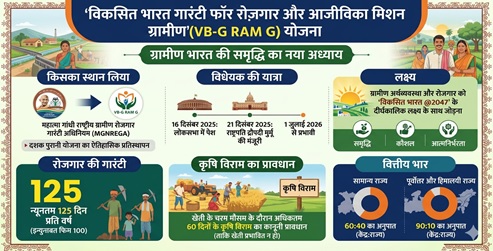
  • An interim allocation of ₹95,692 crore has been released under the 'Viksit Bharat Guarantee for Employment and Livelihood Mission (Rural)' [VB-G RAM G] scheme, set to come into effect on July 1, 2026.
  • 'Viksit Bharat Guarantee for Employment and Livelihood Mission (Rural)' [VB-G RAM G] Scheme:
  • Replaced: Mahatma Gandhi National Rural Employment Guarantee Act (MGNREGA)
  • Legislative Journey: The bill was introduced in the Lok Sabha on December 16, 2025, and became law after receiving the assent of President Droupadi Murmu on December 21, 2025.
  • Objective: To align the rural economy and employment with the long-term goal of 'Viksit Bharat @2047'.
  • Employment Guarantee: Minimum of 125 days per year.
  • Legal provision for a maximum 60-day agricultural break during peak farming seasons.
  • Financial Burden: 60:40 ratio for general states; 90:10 ratio for Northeastern and Himalayan states.


Announcement to remove the word 'Dham' from the name of the Jagannath Temple in Digha
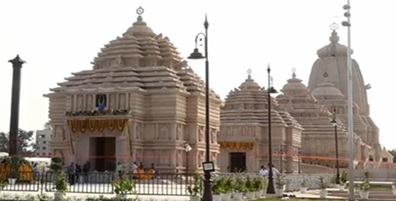
  • Acceding to a request from the Chief Minister of Odisha, the West Bengal government has announced the removal of the word 'Dham' from the name of the Jagannath Temple located in Digha.
  • The complex will now be known as 'Shri Shri Jagannath Cultural Centre' or 'Shri Shri Jagannath Dev Temple'.

Related Facts:


  • Original Incident: Odisha Chief Minister Mohan Charan Majhi had written a letter expressing objection, noting that historically, the term 'Jagannath Dham' is associated exclusively with the Shrimandir in Puri (Odisha).
  • Bengal Government's Decision: The West Bengal government accepted this request. It was stated that according to Sanatan tradition, there are only 'Char Dham' (four sacred abodes) in India, and using the word 'Dham' for any other new temple could hurt the religious sentiments of millions of devotees.
  • Temple History: This temple in Digha was constructed at a cost of approximately ₹250 crore and is a replica of the main 12th-century temple in Puri.

Char Dham and their significance:

Badrinath (North):

  • Location: This Dham is situated on the banks of the Alaknanda River in Uttarakhand, amidst the Garhwal Himalayan hills.
  • Significance: It is dedicated to Lord Vishnu (Badri Vishal). According to religious beliefs, this site was the most prominent during the Satya Yuga. Here, Lord Vishnu performed severe penance in the forms of Nara and Narayana.

Rameswaram (South):

  • Location: It is situated on Pamban Island in the Ramanathapuram district of Tamil Nadu.
  • Significance: It is primarily dedicated to Lord Shiva (Ramanathaswamy). According to the Ramayana era, Lord Shri Ram installed and worshipped a Shivling here with his own hands before marching towards Lanka during the Treta Yuga. This Dham is considered a symbol of unity between the Shaiva and Vaishnava sects.

Dwarka (West):

  • Location: It is situated on the western coast of Gujarat, near the mouth of the Gomti River. Significance: This *Dham* (sacred abode) is dedicated to Lord Krishna (Dwarkadhish) and is considered a major center of the *Dvapara Yuga*. According to the *Mahabharata* era, Lord Krishna established the city of Dwarka and made it his capital after leaving Mathura.

Puri or Jagannath Puri (East):

  • Location: It is situated on the eastern coast of Odisha, along the Bay of Bengal. Significance: This *Dham* is considered the most important center of the *Kali Yuga*. Wooden idols of Lord Jagannath (an avatar of Vishnu), his elder brother Balabhadra, and his sister Subhadra are enshrined here. The annual *Ratha Yatra* (Chariot Festival) held here is famous worldwide.

Jagannath Temple, Odisha (Puri):

  • Construction: Its construction was initiated in the 12th century by King Anantavarman Chodaganga Deva of the Ganga dynasty.
  • Style: The temple is an exquisite example of the Kalinga architectural style, primarily featuring the 'Rekha Deula' (spire/shikhara) and 'Jagamohan' (assembly hall).
  • Distinguishing Feature: It is also known as the 'White Pagoda' (whereas the Sun Temple at Konark is known as the 'Black Pagoda'). The annual *Ratha Yatra* here is world-renowned.

Poliovirus Confirmed in Ghaziabad

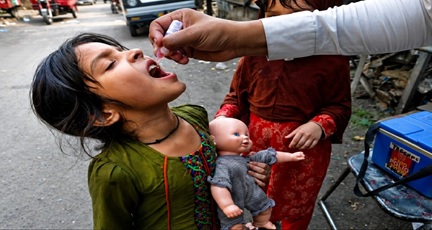
  • Vaccine-derived poliovirus type-1 (VDPV-1) has been confirmed in samples collected from the Dundahera Sewage Treatment Plant (STP) in Ghaziabad, Uttar Pradesh.

Key Facts:


  • Location: Dundahera Sewage Treatment Plant (STP), Ghaziabad, Uttar Pradesh
  • Virus Type: Vaccine-derived poliovirus type-1 (VDPV-1)
  • Surveillance Method: The virus was detected during testing at a Delhi laboratory as part of routine monthly sewage water sampling under 'environmental surveillance'.
  • Administrative Measures: The Health Department has deployed 107 teams across 12 vulnerable urban areas of Ghaziabad (such as Rajnagar, Shastri Nagar, Vijay Nagar, etc.) to initiate a door-to-door survey and vaccination review for children under the age of five.
  • Vaccine-derived Poliovirus (VDPV): This is a rare form of the weakened live virus used in the Oral Polio Vaccine (OPV). When excreted in the stool of a vaccinated child, the virus can survive for extended periods in the environment (sewage) in areas with low vaccination coverage; it may mutate and potentially cause neuroprogressive paralysis.
  • India's Polio-free Status: The World Health Organization (WHO) officially declared India a 'polio-free country' on March 27, 2014.
  • Last Case: The last case of wild poliovirus (WPV) in India was recorded on January 13, 2011, in Howrah, West Bengal.

Poliovirus:

  • Virus Type: It is an RNA virus. It belongs to the *Enterovirus* genus of the *Picornaviridae* family. Types (Serotypes): It has three natural forms—Type-1, Type-2, and Type-3.
  • Wild poliovirus types 2 and 3 have been completely eradicated from the world.
  • Currently, only Type-1 (WPV-1) remains naturally active.
  • Affected system: Central nervous system.
  • World Polio Day: Observed annually on October 24, the birthday of Jonas Salk.
  • Pulse Polio Campaign: Launched in India in 1995.

Launch of 'Blue Valley Cluster'

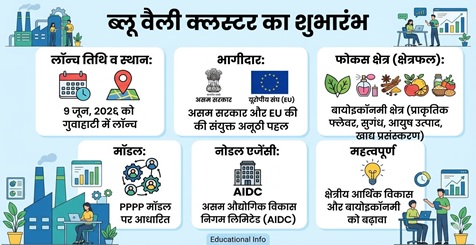
  • The Government of Assam and the European Union have launched the 'Blue Valley Cluster'.

Key Facts:


Launch of Blue Valley Cluster:

  • Launch Date and Location: It was launched on June 9, 2026, in Guwahati, Assam.
  • Partners: It is a unique joint initiative between the Government of Assam and the European Union (EU).
  • Focus Areas: It primarily focuses on bio-economy sectors such as natural flavors, fragrances, AYUSH products, and food processing.
  • Model: The project is based on the PPPP model.
  • Nodal Agency: The nodal agency for this initiative on behalf of the Assam government is the Assam Industrial Development Corporation Limited (AIDC).

First World Yoga Asana Championship 

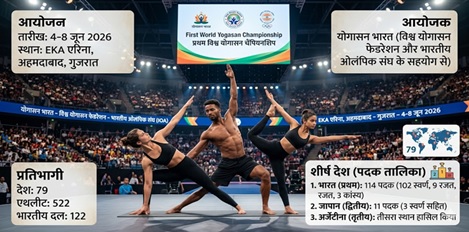
  • India topped the medal tally at the 1st World Yogasana Championship 2026, winning a total of 114 medals, including 102 gold medals.

1st World Yogasana Championship:


  • Event: The inaugural World Yogasana Championship was held from June 4 to June 8, 2026, at the EKA Arena in Ahmedabad, Gujarat.
  • Organizer: This historic championship was organized by 'Yogasana Bharat' in collaboration with the World Yogasana Federation and the Indian Olympic Association (IOA).
  • Participants: 522 athletes from 79 countries participated in the competition. A 122-member contingent represented India.

Top Countries (Medal Tally):

  • India (1st): 114 medals (102 gold, 9 silver, 3 bronze)
  • Japan (2nd): 11 medals (including 3 gold)
  • Argentina (3rd): Secured the third position

Launch of the ‘Ganga Project’

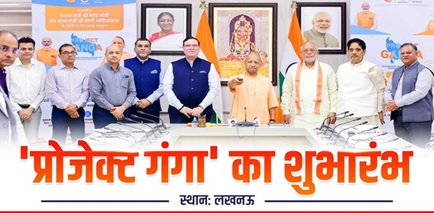
  • The Uttar Pradesh government has launched the ‘Ganga Project’.

Key Facts:


  • Full Name: Government Assisted Network for Growth and Advancement (GANGA)
  • Main Objective: To ensure 'last-mile' digital connectivity in the rural areas of Uttar Pradesh.
  • Partner Organization: The project is being implemented in collaboration with the Hinduja Group on a 'no-profit, no-loss' basis.
  • First Phase: In the initial phase, it is being implemented across 21 districts of Uttar Pradesh.
  • Overall Target: To provide high-speed internet access to approximately 20 lakh (2 million) families across the state's 57,000 Gram Panchayats.
  • Loan Facility: Selected youths will be able to avail interest-free loans of up to ₹5 lakh to start their own digital enterprises under the 'CM Yuva Scheme'.
  • Women Empowerment: Women will account for approximately 50 percent of the project's beneficiaries.

Launch of 'Singapen' Special Force

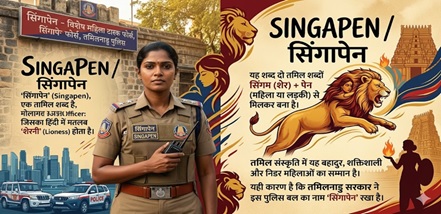
  • The Tamil Nadu government launched the 'Singapen' special force to promote women's safety and empowerment.

Related Facts:


  • Launched by: Tamil Nadu's current Chief Minister C. Joseph Vijay.
  • Launch Date: June 9, 2026.
  • Launch Venue: Rajarathinam Stadium, Egmore, Chennai.
  • Leadership (Head): The force is led by Inspector General of Police (IGP) K. Bhavanishwari.
  • Initial Financial Allocation: ₹354 crore has been allocated for this scheme ('Singapen Athiradi Thittam').
  • All-Women Police Force: This is a special all-women police unit.
  • Constitutional Schedule: Under the 7th Schedule of the Indian Constitution, 'Police' and 'Law and Order' are subjects under the State List.

Science and Technology

Identification of a specific group of 14 proteins
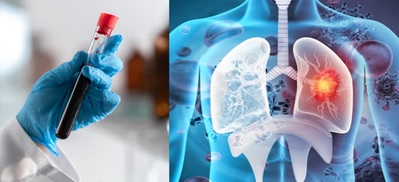
  • Scientists have identified a specific group of 14 proteins present in the blood that can predict the risk of lung cancer more than five years before a diagnosis is made.

Related Facts:


  • Use of Machine Learning: Researchers utilized Artificial Intelligence (AI) and machine learning algorithms to analyze blood plasma data from over 48,000 individuals in the UK Biobank.
  • Indicator of inflammation, not tumors: This protein profile does not originate from an existing tumor. Instead, it reflects chronic inflammation and an altered environment in the lungs that precedes the development of cancer.
  • Precise prevention: This discovery will assist scientists in preventing cancer through the use of drugs (such as Canakinumab) that block inflammation-causing agents like 'Interleukin-1 beta' (IL-1β).

Economy and Banking

SBI Hands Over Dividend of ₹8,813 Crore to the Government
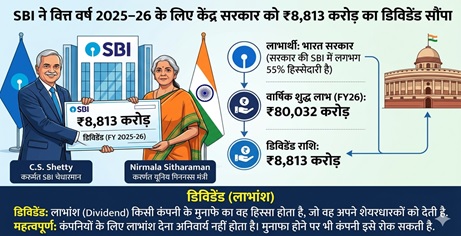
  • State Bank of India (SBI) handed over a dividend of ₹8,813 crore to the Central Government for the financial year 2025-26.

Related Facts:


  • Dividend Amount: ₹8,813 crore
  • Beneficiary: Government of India (The government holds approximately a 55% stake in SBI)
  • Current SBI Chairman: C.S. Setty
  • Current Union Finance Minister: Nirmala Sitharaman
  • Annual Net Profit: ₹80,032 crore (FY26)

Dividend:

  • A dividend is the portion of a company's profit that it distributes to its shareholders.
  • Paying dividends is not mandatory for companies; a company may choose to withhold them even if it has made a profit.

State Bank of India (SBI):

  • India's largest and oldest public sector bank.
  • Year of Establishment: 1806 (as the Bank of Calcutta)
  • Transition from Imperial Bank: In 1921, three Presidency Banks were merged to form the 'Imperial Bank of India'; this was nationalized on July 1, 1955, and renamed the State Bank of India (SBI).
  • Headquarters: Mumbai, Maharashtra

International News

114th International Labour Conference

  • Minister of State Shobha Karandlaje led the Indian delegation at the 114th International Labour Conference held in Switzerland.

Related Facts:


International Labour Organization (ILO):

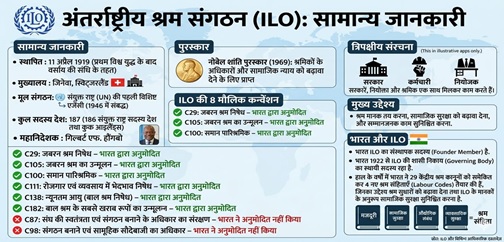
  • Establishment: April 11, 1919 (under the Treaty of Versailles following World War I)
  • Headquarters: Geneva, Switzerland
  • Parent Organization: First specialized agency of the United Nations (UN) (affiliated in 1946)
  • Total Member Countries: 187 (186 UN member states and the Cook Islands)
  • Nobel Peace Prize: Received in 1969 for promoting workers' rights and social justice.
  • Director-General: Gilbert F. Houngbo

ILO's 8 Fundamental Conventions:

  • Convention 29: Prohibition of Forced Labour – Ratified by India.
  • Convention 105: Abolition of Forced Labour – Ratified by India.
  • Convention 100: Equal Remuneration – Ratified by India.
  • Convention 111: Prohibition of Discrimination in Employment and Occupation – Ratified by India.
  • Convention 138: Minimum Age (Prohibition of Child Labour) – Ratified by India.
  • Convention 182: Abolition of the Worst Forms of Child Labour – Ratified by India.
  • Convention 87: Freedom of Association and Protection of the Right to Organize – Not ratified by India.
  • Convention 98: Right to Organize and Collective Bargaining – Not ratified by India.

India and the ILO:

  • India is a founding member of the ILO.
  • India has been a permanent member of the ILO's Governing Body since 1922.
  • In recent years, India has consolidated 29 central labour laws into 4 new Labour Codes, aimed at promoting labour reforms and ensuring social security in alignment with ILO standards. International Labour Day: May 1
  • In the Indian Constitution, 'Labour' is a subject in the Concurrent List, on which both the Centre and the States can enact laws.

'Hejaz Railway' Corridor

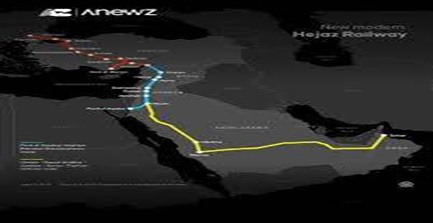
  • Türkiye and Saudi Arabia have signed a Memorandum of Understanding (MoU) to revive the historic 'Hejaz Railway' corridor.
  • The primary objective of this project is to establish a secure and seamless land trade route as an alternative to the Strait of Hormuz.

Related Facts:


Hejaz Railway:

  • Original Construction Period: Construction of the Hejaz Railway began in the year 1900.
  • Who Built It?: It was constructed on the orders of Sultan Abdul Hamid II of the Ottoman Empire.
  • Objective: Its main aim was to facilitate the journey of pilgrims from Istanbul/Damascus to the holy cities of Saudi Arabia (Mecca and Medina), boost trade, and strengthen military control.
  • Initial Operation: The rail line became fully operational in 1908.
  • Decline: The railway network suffered heavy damage during World War I and was shut down. Now, after more than 100 years, it is being revived in a modern form.

Türkiye:

  • Capital: Ankara
  • Largest City: Istanbul
  • Currency: Turkish Lira
  • Continent: Asia + Europe
  • National Day: October 29
  • President: Recep Tayyip Erdoğan
  • Bordering Countries: Greece, Bulgaria, Georgia, Armenia, Azerbaijan (Nakhchivan), Iran, Iraq, and Syria
  • Important Straits: Bosphorus and Dardanelles, which connect Europe and Asia.

Saudi Arabia:

  • Capital: Riyadh
  • Currency: Saudi Riyal (SAR)
  • National Day: September 23
  • Holy Cities: Mecca and Medina
  • King: Salman bin Abdulaziz Al Saud
  • Crown Prince: Mohammed bin Salman

Person In News

Prime Minister Narendra Modi

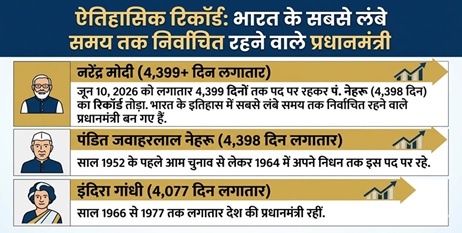
  • On June 10, 2026, PM Modi became the longest-serving elected Prime Minister, surpassing the record held by Pt. Nehru (4,398 days) by completing 4,399 consecutive days in office.

Tenure and Political Records:


  • On June 10, 2026, PM Narendra Modi became the longest-serving elected Prime Minister, breaking Pt. Jawaharlal Nehru's record (4,398 days) by completing 4,399 consecutive days in office.
  • Pt. Nehru served as Prime Minister for 4,398 consecutive days, from May 13, 1952, to May 27, 1964.
  • On July 25, 2025, PM Modi had already surpassed Indira Gandhi's record of a 4,077-day consecutive tenure.
  • He is the country's first non-Congress leader to become Prime Minister for three consecutive terms (2014, 2019, and 2024).
  • He is the second leader, after Jawaharlal Nehru, to become Prime Minister after winning three consecutive Lok Sabha elections.
  • Born on September 17, 1950, Narendra Modi is the first Prime Minister to be born in independent India.
  • During his tenure, the Nari Shakti Vandan Adhiniyam (Women's Reservation Bill) was passed, under which 33% of seats in the Lok Sabha and State Legislative Assemblies will be reserved for women in the future.

Bharathiraja

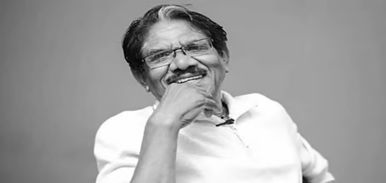
  • Filmmaker, actor, and director Bharathiraja passed away in Chennai at the age of 84.

Related Facts:


  • He received six National Film Awards, four Filmfare Awards, and six Tamil Nadu State Film Awards.
  • The music for most of his films was composed by Ilaiyaraaja. He was also popular in Telugu, Hindi, and Kannada cinema.


Latest Courses