NATIONAL NEWS
India’s first Geothermal Power Project
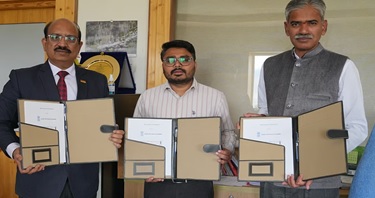
- The ONGC Energy Centre has signed a Memorandum of Understanding (MoU) with the Union Territory Administration of Ladakh and the Ladakh Autonomous Hill Development Council to extend their collaboration for another five years for the development of India’s first geothermal power project at Puga Valley in Ladakh.
Oil and Natural Gas Corporation Limited (ONGC)
- Founded: August 14, 1956
- Status: Maharatna Public Sector Undertaking
- Headquarters: Delhi
- Chairman and CEO: Arun Kumar Singh
- International Arm: Operates overseas assets via its wholly owned subsidiary, ONGC Videsh Limited (OVL)
|
STATE SPECIAL NEWS
4th Mega Lavender Festival
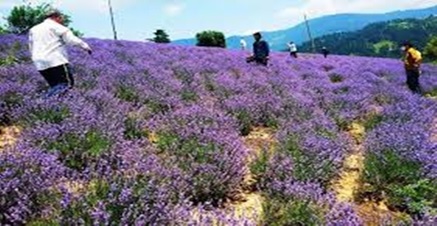
- In Jammu and Kashmir, the two-day 4th Mega Lavender Festival concluded in Doda district with enthusiastic participation from farmers, students, scientists, industrial partners, buyers, sellers and other stakeholders associated with the lavender and aromatic plant sector.
Jammu and Kashmir
- Lieutenant Governor: Manoj Sinha
- Chief Minister: Omar Abdullah
- Union Territory Formed: 31 October 2019 (Reorganisation Act, 2019)
- Boundaries: Shares international borders with Pakistan (Line of Control) and China (Line of Actual Control via Ladakh), and domestic borders with Himachal Pradesh and Punjab.
- Capital: Srinagar serves as the summer capital, while Jammu serves as the winter capital.
- Major Rivers: The Indus, Jhelum, Chenab, and Ravi flow through or originate near the region. The Jhelum forms the famous Wular Lake, one of the largest freshwater lakes in Asia.
- Key Passes: Zoji La (connects Srinagar to Leh), Banihal Pass (connects Jammu to Srinagar via the Jawahar Tunnel), and Pencil La.
- National Parks: Dachigam National Park (famous for the critically endangered Hangul or Kashmir Stag), Kishtwar National Park, and Kazirag National Park.
- GI Tags: Kashmiri Saffron (grown in the Pampore highlands/Karewas), Kani Shawls, Kashmiri Pashmina, and Bhaderwah Rajmash.
- Karewas: These are highly fertile lacustrine (lake) deposits in the Kashmir Valley, crucial for the cultivation of Saffron, almonds, and walnuts.
- Tulip Garden: Located in Srinagar, the Indira Gandhi Memorial Tulip Garden is the largest tulip garden in Asia.
- Hydroelectric Projects: Baglihar Project (Chenab), Salal Project (Chenab), Uri Project (Jhelum), and Dul Hasti Project (Chenab).
Historical Facts
- Ancient History: Kalhana’s Rajatarangini is the earliest authentic chronicle of Kashmir's history, composed in the 12th century.
- Medieval Rulers: Zain-ul-Abidin (fondly called Badshah or the Great King) is highly tested for his religious tolerance and for banning cow slaughter.
- Modern History: The princely state acceded to India on October 26, 1947, when Maharaja Hari Singh signed the Instrument of Accession following a tribal invasion.
|
36th State and UT to implement Ayushman Bharat Yojana
- West Bengal became the 36th State/UT to implement the Ayushman Bharat–Pradhan Mantri Jan Arogya Yojana (AB PM-JAY), following the signing of an MoU between the National Health Authority and the State Government for the rollout of the world’s largest publicly funded health insurance scheme.
Ayushman Bharat–Pradhan Mantri Jan Arogya Yojana (AB PM-JAY)
- Launch Date: September 23, 2018 (Launched in Ranchi, Jharkhand).
- Nodal Ministry: Ministry of Health and Family Welfare (MoHFW).
- Implementing Agency: National Health Authority (NHA), an apex body created to implement the scheme (succeeding the erstwhile National Health Agency).
Funding Pattern: Centrally Sponsored Scheme
- Coverage: Up to ₹5 lakh per family per year for secondary and tertiary care hospitalizations. Pre-existing diseases are covered from day one.
- Entitlement-based: Unlike traditional enrollment-based schemes, PM-JAY is entitlement-based. Eligibility is based on the deprivation and occupational criteria derived from the Socio-Economic Caste Census (SECC) database for rural and urban areas.
- Recent Expansion: The Union Cabinet expanded the scheme to cover all senior citizens aged 70 and above—irrespective of their income status. They are issued a distinct card (such as the Ayushman Vaya Vandana Card) with an independent or shared ₹5 lakh family limit.
Two Pillars of Ayushman Bharat:
- Pillar 1: Health and Wellness Centres (HWCs)—now renamed Ayushman Arogya Mandirs—focused on comprehensive primary healthcare.
- Pillar 2: PM-JAY, which handles financial risk protection for secondary and tertiary hospital care.
|
Yogandhra 2026 campaign
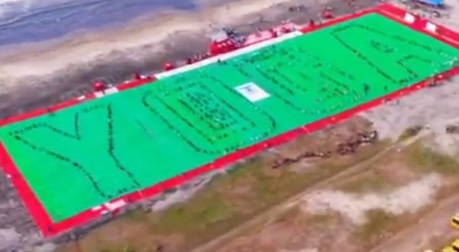
- The Andhra Pradesh government launched Yogandhra 2026, a statewide campaign aimed at promoting yoga and healthy living ahead of International Yoga Day.
Andhra Pradesh
- Formation: 1 October 1953
- Capital: Amaravati
- Governor: S. Abdul Nazeer
- Chief Minister: N. Chandrababu Naidu
- Parliamentary Representation: 25 Lok Sabha seats and 11 Rajya Sabha seats
- Classical Dance: Kuchipudi
- Major Rivers: Godavari (Ganga of the South) and Krishna
- Leading Producer of: Mica
- Coastline: India's second-longest coastline (approximately 974 km), after Gujarat
Major Lakes:
-
- Kolleru Lake (freshwater, Ramsar Site)
- Pulicat Lake (brackish water, home to Sriharikota Island)
- Visakhapatnam Steel Plant: India's first shore-based integrated steel plant
- Major Festivals: Ugadi (Telugu New Year), Sankranti, and Tirupati Brahmotsavam
- National Parks:
-
- Papikonda National Park
- Sri Venkateswara National Park
- Rajiv Gandhi (Rameswaram) National Park
-
- Visakhapatnam Port (India's deepest natural seaport)
- Gangavaram Port
|
INTERNATIONAL NEWS
8th India-Indonesia Joint Commission Meeting
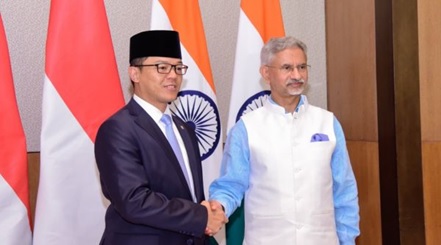
- The 8th India–Indonesia Joint Commission Meeting (JCM) was held in New Delhi after a gap of four years and was co-chaired by External Affairs Minister Dr. S. Jaishankar and Indonesian Foreign Minister Sugiono.
- Both Sides reviewed the full spectrum of bilateral relations under the India-Indonesia Comprehensive Strategic Partnership and discussed avenues for further strengthening cooperation in political, defence and security, maritime, trade and investment, pharma and healthcare, digital, energy, connectivity, space, education, consular and culture domains, and people-to-people exchanges.
Indonesia
- Capital: Jakarta
- New Capital: Nusantara, located in East Kalimantan on Borneo Island
- Indonesia's national symbol: Garuda (a mythical bird from Hindu mythology)
Currency: Indonesian rupiah (Rp)
- President: Prabowo Subianto
Positioned across the Equator, it lies in both the Northern and Southern Hemispheres.
- Border: Despite being a vast island nation, it shares land borders with Malaysia (on the island of Borneo) and Papua New Guinea (on the island of New Guinea), along with East Timor.
- The Archipelago: Indonesia consists of over 17,000 islands and main islands are Sumatran, Java, Borneo (Kalimantan), Sulawesi, and New Guinea (Papua).
- Flora & Fauna: The country is divided ecologically by the Wallace Line, separating Asian fauna from Australasian species.
Rivers: Kapuas, Barito, Musi, and Digul
- Highest Peak: Puncak Jaya (also known as Carstensz Pyramid) in Papua
- Volcanoes: Mount Merapi, Mount Agung, and Mount Marapi
Maritime Chokepoints:
-
- Strait of Malacca: Separates Sumatra from the Malay Peninsula; the world's busiest trade chokepoint.
- Sunda Strait: Separates Java and Sumatra.
- Lombok Strait: Separates Bali and Lombok, vital for deep-draft vessels.
Economy
- Indonesia is the world's largest producer and exporter of Palm Oil.
- Natural Resources: It is dominated by natural gas and crude petroleum. Other major mineral exports include coal, nickel, bauxite, gold, tin, and copper.
India-Indonesia Bilateral Relations
- Historical Links: The ancient empires of Indonesia—the Srivijaya Empire (Buddhist) and Majapahit Empire (Hindu)—maintained deep maritime, cultural, and religious ties with the Chola and Kalinga dynasties of India.
-
- Strategic Partnership: Elevated to a Comprehensive Strategic Partnership in 2018. Indonesia is a vital pillar of India's Act East Policy and the Indo-Pacific Oceans Initiative (IPOI).
- Sabang Port Cooperation: India and Indonesia are jointly developing the strategic Sabang Port in Aceh, Sumatra. Located close to the Andaman and Nicobar Islands, it enhances India's maritime security near the Strait of Malacca.
- Bilateral Military Exercises:
- Samudra Shakti: Maritime bilateral exercise.
- Garuda Shakti: Joint special forces military exercise.
- IND-INDO CORPAT: Coordinated maritime patrolling.
|
India-Nepal
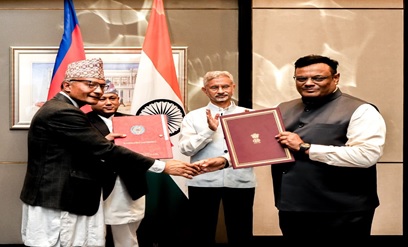
- External Affairs Minister Dr. S. Jaishankar and Nepal’s Foreign Minister Shisir Khanal reviewed bilateral cooperation in New Delhi and virtually handed over 72 health facilities and 12 cultural heritage projects completed under the 2015 Nepal Earthquake Reconstruction Programme.
- The two leaders also launched the linkage between India’s UPI and Nepal’s National Payments Interface for cross-border remittances and witnessed the signing of an MoU between Bhashini and Kathmandu University to develop a Voice-First language translation platform for Nepal.
Nepal
- Prime Minister: Balendra Shah ("Balen")
- President: Ram Chandra Paudel
- Capital: Kathmandu.
- Currency: Nepalese Rupee
- Administrative Division: 7 Provinces, 77 Districts.
- Religion: Secular state, primarily Hindu and Buddhist.
- National Sport: Volleyball.
Topography
- Location: Landlocked, bordered by India (south, east, west) and China (north).
- Division: Three main zones—Himalayan (North), Hilly (Center), and Terai plains (South).
- Mountains: Home to Mount Everest (8,848.86m), locally known as Sagarmatha (Nepal) or Chomolungma.
- Rivers: Major rivers like Koshi, Gandaki, and Karnali originate in the Himalayas and flow into India, influencing India's water security.
- Protected Areas: Rara National Park, Chitwan National Park (famous for one-horned rhinoceros).
India-Nepal Relations
- Strategic Importance: Acts as a buffer state against aggression and is vital for India's "Neighbourhood First" policy.
- Open Border: Over 1,850 km of open border shared with five Indian states: Uttarakhand, Uttar Pradesh, Bihar, West Bengal, and Sikkim.
- Defence Cooperation: The Gorkha Regiments of the Indian Army are partly recruited from Nepal. The annual joint military exercise is known as Surya Kiran.
- Economic Ties: India is Nepal's largest trading partner and transit provider for third-country trade.
Political Evolution:
- Sugauli Treaty (1816): Established current boundaries after the Anglo-Nepalese War.
- Monarchy to Republic: Nepal abolished its 240-year-old monarchy in 2008, becoming a Federal Democratic Republic.
- New Constitution (2015): Formally established the secular, federal structure.
|
SUMMITS AND CONFERNCES
Zone-II Conference of the Commonwealth Parliamentary Association, CPA, India Region
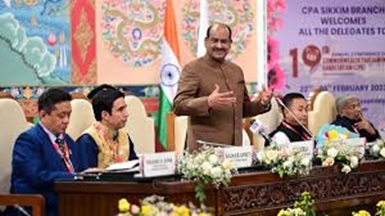
- Lok Sabha Speaker Om Birla inaugurated the 2nd Commonwealth Parliamentary Association (CPA) India Region Zone-II North Zone Conference at the Haryana Legislative Assembly in Chandigarh.
- Theme: "Role of Aware Society and Legislators in Realising Future Challenges and Goal of Viksit Bharat 2047".
- The conference featured delegates from Zone-II legislatures—Jammu and Kashmir, Himachal Pradesh, Punjab, Haryana, and Delhi—along with invited presiding officers from 10 other states.
AWARDS AND HONOURS
National Awards for e-Governance 2026
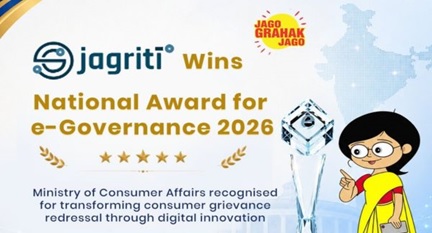
- The e-Jagriti digital platform, developed by the Department of Consumer Affairs, was conferred with the prestigious Silver Award under Category I: "Government Process Re-engineering through Use of Technology for Digital Transformation" at the National Awards for e-Governance (NAeG) 2026.
Other winners
- AI-enabled Clinical Decision Support System in eSanjeevani for AI innovation
- Space Applications Centre (ISRO) for cybersecurity
- E-Aarogya Dhamni (Maharashtra) for district-level initiatives
- Kadepur (Maharashtra) and Bijoy Nagar (Tripura) Gram Panchayats
- Agri Stack (Ministry of Agriculture) for data analytics
Jury Award: Conferred upon the Survey of India for their CORS Network.
Notable Gold Award: The Prayagraj Mela Authority for the Mahakumbh 2025 digital management system.
|
UN Military Gender Advocate of the Year Award
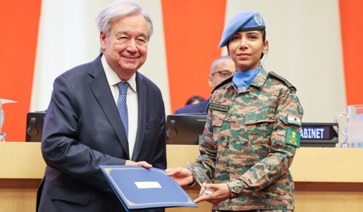
- Major Abhilasha Barak, the Indian Army’s first woman combat helicopter pilot, was conferred the 2025 United Nations Military Gender Advocate of the Year Award for her outstanding contributions with UNIFIL in Lebanon.
- As the leader of the Female Engagement Team and Gender Focal Point, she impacted over 5,000 women and girls through education, healthcare, and livelihood initiatives while facilitating international scholarships under the ITEC programme.
- She also launched an AI-powered confidential reporting platform to support survivors of gender-based violence, strengthening gender inclusion and community outreach efforts.
United Nations
- Founded: October 24, 1945
- Member nations :193
- Founding: Signed in San Francisco in 1945; went into effect on Oct 24, 1945 (celebrated globally as UN Day)
Core Structure and Principal Organs
- The UN operates through six principal organs established in 1945. Five are located at the UN Headquarters in New York, while the International Court of Justice is based in The Hague.
1. United Nations General Assembly (UNGA)
- Role: Main deliberative, policymaking, and representative organ.
- Composition: All 193 member states have equal representation (1 state = 1 vote).
- Key Fact: Decisions on important questions (peace, security, new members, budget) require a two-thirds majority. Other questions need a simple majority.
2. United Nations Security Council (UNSC)
- Role: Primary responsibility for maintaining international peace and security.
- Composition: 15 members — 5 Permanent (P5) with veto power and 10 Non-Permanent members.
- The P5: United States, United Kingdom, France, Russia, and China.
- Non-Permanent Members: Elected for two-year terms by the UNGA. They are not eligible for immediate re-election.
3. Economic and Social Council (ECOSOC)
- Role: Principal body for coordination, policy review, and recommendations on economic, social, and environmental issues.
- Composition: 54 members, elected by the UNGA for overlapping three-year terms.
4. Trusteeship Council
- Role: Established to provide international supervision for 11 Trust Territories.
- Key Fact: Suspended operations on November 1, 1994, following the independence of Palau, the last remaining UN trust territory.
5. International Court of Justice (ICJ)
- Role: The principal judicial organ of the UN. It settles legal disputes submitted by States.
- Location: The Hague, Netherlands (The only principal organ not in New York).
- Composition: 15 judges elected for nine-year terms by the UNGA and UNSC.
6. Secretariat
- Role: Comprises the Secretary-General and tens of thousands of international UN staff members who carry out the day-to-day work.
- Leadership: The Secretary-General is the chief administrative officer, appointed by the UNGA on the recommendation of the UNSC for a five-year, renewable term.
|
South Korea and Japan
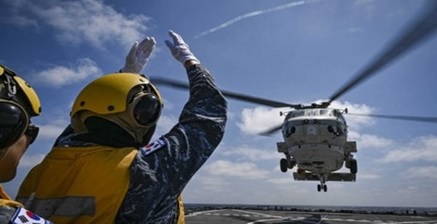
- South Korea and Japan conducted a joint maritime search and rescue exercise (SAREX) for the first time in nine years and the drill was conducted by the South Korean Navy and Japan’s Maritime Self-Defence Force in international waters southeast of Jeju Island.
Japan
|
Geography of Japan
- Archipelago: Comprises four major islands (north to south): Hokkaido, Honshu (largest), Shikoku, and Kyushu.
- Terrain: Highly mountainous (over 80%) with a rugged landscape.
- Ring of Fire: Situated along the Pacific Ring of Fire, making it highly prone to earthquakes, tsunamis, and volcanic activity.
- Key Features: Highest peak is Mount Fuji (3,776 m), a stratovolcano. The longest river is the Shinano River.
- Climate: Temperate climate, with four distinct seasons, surrounded by the Sea of Japan to the west, Sea of Okhotsk to the north, and Pacific Ocean to the east
Emperor: Reiwa Era – Naruhito
Currency: Japanese Yen (¥)
- Capital: Tokyo.
- Language: Japanese.
- National Sport: Sumo Wrestling.
- Cultural Element: "Washoku" (traditional Japanese cuisine) is listed as UNESCO Cultural Heritage.
- Senkaku Islands: Disputed between Japan and China.
India-Japan Relations
- Partnership: Elevated to "Special Strategic and Global Partnership" in 2014.
- Defense: 2+2 Ministerial Dialogue, Malabar Exercise, JIMEX, and Acquistion and Cross-Servicing Agreement (ACSA) for logistics support.
- Infrastructure: Japan is India's largest ODA (Official Development Assistance) donor, financing projects like the Mumbai-Ahmedabad High-Speed Rail (Bullet Train) and Delhi Metro.
- Regional Strategy: Both are part of the Quad (India-Japan-USA-Australia) to maintain a Free and Open Indo-Pacific (FOIP).
- Trade: Comprehensive Economic Partnership Agreement (CEPA) 2011. Trade has expanded, but a significant trade deficit favors Japan.
|
ECONOMY & BANKING
OPEC+ decides to raise oil production
- OPEC+ agreed to increase oil production by about 188,000 barrels per day in July 2026, marking the fourth output hike amid the West Asia crisis, with seven member countries including Saudi Arabia and Russia supporting the decision.
Organization of the Petroleum Exporting Countries (OPEC)
- Establishment: September 1960
- Headquarters: Vienna
- OPEC+: Formed 2016, when OPEC partnered with Russia and other nations to control falling oil prices
|
- Current Members (12): Algeria, Equatorial Guinea, Gabon, Iran, Iraq, Kuwait, Libya, Nigeria, Republic of the Congo, Saudi Arabia, United Arab Emirates, Venezuela
|
PERSON IN NEWS
Salim Kumar
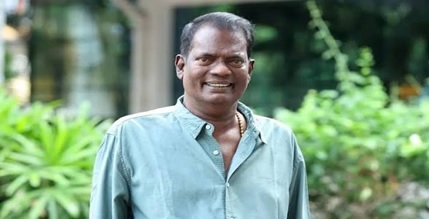
- National Award-winning Malayalam actor and director Salim Kumar passed away in Kochi.
- He was the winner of the National Film Award for Best Actor in 2010 for his masterful performance in Adaminte Makan Abu and the Kerala State Film Award for Second Best Actor for Achanurangatha Veedu in 2005.
ART & CULTURE
‘Sabareesam’ building at the Ayyappa Temple
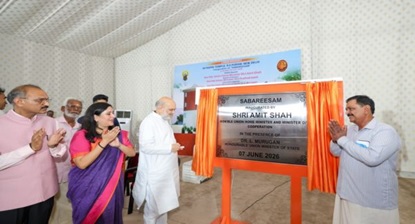
- Union Home Minister Amit Shah inaugurated the newly constructed ‘Sabareesam’ building at the Ayyappa Temple complex in R K Puram, New Delhi.
- It aims to preserve and strengthen the cultural roots of devotees, especially the Malayali community from Keralam residing in the national capital and also serve as a venue for various welfare initiatives and community service programs undertaken by the temple committee..
ENVIRONMENT + SCIENCE & TECHNOLOGY
Earthquake in Philippines
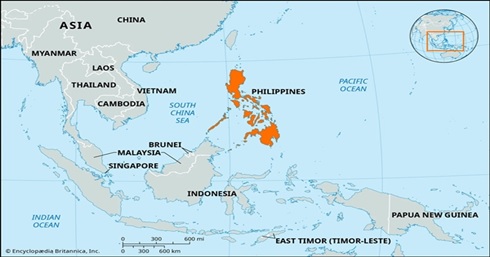
- A powerful 7.8-magnitude earthquake struck off the coast of Mindanao in the southern Philippines killing at least 15 people, injuring 129 others, and triggering widespread tsunami warnings across Asia.
Earthquake
- An earthquake is the shaking or trembling of the earth’s crust caused by the sudden release of built-up tectonic stress, generating seismic waves that radiate in all directions.
- Hypocenter / Focus: The point within the Earth's crust where the earthquake originates and the rupture begins.
- Epicenter: The point on the Earth’s surface directly above the focus. This is where the maximum destruction typically occurs.
- Fault Zone: Sharp breaks in crustal rocks where energy is released when the frictional lock holding the blocks together is overcome.
Circum-Pacific Belt: Also known as the "Ring of Fire," this zone hosts over 68% of global earthquakes due to active subduction zones.
Seismic Waves
- Primary Waves (P-waves): The fastest-moving body waves. They can travel through all mediums (solids, liquids, and gases).
- Secondary Waves (S-waves): Slower than P-waves. They are transverse waves that can only travel through solids. The disappearance of S-waves in the outer core is the primary evidence that it is in a liquid state.
- Surface Waves (L and R waves): These propagate along the Earth's surface. They are the slowest-moving waves but cause the most destruction and ground displacement.
Measurement & Scale
- Richter Scale: A logarithmic scale measuring the magnitude (total energy released) of an earthquake.
- Mercalli Intensity Scale: Measures the intensity or visible damage caused by an earthquake, ranging from I to XII.
- Seismograph: The instrument used to record the vector components of seismic waves.
Seismic Zones of India
- Zone V (Very High Risk): Includes the entire Northeast region, parts of Jammu & Kashmir, Himachal Pradesh, Uttarakhand, the Rann of Kutch in Gujarat, Northern Bihar, and the Andaman & Nicobar Islands.
- Zone IV (High Risk): Covers parts of the Indo-Gangetic plains, Delhi, Sikkim, and parts of Maharashtra (e.g., Koyna region).
- Zone III (Moderate Risk): Includes the remaining parts of the Himalayas, the Western coast, and the Northern plains.
- Zone II (Low Risk): Stable shield areas and the Deccan plateau.
|
Antares Nuclear’s Mark-0 demonstration reactor
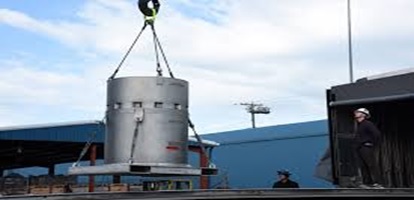
- Antares Nuclear’s Mark-0 demonstration reactor achieved its first zero-power fueled criticality, becoming the first privately developed non-light-water nuclear reactor in the United States to reach this milestone in over four decades.
- Mark-0 is a compact, sodium heat-pipe-cooled microreactor. It utilizes Tri-structural Isotropic (TRISO) ceramic pellet fuel. The fuel was manufactured in partnership with BWX Technologies.
Nuclear Energy
|
Nuclear Energy: It is the energy stored in the nucleus of an atom, released through radioactive decay, nuclear fusion, or nuclear fission. It is known for its extremely high energy density and near-zero carbon emissions during electricity generation.
- Nuclear Fission: Heavy atomic nuclei split into smaller fragments when struck by a neutron, releasing vast amounts of energy. This process powers all current commercial nuclear reactors.
- Nuclear Fusion: Light atomic nuclei (like hydrogen isotopes) fuse together to form a heavier nucleus (like helium). This reaction powers the sun and stars but is not yet commercially viable for electricity on Earth.
- Mass-Energy Equivalence: Nuclear reactions operate on Albert Einstein's famous equation, (E=mc2). This formula states that a tiny amount of lost mass converts into a massive amount of energy because the speed of light is a very large number.
- Nuclear Fuel: Uranium-235 and Plutonium-239 are the primary fissile materials used because their atoms split easily.
Components of a Nuclear Reactor
Fuel Rods: Tubes packed with enriched uranium pellets that undergo fission.
Control Rods: Inserts made of neutron-absorbing materials (like boron or cadmium) used to slow down or stop the chain reaction.
Moderator: Substances like heavy water, light water, or graphite used to slow down fast neutrons, making them more likely to split more atoms.
Coolant: A liquid or gas (usually water) that absorbs heat from the reactor core and transfers it to the steam generator.
Other Facts
- First Nuclear Power Plant: The AM-1 Obninsk Nuclear Power Station in the Soviet Union became the first grid-connected nuclear plant in 1954.
- Top Producers: The United States produces the most total nuclear electricity, while France generates the highest percentage of its domestic electricity (around 70%) from nuclear power.
- Naturally Occurring Fission: Billions of years ago, a natural nuclear fission reactor spontaneously formed and operated in what is now Oklo, Gabon.
|
NZP Saathi App
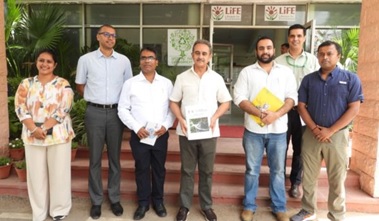
- Union Minister of State for Environment, Forest and Climate Change Kirti Vardhan Singh launched a mobile application offering a smart digital guide to the zoo and inaugurated self-ticketing kiosks at the National Zoological Park (NZP) in New Delhi which aims to enhance visitor experience by enabling easier online ticket booking and promoting digital services at the zoo.
SPORTS
French Open 2026
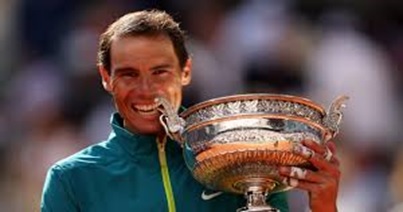
- Alexander Zverev won the men's singles title at the 2026 French Open, defeating Flavio Cobolli and became the first German man to win the French Open in the Open Era and capturing his maiden major title on his fourth Grand Slam final attempt.
Other Winners
| Category |
Winner |
Runner-up |
| Women's Singles: |
Mirra Andreeva |
Maja Chwalińska |
| Men's Doubles |
Marcel Granollers and Horacio Zeballos |
Harri Heliövaara and Henry Patten |
| Women's Doubles |
Kateřina Siniaková and Taylor Townsend |
Anna Danilina and Aleksandra Krunić |
| Mixed Doubles |
Sara Errani and Andrea Vavassori |
Gabriela Dabrowski and Evan King |
Ulaanbaatar Open in Mongolia
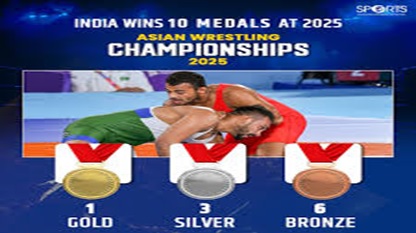
- India delivered an impressive performance at the Ulaanbaatar Open in Mongolia, winning two gold and two bronze medals in the men’s freestyle wrestling events. Deepak (61kg) and Dinesh (125kg) secured gold medals, while Mohit Kumar (65kg) and Vicky (97kg) claimed bronze medals for the country.


 Don't Have an Account?