GK Update
 
  • Mobile Menu
HOME BUY MAGAZINEnew course icon
LOG IN SIGN UP

Sign-Up IcanDon't Have an Account?


SIGN UP


Login Icon

Have an Account?


LOG IN
 

or
By clicking on Register, you are agreeing to our Terms & Conditions.


or


GK Update

Thu 04 Jun, 2026

National News

Approval of a Two-Year Scheme for the Delhi-NCR Region
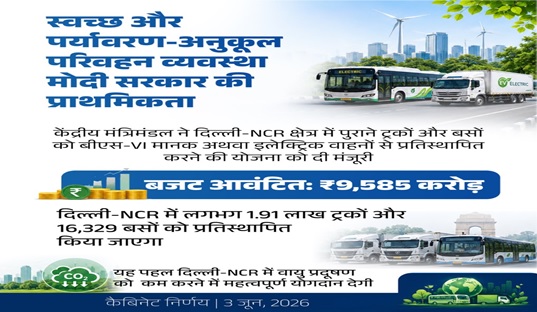
  • The Union Cabinet has approved a scheme to provide assistance to the National Capital Region Planning Board (NCRPB) for the replacement of old trucks and buses in the Delhi-NCR region.

Related Facts:


  • Budget Allocation: ₹9,585 crore
  • Central Contribution: ₹5,041 crore as direct financial assistance
  • States’ Contribution: Approximately ₹1,601 crore through tax concessions by participating states

Associated Ministries:

  • Financed by: National Capital Region Planning Board (NCRPB) under the Ministry of Housing and Urban Affairs (MoHUA)
  • Implemented by: Ministry of Road Transport and Highways (MoRTH) and Ministry of Petroleum and Natural Gas (MoPNG) jointly
  • Target Area:Delhi and the four states/Union Territory falling under NCR—Delhi, Haryana, Rajasthan, and Uttar Pradesh.
  • Main Objective and Target: To replace approximately 2.07 lakh commercial vehicles registered in Delhi-NCR that comply with BS-IV or older emission standards (1.91 lakh trucks and 16,329 buses) with BS-VI-compliant or Electric Vehicles (EVs).

Major Incentives for Vehicle Owners:

  • Interest Support: 5% interest subvention on loans for new vehicles for a period of 5 years.
  • Fuel Coupons: Monthly fuel vouchers of up to ₹4,800, depending on the vehicle category.
  • State-Level Concessions: State governments will provide up to 100% exemption on motor vehicle tax for new vehicles and 50% exemption for certified old vehicles for 10 years, along with waiver of registration fees. Outstanding liabilities of old vehicles will also be waived.
  • Automobile Industry Discount: Original Equipment Manufacturers (OEMs) will offer an 8% discount on the ex-showroom price of new vehicles.

Approval of the 'Gujarat Wire-Free City Mission'
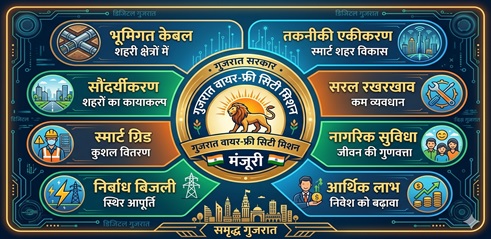
  • The Government of Gujarat has approved the 'Gujarat Wire-Free City Mission', under which all power lines in urban areas will be completely shifted underground by 2030.
  • The approval was granted by the State Cabinet under the chairmanship of Chief Minister Bhupendra Patel. The primary objectives of the mission are to enhance urban aesthetics, reduce technical faults, and ensure public safety.

Related Facts:


  • Comprehensive Coverage: All 17 Municipal Corporations and 151 Municipalities of Gujarat will be covered under the mission in a phased manner.
  • Budget Allocation: The State Government has approved an initial budget of ₹500 crore for the smooth implementation of the first phase.
  • Scale of Transformation: A total of 14,600 circuit kilometres of High-Tension (HT) lines and 31,400 circuit kilometres of Low-Tension (LT) overhead power lines will be converted into underground cable networks.

Gujarat:

  • A highly industrialized and culturally rich state located on the western coast of India.
  • It has the longest coastline among Indian states and plays a leading role in economic development, infrastructure, and trade.
  • Capital: Gandhinagar (Ahmedabad is the largest city and principal commercial centre).
  • Coastline: Approximately 1,600 kilometres, the longest among Indian states.
  • Geographical Boundaries: Pakistan in the north-west, Rajasthan in the north, Madhya Pradesh in the east, Maharashtra in the south-east, and the Arabian Sea in the west.
  • Major Regions: Gujarat is broadly divided into Kutch (arid and marshy region), Saurashtra (peninsular region), and Mainland Gujarat.
  • Petrochemical Hub: Jamnagar is home to the world's largest refinery complex. Gujarat is often referred to as the "Petrochemical Capital of India."
  • Diamond Industry: Surat is the global centre for cutting and polishing nearly 90% of the world's rough diamonds.
  • Ahmedabad: Known as the "Manchester of India" because of its cotton textile industry.
  • Major Dance Forms: Garba and Dandiya Raas (Garba has recently been included in UNESCO’s Representative List of the Intangible Cultural Heritage of Humanity).
  • Statue of Unity: The 182-metre-high statue of Sardar Vallabhbhai Patel located at Kevadia (Ekta Nagar) on the Narmada River; it is the tallest statue in the world.

Approval of the 'Uttar Pradesh Prisoner Death and Compensation Payment Policy'
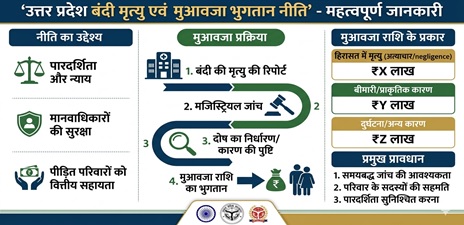
  • The Uttar Pradesh Cabinet has approved the 'Uttar Pradesh Prisoner Death and Compensation Payment Policy', aimed at providing compensation to the dependents of prisoners who die due to unnatural causes while in jail custody.

Related Facts:


  • Death Due to Inmate Fights or Negligence: If a prisoner dies because of a fight with another inmate, medical negligence, shortage of doctors, or lapses in prison hospital services, the dependents will receive compensation of ₹5 lakh.
  • Custodial Suicide: Families of prisoners who commit suicide inside jail premises will be provided financial assistance of ₹3 lakh.
  • Exceptions (Cases Not Eligible for Compensation): No compensation will be paid in cases involving age-related illnesses, prolonged diseases, death while on bail, or accidents occurring during attempts to escape from custody.

Approval for New District Jails:

  • To reduce overcrowding in prisons and modernize correctional infrastructure, the Cabinet has also approved the construction of five new district jails in Moradabad, Kanpur Nagar, Auraiya, Lalitpur, and Bhadohi at a total cost of more than ₹1,460 crore.
  • Moradabad District Jail: To be constructed at a cost of ₹386.91 crore with a capacity of 2,000 inmates.
  • Kanpur Nagar District Jail: To be constructed at a cost of ₹384 crore with a capacity of 2,030 inmates.

Uttar Pradesh :

  • Foundation Day: 24 January 1950 (earlier known as the United Provinces).
  • Capital: Lucknow (administrative) and Prayagraj (judicial seat of the High Court).
  • Districts and Divisions: 75 districts and 18 divisions.
  • Bicameral Legislature: Legislative Assembly (403 seats) and Legislative Council (100 seats).
  • Parliamentary Representation: Highest in India with 80 Lok Sabha seats and 31 Rajya Sabha seats.
  • Neighbouring States and Country: Shares borders with Uttarakhand, Himachal Pradesh, Haryana, Rajasthan, Madhya Pradesh, Chhattisgarh, Jharkhand, Bihar, the National Capital Territory of Delhi, and Nepal.

Extreme Districts:

  • Easternmost: Ballia
  • Westernmost: Shamli
  • Northernmost: Saharanpur
  • Southernmost: Sonbhadra (the only district in India touching the borders of four states—Madhya Pradesh, Chhattisgarh, Jharkhand, and Bihar).
  • Largest and Smallest Districts by Area: Lakhimpur Kheri (largest) and Hapur (smallest)

Major Fairs of Uttar Pradesh :

  • Kumbh Mela (Prayagraj): The world's largest religious and spiritual gathering, held every 12 years at the confluence of the Ganga, Yamuna, and the mythical Saraswati rivers. It is inscribed on UNESCO’s Intangible Cultural Heritage list.
  • Bateshwar Fair (Agra): The largest cattle fair in Uttar Pradesh, organized on the banks of the Yamuna during Kartik Purnima.
  • Nauchandi Fair (Meerut): A symbol of communal harmony, featuring both the Navchandi Devi Temple and the shrine of Hazrat Bale Miyan.
  • Deva Sharif Fair (Barabanki): Held at the shrine of the renowned Sufi saint Haji Waris Ali Shah during the Kartik month.
  • Khichdi Fair (Gorakhpur): A month-long fair organized at the Gorakhnath Temple during Makar Sankranti.
  • Devipatan Fair (Balrampur): A grand fair held during Navratri at the famous Shakti Peeth in Tulsipur.
  • Garhmukteshwar Fair (Hapur): A historic fair organized on the banks of the Ganga during Kartik Purnima.
  • Shringirampur and Ramnagariya Fairs (Farrukhabad): Important religious fairs held on the banks of the Ganga.
  • Daduji and Mudiya Fairs (Mathura): Well-known traditional religious fairs of the Braj region.

Economy and Banking

India's First Blue Bond

  • Sagarmala Finance Corporation Limited (SMFCL) has announced plans to issue India’s first Blue Bond to diversify its funding sources and finance maritime and coastal infrastructure projects.

Related Facts:


  • What is a Blue Bond? : A Blue Bond is a specialized debt instrument used to raise funds for projects related to the sustainable use and conservation of oceans, coastal regions, and water-based ecosystems.
  • Difference from Green Bonds: While Green Bonds focus on a broad range of climate and environmental projects, Blue Bonds are specifically dedicated to water and marine ecosystems.
  • Global Background: The world’s first sovereign Blue Bond was issued by Seychelles in 2018.
  • Fund-Raising Target: SMFCL plans to raise up to ₹1,000 crore (US$105.08 million) through this bond during the current financial year.
  • Structure: The issue consists of a ₹500 crore base issue and a ₹500 crore Greenshoe Option.
  • Tenor: The bond will have a maturity period of 10 years.
  • Utilization of Funds: The proceeds will be used for the development of greenfield and brownfield ports, coastal road networks, inland waterways, and shipbuilding infrastructure.

Sagarmala Finance Corporation Limited (SMFCL) :

  • Established: 2016
  • Introduction: India’s first maritime sector-focused Non-Banking Financial Company (NBFC).
  • NBFC Licence: Obtained its Non-Banking Financial Company (NBFC) licence in June 2025.
  • Administrative Ministry: Functions under the administrative control of the Ministry of Ports, Shipping and Waterways.
  • Status: Holds the status of a Miniratna Category-I Central Public Sector Enterprise (CPSE).
  • Objective: Its primary mandate is to provide long-term financing for the development of ports, shipbuilding, inland waterways, and coastal infrastructure under the Sagarmala Programme and Maritime India Vision.

International News

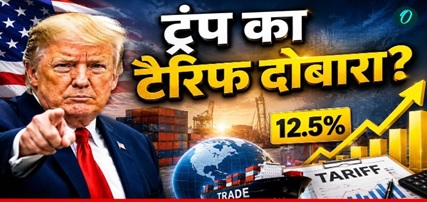
12.5% ​​Tariffs on 53 Other Countries: USA

  • Following a trade investigation conducted by the U.S. Trade Representative (USTR) under Section 301 of the U.S. Trade Act of 1974, the Trump administration has proposed imposing a 12.5% ​​tariff on 53 other countries—including India, China, the UK, and Japan.
  • This move comes after the U.S. Supreme Court declared President Donald Trump's previous "Liberation Day" tariffs illegal; this legal framework is now being utilized as an alternative to those measures.
  • The USTR initiated an investigation in March 2026. According to its findings, these 54 countries—including India—have failed to effectively ban the importation of products made using forced labor within their borders. The U.S. maintains that this failure is unfair and discriminatory toward U.S. commerce.

USA:


  • Capital: Washington, D.C.
  • Largest City: New York City
  • Continent: North America
  • Head of State: President
  • Legislature: Congress (House of Representatives, Senate)
  • Currency: U.S. Dollar (USD)
  • Major Rivers: Mississippi, Missouri, Colorado
  • Major Mountain Ranges: Rocky Mountains, Appalachian Mountains
  • Official Language: English (Officially recognized at the federal level via an executive order issued by Donald Trump in March 2025)

Israel-Lebanon Ceasefire

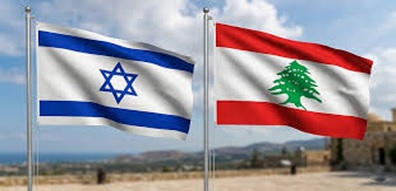
  • Under US mediation, Israel and Lebanon have renewed a ceasefire and agreed to establish a Hezbollah-free "pilot" security zone in southern Lebanon.
  • Under this agreement, the Lebanese Armed Forces (LAF) will assume exclusive control of these areas south of the Litani River.

Related Facts:


  • Essence of the Agreement: This Israel-Lebanon agreement is in accordance with the principles of United Nations Security Council (UNSC) Resolution 1701 (UNSCR 1701).
  • Security Zone: The complete withdrawal of Hezbollah militants between the Litani River and the Israeli border will be ensured. Control of these areas will be handed exclusively to the official Lebanese military to prevent any non-state actor from exerting influence.

Israel:

  • Capital: Jerusalem
  • Parliament Name: Knesset
  • Currency: New Shekel (ILS)
  • National Language: Hebrew
  • Intelligence Agency: Mossad
  • Neighboring Countries: Israel is bordered by Lebanon to the north, Syria to the northeast, Jordan to the east, and Egypt to the southwest.
  • Maritime Borders: The Mediterranean Sea to the west and the Gulf of Aqaba of the Red Sea to the south.

Major Water Bodies:

  • The Dead Sea: This is the lowest point in the world, located on the border between Israel and Jordan. Due to its high salinity, no human being can drown in it.
  • Sea of ​​Galilee: This is Israel's largest freshwater lake.

Lebanon:

  • A prominent Middle Eastern country located in Western Asia, situated on the eastern coast of the Mediterranean Sea.
  • Capital: Beirut
  • Currency: Lebanese Pound (LBP)
  • President: Always a Maronite Christian (Current: Joseph Aoun)
  • Prime Minister: Always a Sunni Muslim (Current: Nawaf Salam)
  • Speaker of Parliament: Always a Shia Muslim (Current: Nabih Berri)
  • Parliament: It comprises a total of 128 seats, divided between Christians and Muslims in a 50:50 ratio.
  • Major River: Litani River

Litani River:

  • Lebanon's most significant watercourse, which currently remains a central focal point of geopolitical disputes and military agreements between Israel and Lebanon.
  • Source: This river originates west of the city of Baalbek, in the fertile Beqaa Valley of eastern Lebanon.
  • Distinguishing Feature: It is the longest and largest river flowing entirely within Lebanon (it does not share a border with any other country).
  • Course: It flows southward through the Beqaa Valley, then takes a sharp turn westward near Marjayoun, and—cutting through the mountains—empties into the Mediterranean Sea.
  • Economic Significance: It is referred to as Lebanon's "lifeline." The Qaraoun Dam, built upon it, constitutes Lebanon's largest hydroelectric and irrigation project.

10th Meeting of the India–Laos Joint Commission
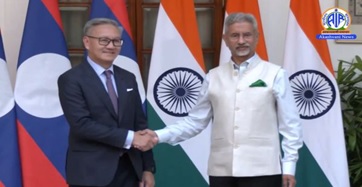
  • External Affairs Minister Dr. S. Jaishankar and the Deputy Prime Minister and Foreign Minister of Laos, Thongloun Sisoulith, co-chaired the 10th meeting of the India–Laos Joint Commission in New Delhi.
  • The meeting featured discussions on enhancing cooperation across various sectors, including trade, investment, health, energy, digital connectivity, development partnerships, and culture.

Laos:


  • Official Name: Lao People's Democratic Republic
  • A remarkably beautiful and historic country located in Southeast Asia.
  • Landlocked Country: Laos is the only landlocked country (surrounded entirely by land) in all of Southeast Asia (the ASEAN region). It possesses no maritime boundaries.
  • Bordering Countries: It shares borders with five nations (North: China; Northeast and East: Vietnam; South: Cambodia; West: Thailand; Northwest: Myanmar).
  • Mekong River: This serves as the lifeline of Laos. The river flows through a significant portion of the country and forms its natural western boundary with Thailand.
  • Capital: Vientiane
  • Currency: Lao Kip

"Padma Barrage Project (Phase I)"

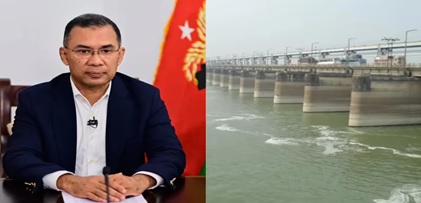
  • Bangladesh has approved one of the largest river engineering projects in its history: the "Padma Barrage Project (Phase I)."
  • This project is linked to concerns regarding the reduction in water flow in downstream areas caused by the Farakka Barrage.

Key Facts:


  • Location: This barrage will be constructed on the Padma River in the Rajbari district of Bangladesh (near the Pangsha Point in Pabna). (The Padma River is the name given to India's Ganges River within Bangladesh.)
  • Timeline: Its implementation is scheduled to take place between July 2026 and June 2033.
  • Engineering Capacity: The barrage will have a total length of 2.1 kilometers, comprising 78 spillway gates, a navigation lock (shipping channel), a fish pass, and a railway bridge.
  • Water Storage and Energy: It will store approximately 2.9 billion cubic meters of water and enable the generation of 113 megawatts of hydroelectric power.

India-Bangladesh Dimension:

  • [India: Ganges River] ───► [Farakka Barrage (West Bengal)] ───► [Bangladesh: Padma River] ───► [Proposed Padma Barrage]
  • Ganges Water Sharing Treaty (1996): A 30-year treaty was signed between India and Bangladesh to share the dry-season flows at the Farakka Barrage; this treaty is set to expire in December 2026.

Farakka Barrage:

  • A significant river control structure located on the Ganges River in the Murshidabad district of West Bengal.
  • This barrage is situated approximately 18 kilometers upstream from the Bangladesh border.
  • Its primary objective is to keep the Kolkata Port free from siltation by diverting the waters of the Ganges into the Hooghly River. The Ganges Water Sharing Treaty, signed in 1996, is set to expire in December 2026; consequently, it has been a subject of intense discussion recently.
  • Construction Period: Its construction began in 1961, and it has been operational since April 21, 1975.
  • Feeder Canal: A 40-kilometer-long feeder canal originates from the barrage, diverting Ganges water (approximately 40,000 cusecs) into the Bhagirathi-Hooghly river system.
  • Other Uses: This barrage also supplies water to the 'Farakka Super Thermal Power Station.'

Ganges Water Treaty, 1996:

  • Signatories: The then Prime Minister of India, H.D. Deve Gowda, and the Prime Minister of Bangladesh, Sheikh Hasina.
  • Duration: It is valid for a period of 30 years (from December 1996 to December 2026).
  • Dry Season Formula (January 1 to May 31): Under this provision, water is shared during the dry season based on a 10-day cycle.
  • If the flow is less than 70,000 cusecs: Both countries will receive water in a 50:50 ratio.
  • If the flow is between 70,000 and 75,000 cusecs: Bangladesh will receive a fixed allocation of 35,000 cusecs, while the remainder goes to India.
  • If the flow exceeds 75,000 cusecs: India will receive 40,000 cusecs, and the remainder will go to Bangladesh.

Important Days

'International Day of Innocent Children Victims of Aggression'
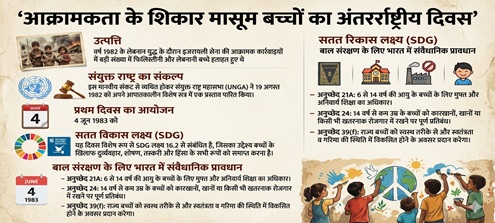
  • The 'International Day of Innocent Children Victims of Aggression' is observed annually on June 4.

Related Facts:


  • Origin: During the 1982 Lebanon War, a large number of Palestinian and Lebanese children were killed or injured as a result of aggressive actions by the Israeli military.
  • UN Resolution: Deeply distressed by this humanitarian crisis, the United Nations General Assembly (UNGA) adopted a resolution during its emergency special session on August 19, 1982.
  • First Observance: June 4, 1983.
  • Sustainable Development Goal (SDG): This day is specifically linked to SDG Goal 16.2, which aims to end all forms of abuse, exploitation, trafficking, and violence against children.

Constitutional Provisions for Child Protection in India:

  • Article 21A: The Right to Free and Compulsory Education for children aged 6 to 14 years.
  • Article 24: A complete prohibition on the employment of children under the age of 14 in factories, mines, or any hazardous occupation.
  • Article 39(f): The State shall provide opportunities for children to develop in a healthy manner and in conditions of freedom and dignity.

Statutory Acts for Child Protection in India:

  • POCSO Act, 2012: A special law designed to provide protection to children against sexual offenses, sexual harassment, and pornography.
  • Juvenile Justice Act, 2015 (JJ Act): A legal framework for the rehabilitation of children in need of care and protection, as well as juveniles in conflict with the law.
  • Child Labour (Prohibition and Regulation) Amendment Act, 2016: Imposes a complete ban on the employment of children (under 14 years) across all sectors, and prohibits the engagement of adolescents (14–18 years) in hazardous occupations.

Appointments

Vipul

  • Senior diplomat Vipul has been appointed as India's new Ambassador to the United Arab Emirates (UAE).

Related Facts:


  • Vipul (IFS: 1998): He was appointed as India's next Ambassador to Saudi Arabia in June 2026. He is currently serving as India's Ambassador to Qatar.
  • Dr. Deepak Mittal (IFS: 1998): He was appointed as India's Ambassador to the United Arab Emirates (UAE). He has succeeded the outgoing Ambassador, Sanjay Sudhir.

United Arab Emirates (UAE):

  • A federal semi-constitutional monarchy located at the eastern end of the Arabian Peninsula in the Middle East (West Asia).
  • Capital: Abu Dhabi
  • Largest City: Dubai
  • Currency: UAE Dirham (AED)
  • Official Language: Arabic
  • President: Mohammed bin Zayed Al Nahyan
  • Continent: Asia
  • System of Government: Federal Monarchy
  • Establishment: December 2, 1971
  • Number of Emirates: 7
  • Major Emirates: Abu Dhabi, Dubai, Sharjah, Ajman, Fujairah, Ras Al Khaimah, Umm Al Quwain
  • National Airlines: Emirates and Etihad Airways
  • Major Landmark: Burj Khalifa — the world's tallest building
  • Borders: Oman lies to the east and northeast, while Saudi Arabia lies to the west and south.
  • Coastal Borders: Its northern border faces the Persian Gulf, and its eastern border faces the Gulf of Oman.
  • The UAE is the 7th largest investor in India.
  • The Comprehensive Economic Partnership Agreement (CEPA) between India and the UAE has been fully effective since May 1, 2022.
  • The UAE is India's fourth-largest supplier of crude oil and its largest supplier of LPG.
  • It is the only foreign partner participating in India's Strategic Petroleum Reserves Program.
  • 3.5 million Indian expatriates reside in the UAE.

Reports and Indices

'Prison Statistics India (PSI) Report' 2024
  • The National Crime Records Bureau (NCRB) has released the 'Prison Statistics India (PSI) Report' 2024.

Key Statistical Findings:


  • Prison Occupancy Rate: In the year 2024, the national prison occupancy rate in India has declined to 112.7%.
  • Total Capacity vs. Actual Population: The sanctioned capacity of the 1,333 prisons across the country is 4.53 lakh (453,000) inmates; however, currently, more than 5.11 lakh inmates are lodged in them.
  • Preponderance of Under-trial Prisoners: Under-trial prisoners constitute approximately 73% of the total inmates lodged in Indian prisons.
  • Regional Status: More than half of the states/UTs have an occupancy rate exceeding 100%. Delhi recorded the highest occupancy rate (194.6%), followed by Meghalaya (163.5%). In Delhi and Bihar, over 87% of the inmates are under-trials.
  • Decline in Conviction Ratio: The share of convicted (sentenced) prisoners in jails has declined from 32% in 2016 to 26.6% in 2024.
  • Gender-based Demographics: Among the inmates lodged in prisons, 95.8% are men and 4.14% are women. There are only 34 dedicated prisons for women in the country.

Sports News

Broadcast of FIFA World Cup Matches

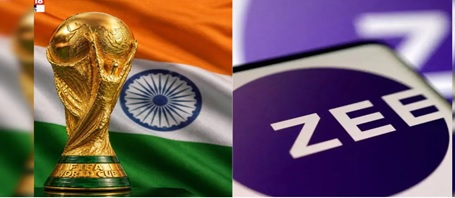
  • Zee Entertainment has secured the exclusive broadcasting and streaming rights in India for the upcoming FIFA World Cup 2026, as well as 39 other FIFA tournaments scheduled through 2034.

Key Facts:


  • Partnership Duration: This deal will remain effective from 2026 to 2034 (spanning 9 years).
  • Total Tournaments: Under this agreement, Zee Entertainment will exclusively broadcast and live-stream a total of 39 FIFA tournaments in India.
  • Major Tournaments: This mega-package includes the Men's FIFA World Cup 2026 (hosted by the USA, Canada, and Mexico), the FIFA Women's World Cup 2027, and the FIFA World Cup 2030. Additionally, the Under-17 and Under-20 World Cups, as well as Futsal tournaments, are part of this package.

FIFA:

  • Full Name: Fédération Internationale de Football Association
  • Established: May 21, 1904 (in Paris, France)
  • Headquarters: Zurich, Switzerland
  • Current President: Gianni Infantino
  • Regional Confederations: 6 regional continental confederations
  • AFC – Asian Football Confederation (India is a member)
  • UEFA – Union of European Football Associations
  • CONMEBOL – South American Football Confederation
  • CAF – Confederation of African Football
  • CONCACAF – Confederation of North, Central American and Caribbean Association Football
  • OFC – Oceania Football Confederation

Major Tournaments Organized by FIFA:

  • FIFA Men's World Cup: This is the largest football event in the world, held every four years. The first World Cup was played in Uruguay in 1930.
  • FIFA Women's World Cup: This tournament was inaugurated in 1991.

India and FIFA:

  • All India Football Federation (AIFF): The AIFF governs football in India. It was established in 1937. FIFA Membership: India (AIFF) received official FIFA membership in 1948.
  • Historic Moments: India successfully hosted the FIFA U-17 Men's World Cup in 2017 and the FIFA U-17 Women's World Cup in 2022.

Upcoming Key FIFA Events:

  • FIFA Men's World Cup 2026: Jointly hosted by the United States, Canada, and Mexico. For the first time in history, 48 teams will participate in this edition (previously, there were 32 teams).
  • FIFA Women's World Cup 2027: To be held in Brazil.
  • FIFA Men's World Cup 2030: Morocco, Portugal, and Spain will serve as the main hosts. (To mark the tournament's centenary year, the first three matches will be played in Uruguay, Argentina, and Paraguay).
  • FIFA Men's World Cup 2034: To be held in Saudi Arabia.

Environment News

80% Probability of El Niño Developing Between June and August
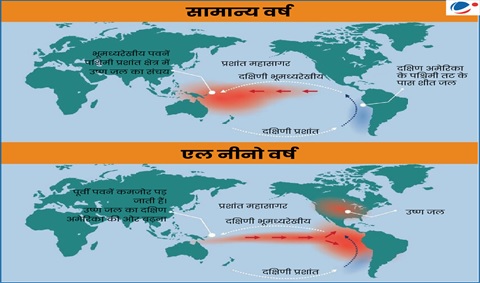
  • According to a report by the World Meteorological Organization, there is an 80% probability that El Niño will develop between June and August, with a 90% or higher likelihood of persisting until November.
  • It is a climatic phenomenon in the Pacific Ocean that has significant impacts on global and Indian weather patterns.

Related Facts:


El Niño :

  • El Niño is a global climate phenomenon characterized by the abnormal warming of sea surface temperatures in the central and eastern equatorial Pacific Ocean.
  • Literal Meaning: In Spanish, El Niño means “Little Boy” or “Christ Child,” as South American fishermen first noticed the phenomenon around Christmas.
  • Part of ENSO: It is the warm phase of the El Niño–Southern Oscillation (ENSO) cycle, while La Niña represents its cool phase.
  • Southern Oscillation: Refers to fluctuations in atmospheric pressure across the tropical Indo-Pacific region. When the oceanic phenomenon (El Niño) and atmospheric phenomenon (Southern Oscillation) occur together, they are known as ENSO.

World Meteorological Organization (WMO) :

  • Established: 23 March 1950
  • UN Specialized Agency: Since 1951
  • Headquarters: Geneva, Switzerland
  • Predecessor Organization: International Meteorological Organization (1873)
  • Members: 193 (187 countries and 6 territories)
  • Current Secretary-General: Celeste Saulo (Argentina)
  • World Meteorological Day: 23 March every year

'Potato Patch' Coral Reef

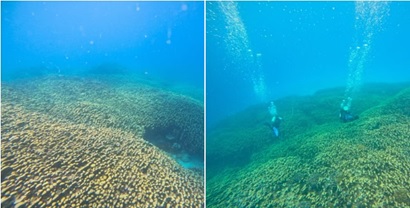
  • Indian researchers have documented a massive coral structure spanning approximately 4,250 square meters in the southeastern part of Kadmat Island, located in the Lakshadweep archipelago; this structure has been locally named the 'Potato Patch' (or 'field of potatoes').
  • This extraordinary discovery involves a coral species known as *Pavona clavus*, which may well be one of the largest living coral colonies ever recorded in the world.
  • Based on preliminary estimates of growth rates, this colony could be between 700 and 1,800 years old; however, researchers note that scientific dating methods are required to confirm this.

Coral Reefs:


  • They constitute one of the most diverse and productive ecosystems found within the ocean, often referred to as the 'Rainforests of the Sea.'
  • Coral: A simple marine organism known as a 'polyp.' It belongs to the phylum Coelenterata.
  • A symbiotic relationship exists between the coral polyp and single-celled algae known as 'zooxanthellae.'
  • The algae provide the coral with food—generated through photosynthesis—as well as its vibrant coloration.
  • In return, the coral provides the algae with protection, shelter, and metabolic waste products (such as CO2 and nutrients).
  • The World's Largest Barrier Reef: The Great Barrier Reef, located in the Pacific Ocean off the northeastern coast of Australia (Queensland).
  • India's Only Entirely Atoll-Based Archipelago: Lakshadweep is an island group composed entirely of atolls (ring-shaped coral reefs).
  • Key Coral Reef Regions in India: There are four major regions—the Gulf of Mannar, the Andaman and Nicobar Islands, Lakshadweep, and the Gulf of Kachchh.

Yellow-throated Marten

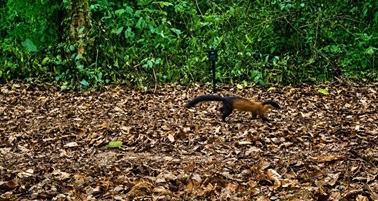
  • The 'Yellow-throated Marten' was recorded for the first time during routine camera trapping operations at the Kaziranga National Park and Tiger Reserve in Assam.
  • The discovery of this rare species confirms the excellent ecological health of the semi-evergreen forest areas within this UNESCO World Heritage Site.

Yellow-throated Marten:


  • It is a member of the weasel family.
  • Scientific Name: Martes flavigula
  • Local Names: In the hilly regions of India, it is known as 'Chuthrol' or 'Kharja'.
  • Ecological Role: It is a mesopredator (a medium-level predator). It is an agile climber and a diurnal (daytime-active) animal that contributes to forest regeneration by aiding in seed dispersal.

Conservation and Legal Status:

  • IUCN Red List: Least Concern
  • Wildlife (Protection) Act, 1972 (India): Schedule II
  • Distribution in India: It is primarily found in the forests of the Himalayan region (including Jim Corbett National Park in Uttarakhand and Himachal Pradesh) and the northeastern states (such as Arunachal Pradesh, Assam, Manipur, etc.).


Latest Courses