National News
Ministry of Panchayati Raj (MoPR) organized Regional Workshop
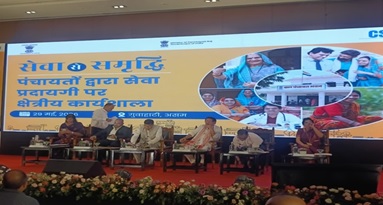
- The Ministry of Panchayati Raj (MoPR) organized the Regional Workshop on Service Delivery – ‘Seva Se Samriddhi: Panchayat-led Service Delivery’ in Guwahati, Assam.
- The primary objective of the workshop was to enhance last-mile public service delivery, promote digital governance, and improve the Ease of Living in rural India through empowered and accountable Panchayati Raj Institutions (PRIs).
National Family Health Survey (NFHS)-6: 2023-24
- The Union Ministry of Health and Family Welfare (MoHFW) released the National Family Health Survey-6 (NFHS-6) report for 2023–24, a nationwide survey independently coordinated by the International Institute for Population Sciences (IIPS), Mumbai, to assess key health and demographic indicators in India.
Key Findings of NFHS-6 (2023–24)
- Increase in Institutional Deliveries: Institutional deliveries increased from 88.6% to 90.6%, indicating improved access to healthcare facilities during childbirth.
- Improved Antenatal Care (ANC): Around 95.9% of pregnant women received antenatal care (ANC) services.
- Rise in First Trimester ANC: The proportion of mothers receiving antenatal care during the first trimester increased from 70% to 76.2%.
- Stable Total Fertility Rate (TFR): India’s Total Fertility Rate (TFR) remained stable at 2.0, reflecting population stabilization trends.
- High Immunization Coverage: Vaccination coverage among children aged 12–23 months remained consistently high at above 96%.
- Impact of Family Planning Programmes: Improvements highlight the success of national family planning initiatives, including Mission Parivar Vikas.
- Women’s Digital Inclusion: The proportion of women who had ever used the internet nearly doubled, increasing from 33.3% to 64.3%.
- Financial Empowerment in Healthcare: Ayushman Bharat–PMJAY and expanded health protection initiatives strengthened financial security in healthcare access.
- Progress Towards SDGs: The findings reaffirm India’s steady progress toward achieving Sustainable Development Goals (SDGs) in health, gender inclusion, and social welfare.
|
Total Fertility Rate (TFR): The average number of children born per woman over her lifetime.
Ayushman Bharat–PMJAY
- Launch Date: September 23, 2018
- Nodal Ministry: Ministry of Health and Family Welfare (MoHFW)
- Implementation Body: National Health Authority (NHA)
- Funding Pattern: 60:40 (Centre:States), 90:10 for North Eastern & Himalayan States, and 100% centrally funded for UTs without a legislature.
- Insurance Cover: ₹5 Lakh per family per annum
Sustainable Development Goals (SDGs)
- Comprise 17 global goals adopted by the UN in 2015 to be achieved by 2030
- Goal 1-5: No Poverty, Zero Hunger, Good Health, Quality Education, Gender Equality
- Goal 6-10: Clean Water, Clean Energy, Economic Growth, Industry/Infrastructure, Reduced Inequalities
- Goal 11-15: Sustainable Cities, Responsible Consumption, Climate Action, Life Below Water, Life on Land
- Goal 16-17: Peace/Justice/Institutions, Partnerships for the Goals
|
Samagra Shiksha Abhiyan
- Union Education Minister Dharmendra Pradhan chaired a detailed review meeting on the release and utilisation of funds under the Samagra Shiksha Abhiyan which focused heavily on transitioning into Samagra Shiksha 3.0, with an overarching goal to make the flagship programme more efficient, transparent, and outcome-oriented.
Convergence of Flagship Schemes: Starting this year, the government will deploy an integrated approach by converging multiple core school education programs. This merger includes:
- Samagra Shiksha Abhiyan (SSA)
- PM-POSHAN (Pradhan Mantri Poshan Shakti Nirman)
- ULLAS (Understanding of Lifelong Learning for All in Society)
- PM-SHRI (Pradhan Mantri Schools for Rising India)
NEP 2020 Implementation: Financial allocations are being aligned to heavily back the implementation of the National Education Policy (NEP) 2020.
About Schemes
|
Samagra Shiksha Abhiyan
Launched: 2018 (by the Ministry of Education, formerly MHRD).
Nature of Scheme: Centrally Sponsored Scheme (CSS)—meaning funding is shared between the Centre and States.
Subsumed Schemes: It integrates three erstwhile independent schemes:
- Sarva Shiksha Abhiyan (SSA) (Elementary education)
- Rashtriya Madhyamik Shiksha Abhiyan (RMSA) (Secondary education)
- Teacher Education (TE) (Institutional training setup)
Serves as the primary vehicle to implement the Right to Education (RTE) Act, 2009 and is fully aligned with the National Education Policy (NEP) 2020.
Education lies in the Concurrent List (List III) of the 7th Schedule
PM-POSHAN (Pradhan Mantri Poshan Shakti Nirman)
- Comprehensive Centrally Sponsored Scheme under the Ministry of Education that guarantees one hot cooked meal per school day to eligible children
- The Origin: The scheme replaced the historic National Programme of Mid-Day Meal in Schools (Mid-Day Meal Scheme), which originally launched nationally on August 15, 1995
- It serves as a vital right-based delivery mechanism under the National Food Security Act, 2013 (NFSA).
- Covers students from Balvatika (pre-primary) up to Class VIII in government and government-aided
ULLAS (Understanding of Lifelong Learning for All in Society)
- A centrally sponsored scheme by the Ministry of Education aimed at empowering adults (aged 15+) who missed formal schooling.
- Implementation Period: 5 Years (Financial Years 2022-23 to 2026-27).
- Motto: "Jan-Jan Sakshar" (Literacy for every person).
- First State (Fully Literate): Mizoram was declared the first state fully literate under ULLAS.
PM-SHRI (Pradhan Mantri Schools for Rising India)
- Launched: 2022
- Nodal Ministry: Department of School Education and Literacy, Ministry of Education.
- Target Scope: Existing schools managed by the Central Government (Kendriya Vidyalayas and Jawahar Navodaya Vidyalayas), State/UT Governments, and Local Bodies (Panchayats/Municipalities).
|
App to monitor implementation of tobacco-free norms
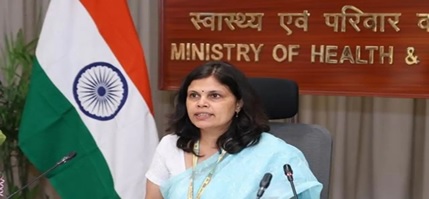
- On the occasion of World No Tobacco Day, Union Health Secretary Punya Salila Srivastava launched the pilot version of the Tobacco-Free Educational Institutions-ToFEI Application in New Delhi.
- It will facilitate self-assessment and reporting by educational institutions, monitor compliance with tobacco-free guidelines, ensure implementation of tobacco control signage, and help prohibit the sale of tobacco products within one hundred yards of educational institutions.
STATE SPECIAL NEWS
Goa celebrated 39th Statehood Day
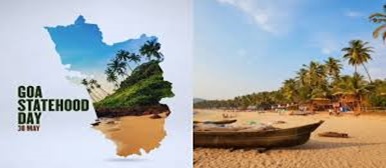
- Goa celebrated its 39th Statehood Day on May 30, 2026, marking the historic milestone when it became India’s 25th state in 1987.
|
Goa's journey to statehood: Historical Timeline
- Portuguese Rule (1510–1961): Goa was colonized by the Portuguese for over 450 years after Alfonso de Albuquerque defeated the local rulers.
- Operation Vijay (1961): On December 19, 1961, the Indian Armed Forces successfully liberated Goa from foreign rule. This milestone is celebrated separately as Goa Liberation Day.
- Union Territory Status: Following its liberation, Goa, along with the nearby coastal enclaves of Daman and Diu, was administered collectively as a Union Territory.
- The 1967 Opinion Poll: A historic referendum was held where Goans voted decisively against merging with neighboring Maharashtra, choosing instead to retain their unique identity.
- Official Language Recognition (1987): The recognition of Konkani as the official regional language paved the final path for state autonomy.
- Full Statehood (May 30, 1987): Under the Goa, Daman and Diu Reorganisation Act, Goa achieved full statehood, making Panaji its capital, while Daman and Diu remained a separate Union Territory.
Goa
- Chief Minister: Pramod Sawant
- Governor: Pusapati Ashok Gajapathi Raju
- Location: Situated on the western coast in the Konkan region, geographically separated from the Deccan highlands by the Western Ghats.
- India's smallest state by area and fourth-smallest by population.
- River: Mandovi (Dudhsagar Falls is located on the Mandovi river) and Zuari
Major protected areas:
- Bhagwan Mahavir Wildlife Sanctuary and Mollem National Park
- Salim Ali Bird Sanctuary (located on Chorão Island along the Mandovi River)
- Cotigao Wildlife Sanctuary
|
INTERNATIONAL NEWS
Security forces of Israel and Russia Blacklisted in UN
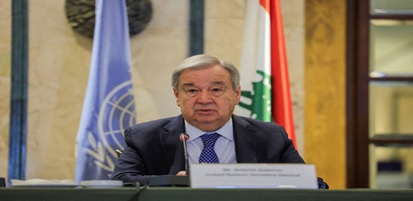
- The United Nations has officially added the armed and security forces of both Israel and Russia to its annual blacklist of parties suspected of committing conflict-related sexual violence.
- The UN verified multiple incidents involving the Israel Defense Forces (IDF), Israel Prison Service, and specialized police units targeting Palestinian detainees from Gaza and the West Bank. Documented abuses included rape, gang rape, physical violence to the genitals, and forced nudity used as a form of torture. Survivors included civilian detainees, journalists, and human rights defenders.
- The UN human rights monitoring mission in Ukraine verified 310 cases of conflict-related sexual violence perpetrated by Russian armed and security forces. The abuses primarily targeted prisoners of war (POWs) and civilian detainees—the vast majority of whom were men—and included gang rape, genital mutilation, and electric shocks used as psychological and physical torture.
United Nations (UN)
- Founding Charter: Signed on June 26, 1945, in San Francisco, entering into force on October 24, 1945 (celebrated annually as UN Day).
- Official Languages: Six official languages—Arabic, Chinese, English, French, Russian, and Spanish.
- Headquarters: Located in New York City, USA (with major offices in Geneva, Nairobi, and Vienna).
- Latest Member: South Sudan joined as the 193rd member in 2011.
- Financing: Funded through assessed contributions from member states (based on gross national income) and voluntary contributions. The USA is the largest contributor.
Specialized UN Agencies & Headquarters
| Organization |
Acronym |
Headquarters |
| International Labour Organization |
ILO |
Geneva, Switzerland |
| Food and Agriculture Organization |
FAO |
Rome, Italy |
| UN Educational, Scientific and Cultural Org. |
UNESCO |
Paris, France |
| World Health Organization |
WHO |
Geneva, Switzerland |
| International Monetary Fund / World Bank |
IMF / WB |
Washington, D.C., USA |
| World Intellectual Property Organization |
WIPO |
Geneva, Switzerland |
REPORTS, RANKS AND INDICES
RBI’s Annual Report for 2025-26
- The Reserve Bank of India (RBI) released its Annual Report for 2025-26, detailing the country's economic performance and the central bank's operations for the April 2025–March 2026 fiscal year.
- The report showcases a strong 7.6% economic expansion but flags a sharp multi-fold rise in the balance of payments deficit and growing geopolitical headwinds.
Reserve Bank of India (RBI)
- Establishment: On April 1, 1935, under the provisions of the 'Reserve Bank of India Act, 1934'.
- Recommendation: Based on the recommendations of the Hilton Young Commission (1926).
- Headquarters: Initially, its Central Office was located in Kolkata, which was permanently shifted to Mumbai in 1937.
- Nationalization: After initially being privately owned, it was fully nationalized on January 1, 1949.
- Governor: Currently, Sanjay Malhotra serves as the 26th Governor.
- First Indian Governor: C.D. Deshmukh (1943–1949). He was appointed in August 1943 and continued to serve as Governor at the time of independence (1947).
- First Female Deputy Governor: K.J. Udeshi (2003). She was the first woman in the history of the RBI to reach this position.
- First Indian Prime Minister to Serve as Governor: Dr. Manmohan Singh. He was the 15th Governor of the RBI (1982–1985).
- First Headquarters: Kolkata (1935). It was permanently shifted to Mumbai in 1937. Longest tenure: Sir Benegal Rama Rau (over 7 years).
- Shortest tenure: Amitav Ghosh (just 20 days).
|
AWARDS AND HONOURS
Labbaytum Awards for Haj coordination
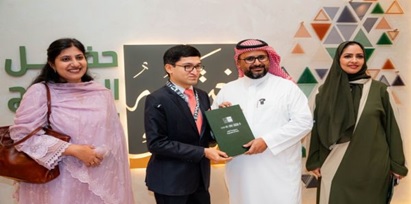
- The Indian Haj Mission has made history by receiving two prestigious Labbaytum Awards from the Saudi Ministry of Hajj and Umrah for the first time.
- Announcing the achievement, Union Minority Affairs Minister Kiren Rijiju confirmed that the awards recognise India's excellence in Haj coordination and communication during the core phase of Haj 2026.
- The Labbaytum Awards are periodically presented by Saudi Arabia to honour international government entities and Hajj Affairs offices that demonstrate outstanding digital, logisitical, and communication frameworks to ease the journey of pilgrims.
ECONOMY & BANKING
Building 30 days’ LPG reserves Amid West Asia conflict persist

- The government has asked public sector oil marketing companies to create Liquefied Petroleum Gas (LPG) reserves sufficient for at least 30 days as the ongoing conflict in West Asia continues to disrupt global energy supplies.
- The directive to state-run Oil Marketing Companies (OMCs)—Indian Oil Corporation (IOC), Bharat Petroleum Corporation Ltd. (BPCL), and Hindustan Petroleum Corporation Ltd. (HPCL)—was issued by the Ministry of Petroleum and Natural Gas.
NITI Aayog’s Roadmap Report titled ‘Future of India’s Semiconductor Industry’
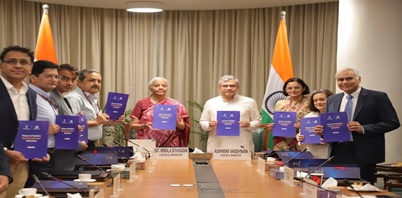
- NITI Aayog released a 10-year roadmap titled ‘Future of India’s Semiconductor Industry’ to build a US$ 120–150 billion domestic semiconductor value chain by 2035 and position India as a major player in the global chip ecosystem, unveiled by Finance Minister Nirmala Sitharaman and Electronics & IT Minister Ashwini Vaishnaw.
- The roadmap builds directly onto the recently launched India Semiconductor Mission (ISM) 2.0, where full-stack Indian IP and advanced nodes (down to 2-nanometre tech) are a top priority.
|
Strategic Goals & Funding Structure
- Market Scale: Target a US$ 120–150 billion domestic semiconductor ecosystem by 2035.
- Investment Needed: Requires an estimated US$ 135–180 billion over the next decade to scale manufacturing, packaging, and design infrastructure.
- Anchor Capital: Proposes a government commitment of US$ 45–60 billion (at least one-third of the total required investment) to act as anchor capital, de-risk long-cycle projects, and boost private investor confidence.
Technology Focus Areas
Instead of merely chasing traditional legacy manufacturing, the NITI Aayog Frontier Tech Hub roadmap outlines distinct segments for global leadership:
- Advanced Packaging & Testing: Moving aggressively into advanced technology nodes and assembly.
- Compound Semiconductors & Wide-Bandgap Materials: Seizing opportunities in electric mobility, power electronics, and industrial tech.
- AI-Native Chip Design: Strongly supporting homegrown design companies to build sovereign Intellectual Property (IP).
|
Government launched portal for search of unclaimed financial assets
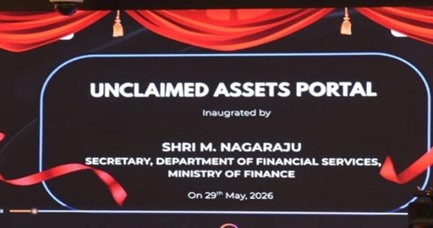
- The Department of Financial Services (DFS) launched the Common Landing Portal for Unclaimed Financial Assets, developed in collaboration with the Public Sector Bank Alliance (PSBA), to enable easy access to information on unclaimed financial assets through a unified platform.
- The portal, www.unclaimedassetsportal.in, serves as a unified platform providing access to search facilities for unclaimed bank deposits, insurance claims, shares, dividends and mutual funds across the financial ecosystem.
MoU signed for Advanced Packaging Glass Core Substrate Manufacturing Facility in Odisha
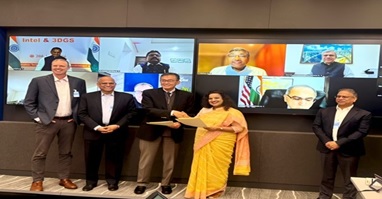
- The landmark Memorandum of Understanding (MoU) was signed between the Government of Odisha, Intel Corporation and 3DGS Inc. USA for a framework to establish an Advanced Packaging Glass Core Substrate Manufacturing Facility in Odisha.
- This massive high-technology project, located at Info Valley in the Bhubaneswar-Khurda region, will be rolled out in phases over the next five to six years.
Semiconductor and India's semiconductor ecosystem
|
Semiconductors
- What are Semiconductors? Materials with electrical conductivity between conductors (like copper) and insulators (like glass).
- Primary Materials: Element-based semiconductors include Silicon (Si) and Germanium (Ge).
- Doping: The process of adding impurities to intrinsic semiconductors to modify their electrical properties (creating P-type and N-type semiconductors).
- Next-Gen Compound Semiconductors: Material mixtures like Gallium Nitride (GaN) and Silicon Carbide (SiC). These are critical for high-voltage, high-temperature operations such as electric vehicles (EVs), defense, and aerospace applications.
- The Manufacturing Chain:
-
- Fab (Fabrication): The highly capital-intensive "front-end" process where circuits are chemically etched onto raw silicon wafers.
- ATMP / OSAT: Assembly, Testing, Marking, and Packaging. This is the "back-end" process that cuts wafers into individual dies and seals them into protective casings before retail integration.
Policies and Schemes
- India Semiconductor Mission (ISM): Launched under the Ministry of Electronics and Information Technology (MeitY) in 2021 to establish a sustainable semiconductor and display ecosystem.
- ISM 1.0 vs. ISM 2.0:
-
- ISM 1.0 (2021): Backed by a ₹76,000 crore outlay. It offers up to 50% fiscal support on a pari-passu basis for setting up Silicon Fabs, Display Fabs, and ATMP units.
- ISM 2.0 (Union Budget 2026–27): Shifts focus from initial setups to advanced manufacturing consolidation. It prioritizes localized raw materials (chemicals, gases, equipment), full-stack indigenous Intellectual Property (IP) development, and advanced R&D.
- Design Linked Incentive (DLI) Scheme: Provides financial infrastructure and design support (up to ₹15 crore per application) to domestic startups and MSMEs to design chips locally.
- Chips to Startup (C2S) Programme: A targeted academic initiative aimed at training a structural pipeline of over 85,000 specialized VLSI and chip-design engineers
Other Facts
- Tata Electronics Fab (Dholera) — India's first commercial chip fab.
- Karnataka is Known as the Chip Design Capital of India, it hosts over 85% of India's R&D in chip design and major global electronic design automation (EDA) firms
- India's older, strategic fabrication facilities include SITAR (Bengaluru, under DRDO) and the Semiconductor Laboratory (SCL) in Chandigarh.
|
PERSON IN NEWS
CDS General Anil Chauhan
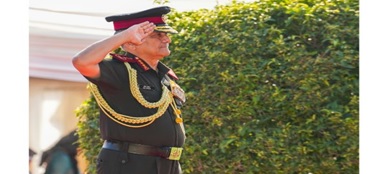
- Chief of Defence Staff (CDS) General Anil Chauhan officially retired from military service on 30 May 2026, handing over the top military command to Lieutenant General N.S. Raja Subramani.
- As India's second CDS, he was instrumental in accelerating the jointness and integration of the Army, Navy, and Air Force, releasing the Joint Air Defence Doctrine, and driving the implementation of the Integrated Theatre Commands.
ART & CULTURE
Vesak Poya Day
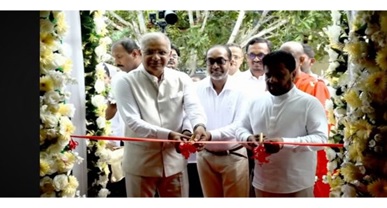
- Sri Lanka celebrated Vesak Poya Day, commemorating the birth, enlightenment and Mahaparinirvana of Lord Buddha.
- Vesak Poya Day, also known as Buddha Purnima or Buddha Day, is the holiest Buddhist festival, commemorating the birth, enlightenment, and passing (Nirvana) of Gautama Buddha.
- It is observed on the first full moon of the lunar month of Vesakha, typically falling in May
ENVIRONMENT + SCIENCE & TECHNOLOGY
Netrasemi launched Edge AI chip A2000
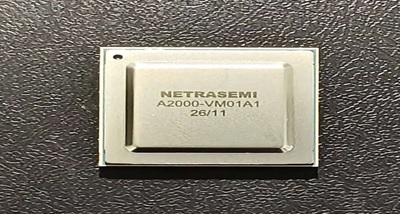
- Zoho-backed semiconductor startup Netrasemi successfully launched its flagship Edge AI System-on-Chip (SoC), the A2000.
- Chip is fabricated on Taiwan Semiconductor Manufacturing Company’s 12nm technology node and is designed for smart vision and real-time video analytics applications across surveillance systems, drones, robotics, intelligent video gateways and industrial automation.
- The A2000 was developed with the support of the Indian Government's Design Linked Incentive (DLI) and Design Infrastructure Support schemes.
IIMC launched its AI academy in Delhi
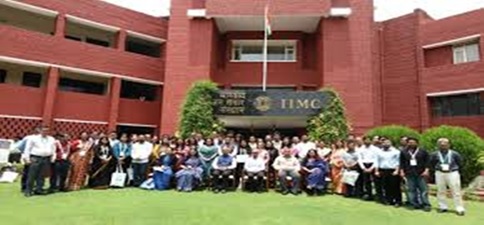
- The Indian Institute of Mass Communication (IIMC) launched the AIME Academy (AI Academy for Media and Entertainment) in New Delhi to strengthen AI-driven media education and build capacity for future-ready media professionals.
Artificial Intelligence (AI)
- Definition: Simulation of human intelligence by machines, especially computer systems, enabling them to learn, reason, and self-correct.
- Father of AI: John McCarthy, who coined the term in 1956 at the Dartmouth Conference.
- Core Technologies: Machine Learning (ML), Deep Learning (neural networks), Natural Language Processing (NLP), Computer Vision, and Robotics.
- Turing Test: Proposed by Alan Turing in 1950 to evaluate a machine's ability to exhibit intelligent behaviour indistinguishable from a human.
- Generative AI: AI models (like ChatGPT, Claude, Gemini) that create new content (text, images, code) using training data, driven by Transformer Architecture.
- Deepfakes: Synthetic media generated using Generative Adversarial Networks (GANs), where two neural networks contest with each other.
- AI Supercomputers: India’s AIRAWAT supercomputer has featured globally in the Top 100 fastest supercomputers list.
Government Initiatives in India
- National Strategy for AI: Launched by NITI Aayog with the theme #AIforAll, focusing on health, agriculture, education, smart cities, and smart mobility.
- AIRAWAT (AI Research, Analytics and Knowledge Dissemination Platform): India’s cloud computing platform for AI, established under NITI Aayog's guidance.
- IndiaAI Mission: A comprehensive government initiative with a budget allocation exceeding ₹10,000 crore to build compute infrastructure, support startups, and establish AI Centers of Excellence.
- GPAI (Global Partnership on Artificial Intelligence): India is a founding member of this international initiative to support the responsible and human-centric development of AI.
|


 Don't Have an Account?