GK Update
 
  • Mobile Menu
HOME BUY MAGAZINEnew course icon
LOG IN SIGN UP

Sign-Up IcanDon't Have an Account?


SIGN UP


Login Icon

Have an Account?


LOG IN
 

or
By clicking on Register, you are agreeing to our Terms & Conditions.


or


GK Update

Fri 29 May, 2026

National News

Achievement of PM Surya Ghar Scheme

  • According to Union Minister for New and Renewable Energy Pralhad Joshi, rooftop solar panels have been installed on 4 million houses under the PM Surya Ghar Scheme so far.

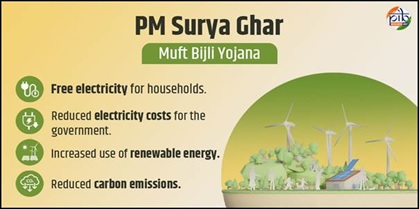
PM Surya Ghar: Muft Bijli Yojana (PMSGMBY):

  • It is the world’s largest domestic rooftop solar scheme.
  • Launched: February 2024 by Prime Minister Narendra Modi
  • Objective: To provide free electricity to households by facilitating rooftop solar panel installation
  • Budget: A total financial outlay of ₹75,021 crore has been approved for the scheme
  • Implementation Period: The scheme will be implemented till FY 2026-27
  • Nodal Ministry: Ministry of New and Renewable Energy (MNRE)
  • Implementing Agencies: National Programme Implementation Agency (NPIA) at the national level and DISCOMs at the state level

Subsidy Details:

  • Consumption up to 150 units: 1-2 kW plant; subsidy of ₹30,000 to ₹60,000
  • Consumption between 150-300 units: 2-3 kW plant; subsidy of ₹60,000 to ₹78,000
  • Consumption above 300 units: Above 3 kW plant; maximum subsidy of ₹78,000

Government Schemes Promoting Solar Energy:

  • Rooftop Solar Scheme, 2015
  • PM Kisan Urja Suraksha evam Utthaan Mahabhiyan (PM-KUSUM), 2019
  • International Solar Alliance (ISA), 2015
  • National Solar Mission, 2010
  • One Sun, One World, One Grid, 2018

Mandatory Direction to All High Courts to Deliver Judgments Within 3 Months
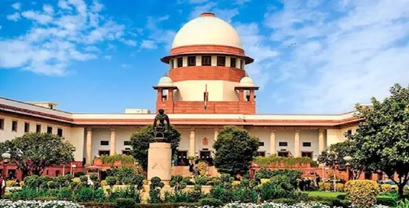
  • The Supreme Court has directed all High Courts across the country to mandatorily pronounce judgments within a maximum period of 3 months after reserving orders.
  • The decision aims to reduce judicial delays and ensure citizens’ “Right to Speedy Justice”.

Related Facts:

Important Articles:

  • Article 141: The law declared by the Supreme Court shall be binding on all courts within the territory of India.
  • Article 21: Guarantees the “Right to Life and Personal Liberty”. Under this article, the Supreme Court has recognized the “Right to Speedy Justice” as a Fundamental Right.
  • Articles 214 and 226: Related to the establishment of High Courts and their power to issue writs.
  • Article 142: Provides the Supreme Court with special powers to do “complete justice”. The Court used this power to issue these guidelines.

Supreme Court of India:

  • Establishment: The Supreme Court came into existence with the enforcement of the Constitution on 26 January 1950 and was formally inaugurated on 28 January 1950.
  • Predecessor: It replaced the Federal Court of India (1937) and the Privy Council of Britain.
  • Constitutional Provisions: Articles 124 to 147 under Part V of the Constitution deal with the composition, powers, and procedures of the Supreme Court.
  • Strength of Judges: Presently, the sanctioned strength is 34 judges including the Chief Justice of India (CJI).

Note: The Union Cabinet has approved the Supreme Court (Number of Judges) Amendment Bill, 2026. Through a Presidential Ordinance, the sanctioned strength has been increased to 38 judges (1 CJI + 37 other judges).

  • Appointment: Judges are appointed by the President on the recommendation of the Collegium System.
  • Qualifications: A person must be a citizen of India and should have served as a High Court judge for at least five years, or as an advocate for at least ten years, or be a distinguished jurist in the opinion of the President.
  • Tenure: Judges hold office until the age of 65 years.

Jurisdiction and Powers:

  • Original Jurisdiction (Article 131): Deals with disputes between the Centre and States or among States.
  • Writ Jurisdiction (Article 32): The Court can issue writs such as Habeas Corpus and Mandamus for the enforcement of Fundamental Rights.
  • Appellate Jurisdiction: The Supreme Court hears appeals against High Court judgments in civil, criminal, and constitutional matters.
  • Advisory Jurisdiction (Article 143): The President may seek the Court’s opinion on legal or public matters of importance.
  • Court of Record: Its judgments are preserved as legal records and are binding on subordinate courts.

Funds Released to 12 States Under PMAY-G
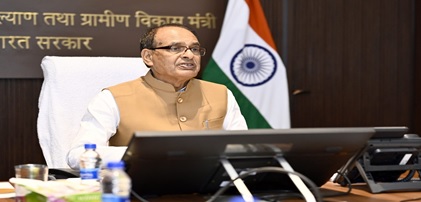
  • Union Minister for Rural Development Shivraj Singh Chouhan has released the first installment (Mother Sanction) of ₹10,021.42 crore to 12 states under the Pradhan Mantri Awaas Yojana-Gramin (PMAY-G) for the financial year 2026-27.

Key Facts:

  • Mother Sanction: This is a comprehensive financial approval issued by the Ministry at the beginning of the financial year. Under this mechanism, a total withdrawal limit is established for the states to ensure that actual funds can be released in a timely manner without any delays.
  • Beneficiary States: The 12 states benefiting from this installment include Assam, Chhattisgarh, Gujarat, Haryana, Himachal Pradesh, Jharkhand, Karnataka, Kerala, Punjab, Rajasthan, Tamil Nadu, and Uttar Pradesh.
  • Women Empowerment: Approximately 75 percent of the houses sanctioned under the scheme are either in the name of women or jointly owned with women.
  • Targets: The government initially set a target of 2.95 crore houses for the period spanning the financial years 2016-17 to 2023-24. Given the continued demand for housing in rural areas, the Union Cabinet has approved an extension of the scheme for the next five years (financial years 2024-25 to 2028-29), adding a new target of 2 crore additional houses.

Pradhan Mantri Awaas Yojana-Gramin (PMAY-G):

  • Launch: In the year 2016, by restructuring the 'Indira Awaas Yojana' (IAY) (originally launched in 1996).
  • Type: Centrally Sponsored Scheme.
  • Ministry: Ministry of Rural Development.

Financial Assistance Structure:

  • Assistance of ₹1.20 lakh per unit in plain areas.
  • Assistance of ₹1.30 lakh per unit in hilly states, difficult areas, and IAP (Integrated Action Plan) districts. Cost Sharing: The cost is shared between the Centre and the States in a ratio of 60:40 for plain areas, and 90:10 for the North-Eastern and Himalayan States.
  • Labour Assistance: Through mandatory convergence under MGNREGA, wage assistance equivalent to 90 to 95 unskilled person-days is provided to the beneficiary for house construction.
  • Swachh Bharat Mission-Gramin (SBM-G): Additional assistance of ₹12,000 is provided for the construction of a toilet.

Kazipet Rail Manufacturing Unit

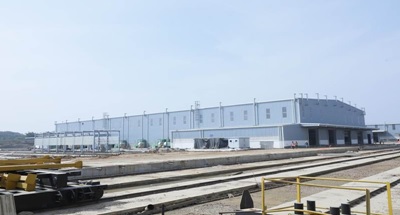
  • According to Railway Minister Ashwini Vaishnaw, 200 intercity trains will be manufactured at the Kazipet Rail Manufacturing Unit in Telangana over the next five years.
  • These trains will be operated across the country for short-distance travel.

Indian Railways:

  • First Passenger Train: India's first passenger train ran on April 16, 1853, during the tenure of Lord Dalhousie.
  • Distance and Route: This inaugural train covered a distance of 34 kilometers between Mumbai (Bori Bunder) and Thane, carrying 400 passengers.
  • Nationalization: 1951
  • Establishment of the Railway Board: The Indian Railway Board was constituted in the year 1905.
  • Computerized Reservation: The first computerized reservation service in India was launched in New Delhi in 1986.
  • Introduction of Toilets: Toilets were introduced in trains for the first time in the year 1909.
  • Global Ranking: Indian Railways is the fourth-largest railway network in the world (following the USA, China, and Russia).
  • Headquarters: The main headquarters of Indian Railways is located in New Delhi.
  • Oldest Engine: The 'Fairy Queen' is the world's oldest operational steam locomotive and is listed in the Guinness Book of World Records.
  • Highest Railway Station: Ghum Railway Station, located in West Bengal, is India's highest railway station (at an altitude of 2,258 meters).

UNESCO World Heritage Sites: Four sites belonging to Indian Railways are included in the UNESCO list:

  1. Darjeeling Himalayan Railway
  2. Nilgiri Mountain Railway
  3. Kalka-Shimla Railway
  4. Chhatrapati Shivaji Maharaj Terminus (Mumbai)
  • Railway Zones: 18
  • Technology and Operations:
  • Vande Bharat Express: This is India's first indigenously designed semi-high-speed train, serving as an excellent example of the 'Make in India' initiative. KAVACH: This is India's indigenous Automatic Train Protection (ATP) system. It automatically halts two trains if they approach each other on the same track, thereby aiming to eliminate rail accidents.
  • Dedicated Freight Corridor (DFC): Specialized corridors—specifically the Eastern (EDFC) and Western (WDFC)—have been constructed to facilitate the rapid movement of freight trains, thereby segregating the traffic of passenger trains from that of goods trains.

5th Fully Literate State under the ‘ULLAS’ Programme
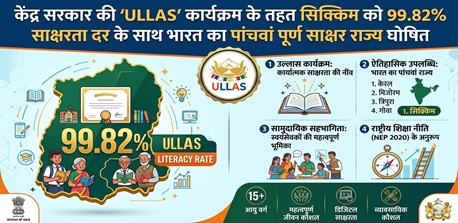
  • Under the Central Government’s ‘ULLAS’ programme, Sikkim has been declared India’s fifth fully literate state with a literacy rate of 99.82%.

Related Facts:

  • This historic announcement was made in the presence of President Droupadi Murmu during the convocation ceremony of Sikkim University.
  • Prescribed Criteria: According to the norms of the Union Ministry of Education, a state or union territory can be declared “fully literate” if its adult literacy rate crosses 95%.
  • Performance of Sikkim: Sikkim achieved an exceptional literacy rate of 99.82%, far above the national benchmark of 95%.
  • Other Fully Literate States: With this achievement, Sikkim has joined the special list of Mizoram, Goa, Tripura and Himachal Pradesh.
  • Special Note: In June 2024, Ladakh became the first administrative unit (Union Territory) in India to achieve full literacy.

ULLAS Initiative:

  • Full Form: ULLAS – Understanding of Lifelong Learning for All in Society.
  • Objective: To promote foundational literacy, numeracy, life skills and adult education in line with the National Education Policy (NEP) 2020.
  • Target Group: The programme targets citizens aged 15 years and above who could not benefit from formal schooling.
  • Implementation in Sikkim: The programme was launched in the state on 14 November 2022 and implemented extensively across all 6 districts and 34 blocks.

Sikkim:

  • Capital: Gangtok
  • Languages: Nepali, Bhutia, Hindi, Limbu and English
  • 15 May 1975: Sikkim became the 22nd state of India.
  • Rivers: Rangeet, Rangpo and Lachung
  • State Flower: Noble Orchid (Yereum Leyi)
  • Sikkim is a major tourism destination in India.
  • Lepcha: Indigenous community of Sikkim and Nepal.
  • Highest Mountain Peak in India: Kanchenjunga (Sikkim)
  • Sikkim is the first Northeastern state to restore the Old Pension Scheme.
  • First Railway Station of Sikkim: Rangpo Station

International News

16th India-Singapore Defence Policy Dialogue
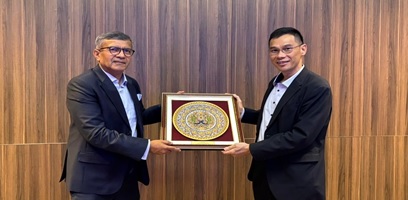
  • The 16th India-Singapore Defence Policy Dialogue was held in Singapore.

Key Facts:

  • Co-chaired by: India's Defence Secretary Rajesh Kumar Singh and Singapore's Permanent Secretary (Defence) Joseph Leong.
  • Both countries reiterated their commitment to supporting an open, inclusive, and rules-based regional security architecture, as well as to promoting practical and constructive defence cooperation in the Indo-Pacific region.

Singapore:

  • Capital: Singapore
  • Currency: Singapore Dollar (SGD)
  • National Language: Malay
  • President: Tharman Shanmugaratnam
  • Prime Minister: Lawrence Wong
  • Independence: August 9, 1965
  • Parliament: Unicameral Parliament
  • Major Port: Port of Singapore (one of the world's busiest ports)
  • Nickname: "Lion City"

Joint Military Exercises:

  • SIMBEX: An annual maritime exercise conducted between the navies of India and Singapore.
  • Agni Warrior: A joint exercise between the armies of both countries.
  • SITMEX: A trilateral naval exercise involving India, Singapore, and Thailand.
  • Kurushetra (JMT): The Singapore Air Force conducts training with the Indian Air Force at Kalaikunda, India.

Person In News

Former Prime Minister Chaudhary Charan Singh
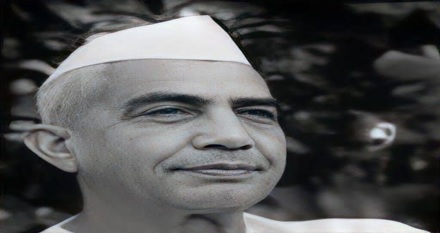
  • The death anniversary of India's former Prime Minister, Chaudhary Charan Singh, is observed every year on May 29.
  • He was born on December 23, 1902, in the village of Noorpur in the Meerut (now Hapur) district of Uttar Pradesh.
  • His birth anniversary (December 23) is celebrated in India as National Farmers' Day (Kisan Diwas).

Related Facts:

  • Prime Ministerial Tenure: He served as the 5th Prime Minister of India from July 28, 1979, to January 14, 1980.
  • He served as the Deputy Prime Minister (January–July 1979) and served two terms as the Chief Minister of Uttar Pradesh.
  • He represented Chhaprauli in the Uttar Pradesh Legislative Assembly (1937, 1946, 1952, 1962, 1967) and later served as a Member of Parliament (MP) from Baghpat.
  • He passed away on May 29, 1987. His memorial in New Delhi is known as 'Kisan Ghat'.
  • Highest Honor: In 2024, he was posthumously conferred with India's highest civilian award, the 'Bharat Ratna'.
  • Airport: The Amausi Airport located in Lucknow was renamed the Chaudhary Charan Singh International Airport.

Notable Works and Books:

  • Abolition of Zamindari
  • India's Poverty and Its Solution
  • Peasant Proprietorship and Land to the Tillers

Demise of Bashir Badr

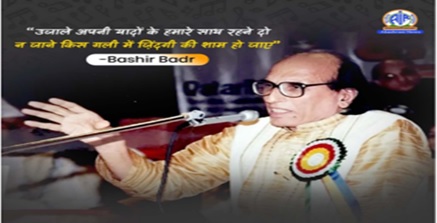
  • Famous Urdu poet and ghazal writer Dr. Bashir Badr passed away at the age of 91 in Bhopal, Madhya Pradesh.
  • He had been suffering from dementia and age-related illnesses for a long time.

Related Facts:

  • Early Life: He was born on 15 February 1935 in Ayodhya, Uttar Pradesh. His real name was Syed Mohammad Bashir.
  • Style of Poetry: Dr. Badr made Urdu ghazals popular among common people by using simple Hindustani language instead of heavily Persian and Arabic vocabulary traditionally used in Urdu poetry.
  • Historical Reference: During the Shimla Agreement between India and Pakistan in 1972, one of his famous couplets gained international recognition:
  • “Dushmani jam kar karo lekin ye gunjaish rahe,
  • Jab kabhi hum dost ho jaayein to sharminda na hon.”
  • Shift to Bhopal: During the 1987 Meerut communal riots, his house was burnt down and many of his valuable unpublished works were destroyed. After this incident, he permanently shifted to Bhopal.

Major Awards and Honours:

  • Padma Shri (1999): Awarded India’s fourth-highest civilian honour by the Government of India.
  • Sahitya Akademi Award (1999): Received for his famous collection of 69 Urdu ghazals titled “Aas”.
  • Urdu Academy Awards: Honoured by the Urdu Academies of Uttar Pradesh and Bihar.

Famous Lines:

  • “Ujale apni yaadon ke hamare saath rehne do,Na jaane kis gali mein zindagi ki shaam ho jaaye.”
  • “Koi haath bhi na milayega jo gale miloge tapaak se, Ye naye mizaaj ka shehar hai zara faasle se mila karo.”

Sports News

Under-23 Asian Wrestling Championships 2026
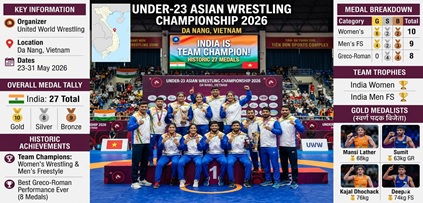
  • Indian wrestlers won the men’s freestyle and women’s team titles at the Under-23 Asian Wrestling Championships 2026 held in Da Nang, Vietnam.
  • Indian wrestlers secured a total of 27 medals in the championship, including 11 gold, 7 silver and 9 bronze medals.

Related Facts:

  • Category-wise Performance of India:

Men’s Freestyle:

  • Total Medals: 9
  • Gold Medals: 4
  • Key Record: This is India’s best-ever medal performance in the history of the championship, with the Indian team finishing ahead of Kyrgyzstan and Kazakhstan to secure the top position.

Women’s Wrestling:

  • Total Medals: 10
  • Gold Medals: 6
  • Key Record: Indian women wrestlers delivered an outstanding performance and won the team championship title.

Greco-Roman:

  • Total Medals: 8
  • Gold Medals: 1
  • Key Record: This is India’s best-ever performance in the history of the Under-23 Asian Championships in the Greco-Roman category.
  • Venue: Da Nang, Vietnam
  • Overall Medal Tally (India): 27 medals, strengthening India’s dominance at the junior level.
  • Historic Team Performance: India won the overall championship titles in both the men’s freestyle and women’s wrestling categories.

Gold Medal Winners (Major Names):

  • Mohit Kumar won gold in the men’s 65 kg freestyle category.
  • Chander Mohan won gold in the men’s 79 kg freestyle category.
  • Mansi Lather won gold in the women’s 68 kg category.
  • Kajal won gold in the women’s 76 kg category.
  • Sumit won gold in the Greco-Roman 63 kg category.
  • Global Governing Body of Wrestling: United World Wrestling (UWW)
  • Established: 1921
  • Headquarters: Lausanne, Switzerland
  • Wrestling Governing Body in India: Wrestling Federation of India (WFI)
  • Headquarters: New Delhi
  • Current President: Sanjay Singh

Defence News

INS Sudarshini

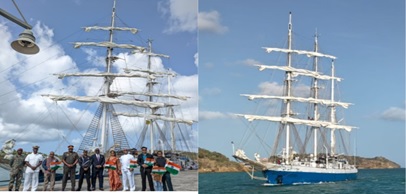
  • Indian Navy ship INS Sudarshini reached Antigua under the Lokayan 26 expedition after crossing the Atlantic Ocean.

Related Facts:

  • Historic Achievement: INS Sudarshini successfully crossed the Atlantic Ocean by completing a challenging 19-day voyage from Cape Verde to Antigua. This was the most difficult phase of the journey so far.
  • Distance and Voyage: The expedition is part of a 22,000 nautical mile transoceanic journey that began from Kochi on 20 January 2026. The ship has already covered more than 10,000 nautical miles.
  • Earlier Expedition: INS Tarangini had previously completed this voyage in 2007.
  • The journey reflects the Indian Navy’s continued commitment towards maritime cooperation and the spirit of “Vasudhaiva Kutumbakam”.

Indian Navy:

  • Established: 26 January 1950
  • Navy Day: 4 December
  • Motto: “Sham No Varunah”
  • Chief: Admiral Dinesh K Tripathi

Naval Commands:

  • Western Naval Command – Mumbai
  • Southern Naval Command – Kochi
  • Eastern Naval Command – Visakhapatnam

Important Days

'World Digestive Health Day'

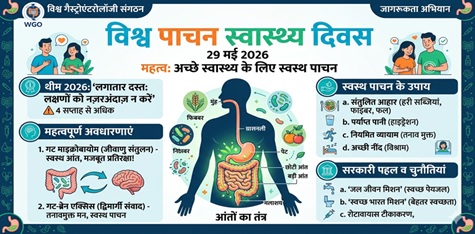
  • 'World Digestive Health Day' is observed annually on May 29th with the aim of raising awareness regarding digestive disorders and their management.

Related Facts:

  • Organizer: This day is organized by the World Gastroenterology Organisation (WGO) in collaboration with the WGO Foundation (WGOF).
  • Inception: It was initiated in the year 2004 on the occasion of the 45th anniversary of the WGO's establishment.
  • This Year's Theme: "Persistent Diarrhea: Don't Ignore the Symptoms"

Environmental News

Discovery of the Evergreen Tree Species *Humboldtia nairiana*
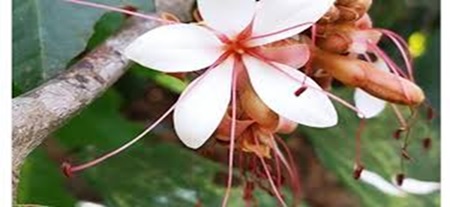
  • Researchers have discovered a new evergreen tree species, *Humboldtia nairiana*, in the riparian forests of the Shendurney Wildlife Sanctuary in Kerala.

Key Facts:

  • What was discovered? : A new evergreen tree species.
  • Who made the discovery? : Researchers from JNTBGRI (Jawaharlal Nehru Tropical Botanic Garden and Research Institute).
  • Where was it found? : In the riparian forests of the Shendurney Wildlife Sanctuary, Kerala.
  • Biosphere Reserve Region: This area is part of the Agasthyamalai Biosphere Reserve.
  • Endemism: This tree is found exclusively in Kerala and occurs at an elevation of approximately 300 meters above sea level.
  • Reason for Naming: It has been named in honor of plant biotechnologist Prof. G.M. Nair (former Director of JNTBGRI).
  • Plant Family: It belongs to the Legume / Fabaceae family.
  • Physical Structure and Characteristics: It is a medium-sized tree that grows to a height of 5 to 8 meters.


Latest Courses