National News
Largest Biomedical and Technology Transfer Facilitation Programme in India
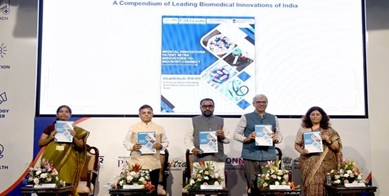
- The Indian Council of Medical Research (ICMR) organized India’s largest biomedical and technology transfer facilitation programme, “Medical Innovation Patent Mitra: Innovators-to-Industry (I2I) Connect,” at the Manekshaw Centre in New Delhi.
Related Facts:
- Transfer of 41 Public Health Technologies: Various ICMR institutes and innovators transferred a total of 41 technologies to private industry partners for medical manufacturing and commercialization. This included 39 technology transfer deals and 2 material transfer agreements.
- First Historic Transfer of Biomaterials: For the first time in India, biological materials of inactivated Kyasanur Forest Disease (KFD - Monkey Fever) virus and Chandipura virus were handed over to industry partners to strengthen research and vaccine manufacturing.
- Release of Report and Compendium: On this occasion, the “Indian Biomedical Patent Landscape Report” and a “Technology Compendium” covering more than 100 deep-tech health innovations were released.
Medical Innovation Patent Mitra: Innovators-to-Industry (I2I) Connect:
- It is India’s largest biomedical innovation and technology transfer platform launched by the Indian Council of Medical Research (ICMR).
- The initiative aims to bridge the gap between scientific research and commercial manufacturing in the country’s healthcare sector.
|
Agreement Between India and the US
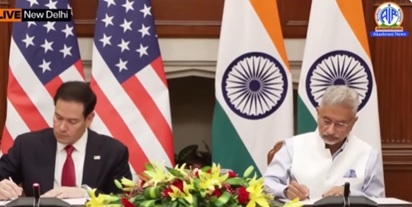
- During the 11th Quad Foreign Ministers' Meeting, India and the United States finalized a bilateral agreement aimed at ensuring a stable supply of critical minerals.
- The primary objective of this agreement is to ensure the mining, processing, and secure supply of Critical Minerals and Rare Earth Elements.
Key Facts:
- Official Name: This bilateral agreement is officially titled "Security of Supply in Critical Minerals and Rare Earth Elements Mining and Processing."
- Multilateral Engagement: Alongside this bilateral agreement, the four Quad nations (India, the US, Australia, and Japan) also signed the 'Quad Critical Minerals Initiative Framework,' under which $20 billion in investment will be mobilized to strengthen global supply chains.
- Areas of Cooperation: These include mineral mining, processing, recycling (from e-waste), joint investment, and project funding.
- Background: This agreement represents the next phase following India's signing of the US-led 'Pax Silica' initiative on February 20, 2026, and the commencement of negotiations between the two nations in 2025.
|
The Right to Safe Travel on National Highways
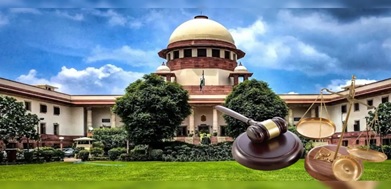
- Delivering a landmark verdict in the case *In Re: Phalodi Accident vs. National Highways Authority of India (NHAI) and Others (2025)*, the Supreme Court exercised its extraordinary powers under Article 142 of the Constitution and declared the 'Right to Safe Travel on National Highways' to be an integral part of Article 21 (the Right to Life).
Relevant Facts:
- Suo Motu Cognizance: The Court issued these directives by taking *suo motu* (on its own motion) cognizance of two horrific road accidents that occurred in Rajasthan and Telangana in November 2025 (in which 34 people lost their lives).
- Alarming Statistics: National Highways (NH) constitute only 2% of India's total road network, yet they account for approximately 30% of all road accident fatalities in the country.
Article 142 — Extraordinary Powers of the Supreme Court:
- "Complete Justice": Article 142(1) grants the Supreme Court the special power to pass any order or decree necessary to render "complete justice" in any matter pending before it.
- Special Note: This power vests exclusively with the Supreme Court (SC); High Courts do not possess residual powers akin to those under Article 142 (High Courts operate under Article 226).
Article 21 — Right to Life and Personal Liberty:
- What was added? The Court held that maintaining safe and motorable roads is not merely an administrative function of the State, but a constitutional obligation.
- Expansion of the Right: The scope of Article 21 is not limited solely to the 'right to survive'; rather, it encompasses the right to safe movement with dignity and protection against preventable hazards.
|
PM-WANI Scheme

- The Department of Telecommunications (DoT) has introduced citizen-friendly updates to the PM-WANI scheme to make public internet more accessible.
Key Highlights:
- QR-code-based authentication for laptops and other devices
- Introduction of flexible short-term Wi-Fi plans with durations of 15, 30, and 60 minutes
- Standardization of PM-WANI hotspot names (SSIDs) for easier identification and enhanced reliability
PM-WANI Scheme:
- Full Name: Prime Minister Wi-Fi Access Network Interface (PM-WANI)
- Ministry/Department: It is administered by the Department of Telecommunications (DoT) under the Ministry of Communications.
- Launch: It was approved by the Union Cabinet in December 2020. The initial recommendation for this scheme was first made by the Telecom Regulatory Authority of India (TRAI) in 2017.
- Primary Objective: To strengthen digital communication infrastructure in the country's rural, remote, and underserved areas, and to provide high-speed internet at affordable rates.
|
Recommendation of the Supreme Court Collegium
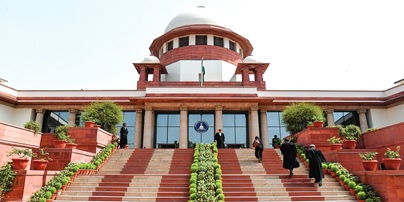
- The Supreme Court Collegium has recommended the elevation of four High Court Chief Justices and senior advocate V. Mohana as judges of the Supreme Court of India.
Related Facts:
|
List of Recommended Judges:
- Justice Sheel Nagu – Chief Justice, Punjab & Haryana High Court
- Justice Sri Chandrashekhar – Chief Justice, Bombay High Court
- Justice Sanjeev Sachdeva – Chief Justice, Madhya Pradesh High Court
- Justice Arun Palli – Chief Justice, Jammu & Kashmir and Ladakh High Court
- Senior Advocate V. Mohana – Senior advocate of the Supreme Court (if approved by the Centre, she will become the second woman lawyer to be directly elevated from the Bar to the Supreme Court).
- Current Status: At present, the Supreme Court has 32 judges, including the Chief Justice of India (CJI), Justice Surya Kant.
- Approved Strength of the Supreme Court: Through an ordinance issued in May 2026, the sanctioned strength of the Supreme Court has been increased from 34 to 38 judges, including the CJI.
- Gender Representation: Currently, there is only one woman judge in the Supreme Court, Justice B.V. Nagarathna. The appointment of V. Mohana would strengthen gender diversity in the judiciary.
Collegium System:
- Structure: The Supreme Court Collegium is headed by the Chief Justice of India (CJI) and comprises the four senior-most judges of the Supreme Court.
Evolution:
- First Judges Case (1981): The Court held that “consultation” with the CJI in judicial appointments did not mean “concurrence.”
- Second Judges Case (1993): The Court reversed its earlier judgment, interpreted “consultation” as “concurrence,” and introduced the Collegium system (CJI + 2 senior-most judges).
- Third Judges Case (1998): On a Presidential Reference under Article 143, the Court expanded the Collegium into a five-member body (CJI + 4 senior-most judges).
Constitutional Provisions:
- Article 124(2): The President of India appoints judges of the Supreme Court after consulting such judges of the Supreme Court and High Courts as deemed necessary.
Eligibility for Appointment (Article 124(3)):
- Be a citizen of India
- Have served for at least 5 years as a judge of a High Court or two or more High Courts in succession; or
- Have practiced as an advocate in a High Court for at least 10 years; or
- Be, in the opinion of the President, a distinguished jurist.
Tenure and Limits:
- Minimum Age: No minimum age is prescribed for appointment as a Supreme Court judge.
- Maximum Age: A judge can hold office until attaining the age of 65 years.
- Oath: Before entering office, judges take an oath under the Third Schedule before the President or a person appointed by him.
|
International News
China-Pakistan Economic Corridor (CPEC 2.0)
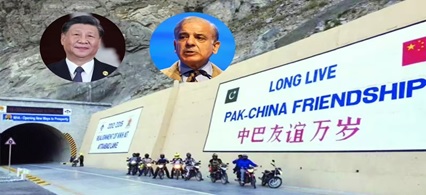
- China and Pakistan have reached a “new broad consensus” to accelerate the next phase of development of the China-Pakistan Economic Corridor (CPEC 2.0) and develop Gwadar Port as a regional connectivity hub.
China-Pakistan Economic Corridor (CPEC):
- It is a flagship project of China’s ambitious Belt and Road Initiative (BRI), connecting China’s Xinjiang region with Pakistan’s Gwadar Port.
- Project Type: A bilateral infrastructure and trade corridor of about 3,000 km.
- Launch: Officially launched in 2015.
- Origin: Xinjiang (Kashgar), northwestern autonomous region of China.
- Entry Point: Enters Pakistan through Pakistan-occupied Kashmir (PoK – Gilgit-Baltistan) via the Karakoram Highway.
- Final Destination: Strategically important Gwadar Port in Pakistan’s Balochistan province.
Pakistan:
- Official Name: Islamic Republic of Pakistan
- Capital: Islamabad (Financial Centre: Karachi)
- Geo-Strategic Boundaries: Pakistan is located in South Asia and shares borders with India in the east, Afghanistan and Iran in the west, and China in the northeast.
Border Lines with Major Countries:
- India: Radcliffe Line / Line of Control (LoC); demarcated in 1947 / 1972; length about 3,323 km.
- Afghanistan: Durand Line; demarcated in 1893; length about 2,640 km.
- Iran: Goldsmid Line; demarcated in 1871; length about 909 km.
- China: Sino-Pak Border; demarcated in 1963; length about 599 km.
China:
- Official Name: People’s Republic of China (PRC)
- Capital: Beijing (Financial Centre: Shanghai)
- Governance System: A one-party socialist state led by the Communist Party of China (CPC)
Geo-Strategic Boundaries:
- China, located in East Asia, shares land borders with 14 countries, the highest in the world, including India, Russia, Mongolia, and Vietnam.
- India and China share a 3,488 km-long border, mainly divided into three sectors.
- McMahon Line: Boundary determined under the 1914 Shimla Agreement in the eastern sector (Arunachal Pradesh). China does not fully recognize it.
- Line of Actual Control (LAC): The temporary military boundary between India and China touching Ladakh, Uttarakhand, Himachal Pradesh, Sikkim, and Arunachal Pradesh.
|
Environment News
Saudi Arabia Becomes the 26th Member of the IBCA

- Saudi Arabia has become the newest member of the International Big Cat Alliance (IBCA).
Key Facts:
- Membership Status: Saudi Arabia has become the 26th official member country of this alliance.
- Regional Significance: Saudi Arabia is the first country from the Arabian Peninsula to join this alliance, a move that will bolster wildlife conservation efforts in West Asia.
- Eligible Countries: A total of 95 'Big Cat Range' countries worldwide—regions where these species are found naturally—fall within the scope of this alliance.
International Big Cat Alliance (IBCA):
- It is a global inter-governmental alliance formed under the leadership of India for the conservation of seven major big cat species.
- Prime Minister Narendra Modi announced the initiative on April 9, 2023, on the occasion of the 50th anniversary of Project Tiger.
- The alliance was officially established as a treaty-based international legal entity in January 2025. Headquarters: New Delhi, India
- Nodal Agency: National Tiger Conservation Authority (NTCA) under the Ministry of Environment, Forest and Climate Change (MoEFCC), Government of India.
- Financial Assistance: The Government of India has approved budgetary support of ₹150 crore for its initial five years (2023-24 to 2027-28).
- When India proposed this international alliance on the global stage, it committed—as the "Anchor Country"—to endeavor to provide total financial/grant assistance amounting to US$ 100 million (approximately ₹830+ crore) to support the alliance's various global campaigns and initiatives over the first five years.
- Focus Species (The 7 Big Cats): Tiger, Lion, Leopard, Snow Leopard, Cheetah, Jaguar, and Puma.
- India serves as the natural or rehabilitated habitat for five of these seven species (Tiger, Lion, Leopard, Snow Leopard, and Cheetah). Jaguars and Pumas are not found naturally in India. Saudi Arabia intends to utilize this platform for the conservation of the critically endangered 'Arabian Leopard'.
|
Bihar and West Bengal at the Center of Rising Pollution Caused by Biomass Burning
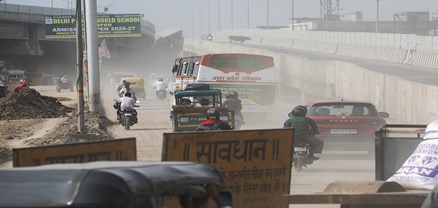
- A 25-year satellite-based study (2000–2024) conducted by researchers at the Kolkata-based Bose Institute has identified Bihar and West Bengal as the largest and consistently expanding major hotspots for aerosol and particulate pollution in Eastern India.
Key Findings of the Study:
- Increase of Over 20%: Between the years 2000 and 2024, an increase of over 20% in particulate pollution was recorded across the Indo-Gangetic Plain (IGP), the Himalayan region, and North-Eastern India.
- Expansion of Hotspots: During the period 2000–2009, air pollution was primarily confined to parts of Bihar, Uttar Pradesh, and Northern West Bengal. However, by 2020–2024, these hotspots had expanded to engulf the entirety of Bihar and West Bengal (as well as parts of Bangladesh and Assam).
- Uttar Pradesh: An Exception: Within this entire polluted belt, Uttar Pradesh remains the only state where a decline in carbon pollution levels has been observed in recent years.
- Primary Cause of Pollution: Biomass combustion (burning of wood/cow-dung cakes and crop stubble in rural areas).
- Affected Sensitive Regions: The Sundarbans and the Eastern Himalayas.
|
Reports and Indices
Report: "Impact of Anti-Dumping Duties in India"
- The 'Centre for Domestic Economy Policy Research' (C-DEP) and the 'Centre for WTO Studies' (CWS) have jointly released a report titled "Impact of Anti-Dumping Duties in India."
- The report states that India's domestic industry has suffered significant economic losses due to the non-implementation of recommended anti-dumping duties.
- This report underscores the critical role of trade remedies in safeguarding the country's domestic manufacturing sector and fiscal health.
Key Findings:
- Economic Loss: Domestic industries are incurring an annual loss of ₹11,938 crore due to the failure to timely implement Anti-Dumping Duties (ADD) on 56 products recommended by the Directorate General of Trade Remedies (DGTR).
- Foreign Exchange Savings: Had these recommended duties been fully implemented, it could have resulted in annual foreign exchange savings of US$ 3 billion (approximately ₹28,540 crore).
- Dependence: Delays in imposing duties have led to an increase in the 'dumping' of imported goods—particularly from China and Vietnam—thereby impacting India's self-reliance.
'Centre for Domestic Economy Policy Research' (C-DEP):
- An independent think-tank and research institute dedicated to making Indian domestic industries globally competitive and formulating progressive policies conducive to their growth.
Anti-Dumping Duties:
- A protective customs duty (tariff) imposed by the government on the import of foreign goods that are being 'dumped' (sold) in the domestic market at a price lower than their fair market value or production cost. Its primary objective is to protect domestic industries from the unfair trade practices of foreign exporters and to restore fair competition within the market.
World Trade Organization (WTO):
- Establishment: January 1, 1995
- Headquarters: Geneva, Switzerland
- Basis of Formation: Uruguay Round Negotiations
- Predecessor Organization: GATT (General Agreement on Tariffs and Trade)
|
Economy and Banking
Launch of the World’s Largest Single-Location Battery Storage System Outside China
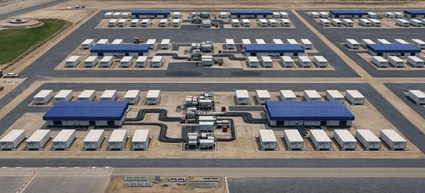
- Adani Green Energy Limited (AGEL) has started commercial operations of a Battery Energy Storage System (BESS) with a cumulative capacity of 3.37 GWh at Khavda in Gujarat.
Related Facts:
- Record-Breaking Speed: The project was commissioned within just 10 months of the start of on-site construction.
- Cumulative Capacity: 3.37 GWh.
- Technology: The system integrates lithium-ion battery technology with advanced Energy Management Systems (EMS) to maximize grid responsiveness and efficiency.
- Strategic Importance: The system is part of the world’s largest 30 GW renewable energy park under development at Khavda, where AGEL has already operationalized 9.9 GW capacity.
- Future Targets: AGEL aims to add more than 10 GWh battery storage capacity by FY2027 and over 50 GWh in the next five years.
Battery Energy Storage System (BESS):
- Traditional Solid Rechargeable Batteries: In these systems, energy is stored within solid metal electrodes. Examples include lead-acid batteries, lithium-ion batteries, zinc-air batteries, etc.
- Flow Batteries: In these systems, energy is stored within flowing liquid electrolytes housed in separate tanks. Examples include vanadium redox flow batteries, zinc-iron flow batteries, zinc-bromine batteries, etc.
Key Policy Initiatives of the Government of India:
- National Framework for Energy Storage Systems (2023): Its objective is to accelerate the development of the ecosystem for energy storage systems within the country.
- Viability Gap Funding (VGF) Scheme: The government is providing financial assistance (VGF) for the development of Battery Energy Storage System (BESS) projects with a capacity of 4,000 MWh by 2030–31.
- PLI Scheme for ACC Battery Storage: A Production-Linked Incentive (PLI) scheme aimed at promoting the domestic manufacturing of Advanced Chemistry Cells (ACC) and reducing import dependence (particularly on China).
- Electricity Rules Amendment (2022): Under this amendment, Energy Storage Systems (ESS) have been declared an essential and integral part of the electricity system.
|
Taiwan: The World's 5th Largest Stock Market
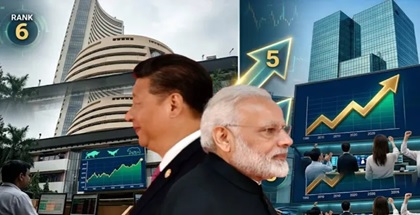
- In global stock market rankings, Taiwan has surpassed India to become the world's 5th largest stock market.
- According to the latest data released by Bloomberg, Taiwan's total market capitalization reached $4.95 trillion—outstripping India's valuation of $4.92 trillion—driven by a massive surge in global demand for Artificial Intelligence (AI) and semiconductor chips.
- Consequently, India has now slipped to the 6th position on this global list.
Related Facts:
- Current Global Stock Market Rankings (based on Market Cap): United States (US), Mainland China, Japan, Hong Kong, Taiwan, India.
Indian Stock Market:
- Bombay Stock Exchange (BSE): This is Asia's oldest stock exchange (established in 1875). Its benchmark index is the SENSEX, which comprises the country's 30 largest and most financially robust companies.
- National Stock Exchange (NSE): This is India's largest, most modern, and fully automated exchange. Its benchmark index is the NIFTY 50, which tracks the performance of the top 50 companies across 12 different sectors.
- Regulatory Body: The Securities and Exchange Board of India (SEBI) regulates and safeguards the interests of the entire Indian stock market, including brokers, depositories, and investors.
|
Art and Culture
Sacred Relics from the UNESCO World Heritage Site, Sanchi Stupa
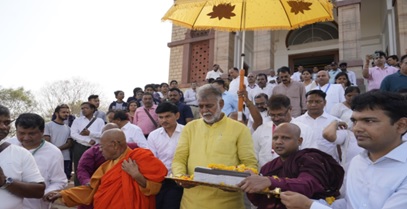
- The sacred relics (bone caskets) of Lord Buddha's two most prominent disciples—Arhant Sariputra and Arhant Mahamoggallana—from the UNESCO World Heritage Site of Sanchi Stupa have been sent to Mongolia for a special 10-day religious exhibition.
- This exhibition is being held at the renowned Gandan Tegchenling Monastery in Ulaanbaatar, the capital of Mongolia.
Sanchi Stupa:
- Location: It is situated atop a hill on the banks of the Betwa River in the Raisen district of Madhya Pradesh.
- Builder: Its original construction was commissioned by the Mauryan Emperor Ashoka in the 3rd century BCE.
- Rediscovery of Sanchi Stupa: When British officer Henry Taylor discovered it in 1818, it was in a completely ruined state.
- Alexander Cunningham led the first formal survey and excavation at Sanchi in 1851.
Architecture:
- Anda: This is the main hemispherical mound of the stupa, symbolizing the dome of heaven enclosing the earth.
- Harmika: A square railing situated at the apex of the dome, considered to be the abode of the gods.
- Yasti: A central mast or pillar rising from the center of the Harmika, symbolizing the Cosmic Axis.
- Chatra: Three umbrellas positioned on the Yasti, representing the Buddha, Dhamma, and Sangha (the Three Jewels or *Triratna*), or the various celestial realms.
- Pradakshinapatha (Ambulatory Way): A circumambulatory path built around the stupa for devotees. Sanchi features both a lower and an upper Pradakshinapatha, which is a unique characteristic of the site.
- Vedica: This is a stone railing (fence) that separates the sacred precinct from the outside world. Torana: These are magnificent, intricately carved gateways situated in the four cardinal directions (North, South, East, and West), upon which Jataka tales have been carved.
|
Raja Randhir Singh
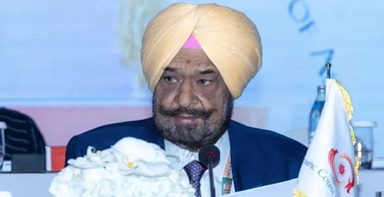
- Marksman and sports administrator Raja Randhir Singh passed away at the age of 79.
- An Asian Games gold medalist and former Arjuna Award recipient, Mr. Singh represented India at the Olympics five times during his illustrious career.
- In addition to serving as the former Secretary General of the Indian Olympic Association, he held several key positions in both Indian and international sports administration.
Veer Savarkar's Birth Anniversary
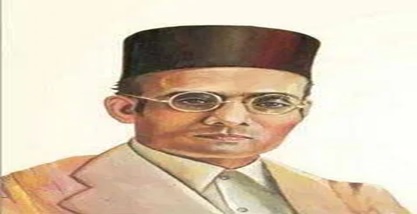
- The birth anniversary of Veer Savarkar (Vinayak Damodar Savarkar) is celebrated annually on May 28th.
- He was born on May 28, 1883, in the village of Bhagur in the Nashik district of Maharashtra.
Veer Savarkar:
- He is also known by the title 'Swatantryaveer' (Freedom Fighter) Savarkar.
- He was a freedom fighter, politician, lawyer, writer, and social reformer.
- Establishment of 'Mitra Mela': Founded in 1899; in 1904, its name was changed to the 'Abhinav Bharat Society'.
- Establishment of the 'Free India Society': Founded in 1906 in London.
- He advocated for guerrilla warfare, was allegedly involved in the manufacture of handmade bombs, and provided legal assistance to Madan Lal Dhingra.
- Literary Contributions: He authored the famous book The Indian War of Independence 1857 (1857 ka Bharatiya Swatantrata Samar), which the British government banned even before its publication. Additionally, in 1923, he penned the influential work titled Hindutva: Who Is a Hindu?
- In 1909, he was arrested on charges of conspiring to launch an armed rebellion against the Morley-Minto Reforms (Indian Councils Act 1909). He was subsequently extradited, sentenced to life imprisonment, and sent to the Cellular Jail (also known as 'Kala Pani'), located in the Andaman and Nicobar Islands.
- Later, he was kept under house arrest in Ratnagiri until 1937.
- Following his release, Savarkar served as the President of the Hindu Mahasabha (1937–1943) and opposed the Quit India Movement (1942).
- In 1964—feeling that his mission had been accomplished following India's independence—Savarkar began a hunger strike on February 1st; he passed away on February 26, 1966.
|


 Don't Have an Account?