National News
First ITBP All-Women Team Conquers Mount Everest
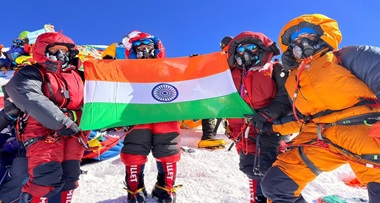
- The first all-women team of the Indo-Tibetan Border Police (ITBP) successfully completed the ascent of the world's highest peak, Mount Everest (8,848.86 meters), on May 21, 2026.
Key Facts:
- The 14-member team comprised 11 female mountaineers along with three technical and support staff members.
- The team conquered the world's highest peak on May 21, approaching from the Nepal side via the South Col route.
- The expedition was flagged off from the Force's headquarters on April 19.
- As part of the "Clean Himalaya – Save Glaciers" campaign, the team also conducted environmental awareness activities and collected non-biodegradable waste from the Everest region.
- With this achievement, the Force has now completed a total of 232 mountaineering expeditions to date.
- These include five successful ascents of Mount Everest.
- The Force has also successfully climbed six of the world's peaks exceeding 8,000 meters in height, including Everest, Kanchenjunga, Makalu, Lhotse, Dhaulagiri, and Manaslu.
Indo-Tibetan Border Police (ITBP)
- Establishment: October 24, 1962 (following the Chinese aggression)
- Control: Union Ministry of Home Affairs (MHA)
- Primary Mandate: To secure the 3,488 km long India-China border, extending from the Karakoram Pass in Ladakh to Jechap La in Arunachal Pradesh.
- Other Roles: Disaster management, rescue operations, and VIP security in the Himalayan regions.
- Motto: "Shaurya – Dridhata – Karma Nishtha" (Valour – Steadfastness – Devotion to Duty)
- Headquarters: New Delhi
Mount Everest
- It is the world's highest mountain peak, with a current official elevation of 8,848.86 meters (29,031.7 feet). It is situated within the Mahalangur Himal sub-range of the Great Himalayan mountain range, and the international border between Nepal and China (Tibet Autonomous Region) passes directly through its summit.
- Geographical Coordinates: It is located in the southern part of the Asian continent at 27°59′ North latitude and 86°56′ East longitude.
- In Nepal: It is known as Sagarmatha, meaning "Head of the Sky" or "Goddess of the Sky."
- In Tibet (China): It is called *Qomolangma*, meaning "Holy Mother of the World."
- Modern Name: Formerly, it was known as 'Peak XV'. In 1865, it was renamed 'Mount Everest' in honor of Sir George Everest, the former Surveyor General of India.
- Announcement of New Height: In 2020, Nepal and China jointly completed a survey and declared its revised height to be 8,848.86 meters—86 centimeters higher than the previous measurement.
- First Successful Ascent: On May 29, 1953, Edmund Hillary of New Zealand and Sherpa Tenzing Norgay of Nepal became the first individuals to set foot on its summit.
- First Woman: Japanese mountaineer Junko Tabei became the first woman in the world to conquer Everest in 1975.
- First Indian: Avtar Singh Cheema was the first Indian man to climb Everest, achieving this feat in 1965.
- First Indian Woman: Bachendri Pal achieved this distinction in 1984 by hoisting the Indian tricolor on Everest.
- Most Ascents: Kami Rita Sherpa, a renowned guide from Nepal, holds the remarkable world record for the highest number of ascents of Everest (more than 25 times).
|
BSF's First All-Women Everest Expedition

- The Border Security Force (BSF)'s first all-women mountaineering team successfully scaled the world's highest peak, Mount Everest, on May 21, 2026, under 'Mission Vande Mataram'.
Key Facts:
- Mission Vande Mataram: This expedition was organized to commemorate the BSF's Diamond Jubilee year and the 150th anniversary of India's national song, 'Vande Mataram'.
- Ecological Message: Under the "Clean Himalayas – Clean Glaciers" initiative, the expedition team also collected waste (litter) from the high camps on Everest and ensured its eco-friendly disposal.
Border Security Force (BSF)
- Date of Establishment: December 1, 1965 (established to strengthen border security following the 1965 India-Pakistan War).
- Headquarters: New Delhi.
- Ministry: It functions under the Ministry of Home Affairs (MHA).
- Motto: "Jeevan Paryant Kartavya" (Duty Unto Death).
- Identity: It is referred to as India's "First Line of Defence."
- Primary Responsibility: To guard India's international borders, specifically to prevent infiltration and smuggling along the India-Pakistan and India-Bangladesh borders.
|
Agreement between the Department of Posts and Flipkart India Private Limited
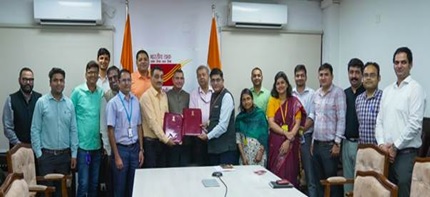
- With the objective of boosting India's e-commerce logistics ecosystem and strengthening last-mile parcel delivery across the country, the Department of Posts and Flipkart India Private Limited have signed an agreement.
- This collaboration serves as an excellent example of a Public-Private Partnership (PPP), which will address the foundational needs of India's burgeoning digital economy.
Key Facts:
|
India Post :
- First Postal System: The postal system was first introduced in India by Lord Clive in 1766.
- First Official Post Office: Warren Hastings established the first General Post Office in Kolkata (Calcutta) in 1774.
- Modern Postal Department (Establishment): The modern Indian Postal Department was established on October 1, 1854, during the tenure of Lord Dalhousie, following the enactment of the Post Office Act.
- First Postage Stamp: India's first postage stamp was officially issued in 1854.
- First Airmail Service: In 1911, the world's first official airmail service was launched between Allahabad and Naini.
- PIN Code System: This system was introduced on August 15, 1972, through the efforts of Shriram Bhikaji Velankar. There are a total of 9 PIN Code zones in India (8 regional zones and 1 for the Army).
- Speed Post: The Speed Post service was introduced in 1986 to facilitate expedited mail delivery. Money Order Service: The Money Order service was introduced by the Department of Posts in 1880 (which has now been transformed into the Electronic Money Order service).
- Ministry: The Department of Posts, India, operates under the Ministry of Communications.
- Headquarters: Its headquarters is located at Dak Bhawan, New Delhi.
- India Post Payments Bank (IPPB): It was launched on September 1, 2018, with the aim of extending banking services to every village.
- World Post Day: Celebrated annually on October 9 (commemorating the establishment of the Universal Postal Union).
- National Postal Day: Celebrated annually in India on October 10.
- World's Largest Network: The Indian Postal Service constitutes the world's largest postal network.
- World's Highest Post Office: The world's highest post office is situated in Hikkim, Himachal Pradesh (Altitude: 14,567 feet).
- The Only Floating Post Office: India's sole floating post office is located on Dal Lake in Srinagar.
- 'Father of the Modern Indian Postal System': Lord Dalhousie is regarded as the father of the modern Indian postal system.
Flipkart :
- It is one of India's largest and most popular e-commerce companies.
- Inception: 2007
- Founders: Sachin Bansal and Binny Bansal
- Headquarters: Bengaluru, Karnataka
- Ownership: In 2018, the American retail giant Walmart acquired a majority stake (approximately 77%) in Flipkart.
|
Agreement to Establish a Joint Force
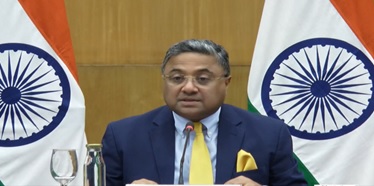
- India and Cyprus have agreed to establish a joint force to combat terrorism.
Joint Working Group (JWG) on Counter-Terrorism:
- Institutional Framework: This Joint Working Group will provide a structured basis for addressing radicalization and cross-border security challenges.
- Intelligence Sharing: Real-time sharing of intelligence between the two nations.
- Capacity Building: Focusing on joint training and capacity building to enhance the operational capabilities of security forces.
- Zero Tolerance and Condemnation of Cross-Border Terrorism: Both nations have adopted a stance of 'zero tolerance' against terrorism and have strongly condemned the recent terrorist attacks in Pahalgam, Jammu and Kashmir.
- Gateway to the European Union (EU): Cyprus has been a member of the European Union since 2004 and currently holds the Presidency of the Council of the European Union. The strengthening of India-Cyprus relations is expected to accelerate the India-EU Free Trade Agreement (FTA).
- Defense Cooperation Roadmap (2026–2031): Establishment of military-industrial cooperation and a cybersecurity dialogue for the next five years. Cyprus has also expressed its interest in procuring drones and missiles from India.
- The year 2027 will mark the completion of 65 years of diplomatic relations between the two nations.
|
Government to Launch 'Smart Border Project'
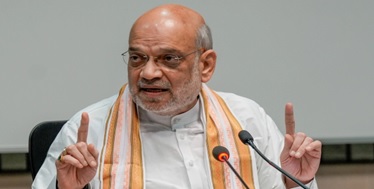
- Addressing the Border Security Force (BSF) Investiture Ceremony and the Rustamji Memorial Lecture, Union Home Minister Amit Shah announced that the government will launch a state-of-the-art 'Smart Border Project' to render the approximately 6,000-kilometer-long borders shared with Pakistan and Bangladesh impregnable.
- This project will be formally implemented during the BSF's 60th Raising Year.
|
Bangladesh:
- Currency: Bangladeshi Taka
- President: Mohammed Shahabuddin
- Capital: Dhaka
- Independence Day: March 26, 1971 (Independence from Pakistan)
- National Anthem: *Amar Shonar Bangla* – Composed by Rabindranath Tagore
- Major Rivers: Ganges (Padma), Brahmaputra (Jamuna), Meghna
Pakistan:
- Capital: Islamabad (Prior to 1967, Karachi was the capital).
- Official Name: Islamic Republic of Pakistan.
- National Languages: Urdu and English.
- Currency: Pakistani Rupee (PKR).
- Name of Parliament: Majlis-e-Shoora. It consists of two houses: the National Assembly (Lower House) and the Senate (Upper House).
- Who Coined the Name 'Pakistan'?: Choudhry Rahmat Ali (in the 1933 pamphlet 'Now or Never').
- India-Pakistan Border Line: Radcliffe Line, demarcated on August 17, 1947, by Sir Cyril Radcliffe.
- Indian States Sharing a Border with Pakistan: 3 States (Rajasthan, Gujarat, Punjab) and 2 Union Territories (Jammu & Kashmir, Ladakh).
|
PM-Surya Ghar: Free Electricity Scheme
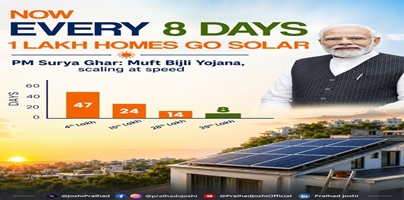
- According to the Minister of New and Renewable Energy, Pralhad Joshi, one lakh new households in India have joined the 'PM-Surya Ghar: Free Electricity Scheme' in just eight days.
PM-Surya Ghar: Free Electricity Scheme:
- Launch Date: February 15, 2024
- Nodal Ministry: Ministry of New and Renewable Energy (MNRE)
- Objective: To provide up to 300 units of free electricity per month
- Target: To cover 1 crore households by March 2027
- Subsidy Structure: Up to 40% of the installation cost of rooftop solar systems is covered
- Significance: This initiative aligns with India's climate goals of reducing carbon emissions and promoting renewable energy
|
Ayushman Bharat Digital Mission
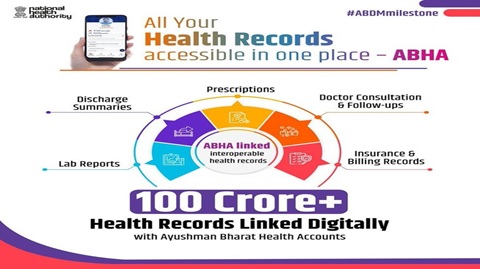
- Under the Ayushman Bharat Digital Mission, more than 100 crore health records have been successfully linked to Ayushman Bharat Health Accounts.
- The number of health records has surged from 50 crore in February of last year to over 100 crore in just 15 months.
- Uttar Pradesh has emerged as the frontrunner with over 15 crore ABHA-linked health records, followed by Andhra Pradesh in second place with approximately 12 crore linked records.
Ayushman Bharat Digital Mission (ABDM)
- Launch: Initiated in September 2021 as a Central Sector Scheme under the Ministry of Health and Family Welfare.
- Implementing Agency: National Health Authority (NHA).
- Key Objective: To build an integrated, secure, and accessible digital health infrastructure (Digital Public Infrastructure) within the country.
Key Digital Components of ABDM:
- ABHA (Ayushman Bharat Health Account): A unique 14-digit digital health identification number for every citizen, which digitally stores health records.
- Healthcare Professionals Registry (HPR): A central database of all certified doctors and nurses across modern and traditional systems (AYUSH).
- Health Facility Registry (HFR): An integrated directory of all government and private hospitals, clinics, and laboratories across the country.
- Unified Health Interface (UHI): An open network that facilitates tele-consultations, appointment bookings, and other digital services.
- Health Information Exchange and Consent Manager (HIE-CM): A system for securely sharing data between different hospitals based on the patient's consent.
|
Awards and Honors
'United Nations Military Gender Advocate of the Year Award 2025'

- Indian Army officer Major Abhilasha Barak has been selected for the 'United Nations Military Gender Advocate of the Year Award 2025'.
Related Facts:
- Indian Army officer Major Abhilasha Barak has been selected for the 'United Nations Military Gender Advocate of the Year Award 2025'.
- Major Barak is currently serving with the Indian Battalion in the United Nations Interim Force in Lebanon (UNIFIL) as the Commander of the Women's Engagement Team.
- Major Barak is also the Indian Army's first female combat helicopter pilot.
- Major Barak has become the third Indian peacekeeper to receive this award.
- Previously, Major Suman Gawani received this award in 2019, and Major Radhika Sen received it in 2023.
United Nations Military Gender Advocate of the Year Award :
- Initiation: 2016, by the Office of Military Affairs under the UN Department of Peace Operations (DPO).
- Selection Process: The best military peacekeeper is selected annually from nominations submitted by Force Commanders and Heads of Mission of UN Peacekeeping Operations.
- UN Security Council Resolution 1325 (UNSCR 1325): Adopted in the year 2000.
- India's Leadership: In 2007, India became the first country in the world to deploy an all-female police unit to the United Nations Mission in Liberia (UNMIL).
United Nations Peacekeeping Forces :
- Also known as the 'Blue Helmets' or 'Blue Berets' due to their distinct global identity, they work to maintain peace and security in global conflict zones. Inception: 1948, to monitor the ceasefire during the Arab-Israeli War
- Headquarters/Operations: Administered by the Department of Peace Operations (DPO), located at United Nations Headquarters, New York
- First Mission: UNTSO (UN Truce Supervision Organization)
- Nobel Peace Prize: 1988, for its unique contribution to global peace
|
Economy and Banking
Surplus Transfer of ₹2.86 Lakh Crore to the Central Government
- The Reserve Bank of India (RBI) has approved a surplus transfer of ₹2.86 lakh crore to the Central Government for the financial year 2025-26.
Key Facts:
- This constitutes one of the highest dividend payouts ever made by the Reserve Bank.
- This decision was taken on May 22 during the 623rd meeting of the Bank's Central Board of Directors, chaired by Governor Sanjay Malhotra, held in Mumbai.
- The RBI's gross income for the financial year 2025-26 increased by 26.42% compared to the previous year, while the Bank's expenditure rose by 27.6%.
- Contingent Risk Buffer (CRB): Under the Revised Economic Capital Framework (ECF), the Board decided to maintain the CRB at 6.5% of the RBI's balance sheet. To this end, an amount of ₹1,09,379.64 crore was transferred to the Contingent Risk Buffer.
- Balance Sheet Expansion: As of March 31, 2026, the RBI's balance sheet expanded by 20.61% to reach ₹91,97,121.08 crore.
- Income and Expenditure: In the financial year 2025-26, the RBI's net income—prior to risk provisions—stood at ₹3.95 lakh crore, up from ₹3.13 lakh crore in the previous financial year. A 26.42% increase was recorded in the Bank's gross income compared to the previous year.
- Section 47 of the RBI Act, 1934: This section stipulates that the Central Bank shall transfer the surplus profits remaining after making provisions for bad and doubtful debts, depreciation in assets, and statutory funds, to the Central Government.
- Bimal Jalan Committee (2019): The Revised Economic Capital Framework (ECF) was formulated based on the recommendations of this committee. According to this, the RBI is mandated to maintain 5.5% to 6.5% of its balance sheet as a 'Contingency Risk Buffer' (CRB) to effectively deal with any global or domestic financial crisis.
Reserve Bank of India (RBI):
- Establishment: April 1, 1935 (under the RBI Act, 1934)
- Recommendation: Hilton Young Commission (Royal Commission on Indian Currency and Finance, 1926)
- Nationalization: January 1, 1949 (currently wholly owned by the Government of India – Ministry of Finance)
- Headquarters: Initially Kolkata; permanently shifted to Mumbai in 1937
- First Governor: Sir Osborne Smith
- First Indian Governor: C. D. Deshmukh
|
Decision to Sell 8% Stake
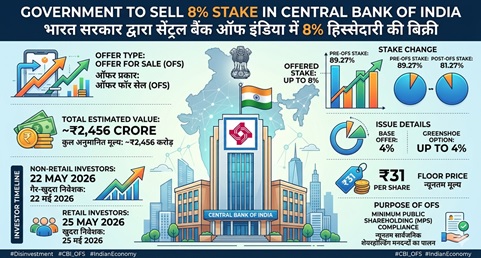
- The Central Government has decided to sell an 8% stake in the Central Bank of India through an Offer for Sale (OFS).
- For this OFS, the government has set a floor price of ₹31 per share, which represents a discount of more than 8.5% compared to the bank's closing price of ₹33.94 on Thursday.
Key Facts:
- Objective: To comply with Minimum Public Shareholding norms and to improve the stock's liquidity.
- Stake and Option: The government was initially selling a 4% equity stake, which has been increased to 8% in view of strong investor demand (4% base + 4% Green Shoe option).
- Floor Price: The floor price (minimum price) for the issue was set by the government at ₹31 per equity share.
- Proceeds: The government is estimated to raise approximately ₹2,455 crore through this OFS.
- Timeline: This share sale has commenced for non-retail investors, while retail investors are also eligible to place bids.
Central Bank of India (CBI):
- A leading public sector commercial bank wholly owned by the Government of India.
- Establishment: Founded on December 21, 1911, by Sir Sorabji Pochkhanawala.
- Ownership: It was the first indigenous bank in India to be wholly owned and managed by Indians.
- Nationalization: It was nationalized under the Banking Companies Act, 1970.
- Headquarters: Mumbai, Maharashtra.
|
Defence News
Another Successful Training Launch of Ballistic Missile ‘Agni-1’
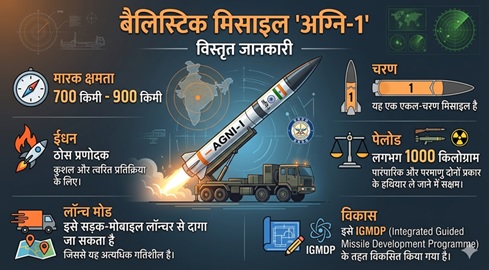
- India has successfully completed another training launch of the short-range ballistic missile ‘Agni-1’ from the Integrated Test Range (ITR) located at Chandipur, Odisha.
Agni-1:
- Type: Short/Medium-Range Ballistic Missile (MRBM)
- Strike Range: 700–900 km
- Payload Capacity: Approximately 1000 kg
- Propulsion: Solid fuel
- Navigation: Advanced electronic and inertial navigation system
- Usage: Capable of carrying both nuclear and conventional payloads
- Deployment: In service with the Strategic Forces Command (SFC)
- Launch Site: Abdul Kalam Island
|
'Suryastra' Rocket System
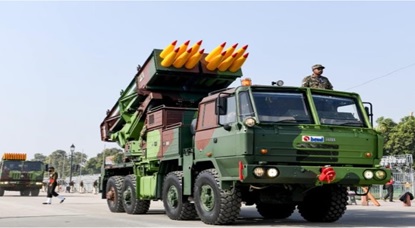
- 'Suryastra' is India's first indigenously developed Universal Multi-Caliber Rocket Launcher System.
- It has been developed by the Pune-based defense company NIBE Limited, with technical assistance (PULS technology) from Israel's Elbit Systems.
Features:
- Successful Trials and Range: Both of its variants (150 km and 300 km) have undergone successful trials at Chandipur (ITR) in Odisha.
- Contract: The Indian Army has signed an emergency procurement contract worth ₹293 crore with NIBE Limited to induct this system into its fleet.
- Key Highlight: It is equipped with "Shoot-and-Scoot" technology, which enables the launcher to relocate immediately after firing the rockets.
|
Launch of ‘Q-Force’
- The Indian Army has launched ‘Q-Force’—an integrated application—with the objective of streamlining logistics and supply management.
Indian Army:
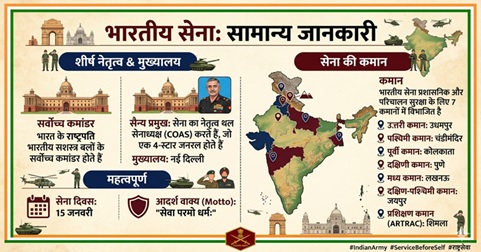
- Supreme Commander: The President of India serves as the Supreme Commander of the Indian Armed Forces.
- Army Chief: The Army is led by the Chief of Army Staff (COAS), who is a 4-star General.
- Headquarters: New Delhi
- Army Day: January 15
- Motto: "Seva Paramo Dharma" (Service Before Self)
- Commands: The Indian Army is divided into 7 Commands for administrative and operational security purposes.
- Northern Command: Udhampur
- Western Command: Chandimandir
- Eastern Command: Kolkata
- Southern Command: Pune
- Central Command: Lucknow
- South-Western Command: Jaipur
- Training Command (ARTRAC): Shimla
|
Launch of ‘The Library Man of India: The Story of P. N. Panicker’
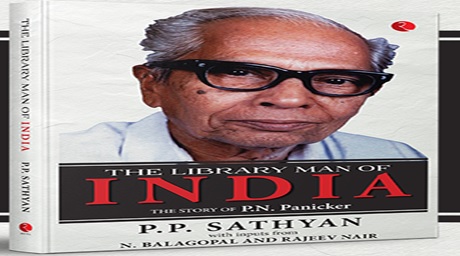
- Vice President C. P. Radhakrishnan released the book ‘The Library Man of India: The Story of P. N. Panicker,’ authored by P. P. Sathyan.
P. N. Panicker:
- Father of Kerala’s Library Movement: P. N. Panicker (1909–1995) is known in Kerala as the ‘Father of Kerala’s Library and Literacy Movement.’
- Kerala Grandhasala Sangham: In 1945, he established this association by bringing together approximately 47 rural libraries; this organization subsequently evolved into a vast network comprising thousands of libraries.
- National Reading Day: In honor of P. N. Panicker, June 19th (his death anniversary) is observed annually in India as ‘National Reading Day.’
|


 Don't Have an Account?