National News
Launch of 'JEEVAN App' and 'SHATAYU Dashboard'
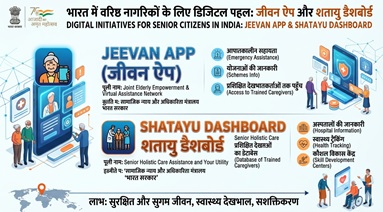
- On May 22, 2026, the Union Ministry of Social Justice and Empowerment officially launched the 'JEEVAN App' (JEEVAN Mobile Application) for the welfare of senior citizens, and the 'SHATAYU Dashboard' for geriatric caregivers.
Key Facts:
|
JEEVAN Mobile App:
- Target Group: Senior citizens of the country (individuals aged 60 years and above).
- Main Objective: To empower the elderly through technology and ensure their easy access to healthcare services, social assistance systems, and welfare schemes.
- Utility: By consolidating various government facilities in a single platform, this app promotes the safety and digital inclusion of the elderly population.
SHATAYU Dashboard:
- Target Group: Geriatric Caregivers (elderly care providers and healthcare professionals).
- Main Objective: To provide centralized data and critical information regarding the workforce involved in elderly care, as well as their expertise.
- Significance: This initiative will assist in institutionalizing the 'Care Economy' and tracking the availability of trained health assistants for the elderly.
|
Notification issued to include Pregabalin under Schedule H1
- The Union Health Ministry has issued a notification under the Drugs Rules, 1945 to include the drug ‘Pregabalin’ under Schedule H1.
- This step has been taken to curb the rising misuse and illegal trafficking of the drug.
Related Facts:
|
What is Pregabalin? :
- Use: It is primarily an anti-convulsant medicine used for the treatment of neuropathic pain (nerve pain), fibromyalgia, chronic pain, and epilepsy (seizures).
- Reason for misuse: Youths are reportedly abusing this drug for its sedative, euphoric, and dissociative effects.
Indian Drug Rules and Act :
- Drugs and Cosmetics Act: This Act was passed in 1940, while the related rules were framed in 1945.
- Introduction of Schedule H1: The Government of India introduced Schedule H1 in 2013 to prevent drug abuse and misuse of antibiotics.
- Record retention period: Medical stores are required to maintain records and doctors’ prescriptions for drugs sold under Schedule H1 for 3 years.
- Identification: Schedule H1 medicines carry a red “Rx” symbol along with a warning printed inside a red box on the label/strip.
Nodal Ministries and Institutions :
- Ministry: Drug regulation and health policies come under the Union Ministry of Health and Family Welfare.
- CDSCO (Central Drugs Standard Control Organisation): It is India’s main national drug regulatory body, headquartered in New Delhi.
- DCGI (Drugs Controller General of India): The head of CDSCO is known as the DCGI, who is the apex authority responsible for approval and classification of new drugs in India.
Schedule H1 :
- It is a special category under the Drugs Rules, 1945, created to prevent misuse of medicines.
- Establishment: It was introduced by the Government of India through a notification (G.S.R. 588(E)) on 30 August 2013 and came into effect from 1 March 2014.
- Main objective: Its primary aim is to control excessive misuse of antibiotics (which increases the risk of Antimicrobial Resistance or AMR), misuse of TB medicines, and addiction to habit-forming drugs.
Types of drugs included :
- Third and Fourth Generation Antibiotics: Such as Ceftriaxone and Cefixime.
- Habit-forming/Narcotic drugs: Such as Alprazolam, Diazepam, Tramadol, and the recently added Pregabalin.
- Anti-TB Drugs: Such as Isoniazid and Rifampicin.
|
Launch of the "Arunachal Kiwi: Arunachal Pradesh's USP" Mission
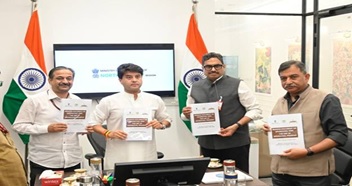
- The Union Minister for the Development of the North Eastern Region launched the "Arunachal Kiwi: Arunachal Pradesh's USP" mission.
Key Facts:
- Objective: To develop cluster-based Kiwi cultivation and its entire value chain in Arunachal Pradesh.
- Total Financial Outlay: A budget of approximately ₹167 crore has been allocated for this mission.
- Collaborative Approach: It is being implemented through the joint participation (convergence) of various Central Government ministries, NABARD, ICAR, APEDA, and private investors.
- Strategic Pillars: This mission is based on four main pillars—Convergence, Value Addition, Branding, and Market Integration.
- Share in Production: Arunachal Pradesh is India's largest Kiwi-producing state, contributing approximately 50% to the country's total Kiwi production.
"Brand North East" and Each State's USP (Unique Selling Proposition):
- This mission is part of the Ministry of Development of North Eastern Region's "Brand North East" initiative, under which a specific product (USP) has been identified for each North Eastern state.
- Arunachal Pradesh: Organic Kiwi
- Sikkim: Organic State
- Mizoram: Ginger
- Nagaland: Coffee
- Tripura: Queen Pineapple
- Meghalaya: Lakadong Turmeric
- Assam: Muga Silk
- Manipur: Polo Heritage
|
International News
Inauguration of 'Indian War Memorial' in Seoul
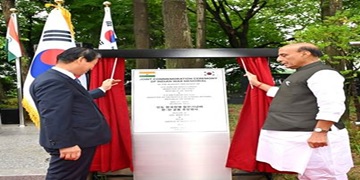
- Defense Minister Rajnath Singh and South Korea's Minister of Patriots and Veterans Affairs, Kwon Oh-yul, inaugurated the 'Indian War Memorial' in Seoul.
Key Facts:
- Location of the Memorial: Imjingak Park, near Seoul, South Korea.
- Significance of the Region: In September 1954, the Custodian Force of India (CFI) established a camp named 'Hind Nagar' in this area (approximately 22,000 Prisoners of War were housed in this camp prior to their peaceful repatriation).
- Dedicated to: The humanitarian services, indomitable courage, and supreme sacrifices rendered by the Indian Army's 60 Para Field Ambulance and the Custodian Force of India (CFI) during and after the Korean War.
- Lieutenant Colonel (Dr.) A. G. Rangaraj (Maha Vir Chakra): Led the 60 Para Field Ambulance.
- General K. S. Thimayya: Chaired the 'Neutral Nations Repatriation Commission' (NNRC), which was constituted to oversee the humane and impartial repatriation of Prisoners of War following the ceasefire.
- Responding to a call from the United Nations (UN), India did not dispatch any combat troops to the Korean War; instead, it sent a medical unit—the 60 Para Field Ambulance.
- Due to their selfless service and humanitarian approach, the Korean people bestowed upon them the title "Maroon Angels" with immense respect.
South Korea :
- Capital: Seoul
- Currency: South Korean Won
- Prime Minister: Han Duck-soo
- Borders: It shares its northern border with North Korea along the 38th Parallel (pre-war) and the Demilitarized Zone (DMZ) (post-war). It is bordered by the Yellow Sea (to the west), the East China Sea (to the south), and the Sea of Japan/East Sea (to the east). Highest Peak: Mount Halla on Jeju Island (an extinct volcano).
- Major Rivers: The Han River (flows through Seoul) and the Nakdong River (the longest).
- Mountain Range: The Taebaek Mountains form the eastern "spine."
- Chaebols: Large family-owned conglomerates—such as Samsung, Hyundai, and LG—dominate its industrial landscape.
- India–South Korea Relations
|
Premiere of a New AI-Generated Film at the Cannes Film Festival

- A new film created using Artificial Intelligence (AI) premiered at the Cannes Film Festival.
- Titled "Hell Grinds," this 95-minute film was produced by a team of 15 people in just 14 days.
- It cost approximately $500,000 to produce.
- Higgsfield AI, a San Francisco-based startup, also released the trailer for this film.
'Muga Silk Stole' and 'Shirui Lily Silk Stole' Presented as Gifts
- During the final leg of his official five-nation tour, Prime Minister Narendra Modi presented a 'Muga Silk Stole' and a 'Shirui Lily Silk Stole' as gifts to Italian Prime Minister Giorgia Meloni.
Related Facts:
|
Muga Silk:
- State: It is primarily produced in the Brahmaputra Valley of Assam.
- Nickname: It is referred to as "Golden Silk" because of its natural golden-yellow hue.
- Scientific Name: This silk is obtained from an insect known as *Antheraea assamensis*.
- Host Plants: These insects feed on the leaves of plants locally known as 'Som' and 'Soalu'.
- Distinguishing Feature: It is considered the strongest natural fiber in the world and is woven without the use of any artificial dyes.
- Tag: Muga Silk holds a Geographical Indication (GI) tag.
Shirui Lily Silk Stole:
- State: It is deeply intertwined with the culture and handicrafts of Manipur.
- Shirui Lily Flower: This is the State Flower of Manipur.
- Scientific Name: Its scientific name is *Lilium mackliniae*.
- Origin: This extremely rare, bell-shaped flower grows naturally nowhere else in the world except on the 'Shirui Kashong Peak' in the Ukhrul district of Manipur.
- Tribe: The 'Tangkhul Naga' community of Manipur regards this flower as a symbol of their cultural identity and purity.
Silk Production in India:
- Types of Silk: Primarily four commercial varieties of silk are found in India—Mulberry, Tussar, Eri, and Muga.
- Monopoly: India is the only country in the world where all four of these silk varieties are produced. Notably, India holds a global monopoly on the production of Muga Silk. Leading Producer States: Karnataka holds the top spot in India's total silk production, while Assam ranks number one in the production of 'Muga silk'.
- Sericulture: The study of the commercial rearing of silkworms and the production of silk is known as 'Sericulture'.
Gifts:
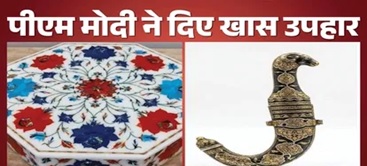
- President of Italy: Presented with an inlaid marble box crafted by artisans from Agra, along with CDs of classical music featuring Pandit Bhimsen Joshi and M.S. Subbulakshmi.
- Prime Minister of the Netherlands: Presented with a Madhubani painting (from Bihar) featuring fish motifs.
- Prime Minister of Sweden: Presented with a stole made of pure Ladakhi Pashmina wool.
- President of the UAE: Gifted India's renowned 'Saffron' mangoes.
- Viral Moment: PM Modi also presented Italian PM Meloni with a packet of India's famous 'Parle Melody' toffees—a gesture that garnered significant attention on social media due to the "Melodi" trend.
|
Economy and Banking
Standards for Blended Fuels Notified

- In May 2026, the Bureau of Indian Standards (BIS) notified new standards for petrol blended with up to 30% ethanol, aiming to strengthen the country's energy security and biofuel ecosystem.
Key Facts:
- Notified Standard (IS 19850:2026): Through a Gazette notification, BIS has issued technical and quality specifications for E22, E25, E27, and E30 fuels.
- Definition of Blending: These standards define blends of water-free ethanol and motor gasoline (petrol) intended for use in vehicles equipped with spark-ignition engines. For instance, E30 signifies a blend of 30% ethanol in petrol.
- DME-Blended LPG (IS 18698:2026): Concurrently, BIS has also issued a new standard for Dimethyl Ether (DME)-blended LPG, which will promote clean synthetic fuels.
- Important Clarification: This notification does not mandate immediate nationwide sales; rather, it establishes a technical blueprint for the future introduction of higher-blend fuels.
- National Policy on Biofuels (2018): Under this policy, India has already achieved its target of a 20% ethanol blend in petrol (E20) ahead of schedule. New Target: The government is now moving towards a 30% ethanol blend in petrol (E30) by 2030—an objective directly supported by this new notification.
- Standard Update: Replaced the previous 2024 standard for Dimethyl Ether (DME)-blended Liquefied Petroleum Gas (LPG).
- Fuel Characteristics: A clean-burning synthetic fuel that behaves similarly to LPG.
- Global Status: China accounts for approximately 90% of the global DME production capacity.
|
Awards and Honors
International Booker Prize 2026

- Taiwanese author Yang Shuang-zi and translator Lin King have been awarded the International Booker Prize 2026 for their novel, *Taiwan Travelogue*.
- This is the first book translated from Mandarin Chinese to achieve this distinction.
Related Facts:
- Original Language: This novel was originally published in Mandarin Chinese in 2020. Its original edition received Taiwan's highest literary honor, the 'Golden Tripod Award 2021.' Its English edition also received the 'National Book Award for Translated Literature 2024' in the United States.
- Subject Matter: This is a historical and post-colonial novel set against the backdrop of Taiwan under Japanese colonial rule during the 1930s.
- International Booker Prize:
- This award is presented annually to a work of fiction from any country that has been translated into English and published in the United Kingdom (UK) or Ireland.
- Establishment: It was instituted in 2005 as the 'Man Booker International Prize.' Since 2016, it has been awarded annually to a single book (prior to this, it was awarded once every two years to an author for their overall contribution).
- Difference from the Booker Prize: The main 'Booker Prize' is awarded to novels originally written in English, whereas the 'International Booker Prize' is dedicated to outstanding literary works translated into English from any language in the world.
- Indian Winners of the International Booker Prize:
- Geetanjali Shree (2022): For *Ret Samadhi* (*Tomb of Sand*), translated by Daisy Rockwell. This was the first Hindi work to win the International Booker Prize.
- Banu Mushtaq (2025): For the book *Heart Lamp*, translated by Deepa Bhasthi. This was the first Kannada work to win this award.
|
'Goddard Astronautics' Award 2026
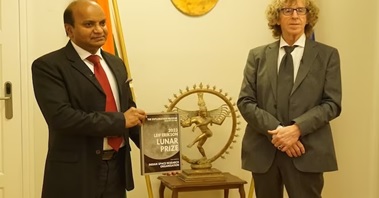
- The Indian Space Research Organisation's (ISRO) historic 'Chandrayaan-3' lunar mission has been honored with the prestigious 'Goddard Astronautics Award 2026' by the American Institute of Aeronautics and Astronautics (AIAA).
- This award was presented on May 21, 2026, during the AIAA ASCEND 2026 conference held in Washington D.C.
- On behalf of ISRO, India's Ambassador to the U.S., Vinay Mohan Kwatra, accepted this highest honor.
Related Facts:
- Highest Honor: This is the highest award conferred by the AIAA for outstanding contributions to space science, engineering, and astronautics.
- History: The award was established by the wife of Robert H. Goddard—the father of modern rocket science and a pioneer of liquid-propellant rocket engines—in his memory.
- Current Form: In 1975, the award was renamed the 'Goddard Astronautics Award,' and its selection criteria were expanded to encompass broader achievements in space science, rather than being limited solely to propulsion engineering.
- Past Recipients: Previous recipients of this prestigious award include Jeff Bezos (founder of Amazon and Blue Origin) and top engineers from NASA.
Primary Reason for the Award:
- Historic Soft Landing: This award was conferred in recognition of Chandrayaan-3's unprecedented and historic soft landing near the lunar South Pole region, an achievement that has deepened global understanding of the Moon and its mysteries.
Chandrayaan-3 Mission:
- Launch Date: July 14, 2023
- Landing Date: August 23, 2023 (This day has been designated as 'National Space Day' by the Government of India). Launch Vehicle: LVM3-M4 (Launch Vehicle Mark-3)
- Mission Components: Vikram (Lander) and Pragyan (Rover)
- Global Record: India became the first country in the world to successfully land on the Moon's South Pole.
|
L’Oréal-UNESCO For Women in Science International Awards 2026

- At the 28th L’Oréal-UNESCO For Women in Science International Awards ceremony held in Paris, five leading women scientists from five different regions of the world were named as laureates.
- This year, these awards were presented in recognition of their groundbreaking contributions to the fields of Life and Environmental Sciences.
Key Facts:
|
2026 Laureates:
- Asia-Pacific: Prof. Felice Jacka (Australia) – For Nutritional Psychiatry.
- Africa/Arab States: Prof. Liesl Zühlke (South Africa) – For research on Rheumatic Heart Disease (RHD) in children.
- Europe: Prof. Sarah A. Teichmann (UK) – For Single-Cell Biology and Genomics.
- Latin America: Prof. Raquel Lia Chan (Argentina) – For drought-tolerant crop development/food security.
- North America: Prof. Gordana Vunjak-Novakovic (USA) – For Tissue Engineering.
- Organizers: A joint initiative by the L’Oréal Foundation (Fondation L’Oréal) and UNESCO.
- Objective: To recognize the outstanding achievements of women in the field of science and to promote gender equality.
|
'World Cities Report 2026'

- According to UN-Habitat's 'World Cities Report 2026', approximately 3.4 billion people worldwide lack adequate housing facilities.
- This report was presented during the 13th session of the 'World Urban Forum' (WUF13), held in Baku, Azerbaijan, in May 2026.
Key Facts:
- Severe Housing Crisis: Globally, 3.4 billion people are deprived of adequate housing, of whom more than 1.1 billion are living precarious lives in slums and informal settlements.
- Rising Prices: Housing prices have risen rapidly relative to income levels. Globally, the average price-to-income ratio increased from 9.5 in 2010 to 11.7 in 2023.
- Climate Risks: Due to the threats posed by climate change, an estimated 167 million homes are projected to be destroyed by 2040. The housing sector alone accounts for between 17% and 21% of global carbon emissions.
- Policy Shortcomings: Most national housing policies have failed to fully incorporate key dimensions of housing adequacy, such as affordability, security of tenure, and accessibility.
- Key Figures in the Indian Context:
- Homelessness Rate: According to data from the 'Institute of Global Homelessness', the homelessness rate in India stands at 13 per 10,000 people.
- Affordability Crisis: The crisis regarding housing prices is acute in Central and South Asia (particularly in India).
- In Mumbai and Delhi, this ratio was recorded at 14.3 and 10.1, respectively.
- Pressure of Urbanization: By 2050, half of India's population is projected to reside in urban areas, which will further intensify the pressure on urban infrastructure.
|
Important Days
'International Day for Biological Diversity'
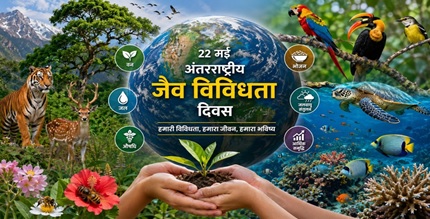
- 'International Day for Biological Diversity' is observed annually on May 22nd with the aim of raising awareness regarding the diversity of life forms on Earth, ecosystems, and their significance in human life.
Related Facts:
- This Year's (2026) Theme: Acting locally for global impact
- Why is this day celebrated specifically on May 22nd? – Because it was on this very day—May 22, 1992—that the text of the 'Convention on Biological Diversity' (CBD) was adopted in Nairobi.
- When did the United Nations General Assembly (UNGA) approve this? – In December 2000 (Prior to this, it was observed on December 29th).
- What is the Kunming-Montreal Global Biodiversity Framework? – A global agreement adopted in December 2022, under which the "30x30 target" (conserving 30% of Earth's land and oceans by 2030) has been established.
- In which year was the Biological Diversity Act passed in India? – In the year 2002.
- Where is the headquarters of the National Biodiversity Authority (NBA) located? – Chennai, Tamil Nadu (Established: 2003).
- How many Ramsar Sites are currently present in India? – There are a total of 98 Ramsar Sites in India, which are related to the conservation of wetlands.
- Which is India's first National Park? – Jim Corbett National Park (Uttarakhand), now also known as Ramganga National Park (Established: 1936, as Hailey National Park).
- Who first coined the term 'Biodiversity'? – Walter G. Rosen, in 1985.
Other Important Days Related to the Environment:
- World Wetlands Day: February 2
- World Forestry Day: March 21
- World Water Day: March 22
- Earth Day: April 22
- World Environment Day: June 5
|
Defence News
Successful Launch of INS ‘Sanghamitra’
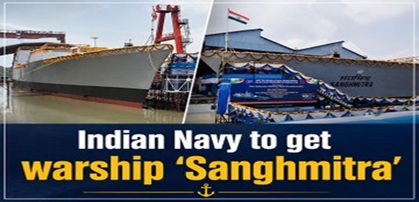
- ‘Sanghamitra’ (Yard 3039)—the first indigenous warship under the Indian Navy’s Next Generation Offshore Patrol Vessel (NGOPV) project—was successfully launched in Kolkata.
INS Sanghamitra (Yard 3039):
- Project Name: NGOPV (Next Generation Offshore Patrol Vessel)
- Builder Shipyard: Garden Reach Shipbuilders & Engineers (GRSE), Kolkata.
- Primary Objective: Monitoring of the Exclusive Economic Zone (EEZ), anti-piracy operations, and coastal security.
- Origin of Name: It is named after ‘Sanghamitra’, the daughter of Emperor Ashoka, who undertook a sea voyage to Sri Lanka to propagate Buddhism.
- Total Number of Ships to be Built: A total of 11 ships are being constructed for the Indian Navy under this project.
Partner Shipyards: This undertaking is being executed jointly by two shipyards:
- Goa Shipyard Limited (GSL): The Lead Shipyard (will build 7 ships).
- GRSE, Kolkata: The Follow Shipyard (will build 4 ships).
|
Appointments
Bharat Singh Chauhan

- Indian sports administrator Bharat Singh Chauhan has been unanimously and unopposedly re-elected as the President of the Commonwealth Chess Association for the 2026–2030 term.
- This election took place during the Annual General Meeting (AGM) of the Commonwealth Chess Association, held in Wadduwa, Sri Lanka.
| Other Appointments: In the election, Malaysia's Akhramsyah Muammar Ubaidah Sanusi was elected Vice President, and Sri Lanka's G. Luxman Wijesuriya was elected General Secretary. |


 Don't Have an Account?