GK Update
 
  • Mobile Menu
HOME BUY MAGAZINEnew course icon
LOG IN SIGN UP

Sign-Up IcanDon't Have an Account?


SIGN UP


Login Icon

Have an Account?


LOG IN
 

or
By clicking on Register, you are agreeing to our Terms & Conditions.


or


GK Update

Tue 19 May, 2026

National News

₹962 Crore Sanctioned for Kiul-Jhajha Third Line Project
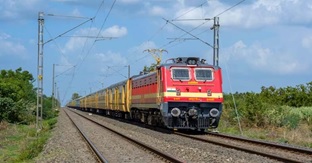
  • The Railways has sanctioned ₹962 crore for the 54-kilometer-long Kiul-Jhajha third line project.
  • This route provides a vital link between the Kolkata/Haldia ports and Raxaul/Nepal, and handles the movement of freight trains carrying heavy cargo connected to major industrial establishments, including the Barh STPP, Jawahar STPP, and Birgunj ICD.
  • This railway section has been identified as part of Indian Railways' high-density traffic network corridors.

Indian Railways:


  • First Passenger Train: India's first passenger train ran on April 16, 1853, during the tenure of Lord Dalhousie.
  • Distance and Route: This inaugural train covered a distance of 34 kilometers between Mumbai (Bori Bunder) and Thane, carrying 400 passengers.
  • Nationalization: 1951
  • Establishment of the Railway Board: The Indian Railway Board was constituted in the year 1905.
  • Computerized Reservation: The first computerized reservation service in India was launched in New Delhi in 1986.
  • Introduction of Toilets: Toilets were introduced in trains for the first time in the year 1909.
  • Global Ranking: Indian Railways is the fourth-largest railway network in the world (following the USA, China, and Russia).
  • Headquarters: The main headquarters of Indian Railways is located in New Delhi.
  • Oldest Engine: The 'Fairy Queen' is the world's oldest operational steam locomotive, listed in the Guinness Book of World Records.
  • Longest Platform: Currently, the Shree Siddharoodha Swamiji Hubballi Station in Karnataka (1,507 meters) holds the title of the world's longest railway platform (previously held by Gorakhpur Junction).

Highest Railway Station: Ghum Railway Station, located in West Bengal, is India's highest railway station (at an elevation of 2,258 meters). UNESCO World Heritage Sites: Four sites of Indian Railways are included in the UNESCO list:

  1. Darjeeling Himalayan Railway
  2. Nilgiri Mountain Railway
  3. Kalka-Shimla Railway
  4. Chhatrapati Shivaji Maharaj Terminus (Mumbai)
  • Railway Zones: 19 (The 19th being Metro Railway, Kolkata)

Technology and Operations:

  • Vande Bharat Express: This is India's first indigenously designed semi-high-speed train, serving as an excellent example of the 'Make in India' initiative.
  • KAVACH: This is India's own Automatic Train Protection (ATP) system. It automatically halts two trains if they approach each other on the same track, thereby aiming to eliminate rail accidents.
  • Dedicated Freight Corridor (DFC): Specialized corridors—specifically the Eastern (EDFC) and Western (WDFC)—have been constructed to facilitate the rapid movement of freight trains, thereby segregating the traffic of passenger trains from that of goods trains.

Jammu-Katra Rail Section and Arakkonam-Chengalpattu Project Approved
  • Indian Railways approved projects worth ₹238 crore to strengthen safety and infrastructure on the Jammu–Shri Mata Vaishno Devi Katra section of Northern Railway.
  • The Railways also approved the ₹993 crore Arakkonam–Chengalpattu doubling project. The 68-km project is part of the important Chennai Suburban Circular Rail Network connecting Chennai Beach, Tambaram, Chengalpattu and Arakkonam.


The world’s highest railway arch bridge has been built over the Chenab River at a height of 359 metres above the river bed.

Central Zonal Council High-Level Meeting Held
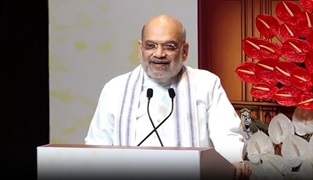
  • The 26th high-level meeting of the Central Zonal Council began in Jagdalpur, Chhattisgarh.
  • This is the first time such a high-level Zonal Council meeting has been held in the Naxal-affected Bastar region, reflecting improved security and development in the area.
  • Chief Ministers and senior officials of the four states under the Central Zonal Council — Chhattisgarh, Madhya Pradesh, Uttar Pradesh and Uttarakhand — participated in the meeting.
  • The meeting is being chaired by Union Home and Cooperation Minister Amit Shah.

Related Facts :


Zonal Councils:

  • Zonal Councils are statutory bodies established under the States Reorganisation Act, 1956.
  • These are advisory bodies and their decisions are not binding on governments.
  • Their main objective is to promote interstate cooperation, national integration and resolve interstate disputes.
  • The idea of Zonal Councils was proposed by India’s first Prime Minister Jawaharlal Nehru in 1956.
  • Organisational Structure
  • The Union Home Minister acts as the common Chairman of all Zonal Councils.
  • Chief Ministers of the member states act as Vice-Chairmen by rotation for one year.

Classification of Zonal Councils :

  • Northern Zonal Council: Jammu & Kashmir, Ladakh, Himachal Pradesh, Haryana, Punjab, Rajasthan, Delhi and Chandigarh. Headquarters: New Delhi.
  • Southern Zonal Council: Andhra Pradesh, Telangana, Karnataka, Kerala, Tamil Nadu and Puducherry. Headquarters: Chennai.
  • Eastern Zonal Council: Bihar, Jharkhand, West Bengal and Odisha. Headquarters: Kolkata.
  • Western Zonal Council: Gujarat, Maharashtra, Goa, Dadra & Nagar Haveli and Daman & Diu. Headquarters: Mumbai.
  • Central Zonal Council: Chhattisgarh, Madhya Pradesh, Uttar Pradesh and Uttarakhand. Headquarters: Prayagraj (Allahabad).

Note: No separate Zonal Council was created for the Northeastern states under the States Reorganisation Act, 1956. For them, the North Eastern Council was established under the North Eastern Council Act, 1971.

Inauguration of a Jan Seva Kendra in Bastar District, Chhattisgarh
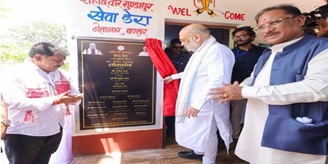
  • Home Minister Amit Shah inaugurated a Jan Seva Kendra (Public Service Center) in Netanar village of Chhattisgarh's Bastar district.
  • This center has been named after the tribal leader and freedom fighter, Veer Gundadhur.
  • The Jan Seva Kendra has been established within the security camp complex of the Central Reserve Police Force (CRPF).

Jan Seva Kendra:


  • It serves as a primary medium for delivering e-services to rural and remote areas under the Government of India's 'Digital India' initiative.
  • Full form of CSC: Common Service Centre (Jan Seva Kendra).
  • Nodal Ministry: It functions under the Ministry of Electronics and Information Technology (MeitY).
  • National e-Governance Plan (NeGP): It constitutes a key component of the Central Government's National e-Governance Plan.
  • Digital Literacy: The PMGDISHA (Pradhan Mantri Gramin Digital Saksharta Abhiyan—Prime Minister's Rural Digital Literacy Campaign) is implemented under the aegis of the CSC, with the objective of making rural citizens digitally literate.

Launch of the "Coffees of Nagaland" Mission
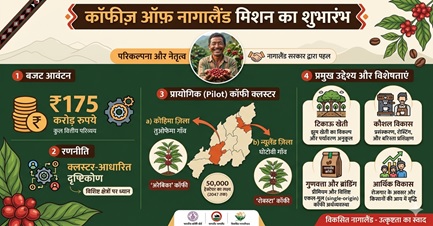
  • Union Minister Jyotiraditya M. Scindia launched the "Coffees of Nagaland" Mission.

Key Facts:


  • Total Financial Outlay: A budget of ₹175 crore has been allocated for this ambitious project.
  • Nodal Ministry: This is a flagship initiative of the Union Ministry of Development of North Eastern Region (MDoNER).
  • Approach: It has been designed under a 'Whole-of-Government Approach.' This brings together governments, farmers, entrepreneurs, exporters, and the Coffee Board of India on a shared platform.

Cluster-based Model:

  • Under this mission, two pilot coffee clusters have been identified in Nagaland to boost coffee production and quality.
  • Tuophema Village (Kohima District): Selected for the development of 'Arabica' coffee.
  • Ghotovi Village (Niuland District): Selected for the development of 'Robusta' coffee.

Coffee Board:

  • Formation and Act: A statutory organization established under the Coffee Act, 1942.
  • Nodal Ministry: Union Ministry of Commerce and Industry.
  • Headquarters: Bengaluru, Karnataka.
  • Key Functions: To promote exports, as well as to improve coffee production, research, marketing, and quality.
  • Production Facts: The highest production of coffee in India takes place in the state of Karnataka.

International News

India-Norway Business and Research Summit 2026
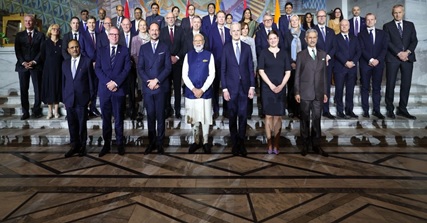
  • The India-Norway Business and Research Summit 2026 was held in May 2026 in Oslo, the capital of Norway.
  • Indian Prime Minister Narendra Modi, Crown Prince Haakon of Norway, and Norwegian Prime Minister Jonas Gahr Støre participated in this summit.

Key Highlights:


  • Green Strategic Partnership: During this visit, India and Norway elevated their bilateral relations to a 'Green Strategic Partnership.' Under this framework, special emphasis will be placed on clean energy, green shipping, the blue economy, and climate finance.
  • TEPA Investment Target: Prime Minister Narendra Modi underscored the commitment to achieving an investment target of US$ 100 billion under the India-EFTA Trade and Economic Partnership Agreement (TEPA) and to creating 1 million direct jobs in India. (Note: The Trade and Economic Partnership Agreement (TEPA) between India and the European Free Trade Association (EFTA)—of which Norway is a key member—came into effect on October 1, 2025.)
  • Innovation Ecosystem (Lab-to-Lab Collaboration): Both nations announced plans to strengthen 'Lab-to-Lab,' 'University-to-University,' and 'Scientist-to-Scientist' partnerships to foster research, thereby connecting India's CSIR and startups with Norway's leading institutions.
  • Business Facilitation Desk: A dedicated Business Facilitation Desk has been established under 'Invest India'—specifically for Norwegian investors—to streamline their investment processes.
  • Indo-Pacific Oceans Initiative (IPOI): Norway has officially joined this Indian maritime initiative, a move that will foster maritime security and sustainable management within the Indo-Pacific region for both nations. Roundtable Sessions: Prior to this high-level conference, roundtable meetings were held in Oslo focusing on five key sectors: healthcare innovation, maritime cooperation, batteries and energy storage, digitalization, and wind energy.

Norway:

  • Capital: Oslo
  • Currency: Norwegian Krone (NOK)
  • Continent: Europe
  • Official Language: Norwegian
  • Parliament: Storting
  • Known for: Fjords, Northern Lights, Oil and Gas Reserves
  • Ranked among the top countries in the Human Development Index (HDI)
  • The Nobel Peace Prize is awarded in Oslo
  • Norway is one of the Scandinavian countries
  • Bordering Countries: Sweden, Finland, and Russia
  • National Day: May 17

‘Public Health Emergency of International Concern’ Declared
  • The World Health Organization (WHO) has declared the Ebola outbreak in the Democratic Republic of the Congo (DRC) and Uganda a "Public Health Emergency of International Concern" (PHEIC).
  • This represents its highest level of global health alert, as the rare Bundibugyo strain of the virus has spread across borders in East Africa.

Key Facts:


  • The current outbreak is caused by the Bundibugyo Ebolavirus.
  • This is a rare variant of Ebola that was first identified in Uganda in 2007.
  • Unlike the more common variant found in Zaire, there are currently no approved vaccines or targeted treatments available for Bundibugyo Ebola.

Ebola:

  • An extremely deadly and infectious viral disease.
  • Virus Name: It is caused by the *Orthoebolavirus* group.
  • Virus Family: It is a member of the *Filoviridae* family.
  • Genetic Material: The Ebola virus contains single-stranded RNA.
  • Disease Type: It is a zoonotic disease, meaning it spreads from animals to humans.
  • Other Names: It is also referred to as Ebola Hemorrhagic Fever.
  • First Discovery: The Ebola virus was first identified in 1976.
  • Naming: It was named after the 'Ebola River' flowing through the Democratic Republic of the Congo (DRC) in Africa, near where the first case was detected.
  • Natural Host: Forest-dwelling fruit bats are considered the primary natural reservoir for this virus.
  • Transmission to Humans: Through direct contact with infected animals (bats, monkeys, chimpanzees). Human-to-Human Transmission: Occurs through direct contact with the blood, saliva, sweat, vomit, or other bodily fluids of an infected person.

World Health Organization (WHO):

  • Nature: It is a specialized agency of the United Nations (UN) responsible for international public health.
  • Headquarters: Geneva, Switzerland.
  • Members: Currently, there are 194 member countries.
  • Functions: To provide leadership on global health matters, set the agenda for health research, establish standards, and provide evidence-based policy options.
  • India and the WHO: India is a member of the WHO's South-East Asia Region, and its regional headquarters is located in New Delhi.
  • World Mental Health Day is observed annually on October 10.

11th Century ‘Anaimangalam Copper Plates’ (Leiden Copper Plates) Returned to India
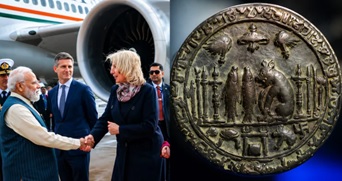
  • During the state visit of Prime Minister Narendra Modi to the Netherlands, the 11th-century ‘Anaimangalam Copper Plates’ (Leiden Copper Plates) were returned to India.

Related Facts :


  • Rulers: These copper plates belong to the reign of great Chola rulers Rajaraja Chola I (985–1014 CE) and Rajendra Chola I (1012–1044 CE).
  • These plates were taken from Nagapattinam to the Netherlands in 1712 by Dutch missionary Florentius Camper associated with the Dutch East Indies Company.
  • Physical Structure: The collection consists of 21 large and 3 small copper plates weighing around 30 kg. All plates are linked by a large bronze ring bearing the royal seal of Rajendra Chola I.
  • Type: The entire collection is known as a Royal Charter (Sasana).

Division and Language :

  • Sanskrit Section: 5 plates contain genealogy and praises of the Chola dynasty in Sanskrit.
  • Tamil Section: 16 plates contain administrative, land grant and revenue-related details in Tamil.

Awards and Honors

'Grand Cross of the Royal Norwegian Order of Merit'
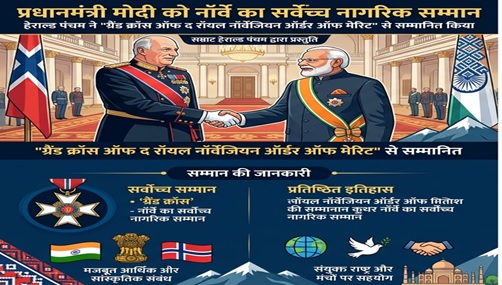
  • Prime Minister Modi was honored by King Harald V of Norway with the country's highest civilian honor, the 'Grand Cross of the Royal Norwegian Order of Merit'.

Related Facts:


  • Historic Visit: This marks the first official visit by an Indian Prime Minister to Norway in the last 43 years. Prior to this, the then Prime Minister had visited the country in 1983.
  • Who receives this award?: The 'Royal Norwegian Order of Merit' was instituted in 1985 by King Olav V. This honor is conferred upon foreign heads of state, diplomats, and foreign nationals for their exceptional contributions toward advancing Norway's interests, serving humanity, and strengthening international relations.
  • Highest Category: The 'Grand Cross' is considered the highest rank within this Order or system of honors.
  • Two Consecutive Nordic Honors: Just one day prior to the Norway visit, during his visit to Sweden, Prime Minister Modi was also conferred with that country's highest civilian honor, the 'Royal Order of the Polar Star, Commander Grand Cross'.
  • Diplomatic Background: Diplomatic relations between the two nations were established in the year 1947.

Defence News

‘Cat-A Qualified Flying Instructor’ Qualification
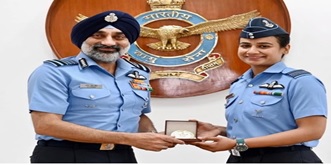
  • Squadron Leader Sanya has become the first female officer to achieve the ‘Cat-A Qualified Flying Instructor’ qualification.

Key Facts:


  • Highest Grading: ‘Cat-A’ (Category-A) represents the pinnacle of the Indian Air Force’s instructor grading system. This qualification is bestowed exclusively upon highly skilled pilots who demonstrate exceptional flying proficiency and operational maturity.
  • Training Institution: She achieved this prestigious milestone at the Flying Instructors School (FIS), Air Force Station Tambaram, located in Chennai, Tamil Nadu.
  • Profile: Squadron Leader Sanya was commissioned into the Flying Branch of the Air Force on June 20, 2015. She was promoted to the rank of Squadron Leader in 2021.

Indian Air Force:

  • Establishment: October 8, 1932 (as the Royal Indian Air Force)
  • Motto: ‘Nabhaḥ Spṛśaṃ Dīptam’ (Touch the Sky with Glory) — This is derived from the 11th Chapter of the Bhagavad Gita.
  • Supreme Commander: The President of India
  • Chief of the Air Staff (2026): Air Chief Marshal Amar Preet (AP) Singh (28th Chief)
  • Headquarters: Vayu Bhawan, New Delhi

The Air Force is divided into 7 Commands:

  • Western Air Command (WAC): New Delhi (The largest Command)
  • Eastern Air Command (EAC): Shillong
  • Central Air Command (CAC): Prayagraj
  • Southern Air Command (SAC): Thiruvananthapuram
  • South Western Air Command (SWAC): Gandhinagar
  • Training Command (TRC): Bengaluru
  • Maintenance Command (MTC): Nagpur

Saurabh Vijay Appointed CEO of UIDAI

  • Senior IAS officer Saurabh Vijay has assumed charge as the Chief Executive Officer of the Unique Identification Authority of India (UIDAI).

Related Facts:


  • Cadre and Batch: He is a 1998 batch IAS officer of the Maharashtra cadre.
  • Qualification: He holds a Bachelor of Science (B.Tech) in Civil Engineering from IIT Delhi.
  • Prior Experience: Before becoming CEO of UIDAI, he was Principal Secretary (Expenditure) in the Finance Department of the Maharashtra Government. Additionally, he has served as Director in the President's Secretariat in New Delhi and as an Advisor at the World Bank in Washington, DC.

Unique Identification Authority of India (UIDAI):

  • Nature: It is a statutory authority established under the Aadhaar Act, 2016.
  • Ministry: Ministry of Electronics and Information Technology (MeitY)
  • Headquarters: New Delhi

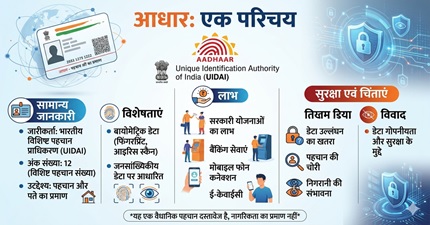
Aadhaar:

  • Issued by: Unique Identification Authority of India (UIDAI)
  • Number of Digits: 12
  • Purpose: Proof of Identity and Address
  • Features: Based on Biometric (Fingerprint, Iris Scan) and Demographic Data
  • Benefits: Benefits of Government Schemes, Banking, Mobile Phone Connection, etc.
  • Security: Threat of Data Breach, Identity Theft, and Surveillance
  • Controversy: Data Privacy and Security Create an infograph with complete details

Important Days

World IBD Day

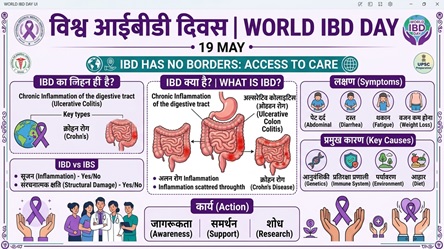
  • World Inflammatory Bowel Disease (IBD) Day is observed annually on May 19th with the aim of spreading global awareness regarding inflammatory bowel diseases such as Crohn's disease and ulcerative colitis.
  • It primarily covers severe and chronic digestive system disorders like Crohn's disease and ulcerative colitis.

Related Facts:


  • Symbol: A purple ribbon is used globally to demonstrate solidarity and support for this disease, and prominent buildings are illuminated with purple lighting.
  • Inception: It was officially launched by the European Federation of Crohn's and Ulcerative Colitis Associations (EFCCA) in collaboration with global patient organizations.
  • Theme for 2026: "IBD Has No Borders: Access to Care"

Inflammatory Bowel Disease (IBD):

  • Crohn's Disease: This can affect any part of the digestive tract, from the mouth to the anus, whereas ulcerative colitis is primarily limited to the large intestine and the rectum.
  • Depth of Inflammation: In Crohn's disease, inflammation can penetrate deep into all layers of the intestinal walls, whereas in ulcerative colitis, inflammation affects only the innermost lining of the intestine.
  • Pattern of Inflammation: In Crohn's disease, inflammation appears as patches in distinct sections of the digestive tract, whereas in ulcerative colitis, the inflammation spreads continuously and uniformly.
  • Key Symptoms: Severe abdominal pain, cramping, persistent diarrhea (often with blood in the stool), extreme fatigue, and sudden weight loss.

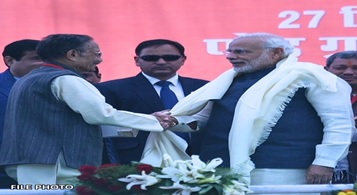
Bhuwan Chandra Khanduri Passes Away

  • Bhuwan Chandra Khanduri, former Chief Minister of Uttarakhand and a senior leader of the BJP, has passed away at the age of 91.

Key Facts:


  • Rank of Major General: Before entering politics, he was a distinguished officer in the Indian Army and retired with the rank of Major General.
  • He was also honored with the Ati Vishisht Seva Medal (AVSM) for his distinguished services.
  • In public life and politics, he was respectfully known as 'General Saheb'.

Chief Minister of Uttarakhand: B.C. Khanduri served as the Chief Minister of Uttarakhand on two occasions:

  • First Term: From March 2007 to June 2009
  • Second Term: From September 2011 to March 2012
  • Parliamentary Career: He was elected as a Member of Parliament (MP) five times from the Garhwal Lok Sabha constituency.


Latest Courses