GK Update
 
  • Mobile Menu
HOME BUY MAGAZINEnew course icon
LOG IN SIGN UP

Sign-Up IcanDon't Have an Account?


SIGN UP


Login Icon

Have an Account?


LOG IN
 

or
By clicking on Register, you are agreeing to our Terms & Conditions.


or


GK Update

Sat 16 May, 2026

National News

Launch of the AI-based ABHAY System

  • The CBI has launched an AI-based system named ‘ABHAY’ to combat cyber fraud.

Key Facts:


  • Full form of ABHAY: AI-Based Helpbot for Authentication of Your Notice
  • Primary Objective: To protect citizens from cyber fraud and so-called ‘digital arrest’ scams.
  • Country’s First System: This is India’s first real-time notice verification system designed to tackle cyber-enabled fraud and impersonation scams.
  • Launch: It was officially launched by Supreme Court Justice Surya Kant during the CBI’s 22nd D.P. Kohli Memorial Lecture.

Note: D.P. Kohli was the Founding Director of the CBI.

D.P. Kohli:

  • Born: In 1907 in Uttar Pradesh.
  • Joined the Police Service in 1931.
  • Led the Delhi Special Police Establishment (DSPE) starting in 1955.
  • Became the Founding Director of the CBI following its establishment on April 1, 1963.
  • Served as the CBI Director until his retirement in 1968.

India's First Human-Elephant Conflict Research Center
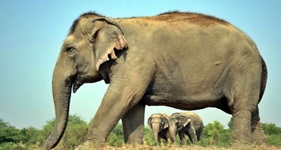
  • India's first dedicated research center for human-elephant conflict is being established within the Palamu Tiger Reserve (PTR) in Jharkhand.
  • This initiative has been undertaken to find scientific solutions to the rapidly escalating human-elephant conflicts across the country and to conduct studies on elephant behavior.

Key Facts:


  • Location and Land: This center is being developed on approximately 20 acres of land situated between the Palamu Fort and Kamaldah Lake, within the Palamu Tiger Reserve.
  • Technological Application: The research center will utilize Artificial Intelligence (AI) and advanced data analytics systems. Through these technologies, a scientific analysis will be conducted regarding elephant movement patterns, vocalizations, and their behavioral changes across different seasons.
  • Initial Phase: The project will commence with a comprehensive 360-degree behavioral study of four resident captive elephants—Juhi, Sita, Murgesh, and Rakhi—following the imposition of a ban on their commercial use within the reserve.
  • Objective: This center is intended to serve as an integrated Decision Support System for the entire country.

Palamu Tiger Reserve (PTR) :

  • Location: Situated on the Chotanagpur Plateau in Jharkhand (within the Latehar district), it forms an integral part of the Betla National Park.
  • Historical Significance: It was one of the first nine tiger reserves established in the country under 'Project Tiger,' which was launched in 1973.
  • World Record: It holds the distinction of being the world's first sanctuary where a tiger census was conducted using the pugmark (footprint) count method, under the supervision of J.W. Nicholson, in 1932.
  • Drainage System (Rivers): The reserve is primarily fed by three rivers—the North Koel, the Auranga, and the Burha (of which the Burha is the only perennial river).
  • Corridors: Currently, there are 17 designated elephant corridors located within Jharkhand.

Elephant

Types:

  • African Elephant: The world's largest land animal, characterized by large ears and curved tusks.
  • Asian Elephant: Relatively smaller in size with smaller ears; found in India, Sri Lanka, Thailand, Nepal, etc. (Comprises three subspecies: the Indian, Sumatran, and Sri Lankan elephants).
  • Status of Elephants in India: Scientific Name: *Elephas maximus indicus*

Conservation Status:

  • IUCN Red List: Endangered
  • Wildlife Protection Act, 1972 (India): Schedule I
  • Conservation Initiatives: Project Elephant (1992), Elephant Reserves
  • National Heritage Animal: Declared as India's National Heritage Animal.

International News

Hantavirus: A "Dangerous Infectious Disease"
  • Thailand's National Communicable Disease Committee (NCDC) has declared Hantavirus the country's 14th "dangerous infectious disease."
  • This decision was taken as part of health emergency preparedness measures, in light of rising global cases and the virus's high mortality rate.

Hantavirus:


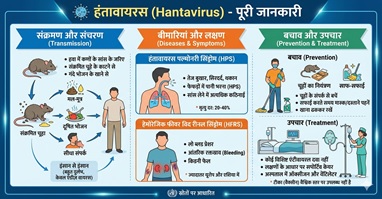
  • Virus Type: It is an RNA virus belonging to the *Hantaviridae* family.
  • Transmission: It spreads primarily through contact with the urine, feces, or saliva of mice and rodents.

Associated Diseases:

  • HPS: Hantavirus Pulmonary Syndrome (affects the lungs).
  • HFRS: Hemorrhagic Fever with Renal Syndrome (affects the kidneys).
  • Human-to-Human Transmission: This is very rare; however, the Andes virus strain—found in South America—is known to exhibit limited human-to-human transmission.
    • Mortality Rate: It has a significantly high mortality rate, which can range from 38% to 40% in certain strains.

Defense News

AI-Powered and Autonomous Combat Aircraft: 'Kaal Bhairav'
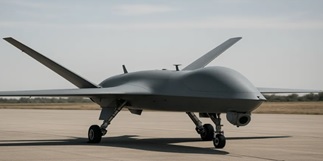
  • India's first AI-powered and autonomous combat aircraft, 'Kaal Bhairav,' will be manufactured in the European nation of Portugal.
  • To facilitate the production of this aircraft, Flying Wedge Defence & Aerospace (FWDA)—a Bengaluru-based Indian defense startup—has entered into a strategic agreement with the Portuguese tech company, SKETCHPIXEL LDA.
  • This marks India's first such partnership in the global defense manufacturing sector, wherein an Indian-designed military aircraft will be produced on the soil of a European and NATO member nation.

Key Facts:


  • Category: It is a MALE (Medium-Altitude Long-Endurance) category autonomous combat UAV (Unmanned Aerial Vehicle).
  • Flight Endurance: It can remain airborne continuously for over 30 hours and boasts a strike range of 3,000 kilometers.
  • Cost-Effective: It is approximately 10 times cheaper than the US Predator drone (MQ-9 Reaper), making it highly 'attritable' (economically viable even in the event of operational loss).
  • AI Capabilities: It is equipped with advanced Artificial Intelligence-based target recognition, autonomous navigation, and swarm warfare technology, enabling multiple aircraft to launch a coordinated attack simultaneously.
  • Division of Responsibilities: Under the agreement, Portugal's SKETCHPIXEL will primarily handle advanced simulation systems, military interoperability, and AI integration.
  • Intellectual Property Rights: The Intellectual Property Rights (IPR) for the aircraft's core autonomous systems and airframe design will remain exclusively with the Indian company, FWDA.
  • This partnership is part of the Indian company's 'Operation 777.'
  • Its long-term objective is to establish a global network for the manufacturing, integration, and deployment of autonomous combat systems of Indian origin across 77 countries spanning 7 continents.

Appointments

Sahdev Yadav

  • Sahdev Yadav, President of the Indian Weightlifting Federation (IWF), has been elected as the new President of the South Asian Weightlifting Federation (SAWF).

Key Facts:


  • New Position: Sahdev Yadav, the President of the Indian Weightlifting Federation (IWF), now also serves as the President of the SAWF.
  • Selection Process: He was elected unanimously during the SAWF General Assembly held in Kathmandu, Nepal.
  • Tenure: He will hold this position for the next four years (2026–2030).
  • Other Appointments: Ram Krishna Shrestha of Nepal has been elected as the new Secretary-General of the Federation.
  • South Asian Weightlifting Federation (SAWF)
  • It is the apex regional body responsible for governing and promoting the sport of weightlifting within the South Asian region.
  • It functions as a regional body under the aegis of the Asian Weightlifting Federation (AWF) and the International Weightlifting Federation (IWF).
  • The SAWF primarily comprises the key nations belonging to the South Asian Association for Regional Cooperation (SAARC) region.

Indian Weightlifting Federation (IWLF):

  • It is the apex national body responsible for administering, governing, and promoting the sport of weightlifting in India.
  • Establishment: 1935; received international affiliation in 1936.
  • Headquarters: New Delhi.

Reports and Indices

'Logistics Ease Across Different States' (LEADS) 2025 Report

  • The Department for Promotion of Industry and Internal Trade (DPIIT), under the Ministry of Commerce and Industry, has released the 7th edition of the 'Logistics Ease Across Different States' (LEADS) 2025 report.

Key Facts:


  • This report is a national index that assesses the logistics infrastructure, services, and regulatory environment across India's states and Union Territories.
  • This report is a national index that assesses the logistics infrastructure, services, and regulatory environment across India's states and Union Territories.
  • Origin and Inspiration: This index was launched in 2018. It is modeled after the World Bank's renowned 'Logistics Performance Index' (LPI).
  • Assessment Criteria (Pillars): This report primarily evaluates the logistics ease of states based on three pillars—Infrastructure, Services, and Regulatory Environment.
  • Objective: To foster healthy competition among states and to guide policy reforms aimed at reducing logistics costs.
  • Full Form: The full name of LEADS is 'Logistics Ease Across Different States'.
  • Issuing Ministry: This report is issued by the Ministry of Commerce and Industry.
  • Nodal Department: It is prepared by the Department for Promotion of Industry and Internal Trade (DPIIT), which functions under the Ministry.
  • Edition: Released in 2025, this report marks the 7th edition of LEADS.
  • Inception: This index was first introduced in 2018.
  • Global Basis: This index is modeled after the World Bank's 'Logistics Performance Index' (LPI).

LEADS 2025: Performance of States/UTs:

Coastal States:

  • Achievers – Tamil Nadu
  • High Performers – Gujarat, Kerala, Maharashtra
  • Accelerators – Andhra Pradesh, Odisha, Goa, Karnataka
  • Emerging – West Bengal

Landlocked States:

  • Achievers – Uttar Pradesh
  • High Performers – Haryana, Telangana, Chhattisgarh, Bihar
  • Accelerators – Punjab, Jharkhand, Madhya Pradesh, Uttarakhand, Himachal Pradesh
  • Emerging – Rajasthan

North-Eastern States:

  • Achievers – Mizoram
  • High Performers – Tripura, Meghalaya
  • Accelerators – Nagaland, Arunachal Pradesh, Manipur, Assam
  • Emerging – Sikkim

Union Territories:

  • Achievers – Delhi
  • High Performers – Jammu & Kashmir, Puducherry
  • Accelerators – Dadra & Nagar Haveli and Daman & Diu, Chandigarh, Ladakh, Lakshadweep
  • Emerging – Andaman & Nicobar Islands

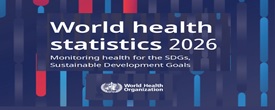
'World Health Statistics Report 2026'

  • The World Health Organization (WHO) has released the 'World Health Statistics Report 2026,' which evaluates global and regional progress toward health-related Sustainable Development Goals (SDGs).

Key Findings of the Report:


  • Impact of COVID-19: Due to the pandemic, global life expectancy and healthy life expectancy (HALE) have declined to 2011 levels.
  • Infectious Diseases (Positive Progress): Between 2010 and 2024, there was a 40% reduction in new HIV infections globally.
  • Neglected Tropical Diseases (NTDs): A 36% decline has been recorded in the number of people requiring treatment for these diseases.
  • Rising Malaria Outbreak: Contrary to positive trends, there has been an 8.5% increase in global malaria cases since 2015.
  • Economic Crisis: Due to excessive out-of-pocket health expenditure, 1.6 billion people have been forced into poverty.
  • Anemia in Women: 30.7% of women of reproductive age (15–49 years) suffer from anemia, with no improvement observed over the past decade.
  • Household Pollution: Globally, approximately 2.0 billion people still rely on polluting fuels and outdated technologies for cooking.
  • Report Frequency: This is an annual report, which has been released consistently every year since 2005.

World Health Organization (WHO):

  • Establishment: April 7, 1948
  • 'World Health Day' is observed on April 7.
  • Headquarters: Geneva, Switzerland
  • Objective of Establishment: To address global health-related challenges and promote better healthcare facilities. Director-General: Dr. Tedros Adhanom Ghebreyesus (from Ethiopia)
  • Regional Offices: It has 6 regional offices located across the world. Its Regional Office for South-East Asia is situated in New Delhi, India.

Key Reports:

  • World Health Statistics Report – Annual
  • World Malaria Report
  • Global Tuberculosis (TB) Report
  • World Health Report

Important Days

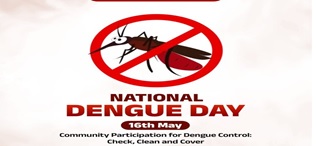
'National Dengue Day'

  • 'National Dengue Day' is observed annually in India on May 16th.

Related Facts:


  • Organizing Ministry: This day is a unique initiative of the Union Ministry of Health and Family Welfare (MoHFW).
  • Objective: To raise public awareness regarding Dengue across the country just prior to the monsoon season, to intensify preventive measures, and to strengthen preparedness for disease control.
  • Theme (Subject) for the Year 2026: “Community Participation for Dengue Control: Check, Clean, and Cover.”
  • Related Government Program: The Government of India monitors and prevents diseases such as Dengue, Malaria, and Chikungunya under the 'National Vector Borne Disease Control Programme' (NVBDCP). The Ministry observes the month of July as 'Anti-Dengue Month' at a nationwide level.

Dengue:

  • Type of Disease: Dengue is a viral disease.
  • Name of the Virus: It is caused by the Dengue virus, which belongs to the *Flaviviridae* family.
  • Other Names: It is commonly referred to as 'Breakbone Fever' because it causes severe pain in the muscles and joints.
  • Mosquito Species: The Dengue virus is transmitted through the bite of the female *Aedes aegypti* mosquito.
  • Biting Time: This mosquito primarily bites during the daytime.
  • Breeding Grounds: *Aedes* mosquitoes always lay their eggs in clean, stagnant water (such as in coolers, flower pots, old tires, and water tanks).
  • Other Diseases: This same mosquito also transmits Chikungunya, Zika, and Yellow Fever.

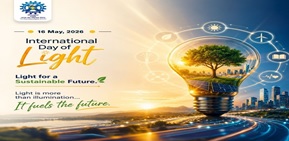
International Day of Light 2026

  • The International Day of Light is celebrated annually on May 16.
  • This day is primarily observed to commemorate the anniversary of the first successful operation of a laser by the renowned physicist and engineer Theodore Maiman on May 16, 1960.

Related Facts:


  • Nodal Agency: This day is officially organized by UNESCO.
  • Theme for 2026: The main theme for this year is "Light for a Sustainable Future."
  • Inception: It was established by UNESCO in 2017, and the first International Day of Light was celebrated on May 16, 2018.


'Sikkim Statehood Day'

  • 'Sikkim Statehood Day' is celebrated annually on May 16th to commemorate the year 1975, when the Namgyal dynasty (Chogyal monarchy) of Sikkim was abolished, and the state was fully integrated into the Indian Union as its 22nd state.
  • In the years 2025–2026, Sikkim marks the Golden Jubilee—the completion of 50 years—since its integration into the Indian Union.

Related Facts:


Historical Background:

  • Rule of the Namgyal Dynasty: The Namgyal dynasty ruled Sikkim from 1642 onwards, with the monarch holding the title of 'Chogyal'.
  • The British Era: Following the Treaty of Tumlong in 1861, Sikkim became a protectorate of British India.
  • Post-Independence (Treaty of 1950): After India's independence, the Indo-Sikkim Treaty was signed in 1950. Under this treaty, Sikkim continued to remain a 'protectorate' of India; the Government of India assumed responsibility for Sikkim's defense, external affairs, and strategic communications, while internal administration remained with the Chogyal.

Merger with India and Constitutional Developments:

  • Tripartite Agreement (1973): Following growing public discontent against the Chogyal's rule, an agreement was reached between the Chogyal, the Sikkimese political parties, and the Government of India.
  • 35th Constitutional Amendment Act, 1974: Through this amendment, Sikkim's status as a "protectorate" was abolished, and it was designated as an 'Associate State' of India. To facilitate this, a new Tenth Schedule was added to the Constitution.
  • Referendum: Driven by the democratic aspirations of the people of Sikkim, a special referendum was held in April 1975, in which over 97% of the voters cast their ballots in favor of abolishing the Chogyal monarchy and fully merging with India. 36th Constitutional Amendment Act, 1975: Through this historic amendment, the 35th Amendment was repealed, and Sikkim was declared India's 22nd full-fledged state. Concurrently, Sikkim's name was added to the First Schedule of the Constitution.

Sikkim:

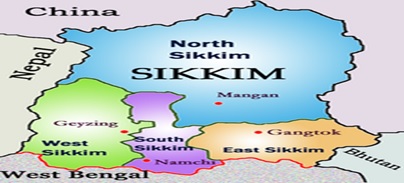
  • International Borders: Sikkim shares its borders with three countries—Nepal to the west, China (Tibet) to the north and east, and Bhutan to the southeast.
  • National Border: It shares its border with only one Indian state—West Bengal—to the south.
  • Highest Peak: Mount Kanchenjunga (8,586 meters)—which is India's highest and the world's third-highest peak—is situated in the northwestern part of Sikkim.
  • Major River: The Teesta River is known as the "Lifeline of Sikkim."
  • Capital: Gangtok (This is also the state's largest city and administrative center).
  • Major Ethnic Groups: Sikkim's population primarily consists of three ethnic groups—Nepalis, Bhutias, and Lepchas.
  • State Animal: Red Panda (Scientific Name: *Ailurus fulgens*).
  • State Bird: Blood Pheasant (Scientific Name: *Ithaginis cruentus*).
  • State Tree: Rhododendron (*Rhododendron niveum*).
  • State Flower: Noble Orchid (Scientific Name: *Cymbidium affine*).
  • World's First 100% Organic State: In 2016, Sikkim became the world's first fully organic farming state by completely eliminating the use of chemical fertilizers and pesticides.

Art and Culture

Gangamma Jatara Festival

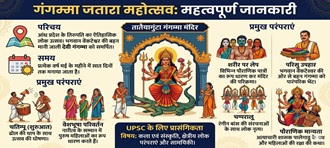
  • The Gangamma Jatara Festival was organized at the Thathayagunta Gangamma Temple in Andhra Pradesh.

Key Facts:


  • State / Location: Andhra Pradesh, Tirupati (Chittoor District)
  • Temple: Thathayagunta Gangamma Temple (named after the 16th-century devotee, Tirumala Thathacharya)
  • Nature: A renowned folk and traditional festival of the Mother Goddess in South India
  • Association: Worship of the village deity (Gram Devata) as the sister of Lord Venkateswara
  • Main Features: Cross-dressing (men dressing as women), application of body pastes, and immersion of a clay idol

Traditions and Cultural Significance:

  • Chatimpu: The official announcement of the festival's commencement, marked by the beating of traditional drums.
  • Vesham: Male devotees dressing up as women—wearing sarees—as a tribute to womanhood.
  • Application of Pastes: Applying a sacred paste of chalk, sandalwood, kumkum, and charcoal over the entire body.
  • Parisu: A gift of a silk saree sent to the sister, Gangamma, on behalf of Lord Venkateswara (her brother).
  • Idol Immersion: On the final day, distributing fragments of the colossal clay idol among devotees as *Prasad* (sacred offering).

Surgical Marks on a 60,000-Year-Old Tooth
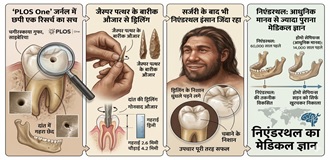
  • In the Chagyrskaya Cave in Siberia, Russia, scientists have discovered a Neanderthal tooth (a lower molar) dating back approximately 59,000 to 60,000 years, which bears clear signs of dental treatment.

Key Facts:


  • Location: Chagyrskaya Cave, Siberia, Russia
  • Discovery: Analysis of a fossilized Neanderthal molar
  • Age: Approximately 59,000 years old
  • Significance: This indicates that early humans (Neanderthals) possessed knowledge of rudimentary dentistry to alleviate dental pain or problems.

Chagyrskaya Cave:

  • Region: This cave is situated in the Krasnoshchyokovsky District of the Altai Krai, in southern Siberia, Russia.
  • River Valley: It is a limestone cave located on the banks of the Charysh River, at an elevation of approximately 19 to 25 meters above the foothills.
  • Distance from Other Sites: It is situated approximately 100 kilometers west of the famous Denisova Cave and 75 kilometers southwest of the Okladnikov Cave.
  • The World's First Neanderthal Family (2022 Discovery): Based on DNA extracted from this cave, scientists identified—for the first time in history—the familial relationship between a Neanderthal father and his teenage daughter. This discovery demonstrated that they lived in small, close-knit family groups.
  • Micoquian Culture (Micoquian Toolkit): The double-edged stone tools (hand-axes) found at this site are virtually identical to those of the 'Micoquian' culture found in Central and Eastern Europe (such as in Germany and Croatia). This suggests that these Neanderthals traveled a long distance—spanning over 3,000 kilometers—from Eastern Europe to reach Siberia. Bison Hunters: Archaeological evidence (skeletal remains) indicates that this cave served primarily as a 'base camp.' The Neanderthals inhabiting this site hunted bison (wild cattle) and horses—animals native to the arid grasslands (steppes)—and processed the meat right here.
  • Survival in a Harsh Climate: The fact that these humans survived even amidst the extremely cold and adverse climate of the Altai Mountains demonstrates their remarkable adaptability (climatic resilience).


Latest Courses