GK Update
 
  • Mobile Menu
HOME BUY MAGAZINEnew course icon
LOG IN SIGN UP

Sign-Up IcanDon't Have an Account?


SIGN UP


Login Icon

Have an Account?


LOG IN
 

or
By clicking on Register, you are agreeing to our Terms & Conditions.


or


GK Update

Thu 14 May, 2026

National News

Launch of the "Mizoram Ginger Mission"
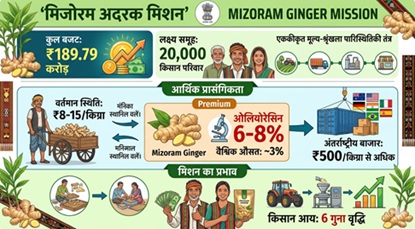
  • Jyotiraditya Scindia, the Minister for Development of the North Eastern Region, launched the "Mizoram Ginger Mission" in Mizoram, an initiative valued at ₹189.79 crore.

Key Facts:


  • Objective: To establish Mizoram's pharma-grade ginger as a global premium brand through value addition, processing, and export.
  • Total Budget: ₹189.79 crore.
  • Target Group: To integrate approximately 20,000 farming families across the state into this integrated value-chain ecosystem.
  • Economic Significance: Mizo ginger contains an oleoresin content of 6–8%, which is double the global average (~3%).
  • Currently, farmers receive only ₹8–15 per kg, whereas its value in the international market reaches upwards of ₹500 per kg.
  • The mission aims to eliminate this intermediary gap. Four Main Pillars: Convergence, Value Addition, Branding, and Market Integration
  • Main Processing Hub: To be established at Mualkawi in Champhai—Mizoram's largest ginger-producing district.
  • GI-Tagged Varieties: 'Thingpui' and 'Thinglaidum' were granted Geographical Indicator (GI) tags in the year 2021.

Leadership:

  • Ministry of Agriculture and Farmers Welfare
  • Ministry of Rural Development
  • Ministry of Food Processing Industries
  • NABARD, ICAR, and APEDA
  • Financial assistance of ₹30.13 crore for the processing component, sourced from the Focused Development Component of the North Eastern Council (NEC).

This mission is part of the Central Government's "Brand North East" strategy, under which each state in the Northeast is being accorded a distinct agricultural identity:

  • Sikkim: Organic State
  • Arunachal Pradesh: Kiwi
  • Tripura: Queen Pineapple
  • Nagaland: Coffee
  • Meghalaya: Lakadong Turmeric
  • Mizoram: Ginger (Mizoram was also declared India's 'Ginger Capital' by NITI Aayog in November 2025).

Approval for the Upgradation and Modernization of Dr. Babasaheb Ambedkar International Airport

  • The Union Cabinet, chaired by Prime Minister Narendra Modi, has approved the upgradation and modernization of Dr. Babasaheb Ambedkar International Airport in Nagpur.
  • This development work will be undertaken through a long-term license under the Public-Private Partnership (PPP) model.

Key Facts:


  • Land Lease Extension: The Cabinet approved the extension of the lease period for the land owned by the Airports Authority of India (AAI) beyond August 6, 2039.
  • Concession Period: This extension will enable MIHAN India Limited (MIL) to grant a long-term license to GMR Nagpur International Airport Limited (GNIAL) for a period of 30 years from the Commercial Operations Date (COD).
  • Co-terminus Period: The new lease extension will now run parallel to GNIAL's 30-year concession agreement, thereby bringing clarity to operations.
  • Joint Venture: MIHAN India Limited (MIL) was formed in 2009 as a joint venture between AAI (49%) and the Maharashtra Airport Development Company Limited (MADC - 51%).
  • Tender and Dispute: Global bids were invited for the PPP model in 2016, wherein the GMR Group emerged as the highest bidder (with a revenue share of 14.49%). In March 2020, MIL cancelled this tender.
  • Judicial Intervention: The Bombay High Court, and subsequently the Supreme Court of India on September 27, 2024, ruled in favor of GMR; following this, the official concession agreement was signed on October 8, 2024.

Airports Authority of India (AAI):

  • Establishment: April 1995, under the Airports Authority of India Act, 1994.
  • Merger: It was formed by merging the erstwhile 'National Airports Authority' and the 'International Airports Authority of India'.
  • Headquarters: New Delhi.
  • Ministry: Ministry of Civil Aviation.

Bharat Innovates 2026

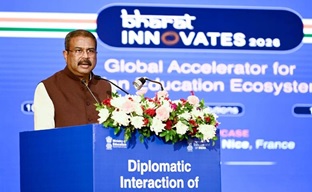
  • Union Education Minister Dharmendra Pradhan presided over a roundtable conference of industry leaders organized for 'Bharat Innovates 2026'.

Key Facts:


  • Bharat Innovates 2026 is a global platform for innovation partnerships.
  • It showcases India's deep-tech startups and research-based innovation ecosystem to international investors, universities, industry leaders, and policymakers.
  • This event will bring together over 100 startups across 13 thematic STEM sectors.

'Scheme for Promoting Surface Coal/Lignite Gasification Projects'
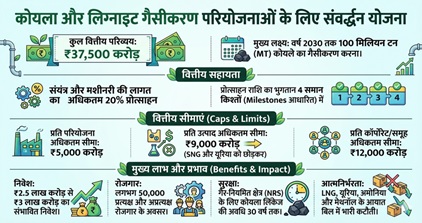
  • The Union Cabinet has approved the 'Scheme for Promoting Surface Coal/Lignite Gasification Projects' with a financial outlay of ₹37,500 crore.
  • This scheme marks a major step towards accelerating India's National Coal Gasification Mission (2021) and achieving the national target of gasifying 100 million tonnes (MT) of coal by 2030.

Key Facts:


  • Total Financial Allocation: ₹37,500 crore
  • National Coal Gasification Target (by 2030): Gasification of 100 million tonnes (MT) of coal
  • Specific Target under this Scheme: Gasification of approximately 75 million tonnes of coal/lignite
  • Maximum Financial Assistance (Incentive Subsidies): Up to a maximum of 20% of the cost of Plant & Machinery
  • Incentive Disbursement: In 4 equal installments (based on project targets/milestones)
  • Estimated Total Investment: The scheme is expected to attract an investment of ₹2.5 lakh crore to ₹3 lakh crore in the country

Financial Limits (Caps) Set under the Scheme:

  • Single Project Limit: Maximum ₹5,000 crore
  • Single Product Limit: Maximum ₹9,000 crore (excluding Synthetic Natural Gas and Urea)
  • Single Entity Group Limit: Maximum ₹12,000 crore across all projects combined
  • Coal Linkage Tenure: For the Non-Regulated Sector (NRS), this tenure has been extended to 30 years.
  • India's Total Coal Reserves: Approximately 401 billion tonnes (one of the largest reserves in the world).
  • India's Total Lignite Reserves: Approximately 47 billion tonnes. Coal's Share in the Energy Mix: Coal contributes over 55% to India's total energy supply.
  • India's Import Bill (FY 2025): India's import bill for products such as LNG, urea, and methanol stood at approximately ₹2.77 lakh crore.

What is Coal Gasification? :

  • It is a thermochemical process in which coal or lignite is partially oxidized using oxygen and steam under high temperature and pressure.
  • The Product (Syngas): Through this process, solid coal is converted into 'Synthesis Gas' (Syngas). This gas primarily consists of a mixture of carbon monoxide (CO), hydrogen, carbon dioxide, and methane.

Approval Granted for Ahmedabad-Sarkhej–Dholera Semi-High-Speed ​​Double-Line Project

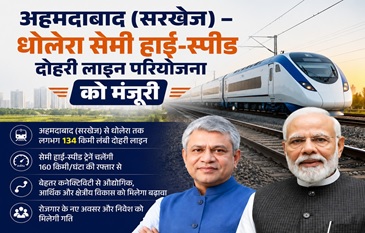
  • The Cabinet Committee on Economic Affairs (CCEA) has approved the Ahmedabad-Sarkhej–Dholera semi-high-speed double-line project at an estimated cost of approximately ₹20,667 crore.

Key Facts:


  • First Indigenous Semi-High-Speed ​​Project: This marks Indian Railways' first semi-high-speed corridor based entirely on indigenously developed technology.
  • Total Estimated Cost: ₹20,667 crore
  • Total Length: Approximately 134 kilometers
  • Maximum Design Speed: 220 km/h
  • Operating Speed: 200 km/h
  • Target Year for Completion: 2030-31
  • Key Feature: This is Indian Railways' first semi-high-speed project based entirely on indigenous technology.
  • Related Initiative: It is being developed under the PM Gati Shakti National Master Plan.

Launch of IP Catalyst and Digital Platform
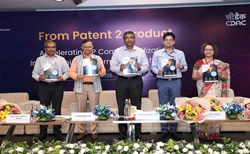
  • The Ministry of Electronics and Information Technology (MeitY) organized a one-day national conference in New Delhi on the theme, "From Patent to Product: Accelerating the Commercialization of Intellectual Property (IP) in Electronics and IT."
  • On this occasion, MeitY Secretary S. Krishnan launched the 'IP Catalyst' initiative and its official digital platform (cipie.in) to empower the intellectual property and innovation ecosystem within the country.

Patent Filing Statistics in India:


  • Financial Year 2024-25: India recorded a historic 110,375 patent applications, with the Electronics and IT sector alone contributing approximately 44%.
  • Financial Year 2025-26: Total patent filings rose to 143,729, witnessing an unprecedented growth of 52% in the Electronics and IT sector.

National Conference under the Vision of "Prosperity through Partnership"
  • The Union Ministry of Minority Affairs organized a national conference on the theme "Minority Welfare—Inclusive Development through AI for a Developed India," under the vision of "Prosperity through Partnership."

Key Highlights:


  • Objective of the Conference: To strengthen inclusive governance, enhance policy outreach, and promote technology-based welfare initiatives for minority communities across the country.
  • Presided Over By: Dr. Srivatsa Krishna, Secretary, Ministry of Minority Affairs.
  • Participants: The meeting was attended by senior officials from the Minority Welfare Departments of various States and Union Territories (UTs), representatives from Central Ministries, and experts from leading tech/AI companies.

Approval Granted for Hike in MSP of 14 Kharif Crops
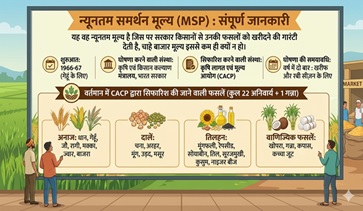
  • The Cabinet Committee on Economic Affairs (CCEA), chaired by Prime Minister Narendra Modi, has approved an increase in the Minimum Support Price (MSP) for 14 Kharif crops for the marketing season 2026-27.
  • This decision has been taken under the policy to ensure a price of at least 1.5 times (50% profit) the All-India Weighted Average Cost of Production (A2+FL), in line with the announcement made in the Union Budget 2018-19.

Key Highlights:


  • Paddy: The MSP for the 'Common' variety of Paddy has been increased by ₹72 to ₹2,441 per quintal (previously ₹2,369). The price for 'Grade A' Paddy has been fixed at ₹2,461.
  • Highest Absolute Increase: The highest increase has been effected in Sunflower Seed, with a hike of ₹622 per quintal, bringing its new MSP to ₹8,343.
  • Other Major Increases: This is followed by Cotton (Medium Staple) with an increase of ₹557 (new price ₹8,267), Nigerseed with ₹515 (new price ₹10,052), and Sesamum with ₹500 (new price ₹10,346) per quintal.
  • Maximum Return/Profit (Expected Margins): Farmers are expected to receive the highest estimated return on their cost of production for Moong (61%), followed by Bajra (56%), Maize (56%), and Arhar/Tur (54%). For all other crops, the profit margin has been fixed at exactly 50%.
  • Financial Outlay: For the current season, the total estimated payment to farmers under the MSP mechanism is expected to be ₹2.60 lakh crore, with an estimated annual procurement of approximately 824.41 Lakh Metric Tonnes (LMT).

Minimum Support Price (MSP):

  • This is the minimum price at which the government guarantees to purchase crops from farmers, even if the market price falls below this level.
  • Inception: 1966-67 (for Wheat)
  • Announcing Authority: Ministry of Agriculture and Farmers Welfare, Government of India
  • Recommending Authority: Commission for Agricultural Costs and Prices (CACP)
  • Frequency of Announcement: Twice a year—once for the Kharif season and once for the Rabi season.
  • Currently, the CACP recommends the MSP for 22 crops; for sugarcane, it recommends the Fair and Remunerative Price (FRP).
  • Cereals: Paddy, Wheat, Barley, Ragi, Maize, Jowar, Bajra
  • Pulses: Gram, Arhar (Tur), Moong, Urad, Masur
  • Oilseeds: Groundnut, Rapeseed, Soybean, Sesame, Sunflower, Safflower, Nigerseed
  • Commercial Crops: Copra, Cotton, Raw Jute, Sugarcane (FRP)

Kharif Crops:

  • Sowing and Harvesting Period: Kharif crops are sown in June-July with the onset of the South-West monsoon and are harvested in October-November (Autumn).
  • Major Kharif Crops: Paddy (Rice), Maize, Bajra, Jowar, Ragi, Tur (Arhar), Moong, Urad, Groundnut, Soybean, Sunflower, Sesame, Nigerseed, and Cotton.

Inauguration of the 16th Pension Adalat
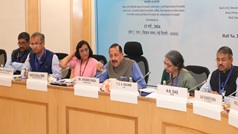
  • Dr. Jitendra Singh, Minister of State for Personnel, Public Grievances and Pensions, inaugurated the 16th Pension Adalat in New Delhi today.

Key Facts:


  • Organizer: The Department of Pension and Pensioners' Welfare (DoPPW), under the Ministry of Personnel, Public Grievances and Pensions.
  • Case Disposal: Out of a total of 985 pending cases, approximately 74% (728 cases) were resolved on the spot.
  • Participating Ministries: A total of 37 Ministries/Departments participated in this Adalat.
  • Year of Inception: The first Pension Adalat was launched by the Department of Pension and Pensioners' Welfare (DoPPW) in the year 2017.
  • Objective: To provide 'on-the-spot' definitive resolution to pensioners' grievances, thereby sparing them the need to make rounds of courts and legal offices.
  • Historical Record: Out of 27,812 cases across the 15 Pension Adalats held so far, 19,948 (over 71.72%) have been resolved.
  • CPENGRAMS Portal: In this Pension Adalat, only those grievances that had been pending on this portal for more than 45 days were taken up for hearing.
  • Full Form of CPENGRAMS: Centralized Pension Grievance Redress and Monitoring System.
  • Anubhav Portal: Launched in March 2015 at the initiative of PM Modi, this portal allows retired employees to share their experiences regarding nation-building.

Approval Granted for the Establishment of Delhi's First Dedicated ANTF Police Station
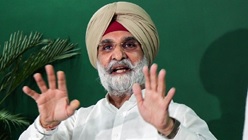
  • Delhi's Lieutenant Governor (L-G), Tarunjit Singh Sandhu, has approved the establishment of Delhi's first dedicated Anti-Narcotics Task Force (ANTF) police station.
  • This police station will place a special focus on investigating the financial networks of drug traffickers and attaching the illicit assets of 'narco-criminals.'

Key Facts:


  • Drug-Free Delhi 2027: The primary objective behind establishing this specialized police station is to achieve the goal of making Delhi completely drug-free by the year 2027.
  • Strict Legal Action: Under this initiative, the stringent provisions of the Narcotic Drugs and Psychotropic Substances Act, 1985 (NDPS Act, 1985) and the PITNDPS Act, 1988 will be effectively enforced.

Person In News

CBI Director Praveen Sood

  • The Central Government has extended the tenure of Central Bureau of Investigation (CBI) Director Praveen Sood by one year, effective from May 24, 2026; consequently, he will now continue to hold this post until May 2027.

Related Facts:


  • Parent Law: The Central Bureau of Investigation (CBI) was constituted under the Delhi Special Police Establishment (DSPE) Act, 1946.
  • Fixed Tenure: Under the Central Vigilance Commission (CVC) Act, 2003, the CBI Director is provided a minimum secure tenure of 2 years.
  • Tenure Extension: Under the ordinance (amendment) brought by the government in 2021, changes were made to the DSPE Act empowering the Central Government to extend the tenure of the CBI Director in public interest by one year at a time up to a maximum of 5 years (original 2 years + 3 years extension). The second service extension granted to Praveen Sood (the first was granted in May 2025) is valid under this provision.
  • About Praveen Sood: He is a 1986-batch Indian Police Service (IPS) officer of the Karnataka cadre and previously served as the Director General of Police (DGP) of Karnataka. He was appointed in May 2023 for a tenure of 2 years.
  • Appointment Committee: The appointment and tenure extension of the CBI Director are recommended by a high-level three-member committee headed by the Prime Minister.

Central Bureau of Investigation (CBI):

  • Established: 1963; the Special Police Establishment (SPE) was renamed as CBI through a resolution of the Ministry of Home Affairs.
  • Legal Basis: Delhi Special Police Establishment (DSPE) Act, 1946.
  • Recommendation: Formed on the recommendation of the Santhanam Committee (1962-64) constituted for corruption prevention.
  • Headquarters: New Delhi
  • First Director: D. P. Kohli (Dharamnath Prasad Kohli) served from 1 April 1963 to 31 May 1968. He was awarded the Padma Bhushan in 1967.
  • Ministry: Initially under the Ministry of Home Affairs, it currently functions under the Ministry of Personnel, Public Grievances and Pensions.

R. Mukundan

  • R. Mukundan, Managing Director and Chief Executive Officer (CEO) of Tata Chemicals, has assumed the office of President of the Confederation of Indian Industry (CII) for the year 2026-27.
  • He served as the industry body's President-Designate for 2025-26.
  • He succeeds Rajiv Memani.

Related Facts:


  • Suchitra K. Ella, Managing Director of Bharat Biotech International, has assumed office as the CII President-Designate for 2026-27.
  • Sashwat Goenka, Vice Chairman of the RP-Sanjiv Goenka Group, has taken charge as the CII Vice President for 2026-27.
  • Goenka recently served as the Chairman of the industry body's Eastern Regional Council.
  • Confederation of Indian Industry (CII):
  • Nature: It is a non-governmental, non-profit, industry-led, and industry-managed organization.
  • Establishment: It was established in 1895 (making it one of India's oldest business associations).

Susan Elias

  • St. Stephen's College, University of Delhi, has appointed 'Susan Elias' as its first female Principal.

Key Facts:


  • Historic Milestone: For the first time in the 145-year history of this institution—established in 1881—a woman has been appointed as Principal.
  • Chronological Order: Professor Susan Elias will be the 14th Principal of St. Stephen's College.
  • Successor: She will succeed Professor John Varghese.
  • Approval: This appointment was announced by the College's Supreme Council, which is chaired by the Bishop of Delhi, the Right Reverend Dr. Paul Swarup.

St. Stephen's College: Historical Background :

  • Establishment: It was founded in 1881 by the Cambridge Mission to Delhi and is one of the oldest constituent colleges of the University of Delhi (established: 1922).
  • Co-education: The College began admitting female students in 1975; however, the leadership position remained male-dominated until 2026.
  • Significant Historical Fact: In 1906, Sushil Kumar Rudra became the College's first Indian Principal; it was at his residence that Mahatma Gandhi stayed, and the framework for the Non-Cooperation Movement was formulated.

International News

17th Round of India-Uzbekistan Foreign Office Consultations
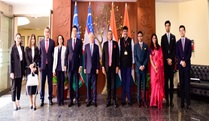
  • The 17th round of Foreign Office Consultations between India and Uzbekistan was held today in New Delhi.

Key Facts:


  • Co-chaired by: Mr. Sibi George, Secretary (West) at the Ministry of External Affairs of India, and Mr. Bahromjon Aloyev, First Deputy Minister of Foreign Affairs of Uzbekistan.
  • Key Areas of Cooperation: Both sides reviewed the entire gamut of bilateral relations, including trade, investment, tourism, energy, Information Technology (IT), innovation, education, culture, and consular issues.

Uzbekistan:

  • It is one of the 'doubly landlocked' countries (the other being Liechtenstein).
  • Neighboring Countries: It shares borders with five countries—Kazakhstan to the north and northwest, Kyrgyzstan to the east, Tajikistan to the southeast, Afghanistan to the south, and Turkmenistan to the southwest.
  • Major Rivers: Amu Darya and Syr Darya.
  • Capital: Tashkent; this is where the historic 'Tashkent Declaration' was signed in 1966.
  • Currency: Uzbekistan Som (UZS).
  • Official Language: Uzbek.
  • President: Shavkat Mirziyoyev.

India-Uzbekistan Relations:

  • India was among the first countries to recognize Uzbekistan's sovereignty following the dissolution of the Soviet Union in 1991.
  • Formal diplomatic relations between the two countries were established in Tashkent in 1992.
  • 'DUSTLIK': This is an annual joint military exercise conducted between India and Uzbekistan; its 7th edition recently concluded at the 'Gurum Saray Field Training Area' (Uzbekistan).

Laying of the Foundation Stone of Shree Basuki Secondary School: Nepal
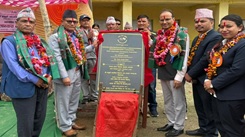
  • Narayan Singh, First Secretary at the Embassy of India in Kathmandu, Nepal, and Jwala Singh Saud, Chairman of Melekh Rural Municipality, today jointly laid the foundation stone of Shree Basuki Secondary School, located in Melekh Rural Municipality of Achham District.
  • This school building is being constructed with financial assistance of approximately 3.8 million Nepali Rupees from the Government of India.

Nepal:


  • Official Name: Federal Democratic Republic of Nepal
  • Capital: Kathmandu (This is also the largest city in Nepal)
  • President: Ram Chandra Poudel
  • Prime Minister: Balendra Shah 'Balen'
  • Name of Parliament: Federal Parliament (It comprises two houses—the House of Representatives and the National Assembly)
  • Geographical Divisions: Nepal is primarily divided into three regions—the Terai (Plains), the Hill Region, and the Mountain Region.
  • Highest Point: Mount Everest (Height: 8,848.86 meters), known as 'Sagarmatha' in Nepal. Eight of the world's ten highest peaks are located in Nepal.
  • Major Rivers: Koshi (Mahakali), Gandaki (Narayani), and Karnali (Ghaghara).
  • Currency: Nepali Rupee (NPR).
  • Official Language: Nepali (Devanagari script).
  • Birthplace of Lord Buddha: Lumbini, the birthplace of Gautama Buddha—the founder of Buddhism—is located in the southern part of Nepal.
  • SAARC Headquarters: The Secretariat of the South Asian Association for Regional Cooperation (SAARC) is located in Kathmandu.

Launch of ‘Country Strategic Opportunities Programme’
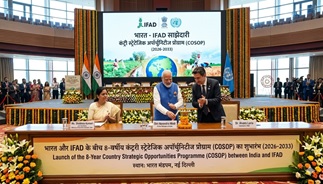
  • The Government of India and International Fund for Agricultural Development (IFAD) launched the eight-year ‘Country Strategic Opportunities Programme’ (COSOP) 2026-2033 in New Delhi.
  • The programme focuses on strengthening India’s rural economy and enhancing resilience against climate change.

Related Facts:


Main Objectives:

  • Increase Rural Income: Strengthen the income of rural families across India and expand sustainable livelihood opportunities.
  • Enhance Resilience: Strengthen the social, economic, and climate resilience of rural communities.
  • Strategic Alignment: The programme has been designed in line with the Government of India’s ‘Viksit Bharat @2047’ vision.
  • Expansion of Knowledge Systems: Share successful rural development models not only within India but also with other Global South countries such as those in Africa, Southeast Asia, and Latin America.

Target Groups and Geographical Areas:

  • Target Population: The programme aims to cover around 3 million rural households (13.2 million individuals).
  • Special Focus: It targets Below Poverty Line (BPL) families, small and marginal farmers, women-headed households, youth, persons with disabilities, and Scheduled Caste/Scheduled Tribe (SC/ST) communities.
  • Geographical Coverage: Special emphasis will be placed on climate-vulnerable Himalayan states (particularly the 10 poorest states) and NITI Aayog’s 112 Aspirational Districts.

International Fund for Agricultural Development (IFAD):

  • A specialized agency of the United Nations and an international financial institution.
  • Major Function: Reducing hunger and poverty in rural communities.
  • Established: 1977
  • Headquarters: Rome
  • Member Countries: 180 (India is a founding member).

Reports & Indexes

Global Forest Goals Report 2026

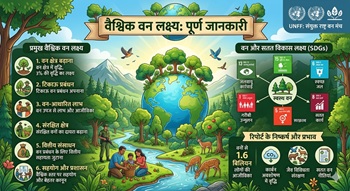
  • According to the “Global Forest Goals Report 2026” released by the United Nations Department of Economic and Social Affairs (UN DESA) and United Nations Forum on Forests (UNFF), the world lost more than 40 million hectares of forest area between 2015 and 2025.

Key Findings of the Report:


  • Released by: United Nations Department of Economic and Social Affairs (UN DESA) and United Nations Forum on Forests (UNFF)
  • Decline in Total Forest Area (2015-2025): More than 40 million hectares of net forest loss was recorded over the last decade.
  • Global Forest Area: The world’s total forest area declined from 4.18 billion hectares in 2015 to 4.14 billion hectares in 2025.
  • Annual Gross Loss: Globally, an average of 10.9 million hectares of forest area is being lost every year.
  • Loss of Primary Forests: Between 2015 and 2025, the world lost 16 million hectares of primary forests.
  • Most Affected Regions: The sharpest decline in forests was recorded in South America and Africa.
  • Top Driver of Deforestation: Conversion of forests into agricultural land remains the biggest cause globally.
  • Asia’s Performance: Asia emerged as the global leader in forest restoration, restoring more than 31 million hectares of forest area.
  • Strategic Plan Duration: The “United Nations Strategic Plan for Forests” is set up to 2030, with 6 global forest goals and 26 targets.


Latest Courses