GK Update
 
  • Mobile Menu
HOME BUY MAGAZINEnew course icon
LOG IN SIGN UP

Sign-Up IcanDon't Have an Account?


SIGN UP


Login Icon

Have an Account?


LOG IN
 

or
By clicking on Register, you are agreeing to our Terms & Conditions.


or


GK Update

Wed 13 May, 2026

National News

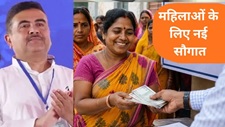
'Annapurna Bhandar Scheme'

  • In the first cabinet meeting held in West Bengal—presided over by the newly elected Chief Minister, Suvendu Adhikari—the 'Annapurna Bhandar Scheme' for women received official approval.

Key Facts:


Annapurna Bhandar Scheme:

  • Announcing State: Government of West Bengal
  • Chief Minister: Suvendu Adhikari (Approved during the recent cabinet meeting)
  • Financial Assistance Amount: ₹3,000 per month (Transferred directly to bank accounts via DBT)
  • Rollout Date: June 1, 2026
  • Supplementary Benefit: Free travel on government buses for the women of the state
  • Scheme Replaced: The 'Lakshmi Bhandar Scheme' of the All India Trinamool Congress (TMC) government

West Bengal:

  • Chief Minister: Suvendu Adhikari (Sworn in as the state's first BJP Chief Minister following a historic victory in the Assembly elections held in May 2026).
  • Capital: Kolkata (Also referred to as the 'Cultural Capital' of India)
  • International Borders: It is bordered by Bangladesh to the east, Bhutan to the north, and Nepal to the northwest.
  • National Borders: It shares its borders with 5 Indian states—Odisha, Jharkhand, Bihar, Sikkim, and Assam.
  • Major Rivers: Hooghly, Bhagirathi, Damodar, Teesta, and Torsa
  • Sundarbans: The world's largest mangrove forest is located here. It is included in UNESCO's list of World Heritage Sites.
  • State Animal: Royal Bengal Tiger (Found in the Sundarbans)
  • Queen of the Hills: Darjeeling, located in the north, is renowned for its world-famous tea gardens and the Himalayan mountain range.
  • Largest Festival: Durga Puja, which has also been included in UNESCO's list of 'Intangible Cultural Heritage'.

Launch of 'One Case One Data' System and 'Su Sahay'
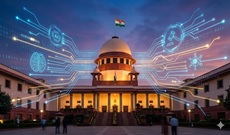
  • Chief Justice (CJI) Surya Kant launched the 'One Case One Data' system and the 'Su Sahay' AI chatbot to make the country's judicial system technology-enabled.

Relevant Facts:


  • Developer: National Informatics Centre (NIC), in collaboration with the Supreme Court Registry.
  • Integration: This chatbot is directly integrated into the official website of the Supreme Court.
  • Primary Function: It provides quick assistance to litigants, lawyers, and the general public in searching for case status (via Diary Number, Party Name, or CNR Number), cause lists, daily orders, and final judgments.
  • Additional Features: It offers step-by-step front-end guidelines for the Court's e-services (such as RTI applications and requests for certified copies) and Frequently Asked Questions (FAQs).

Supreme Court:

  • Establishment: Came into existence on January 26, 1950, with the commencement of the Constitution; however, it was formally inaugurated on January 28, 1950.
  • Predecessors: It replaced the 'Federal Court of India' (established in 1937) and the 'Privy Council' (of Britain).
  • Constitutional Provisions: Articles 124 to 147, under Part V of the Constitution, describe the composition, powers, and procedure of the Supreme Court.
  • Number of Judges: Currently, the sanctioned strength comprises a total of 34 judges, including the Chief Justice of India (CJI).
  • Appointment: Judges are appointed by the President upon the recommendation of the 'Collegium System'.
  • Qualifications: It is mandatory to be a citizen of India. One must have served as a Judge of a High Court for at least 5 years, or as an Advocate of a High Court for at least 10 years, or be, in the opinion of the President, a distinguished jurist.
  • Tenure: Judges hold office until they attain the age of 65 years.

Jurisdiction and Powers:

  • Original Jurisdiction (Article 131): Settlement of legal disputes between the Centre and the States, or between two States.
  • Writ Jurisdiction (Article 32): Issuance of writs—such as *Habeas Corpus*, *Mandamus*, etc.—for the enforcement of Fundamental Rights.
  • Appellate Jurisdiction: Hearing appeals against the judgments of High Courts in civil, criminal, and constitutional matters. Advisory Jurisdiction (Article 143): The President may seek the opinion of the Court on questions of law or facts of public importance.
  • Court of Record: All its decisions are preserved as law and are binding on subordinate courts.

Kimberley Process Intersessional Meeting 2026

  • The Kimberley Process Intersessional Meeting 2026 was inaugurated in Mumbai under India's Chairmanship.

Key Facts:


  • Event: This four-day meeting is being held in Mumbai from May 11 to May 14, 2026.
  • India's Chairmanship: India assumed the Chairmanship on January 1, 2026.
  • India's Theme: The theme for India's Chairmanship for the year 2026 is based on the "3Cs"—Credibility, Compliance, and Consumer Confidence.
  • Main Focus: Strengthening monitoring, transparency, data-based tracking, and Responsible Sourcing within the global natural diamond value chain.
  • Nodal Organizing Agency: In India, the nodal department for this initiative is the Ministry of Commerce, and the co-organizer is the Gem and Jewellery Export Promotion Council (GJEPC).

The Kimberley Process (KP):

  • It is an international initiative aimed at preventing the illicit trade of rough diamonds. Its primary objective is to curb earnings derived from diamond trafficking, which are utilized by rebel movements to finance wars against governments.
  • The Kimberley Process is an international forum that was initiated in the year 2000 by Southern African nations to regulate the trade of rough diamonds.
  • Participants: The Kimberley Process comprises 60 participants representing 86 countries, including industry observers such as the World Diamond Council and the Civil Society Coalition (with the European Union participating as a single bloc).
  • Members of the Kimberley Process account for approximately 99.8% of global rough diamond production.

Economy and Banking

The Country's Retail Inflation Rate in April 2026

  • In April 2026, the country's retail inflation rate was recorded at 3.48%, which is marginally higher than the 3.40% recorded in March 2026.
  • Food inflation rose to 4.20% in April, up from 3.87% in March.

Related Facts:


  • Retail inflation in rural areas: 3.74%
  • Retail inflation in urban areas: 3.16%
  • Food inflation stood at 4.26% in rural areas and 4.10% in urban areas.
  • Among the states, Telangana recorded the highest inflation rate at 5.81%.
  • Mizoram recorded the lowest rate at 0.69%.
  • The retail inflation rate in Delhi was 1.96%.
  • Housing inflation stood at 2.15% in April 2026.
  • New Base Year for the Index (Base Year Reset): The new base year is 2024.

Consumer Price Index (CPI):

  • It is a key economic indicator that measures the average change in the retail prices of goods and services purchased by domestic consumers.
  • In India, it is considered the primary benchmark for calculating inflation. Issuing Organization (CPI): Retail inflation figures for the country are released by the National Statistical Office (NSO), which functions under the Ministry of Statistics and Programme Implementation (MoSPI).
  • Indices Issued by the Labour Bureau: The compilation of the CPI for Industrial Workers (IW), Agricultural Labourers (AL), and Rural Labourers (RL) is undertaken by the Labour Bureau (Shimla/Chandigarh).
  • Exception for Housing: The housing component is included only in the Urban CPI; in the Rural CPI, its weightage is zero (0).
  • Urjit Patel Committee: It was based on the recommendations of this committee that, in 2014, the RBI adopted the CPI—moving away from the WPI (Wholesale Price Index)—as the primary metric for measuring inflation.
  • Inflation Target: The government has assigned the RBI a target of maintaining the retail inflation rate at 4%. This includes an upper and lower tolerance band of 2% (i.e., a range of 2% to 6%).
  • Impact on Interest Rates: When the retail inflation rate rises, the RBI increases the Repo Rate to bring it under control, which, in turn, makes loans in the market more expensive.

PSB Record All-Time High Net Profit in FY26

  • Public Sector Banks (PSBs) recorded an all-time high net profit of ₹1.98 lakh crore in the financial year 2025-26 (FY26), marking an annual growth of 11.1% year-on-year (y-o-y) compared to the previous year.
  • This marks the fourth consecutive year in which government-owned banks have collectively demonstrated robust profitability, signaling a complete recovery of the Indian banking sector from the "Twin Balance Sheet Crisis."

Related Facts:


  • Aggregate Business: ₹283.3 lakh crore (12.8% growth)
  • Aggregate Deposits: ₹156.3 lakh crore (10.6% growth)
  • Gross Advances/Loans: ₹127 lakh crore (15.7% annual growth)
  • Operating Profit: ₹3.21 lakh crore
  • Capital Adequacy Ratio (CRAR): Improved to 16.6% (significantly higher than the regulatory requirement of 11.5%)
  • The banks' Gross NPA ratio declined to 1.93%, and the Net NPA ratio dropped to a historic low of 0.39%.
  • The delinquency ratio declined to 0.7%.
  • Retail advances recorded a growth of 18.1%, and MSME loans grew by 18.2%.
  • Total recoveries, including from written-off accounts, stood at ₹86,971 crore.

Public Sector Banks (PSB):

  • These are commercial banks in which the Government of India, or the country's Public Sector Undertakings (PSUs), hold a majority stake of 51% or more.
  • These banks are regulated by the Reserve Bank of India (RBI). Currently, there are a total of 12 public sector banks operating in India.

State Bank of India (SBI):

  • Headquarters: Mumbai, Maharashtra
  • Key Fact: It is India's largest public sector bank in terms of market capitalization and assets.

Punjab National Bank (PNB):

  • Headquarters: New Delhi
  • Key Fact: Oriental Bank of Commerce and United Bank of India were merged into it.

Bank of Baroda (BoB):

  • Headquarters: Vadodara, Gujarat
  • Key Fact: Dena Bank and Vijaya Bank were merged into it.

Canara Bank:

  • Headquarters: Bengaluru, Karnataka
  • Key Fact: Syndicate Bank was merged into it.

Union Bank of India:

  • Headquarters: Mumbai, Maharashtra
  • Key Fact: Andhra Bank and Corporation Bank were merged into it.

Indian Bank:

  • Headquarters: Chennai, Tamil Nadu
  • Key Fact: Allahabad Bank was merged into it.

Bank of India (BoI):

  • Headquarters: Mumbai, Maharashtra

Central Bank of India:

  • Headquarters: Mumbai, Maharashtra

Indian Overseas Bank (IOB):

  • Headquarters: Chennai, Tamil Nadu

UCO Bank:

  • Headquarters: Kolkata, West Bengal

Bank of Maharashtra:

  • Headquarters: Pune, Maharashtra

Punjab & Sind Bank:

  • Headquarters: New Delhi

Launch of the 'Bharat Maritime Insurance Pool'

  • The Government of India launched the 'Bharat Maritime Insurance Pool' in New Delhi to provide insurance cover to Indian vessels operating on international maritime routes.

Key Facts:


  • Launch Date: It was officially launched in New Delhi on May 12, 2026, by the Department of Financial Services (DFS) under the Union Ministry of Finance.
  • Cabinet Approval: The Union Cabinet had approved this proposal in April 2026.
  • Related Ministry: This initiative falls under the purview of the Ministry of Finance.
  • Primary Objective of the Launch: To address the heightened risks and rising insurance premiums on global maritime routes resulting from tensions in West Asia (Middle East Crisis) and the Red Sea crisis.
  • Total Pool Size: US$ 1.5 billion.
  • Sovereign Guarantee: The Government of India has provided a sovereign guarantee of US$ 1.4 billion (₹12,980 crore) for this initiative.
  • Pool's Claim Settlement Capacity: This pool can settle claims of up to a maximum of US$ 100 million on its own, without government assistance. For claims exceeding this amount, the government guarantee will serve as a backstop.
  • Administrator: The pool is being administered by GIC Re.
  • Key Participating Companies: Under this pool, the very first maritime war risk policy was issued by The New India Assurance Company Limited.
  • Global Context: Prior to the formation of this pool, India was the only major maritime trading nation in the world that did not possess its own Protection and Indemnity (P&I) Club.

Decline Recorded in Unemployment Rate: According to January-March 2026 Estimates
  • According to the estimates from the quarterly bulletin of the Periodic Labour Force Survey (PLFS) for January–March 2026, a decline has been recorded in the Unemployment Rate (UR) in urban areas, while an increase has been observed among regular wage/salaried employees in rural areas.

Key Facts:


  • In January–March 2026, the overall LFPR (Labour Force Participation Rate) for individuals aged 15 years and above was recorded at 55.5%, compared to 55.8% in the previous quarter.
  • The female LFPR (15+ years) remained largely unchanged at 34.7% compared to the previous quarter.
  • The urban Worker Population Ratio (15+ years) remained stable at 46.9% in January–March 2026.
  • In rural areas, the proportion of regular wage/salaried employees aged 15 years and above witnessed a marginal increase during January–March 2026, rising to 15.5% from 14.8% in the previous quarter.
  • During January–March 2026, an increase was recorded in the share of rural employment for individuals aged 15 years and above in both the secondary and tertiary sectors.
  • A declining trend was observed in urban employment for individuals aged 15 years and above.

Awards and Honors

National Florence Nightingale Award 2026

  • The President conferred the National Florence Nightingale Award 2026 upon 15 nursing personnel.
  • This honor has been bestowed upon nursing professionals for their exceptional dedication, selfless service, and outstanding contributions to the public health sector.

Related Facts:


  • Total Number of Winners: In the year 2026, a total of 15 nursing personnel were honored with this award.
  • Prize Money: Each winner receives a cash prize of ₹1,00,000 (One Lakh Rupees), a medal, and a certificate.
  • Composition of Awardees: The total of 15 nursing professionals honored this year (2026) included 6 Auxiliary Nurse Midwives (ANMs) and 9 Nurses.
  • Winner from Military Nursing Service: Major General Lissamma P.V. of the Indian Army.
  • Winner from Ladakh: ANM Kulwinder Parhi from the ITBP Frontier Hospital, Leh (Ladakh).

National Florence Nightingale Award:

  • Year of Establishment: 1973
  • Nodal Ministry: Union Ministry of Health and Family Welfare (MoHFW)
  • Objective: To recognize the distinguished and exemplary services of Registered Nurses, Midwives, and Lady Health Visitors (LHVs) working in the Central Government, State Governments, Union Territories, and voluntary organizations.
  • Basis for Naming: In honor of Florence Nightingale (known as 'The Lady with the Lamp'), the founder of the modern nursing movement.

Florence Nightingale:

  • Birth: May 12, 1820, in Florence, Italy (hence she was named Florence).
  • Her birthday (May 12) is celebrated annually as 'International Nurses Day'. Death: August 13, 1910, in London, United Kingdom
  • Nickname: She was known as 'The Lady with the Lamp'
  • Historical War: She became famous for serving wounded British soldiers during the Crimean War (1853–1856)
  • Contribution to Statistics: She invented the 'Polar Area Diagram' (Rose Diagram) to illustrate mortality rates in hospitals
  • Famous Book: The book authored by her is titled 'Notes on Nursing'

Environmental News

India's First Low Emission Zone (LEZ)

  • To control and reduce air pollution, India's first Low Emission Zone (LEZ) will be developed in the city of Pune, Maharashtra.
  • This initiative has been undertaken to curb rising vehicular pollution within the city and to improve air quality.

Key Facts:


  • India's First Low Emission Zone (LEZ): Located in the city of Pune, Maharashtra.
  • Target Area in Pune: Primarily the Shivajinagar and Peth localities.
  • Relevant State Policy: Implemented under the Maharashtra Electric Vehicle (EV) Policy 2021.
  • Restricted Vehicle Categories: In the first phase, the focus will be on Bharat Stage-III (BS-III) vehicles and older vehicles registered prior to 2011.
  • Collaborating Agency: The Pune Municipal Corporation (PMC) is developing this project in collaboration with ITDP India (Institute for Transportation and Development Policy).
  • Camera Technology: ANPR (Automatic Number Plate Recognition) cameras will be utilized to track vehicles within the zone.
  • Exempted Vehicles: Public buses, emergency vehicles (ambulances), and auto-rickshaws have been exempted from these restrictions.
  • World's First LEZ: First introduced in Stockholm (Sweden) in 1996 by imposing restrictions on heavy diesel vehicles.
  • Most Renowned Global Model: London's ULEZ (Ultra Low Emission Zone) model.
  • Launch of NCAP: The Central Government's National Clean Air Programme (NCAP) was launched in 2019, setting a target for improving air quality.

Introduction of the Modern 'Algae Tree' Technology
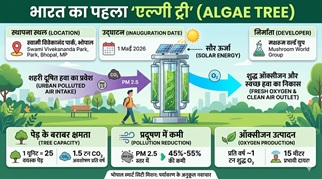
  • For the first time in the country, the modern 'Algae Tree' technology—designed to absorb carbon dioxide from the atmosphere—was introduced in Bhopal.

Key Facts:


  • Where was India's first Algae Tree installed? In Bhopal, the capital of Madhya Pradesh (specifically at Swami Vivekananda Park, located in Ashoka Garden).
  • Who developed it? The Mushroom World Group developed this technology following two years of research conducted by a team of over 50 experts.
  • What is its capacity? The unit is equipped with a 600-liter liquid algae system.
  • How does its performance compare to natural trees? A single unit of this device possesses the capacity to absorb carbon and release oxygen equivalent to that of 25 mature (fully grown) trees.
  • Annual Carbon Absorption Capacity: It absorbs approximately 1.5 tons of carbon dioxide and emits 1 ton of oxygen annually.
  • Pollution Control Capability: It can reduce PM 2.5 particulate matter by 45% to 55% within a 15-meter radius.
  • Energy Source: It is a smart structure powered entirely by solar energy.
  • Technical Name: In scientific terminology, it is also referred to as a 'Photobioreactor' or a 'Liquid Tree.'
  • Main Components: It consists of a mixture of microalgae and water.
  • Process: Utilizing sunlight, this system carries out the process of photosynthesis at a rate 10 to 50 times faster than that of ordinary trees.

Appointments

Prashant Pise Appointed Ambassador to Oman
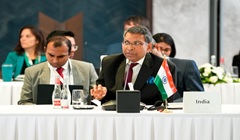
  • Prashant Pise, a senior officer of the Indian Foreign Service (IFS), has been appointed as India's next Ambassador to the Sultanate of Oman.
  • This announcement was officially made by the Ministry of External Affairs (MEA) in May 2026.

Key Facts:


  • Batch and Service: Prashant Pise is a 1995-batch officer of the Indian Foreign Service (IFS).
  • Current Position: Prior to his appointment as Ambassador to Oman, he served as the Additional Secretary (Migration Policy and Welfare) at the Ministry of External Affairs.
  • Successor to: He will succeed Godavarthi Venkata Srinivas—a 1993-batch IFS officer—in Muscat, Oman.
  • Diplomatic Experience: Prashant Pise possesses over two decades of extensive diplomatic experience. He has previously served as India's Ambassador to Iraq, Slovenia, and Tunisia. He also led the Indian delegation at the 8th Ministerial Consultation of the Abu Dhabi Dialogue, held in Dubai in February 2026.

Oman:

  • Official Name: Sultanate of Oman
  • A strategic and prosperous West Asian nation situated on the southeastern coast of the Arabian Peninsula.
  • Capital: Muscat (This is also the country's largest city and a major commercial hub).
  • Currency: Omani Rial (OMR)
  • Neighboring Countries: Oman shares its land borders with the United Arab Emirates (UAE) to the northwest, Saudi Arabia to the west, and Yemen to the southwest.
  • Maritime Borders: Its coastline borders the Gulf of Oman to the northeast and the Arabian Sea to the southeast.
  • Strait of Hormuz: A small exclave of Oman, known as the 'Musandam Peninsula,' is situated on the Strait of Hormuz. This is the most critical waterway for the global transportation of crude oil.

Yoweri Museveni: Sworn in as President
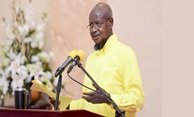
  • Yoweri Museveni has been sworn in as the President of Uganda for the seventh consecutive term.
  • President Museveni has held the presidency for the past 40 years.
  • He took the oath of office on May 12, 2026, during a ceremony held at the Kololo Independence Grounds in Kampala, the capital of Uganda.

Related Facts:


  • Historic Mandate: Museveni secured a landslide victory in the presidential election held in January 2026, garnering 71.65% of the votes.
  • Main Rival: He defeated his closest rival and the youth leader of the National Unity Platform (NUP), Robert Kyagulanyi (popularly known as Bobi Wine), who received 24.72% of the votes.
  • Controversy: The opposition and international observers have alleged a nationwide internet blackout, electoral rigging, and harassment of opposition leaders during the election.
  • New Term: This new term will run from 2026 to 2031 (5 years), bringing his total tenure in power to 45 years.
  • Removal of Term Limits (2005): In 2005, Uganda removed the constitutional limit restricting the presidency to a maximum of two terms through a constitutional amendment.
  • Removal of Age Limit (2017): In 2017, another historic amendment abolished the maximum age limit of 75 years previously prescribed for the presidency, thereby paving the way for Museveni to seek re-election.


Latest Courses