Great Nicobar Project
 
  • Mobile Menu
HOME BUY MAGAZINEnew course icon
LOG IN SIGN UP

Sign-Up IcanDon't Have an Account?


SIGN UP


Login Icon

Have an Account?


LOG IN
 

or
By clicking on Register, you are agreeing to our Terms & Conditions.


or


Great Nicobar Project

Mon 11 May, 2026

Context

The Great Nicobar Project has emerged as one of India’s most ambitious and debated infrastructure initiatives.

About the Project

  • Approved by the Union Cabinet in 2021, the ₹72,000-crore project aims to transform Great Nicobar Island into a major maritime and strategic hub in the Indo-Pacific region.
  • Due to its proximity to the Malacca Strait, one of the world’s busiest shipping corridors, the project is viewed as strategically vital for India’s economic and security interests. However, it has also triggered concerns regarding environmental degradation and tribal rights.
  • Officially known as the “Holistic Development of Great Nicobar Island,” the project has been conceptualized by NITI Aayog and is being implemented by Andaman and Nicobar Islands Integrated Development Corporation Limited (ANIIDCO). The project will be implemented in phases over 30 years and will cover nearly 166 sq km of land.

The project consists of four major components:

  1. International Container Transhipment Terminal (ICTT) at Galathea Bay to reduce India’s dependence on foreign ports such as Colombo and Singapore.
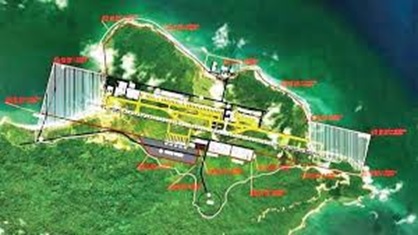
  2. Greenfield International Airport capable of handling large aircraft and nearly 10 million passengers annually.
  3. Hybrid Gas-Solar Power Plant for uninterrupted energy supply.
  4. Modern Township to support commercial and residential activities.

Strategic Importance

Indo-Pacific and Maritime Significance

  • The island lies close to the East-West international shipping route through which nearly 25% of global trade passes. This geographical advantage can help India emerge as a major transhipment and logistics hub in the Indo-Pacific region.
  • Currently, a significant portion of Indian cargo is routed through foreign ports such as Colombo and Singapore due to the lack of deep-water facilities in Indian ports. The proposed ICTT at Galathea Bay, with natural water depth exceeding 20 metres, can reduce this dependency and enhance India’s maritime competitiveness.

Defence and National Security

  • The project also carries immense strategic value. Great Nicobar’s location enables India to monitor key maritime chokepoints such as the Sunda, Lombok, and Ombai-Wetar Straits. The proposed airport is expected to serve both civilian and military purposes, strengthening India’s presence in the eastern Indian Ocean region.
  • The initiative aligns with the government’s Sagarmala Programme and Maritime India Vision 2030, supporting India’s “Act East Policy.”

Economic Benefits

  • According to government estimates, the transhipment port alone could generate nearly ₹30,000 crore annually by 2040. The project is also expected to create around 50,000 employment opportunities, boosting economic development in the Andaman and Nicobar Islands.

Environmental Concerns

Threat to Biodiversity

Great Nicobar is a globally recognized biodiversity hotspot with nearly 85% forest cover. Environmentalists fear that large-scale construction may lead to irreversible ecological damage.

Galathea Bay, the proposed site for the port, is:

  • A Ramsar wetland of international importance.
  • India’s major nesting ground for the endangered leatherback sea turtle.
  • Rich in coral reefs and marine biodiversity.
  • Large-scale dredging and deforestation may severely disrupt marine ecosystems and wildlife habitats.

Disaster Vulnerability

  • The island lies in a seismically active and cyclone-prone zone. Experts argue that destruction of mangroves and coastal ecosystems may increase vulnerability to tsunamis, coastal erosion, and climate-related disasters.

Tribal Rights and Legal Issues

  • Great Nicobar is home to Particularly Vulnerable Tribal Groups (PVTGs) such as the Shompen and Nicobarese communities. Critics allege that the project may undermine their traditional rights and livelihoods.

Concerns have also been raised regarding:

  • Dilution of Coastal Regulation Zone (CRZ) norms.
  • Adequacy of Environmental Impact Assessment (EIA).
  • Compliance with the Forest Rights Act, 2006.

However, the government has clarified that no tribal displacement is proposed and tribal settlements have been excluded from relocation plans.

Conclusion

  • The Great Nicobar Project reflects India’s growing strategic and economic ambitions in the Indo-Pacific region.
  • At the same time, it raises critical questions regarding environmental sustainability and protection of indigenous communities. The ultimate success of the project will depend on India’s ability to strike a balanced approach between development, national security, ecological conservation, and tribal welfare.

Latest Courses