GK Update
 
  • Mobile Menu
HOME BUY MAGAZINEnew course icon
LOG IN SIGN UP

Sign-Up IcanDon't Have an Account?


SIGN UP


Login Icon

Have an Account?


LOG IN
 

or
By clicking on Register, you are agreeing to our Terms & Conditions.


or


GK Update

Fri 08 May, 2026

National News

IIT Madras Global Research Foundation's First International Center
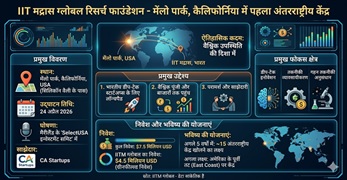
  • The IIT Madras Global Research Foundation has announced the opening of its first international center in Menlo Park, California (USA).
  • Situated near Silicon Valley, this center will serve as a global launchpad for Indian deep-tech startups.

Key Facts:

  • Location: Menlo Park, California, USA (near Silicon Valley)
  • Objective: To promote Indian deep-tech startups on a global stage
  • Announcement Venue: SelectUSA Investment Summit, Maryland
  • Partner Organization: Established in collaboration with 'CA Startups'
  • Nodal Institution: IIT Madras (This is the first institution in India to open such an international startup center)
  • Total Proposed Investment: US $7.5 million

Other Significant Facts Related to IIT Madras:

  • First International Campus: IIT Madras has opened its first international academic campus in Zanzibar (Tanzania).
  • NIRF Rankings 2023/24: IIT Madras has consistently held the top spot in India in both the 'Overall' and 'Engineering' categories.
  • Indigenous Operating System: IIT Madras has developed an indigenous mobile operating system named 'BharOS'.
  • Hyperloop: An agreement has been signed between the Ministry of Railways and IIT Madras to develop India's first Hyperloop facility.

Construction of India's First Road Section Using 'Geocells' Made from 'End-of-Life Plastics'
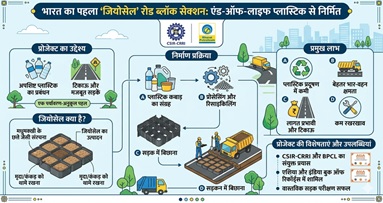
  • CSIR-CRRI (Central Road Research Institute) and Bharat Petroleum (BPCL) have constructed India's first road section using 'Geocells'—technical textiles made from 'end-of-life plastics' (post-consumer plastic waste).
  • This achievement has been recorded in the 'India Book of Records' and the 'Asia Book of Records'.

Key Facts:

  • Technology Name: The project utilized the 'Bitu-Plast' technology in conjunction with Geocells.
  • Materials: It was constructed using 'end-of-life' plastics (such as chips packets, milk pouches, etc.)—materials that are typically difficult to recycle.
  • World Record: This achievement has been recognized and recorded in both the 'India Book of Records' and the 'Asia Book of Records'.
  • Test Site: The road section was constructed along a stretch of the DND-Faridabad-KMP Expressway.
  • CSIR-CRRI Headquarters: The institute is located in New Delhi (Established: 1952).
  • Objective: To manage plastic waste and extend the lifespan of roads.

Council of Scientific and Industrial Research (CSIR):

  • Full Name: Council of Scientific and Industrial Research (CSIR)
  • Establishment: September 26, 1942
  • Headquarters: Anusandhan Bhawan, New Delhi
  • Nature: It is an autonomous body registered under the Societies Registration Act, 1860.
  • Nodal Ministry: Ministry of Science and Technology
  • President: The Prime Minister of India serves as its *ex-officio* President.
  • Vice President: The Union Minister of Science and Technology.
  • Director General: Currently, Dr. N. Dr. N. Kalaiselvi holds this position. She is the first female Director General of CSIR.

5th BRICS SAI Leaders' Summit

  • The 5th BRICS Supreme Audit Institutions (SAI) Leaders' Summit was held in Bengaluru.

Key Facts:

  • Venue: Bengaluru, India
  • Edition: 5th
  • Host: Comptroller and Auditor General (CAG) of India
  • Current CAG: K. Sanjay Murthy (Presided over the summit)
  • Theme: "Ease of Living with a focus on Urban Mobility"
  • Outcome: The 'Bengaluru Declaration' was adopted
  • BRICS SAI Action Plan: Consensus reached on the Action Plan for 2027-28
  • Associated Concept: 5-E Vision (Ease of Living, Education, Employment, Economy, Entertainment)
  • New Members: The heads of the SAIs (Supreme Audit Institutions) of new BRICS members—such as Egypt, Ethiopia, Iran, and the United Arab Emirates—also participated in the conference

BRICS:

  • A group of the world's major emerging economies
  • Full Name: BRICS stands for Brazil, Russia, India, China, and South Africa
  • Origin: The term 'BRIC' was first coined in 2001 by British economist Jim O'Neill
  • First Formal Meeting: The first meeting of Foreign Ministers was held in New York in September 2006
  • First Summit: Held on June 16, 2009, in Yekaterinburg, Russia
  • Inclusion of South Africa: South Africa became part of the group in 2010, after which its name changed from BRIC to BRICS
  • New Members (Effective from January 1, 2024): Egypt, Ethiopia, Iran, and the United Arab Emirates (UAE)
  • Indonesia joined as a full member in 2025
  • New Development Bank (NDB): Also referred to as the 'BRICS Bank' It was established in July 2014 (during the Fortaleza Summit).
  • NDB Headquarters: Shanghai, China
  • Contingent Reserve Arrangement (CRA): A framework created to address global liquidity crises.
  • BRICS accounts for 45% of the world's population and 37.3% of the global GDP—surpassing the European Union's 14.5% and the G7's 29.3%.
  • With the accession of Iran, Saudi Arabia, and the United Arab Emirates (UAE) to the bloc, BRICS now accounts for approximately 44% of global crude oil production.

Article 148: Relates to the appointment and tenure of the Comptroller and Auditor General (CAG) of India.

Article 149: Defines the duties and powers of the CAG.

'Modi Tattva' Module Included in Curriculum
  • The Maharaja Sayajirao University (MSU) of Vadodara, Gujarat, has announced the inclusion of a module titled 'Modi Tattva' (Modi Essence) in its Sociology curriculum.

Key Details:

  • Course Name: This module forms part of a paper titled 'Sociology of Patriotism.'
  • Credits: It is a 4-credit module, which will be taught to undergraduate (BA) students in their fourth year and postgraduate (MA) students in their first year of Sociology.
  • Comprehensive Reforms: Additionally, new courses such as 'Sociology of Bharat' and 'Hindu Sociology' have also been introduced.

Economy and Banking

Significant Growth in the Pension Landscape
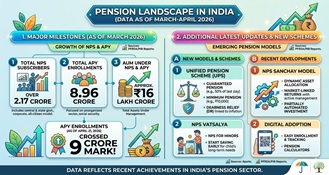
  • By March 2026, the number of NPS subscribers has exceeded 2.17 crore, and enrollments under the APY have reached 8.96 crore.

Related Facts:

  • NPS Subscribers: The number of enrollments has exceeded 2.17 crore.
  • APY Enrollments: Total enrollments have reached 8.96 crore.
  • Note: As of April 21, 2026, APY has also crossed the historic milestone of 9 crore enrollments.

Assets Under Management (AUM):

  • NPS: ₹15.95 lakh crore.
  • APY: Approximately ₹51,400 crore.
  • Employees' Pension Scheme (EPS): The number of contributing members has risen to 7.98 crore as of April 2026.

Atal Pension Yojana (APY):

  • Launch Date: May 9, 2015 (by Prime Minister Modi from Kolkata).
  • Eligibility: All Indian citizens aged between 18 and 40 years.
  • Pension: A guaranteed monthly pension ranging from ₹1,000 to ₹5,000 after the age of 60.
  • Tax Benefits: Additional tax deduction under Section 80CCD (1B) of the Income Tax Act.
  • Key Feature: It is primarily designed for workers in the unorganized sector.

National Pension System (NPS):

  • Inception: January 1, 2004 (Mandatory for all government employees, excluding the Armed Forces).
  • Open to All: From May 1, 2009, it was voluntarily opened to all citizens (aged 18–70).
  • Nature: It is a 'Market-Linked' scheme with a defined contribution structure.
  • PRAN: A Permanent Retirement Account Number (PRAN) is issued upon joining NPS (this is a 12-digit number).
  • PFRDA: The regulator for these schemes is the Pension Fund Regulatory and Development Authority. Its headquarters is located in New Delhi.
  • Establishment of PFRDA: 2003 (via Executive Order) and 2013 (via Statutory Act).

Reports and Indices

NCRB Report 2024

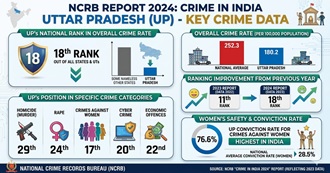
  • According to the NCRB Report 2024, Uttar Pradesh ranks 18th in the country in terms of crime rate (180.2), which is lower than the national average (252.3).

Related Facts:

  • Total Registered Crimes: A total of 3,544,608 criminal cases were registered across the country in 2024.
  • National Crime Rate: India's average crime rate (per 100,000 population) stood at 252.3.
  • Decline in Crimes: A 6% decrease in total crimes was observed in 2024 compared to 2023.
  • Cybercrime: There was a massive increase of 17.9% in this category. Approximately 72.6% of total cybercrimes were related to financial fraud.
  • Conviction Rate: Uttar Pradesh ranks first in the country regarding crimes against women, with a conviction rate of 76.6%.

Uttar Pradesh:

  • Crime Rate: UP's crime rate is 180.2, which is significantly lower than the national average (252.3).
  • National Ranking: Uttar Pradesh ranks 18th in terms of overall crime rate (it ranked 11th in 2023).
  • Share: While 17% of India's population resides in UP, its share of the country's total crimes is merely 12.14%.
  • Rankings in Specific Categories:
  • Murder: 29th position.
  • Rape: 24th position.
  • Rioting and Dacoity: In these categories, UP ranks at the lowest rung among the states. Crimes Against Women: The state ranks 17th.
  • Highest Crime Rate: According to 2024 statistics, high crime rates have been recorded in states/Union Territories such as Kerala and Puducherry.
  • Highest Cyber ​​Crime: The highest number of cyber crime cases were recorded in Telangana.

Defence News

First Successful Flight Test of the TARA Weapon System
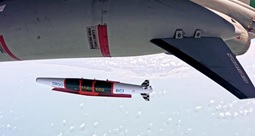
  • The DRDO and the Indian Air Force conducted the first successful flight test of the indigenous 'TARA' (Tactical Advanced Range Augmentation) weapon system off the coast of Odisha.

Key Facts:

  • What is TARA?: It is India's first indigenous Glide Weapon System.
  • Function: It is a 'modular kit' that transforms unguided bombs into Precision-Guided Munitions.
  • Test Date and Location: Its first successful flight test was conducted on May 7, 2026, off the coast of Odisha.
  • Aircraft Used for Testing: It was successfully launched from an Indian Air Force Jaguar aircraft.
  • Developer: It has been developed by the Hyderabad-based DRDO laboratory, Research Centre Imarat (RCI), in collaboration with other DRDO laboratories. Lethality and Accuracy:
  • Range: Approximately 150 to 180 kilometers
  • Accuracy (CEP): Less than 3 meters (i.e., a pinpoint strike on the target)

Defence Research and Development Organisation (DRDO):

  • Establishment (Formation): 1 January 1958
  • Headquarters: DRDO Bhawan, New Delhi
  • Ministry: It functions under the Ministry of Defence
  • Motto: 'Balasya Mulam Vigyanam' (The source of strength is science)
  • Current Chairman (2026): Dr. Samir V. Kamat (Serving since August 2022)

Indian Air Force:

  • Establishment: 8 October 1932 (as the Royal Indian Air Force)
  • Motto: 'Nabha Sprisham Deeptam' (Touch the Sky with Glory) — This is derived from the 11th chapter of the Bhagavad Gita
  • Supreme Commander: The President of India
  • Chief of the Air Staff (2026): Air Chief Marshal Amar Preet (AP) Singh (28th Chief)
  • Headquarters: Vayu Bhawan, New Delhi

The Air Force is divided into 7 Commands:

  • Western Air Command (WAC): New Delhi (Largest Command)
  • Eastern Air Command (EAC): Shillong
  • Central Air Command (CAC): Prayagraj
  • Southern Air Command (SAC): Thiruvananthapuram
  • South Western Air Command (SWAC): Gandhinagar
  • Training Command (TRC): Bengaluru
  • Maintenance Command (MTC): Nagpur

Important Days

'World Thalassemia Day'

  • 'World Thalassemia Day' is observed annually on May 8th. Its theme for this year is "Not Anymore Hidden: Unveil the Unidentified and Support the Unseen."

Thalassemia:

  • Type of Disease: It is a genetic and hereditary blood disorder.
  • Affected Cells: It primarily affects Red Blood Cells (RBCs).
  • Hemoglobin Deficiency: In this condition, the body is unable to produce sufficient hemoglobin—the protein responsible for carrying oxygen.

Chromosomes:

  • Alpha Thalassemia: Caused by a gene defect on Chromosome 16.
  • Beta Thalassemia: Caused by a gene defect on Chromosome 11.

World Red Cross Day

  • World Red Cross Day is observed annually on May 8th, with the theme for this year being "Keeping Humanity Alive."

Related Facts:

  • Founder: The Red Cross was founded by Henry Dunant. This day marks the anniversary of his birth.
  • First Nobel Prize: Henry Dunant received the world's first Nobel Peace Prize in 1901.
  • Headquarters (HQ): The headquarters of the International Committee of the Red Cross (ICRC) is located in Geneva, Switzerland.
  • Year of Establishment: The organization was founded in 1863.
  • Battle of Solferino (1859): It was only after witnessing the tragedy of this battle that the idea to establish this organization occurred to Henry Dunant.

Indian Red Cross Society (IRCS):

  • Establishment: In India, it was established in 1920 under the 'Indian Red Cross Society Act.'
  • President: The President of India serves as its *ex-officio* President.
  • Chairman: India's Union Minister of Health serves as its Chairman.

Science, Technology, and Environment News

Discovery of a Rare Species of Snapper Fish
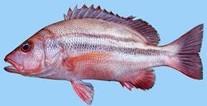
  • Researchers have recorded the presence of a rare species of snapper fish—*Lutjanus arakan*—in Indian waters for the first time.
  • This discovery was made near Gopalpur-on-Sea in the Ganjam district of Odisha.

Key Facts:

  • Scientific Classification: It belongs to the family Lutjanidae, commonly known as 'snappers.'
  • Physical Characteristics: Its body is reddish-silver in color, featuring four dark reddish-brown horizontal stripes running from head to tail. The upper body ranges in color from dark brown to black.
  • Ecological Role: Snapper fish act as mid-level predators within the marine ecosystem, playing a crucial role in maintaining marine balance.
  • Habitat: It is primarily found in tropical and subtropical marine regions, particularly in reef and coastal areas.
  • Distribution Range: Previously, this species had been recorded only off the coast of Bangladesh. Its discovery in Odisha has expanded its known geographical distribution range.
  • Biodiversity: This discovery will aid in documenting the marine biodiversity of the Bay of Bengal and the southwestern Indo-Pacific region.
  • Research Institutions: This landmark discovery was jointly made by researchers from the Estuarine Biology Regional Centre (EBRC) of the Zoological Survey of India (ZSI) and Fakir Mohan University, Balasore.

Discovery of a Rare Medicinal Mushroom
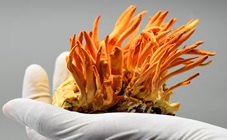
  • A rare medicinal mushroom named Cordyceps has been discovered in Arunachal Pradesh.
  • Researchers from the Central Agricultural University (CAU), based in Pasighat, discovered it in the state's East Siang district.

Relevant Facts:

  • Location: This fungus was discovered by researchers at the Central Agricultural University (CAU), Pasighat, in the East Siang district.
  • Significance of Altitude: Typically, *Cordyceps* are found at altitudes exceeding 3,000–4,000 meters; however, this discovery occurred in a low-altitude region—a phenomenon considered scientifically extremely rare.
  • Scientific Team: This exploration was led by Dr. Senpon Ngomle, Dr. Yengkhom Disco Singh, and P. Chattopadhyay.

Cordyceps:

  • Type: It is a parasitic fungus that primarily grows on insect larvae.
  • Nickname: Due to its high market value and medicinal properties, it is referred to as "Himalayan Gold."
  • Bioactive Compounds: It contains significant constituents such as cordycepin and adenosine.

Mushrooms:

  • Kingdom: Mushrooms belong to the Kingdom Fungi. They are not plants.
  • Type: They are eukaryotic and multicellular organisms (Exception: Yeast is unicellular).
  • Absence of Chlorophyll: They lack chlorophyll; therefore, they are unable to perform photosynthesis.
  • Nutrition: They are heterotrophic and primarily obtain nutrition from decaying organic matter as saprophytes.
  • Cell Wall: The cell wall of mushrooms is composed of a polysaccharide called chitin. This is a "favorite" question in SSC examinations.
  • Mycology: The scientific study of fungi/mushrooms is known as mycology. Food Storage: They store their food in the form of glycogen and oil (unlike plants, which store it as starch).

Launch of the "Smart Island" Monitoring System
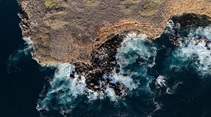
  • The world's first "Smart Island" monitoring system has been launched on Floreana Island, part of Ecuador's Galápagos archipelago.
  • The objective of this system is to protect wildlife and to obtain real-time information regarding the health of the ecosystem and the progress of restoration efforts.
  • This technology streamlines conservation operations.

Key Features:

  • LoRaWAN and IoT: An "Internet of Things" (IoT) network has been deployed across the entire island.
  • AI Camera Traps: Cameras equipped with Artificial Intelligence (AI) that record only significant activity, thereby reducing manual labor by up to 98%.
  • Smart Traps and Trackers: Provide precise data on animal movements and the health of the ecosystem.
  • EarthRanger Platform: Used for data visualization and analysis.
  • Floreana Island:
  • Location: Situated in the southern part of the Galápagos archipelago, approximately 1,000 km off the coast of Ecuador in the Pacific Ocean.
  • Historical Significance: It was the first island to be settled by Ecuador, in 1832. Charles Darwin visited the island in 1835.
  • Ecological Significance: Home to 54 IUCN Red-Listed species. The Galápagos short-eared owl and giant tortoises are among the island's prominent species.
  • This initiative is led by Island Conservation and Fundación Jocotoco, with support from the German Development Bank (KfW) and the Charles Darwin Foundation.

Awards and Honors

Erth Dubai Award 2026

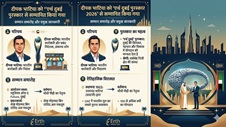
  • Deepak Bhatia, an Indian businessman based in Dubai, was honored with the Erth Dubai Award 2026.
  • This award was presented to him in the category of 'Best Private Sector Entity.'

Key Facts:

  • Presenter: The award was conferred by Sheikh Mohammed bin Rashid Al Maktoum—the Vice President and Prime Minister of the United Arab Emirates (UAE), and the Ruler of Dubai.
  • Company Details: Deepak Bhatia serves as the Managing Director of 'Uncle's Shop Building Material Trading.' This company was established in 1922 by his grandfather, the late Uttamchand Bhatia.
  • Historical Significance: This enterprise is one of the oldest Indian-origin businesses in the UAE and is now under the leadership of its fourth generation. This honor recognizes the family's contribution—spanning over 100 years—to Dubai's trade, construction sector, and heritage preservation.
  • Erth Dubai Award: This award is bestowed upon individuals and organizations that have played a pivotal role in preserving Dubai's cultural memory and in its journey of transformation from a historic trading port into a global metropolis.


Latest Courses