National News
Second Edition of WAVES Doc Bazaar

- The second edition of WAVES Doc Bazaar will be held from June 16 to June 18, 2026, at the NFDC premises in Mumbai.
- This event is being organized in conjunction with the 19th Mumbai International Film Festival (MIFF), which will run from June 15 to June 21, 2026.
Key Facts:
- Event: Second Edition of WAVES Doc Bazaar
- Dates: The market will take place from June 16 to June 18, 2026.
- Associated Festival: It is a part of the 19th Mumbai International Film Festival (MIFF), which will be held from June 15 to June 21, 2026.
- Venue: NFDC Premises, Mumbai
Mumbai International Film Festival (MIFF):
- Establishment: MIFF was initiated in 1990.
- Significance: It is South Asia's oldest and largest non-feature (documentary, short fiction, and animation) film festival.
- Frequency: It is a biennial event; that is, it takes place once every two years.
- Organizer: The National Film Development Corporation of India (NFDC), under the Ministry of Information and Broadcasting.
|
Railway Projects Covering 19 Districts Across 6 States Approved
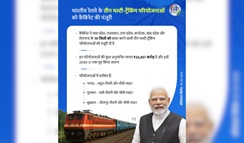
- The Cabinet Committee on Economic Affairs (CCEA), chaired by Prime Minister Narendra Modi, has approved three significant multi-tracking projects of Indian Railways with a total estimated cost of ₹23,437 crore.
Key Details of the Projects:
- Total Cost: Approximately ₹23,437 crore
- Total Length: A combined total of approximately 901 km of new track will be laid across these three projects
- States Covered (6): Uttar Pradesh, Madhya Pradesh, Rajasthan, Karnataka, Andhra Pradesh, and Telangana
- Districts Covered: A total of 19 districts
- Largest Project: Construction of the 3rd and 4th lines on the Nagda-Mathura route (568 km)
- Major Railway Corridors: These projects will enhance the capacity of busy routes such as Delhi-Mumbai, Mumbai-Chennai, and New Delhi-Guwahati
- Mission: This initiative is part of the 'PM Gati Shakti' National Master Plan
- Environmental Goals: Savings of 37 crore liters in fuel imports and a reduction of 185 crore kilograms in CO2 emissions
- Deadline: The target is to complete these projects by 2030-31
- The proposed multi-tracking projects are expected to improve connectivity for approximately 4,161 villages, serving a combined population of around 83 lakh.
|
BRICS 2026: Second Employment Working Group Meeting
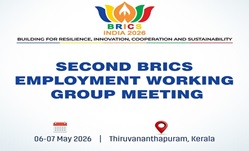
- Under India's BRICS Chairship, the second meeting of the Employment Working Group is being organized in Thiruvananthapuram, Kerala.
Key Facts:
- Venue: Thiruvananthapuram, Kerala (May 6–7, 2026)
- Chairship: India (Ministry of Labour and Employment)
- Four Priority Areas (Important for SSC):
- Social Security and Formalization of Labour Markets
- Women's Participation and Inclusion in the Workforce
- Skills Mapping and Development
- Leveraging Digital Technologies (for Gig & Platform Workers)
- International Partners: International Labour Organization (ILO) and International Social Security Association (ISSA)
BRICS:
- A group of the world's major emerging economies
- Full Name: BRICS stands for Brazil, Russia, India, China, and South Africa
- Origin of the Concept: The term 'BRIC' was first coined in 2001 by British economist Jim O'Neill
- First Formal Meeting: The first meeting of Foreign Ministers took place in New York in September 2006
- First Summit: Held on June 16, 2009, in Yekaterinburg, Russia
- Inclusion of South Africa: South Africa became part of the group in 2010, after which its name changed from BRIC to BRICS
- Member Countries: Currently, it has 10 core members—Brazil, Russia, India, China, South Africa, Saudi Arabia, Egypt, Ethiopia, Iran, and the United Arab Emirates (UAE)
- New Development Bank (NDB): Also referred to as the 'BRICS Bank'. It was established in July 2014 (during the Fortaleza Summit).
- NDB Headquarters: Shanghai, China
- Contingent Reserve Arrangement (CRA): A framework designed to address global liquidity crises.
- BRICS accounts for 45% of the world's population and 37.3% of the global GDP—surpassing the European Union's 14.5% and the G7's 29.3%.
- With the accession of Iran, Saudi Arabia, and the United Arab Emirates (UAE) to the bloc, BRICS now accounts for approximately 44% of global crude oil production.
Summits and Chairmanship:
- 16th Summit (2024): Kazan, Russia
- 17th Summit (2025): Brazil
- 18th Summit (2026): India (effective from January 1, 2026)
|
Approval Granted for Two Additional Semiconductor Projects Under the India Semiconductor Mission

- Presided over by Prime Minister Narendra Modi, the Union Cabinet approved two new projects in Gujarat under the India Semiconductor Mission on May 5, 2026.
Key Highlights:
- With an investment of approximately ₹3,936 crore, Crystal Matrix (Mini/Micro-LED) and Suchi Semicon (OSAT) units will be established; this initiative is expected to generate 2,230 skilled jobs and significantly strengthen India's semiconductor ecosystem.
- Project 1 (Crystal Matrix Limited – Dholera, Gujarat): A Compound Semiconductor Fabrication and ATMP facility with an estimated cost of ₹3,068 crore. This will be the country's first commercial Mini/Micro-LED display unit, utilizing Gallium Nitride (GaN) technology.
- Project 2 (Suchi Semicon Private Limited – Surat, Gujarat): An Outsourced Semiconductor Assembly and Test (OSAT) facility with an estimated cost of ₹868 crore. This facility will manufacture discrete semiconductors.
|
Fair and Remunerative Price for Sugarcane for the 2026-27 Sugar Season
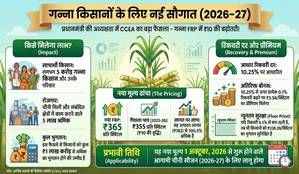
- The Cabinet Committee on Economic Affairs (CCEA), chaired by Prime Minister Narendra Modi, has fixed the Fair and Remunerative Price (FRP) for sugarcane at ₹365 per quintal for the 2026-27 sugar season (October-September).
Key Highlights:
- Base Price: ₹365 per quintal, based on a basic recovery rate of 10.25%.
- Premium: An additional premium of ₹3.56 per quintal will be provided for every 0.1% increase in the recovery rate above 10.25%.
- Floor Price (Minimum Safeguard): No deductions will be made even if the recovery rate falls below 9.5%. A minimum price of ₹338.30 per quintal is assured for such farmers.
- Profit over Production Cost: This price is 100.5% higher than the production cost (₹182/quintal).
- Increase: This represents an increase of 2.81% (or ₹10) compared to the price of ₹355 per quintal in the previous season (2025-26).
- Determination Process: The FRP for sugarcane is determined based on the recommendations of the Commission for Agricultural Costs and Prices (CACP).
- Legal Framework: This is statutorily mandated under the 'Sugarcane (Control) Order, 1966'.
- Beneficiaries: This decision will benefit approximately 5 crore sugarcane farmers and their families, as well as about 5 lakh workers employed in sugar mills.
|
Approval for the Fifth Phase (ECLGS 5.0) of the Emergency Credit Line Guarantee Scheme (ECLGS)
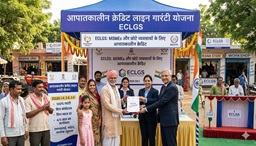
- The Union Cabinet, chaired by Prime Minister Narendra Modi, approved the fifth phase (ECLGS 5.0) of the Emergency Credit Line Guarantee Scheme (ECLGS) on May 5, 2026.
- Under this scheme, a 100% credit guarantee will be provided to Micro, Small, and Medium Enterprises (MSMEs), while a 90% guarantee will be extended to non-MSMEs and the airline sector.
Key Facts:
- Objective: To provide financial stability to MSMEs and the airline sector amidst the West Asia crisis.
- Total Target: An additional credit flow totaling ₹2.55 lakh crore is targeted through this phase. Of this, ₹5,000 crore has been specifically allocated for the airline sector.
Guarantee Coverage:
- For MSMEs: 100% guarantee coverage.
- For Non-MSMEs and the Airline Sector: 90% guarantee coverage.
- Eligibility: MSMEs and non-MSMEs having existing working capital limits as of March 31, 2026, and airlines whose accounts are classified as 'Standard'.
Loan Tenor:
- MSMEs/Non-MSMEs: 5 years (including a 1-year moratorium).
- Airline Sector: 7 years (including a 2-year moratorium).
- Implementing Agency: This scheme will be operated through the National Credit Guarantee Trustee Company Limited (NCGTC).
|
Approval of the 'Cotton Productivity Mission' (2026-27 to 2030-31)
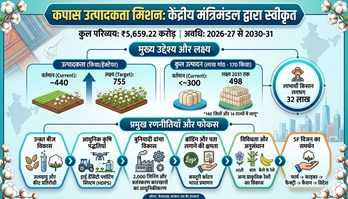
- On May 5, 2026, the Union Cabinet approved the 'Cotton Productivity Mission' (2026-27 to 2030-31) with a total outlay of ₹5,659.22 crore.
- The objective of this five-year mission is to enhance cotton productivity through advanced seed technology, modern farming techniques, and improved agricultural practices, aiming to boost production to 498 lakh bales by 2031 and reduce import dependency.
Key Facts:
- Mission Duration: It spans 5 years—from 2026-27 to 2030-31.
- Total Budget (Outlay): ₹5,659.22 crore has been allocated for this mission.
- Productivity Target: The goal is to increase cotton yield from 440 kg/hectare to 755 kg/hectare.
- Total Production Target: To raise cotton production from 297 lakh bales to 498 lakh bales (1 bale = 170 kg).
- Nodal Ministries: This is a joint initiative of the Ministry of Agriculture and the Ministry of Textiles.
- Key Technology (HDPS): The mission emphasizes the High Density Planting System (HDPS) to enable higher production within a smaller land area.
- Kasturi Cotton: The 'Kasturi Cotton Bharat' program has been integrated with this mission to ensure the branding and quality of Indian cotton.
- 5F Vision: This represents a step towards realizing the Prime Minister's '5F Vision' (Farm to Fibre, Fibre to Factory, Factory to Fashion, Fashion to Foreign).
- India is the world's second-largest producer of cotton.
- Black soil—also known as 'Regur soil'—is the most suitable soil type for cotton cultivation.
- In India, Gujarat and Maharashtra are the largest cotton-producing states.
|
500 MW Solar Power Plant in Jalaun
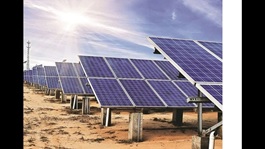
- The Uttar Pradesh Cabinet has approved the establishment of a 500 MW solar power plant in Jalaun, which will be developed as a joint venture (JV) between UPRVUNL and Coal India.
- This project will help enhance UP's renewable energy capacity and contribute towards achieving the target of 22,000 MW of solar energy by 2026-27.
Key Facts:
- Total Capacity: 500 MW
- Location: Jalaun District, Uttar Pradesh (Bundelkhand Region)
- Partners: Uttar Pradesh Rajya Vidyut Utpadan Nigam Limited (UPRVUNL) and Coal India Limited (CIL)
- Equity Share: Coal India (51%) and UPRVUNL (49%)
- Estimated Cost: Approximately ₹2,500 Crore
- Power Purchaser: Uttar Pradesh Power Corporation Limited (UPPCL)
- Land: 22 acres of land allocated by the State Government (initial phase)
- Nodal Agency: Uttar Pradesh New and Renewable Energy Development Agency (UPNEDA)
- Target: 22,000 MW of solar energy generation by 2026-27
|
Approval Granted to Increase Sanctioned Strength of Judges
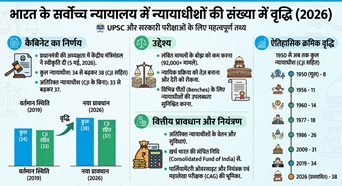
- The Union Cabinet has approved a proposal to increase the sanctioned strength of judges in the Supreme Court of India (raising it from 33 to 37).
Key Facts:
- Proposed New Strength: The Union Cabinet has approved increasing the number of Supreme Court judges from 33 to 37.
- Total Capacity: If the Chief Justice of India (CJI) is also included, the total sanctioned strength will stand at 38 (37 Judges + 1 CJI).
- Name of the Bill: To effect this change, the Supreme Court (Number of Judges) Amendment Bill, 2026, will be introduced in Parliament.
- Previous Amendment: Prior to this, in 2019, the strength was increased from 31 to 34 (including the CJI).
- Article 124(1): This Article empowers Parliament to determine the number of judges and to establish the Supreme Court.
- Initial Strength (1950): The original Constitution provided for 1 Chief Justice and 7 other judges (total 8).
- Appointment: Judges are appointed by the President upon the recommendation of the Collegium.
- Retirement Age: Supreme Court judges retire at the age of 65.
- Oath: The oath of office is administered to the judges by the President of India.
- Salary and Allowances: The salaries and allowances of the judges are charged upon the Consolidated Fund of India.
- First Chief Justice: Hiralal J. Kania (H.J. Kania)
- First Female Judge: Justice Fathima Beevi
- Longest Tenure: Justice Y.V. Chandrachud (2696 days)
- Shortest Tenure: Justice Kamal Narain Singh (only 17 days)
|
India's 18th Railway Zone
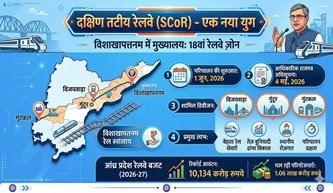
- Union Railway Minister Ashwini Vaishnaw officially announced the South Coast Railway Zone, headquartered in Visakhapatnam, which will serve as India's 18th railway zone.
Key Facts:
- Name of the Zone: South Coast Railway (SCoR)
- Designation: It is India's 18th railway zone.
- Headquarters (HQ): Visakhapatnam (Andhra Pradesh)
- Total Divisions: It will comprise 3 divisions—Vijayawada, Guntur, and Guntakal.
- Date of Establishment: Operations are set to commence on June 1, 2026.
- New Division: The Waltair Division has been dissolved, and a new Rayagada Division has been created from a portion of its territory (which will remain part of the East Coast Railway, i.e., ECoR).
|
Major Agreements
India–EU Joint Initiative for EV Battery Recycling
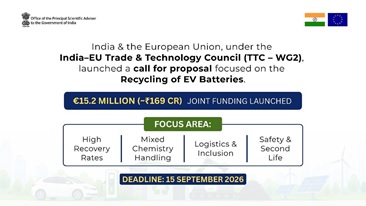
- India and the European Union launched a joint initiative worth ₹169 crore under the India–EU Trade and Technology Council (TTC).
Related Facts:
- Total Budget: ₹169 Crore (approximately €15.2 million)
- Objective: Recycling of Electric Vehicle (EV) batteries and recovery of critical minerals (such as lithium and cobalt)
- Council Name: India-EU Trade and Technology Council (TTC)
- Nodal Ministry (India): Ministry of Heavy Industries (MHI)
- Funding Programme (EU): Horizon Europe
- Establishment of TTC: April 2022 (This is the first such forum established by India with any country)
- Secretariat: Coordinated on the Indian side by the Ministry of External Affairs (MEA) and the Ministry of Electronics and IT (MeitY)
- Target Year: This initiative will help India achieve its clean energy goals by 2030
European Union (EU):
- Establishment: Formed on November 1, 1993, through the Maastricht Treaty
- Headquarters: Located in Brussels (Belgium)
- Currency: The Euro (€) is the official currency, currently used by 21 member states (this region is known as the Eurozone)
Key Institutions:
- European Parliament: The only institution whose members are directly elected by citizens
- European Council: Sets the strategic direction
- European Central Bank (ECB): Headquartered in Frankfurt (Germany); manages the currency
- Court of Justice: Located in Luxembourg
- Nobel Peace Prize: The European Union was awarded the Nobel Prize in 2012 for promoting peace and democracy
- Languages: The European Union has 24 official languages
- Europe Day: Celebrated annually on May 9
|
Agreement between UIDAI and NFSU
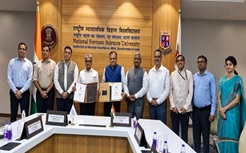
- The Unique Identification Authority of India (UIDAI) and the National Forensic Sciences University (NFSU) have signed a significant agreement to strengthen digital forensics and cybersecurity.
Key Facts:
- Duration of the Agreement: This partnership has been established for a period of 5 years.
- Primary Objective: Research and capacity building in digital forensics, cybersecurity, and advanced technologies (AI, Deepfake detection).
- Signatories: Vivek Chandra Verma, CEO of UIDAI, and Professor (Dr.) S. O. Junare, Director of NFSU (Gujarat Campus).
|
Between the Ministry of Defence and Bharat Electronics Limited
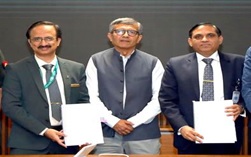
- The Ministry of Defence has signed a contract with Hyderabad-based Bharat Electronics Limited for the procurement of five ground-based mobile electronic systems for the Indian Army at a cost of ₹1,476 crore.
- These systems will be equipped with at least 72% indigenous components.
- This system will modernize the units of the Indian Army and strengthen the country's indigenous defense manufacturing ecosystem.
International News
9th FOC between India and Sudan
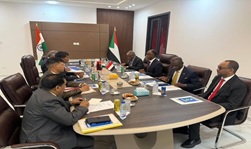
- The 9th round of Foreign Office Consultations (FOC) between India and Sudan was held in Port Sudan.
Key Highlights:
- During this meeting, discussions focused on enhancing cooperation in sectors such as bilateral relations, trade, capacity building, health, education, agriculture, and mining, as well as on shared regional issues—reflecting the strong bilateral partnership between the two nations.
- The meeting was co-chaired by the Joint Secretary (WANA) at the Ministry of External Affairs (MEA) and the Undersecretary for Foreign Affairs and International Cooperation of Sudan.
- Both countries agreed to hold the next round of consultations in New Delhi.
Sudan:
- Capital: Khartoum. This city is situated at the confluence of the Blue Nile and White Nile rivers.
- Population: The estimated population for 2025 is approximately 51.8 million.
- Languages: The official languages are Arabic and English.
- Currency: Sudanese Pound.
- Ancient Civilization: Sudan is renowned for its rich ancient Nubian civilization. Interestingly, Sudan is home to more pyramids than Egypt.
|
Vietnamese President's First Visit to India
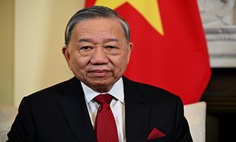
- Vietnamese President To Lam has arrived in New Delhi on his first state visit to India.
- Minister of State for Home Affairs Nityanand Rai welcomed him.
Socialist Republic of Vietnam:
- Capital: Hanoi
- Largest City: Ho Chi Minh City (formerly known as Saigon)
- Official Language: Vietnamese
- Currency: Vietnamese Dong (VND)
- Geographical Location: It is situated in the eastern part of the Indochina Peninsula and is shaped like the letter 'S'.
- Borders: It is bordered by China to the north, Laos and Cambodia to the west, and the South China Sea to the east and south.
- Major Rivers: The Mekong and the Red River are the major rivers of the country.
- Vietnam's parliament is known as the National Assembly.
- In Vietnamese, its official name is Quốc hội
|
Economy and Banking
India: One of the Largest Emerging Market Economies Over the Last Five Years

- According to a May 2026 report by Moody's Ratings, India has remained one of the most resilient and largest emerging market economies since 2020.
Key Facts:
- Moody's Ratings and India:
- Sovereign Rating: Moody's has maintained India's rating at 'Baa3', which falls under the "lowest investment grade" category.
- Outlook: The rating outlook for India has been kept 'Stable'.
- Most Resilient Economy: Moody's has identified India as the "most resilient large emerging market economy" since 2020.
- Comparison: India has outperformed countries such as Turkey, Argentina, and Nigeria across indicators like credit spreads and currency stability.
Growth Rate Forecast: 2025 Projection: According to Moody's, India's GDP growth rate is expected to be approximately 6.3% in 2025.
|
Defence News
INS Sunayna on a Visit to Myanmar

- The Indian Navy's Offshore Patrol Vessel, INS Sunayna, arrived at the port of Yangon, Myanmar, on May 4, 2026.
- This deployment coincides with the visit of the Chief of Naval Staff, Admiral Dinesh K. Tripathi, to Myanmar.
Key Facts:
- Ship's Name: INS Sunayna
- Type: It is an NOPV (Naval Offshore Patrol Vessel).
- Class: It is the second ship of the 'Saryu-class'.
- Builder: It was indigenously constructed by Goa Shipyard Limited (GSL).
- Mission Name: It has been deployed under the 'IOS SAGAR' (Indian Ocean Ship SAGAR) mission. Destination Port: Yangon Port, Myanmar
- Related Vision: This is part of the Government of India's SAGAR (Security and Growth for All in the Region) and MAHASAGAR initiatives.
- Command: It falls under the Southern Naval Command of the Indian Navy, based in Kochi.
Indian Navy:
- Establishment: In its modern form on January 26, 1950 (originally established in 1612 as the 'East India Company Marine').
- Motto: 'Shām No Varunaḥ' – meaning "May Varuna, the God of the Oceans, be auspicious unto us."
- Navy Day: December 4 (Celebrated to commemorate the success of 'Operation Trident' during the 1971 War).
- Supreme Commander: The President of India (Currently Smt. Droupadi Murmu).
- Chief of the Naval Staff (CNS): Admiral Dinesh Kumar Tripathi (26th Chief).
- Headquarters: Ministry of Defence (Navy), New Delhi.
The Indian Navy primarily comprises three commands, each led by an officer of the rank of 'Vice Admiral':
- Western Naval Command (Mumbai): Operations in the Arabian Sea.
- Eastern Naval Command (Visakhapatnam): Operations in the Bay of Bengal.
- Southern Naval Command (Kochi): Training Command.
- Andaman and Nicobar Command: This is India's only Tri-Services Command (a joint command of the Army, Navy, and Air Force), headquartered in Port Blair.
- Aircraft Carriers: INS Vikramaditya and INS Vikrant (India's first indigenous aircraft carrier).
- Special Forces: MARCOS – The Marine Commandos of the Indian Navy.
|


 Don't Have an Account?