GK Update
 
  • Mobile Menu
HOME BUY MAGAZINEnew course icon
LOG IN SIGN UP

Sign-Up IcanDon't Have an Account?


SIGN UP


Login Icon

Have an Account?


LOG IN
 

or
By clicking on Register, you are agreeing to our Terms & Conditions.


or


GK Update

Sun 03 May, 2026

National News

Launch of ‘Cell Broadcast System (CBS)’

  • Union Communications Minister Jyotiraditya Scindia launched the indigenously developed ‘Cell Broadcast System’ (CBS) on 2 May 2026 to strengthen India’s emergency communication systems.
  • This system is designed to send real-time warning messages to citizens on their mobile phones during disasters and emergencies.

Related Facts:

  • Indigenous Technology: Developed by Centre for Development of Telematics in collaboration with the Ministry of Home Affairs and National Disaster Management Authority.
  • Nationwide Testing: Successfully tested across India, with citizens receiving alert messages along with siren-like sounds on their phones.

Key Features:

– Geo-targeting: Sends alerts to specific geographic areas (district or cell tower level).

– No Internet Required: Works without internet connectivity.

– Multilingual Support: Sends alerts in multiple regional languages.

– Network Compatibility: Works across 2G, 3G, 4G, and 5G networks.

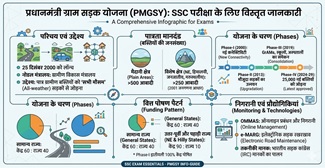
Launch of PMGSY-IV

  • Union Minister for Agriculture and Rural Development Shivraj Singh Chouhan launched Pradhan Mantri Gram Sadak Yojana-IV (PMGSY-IV) in Rayagada district.

Related Facts:

  • Major developmental benefits were announced for the state.
  • Road Projects: 827 road projects approved at a cost of ₹1,698.04 crore, covering लगभग 1,701 km.
  • Beneficiary Habitations: 898 habitations to be connected with all-weather roads for the first time.
  • Rayagada Focus: 274 roads (552.21 km) worth ₹562.10 crore benefiting 314 habitations.
  • Additional Funds: ₹147 crore for pending works and ₹868 crore released as first installment under MGNREGA.

PMGSY-IV:

  • Approval: 2024
  • Duration: FY 2024–25 to 2028–29
  • Target: 62,500 km roads connecting 25,000 habitations
  • Outlay: ₹70,125 crore (Centre: ₹49,087.50 crore; States: ₹21,037.50 crore)
  • Funding: 60:40 (General), 90:10 (NE/Himalayan states)

Coverage:

  • Plains: 500+ population
  • NE/Hilly/Special areas: 250+
  • LWE areas: 100+
  • PMGSY (Original):
  • Launched: 25 Dec 2000 by Atal Bihari Vajpayee
  • Nodal Ministry: Ministry of Rural Development

India’s First Integrated Basmati and Organic Training-cum-Demonstration Farm
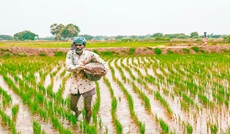
  • India’s first integrated Basmati and organic training-cum-demonstration farm will be established in Pilibhit.

Related Facts:

  • Agreement signed between APEDA and the Agriculture Department of Uttar Pradesh Government on a 70-year lease.
  • Area & Investment: About 7 acres; ₹15 crore investment.
  • Objective: Training and demonstration of traditional and organic Basmati farming.
  • Facilities: Lab, museum, auditorium, and AICRP centre.
  • AI Survey: First AI-based Basmati survey (2026–2028) covering 4 million hectares.
  • Beneficiaries: Farmers of Uttar Pradesh and Uttarakhand.

APEDA:

  • Statutory body under Ministry of Commerce and Industry
  • Established: 1986 (under APEDA Act, 1985)
  • Headquarters: New Delhi

India’s First Open Road Tolling System
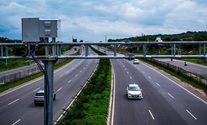
  • India’s first Open Road Tolling (ORT) / Multi-Lane Free Flow (MLFF) system has been implemented on NH-48 (Surat–Bharuch section) at Choriyasi toll plaza in Gujarat.

Related Facts:

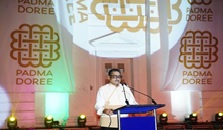
  • A Confluence of Two Cultural Heritages: ‘Padma Dori’ represents a unique fusion of Northeast India’s Eri Silk traditions and Madhya Pradesh’s renowned Chanderi Weaving heritage.
  • Key Feature: This is a 'Double-GI' (Geographical Indication) heritage product that caters to both sustainability and modern market demands.
  • Eri Silk (Ahimsa Silk): Also known as 'Ahimsa Silk' (Non-violent Silk), this variety is produced by extracting the yarn without harming the silkworms. It is renowned for its warmth and durability.
  • Chanderi Weaving: Originating in Chanderi, Madhya Pradesh, this weaving style is celebrated for its fine texture and intricate designs.
  • Vision and Ministry: This initiative reflects the vision of 'Ek Bharat Shreshtha Bharat' (One India, Great India). It has been launched by NEHHDC—a CPSE operating under the Ministry of Development of North Eastern Region (MDoNER).
  • Double-GI Synergy: This project creates a 'Double-GI' heritage brand by combining two distinct Geographical Indication (GI) products, thereby promoting ethical and sustainable fashion on a global stage.

Total Textile Exports in FY 2025-26:

  • In the financial year 2025-26, India's total textile exports (including handicrafts) grew by 2.1%, exceeding ₹3.16 lakh crore—compared to ₹3.9 lakh crore in the previous year.
  • Ready-Made Garments (RMG): This sector remained the largest contributor to total textile exports. Its exports reached ₹1,39,349.6 crore, registering a growth of 2.9%.
  • Handicrafts: Among the value-added categories, handicrafts (excluding hand-made carpets) recorded the highest growth of 6.1%, reaching a total value of ₹15,855.1 crore. Man-made Textiles: This category witnessed robust growth of 3.6%, with exports reaching ₹42,687.8 crore.
  • Cotton Products: Exports of cotton yarn, fabrics, and handloom products recorded steady growth of 0.4%.
  • Key Markets: Export growth was observed across more than 120 destinations. Notable growth was recorded in countries such as the UAE, the UK, Germany, Spain, and Japan.

Key Targets (2030 and 2047):

  • Export Target 2030: To triple textile and apparel exports, reaching ₹9 lakh crore ($100 billion).
  • Market Size 2030: To expand the total turnover of the Indian textile industry to $350 billion (approximately ₹29 lakh crore).
  • Domestic Demand 2030: Domestic demand for textiles is projected to reach $250 billion.
  • Vision 2047: By the time India completes 100 years of independence, the target is set at $600 billion in exports and a domestic market worth $1.8 trillion.
  • Employment Generation: The goal is to create 35 million new jobs in this sector by 2030.

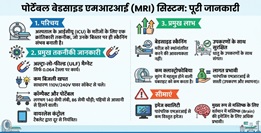
India's First Portable, Ultra-Low-Field Bedside MRI Machine
  • AIIMS (All India Institute of Medical Sciences), Delhi, has introduced India's first portable, ultra-low-field bedside MRI machine.
  • This state-of-the-art technology is capable of performing brain scans on critically ill patients directly at their bedside within ICUs and emergency wards, thereby eliminating the risks associated with transporting them to other departments.
  • This initiative promotes indigenous medical devices under the 'Make in India' campaign.
  • It has been developed by SAMEER (Society for Applied Microwave Electronics Engineering and Research).

MRI:

  • Full Form: Magnetic Resonance Imaging.
  • Alternate Name: It is also referred to as NMRI (Nuclear Magnetic Resonance Imaging).
  • Inventors: Paul C. Lauterbur and Peter Mansfield were awarded the Nobel Prize in 2003 for their contributions to the development of MRI.

Working Principle:

  • Basis: It is based on the principle of Nuclear Magnetic Resonance (NMR).
  • Key Components: It utilizes powerful magnets and radio waves.
  • Process: Hydrogen atoms (protons) within the body align themselves in a specific direction when placed within a magnetic field. When the radio waves are switched off, these atoms release energy, which is then converted into images by a computer.

Key Differences and Safety Considerations (Comparison & Safety):

  • Radiation: Unlike X-rays and CT scans, MRI does not utilize ionizing radiation; therefore, it is considered safe.
  • Applications: It is particularly superior for detailed examinations of soft tissues—such as the brain, heart, muscles, and ligaments.
  • Caution: MRI can be hazardous for individuals with pacemakers or metal implants in their bodies, as the machine's magnetic field can exert a strong pull on the metal objects.

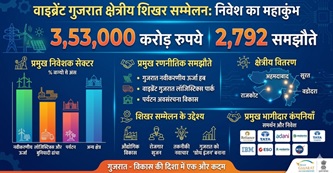
'Vibrant Gujarat' Regional Conference

  • During the 'Vibrant Gujarat' regional conference held in Surat, the Government of Gujarat signed 2,792 MoUs (Memorandums of Understanding) involving investments exceeding ₹3,53,306 crore.

Key Facts:

  • South Gujarat Conference (Surat): This conference was held on May 1–2, 2026, at AURO University in Surat.
  • Special Occasion: The Surat conference was organized on the historic occasion of 'Gujarat Foundation Day' (May 1).

Other Regional Centers:

  • North Gujarat: Mehsana (October 9–10, 2025)
  • Saurashtra-Kutch: Rajkot (January 11–12, 2026)
  • Central Gujarat: Vadodara (Proposed: June 10–11, 2026)

Key Figures and Achievements (South Gujarat)

  • MoUs and Investment: A total of 2,792 MoUs were signed, with a cumulative investment value exceeding ₹3,53,306 crore.
  • Employment: These agreements are estimated to generate approximately 2.82 lakh direct jobs.
  • Partner Countries: 27 countries—including Japan, Singapore, and Russia—participated in this conference.
  • Single Click Payment: During the conference, the State Government directly disbursed an amount of ₹1,349.50 crore to 11,029 beneficiaries (MSMEs and textile units) under the 'Single Click Payment Program.'
  • Historical Context: The 'Vibrant Gujarat Global Summit' was initiated in the year 2003 by the then Chief Minister (and current Prime Minister), Narendra Modi.

Appointments

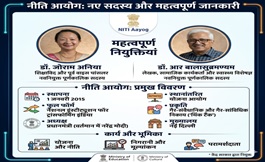
NITI Aayog Full-time Members

  • The Central Government has appointed educationist Dr. Jorom Anya and author Dr. R. Balasubramaniam as full-time members of NITI Aayog.
  • Prime Minister Narendra Modi approved this appointment, following which the total number of full-time members in the Commission—including the Vice-Chairman—has reached seven.

Key Facts:

Dr. Joram Aniya:

  • She is the Head of the Department of Hindi at Dera Natung Government College in Arunachal Pradesh.
  • She is the first woman from the Nyishi community to earn a PhD.
  • She possesses over 18 years of experience in teaching, research, and public policy.

Dr. R. Balasubramaniam:

  • He is a renowned development expert and author.
  • Previously, he served as a Member (HR) of the Capacity Building Commission, where he played a pivotal role in formulating the 'Karmayogi Competency Framework'.

NITI Aayog:

  • Establishment: January 1, 2015
  • Replaced: Planning Commission
  • Full Form (NITI): National Institution for Transforming India
  • Nature: Non-constitutional and non-statutory body (Think Tank)
  • Chairperson: Prime Minister (Currently Narendra Modi)
  • Headquarters: New Delhi
  • Vice-Chairperson: Recently, the eminent economist Ashok Kumar Lahiri was appointed as the new Vice-Chairperson of NITI Aayog (succeeding Suman Bery).

Rohit Jain

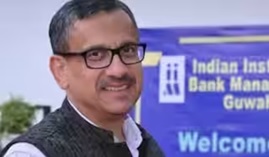
  • The Central Government has appointed Rohit Jain, an Executive Director at the Reserve Bank of India (RBI), as the new Deputy Governor.
  • His appointment will be effective for a period of three years, commencing from May 3, 2026.

Key Facts:

  • Successor to: Rohit Jain will succeed T. Rabi Sankar, whose extended tenure concluded on May 2, 2026.
  • Experience: Prior to becoming Deputy Governor, Rohit Jain served as an Executive Director (ED) at the RBI, overseeing the Department of Supervision. He possesses approximately 30 years of experience in central banking and banking supervision.
  • Appointment Process: This appointment has been approved by the Appointments Committee of the Cabinet (ACC).

RBI's Organizational Structure:

  • According to the RBI Act, 1934, the central bank may have a maximum of four Deputy Governors. Currently, the other three Deputy Governors are:
  • Swaminathan J.
  • Dr. Poonam Gupta
  • S. C. Murmu

Reserve Bank of India (RBI):

  • Establishment: April 1, 1935, under the provisions of the 'Reserve Bank of India Act, 1934'.
  • Recommendation: Based on the recommendations of the Hilton Young Commission (1926).
  • Headquarters: Initially, its Central Office was located in Kolkata; it was permanently relocated to Mumbai in 1937.
  • Nationalization: Although initially privately owned, it was fully nationalized on January 1, 1949.
  • Governor: Currently, Sanjay Malhotra serves as the 26th Governor.
  • First Indian Governor: C.D. Deshmukh (1943–1949). He was appointed in August 1943 and continued to serve as Governor at the time of India's independence (1947).
  • First Female Deputy Governor: K.J. Udeshi (2003). She was the first woman in the history of the RBI to reach this position.
  • The first Indian Prime Minister to have served as Governor: Dr. Manmohan Singh. He was the 15th Governor of the RBI (1982–1985).
  • First Headquarters: Kolkata (1935). It was permanently shifted to Mumbai in 1937.
  • Longest Tenure: Sir Benegal Rama Rau (over 7 years).
  • Shortest Tenure: Amitav Ghosh (just 20 days).

Prasoon Joshi

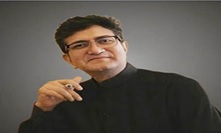
  • On May 2, 2026, the Ministry of Information and Broadcasting appointed renowned lyricist and communication expert Prasoon Joshi as the new Chairman of Prasar Bharati (India's public service broadcaster).

Key Facts:

  • Background: Prasoon Joshi is a prominent figure in the fields of advertising, cinema, and literature. He has also been serving as the Chairman of the Central Board of Film Certification (CBFC) since August 2017.
  • Vacant Post: This position had remained vacant following the resignation of the former Chairman, Navneet Kumar Sehgal, in December 2025.
  • Dual Role: This marks, perhaps, the first instance where an individual has been appointed to simultaneously hold the chairmanship of both the CBFC and Prasar Bharati.

Prasar Bharati:

  • Nature: It is an autonomous statutory body, established in 1997 under the Prasar Bharati Act, 1990.
  • Constituents: It comprises Doordarshan (DD) and Akashvani (All India Radio - AIR).
  • Headquarters: New Delhi

International News

'Ethnic Unity Law'

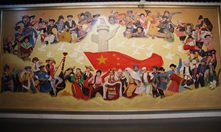
  • The European Parliament has strongly condemned China's new 'Ethnic Unity Law' (Law on Ethnic Unity and Progress).
  • This law was passed by China's National People's Congress on March 12, 2026, and is set to come into force on July 1, 2026.

Key Facts:

  • Cultural Repression: The European Parliament has warned that this law constitutes an attempt to systematically erase the cultural, linguistic, and religious identities of Tibetan and other minority communities (such as Uyghurs, Mongolians, etc.).
  • Mandarin Mandate: This law prioritizes the use of Mandarin (the Chinese language) over local languages ​​in education, public life, and the media.
  • Imposition of Ideology: The law mandates adherence to the state's official ideology, thereby posing a threat to the autonomy of ethnic minorities.
  • Deviation from Previous Legislation: Lawmakers have expressed concern that this law marks a complete departure from the 1984 'Regional Ethnic Autonomy Law,' which previously granted a certain degree of regional autonomy.

Eruption of Mayon Volcano

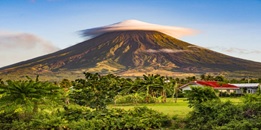
  • A powerful eruption has occurred at the Mayon Volcano in the Philippines, prompting authorities to issue Alert Level 3.

Key Facts:

Mayon Volcano:

  • It is one of the most active and renowned volcanoes in the Philippines.
  • Location: It is situated in the province of Albay, on the island of Luzon in the Philippines.
  • Type: It is a stratovolcano (or composite volcano), composed of layers of lava and ash.
  • Distinguishing Feature: It is globally famous for its "perfect cone" shape, which highlights its exceptional symmetry.
  • Elevation: Its height above sea level is approximately 2,462 meters.
  • Plate Tectonics: It is located at the convergent boundary between the Eurasian and Philippine plates.
  • Pacific Ring of Fire: It forms part of the Pacific Ocean's "Ring of Fire"—a region characterized by the highest levels of seismic and volcanic activity in the world. Major Volcanoes of the World:

Fujiyama: Japan

  • Mayon: Philippines
  • Mount Erebus: Ross Island (Antarctica)
  • Mount Etna: Sicily (Italy)
  • Mount Pelée: Martinique Island
  • Hekla: Iceland
  • Vesuvius: Bay of Naples (Italy)
  • Stromboli: Lipari Island (Mediterranean Sea)
  • Laki: Iceland
  • Katmai: Alaska (USA)
  • Mount Rainier: USA
  • Mount Shasta: USA
  • Chimborazo: Ecuador
  • Ojos del Salado: Argentina–Chile
  • Cotopaxi: Ecuador
  • Popocatépetl: Mexico
  • Parícutin: Mexico
  • Mauna Loa: Hawaiian Islands (USA)
  • Damavand: Iran
  • Koh-i-Sultan: Pakistan
  • Mount Popa: Myanmar (Burma)
  • Alborz: Iran
  • Krakatoa: Indonesia

Reports and Indices

QS Global MBA Rankings 2026

  • According to the QS Global MBA Rankings 2026, IIM Bangalore has secured the top spot in India.

Key Highlights:

  • National Level: IIM Bangalore retains its position as India's No. 1 institute.
  • Global Full-Time MBA Rankings: Globally, IIM Bangalore has secured the 52nd position.
  • Executive MBA (EMBA) Rankings: In this category, IIM Bangalore ranks 64th globally.
  • Key Indicators: The institute achieved the 42nd rank globally in 'Employer Reputation' and the 47th rank in 'Career Outcomes'.

Other Leading Indian Institutes (Global MBA Rankings 2026):

  • IIM Ahmedabad: Global Rank 58
  • IIM Calcutta: Global Rank 64
  • ISB Hyderabad: Global Rank 86

World Press Freedom Index 2026

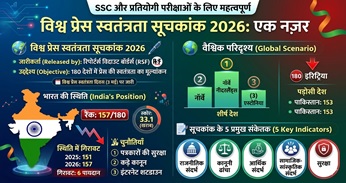
  • In the World Press Freedom Index 2026, released by Reporters Without Borders (RSF), India ranks 157th out of 180 countries.
  • This marks a decline of 6 places from its 151st position in 2025, raising concerns regarding media freedom within the country.
  • Norway retains the top spot (for the 10th consecutive time), while India lags behind its neighboring countries.

Key Facts:

  • Organization: This report is released annually by Reporters Without Borders (Reporters Sans Frontières – RSF).
  • India's Position (2026): 157th (out of 180 countries)
  • Decline: India was ranked 151st in the previous year (2025), indicating a drop of 6 places.
  • Global Trends: According to the report, for the first time in 25 years, the global average score has hit its lowest level, with more than half of the countries falling into the "difficult" or "very serious" categories.
  • Top-Ranked Countries: Norway, Netherlands, Estonia, Denmark, and Sweden.
  • Bottom-Ranked Countries: Saudi Arabia, Iran, China, North Korea, and Eritrea.

Key Indicators for Assessment:

  • RSF determines the rankings based on 5 key indicators:
  • Political context
  • Legal framework
  • Economic context
  • Sociocultural context
  • Safety (Safety of journalists)

Important Days

'World Press Freedom Day'

  • 'World Press Freedom Day' is observed annually on May 3rd; this year, its theme is 'Building a Peaceful Future.'

Related Facts:

  • Declaration: The United Nations General Assembly (UNGA) officially proclaimed this day in December 1993.
  • Windhoek Declaration: This day marks the anniversary of the 'Windhoek Declaration,' which was adopted in Namibia in 1991.
  • World Press Freedom Index 2026: In the latest rankings released by 'Reporters Without Borders' (RSF), India is ranked 157th (out of 180 countries).
  • Constitutional Context (Static GK): Under Article 19(1)(a) of the Indian Constitution, freedom of the press is deemed to be implicit within the 'freedom of speech and expression,' although the word "Press" is not explicitly mentioned separately in the Constitution.
  • Guillermo Cano Prize: Instituted by UNESCO, this award is presented annually on this day to individuals or institutions that have contributed to the promotion of press freedom.
  • Hosting of Global Conference: This year, the city of Lusaka, Zambia, is hosting the main global conference. The conference is being held on May 4–5, 2026, at the Mulungushi International Conference Centre.
  • UNESCO/Guillermo Cano Prize 2026: This year, this prestigious award has been conferred upon the 'Sudanese Journalists Syndicate' for their courageous reporting in conflict zones.


Latest Courses