GK Update
 
  • Mobile Menu
HOME BUY MAGAZINEnew course icon
LOG IN SIGN UP

Sign-Up IcanDon't Have an Account?


SIGN UP


Login Icon

Have an Account?


LOG IN
 

or
By clicking on Register, you are agreeing to our Terms & Conditions.


or


GK Update

Sat 02 May, 2026

National News

Reconstitution of Four Parliamentary Committees
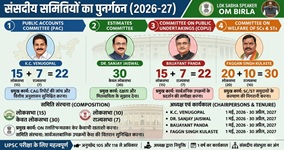
  • Lok Sabha Speaker Om Birla has reconstituted four parliamentary committees for the year 2026-27.
  • The tenure of these committees will extend from May 1, 2026, to April 30, 2027.

The reconstituted committees and their newly appointed Chairpersons:

  • Public Accounts Committee (PAC): Congress MP K.C. Venugopal has been re-appointed as the Chairperson of this crucial committee. This committee comprises 15 members from the Lok Sabha and 7 members from the Rajya Sabha.
  • Estimates Committee: BJP MP Dr. Sanjay Jaiswal has been appointed as the Chairperson of this 30-member committee. All members of this committee are drawn exclusively from the Lok Sabha.
  • Committee on Public Undertakings (COPU): BJP MP Baijayant Panda has been entrusted with the leadership of this committee. It consists of 15 members from the Lok Sabha and 7 members from the Rajya Sabha.
  • Committee on the Welfare of Scheduled Castes and Scheduled Tribes: BJP MP Faggan Singh Kulaste has been appointed as the Chairperson of this committee. This committee includes 20 members from the Lok Sabha and 10 members from the Rajya Sabha.
  • Constitutional Basis: Parliamentary committees derive their authority from Article 105 (Privileges) and Article 118 (Right of Parliament to regulate its own procedure) of the Constitution.
  • Appointment of Chairpersons: The Chairpersons of Lok Sabha committees are appointed by the Speaker of the Lok Sabha.
  • Tenure: These committees are typically constituted for a term of one year.
  • Significance: These committees closely scrutinize legislative business and play a vital role in ensuring government accountability.

Official Permission for Installation of Major Equipment in KKNPP Units 5 and 6
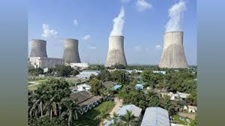
  • The Atomic Energy Regulatory Board (AERB) issued official permission on April 30, 2026, for the installation of major equipment in Units 5 and 6 of the Kudankulam Nuclear Power Project (KKNPP).

Relevant Facts:

  • Permission: The Atomic Energy Regulatory Board (AERB) granted approval on April 30, 2026, for the "installation of major equipment" in Units 5 and 6 of Kudankulam.
  • Major Equipment: Under this approval, critical components such as the Reactor Pressure Vessel (RPV), steam generators, and coolant pumps can be installed.
  • Previous Phase: Prior to this, permission for the 'First Pour of Concrete' (FPC) was granted in April 2021.

Kudankulam Nuclear Power Project (KKNPP):

  • Location: Tirunelveli District, Tamil Nadu
  • Collaboration: It has been constructed with the technical assistance of Russia (formerly the Soviet Union).
  • Capacity: It is India's largest nuclear power plant. Its total planned capacity is 6,000 MW (comprising 6 units of 1000 MW each).
  • Reactor Type: It utilizes the VVER-1000 (Water-Water Power Reactor), which is a type of 'Pressurized Water Reactor' (PWR).
  • Operation: It is operated by the NPCIL (Nuclear Power Corporation of India Limited).

Atomic Energy Regulatory Board (AERB):

  • Establishment: November 15, 1983
  • Headquarters: Mumbai, Maharashtra
  • Function: To develop regulatory policies and standards for nuclear energy and radiation safety in India.
  • Current Chairman: A.K. Balasubramaniam
  • Ministry: It functions under the Department of Atomic Energy (DAE) and reports directly to the Prime Minister.

Other Important Nuclear Centers

  • Tarapur (TAPS): Maharashtra (India's oldest center)
  • Rawatbhata (RAPS): Rajasthan (Established with Canadian collaboration)
  • Kaiga: Karnataka (Recently received FPC approval for Units 5-6)
  • Narora (NAPS): Uttar Pradesh
  • Kakrapar (KAPS): Gujarat

The Country's First State with a Paperless Judiciary
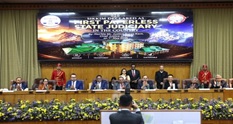
  • Sikkim has become the first state in India where the judiciary has gone completely paperless.
  • Justice Surya Kant, a Judge of the Supreme Court of India, made this announcement at a conference held in Gangtok.

Sikkim:

  • Capital: Gangtok
  • Rivers: Rangit, Rangpo, and Lachung
  • State Flower: Noble Orchid (Yerum Leyi)
  • Sikkim is a major hub for tourism in India.
  • Lepcha: Indigenous inhabitants of Sikkim and Nepal
  • India's Highest Mountain Peak: Kanchenjunga (Sikkim) — It is the first state in the Northeast to restore the Old Pension Scheme.
  • Sikkim's First Railway Station: Rangpo Station

Economy and Banking

₹2,000 Denomination Notes

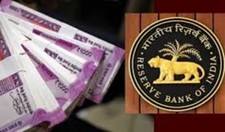
  • According to the Reserve Bank of India (RBI), 98.47 percent of the ₹2,000 denomination notes currently in circulation have returned to the banks three years after the announcement of their withdrawal.

Related Facts:

  • Total Value: On May 19, 2023—when the withdrawal was announced—the total value of these notes in circulation stood at ₹3.56 lakh crore.
  • Current Status: As of the close of business on April 30, 2026, notes worth only ₹5,451 crore remain in the market.
  • Legal Tender Status: It is important to note that ₹2,000 notes continue to remain legal tender.

Reserve Bank of India (RBI):

  • Establishment: On April 1, 1935, under the provisions of the 'Reserve Bank of India Act, 1934'.
  • Recommendation: Based on the recommendations of the Hilton Young Commission (1926).
  • Headquarters: Initially, its Central Office was located in Kolkata, which was permanently shifted to Mumbai in 1937.
  • Nationalization: After initially being privately owned, it was fully nationalized on January 1, 1949.
  • Governor: Currently, Sanjay Malhotra serves as the 26th Governor.
  • First Indian Governor: C.D. Deshmukh (1943–1949). He was appointed in August 1943 and continued to serve as Governor at the time of independence (1947).
  • First Female Deputy Governor: K.J. Udeshi (2003). She was the first woman in the history of the RBI to reach this position.
  • First Indian Prime Minister to Serve as Governor: Dr. Manmohan Singh. He was the 15th Governor of the RBI (1982–1985).
  • First Headquarters: Kolkata (1935). It was permanently shifted to Mumbai in 1937. Longest tenure: Sir Benegal Rama Rau (over 7 years).
  • Shortest tenure: Amitav Ghosh (just 20 days).

Bilateral Trade Between India and the UAE
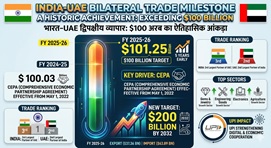
  • Bilateral trade between India and the UAE has crossed the $100 billion mark.

Key Facts:

  • CEPA Agreement: This historic growth is attributed to the Comprehensive Economic Partnership Agreement (CEPA), which came into effect on May 1, 2022.
  • India's Standing: The UAE is currently India's third-largest trading partner and its second-largest export destination.
  • Export Commodities: India primarily exports gems and jewelry, engineering goods, electronics, and agricultural products.
  • Import Commodities: India predominantly imports crude oil and natural gas from the UAE.
  • New Target: Both nations have set a target to boost bilateral trade to $200 billion by 2032.

United Arab Emirates (UAE):

  • Capital: Abu Dhabi
  • Currency: United Arab Emirates Dirham (AED)
  • Official Language: Arabic
  • Religion: Islam (Official)
  • Government: A federal constitutional monarchy comprising seven emirates.
  • The Seven Emirates: The UAE is a federation of seven states (emirates): Abu Dhabi, Dubai, Sharjah, Ajman, Umm Al-Quwain, Fujairah, and Ras Al Khaimah (which joined in 1972).
  • Borders: It shares borders with Saudi Arabia to the west and south, and with Oman to the southeast.
  • Tropic of Cancer: This line passes through the UAE (specifically through Abu Dhabi).
  • Largest City: Dubai (the second-largest in terms of both population and area).

International News

11th Meeting of the Joint Committee on Kosi and Gandak Projects
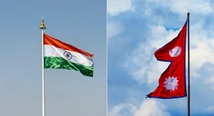
  • The 11th meeting of the Joint Committee on the Kosi and Gandak projects between India and Nepal is being held in Kathmandu.

Key Highlights:

  • Representation: The Indian delegation was led by Santosh Kumar Mall, Principal Secretary of the Water Resources Department, Government of Bihar. The Nepali side was led by Mitra Baral, Director General of the Department of Irrigation.
  • Removal of Encroachments: The Government of Nepal has agreed to remove encroachments from the 35-kilometer stretch of the Western Kosi Main Canal that falls within Nepali territory. Additionally, illegal encroachments will also be cleared from the Kosi and Gandak Barrage areas.
  • Flood Management: In view of the upcoming monsoon season, special discussions were held regarding the strengthening of flood forecasting models and safety measures. A separate joint meeting specifically focused on flood forecasting was also held on May 2, 2026.
  • Infrastructure and Maintenance: Approval has been granted to relocate electric poles situated on the embankments of the Western Kosi Main Canal; this move will facilitate the maintenance of the canal and the operation of service roads.
  • Gandak Project: Under this project, strategies were formulated to address issues such as waterlogging caused by drainage obstructions, maintaining water levels in the canals, and silt control.
  • Kosi Agreement: This treaty was signed between India and Nepal in 1954. (The Kosi River is often referred to as the 'Sorrow of Bihar').
  • Gandak Agreement: This treaty was signed in 1959.
  • Major Rivers: The Kosi River is known as 'Saptakoshi' in Nepal, while the Gandak River is known as 'Narayani'.
  • Barrage Locations: The Kosi Barrage is located at Hanuman Nagar (Nepal), and the Gandak Barrage is situated at Valmikinagar (on the India-Nepal border).

Person In News

Ishank Singh

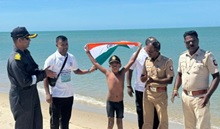
  • Ishank Singh from Jharkhand has become the youngest swimmer to cross the 'Palk Strait'.

Related Facts:

  • Youngest Swimmer: At the age of just 7, Ishank has become the world's youngest swimmer to swim across the 'Palk Strait'.
  • Time and Distance: He covered a distance of approximately 29 kilometers—from Talaimannar in Sri Lanka to Dhanushkodi in India—in just 9 hours and 50 minutes.
  • Previous Record: Ishank broke the record held by Jay Jaswanth of Tamil Nadu, who had covered this distance in 10 hours and 30 minutes at the age of 10 in 2019.
  • World Record Recognition: His achievement was officially recognized by the Universal Records Forum (URF), and he was awarded a certificate designating him as "The Youngest and Fastest Palk Strait Swimmer."

Palk Strait:

  • Location: It is situated between the state of Tamil Nadu in India and the Northern Province (Jaffna District) of Sri Lanka.
  • Connecting Water Bodies: It connects the Bay of Bengal in the northeast to Palk Bay and the Gulf of Mannar in the southwest.
  • Origin of Name: It is named after Robert Palk, the Governor of the Madras Presidency (1755–1763) during the British colonial era.
  • River Flow: The Vaigai River of Tamil Nadu flows into this strait.
  • Ram Setu (Adam’s Bridge): This is a chain of limestone shoals that connects Pamban Island (Dhanushkodi) in India to Mannar Island in Sri Lanka.
  • Shallow Waters: Its depth is quite shallow (less than 9.1 meters at its minimum), making it difficult for large ships to navigate through it. Sethusamudram Project: The Government of India has proposed a plan to construct a shipping canal here to facilitate the movement of large vessels.

Defence News

INS Mahendragiri

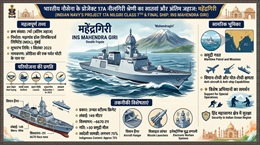
  • At Mazagon Dock Shipbuilders Limited (MDL), Mumbai, 'Mahendragiri'—the sixth indigenous stealth frigate under Project 17A—was delivered to the Indian Navy.
  • Named after the Mahendragiri peak in Odisha, this warship is equipped with advanced weaponry, sensors, and over 75% indigenous content, serving as a key symbol of 'Atmanirbhar Bharat' (Self-Reliant India).

Related Facts:

Project 17A (Nilgiri Class):

  • Total Ships: A total of 7 ships are being constructed under this project (4 by MDL and 3 by GRSE).
  • Stealth Features: These ships possess enhanced stealth features (reduced radar signature) and a high level of automation.
  • Design: The design of these ships has been developed in-house by the Indian Navy's 'Warship Design Bureau' (WDB).
  • Weapon Systems: These include BrahMos (Surface-to-Surface Missile), Barak-8 (Surface-to-Air Missile), and advanced radar systems.

All Seven Ships of Project 17A:

  • Nilgiri – First Ship (Commissioning: January 2025)
  • Himgiri
  • Udaygiri (Commissioning: August 2025)
  • Dunagiri
  • Taragiri (Commissioning: April 2026)
  • Vindhyagiri
  • Mahendragiri – Final Ship

Assumed Charge as Defence Finance Secretary
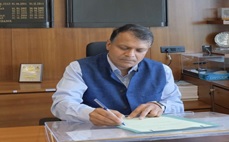
  • Vishwajeet Sahay, a 1990-batch officer of the Indian Defence Accounts Service, assumed charge as Defence Finance Secretary in the Ministry of Defence.

Related Facts :

  • Previous Position: Before this appointment, he was serving as Controller General of Defence Accounts.
  • Experience: He has over 30 years of extensive experience in defence finance and public administration.
  • Previous Roles: He has held several important positions, including Joint Secretary in the Department of Heavy Industries, Additional Secretary & Financial Adviser in the Department of Science and Technology, and Director in the Ministry of Information and Broadcasting.

Assumed Charge as Controller General of Defence Accounts
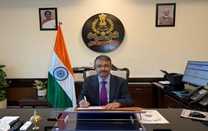
  • Anugrah Narayan Das, a senior officer of the Indian Defence Accounts Service (IDAS) of the 1991 batch, assumed charge as Controller General of Defence Accounts (CGDA) on May 1, 2026.

Related Facts :

  • Experience: He has over 30 years of experience in defence financial management and public service.
  • Education: He is an alumnus of Utkal University and University of Ljubljana (ICPE, Slovenia).
  • Key Positions: He has served in major roles such as Additional Financial Adviser & Joint Secretary in the Ministry of Defence, Principal Integrated Financial Adviser at Army Headquarters, and Special Controller of Defence Accounts at CGDA Headquarters.


Awards and Honours

Whitley Award 2026

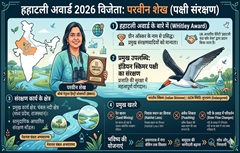
  • Parveen Shaikh was honoured with the prestigious Whitley Award 2026, also known as the “Green Oscar”.

Related Facts :

  • Award: Whitley Award 2026
  • Organization: The award is given by the UK-based charity Whitley Fund for Nature (WFN).
  • Field of Work: She received the award for conservation of the endangered bird Indian Skimmer.
  • Co-winner: Along with Parveen Shaikh, another Indian conservationist, Barkha Subba, was also awarded for conservation of the Himalayan salamander.
  • Parveen Shaikh is working as a scientist at Bombay Natural History Society (BNHS).
  • She developed a community-based conservation model named “Guardians of the Skimmer” on the Chambal River.
  • Due to her efforts, the population of Indian Skimmers in Chambal increased from 400 in 2017 to around 1,000 by 2025, and nest survival rate improved from 14% to 27%.
  • She will use the award money to expand this conservation model to Prayagraj in the Ganga basin.

Indian Skimmer :

  • Feature: This bird is known for its bright orange beak and its unique style of catching fish by skimming the water surface while flying.
  • Population: Over 90% of the world’s population (around 3,000 birds) is found in India.
  • Habitat: These birds nest on seasonal sandbars and river islands, which are threatened due to human interference and changes in river flow.

Alumni Award for Professional Achievement
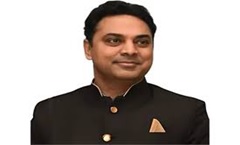
  • The University of Chicago honoured former Chief Economic Adviser of India, Krishnamurthy V. Subramanian, with the Alumni Award for Professional Achievement.
  • He became the first Indian economist to receive this honour since its inception in 1941, recognizing his historic economic contributions to India.

Related Facts :

  • Award: Alumni Award for Professional Achievement
  • Organization: University of Chicago
  • Significance: He is the first Indian economist to receive this award in its 85-year history.
  • Contribution: K. V. Subramanian served as CEA from 2018–2021 and prepared key Economic Surveys during the COVID-19 crisis.
  • Current Role: He is currently the Executive Director for India at the International Monetary Fund.
  • Award Ceremony: The award was presented during the Alumni Weekend of the university.
  • Krishnamurthy V. Subramanian served as India’s Chief Economic Adviser from 2018 to 2021.
  • The university described him as a key economic voice of India during the COVID-19 crisis.


Latest Courses