GK Update
 
  • Mobile Menu
HOME BUY MAGAZINEnew course icon
LOG IN SIGN UP

Sign-Up IcanDon't Have an Account?


SIGN UP


Login Icon

Have an Account?


LOG IN
 

or
By clicking on Register, you are agreeing to our Terms & Conditions.


or


GK Update

Fri 01 May, 2026

National News

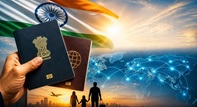
Citizenship (Amendment) Act, 2026

  • The Central Government has notified the Citizenship (Amendment) Act, 2026.
  • This notification primarily amends the Citizenship Rules, 2009, and introduces significant changes regarding Overseas Citizen of India (OCI) cardholders and citizenship application procedures.

Key Facts:


  • Objective of this change: To make the procedures simpler, more transparent, and faster.
  • Ban on Dual Citizenship for Minors: According to the new rules, no minor child may simultaneously hold an Indian passport and a citizenship document (passport) of any other country.
  • Completely Online Application Process: The entire process for registering for an OCI card, as well as for its renunciation, will now be entirely digital. It is mandatory for applicants to apply electronically via the OCI portal.
  • e-OCI Option: In addition to the physical card, an option for an e-OCI (digital document) has now been introduced, making the process more transparent and accessible.
  • Right to Challenge a Decision: If an OCI or citizenship application is rejected, the decision may be challenged before an officer 'one rank higher' than the officer who issued the rejection. The affected individual will also be granted a reasonable opportunity to present their case (Right to be Heard).
  • Legal Basis: Rules related to citizenship are framed by Parliament under the Citizenship Act, 1955.
  • CAA 2019 and Rules 2024: The rules for implementing the Citizenship (Amendment) Act, 2019 (CAA) were notified in March 2024. The objective of the CAA 2019 is to grant citizenship to religious minorities who arrived from Pakistan, Bangladesh, and Afghanistan by December 31, 2014.
  • OCI Scheme: This scheme was introduced through the Citizenship (Amendment) Act, 2005. OCI cardholders are granted a lifelong visa and certain financial/educational parity, but they do not possess political rights (such as the right to vote).
  • Matters related to citizenship and OCI are administered by the Ministry of Home Affairs.
  • The Overseas Citizen of India (OCI) scheme was introduced in 2005.
  • India follows the provision of single citizenship, which has been adopted from the Constitution of Britain.

Important Articles Related to Citizenship:

  • Article 5: Lays down the conditions for persons domiciled in India at the commencement of the Constitution (January 26, 1950) to become citizens.
  • Article 6: Determines the rules regarding the citizenship of persons who migrated from Pakistan to India during the Partition.
  • Article 7: States that the Indian citizenship of persons who migrated to Pakistan after March 1, 1947, was deemed to have ceased (unless they returned for resettlement).
  • Article 8: Outlines the provisions regarding the citizenship of Persons of Indian Origin (PIOs) residing outside India.
  • Article 9: States that if a person voluntarily acquires the citizenship of another country, their Indian citizenship ceases (India does not permit dual citizenship).
  • Article 10: Ensures that citizenship rights continue to subsist, subject to laws enacted by Parliament.
  • Article 11: Empowers Parliament to enact laws regarding the acquisition and termination of citizenship; the Citizenship Act, 1955, was enacted under this provision.
  • Rights: The Fundamental Rights enshrined under Articles 15, 16, 19, 29, and 30 are available exclusively to Indian citizens, not to foreigners.

Launch of the 'Khuaurel' Mobile Application
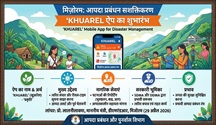
  • Mizoram has launched the 'Khuaurel' mobile application to strengthen disaster management efforts.

Key Facts:


  • Objective: To facilitate rapid response, disseminate information, and accelerate relief operations during disasters.
  • Functionality: This app allows the public to report disaster-related incidents immediately.
  • Coordination: It enables seamless communication between the State Disaster Management Authority (SDMA) and the District Disaster Management Authority (DDMA).
  • Data Management: It will assist in the systematic recording and tracking of disaster-related data, thereby improving future response strategies.
  • Meaning: 'Khuaurel' is a word from the Mizo language, meaning 'Nature'.

Mizoram:

  • Mizoram became the 23rd state of India on February 20, 1987.
  • It is also known as the 'Land of Blue Mountains'.
  • Its borders touch Myanmar and Bangladesh internationally, while domestically, it shares boundaries with Tripura, Assam, and Manipur.
  • Phawngpui is the highest peak in the state.
  • In May 2025, Mizoram was declared India's first fully functionally literate state. Under the 'ULLAS' initiative, the state set a precedent by achieving a literacy rate of 98.20%.
  • Major Festivals: Chapchar Kut is Mizoram's most popular spring festival. Other major 'Kuts' (festivals) include Mim Kut and Pawl Kut.

India's First Multilingual AI System

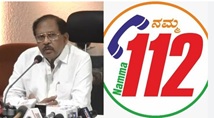
  • The Bengaluru City Police has launched India's first multilingual AI system within the 'Namma 112' emergency response system.

Key Facts:


  • India's First Multilingual AI: This is a first-of-its-kind initiative in the country, wherein a police department has deployed an AI-based multilingual voice system for an emergency helpline.
  • Usage of VANKI: This system has been named VANKI (Multilingual Voice AI for Nationwide Key Interventions).
  • Support for 10+ Languages: The system currently supports over 10 Indian and foreign languages. These include Bengali, Gujarati, Odia, Manipuri, Kashmiri, Nepali, and Assamese, as well as Spanish, French, and Arabic.
  • Real-time Translation: Utilizing AI, VANKI instantly comprehends and translates the caller's language, thereby providing call handlers with accurate information and reducing response times.
  • Development Partners: This technology was developed in collaboration with Monday Ventures and Aeos.
  • Modus Operandi: When a call cannot be understood by an operator due to a language barrier, it is transferred to the AI ​​system. The AI ​​converses with the caller and gathers details regarding their location and the nature of the incident.

Launch of the e-Prāpti Portal

  • The EPFO ​​has launched the e-Prāpti portal to facilitate the secure tracking and activation of dormant EPF accounts through Aadhaar-based authentication.

Employees' Provident Fund Organisation (EPFO):


  • Establishment: Employees' Provident Fund and Miscellaneous Provisions Act, 1952.
  • Administration: Union Ministry of Labour and Employment, Government of India.
  • Structure: The apex decision-making body is the Central Board of Trustees (CBT).
  • Services: The EPFO ​​is one of the largest social security organizations in the world.
  • Schemes: EPF (Provident Fund), EPS (Pension Scheme – payable at age 58), and EDLI (Life Insurance).
  • Contribution: Employee: 12% of Basic Salary; Employer: 12% (8.33% to EPS, 3.67% to EPF).

International News

'Aarogya Maitri' Health Cube

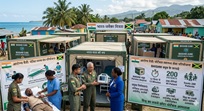
  • Strengthening its partnership with CARICOM, India has deployed the 'Aarogya Maitri' Health Cube in Jamaica.
  • This serves as a novel and effective example of cooperation among developing nations within the realm of humanitarian diplomacy, falling under the broader framework of the India-Caribbean Community (CARICOM).
CARICOM Partnership: This marks a significant step toward the implementation of the seven pillars of CARICOM—proposed by Prime Minister Modi during the second India-CARICOM Summit in November 2024—of which medical and healthcare services constitute a key pillar.

Defence News

First Successful 'Salvo Launch' of NASM-SR

  • The DRDO and the Indian Navy conducted the first successful 'salvo launch' of the NASM-SR (Naval Anti-Ship Missile-Short Range) from a naval helicopter off the coast of Odisha in the Bay of Bengal.

Key Facts:


  • Salvo Launch: During this test, two missiles were fired in quick succession from a single helicopter. This marks the first time India has demonstrated the salvo capability of an air-launched anti-ship missile system.
  • Indigenous Technology: It has been developed by the Hyderabad-based Research Centre Imarat (RCI) in collaboration with other DRDO laboratories and private industries.

Missile Characteristics:

  • Category: This is India's first indigenous 'air-launched' anti-ship missile.
  • Range: It has a range of approximately 55 kilometers.
  • Speed: It is a subsonic missile with an average speed of Mach 0.8.
  • Weight and Payload: It weighs approximately 380–385 kilograms and can carry a 100-kilogram warhead.
  • Launch Technology: It utilizes a 'sea-skimming' profile, making it difficult for radar systems to detect.

Economy and Banking

GST Collection in April 2026 (Year-on-Year Basis)
  • In April 2026, India's GST collection exceeded ₹2.43 lakh crore, registering a growth of 8.7% on a year-on-year basis.
  • This growth represents an 8.7 percent increase compared to the same month in the previous year (₹2.23 lakh crore).

Related Facts:


Key Figures:

  • Gross Revenue: ₹2,42,702 crore (approximately ₹2.43 lakh crore)
  • Net Collection: Net GST revenue, after refunds, stood at ₹2.11 lakh crore, marking a 7.3% increase on a year-on-year basis.
  • Revenue from Imports: GST collection on imported goods witnessed a substantial increase of 25.8%, reaching ₹57,580 crore.
  • Domestic Transactions: Revenue derived from domestic sales and services grew by 4.3% (₹1.85 lakh crore).
  • Refunds: Refunds amounting to ₹31,793 crore were issued this month, which is 19.3% higher than the previous year.

Gross Goods and Services Tax (GST):

  • It is a destination-based indirect tax levied on the supply of goods and services.
  • Constitutional Amendment: It was implemented through the 101st Constitutional Amendment Act, 2016.
  • Article 279A: Under this article, the GST Council was constituted, presided over by the Union Finance Minister.
  • Components of GST:
  • CGST (Central GST): Collected by the Central Government on transactions occurring within the same state.
  • SGST/UTGST (State/Union Territory GST): Collected by State or Union Territory governments on transactions occurring within their respective jurisdictions.
  • IGST (Integrated GST): Levied by the Centre on inter-state trade and imports, the proceeds of which are subsequently shared between the Centre and the States.

Art and Culture

Annual Chitra Pournami

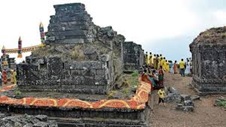
  • The annual Chitra Pournami (April–May) festival was held at the historic Mangala Devi Kannagi Temple, situated within the Periyar Tiger Reserve on the Kerala–Tamil Nadu border.

Related Facts:


  • Significance: This temple is dedicated to Kannagi (Goddess Mangala Devi), the heroine of the famous Tamil epic Silappathikaram.
  • Timings: This temple is opened for devotees' *darshan* (viewing) only once a year, on the day of *Chitra Pournami* (between April and May).
  • History: It is believed to have been constructed 2,000 years ago by the Chera King Cheran Senguttuvan, and it is also known as 'Kannagi Kottam'.
  • Architecture: It is a temple built using massive granite stones, constructed in the ancient Pandyan architectural style.
  • Worship Rituals: During this festival, priests from both Kerala (Nambudiri tradition) and Tamil Nadu jointly perform the worship rituals.

Periyar Tiger Reserve (PTR):

  • Located across the Idukki and Pathanamthitta districts of Kerala, the Periyar Tiger Reserve (PTR) is one of India's most significant and biodiverse-rich protected areas.
  • It is situated in the southern region of the Western Ghats, nestled between the Cardamom Hills and the Pandalam Hills.
  • It was declared a wildlife sanctuary in 1950. In 1978, it was accorded the status of a Tiger Reserve under 'Project Tiger'. A significant portion of the reserve (350.54 sq km) was declared the Periyar National Park in 1982.
  • Situated at its center is Periyar Lake, an artificial lake formed in 1895 following the construction of the Mullaperiyar Dam.
  • The Mullayar—a tributary of the Periyar River—also originates from the 'Kottamala' peak, located within this very reserve.
  • Podocarpus wallichianus—the only coniferous tree species found in South India—is found here.

657 Antiquities Worth $14 Million

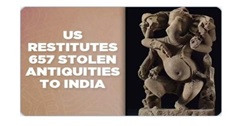
  • The United States has returned 657 stolen antiquities to India, with a total estimated value of approximately $14 million (about ₹120 crore).

Key Facts:


  • The returned items include a bronze statue of 'Avalokiteshvara' valued at $2 million.
  • The Avalokiteshvara statue was discovered near the Lakshman Temple in 1939 and was housed at the Mahant Ghasi Das Memorial Museum in Raipur until 1952.
  • The statue was stolen from the museum and smuggled into the United States in 1982.
  • These artifacts also include a sandstone statue of the dancing Lord Ganesha, which was stolen from a temple in Madhya Pradesh in the year 2000.
  • In 2024, both countries signed a Cultural Property Agreement to prevent the illicit trade of cultural property.

Inauguration of the Exhibition of Sacred Relics of Tathagata Buddha
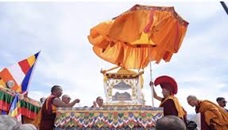
  • On the occasion of Buddha Purnima, Home Minister Amit Shah inaugurated an exhibition of the sacred relics of Tathagata Buddha at Jivetsal in Leh.
  • Buddha Purnima (Vesak) is the most sacred festival of Buddhism, celebrated on the full moon day of the month of Vaishakh.
  • It symbolizes three significant events—the birth, enlightenment (at Bodhgaya), and Mahaparinirvana (at Kushinagar) of Gautama Buddha—and is also referred to as the 'Triple-Blessed Day.'
  • Since 1999, Buddha Purnima has been recognized as an international day by the United Nations.

Important Days

International Workers' Day 2026

  • 'International Workers' Day' is observed annually on May 1st with the objective of honoring the contributions of workers.
  • This year, the day was celebrated under the theme: "Ensuring a Healthy Psychosocial Working Environment."

Related Facts:


  • Historical Background: Its origins trace back to the 'Haymarket Movement' that took place in Chicago, USA, on May 1, 1886, where workers demanded a reduction in working hours from 15–16 hours to 8 hours.
  • Role of the ILO: The International Labour Organization (ILO), an agency of the United Nations, sets global labor standards and ensures the social security of workers.

In the Context of India:

  • Inception in India: The first Labour Day in India was celebrated on May 1, 1923, in Madras (now Chennai) by the 'Labour Kisan Party of Hindustan'.
  • Constitutional Provisions: Article 24 (Prohibition of Child Labour), Article 39(d) (Equal Pay for Equal Work), and Article 43 (Living Wage) of the Indian Constitution safeguard the rights of workers.
  • The Government of India has streamlined 29 central labor laws and, effective November 21, 2025, has implemented four major Labour Codes covering wages, industrial relations, social security, and occupational safety.
  • These reforms strike a balance between enhancing the 'Ease of Doing Business' and protecting the rights of workers.
  • The Code on Wages, 2019: This code integrates four laws—the Minimum Wages Act, the Payment of Wages Act, the Payment of Bonus Act, and the Equal Remuneration Act. It ensures a minimum wage and timely payment for all employees. Industrial Relations Code, 2020: This Code integrates laws related to trade unions, industrial employment, and dispute resolution. It raises the threshold for obtaining permission for retrenchment or closure from 100 to 300 employees.
  • Code on Social Security, 2020: This Code brings workers in the unorganized sector, as well as gig and platform workers, under the ambit of social security (including PF and ESI).
  • Occupational Safety, Health and Working Conditions Code, 2020 (OSH Code, 2020): This Code consolidates 13 laws pertaining to the safety and working conditions (such as 'Work from Home' provisions) of workers in factories, mines, and plantations.
  • These Codes have been brought into force effective November 21, 2025.

International Labour Organization (ILO):

  • It is a specialized agency of the United Nations dedicated to setting global labor standards and promoting social justice.
  • Establishment: It was established in 1919, following the First World War, under the 'Treaty of Versailles'.
  • Headquarters: Its headquarters are located in Geneva, Switzerland.
  • Nobel Peace Prize: It was awarded the Nobel Peace Prize in 1969 for its efforts in promoting peace and justice among workers.

The ILO is the only specialized agency of the United Nations with a tripartite structure. It provides equal representation to three groups:

  1. Governments of member states
  2. Employers
  3. Workers
  • Key Reports: The ILO publishes the 'World Employment and Social Outlook' (WESO) and the 'Global Wage Report'. Founding Member: India has been a founding member of the ILO since 1919. Governing Body: India has been a permanent member of its Executive Council since 1922. Ratification of Conventions: India has ratified 6 out of the 8 core/fundamental conventions.

Birth Anniversary of Pandit Raghunath Murmu
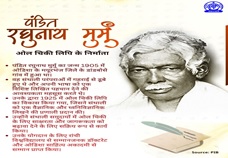
  • Every year on May 1st, the birth anniversary of Pandit Raghunath Murmu—the creator of the Ol Chiki script for the Santhali language—is celebrated.

Ol Chiki Script:


  • This script was developed by Pandit Raghunath Murmu in 1925.
  • The year 2025 marks the centenary of the Ol Chiki script, a milestone specifically highlighted by the President.
  • 5th Schedule: This pertains to the administration and control of Scheduled Areas, as well as of Scheduled Tribes residing in any state other than Assam, Meghalaya, Tripura, and Mizoram.
  • 6th Schedule: This provides for the administration of tribal areas in the states of Assam, Meghalaya, Tripura, and Mizoram to safeguard the rights of the tribal population. This special provision is enshrined under Article 244(2) and Article 275(1) of the Constitution.
  • The characters of the script are inspired by natural shapes and Santhali words.
  • On December 25, 2025, President Droupadi Murmu released the official translation and digital edition of the Constitution of India in the Santhali language (Ol Chiki script) at Rashtrapati Bhavan.

Maharashtra and Gujarat Foundation Day
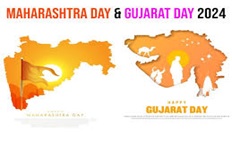
  • Maharashtra Foundation Day is celebrated annually on May 1st to commemorate the formation of Maharashtra as a Marathi-speaking state under the Bombay Reorganisation Act, 1960.

Related Facts:


  • State Reorganisation: After independence, demands arose in India for the formation of states on a linguistic basis. The Samyukta Maharashtra Movement (Samyukta Maharashtra Samiti) spearheaded the demand for the bifurcation of the Marathi and Gujarati-speaking regions within the Bombay State.
  • Bombay Reorganisation Act, 1960: Through this Act, the erstwhile Bombay State was divided into two separate states:
  1. Maharashtra: For the Marathi-speaking population.
  2. Gujarat: For the Gujarati-speaking population.

Maharashtra:

  • Formation (by bifurcation): May 1, 1960
  • Governor: Jishnu Dev Varma
  • Parliamentary Seats: 48 seats in the Lok Sabha and 19 seats in the Rajya Sabha.
  • Highest Peak: Kalsubai (1,646 meters) in the Sahyadri Range.
  • Festivals: Ganesh Chaturthi, Gudi Padwa (Marathi New Year), and Pola.
  • Folk Arts: Lavani and Tamasha; Warli painting is a renowned tribal art form.
  • Saint Tradition: Known as the "Land of Saints" (Sant Dnyaneshwar, Sant Tukaram, Sant Namdev).
  • Major Rivers: Godavari (the state's longest river, often referred to as the "Dakshin Ganga" or Southern Ganges), Krishna, Tapi, and Bhima.
  • UNESCO World Heritage Sites: Seven sites, including the Ajanta Caves, Ellora Caves, Elephanta Caves, Chhatrapati Shivaji Terminus, and the Victorian Gothic and Art Deco Ensembles of Mumbai.


Latest Courses