GK Update
 
  • Mobile Menu
HOME BUY MAGAZINEnew course icon
LOG IN SIGN UP

Sign-Up IcanDon't Have an Account?


SIGN UP


Login Icon

Have an Account?


LOG IN
 

or
By clicking on Register, you are agreeing to our Terms & Conditions.


or


GK Update

Fri 24 Apr, 2026

National News

Northern Region Agriculture Conference
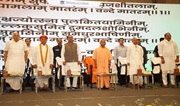
  • The Northern Region Agriculture Conference was organized on April 24, 2026, at 'The Centrum Hotel' in Lucknow, the capital of Uttar Pradesh.
  • This conference was held under the aegis of the Union Ministry of Agriculture and Farmers Welfare.

Key Highlights:


  • Chairmanship: Union Minister of Agriculture and Farmers Welfare, Shivraj Singh Chouhan, presided over the conference.
  • Participating States and Union Territories: Nine states and Union Territories from Northern India participated in the event, including Uttar Pradesh, Haryana, Himachal Pradesh, Uttarakhand, Punjab, Delhi, Chandigarh, Jammu & Kashmir, and Ladakh.
  • Key Discussion Themes: During the conference, an in-depth review was conducted on critical topics such as the Kisan Credit Card (KCC), Agriculture Infrastructure Fund (AIF), Digital Agriculture Mission (Digital Farmer Registry), Horticulture Development, and the Pulses and Oilseeds Self-Sufficiency Mission.
  • This event is part of a series of regional conferences being organized across the country, which will culminate in the 'National Kharif Conference' scheduled to be held in New Delhi on May 28–29.

Major Agricultural Schemes:

  • PM-KISAN (Pradhan Mantri Kisan Samman Nidhi) – Launched: February 24, 2019 | Ministry: Ministry of Agriculture and Farmers Welfare
  • PMFBY (Pradhan Mantri Fasal Bima Yojana) – Launched: January 13, 2016 | Ministry: Ministry of Agriculture and Farmers Welfare
  • KCC (Kisan Credit Card) – Launched: August 1998 | Ministry: Ministry of Finance (Implemented by RBI/NABARD)
  • PMKSY (Pradhan Mantri Krishi Sinchai Yojana) – Launched: July 1, 2015 | Ministries: Ministry of Jal Shakti, Ministry of Agriculture, and Ministry of Rural Development
  • PM-KUSUM (Solar Pump Scheme) – Launched: March 2019 | Ministry: Ministry of New and Renewable Energy (MNRE)
  • e-NAM (National Agriculture Market) – Launched: April 14, 2016 | Ministry: Ministry of Agriculture and Farmers Welfare
  • Soil Health Card – Launched: February 19, 2015 | Ministry: Ministry of Agriculture and Farmers Welfare
  • PM-KMY (Kisan Maan-Dhan Yojana) – Launched: September 12, 2019 | Ministry: Ministry of Agriculture and Farmers Welfare

'Scheme for Special Assistance to States for Capital Investment' (SASCI)
  • The Union Ministry of Mines has included a financial allocation of ₹5,000 crore under the 'Scheme for Special Assistance to States for Capital Investment' (SASCI) for the financial year 2026-27.
  • The primary objective of this initiative is to incentivize reforms in the mining sector within the states and to accelerate mineral production.
  • The operational guidelines for this component of the scheme have recently been issued by the Ministry.

Saras Aajeevika Mela in the Financial Year 2026-27
  • The Ministry of Rural Development has finalized the national-level calendar for the Saras Aajeevika Melas for the financial year 2026-27.
  • Its objective is to promote rural livelihoods, women's entrepreneurship, and traditional handicrafts across the country.

Key Details:


  • Saras Aajeevika Mela 2026: To be held from October 22 to November 6, 2026, at Leisure Valley Park, Gurugram.
  • Saras Food Festival 2026: To be held from November 21 to December 8, 2026, at Sunder Nursery, New Delhi.
  • Saras Aajeevika Mela 2027: To be held from February 1 to February 28, 2027, at the Major Dhyan Chand National Stadium, New Delhi.
  • These fairs serve as a platform to bring together members of Self-Help Groups (SHGs) from across the country and enable rural women to connect directly with urban consumers, thereby increasing their income and visibility.

Saras Aajeevika Mela:

  • Organizer: The Ministry of Rural Development (MoRD), in collaboration with the National Institute of Rural Development and Panchayati Raj (NIRDPR).
  • Mission: It is a component of the Deendayal Antyodaya Yojana – National Rural Livelihoods Mission (DAY-NRLM).

Objectives:

  • To provide market access to rural artisans and craftspeople, and to eliminate intermediaries.
  • To promote women's empowerment by making rural women economically independent.
  • To strengthen campaigns such as 'Vocal for Local' and 'Atmanirbhar Bharat' (Self-Reliant India) at the grassroots level.
  • Saras Aajeevika Mela 2026: This event was organized in February 2026 in Gurugram, Haryana. More than 900 women entrepreneurs from 28 states participated in this event.
  • Saras Aajeevika Mela 2025: It was organized at venues such as Noida Haat and Delhi's Major Dhyan Chand National Stadium.
  • Lakhpati Didi Initiative: A key focus of the current fairs is to develop the export potential of 'Lakhpati Didis' (women from Self-Help Groups earning over ₹1 lakh annually) and to transform them into successful entrepreneurs.

Assistance for the Education and Empowerment of Scheduled Caste Students
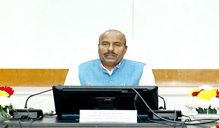
  • The Central Government has disbursed an amount exceeding ₹7,981 crore in 2025-26 for the education and empowerment of over 75 lakh Scheduled Caste students.

Key Facts:


  • Objective: To provide financial assistance to Scheduled Caste (SC) students pursuing studies in Class 11 and above, enabling them to complete their education.
  • Financial Structure: This is a Centrally Sponsored Scheme. In 2020, the Cabinet revised its "funding pattern" to 60:40 (Centre: State) (with a ratio of 90:10 for Northeastern states).
  • Significance of DBT: To ensure transparency, the scholarship amount is transferred directly into the students' Aadhaar-linked bank accounts through Direct Benefit Transfer (DBT).
  • Freeship Card: Eligible students are issued a 'Freeship Card,' which enables them to secure admission to higher educational institutions without the requirement of paying upfront fees.

Technology Development and Investment Promotion (TDIP) Scheme
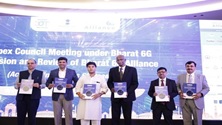
  • Union Minister for Communications, Jyotiraditya M. Scindia, released the revised guidelines for the Technology Development and Investment Promotion (TDIP) Scheme.
  • The primary objective of this scheme is to position India not merely as a technology consumer in the telecom sector, but as a global standard-setter.

Key Facts:


  • Total Outlay: ₹203 crore.
  • Duration: The scheme will be applicable for the period 2026–31.
  • Key Objectives: To accelerate the development of next-generation telecom technologies—such as 6G and Advanced 5G—and to strengthen India's participation in international standardization bodies (such as ITU, 3GPP, and oneM2M).
  • Expanded Scope: Under the revised guidelines, the scope has now been expanded to include startups, MSMEs, academic institutions, research organizations, and telecom service providers.
  • Implementing Agencies: The scheme will be implemented through the Telecommunications Standards Development Society India (TSDSI), Telecom Centers of Excellence (TCoE), and Telecommunications Consultants India Limited (TCIL).

Important Days

'National Panchayati Raj Day'

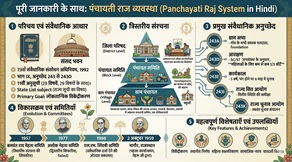
  • 'National Panchayati Raj Day' is celebrated annually on April 24th to commemorate the enactment of the 73rd Constitutional Amendment Act.

Related Facts:


  • Historical Background: The 73rd Constitutional Amendment Act, 1992, was passed by the Lok Sabha on December 22, 1992, and by the Rajya Sabha on December 23, 1992. After receiving the President's assent, it came into force (became effective) on April 24, 1993. Given the significance of this specific date, April 24th was chosen for this observance.
  • First Declaration: The then Prime Minister, Dr. Manmohan Singh, announced the first 'National Panchayati Raj Day' in 2010.
  • Constitutional Provisions: Through this amendment, a new Part IX (Articles 243 to 243O) and the 11th Schedule were added to the Constitution, comprising 29 functional subjects for Panchayats.
  • Three-Tier Structure: This Act provides for a three-tier Panchayati Raj system at the Village, Block (Intermediate), and District levels.

Current Context (2026):

  • Completion of 33 Years: On April 24, 2026, this historic amendment marks the completion of 33 years since its enactment.
  • Nodal Ministry: The event is organized annually by the Ministry of Panchayati Raj.
  • On this occasion, the report on the Panchayat Development Index (PDI)-2.0 and three books under the theme 'Meri Panchayat Meri Dharohar' (My Panchayat, My Heritage) will be released.
  • Under the Ministry's 'Panchayat Dharohar Initiative' (Panchayat Heritage Initiative), three illustrated books on rural heritage—specifically, a monograph on the rural heritage of Tripura, a monograph on the rural heritage of Tirupati, and a volume titled 'Uttarkashi: Saumya Kashi: The Soul of Himalayan Heritage'—will be released. Panchayati Raj:
  • Panchayati Raj is a system of rural local self-government in India, which was accorded constitutional status by the 73rd Constitutional Amendment Act of 1992.

Three-Tier Structure:

  • In most states of India, the Panchayati Raj system comprises three levels:
  • Village Level: Gram Panchayat
  • Block/Intermediate Level: Panchayat Samiti
  • District Level: Zila Parishad

Important Committees:

  • Balwant Rai Mehta Committee (1957): It proposed a three-tier Panchayati Raj system.
  • Ashok Mehta Committee (1977): It recommended a two-tier structure.
  • L.M. Singhvi Committee (1986): It strongly recommended granting constitutional status to Panchayats.

Constitutional Provisions:

  • Part of the Constitution: It has been included in Part IX of the Constitution (Articles 243 to 243O).
  • Schedule: The 11th Schedule was added, comprising 29 subjects falling within the functional domain of Panchayats.
  • Subject of the State List: 'Local Self-Government' is fundamentally a subject of the State List.

Key Features:

  • Gram Sabha: This forms the foundation of the Panchayati Raj system and consists of all registered voters residing in the village.
  • Reservation: Reservation of seats is mandatory for Scheduled Castes (SC), Scheduled Tribes (ST), and women (at least one-third of the seats).
  • Tenure: The tenure of Panchayats is fixed at 5 years. In the event of premature dissolution, it is mandatory to conduct elections within six months.
  • State Election Commission: A provision exists for an independent State Election Commission in every state to ensure the fair conduct of elections.
  • State Finance Commission: There is a provision for the constitution of this commission every five years to review the financial position of the Panchayats.
  • First Implementation: In modern India, the Panchayati Raj system was inaugurated for the first time on October 2, 1959, by Prime Minister Jawaharlal Nehru in the Nagaur district of Rajasthan.

Environmental News

Research Paper: 'Global Drought Extremes in 2025'
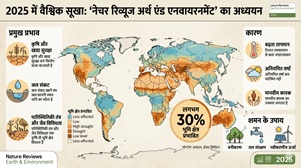
  • According to a study published in the journal *Nature Reviews Earth & Environment*, global drought affected approximately 30% of the Earth's land area in the year 2025.
  • This figure is nearly three times higher than the 10% recorded in the 1990s.

Key Facts:


  • This study is based on the ERA5-Land dataset from the European Centre for Medium-Range Weather Forecasts (ECMWF), as well as several high-resolution climate indices.
  • The study analyzed the extent and severity of drought from 1950 to 2025.
  • According to the study, the year 2025 ranked sixth among the years most affected by drought since 1950.
  • Of the 30% of the global land area affected by meteorological drought in 2025, approximately 1.2% was impacted by extreme drought (defined specifically as a severe moisture deficit).
  • The report states that the drought of 2025 was not an isolated event, but rather part of a broader expansion of global drought trends observed since the year 2000.

Reports, Rankings, and Indices

Second Phase of FTO Rankings Released

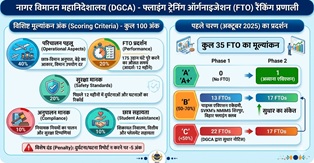
  • Union Minister of Civil Aviation Ram Mohan Naidu released the second phase (April 2026 edition) of the rankings for Flight Training Organizations (FTOs) approved by the Directorate General of Civil Aviation (DGCA).
  • This ranking system has been introduced to make pilot training in the country more transparent and competitive.
  • The first phase of the rankings was published on October 1, 2025.

According to the report:


Evaluation Criteria:

The DGCA has assessed these organizations based on the following 5 key parameters:

  • Safety Standards and Culture
  • Average Time Taken for Course Completion
  • Student-to-Aircraft Ratio
  • Fleet Size and Availability of Instructors
  • Regulatory Compliance and Student Support
  • Objective: The primary goal is to promote the 'Train in India, Fly in India' vision and to make the Indian pilot training ecosystem globally competitive.
  • Administrative Reforms: The rankings are released every six months (on April 1 and October 1). This data-driven framework ensures healthy competition among institutions.
  • Sectoral Growth: Over the past 8 years, the number of Commercial Pilot Licenses (CPLs) issued has increased more than 2.5 times, reflecting growing self-reliance in the aviation sector.
  • Regulatory Initiatives: Facilities such as a single-window system for pilot licensing have also been introduced under the 'Bharatiya Vayuyan Adhiniyam' (Indian Aircraft Act).
  • Top Performer: In this phase, Avyanna Aviation Pvt. Ltd. has achieved the highest 'A' category ranking. This marks a significant improvement compared to the previous phase (October 2025), when no institution managed to secure a place in the 'A' or 'A+' categories. Trend of Improvement: In the first phase (October 2025), out of 35 FTOs, 13 were in Category 'B' and 22 in Category 'C'. Data from the second phase indicates that several institutions have improved their operational efficiency and standards.
  • Category 'C' (22 Institutions): Institutions that scored less than 50%. These were issued notices for improvement by the DGCA.
  • The number of institutions in Category 'B' has increased from 13 to 17, while the number in Category 'C' has declined to 17, signaling an improvement in the sector.

Raghav Chadha, Sandeep Pathak, and Ashok Mittal
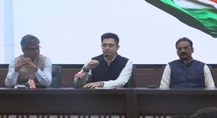
  • Three Members of Parliament (MPs) from the Aam Aadmi Party—Raghav Chadha, Sandeep Pathak, and Ashok Mittal—have announced their decision to leave the party.
  • Raghav Chadha stated that he, along with two-thirds of AAP's members in the Rajya Sabha, would be joining the Bharatiya Janata Party (BJP).

Relevant Facts:


  • Defection and Merger: In a press conference, Raghav Chadha announced that out of the Aam Aadmi Party's total 10 Rajya Sabha MPs, seven (constituting two-thirds of the members) are leaving the party and have decided to merge with the BJP in accordance with constitutional provisions.
  • Grounds: Raghav Chadha cited a deviation from the party's principles and dissatisfaction with the leadership as the reasons for this move.
  • Split and Merger: If two-thirds (2/3) of the members of a political party decide to merge with another party, their membership remains secure under the Anti-Defection Law (as per the 91st Constitutional Amendment, 2003).
  • Grounds for Disqualification: An elected member may be disqualified if they voluntarily give up their membership of a political party or if they vote contrary to the party's directives (the 'Whip').
  • Decision-Making Authority: The authority to decide on questions regarding disqualification rests with the Presiding Officer of the House (the Chairman in the case of the Rajya Sabha).

'Anti-Defection Law':

  • Provisions regarding defection in the Indian Constitution are set forth in the Tenth Schedule, which was added through the 52nd Constitutional Amendment Act of 1985. It is commonly referred to as the 'Anti-Defection Law'.

Article 102(2) — For Parliament:

  • Article 102(1) deals with general grounds for disqualification (such as holding an 'office of profit', insolvency, etc.).
  • Article 102(2) specifically refers to the Tenth Schedule (defection). Article 191(2) — For State Legislatures:
  • 10th Schedule: This details the rules and procedure regarding disqualification.

Articles 102(2) and 191(2):

  • These provide, within the main body of the Constitution, the constitutional basis through which the 10th Schedule is implemented.
  • Note: In addition to the above, Articles 75(1B) and 164(1B) (added by the 91st Amendment, 2003) stipulate that a person disqualified on the grounds of defection shall also remain ineligible for the post of Minister until they are re-elected.

General Upendra Dwivedi

  • Indian Army Chief General Upendra Dwivedi has been inducted into the International Hall of Fame at the U.S. Army War College.

Key Facts:


  • Third Indian Army Chief: General Dwivedi is the third Indian Army Chief to receive this honor. Prior to him, former Army Chiefs General V.K. Singh (2011) and General Bikram Singh had received this distinction.
  • Alumnus of the Institution: General Dwivedi is an alumnus of this college and has also been conferred the title of 'Distinguished Fellow' here.
  • Basis of the Honor: This honor is bestowed upon foreign military officers who, after graduating from the USAWC, attain the highest rank (such as Army Chief) within their country's armed forces.
  • Significance: This achievement underscores India's growing military stature on the global stage and the deepening defense ties between India and the U.S. (particularly in the Indo-Pacific region).

Sports News

87th Inter-State Junior and Youth National Table Tennis Championships
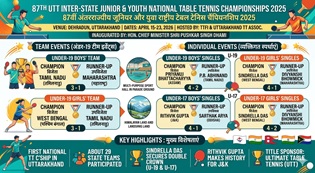
  • Tamil Nadu won the Under-19 category title by defeating Maharashtra at the 87th Inter-State Junior and Youth National Table Tennis Championship held in Dehradun.

Related facts:


  • Hosting: This marked the first time that Uttarakhand hosted this national-level table tennis tournament.
  • Participation: Teams from approximately 29 states across the country participated in this championship.
  • Organizing Bodies: It was organized under the aegis of the Table Tennis Federation of India (TTFI) and the Uttarakhand Table Tennis Association.
  • Change in Dates: Initially, the competition was scheduled for February–March 2026, but it was postponed to April 2026 due to board examinations.
  • Sponsor: The title sponsor of this championship was 'Ultimate Table Tennis' (UTT).


Latest Courses