National News
Online Gaming Rules, 2026

- The Ministry of Electronics and Information Technology (MeitY) has notified the 'Rules regarding the Promotion and Regulation of Online Gaming, 2026'.
- These rules will come into effect on May 1, 2026, and have been formulated to implement the Online Gaming (Promotion and Regulation) Act, 2025.
Key Facts:
- Objective: To regulate online gaming, ensure citizen safety, safeguard the financial system, enable coordinated enforcement, and protect user rights.
- Classification: Online games have been categorized into three major categories: Online Money Games, Social Games, and Esports.
- Regulatory Body: An "Online Gaming Authority of India" will be constituted, to be chaired by an Additional Secretary from MeitY.
- The other five members will include Joint Secretaries from the Ministries of Home Affairs, Information and Broadcasting, and Youth Affairs and Sports, as well as the Department of Financial Services and the Department of Legal Affairs.
- The functions of the Authority will include the classification and registration of online games.
- It will also determine whether or not a game is money-based.
- The Authority will also be responsible for the redressal of public grievances.
- To ensure compliance, it will issue guidelines, codes of conduct, and directives.
|
NGT Issues Notices to Several Agencies
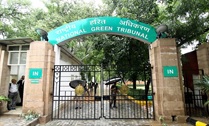
- The National Green Tribunal has issued notices to several agencies regarding pollution in the Yamuna River.
- The Tribunal has sought responses from local authorities—including the National Mission for Clean Ganga, the Government of Uttar Pradesh, the Mathura-Vrindavan Municipal Corporation, and the Central and State Pollution Control Boards.
- The matter pertains to the alleged discharge of untreated sewage and wastewater into the river from the towns of Vrindavan and Kosi.
- A bench headed by the Tribunal's Chairperson, Justice Prakash Shrivastava, was hearing a petition concerning the non-compliance with directives issued in December 2021.
National Green Tribunal (NGT):
- Establishment: October 18, 2010 (under the NGT Act, 2010)
- Headquarters: Delhi
- Regional Offices: Bhopal, Pune, Kolkata, Chennai
- Composition: Chairperson (a Judge of the Supreme Court or a Chief Justice of a High Court), Judicial Members, and Expert Members (holding a tenure of 5 years)
- Jurisdiction: Civil cases related to the environment, forests, and natural resources
- Regulations: The NGT is not bound by the Code of Civil Procedure (CPC), 1908; instead, it is guided by the principles of 'Natural Justice'.
- Suo Motu Powers: The Supreme Court has granted the NGT the special power to take *suo motu* (on its own motion) cognizance of matters.
|
90 Million Subscribers Enrolled Under APY as of April 2026

- The Atal Pension Yojana (APY) has achieved the milestone of enrolling 90 million subscribers.
- In the previous financial year, total enrollments reached 13.5 million—the highest number of enrollments recorded in a single financial year since the inception of the scheme.
Atal Pension Yojana (APY):
- Launched: May 9, 2015
- Implemented: June 1, 2015
- This scheme is a voluntary, contributory pension scheme primarily designed for the poor, the underprivileged, and workers in the unorganized sector.
- Administration: The scheme is administered by the Pension Fund Regulatory and Development Authority (PFRDA) under the aegis of the Ministry of Finance.
- Extension: According to recent reports, the Union Cabinet has approved the continuation of this scheme until the financial year 2030-31.
- It is intended for workers in the unorganized sector who often lack any formal pension coverage.
- Initially, it was available to all citizens of India aged between 18 and 40 years.
- Effective October 1, 2022, individuals who pay income tax are no longer eligible to join this scheme.
- Upon reaching the age of 60, subscribers receive a fixed monthly pension based on their contributions.
- The available pension slabs are: ₹1,000, ₹2,000, ₹3,000, ₹4,000, and ₹5,000 per month.
- A minimum contribution period of 20 years is mandatory, the duration of which depends on the subscriber's age at the time of joining.
- It is managed under the framework of the National Pension System (NPS).
|
International News
11th India-Egypt Joint Defence Committee Meeting
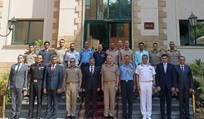
- The 11th meeting of the Joint Defence Committee (JDC) between India and Egypt was held in Cairo, Egypt.
Key Highlights:
- Representation: The Indian delegation was led by Amitabh Prasad, Joint Secretary (International Cooperation) at the Ministry of Defence, while the Egyptian side was led by Major General Ahmed Mohamed Omar of the Egyptian Armed Forces Staff.
- Defence Cooperation Plan 2026-27: Both nations reached a consensus on a bilateral Defence Cooperation Plan for the year 2026-27. The primary focus of this plan is to enhance military dialogue, joint training exercises, and maritime security cooperation.
- Naval Talks: During this meeting, the 'Inaugural Navy-to-Navy Staff Talks' were also conducted for the first time, reflecting the growing maritime cooperation between the two countries.
- Tribute: The Indian delegation visited the Heliopolis War Memorial in Cairo and paid homage to the Indian soldiers who sacrificed their lives during the First and Second World Wars.
Egypt:
- Officially known as the Arab Republic of Egypt.
- It is a transcontinental country situated in North-Eastern Africa and Western Asia (the Sinai Peninsula).
- Borders: It is bordered by the Mediterranean Sea to the north, Sudan to the south, Libya to the west, and the Red Sea to the east.
- The Nile River: It is often referred to as the "Gift of the Nile." The Nile is one of the longest rivers in the world, flowing from south to north and emptying into the Mediterranean Sea.
- Canal: The world-renowned Suez Canal is located in Egypt; it connects the Mediterranean Sea to the Red Sea and holds immense strategic importance for global trade.
- Highest Peak: Mount Catherine is the highest peak in Egypt. Capital: Cairo
- System of Government: Semi-presidential Republic
- Currency: Egyptian Pound
- Official Language: Arabic
- Egypt is home to one of the world's oldest civilizations.
- Pyramids: The Great Pyramid of Giza and the 'Great Sphinx' are outstanding examples of the region's ancient architecture.
- In ancient times, the rulers of this land were known as 'Pharaohs'.
India-Egypt Relations:
- Ancient Ties: References to relations with Egypt (under Ptolemy II) can be found in the inscriptions of Emperor Ashoka.
- In 1955, India and Egypt signed a Treaty of Friendship.
- Establishment of NAM: In 1961, Jawaharlal Nehru and Gamal Abdel Nasser jointly laid the foundation of the Non-Aligned Movement (NAM).
- Total Bilateral Trade: In the fiscal year 2024-25, total trade stood at US$ 5.2 billion (approximately 5.2 billion dollars).
|
Economy and Banking
Total Textile Exports in FY 2025-26
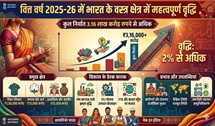
- In the financial year 2025-26, India's total textile exports (including handicrafts) exceeded ₹3.16 lakh crore—marking a growth of 2.1%—compared to ₹3.9 lakh crore in the previous year.
Related Facts:
- Ready-made Garments (RMG): This segment continued to be the largest contributor to total textile exports. Its exports reached ₹1,39,349.6 crore, registering a growth of 2.9%.
- Handicrafts: Among value-added categories, handicrafts (excluding hand-knotted carpets) recorded the highest growth of 6.1%, reaching ₹15,855.1 crore.
- Man-made Textiles: This category witnessed robust growth of 3.6%, with exports standing at ₹42,687.8 crore.
- Cotton Products: Exports of cotton yarn, fabrics, and handloom products recorded a steady growth of 0.4%.
- Key Markets: Export growth was observed across more than 120 destinations. Notable growth was recorded in countries such as the United Arab Emirates (UAE), the United Kingdom (UK), Germany, Spain, and Japan.
- Key Targets (2030 and 2047):
- Export Target 2030: To triple textile and apparel exports, reaching ₹9 lakh crore ($100 billion).
- Market Size 2030: To take the total turnover of the Indian textile industry to $350 billion (approximately ₹29 lakh crore).
- Domestic Demand 2030: Domestic demand for textiles is estimated to reach $250 billion. Vision 2047: The goal is to achieve exports worth $600 billion and a domestic market valued at $1.8 trillion by the time the nation completes 100 years of independence.
- Employment Generation: The objective is to create 35 million new jobs in this sector by 2030.
- Strategic Pillars and Schemes:
- PM MITRA Parks: Establishing Mega Textile Parks across 7 states of the country (Tamil Nadu, Telangana, Gujarat, Karnataka, Madhya Pradesh, Uttar Pradesh, and Maharashtra) to reduce logistics costs and integrate the entire value chain within a single location.
- PLI Scheme: Providing Production-Linked Incentives to boost the production of Man-Made Fibers (MMF) and Technical Textiles.
- National Technical Textiles Mission (NTTM): Aiming to expand the market for Technical Textiles (such as medical, agricultural, and defense textiles) to $309 billion by 2047.
- Sustainability: The goal is to secure a 30% global share in Recycled Fibers and to promote eco-friendly manufacturing practices.
|
India's GDP Growth in FY27: Moody's Ratings
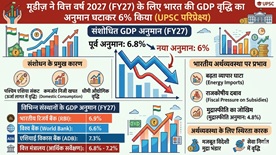
- Moody's Ratings has lowered its GDP growth forecast for India for FY27 from 6.8% to 6%.
Key Facts:
- Primary Reason for Revision: Rising energy prices (oil and gas) and increased input costs resulting from military conflicts in West Asia.
- Economic Impact: A decline in private consumption and a slowdown in industrial activity.
- Inflation: Retail inflation is projected to average 4.8% in FY27, which is significantly higher than the 2.4% recorded in FY26.
GDP Growth Forecasts by Major Institutions (FY27):
- Reserve Bank of India (RBI): India's central bank has projected a growth rate of 6.9% for FY27.
- Asian Development Bank (ADB): In its recent 'Asian Development Outlook' (April 2026), the ADB projected India's growth rate at 6.9% for FY27 and 7.3% for FY28.
- Economic Survey (2025-26): The Government of India's Economic Survey has estimated real GDP growth for FY27 to be in the range of 6.8% to 7.2%.
- World Bank: Signaling strong growth for India in the medium term, the World Bank has projected a growth rate of approximately 6.6% for FY27.
- International Monetary Fund (IMF): Amidst global uncertainties, the IMF has projected that the growth rate will moderate to 6.2% in FY27.
|
Reports and Indices
'Global Electricity Review 2026' Report
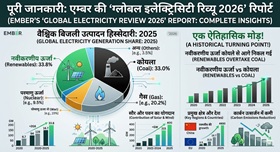
- According to Ember's seventh annual 'Global Electricity Review 2026' report, the share of renewable energy in global electricity generation stood at 33.8% in 2025, while the share of coal was 33.0%.
Key Highlights:
- Historic Shift: 2025 marked the first year in which renewable energy (33.8%) surpassed coal (33.0%) in global electricity generation. This indicates that the world is now moving towards the end of the 'coal era.'
- Decline in Fossil Fuel Contribution: A marginal shift of -0.2% was recorded in fossil fuel-based electricity generation, signaling a stagnation or decline in this sector.
- China's Dominance: China accounted for more than half of the global growth in solar energy capacity. In China, the combined share of solar and wind energy in total electricity generation reached 22%.
- Target 2030: The report suggests that the world is making the right strides toward achieving the goal—set at COP28—of 'tripling renewable capacity by 2030'; however, increasing investment in infrastructure (grid) and storage remains a significant challenge.
- India's Context: India, too, witnessed a record surge in solar capacity, a development crucial for the country's 'Panchamrit' goals (achieving 500 GW of non-fossil fuel capacity by 2030).
|
Science and Technology
'Fluorometric Sensing' Material Developed
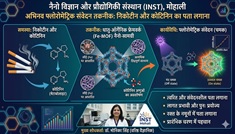
- Scientists at the Mohali-based Institute of Nano Science and Technology (INST)—an autonomous institute under the Department of Science and Technology (DST)—have developed a novel fluorometric nano-sensor for the detection of nicotine and its primary metabolite, cotinine.
Key Facts:
- Base Material: This sensor utilizes iron-based Metal-Organic Framework (Fe-MOF) nanospheres.
- Fluorometric Sensing: It functions as a 'turn-on' sensor. When molecules of nicotine or cotinine become trapped within its sponge-like porous structure, the material begins to glow with blue fluorescence.
- Synthesis Process: These nanospheres were synthesized using a 'solvothermal' process.
- While nicotine remains in the body for only a short duration, cotinine is a stable biomarker that persists in blood, saliva, and urine for an extended period.
- This sensor can accurately detect the 'long-lasting footprints' of tobacco exposure (whether through active or passive smoking) within the body.
|
Environmental News
Uttar Pradesh's 12th and India's 99th Ramsar Site
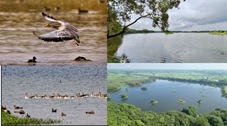
- Union Minister Bhupender Yadav announced that the 'Shekha Lake Bird Sanctuary' in Uttar Pradesh has been accorded the status of Uttar Pradesh's 12th and India's 99th Ramsar site.
Key Facts:
|
Shekha Lake Bird Sanctuary:
- Location: It is situated in the Koil Tehsil of Aligarh district in Uttar Pradesh.
- History: This lake was formed in 1852 following the construction of the Upper Ganges Canal, which passes nearby.
- Significance: The lake serves as a crucial stopover point for migratory birds along the Central Asian Flyway.
- Biodiversity: The presence of approximately 249 bird species has been recorded here, 62 of which are specifically dependent on wetlands. Key species include the Bar-headed Goose, Painted Stork, and various types of ducks.
- Category: It has also been recognized by BirdLife International as an 'Important Bird Area' (IBA).
Ramsar Sites:
- These are wetlands of international importance that have been designated for conservation. They are named after the city of Ramsar in Iran, where the Ramsar Convention was signed.
- Signing of the Convention: February 2, 1971, in the city of Ramsar, Iran (World Wetlands Day: Celebrated annually on February 2).
- Entered into Force: 1975.
- The list of Ramsar sites is maintained by the Secretariat of the Ramsar Convention, which is housed within the headquarters of the International Union for Conservation of Nature (IUCN) in Gland, Switzerland. India adopted this treaty in 1982
All 12 Ramsar sites of Uttar Pradesh:
- Shekha Bird Sanctuary: Aligarh
- Patna Bird Sanctuary: Etah
- Haiderpur Wetland: Muzaffarnagar/Bijnor
- Bakhira Wildlife Sanctuary: Sant Kabir Nagar
- Sur Sarovar/Keetham Lake: Agra
- Sarsai Nawar Jheel: Etawah
- Sandi Bird Sanctuary: Hardoi
- Saman Bird Sanctuary: Mainpuri
- Samaspur Bird Sanctuary: Rae Bareli
- Parvati Arga Bird Sanctuary: Gonda
- Nawabganj Bird Sanctuary: Unnao
- Upper Ganga River: Brajghat to Narora (Hapur, Bulandshahr, Sambhal, Amroha)
|
Arsenic Contamination in the Salween River
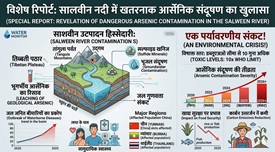
- Hazardous levels of arsenic contamination have been detected in the Salween River, which originates from the Tanggula Mountains located on the Tibetan Plateau.
The Salween River:
- Origin: It originates from the Tanggula Mountains on the Tibetan Plateau. In China, it is known as the 'Nu River' (Nujiang).
- Flow: It flows through China, Myanmar, and Thailand before emptying into the Andaman Sea.
- Arsenic Contamination: According to recent studies, arsenic levels in the river have risen due to geological activities and anthropogenic factors such as mining. This poses a grave threat to the aquatic ecosystem and to the health of the millions of people who depend on it.
- Ecological Significance: It is considered one of Southeast Asia's longest 'free-flowing' rivers, with very few dams constructed along its course.
Arsenic Contamination:
- Arsenic (As) is a naturally occurring, highly toxic metalloid. Its contamination of drinking water and the food chain poses a major threat to public health.
- Prolonged consumption of arsenic-contaminated water leads to a condition known as Arsenicosis.
- WHO Standards: The safe limit for arsenic in drinking water is set at 0.01 mg/l (10 ppb).
- Indian Standards (BIS): In India, the permissible limit is 0.01 mg/l; however, in the absence of alternative sources, a limit of up to 0.05 mg/l is permitted.
- Affected States: In India, the regions within the Ganga-Brahmaputra basin—primarily in the states of West Bengal, Bihar, Uttar Pradesh, Jharkhand, Assam, and Chhattisgarh—are the most severely affected.
|
Sports News
13th World Para Athletics Championships

- World Para Athletics has announced that Tashkent, the capital of Uzbekistan, will host the 13th World Para Athletics Championships in June 2027.
Key Facts:
- Host: Tashkent, Uzbekistan
- Edition: This will be the 13th World Para Athletics Championships.
- Timing: The event is scheduled to take place in June 2027.
- Historical Context: This marks the first time that Uzbekistan will host this prestigious global competition.
- Prior to this, Uzbekistan has successfully organized several Grand Prix competitions.
World Para Athletics:
- It is an organization operating under the International Paralympic Committee (IPC) that governs and regulates Para Athletics (track and field) sports worldwide.
- Headquarters: Bonn, Germany
- Objective: To provide opportunities for high-level competition to athletes with disabilities and to govern the technical rules of the sport.
- Participation: It is open to athletes with physical impairments, visual impairments, and intellectual impairments.
|
Important Days
World Book and Copyright Day

- World Book and Copyright Day is celebrated annually on April 23rd with the aim of promoting the importance of reading, publishing, and copyright.
Related Facts:
- Organizer: This is an annual event organized by UNESCO.
- Objective: To promote the habit of reading, encourage publishing, and protect copyright through intellectual property.
- In 1995, UNESCO officially declared April 23rd as 'World Book and Copyright Day'.
- Rabat, the capital of Morocco, has been designated by UNESCO as the World Book Capital for 2026, receiving this honor following Rio de Janeiro (2025).
- Since 2001, more than 26 cities have been accorded the status of 'World Book Capital'.
- This date holds great significance for world literature, as several renowned authors were either born or passed away on April 23rd: William Shakespeare, Miguel de Cervantes, and Inca Garcilaso de la Vega.
|


 Don't Have an Account?