GK Update
 
  • Mobile Menu
HOME BUY MAGAZINEnew course icon
LOG IN SIGN UP

Sign-Up IcanDon't Have an Account?


SIGN UP


Login Icon

Have an Account?


LOG IN
 

or
By clicking on Register, you are agreeing to our Terms & Conditions.


or


GK Update

Wed 22 Apr, 2026

National News

NMCG's Progress in FY 2025–26

  • The National Mission for Clean Ganga (NMCG) has made significant progress during the financial year 2025–26 in strengthening sewage treatment infrastructure and implementing pollution abatement measures along the banks of the Ganga and its tributaries.
  • During this year, a cumulative treatment capacity of 538.03 MLD (Million Liters per Day) has been added through 18 projects, involving an investment of approximately ₹4,700 crore.

Key Highlights:

  • Construction of STPs: A total of 28 Sewage Treatment Plants (STPs) were completed this year, marking a 27% increase compared to the previous year (22 STPs).
  • State-wise Progress: These projects are spread across the states of Uttar Pradesh, Uttarakhand, Bihar, Jharkhand, and West Bengal.
  • Uttar Pradesh: This state made the largest contribution. Capacities of 55 MLD in Varanasi (Assi-BHU area), 43 MLD in Prayagraj, and 166 MLD in Agra were added.
  • Bihar: Significant work was undertaken in Digha (30 MLD), Kankarbagh (35 MLD), and Bhagalpur (22.5 MLD).
  • Jharkhand: An 'Interception and Diversion' (I&D) and STP project was completed in Phusro, adding a capacity of 14 MLD.
  • Uttarakhand: Improvements were made in Haridwar and Muni Ki Reti, as well as in Udham Singh Nagar (10.3 MLD) and Dehradun (15 MLD).
  • West Bengal: Infrastructure was strengthened in Jangipur (13 MLD), Chakdaha (15 MLD), and Uttar Barrackpore (30 MLD).
  • Monitoring and Transparency: The Mission has launched the 'Ganga Pulse Public Portal' to ensure real-time monitoring and transparency regarding STP operations. Budgetary Allocation: The Namami Gange Programme has been extended until March 2026, with a budgetary outlay of ₹3,400 crore earmarked for the year 2025-26.

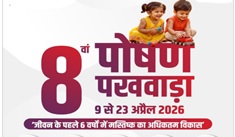
8th National Nutrition Fortnight

  • In the 8th National Nutrition Fortnight campaign, Ahilyanagar in Maharashtra secured the first position, while Pune attained the second position.

Key Facts:

  • Third Place: Muzaffarpur district in Bihar secured the third position at the national level.
  • A record 324,075 awareness activities were recorded in Ahilyanagar.
  • Organization: Conducted by the Ministry of Women and Child Development from April 9 to April 23, 2026.
  • Main Theme: "Brain Development in the First Six Years of a Child's Life."
  • Achievement: Ahilyanagar district secured the top spot in the country by organizing over 324,075 activities under this campaign.
  • Objective: To establish nutrition and early childhood care as a 'Jan Andolan' (People's Movement).
  • Mission Poshan 2.0: This campaign is part of the effort to further strengthen the Integrated Child Development Services (ICDS) under Mission Poshan 2.0.
  • The Poshan Abhiyan was launched by Prime Minister Narendra Modi on March 8, 2018, from Jhunjhunu, Rajasthan. This program represents a significant effort to address the issue of malnutrition and to improve the nutritional status of pregnant women, lactating mothers, and children.

Inauguration of Key Infrastructure Projects by the President
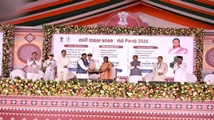
  • President Droupadi Murmu inaugurated several key infrastructure projects in Rourkela, aimed at promoting science, cultural heritage, and urban administration.

Related Facts:

  • Key Inaugurations: The President inaugurated the Nirmal Munda Parivesh Path, a Planetarium and Science Centre, a Tribal Museum, and an Integrated Command and Control Centre (ICCC).
  • Objectives: To foster scientific curiosity, preserve local tribal culture and history, and promote smart urban management.

Planetarium:

  • A specialized type of theater or hall designed primarily for education and entertainment regarding astronomy and the night sky.
  • Asia's Largest and the World's Second-Largest Planetarium: The M.P. Birla Planetarium, Kolkata. Its architecture is modeled after the Buddhist Stupa at Sanchi.
  • Nehru Planetarium: Located within the complex of 'Teen Murti Bhavan,' the former residence of the country's first Prime Minister. It houses the space suit of Rakesh Sharma (the first Indian astronaut) and the 'Soyuz T-10' capsule.
  • Swami Vivekananda Planetarium: India's first 3D planetarium. It utilizes an 8K ultra-bright digital projection system.
  • Kusumbai Motichand Planetarium: Considered to be India's first planetarium, established in 1954.
  • Indira Gandhi Planetarium: Known for its unique architectural design, which is shaped like the planet Saturn.

Road Safety is an Integral Part of the “Right to Live with Dignity”: Supreme Court
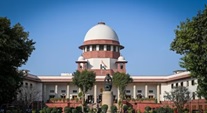
  • The Supreme Court of India, in a landmark judgment (April 2026), clarified that under Article 21, the right to road safety and safe passage is an integral part of the “right to live with dignity.”

Related Facts:

  • A bench comprising Justice J.K. Maheshwari and Justice A.S. Chandurkar delivered this ruling in the Phalodi Accident vs National Highways Authority of India (NHAI) case.
  • While hearing the matter, the Court warned that due to administrative or infrastructural failures, expressways must not turn into “corridors of death.”
  • Invoking Article 142 of the Constitution, the Court issued nationwide road safety directions.

Supreme Court of India :

  • Establishment: Came into existence on 26 January 1950 with the enforcement of the Constitution; formally inaugurated on 28 January 1950.
  • Predecessors: Replaced the Federal Court of India (1937) and the Privy Council (UK).
  • Constitutional Provisions: Covered under Part V of the Constitution (Articles 124 to 147).
  • Strength: Sanctioned strength of 34 judges, including the Chief Justice of India (CJI).
  • Appointment: Judges are appointed by the President based on the Collegium system.
  • Qualifications: Must be an Indian citizen; at least 5 years as a High Court judge, or 10 years as an advocate, or a distinguished jurist in the President’s opinion.
  • Tenure: Judges serve until the age of 65 years.

Jurisdiction and Powers :

  • Original Jurisdiction (Article 131): Disputes between the Centre and States or between States.
  • Writ Jurisdiction (Article 32): Enforcement of Fundamental Rights through writs like Habeas Corpus and Mandamus.
  • Appellate Jurisdiction: Appeals in civil, criminal, and constitutional matters from High Courts.
  • Advisory Jurisdiction (Article 143): President can seek the Court’s opinion on legal/public matters.
  • Court of Record: Its decisions are binding and preserved as legal precedents.

Landmark Cases :

  • Kesavananda Bharati v. State of Kerala (1973): Propounded the “Basic Structure Doctrine.”
  • Maneka Gandhi v. Union of India (1978): Expanded the interpretation of Article 21.
  • Justice K.S. Puttaswamy v. Union of India (2017): Recognized Right to Privacy as a Fundamental Right.
  • Article 21 : Article 21 is considered the most dynamic and essential pillar of Indian democracy, often called the “heart of the Constitution” as it protects human dignity.
  • Text: “No person shall be deprived of his life or personal liberty except according to procedure established by law.”

Key Features :

  • Universal Application: Available to both citizens and non-citizens.
  • Negative & Positive Obligation: Prevents the State from taking life arbitrarily and obligates it to ensure a dignified life.
  • Emergency Exception: After the 44th Amendment (1978), Article 21 cannot be suspended even during a National Emergency.

Procedure Established by Law” vs “Due Process of Law” :

  • Gopalan Case (1950): Narrow interpretation—only protection against executive action.
  • Maneka Gandhi Case (1978): Expanded interpretation—procedure must be fair, just, and reasonable, effectively introducing “due process of law” in India.

Rights Under Article 21 (Judicial Interpretation)

  • Right to Shelter
  • Right to Clean Environment
  • Right to Privacy (Puttaswamy Case)
  • Right to Speedy Trial
  • Right to Free Legal Aid
  • Right to Travel Abroad
  • Right to Road Safety (2026 Landmark Judgment)

International News

7th Meeting of the Joint Group on Customs between India and Bhutan
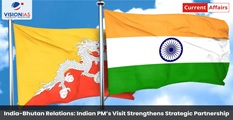
  • The seventh meeting of the Joint Group on Customs (JGC) between India and Bhutan was held in Munnar, Kerala.

Key Highlights:

  • Co-chairmanship: The meeting was co-chaired by Yogendra Garg, Member of India's Central Board of Indirect Taxes and Customs (CBIC), and Sonam Jamtsho, Director General of the Department of Revenue and Customs under Bhutan's Ministry of Finance.
  • Trade Statistics: In the financial year 2024-25, bilateral trade between India and Bhutan exceeded $1.9 billion, marking an increase of over 46% compared to the previous year.
  • Digitalization: Both sides discussed the digitalization of customs procedures and facilitating the movement of goods through the Electronic Cargo Tracking System (ECTS).
  • Study Tour: The Bhutanese delegation visited the Port of Kochi, where they were briefed on systems such as cargo handling, maritime enforcement, and the Automatic Identification System (AIS).
  • Key Agreements: Consensus was reached on coordinated border management, the pre-arrival exchange of customs data, and sharing intelligence to curb smuggling.
  • India-Bhutan Relations: India is Bhutan's largest trading partner, accounting for approximately 80% of its total trade.
  • 'Neighbourhood First' Policy: This meeting reflects India's commitment to fostering regional stability and economic integration.
  • Connectivity: Currently, 10 Land Customs Stations (LCS) are notified along the India-Bhutan border, with 6 located in West Bengal and 4 in Assam.
  • Strategic Significance: Bhutan is a landlocked country; therefore, transit facilities provided through India are crucial for its economic development.

Bhutan:

  • Capital: Thimphu (also the country's largest city).
  • Official Language: Dzongkha.
  • Currency: Ngultrum.
  • National Flag: Features a 'Thunder Dragon'; the yellow color symbolizes the power of the King, while the saffron-orange color represents Buddhism.
  • System of Government: Bhutan is a democratic constitutional monarchy.
  • Head of State: King Jigme Khesar Namgyel Wangchuck (the 5th Druk Gyalpo).
  • Head of Government: Prime Minister (currently Dasho Tshering Tobgay).
  • Parliament: Known as the *Tshogdu*.
  • Borders: Bounded by China to the north, and by India (Sikkim, West Bengal, Assam, and Arunachal Pradesh) to the south, east, and west.
  • Carbon Negative: Bhutan is one of the select few countries in the world that are carbon negative—meaning it absorbs significantly more carbon dioxide than it produces.
  • Forest Cover: More than 70% of the country's land area is covered by forests.
  • Highest Peak: Gangkhar Puensum (7,570 meters), considered the world's highest 'unclimbed' mountain.

Economy & Banking

India’s Marine Food Exports in FY 2025–26
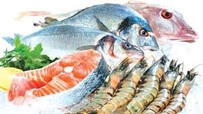
  • According to the Marine Products Export Development Authority, India’s marine food exports stood at ₹72,325.82 crore in FY 2025–26.

Related Facts:

  • Key Product: Frozen shrimp remained the primary driver of export growth, contributing ₹47,973.13 crore (USD 5.51 billion), accounting for more than two-thirds of total export earnings. The volume of shrimp exports increased by 4.6%, while the value rose by 6.35%, further strengthening its dominance in India’s marine export basket.
  • Top Export Destination: The United States continued to be the largest export destination, with imports worth USD 2.32 billion. However, exports to the U.S. declined by 19.8% in volume and 14.5% in value, largely reflecting the impact of reciprocal tariffs.

Alternative Markets Growth:

  • Exports to China (second-largest destination) grew significantly, with 22.7% increase in value and 20.1% in volume.
  • The European Union also recorded strong growth, with exports rising 37.9% in value and 35.2% in volume.
  • Southeast Asia witnessed notable expansion, with growth of over 36.1% in value and 28.2% in volume.

Other Markets:

  • Exports to Japan increased by 6.55% in value.
  • Exports to West Asia saw a marginal decline of 0.55%, mainly due to regional instability toward the end of the financial year.

Art and Culture

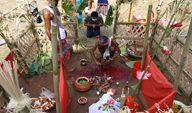
Garia Puja

  • Garia Puja was celebrated in Tripura during the third week of April 2026 (on April 21, or the beginning of the month of Vaishakh).

Key Facts:

  • Deity: This puja (worship) is dedicated to Baba Garia (Lord Garia), who is revered as the deity of wealth, livestock, fertility, and domestic well-being.
  • Timing and Duration: The festivities commence on the last day of the month of Chaitra and conclude on the seventh day of the month of Vaishakh (the third week of April). In 2026, the main puja fell on April 21.
  • Symbolism: During the puja, a bamboo pole is adorned with flowers and garlands, serving as a symbolic representation of Lord Garia.

Major Festivals of Northeast India:

  • Hornbill Festival – Nagaland: Often referred to as the 'Festival of Festivals,' it showcases the rich culture and heritage of the Naga tribes.
  • Ambubachi Mela – Assam: Held at the Kamakhya Temple (Guwahati), it is also known as the 'Mahakumbh of the East' and symbolizes the Goddess's annual menstruation cycle.
  • Moatsu – Nagaland: Celebrated by the Ao tribe following the sowing of crops.
  • Losar – Arunachal Pradesh/Ladakh: The Tibetan Buddhist New Year.
  • Saga Dawa – Sikkim: A festival commemorating the birth, enlightenment, and Mahaparinirvana (final liberation) of Gautama Buddha.

Cultural Festivals of South India:

  • Onam – Kerala: A harvest festival celebrated to welcome King Mahabali. 'Vallam Kali' (boat races) is a major highlight of this festival.
  • Pongal – Tamil Nadu: A harvest festival dedicated to the Sun God (Surya Dev). It is closely associated with 'Jallikattu' (a traditional bull-taming sport).
  • Ugadi – Andhra Pradesh, Telangana, Karnataka: The South Indian New Year. Hampi Utsav – Karnataka: Celebrated to commemorate the heritage of the Vijayanagara Empire.

Festivals of Central and Western India:

  • Khajuraho Dance Festival – Madhya Pradesh: The largest festival of classical dances.
  • Baneshwar Fair – Rajasthan: Known as the 'Kumbh of the Tribals' (Dungarpur District).
  • Lokrang – Madhya Pradesh: A festival of folk arts and tribal culture.
  • Gudi Padwa – Maharashtra: The Marathi New Year.
  • Other Important and Unique Festivals:
  • Lai Haraoba – Manipur: An ancient festival celebrated by the Meitei community to appease the deities.
  • Chhath Puja – Bihar/UP: Dedicated to the Sun God and his consort, Chhathi Maiya, involving the offering of Arghya (ritual water offerings) to both the setting and the rising sun.
  • Hemis Festival – Ladakh: Celebrated on the birth anniversary of Guru Padmasambhava, featuring the famous 'Cham Dance' (masked dance).

Reports and Indices

Boston Consulting Group Report on India's Role in Personalized Healthcare

  • According to a report released by the Boston Consulting Group (BCG) titled *Consumers Are Ready for AI-Enabled Health Care. Health Systems Need to Be, Too*, India has emerged as a global leader in the adoption of AI within the realm of personalized healthcare.

Key Findings:

  • Usage Rate in India: 85% of consumers in India are already utilizing AI-powered tools for their healthcare needs.
  • Global Comparison: This rate in India is significantly higher than that of developed nations such as the US (50%), the UK (43%), and Japan (34%).
  • Global Average: The global average for the use of AI in healthcare services stands at approximately 60%.
  • Popular Technologies: Indian consumers primarily utilize chatbots (33%) and wearable devices (19%).
  • Objectives: AI is being employed to check symptoms, understand treatment options, and interpret test reports.

Awards and Honors

Goldman Environmental Prize 2026

  • For the first time in history, the 2026 Goldman Environmental Prize has been dedicated entirely to women.

Related Facts:


  • Nickname: It is often referred to as the "Green Nobel Prize."
  • Establishment: Founded in 1989 by Richard and Rhoda Goldman to honor grassroots activists.
  • Each recipient receives $200,000, and the award highlights their contributions in the fields of environmental conservation, biodiversity protection, and climate justice.

2026 Winners:

  • Sarah Finch (United Kingdom – Europe): Secured a historic legal victory against the climate impact of fossil fuel projects.
  • Alannah Acaq Hurley (United States – North America): Mobilized Indigenous communities to halt North America's largest open-pit mine (Pebble Mine).
  • Borim Kim (South Korea – Asia): Achieved Asia's first youth-led constitutional climate victory.
  • Theonila Roka Matbob (Papua New Guinea – Island Nations): Compelled mining giant Rio Tinto to take responsibility for decades of environmental destruction.
  • Yuvelis Morales Blanco (Colombia – South/Central America): Worked to stop fracking in Colombia and protect the Magdalena River.
  • Iroro Tanshi (Nigeria – Africa): Provided grassroots leadership for the conservation of endangered species and their habitats in Nigeria.

Breakthrough Prize 2026

  • The Breakthrough Prize Foundation has announced the winners of the 'Breakthrough Prize 2026'.
  • Renowned as the "Oscars of Science," these awards are presented for outstanding contributions in the fields of Life Sciences, Fundamental Physics, and Mathematics.

Key Facts:

Life Sciences:

  • Stuart Orkin and Swee Lay Thein: For treatments for sickle cell disease and beta-thalassemia (contributions to the development of the first CRISPR-based drug, 'Casgevy').
  • Jean Bennett, Katherine High, and Albert Maguire: For developing the first FDA-approved gene replacement therapy for genetic blindness (Leber Congenital Amaurosis).
  • Rosa Rademakers and Bryan Traynor: For discovering the most common genetic cause of ALS (Motor Neuron Disease) and frontotemporal dementia.

Fundamental Physics:

  • Muon g-2 Collaboration (CERN, Brookhaven, and Fermilab): For precise measurements of the magnetic moment of the muon, which tests the limits of the Standard Model.
  • David J. Gross (Special Prize): A 'Special Breakthrough Prize' for his lifelong contributions to the theory of the Strong Nuclear Force.

Mathematics:

  • Frank Merle: For groundbreaking work in understanding the stability and behavior of 'Nonlinear Evolution Equations'.
  • Established: 2013
  • Founders: Mark Zuckerberg, Priscilla Chan, Sergey Brin, Anne Wojcicki, and Yuri & Julia Milner.
  • Prize Amount: $3 million for each main prize. Other Categories: These also include the 'New Horizons' award for emerging scientists and the 'Maryam Mirzakhani' award for women mathematicians.


Latest Courses