GK Update
 
  • Mobile Menu
HOME BUY MAGAZINEnew course icon
LOG IN SIGN UP

Sign-Up IcanDon't Have an Account?


SIGN UP


Login Icon

Have an Account?


LOG IN
 

or
By clicking on Register, you are agreeing to our Terms & Conditions.


or


GK Update

Tue 21 Apr, 2026

National News

India's First 'Petroglyph Conservation Park'
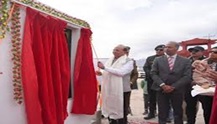
  • Lieutenant Governor Vinai Kumar Saxena laid the foundation stone for India's first 'Petroglyph Conservation Park' on the banks of the Indus River in Leh (Ladakh).
  • This initiative marks a significant step towards safeguarding Ladakh's ancient rock art.

Key Facts:


  • Objective: To protect Ladakh's centuries-old petroglyphs (rock carvings) from threats such as unregulated tourism, infrastructure development, and a lack of public awareness.
  • Relocation and Conservation: Endangered rock carvings from approximately 400 sites along the banks of the Indus and Zanskar rivers will be relocated to this park, where they will be displayed in a structured and educational environment.
  • Collaboration: A Memorandum of Understanding (MoU) has been signed between the Department of Archaeology, Ladakh, and the Archaeological Survey of India (ASI) for this project.
  • Heritage and Development: This is being hailed as a historic initiative undertaken under the vision of 'Vikas Bhi, Virasat Bhi' (Development as well as Heritage).

What are Petroglyphs?

  • These are prehistoric images, symbols, and carvings created by cutting or incising into rock surfaces.
  • Significance in Ladakh: The rock carvings found here depict hunting scenes and images of wild animals such as ibexes and snow leopards. Together with symbols (such as stupas) and inscriptions from the later Buddhist period, they illustrate the region's cultural transition and the history of ancient human life.
  • Chronology: These carvings in Ladakh span a vast timeline, ranging from the Palaeolithic Age to the later historical periods.

Major Petroglyph Sites in India:

  • Ratnagiri (Maharashtra): Home to over 1,500 rock carvings dating back to the Mesolithic period (approx. 10,000 BCE).
  • Edakkal Caves (Kerala): Famous for rock carvings dating back to the Neolithic period. Bhimbetka (Madhya Pradesh): Primarily famous for cave paintings (pictographs), but some rock carvings are also found here.

International News

2 Tonnes of Life-Saving Medical Supplies to Tanzania
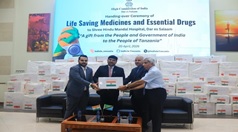
  • India has sent “2 tonnes of life-saving medical supplies” to the ‘Shree Hindu Mandal Hospital’ in Dar es Salaam, Tanzania.
  • This assistance reflects India’s commitment to the welfare of its diaspora and to countries of the Global South.

Related Facts:


  • Mode of Delivery: The aid was formally handed over by India’s High Commissioner to Tanzania, Bishwadip Dey, to hospital trustee Dr. Kaushik L. Ramiya. Earlier in March 2026, a consignment of medicines was also sent via the Indian Navy’s warship INS Trikand.
  • Items Included: The shipment includes oxygen concentrators, suction units, oximeters, microscopes, and stethoscopes. It also contains consumables such as inhalers, syringes, gloves, bandages, and wheelchairs
  • Hospital Background: Shree Hindu Mandal Hospital was established in 1919 by the Indian-origin community. It is currently a major healthcare institution in Tanzania, serving thousands of patients annually.
  • February 2026: The same hospital earlier received cardiac monitors and ventilators worth about 120 million Tanzanian Shillings (over ₹43 lakh).
  • In 2026, India has been providing humanitarian and medical assistance to several countries under the vision of “Vasudhaiva Kutumbakam” and SAGAR (Security and Growth for All in the Region).

Other Medical Diplomacy Initiatives:

Iran:

  • March 2026: India sent the first consignment of medical aid for people affected by regional conflict, handed over to the Iranian Red Crescent Society.
  • April 2026: A second shipment containing essential medicines and health supplies was dispatched amid the ongoing crisis.

Afghanistan:

  • March 2026: India provided humanitarian medical aid, part of a total supply of 327 tonnes of medicines and vaccines over the last four years.
  • Infrastructure: India has supported projects like a 30-bed hospital in Kabul and maternity clinics across provinces.
  • Other Health Diplomacy Efforts:
  • BRICS Health Working Group 2026: India chaired its first meeting in New Delhi with the theme “Resilience, Innovation, Cooperation & Sustainability.”
  • Advantage Healthcare India 2026: India showcased itself as a global healthcare hub to boost medical tourism and institutional partnerships.
  • Budget 2026–27: The government announced 5 regional medical tourism hubs and the ‘Biopharma Shakti’ fund (₹10,000 crore) to promote affordable drug production and exports.

Tanzania:

  • Official Name: United Republic of Tanzania
  • Location: East Africa
  • Capital: Dodoma
  • Largest City & Commercial Hub: Dar es Salaam
  • Borders: Kenya & Uganda (North), Rwanda, Burundi & DRC (West), Zambia, Malawi & Mozambique (South), Indian Ocean (East)

Major Features:

  • Mount Kilimanjaro – Highest peak in Africa
  • Lake Victoria – Largest lake in Africa (North)
  • Lake Tanganyika – Second deepest lake in the world (West)
  • Lake Nyasa (Lake Malawi) – Located in the South
  • Islands: Zanzibar
  • Currency: Tanzanian Shilling
  • Formation: Formed in 1964 by the union of Tanganyika and Zanzibar
  • Languages: Swahili and English

Economy and Banking

India-South Korea Bilateral Trade Target by 2030
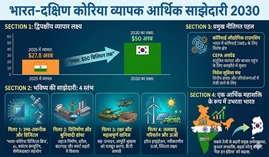
  • India and South Korea have set a target to boost their bilateral trade to $50–54 billion by 2030.
  • During a meeting held in New Delhi on April 20, 2026, between Prime Minister Narendra Modi and South Korean President Lee Jae-myung, a roadmap for a "Futuristic Partnership" was formulated to achieve this objective.

Related Facts:


  • Current Trade: During the fiscal years 2022–2025, bilateral trade stood at approximately $27.8 billion.
  • New Target: The aim is to accelerate this growth over the next four years, reaching $50 billion (or $54 billion according to some reports) by 2030.
  • Growth Rate: Achieving this target will require an annual trade growth rate of approximately 18%.
  • Technology: Initiatives involving AI, semiconductors, and the launch of the 'India-Korea Digital Bridge.'
  • Manufacturing: Focus on shipbuilding, steel, and supply chains for critical minerals.
  • Defense: Signing of over 20 agreements to strengthen defense production and security cooperation.
  • Energy: South Korea's accession to the Global Solar Alliance and investment in green energy.
  • CEPA Upgrade: A decision to upgrade the 2010 Comprehensive Economic Partnership Agreement (CEPA) within the next year to help reduce the trade imbalance.
  • Korean Industrial Townships: Plans for special townships designed to facilitate easier entry for Korean Small and Medium Enterprises (SMEs) into the Indian market.
  • Financial Forum: Establishment of the 'India-Korea Financial Forum' to accelerate investment flows.

South Korea (Republic of Korea):

  • A developed democratic nation located in East Asia, covering the southern portion of the Korean Peninsula. Official Name: Republic of Korea (ROK)
  • Capital: Seoul, which is one of the world's largest metropolitan areas.
  • Official Language: Korean (written in the Hangul script).
  • Currency: South Korean Won (KRW)
  • Borders: North Korea to the north (separated by the DMZ), the Yellow Sea to the west, and the Sea of ​​Japan (East Sea) to the east.
  • Topography: Approximately 70% of the country is mountainous. Hallasan is the highest peak, located on Jeju Island.
  • Major Cities: In addition to Seoul, Busan, Incheon, Daegu, and Gwangju are the main centers.

India's Economic Outlook: A UN Report

  • According to a report released in April 2026 by the United Nations Economic and Social Commission for Asia and the Pacific (ESCAP), India's economy is projected to grow by 6.4 percent this year and by 6.6 percent in 2027.

Key Highlights:


  • The report states that the economies of South and South-West Asia grew at a rate of 5.4 percent in 2025, whereas the growth rate stood at 5.2 percent in 2024.
  • India's robust growth played a major role in this performance.
  • India's growth rate rose to 7.4 percent in 2025.
  • Inflation within the country is expected to stand at 4.4 percent this year and 4.3 percent in 2027.
  • The report also cites estimates from the International Renewable Energy Agency (IRENA), according to which there were approximately 16.6 million green jobs globally; between 2012 and 2024, about 800,000 new jobs were created annually—reflecting an annual growth rate of 7 percent.
  • Of these 16.6 million jobs, 7.3 million were created in China, 1.3 million in India, and 2.5 million in other parts of Asia, accounting for 44 percent, 8 percent, and 15 percent of the global total, respectively.
  • Report Title: ‘Economic and Social Survey of Asia and the Pacific 2026’

India's Nuclear Energy Capacity Target by 2047
  • Ghanshyam Prasad, Chairperson of the Central Electricity Authority (CEA), has announced a target to increase India's nuclear energy capacity from the current 8.8 GW to 100 GW by 2047.
  • This is an ambitious plan that, under the 'Viksit Bharat 2047' (Developed India 2047) initiative, aims to boost the country's energy security—specifically regarding clean energy and the reduction of carbon emissions—by more than tenfold.

Related Facts:


India's Nuclear Energy:

  • Current Capacity: India's total installed nuclear energy capacity stands at approximately 8.18 Gigawatts (GW), or 8,180 Megawatts.
  • Contribution to Total Power Generation: Its share in India's total electricity generation is approximately 3.1%.

Future Targets:

  • By 2031-32: The target is to increase the capacity to 22,480 Megawatts.
  • By 2047 (Viksit Bharat): An ambitious goal has been set to reach 100 Gigawatts by 2047.

Three-Stage Nuclear Programme:

  • Dr. Homi J. Bhabha is regarded as the father of India's nuclear programme. India has adopted a three-stage strategy to utilize its abundant reserves of thorium.
  • Stage I: Pressurized Heavy Water Reactors (PHWRs), which utilize natural uranium.
  • Stage II: Fast Breeder Reactors (FBRs), which utilize Plutonium-239.
  • Stage III: Thorium-based Reactors (Thorium-233), representing India's ultimate goal of self-reliance in the sector.
  • Currently, India has over 20 reactors operational across 7 nuclear power plants; their combined capacity makes a significant contribution to the country's electricity supply. Among these, the largest nuclear power facility is the Kudankulam Nuclear Power Plant (KKNPP), located in Tamil Nadu; with its eventual installed capacity projected to reach approximately 6,000 MW across six units, it is currently considered India's largest nuclear power station.
  • Located in Maharashtra, the Tarapur Atomic Power Station (TAPS) is India's oldest and first nuclear power plant; its first unit became commercially operational in 1969, establishing it as the foundational hub for the country's nuclear energy program.
  • Situated in Rajasthan, the Rajasthan Atomic Power Station (RAPS—Rawatbhata) was established under a collaborative initiative between India and Canada and houses several PHWR-type reactors that supply electricity to Rajasthan and its neighboring regions.
  • The Kaiga Nuclear Power Plant (KGS), located in Karnataka, stands as a significant testament to the country's indigenous nuclear energy technology, operating indigenously designed PHWR reactors; plans are also underway here to experiment with thorium-based technologies and to expand the facility with new 700 MWe units.
  • At the Kakrapar Atomic Power Station (KAPS), located in Gujarat, India's first fully indigenous, second-generation 700 MW PHWR unit was recently commissioned, marking a significant enhancement in India's indigenous nuclear generation capacity.
  • Located in Tamil Nadu, the Kalpakkam facility—known as the Madras Atomic Power Station (MAPS)—serves as a historic landmark for the country's early nuclear energy program and also operates PHWR reactors.
  • Situated along the banks of the Ganges River in Uttar Pradesh, the Narora Atomic Power Station (NAPS) constitutes a vital component of Northern India's energy supply, providing reliable base-load electricity to Uttar Pradesh and its neighboring states. In addition to these seven or eight major nuclear power centers, India also has reactors and units under construction at other locations, through which the government is advancing towards its goals of long-term energy security and clean energy.

India's GDP Growth Rate: According to SBI
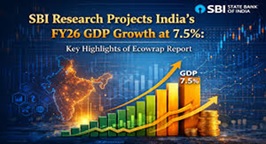
  • A research report by the State Bank of India (SBI) has projected India's GDP growth rate for the financial year 2026-27 to range between 6.8% and 7.1%.

Key Findings of SBI Research (for FY27):


  • GDP Growth: 6.8% – 7.1% (Projected)
  • Base (FY26): Projected growth of 7.6%
  • Inflation: Averaging approximately 4.5%
  • Fiscal Deficit: Estimated to range between 4.5% and 4.6%
  • Key Risk: The impact of a 'Super El Niño' could affect growth projections.

Largest Source of Foreign Direct Investment in India
  • According to data for the financial year 2026 (April–December), Singapore has emerged as the largest source of Foreign Direct Investment (FDI) in India.

Key Facts:


  • According to data released by the Department for Promotion of Industry and Internal Trade (DPIIT), during the April–December period of FY 2026, Singapore accounted for the highest share of FDI, with an investment of $17.6 billion—representing 37% of the total investment.
  • The contributions from the US and Mauritius stood at 16% and 10%, respectively.
  • FDI from the Cayman Islands—a tax haven—surged fivefold, rising from $422 million in 2024 to $2.026 billion in 2026.
  • Cyprus, another tax haven, invested $1.4 billion in India, up from $1.2 billion in 2024.
  • During the same period, investment from Luxembourg increased from $352.67 million to $545 million.
  • India received a total FDI inflow of $47.87 billion during the April–December period of FY 2026, of which $7.8 billion came from the US and $4.8 billion from Mauritius.

Decline Recorded in Eight Core Industries
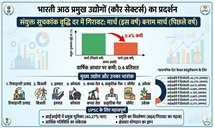
  • According to the Ministry of Commerce and Industry, the combined index of India's eight core industries registered a decline of 0.4% in March 2026 compared to the previous year.

Related Facts:


  • The Index of Core Industries (ICI) measures the combined and individual production performance of eight core industries: coal, crude oil, natural gas, refinery products, fertilizers, steel, cement, and electricity.
  • These eight core industries account for 40.27 percent of the weight of items included in the Index of Industrial Production (IIP).
  • Indices of the Eight Core Industries:
  • Coal production declined by 4.0% in March 2026 compared to March 2025, while cumulatively, it remained 0.5% lower during the April–March 2025–26 period.
  • Crude oil production fell by 5.7%, and the cumulative index for the fiscal year 2025–26 recorded a decline of 2.8%.
  • Natural gas production rose by 6.4%, but the cumulative growth rate for the year remained 2.8% lower.
  • Refined petroleum production saw a marginal increase of just 0.1% in March 2026, while the cumulative growth rate for the entire fiscal year remained down by 0.1%.
  • Fertilizer production decreased by 24.6%, and the cumulative index for the year declined by 0.1%.
  • Steel production recorded a growth of 2.2% in March 2026, and cumulatively, it increased by 9.1% during the April–March 2025–26 period.
  • Cement production grew by 4.0% in March 2026, and by the end of the fiscal year, the cumulative growth stood at 8.6%. Electricity generation declined by 0.5% in March 2026, but recorded a cumulative growth of 0.9% over the entire financial year.
  • Base Year: The current base year for calculating the index of these industries is 2011-12.
  • Issuer: This index is released monthly by the Office of the Economic Adviser (OEA), under the Ministry of Commerce and Industry.

Defence News

Agreement for T-72 and T-90 Tanks

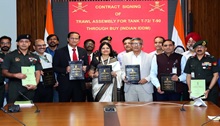
  • The Ministry of Defence has signed a contract for the procurement of Trawl Assemblies for T-72 and T-90 tanks at a cost of approximately ₹975 crore.

Key Facts:


  • Signatories: Signed by the Ministry of Defence with Bharat Earth Movers Limited (BEML) and Electro Pneumatics and Hydraulics (India) Pvt. Ltd.
  • Equipment Development: Indigenously developed by the Defence Research and Development Organisation (DRDO).
  • Objective: This equipment will enhance the Indian Army's capability to breach minefields. It assists in creating a 'safe passage for vehicles' in areas containing anti-tank mines.
  • Category: This procurement has been undertaken under the 'Buy (Indian-IDDM)' (Indigenously Designed, Developed, and Manufactured) category, which promotes the 'Atmanirbhar Bharat' (Self-Reliant India) and 'Make-in-India' initiatives.

T-72 'Ajeya':

  • This is the Indian Army's most reliable and most numerous tank.
  • Origin: A Soviet design from the 1970s. India began adopting it in the 1980s.
  • Main Armament: 125 mm 2A46 smoothbore gun. It relies primarily on shells rather than 'fire-and-forget' missiles.
  • Numbers: The Indian Army possesses over 2,400 T-72 tanks, which form the backbone of its 'Armoured Corps'.
  • Protection (Upgrades): The original T-72 had limited protection; however, the Indian variant ('Ajeya') is now equipped with ERA (Explosive Reactive Armour), which provides protection against missiles.
  • Engine: Its original engine had an output of 780 HP, which is now being replaced by a more powerful 1000 HP engine (under 'Project Combat Improved Ajeya'). Speed: 60 km/h on roads and 35–45 km/h in the battlefield (off-road).

T-90 'Bhishma' :

  • This is a highly advanced and modernized variant of the T-72, which India acquired from Russia in 2001.
  • Origin: A Russian design from the 1990s. It was developed by combining the chassis of the T-72 with features from the T-80.
  • Firepower (Enhancements): Its 125mm cannon is capable of firing 'Invar' missiles, which can destroy a tank or a slow-moving helicopter located up to 5 km away.
  • Hunter-Killer Capability: It features an 'Independent Thermal Sight' for the commander, allowing him to search for the next enemy target while the gunner is simultaneously engaging a current target. This capability is absent in the T-72.
  • Protection: It is equipped with advanced 'Kanchan' armor and 'Kontakt-5' Explosive Reactive Armor (ERA), rendering it virtually impenetrable against modern anti-tank weaponry.
  • Engine: A 1000 HP V-92S2 diesel engine, which enables it to maintain high speeds even in the scorching heat of desert environments.
  • Range: Approximately 550 km (this range is further extended with the use of auxiliary fuel tanks).

Exhibition on India's Contribution to the Korean War Held in Delhi:
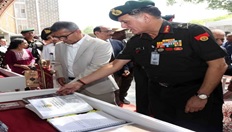
  • A special photo exhibition based on India's contribution to the Korean War—which spanned from 1950 to 1954—has opened at the India International Centre in New Delhi.
  • Titled 'Guardians of Neutrality,' this exhibition highlights the role played by the Indian Army's 60 Para Field Ambulance.
  • The exhibition was visited by the Republic of Korea's Foreign Minister Cho Tae-yul, Defence Secretary Rajesh Kumar Singh, and the Vice Chief of Army Staff, Lieutenant General Dhiraj Seth.
  • The theme of the exhibition is "India's Balance in the Korean War: Neutrality, Diplomacy, and Humanitarian Aid."

Important Days

'Creativity and Innovation Day'

  • 'Creativity and Innovation Day' is observed annually on April 21st; the theme for this year is "Leveraging Creativity for Global Progress."

Related Facts:


  • Main Objective: To raise awareness regarding the role of creativity and innovation in solving human problems and achieving the Sustainable Development Goals (SDGs).
  • History: It originated in 2002, but the United Nations General Assembly (UNGA) officially adopted the resolution to observe it in 2017.
  • First Observance: 2018
  • In the Global Innovation Index (GII) 2025—released by the World Intellectual Property Organization (WIPO)—India ranks 38th out of 139 countries.
  • World Creativity and Innovation Week (WCIW):
  • Duration: April 15–21, 2025 (coinciding with the birth anniversary of Leonardo da Vinci on April 15).

Awards and Honors

9th Prof. M.S. Swaminathan Award

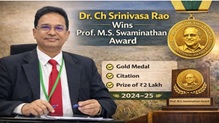
  • Dr. C.H. Srinivasa Rao, Director of ICAR-IARI, has been conferred with the 9th Prof. M.S. Swaminathan Award for the years 2024-25.

Key Facts:


  • Contribution: He has been bestowed with this honor for his pioneering work in Climate-Resilient Agriculture and Natural Resource Management.
  • Significance: This award cycle holds particular significance as it coincides with the birth centenary year of Dr. M.S. Swaminathan, the Father of India's Green Revolution.
  • Institution: This award was instituted in 2004-05 by the Retired ICAR Employees Association (RICAREA) in collaboration with Nuziveedu Seeds Limited (NSL).
  • Notable Work: Dr. Rao has played a pivotal role in developing agricultural contingency plans for over 650 districts across India and in promoting the adoption of climate-resilient technologies.
  • Award Components: The award comprises a gold medal, a citation, and a cash prize of ₹2 lakh.

Dr. M.S. Swaminathan:

  • M.S. Swaminathan (1925–2023) was the Father of the Green Revolution in India, who rendered the country food self-sufficient in the 1960s through the introduction of high-yielding wheat and rice varieties. An eminent agricultural scientist, he chaired the National Commission on Farmers in 2004 and proposed the concept of an 'Evergreen Revolution' as well as a 50% profit margin over costs in the Minimum Support Price (MSP)—known as the 'Swaminathan Formula'.


Latest Courses