National News
Sevagram Ashram
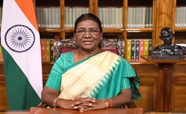
- President Droupadi Murmu visited Sevagram Ashram at Wardha in Maharashtra.
- She also addressed the 6th Convocation Ceremony of the Mahatma Gandhi Antarrashtriya Hindi Vishwavidyalaya (MGAHV) in Wardha.
Sevagram Ashram at Wardha
- Establishment: In April 1936, at the age of 67, Mahatma Gandhi decided to settle in a small village called Segaon (later renamed Sevagram, meaning "Village of Service") near Wardha, Maharashtra.
- Shift from Sabarmati: After beginning the Dandi March in 1930, Gandhi vowed not to return to Sabarmati Ashram until independence was achieved. Sevagram became his new home and headquarters.
- Role of Jamnalal Bajaj: Seth Jamnalal Bajaj, a close associate of Gandhi, provided 300 acres of land for the Ashram.
- Origin of Name: Originally named Shegaon, it was renamed Sevagram in 1940 to avoid confusion with another town (Shegaon, famous for Saint Gajanan Maharaj).
- Center of Decision Making: Many critical decisions on national matters, including the strategy for the Quit India Movement (1942), were taken at Sevagram.
- "Do or Die" Mantra: The historic "Do or Die" message was finalized here, and the Quit India Movement was planned here after the 1942 Bombay session.
- Meetings with Leaders: It was a crucial meeting spot where prominent leaders like Jawaharlal Nehru, Sardar Patel, and Maulana Azad met Gandhi for consultations.
- Telephone Connection: The British government installed a direct telephone connection to Sevagram for direct consultation with Gandhi, highlighting its political importance.
- Nai Talim (Basic Education): The Ashram housed the Nai Talim Sangh, fostering an education system focused on learning through manual labor and rural skills.
- Village Industries Association: Established nearby (at Maganwadi) to promote self-reliance through local industrial activities (khadi, paper making, soap making).
- Anti-Untouchability: The Ashram employed Dalits (untouchables) in the common kitchen to break caste barriers.
- Simple Living: The Ashram promoted the 11 vows (including truth, non-violence, and manual labour) and was built with locally available, low-cost materials.
|
Houselisting and Housing Census (HLO)
- The Ministry of Home Affairs (MHA) has officially commenced field operations for the Houselisting and Housing Census (HLO) across several States and Union Territories.
- This is the first phase of the Census of India 2027, which is notable for being India’s first fully digital census.
- The Office of the Registrar General and Census Commissioner (under the Ministry of Home Affairs) manages all operations.
About Census of India 2027
|
The census is being conducted in two major phases:
- Phase I: Houselisting and Housing Census (April – September 2026)
- This phase gathers data on housing conditions, amenities (water, electricity, internet), and household assets.
- As of April 16, 2026, door-to-door field operations have begun in the first batch of states (including Goa, Karnataka, and Odisha) after the conclusion of their self-enumeration window.
- Self-enumeration for the next batch (including Andhra Pradesh, Haryana, and Madhya Pradesh) is scheduled to start on April 16, 2026.
- Phase II: Population Enumeration (February 2027)
- This phase will collect socio-economic details, including education, migration, fertility, and caste data.
- The national reference date is March 1, 2027.
Key Innovations & Features
- Digital Enumeration: Over 3 million officials are using mobile apps for data collection.
- Self-Enumeration: Residents can log into the Official Census Portal to submit their household details online in 16 languages.
- Caste Census: For the first time since 1931, the census will include a comprehensive enumeration of all castes (beyond just SC/ST categories).
- Relationship Status: For the first time, live-in relationships can be recorded as "stable unions" under marital status.
|
National Backward Classes Finance and Development Corporation
- According to the Ministry of Social Justice and Empowerment National Backward Classes Finance and Development Corporation has achieved the highest-ever disbursement of six hundred 13 crore rupees, benefiting sixty one thousand 621 beneficiaries in the financial year 2025-26.
National Backward Classes Finance and Development Corporation (NBCFDC)
- Establishment: Incorporated on January 13, 1992, as a non-profit company (Section 8 of Companies Act).
- Mandate: Focused on fostering economic self-reliance for Backward Classes (OBCs) through skill development and targeted self-employment initiatives.
- Implementation Model: Operates via Channel Partners (State Channelizing Agencies, Banks) rather than direct lending.
|
STATE SPECIAL NEWS
Jal Pakhwada in Uttar Pradesh
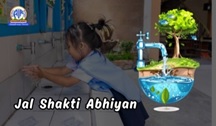
- In Uttar Pradesh, Jal Pakhwada was launched in all schools and educational institutions across the state under the ‘Jal Shakti Abhiyan'.
- The government has taken a unique step in the field of water conservation by linking it directly with schools.
Uttar Pradesh
- First Chief Minister of the state: Govind Ballabh Pant
- First woman Chief Minister of the state and country: Sucheta Kripalani
- Present CM: Yogi Adityanath
- Highest Peak: Amsot Peak
- Total Districts: 76
|
- Present Governor: Anandiben Patel
- Uttar Pradesh Day: 24 January
- First woman governor of the state and country: Sarojini Naidu
- Largest District: Lakhimpur Kheri
- Most Populous District: Prayagraj
- Least Populous District: Mahoba
|
Andhra Pradesh government signed MoU with NRSC
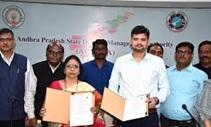
- The Andhra Pradesh government has signed a Memorandum of Understanding (MoU) with the National Remote Sensing Centre (NRSC) to reduce deaths caused by lightning strikes, particularly in rural areas.
Andhra Pradesh
- Foundation Day: 1st November
- CM: N. Chandrababu Naidu
- Bifurcated in 2014 to form Telangana
|
- Governor: S. Abdul Nazeer
- First state in India to be formed on a linguistic basis.
- National Parks: Papikonda, Rajiv Gandhi (Rameswaram), Sri Venkateswara
|
Telangana released caste survey findings
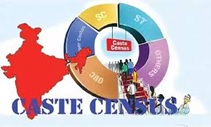
- The Telangana government has released its 2024-25 Comprehensive Caste Survey (SEEEPC) findings, revealing that Backward Classes (BC) constitute 56.36% of the population, followed by Scheduled Castes (SC) at 17.42%, Scheduled Tribes (ST) at 10.43%, and Other Castes (OC) at 15.79%.
- The survey indicates that 67% of the population belongs to 135 castes that fall below the state’s average development score, with SCs and STs being nearly three times more backward than general categories.
Telangana
- Capital: Hyderabad
- Formation: Officially formed on June 2, 2014, as the 29th state of India (currently 28th after Jammu & Kashmir became a UT)
- Governor- Shiv Pratap Shukla
- Chief Minister-Revanth Reddy
- Telangana has a bicameral legislature (Legislative Assembly and Legislative Council).
- Telangana was part of the Nizam’s Hyderabad state, merged with Andhra State in 1956 to form Andhra Pradesh, and separated after a long movement.
- Etymology: Derived from "Trilinga Desa" (Land of three lingas: Draksharama, Kaleshwaram, Srisailam) or "Telugu-angana" to distinguish it from Marathi-speaking Marathwada.
- Important Historic Eras: Satavahanas, Kakatiyas (Warangal Fort), Qutb Shahis (Hyderabad, Charminar), and Asaf Jahi Nizams (1724–1948).
- Key Historic Events: Operation Polo (1948 - integration with India), Telangana Rebellion (1946-51), Gentlemen’s Agreement (1956), Srikrishna Committee (2010), AP Reorganisation Act (2014).
- Forest: Kawal Tiger Reserve, Pakhal Wildlife Sanctuary, and Eturnagaram Wildlife Sanctuary
- Key irrigation projects: Kaleshwaram Lift Irrigation Project (world's largest), Palamuru-Rangareddy, and Mission Kakatiya
- Festivals: Bonalu (Goddess Mahakali), Bathukamma (Flower festival), Ramzan, and Muharram
- Arts & Crafts: Bidri craft (metalwork), Banjara needle crafts, Dokra metal crafts, and Nirmal arts.
|
INTERNATIONAL NEWS
Saudi Arabia will deposit $3 billion into Pakistan's central bank
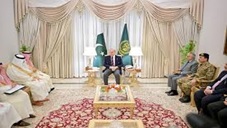
- Saudi Arabia has committed a fresh $3 billion deposit to Pakistan's central bank. Of this total commitment, the State Bank of Pakistan (SBP) confirmed on April 16 that it had already received an initial $2 billion from the Saudi Ministry of Finance.
- The assistance is intended to Shore up foreign exchange reserves as Pakistan faces a $3.5 billion repayment obligation to the United Arab Emirates (UAE) and Help Pakistan meet the International Monetary Fund (IMF) target of maintaining over $18 billion in reserves by June.
Pakistan
- Official Name: Islamic Republic of Pakistan.
- Capital: Islamabad (replaced Karachi in 1960).
- Currency: Pakistani Rupee (PKR).
- President: Asif Ali Zardari
- Prime Minister: Shehbaz Sharif
- National Motto: Faith, Unity, Discipline (Iman, Ittihad, Nazm).
- National Animal: Markhor (a type of large wild goat).
- Land Borders: Shares borders with India (East), Afghanistan (West/Northwest), Iran (Southwest), and China (Northeast).
- Highest Point: K2 (Mount Godwin-Austen) at 8,611 metres—the second-highest peak in the world.
- Longest River: Indus River, which supports the world's largest contiguous irrigation system.
- Major Provinces: Punjab, Sindh, Khyber Pakhtunkhwa, and Balochistan (the largest province by area).
Important Boundaries:
-
- Radcliffe Line: Boundary with India (partition 1947).
- Durand Line: Boundary with Afghanistan.
- Line of Control (LoC): De facto ceasefire line in Jammu & Kashmir.
- Key Passes: Khyber Pass (connects Peshawar to Kabul), Bolan Pass (connects Sindh Plain with Quetta).
- Fertile Desert: The Tharparkar Desert in Sindh is noted as the only fertile desert in the world.
- Independence: Formed on 14 August 1947 following the partition of British India.
- First Leaders: Muhammad Ali Jinnah served as the first Governor-General, and Liaquat Ali Khan was the first Prime Minister.
- Separation of Bangladesh: Originally comprised West and East Pakistan; East Pakistan seceded to become Bangladesh in 1971 after a civil war.
- First Female PM: Benazir Bhutto was the first woman to head a democratic government in a Muslim-majority nation.
- Current Leadership: As of 2026, Asif Ali Zardari is the President and Shehbaz Sharif is the Prime Minister.
History of Pakistan
- Independence: Formed on August 14, 1947, as a homeland for Muslims.
- Partition: Based on the "Two-Nation Theory" championed by Muhammad Ali Jinnah.
- 1971 Civil War: East Pakistan separated to become Bangladesh.
- Key Wars with India: 1947-48 (Kashmir), 1965 (Kashmir), 1971 (Bangladesh liberation), 1999 (Kargil conflict).
- Nuclear Power: Conducted tests in 1998, establishing nuclear parity in South Asia.
|
Indian Ambassador Meets Top US Officials
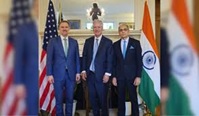
- Indian Ambassador to the US Vinay Mohan Kwatra hosted US Trade Representative Jamieson Greer and former National Security Adviser Robert O’Brien at India House in Washington, D.C. to finalize a Bilateral Trade Agreement (BTA) between India and the United States.
- The discussions follow a framework finalized in February 2026 for the first phase of the deal, which includes a US commitment to reduce tariffs on Indian goods to 18%.
Horizon 2047 Roadmap
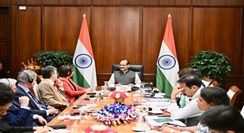
- Lok Sabha Speaker Om Birla today met a delegation of the France-India Parliamentary Friendship Group at the Parliament House and discussed strengthening bilateral ties and parliamentary cooperation.
- The deliberations also covered enhancing cooperation across sectors under the Horizon 2047 Roadmap, along with opportunities for technological collaboration.
France
- Official Name: French Republic (République française).
- Capital: Paris (situated on the Seine River).
- President: Emmanuel Macron.
- Location: Western Europe, often referred to as a "Hexagon" due to its shape.
- Bordering Countries (7): Belgium, Luxembourg, Germany, Switzerland, Italy, Spain, and Andorra.
- Water Bodies: Bay of Biscay (West), English Channel (Northwest), Mediterranean Sea (South).
- Overseas Regions (5): French Guiana (South America), Guadeloupe, Martinique, Mayotte, and La Réunion (Indian Ocean).
- Highest Peak: Mont Blanc (4,810m) in the Alps.
- Major Rivers: Seine, Loire (longest), Rhône, and Garonne.
- Currency: Euro (€) (Adopted in 2002)
History
- The French Revolution (1789-1799): Led to the fall of the Bourbon monarchy, introduced the slogan "Liberté, égalité, fraternité" (Liberty, Equality, Fraternity), and drafted the Declaration of the Rights of Man and of the Citizen.
- Napoleonic Era (1799–1815): Napoleon Bonaparte introduced the Napoleonic Code (civil law system) and expanded French power across Europe.
- World Wars: France was a key member of the Allies in both WWI and WWII, but was occupied by Germany in 1940.
- The Fifth Republic (1958): Established by Charles de Gaulle after the Algerian War, creating a strong presidential system.
- UNESCO Sites: 45+ sites (including Eiffel Tower, Louvre Museum, Palace of Versailles).
India-France Relations
- Strategic Partnership: Established in 1998, covering defense, space, and civil nuclear cooperation.
- Defense Cooperation: Rafale fighter jets, Scorpene submarines. Joint exercises include:
- Varuna (Naval)
- Garuda (Air)
- Shakti (Army).
- Space & Tech: Jointly launched satellites; AsterX was France's first space military exercise (2021).
- International Solar Alliance (ISA): Co-founded by India and France in 2015.
|
72nd Founders’ Day of the Indian Institute of Public Administration
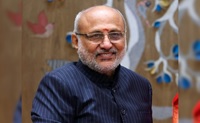
- Vice President C P Radhakrishnan addressed the 72nd Founders’ Day of the Indian Institute of Public Administration and delivering the 5th Dr Rajendra Prasad Annual Memorial Lecture on AI for Good Governance in New Delhi.
Indian Institute of Public Administration
- A premier autonomous research and training organization under the Ministry of Personnel, Government of India.
- Established in 1954 on the recommendation of Paul H. Appleby, it serves as the nation's primary think tank and training hub for public governance.
- President: Vice President of India
- Chairman: Jitendra Singh
|
SUMMITS AND CONFERNCES
Asia Zero-Emission Community (AZEC) Plus meeting
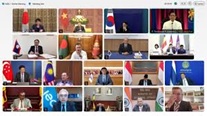
- External Affairs Minister Dr S Jaishankar participated in the Asia Zero-Emission Community (AZEC) Plus meeting convened by Japan to deliberate on supply chain disruptions in the energy markets.
- The meeting, chaired by Japanese Prime Minister Sanae Takaichi, focused on the vulnerabilities of Asian economies following the closure of the Strait of Hormuz.
Highlights of the Meeting
- Condemnation of Shipping Attacks: Jaishankar stated that attacks on merchant shipping are "completely unacceptable" and pose a direct threat to global economic stability.
- Maritime Security: He emphasized India's firm commitment to safe and unimpeded transit passage for maritime shipping, which is vital for unconstrained energy markets.
- Supply Chain Resilience: As a major energy consumer, Jaishankar affirmed that India will collaborate with like-minded partners to develop more resilient energy supply chains against future shocks.
- Regional Context: The summit included leaders from AZEC members like Australia, Singapore, and the Philippines, as well as partner nations including India, South Korea, and Bangladesh.
- Japan's "AZEC 2.0" Initiative: During the summit, Japan introduced an "AZEC 2.0" framework, which includes a $10 billion initiative offering low-interest loans for the procurement of crude oil and refined fuel to bolster regional energy security.
About Japan
Geography of Japan
- Archipelago: Comprises four major islands (north to south): Hokkaido, Honshu (largest), Shikoku, and Kyushu.
- Terrain: Highly mountainous (over 80%) with a rugged landscape.
- Ring of Fire: Situated along the Pacific Ring of Fire, making it highly prone to earthquakes, tsunamis, and volcanic activity.
- Key Features: Highest peak is Mount Fuji (3,776 m), a stratovolcano. The longest river is the Shinano River.
- Climate: Temperate climate, with four distinct seasons, surrounded by the Sea of Japan to the west, Sea of Okhotsk to the north, and Pacific Ocean to the east
Emperor: Reiwa Era – Naruhito
Currency: Japanese Yen (¥)
- Capital: Tokyo.
- Language: Japanese.
- National Sport: Sumo Wrestling.
- Cultural Element: "Washoku" (traditional Japanese cuisine) is listed as UNESCO Cultural Heritage.
- Senkaku Islands: Disputed between Japan and China.
India-Japan Relations
- Partnership: Elevated to "Special Strategic and Global Partnership" in 2014.
- Defense: 2+2 Ministerial Dialogue, Malabar Exercise, JIMEX, and Acquistion and Cross-Servicing Agreement (ACSA) for logistics support.
- Infrastructure: Japan is India's largest ODA (Official Development Assistance) donor, financing projects like the Mumbai-Ahmedabad High-Speed Rail (Bullet Train) and Delhi Metro.
- Regional Strategy: Both are part of the Quad (India-Japan-USA-Australia) to maintain a Free and Open Indo-Pacific (FOIP).
- Trade: Comprehensive Economic Partnership Agreement (CEPA) 2011. Trade has expanded, but a significant trade deficit favors Japan.
|
ECONOMY & BANKING
NIPER Mohali signed agreement with Novartis Healthcare
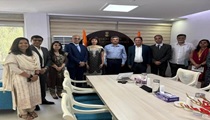
- The National Institute of Pharmaceutical Education and Research (NIPER), Mohali today signed an agreement with Novartis Healthcare Private Limited in New Delhi, to strengthen the research and innovation in the pharmaceutical sector.
National Institute of Pharmaceutical Education and Research (NIPER)
- A group of seven premier public pharmacy research universities in India
- Declared as Institutes of National Importance.
- Location: The pioneering institute is in S.A.S. Nagar (Mohali), Punjab.
- Branches: Ahmedabad, Guwahati, Hajipur, Hyderabad, Kolkata, Raebareli.
- Governance: Operates under the Department of Pharmaceuticals, Ministry of Chemicals and Fertilizers, Government of India.
- Focus: These institutes aim to produce specialized talent, focusing on drug discovery, development, and pharmaceutical formulations.
|
Integrated digital platform for the Department of Commerce
- The Ministry of Commerce and Industry launched a modern, integrated website and a bilingual mobile application for the Department of Commerce.
- This digital ecosystem is designed to provide exporters, importers, and other stakeholders with seamless, real-time access to critical trade information and resources.
Department of Commerce (DoC)
|
Operates under the Ministry of Commerce and Industry.
Key Functions of the Department of Commerce
- Foreign Trade Policy (FTP): Formulates, implements, and monitors the FTP, which is periodically updated to meet global economic scenarios.
- Trade Negotiations: Handles multilateral (WTO), regional, and bilateral commercial relations, including Free Trade Agreements (FTAs).
- Export Promotion: Manages Export Promotion Councils (EPCs) and bodies like APEDA (agricultural products), Tea Board, Rubber Board, and Marine Products Export Development Authority (MPEDA).
- Special Economic Zones (SEZs): Develops, operates, and regulates SEZs, including policy framework and fiscal regimes.
- Trade Logistics & Remedies: Oversees export infrastructure and trade remedies, including anti-dumping and safeguard measures.
Important Organizations/Bodies Under the Department
- Attached Offices: Directorate General of Foreign Trade (DGFT), Directorate General of Trade Remedies (DGTR).
- Autonomous Bodies: APEDA, Coffee Board, Tea Board, Spices Board, Rubber Board, Indian Institute of Packaging (IIP), Quality Council of India (QCI).
- Public Sector Undertakings (PSUs): State Trading Corporation of India (STC).
|
PERSON IN NEWS
107th birth anniversary of Arjan Singh
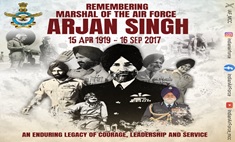
- The Indian Air Force and top leadership paid tributes to the late Marshal of the Air Force, Arjan Singh, on his 107th birth anniversary on April 15, 2026, honoring him as a legendary figure in military history.
Legacy of Arjan Singh
- Iconic Leadership: Known for his dynamic leadership during the 1965 Indo-Pak conflict, where his strategic vision was vital for India's success.
- Distinguished Career: He was the first Air Chief Marshal of the IAF (1966) and served as the Chief of Air Staff from 1964 to 1969.
- Only Five-Star Rank: In 2002, he was promoted to the highest rank of Marshal of the Indian Air Force, the only officer to achieve this distinction.
- Post-Retirement Service: He served as India’s Ambassador to Switzerland and the Vatican, and was a respected administrator and mentor to the IAF.
- Commemoration: The IAF and government leaders celebrated his 107th birth anniversary (born April 15, 1919) to honor his lasting impact on India’s air power
|
ART & CULTURE
Vishu Festival in Keralam
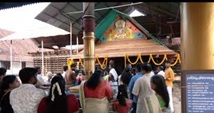
- Malayalis across the world are celebrated Vishu which is a symbol of Keralam’s rich agrarian culture and abundance, is traditionally observed on the first day of the Malayalam month of Medam.
- It is a harvest festival, symbolizing the sun's transition into Aries and the start of the astronomical New Year, celebrated with family, traditional feasts (Sadhya), and new clothes (Vishu Kodi).
ENVIRONMENT + SCIENCE & TECHNOLOGY
Severe Tropical Cyclone Maila
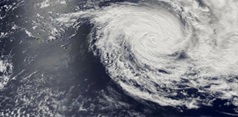
- Severe Tropical Cyclone Maila, a powerful Category 5 system impacted the Solomon Islands and Papua New Guinea (PNG).
Tropical Cyclones
- Definition: A tropical cyclone is an intense, rotating low-pressure system that forms over warm tropical or subtropical oceans.
- Etymology: The word "Cyclone" is derived from the Greek word Cyclos, meaning "coils of a snake," coined by Henry Piddington because tropical storms in the Bay of Bengal resemble coiled serpents.
- Direction of Rotation:
- Northern Hemisphere: Anticlockwise.
- Southern Hemisphere: Clockwise.
- Thermal Origin: These storms are primarily "thermal" in origin, deriving energy from the latent heat of condensation released as warm, moist air rises and cools.
Structure of a Mature Cyclone
- The Eye: A central calm region of sinking air (subsidence) with light winds and clear skies. It has the lowest surface pressure and highest temperatures aloft.
- Eye Wall: The most violent part of the cyclone, immediately surrounding the eye, characterized by the highest wind speeds and heaviest rainfall.
- Spiral Rainbands: Curved bands of cumulonimbus clouds trailing away from the eye wall that produce intense rainfall.
Regional Names
- Indian Ocean- Cyclone
- Atlantic & NE Pacific- Hurricane
- NW Pacific (China Sea/Japan)-Typhoon
- Western Australia- Willy-Willies
|
SPORTS
India’s Grandmaster R. Vaishali Won FIDE Women’s Candidates 2026

- India’s Grandmaster R. Vaishali won the FIDE Women’s Candidates Tournament 2026 in Cyprus, and became the first Indian woman to win the tournament.


 Don't Have an Account?