GK Update
 
  • Mobile Menu
HOME BUY MAGAZINEnew course icon
LOG IN SIGN UP

Sign-Up IcanDon't Have an Account?


SIGN UP


Login Icon

Have an Account?


LOG IN
 

or
By clicking on Register, you are agreeing to our Terms & Conditions.


or


GK Update

Fri 10 Apr, 2026

National News

Launch of Fintech Portal

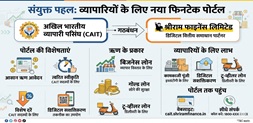
  • The Confederation of All India Traders (CAIT) and Shriram Finance Limited have launched a new fintech portal (cait.shriramfinance.in) for traders.

Key Details:

  • Launched by: MP Praveen Khandelwal and company official G.M. Jilani.
  • Objective of the Portal: To enhance the seamless availability of credit for traders, MSMEs, startups, and women entrepreneurs across the country.
  • CAIT (Confederation of All India Traders): This is India's largest non-governmental trade body, representing approximately 80 million traders and 40,000 trade associations. Its headquarters is located in New Delhi.
  • Shriram Finance Limited: This is one of India's leading Non-Banking Financial Companies (NBFCs), specializing in retail asset financing.
  • Economic Impact: MSMEs contribute approximately 31% to India's GDP, yet they face significant hurdles in accessing formal credit. Fintech portals such as this help bridge this "credit gap."

Latest Edition of the Constitution of India Released in Sindhi
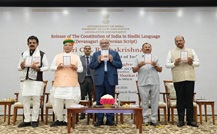
  • Vice President C.P. Radhakrishnan released the latest edition of the Constitution of India in Sindhi in New Delhi.

Relevant Facts:

  • Availability in Two Scripts: This updated edition of the Constitution has been released in both the Devanagari and Persian scripts.
  • A First Since Independence: This marks the first time since India's independence that the Sindhi version of the Constitution has been published in the Devanagari script.
  • Objective: Its primary objective is to promote linguistic inclusivity and to make constitutional rights accessible to common citizens in their mother tongue.
  • The Vice President lauded the efforts undertaken by the government—under the leadership of Prime Minister Shri Narendra Modi—to make the Constitution accessible in numerous Indian languages.
  • Citing the initiatives to make the Constitution available in languages ​​such as Bodo, Dogri, Santhali, Tamil, Gujarati, and Nepali, the Vice President stated that these efforts honor India's linguistic diversity and strengthen democratic values.

The Sindhi Community:

  • Indus Valley Civilization: The roots of the Sindhi community are intertwined with the ancient Indus Valley Civilization, which flourished in the region of modern-day Sindh (Pakistan).
  • Impact of the Partition: At the time of India's partition in 1947, the province of Sindh became part of Pakistan. Consequently, Sindhi Hindus faced mass displacement and subsequently settled across various states of India (primarily Gujarat, Maharashtra, Rajasthan, and Madhya Pradesh).
  • Constitutional Status: The Sindhi language is included in the Eighth Schedule of the Indian Constitution. It was added through the 21st Constitutional Amendment Act (1967).
  • Script: In India, the Sindhi language is primarily written in both the Devanagari and Arabic (Persian-Arabic) scripts.
  • Literature: 'Shah Jo Risalo' (composed by Shah Abdul Latif Bhittai) holds a place of great significance in Sindhi literature.
  • Jhulelal (Ishtadev): The revered deity of the Sindhi community is Lord Jhulelal, who is considered an incarnation of Varuna (the God of Water). His birth anniversary is celebrated as 'Cheti Chand,' which marks the Sindhi New Year.
  • Religion: The majority of Sindhis residing in India follow Hinduism, whereas the majority population in Sindh, Pakistan, adheres to Islam (both Sunni and Shia).
  • Influence of Sufism: Sindhi culture has been deeply influenced by Sufi saints, who propagate a message of communal harmony and peace.
  • Social Structure: In India, Sindhi Hindus primarily belong to the Lohana caste, which comprises sub-groups such as 'Amil' (the administrative/educated class) and 'Bhaiband' (the merchant class).
  • Not to be confused with the Siddi Community: The Siddi community consists of people of African origin who reside along India's western coast (in Gujarat and Karnataka) and are categorized as a Scheduled Tribe (ST). Sindhis and Siddhis are two different communities.

Agreement between FIU-IND and I4C

  • With the objective of combating cyber-enabled financial fraud in India, the Financial Intelligence Unit-India (FIU-IND) and the Indian Cyber ​​Crime Coordination Centre (I4C) have signed an agreement.

Key Facts:

  • Objective: To jointly combat cyber-enabled financial crimes and secure the country's digital payment ecosystem.
  • Signatories: The MoU was signed by Amit Mohan Govil, Director of FIU-IND, and Rajesh Kumar, CEO of I4C.

Key Aspects:

  • Information Sharing: Sharing information regarding suspicious financial transactions and cybercrimes in real-time.
  • Operational Intelligence: Developing intelligence to assist investigative agencies.
  • Asset Recovery: Assisting in the recovery of assets acquired through fraudulent means.
  • Policy Reforms: Issuing 'Red Flag Indicators' and guidelines for financial institutions.
  • Financial Intelligence Unit-India (FIU-IND):
  • It is a premier central agency in India that primarily works to combat money laundering and the financing of terrorism.
  • Ministry: It functions under the Department of Revenue, Ministry of Finance.
  • Reporting: It reports directly to the Economic Intelligence Council (EIC), which is chaired by the Union Finance Minister.

Core Functions:

  • Receiving Information: Receiving Cash Transaction Reports (CTRs) and Suspicious Transaction Reports (STRs) from various entities (such as banks and financial institutions).
  • Processing: Organizing the data.
  • Analysis: Detecting suspicious activities by studying transaction patterns.
  • Dissemination: Sharing critical information—following analysis—with enforcement agencies (such as the ED, CBI, and Income Tax Department) and foreign FIUs. Indian Cyber ​​Crime Coordination Centre (I4C):
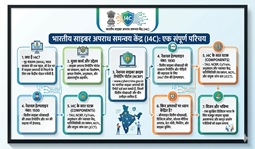
  • The Indian Cyber ​​Crime Coordination Centre (I4C) is the Ministry of Home Affairs' (MHA) most significant initiative for combating cybercrime in India.
  • Establishment: It was conceptualized in 2018 and was officially dedicated to the nation on January 10, 2020.
  • Ministry: It functions under the Ministry of Home Affairs (MHA).
  • Headquarters: Its central hub is located in New Delhi.

Seven Key Components of I4C:

  • National Cyber ​​Crime Threat Analytics Unit (TAU): Analyzing cyber threats.
  • National Cyber ​​Crime Reporting Portal (NCRP): Where citizens register complaints regarding online fraud (www.cybercrime.gov.in).
  • National Cyber ​​Crime Training Centre (CyTrain): Online training and certification for police officers.
  • National Cyber ​​Crime Research and Innovation Centre: Research on new technologies and solutions.
  • National Cyber ​​Crime Ecosystem Management Unit: Coordination between the government and private sectors.
  • National Cyber ​​Crime Forensic Laboratory (NCFL): A state-of-the-art laboratory for the examination of digital evidence.
  • Joint Cyber ​​Crime Investigation Teams (JCCT): Coordination among states for the investigation of inter-state crimes.

Uttar Pradesh Ranks First in the Country for Procurement on the GeM Portal in FY 2025-26

  • Uttar Pradesh has secured the top position in the country by achieving a record procurement of ₹22,337 crore through the GeM (Government e-Marketplace) portal during the financial year 2025-26.
  • Under its 'GeM Procurement Policy-2024,' the state has set a new benchmark for transparency and integrity by completely transitioning from the traditional tender system to an online portal.

Key Facts:

  • In FY 2025-26, the Urban Development Department led the way in procurement made by various departments of UP through the GeM portal. Urban Development Department: ₹3,606 crore.
  • Growing contribution of women entrepreneurs in 2025-26: ₹4,755 crore.
  • Participation of SC/ST entrepreneurs in 2025-26: ₹752 crore.

Government e-Marketplace (GeM):

  • An online public procurement portal in India for both goods and services.
  • Launched in August 2016, it serves as a key pillar of India's digital governance reforms.
  • Ministry: Operates under the Ministry of Commerce and Industry.
  • Ownership: Held by the GeM SPV (Special Purpose Vehicle), a 100% government-owned, non-profit Section 8 company.
  • Legal Mandate: Under Rule 149 of the General Financial Rules (GFR), 2017, procurement through GeM is mandatory for Central Government Ministries and Departments.
  • Target Audience: Central and State Government Departments, PSUs, autonomous bodies, and local bodies. In 2022, its scope was expanded to allow cooperatives to register as buyers.

Science and Technology

Discovery of Three New Species of the Genus Megalopinus
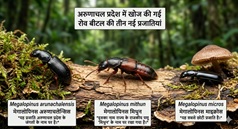
  • Researchers in Arunachal Pradesh have discovered three new species of rove beetles—Megalopinus arunachalensis, Megalopinus mithun, and Megalopinus micros.

Names of the New Species:

  • Megalopinus arunachalensis: Named after the state (Arunachal Pradesh) where it was discovered.
  • Megalopinus mithun: Named after the state animal of Arunachal Pradesh, the Mithun (Gayal).
  • Megalopinus micros: The term “micros” means small, indicating its tiny size.
  • Discoverers: Researchers from Rajiv Gandhi University, Arunachal Pradesh, and the University of Tübingen, Germany.
  • Published in: Soil Organisms journal

Rove Beetle:

  • Family: They belong to the Staphylinidae family, one of the largest families of living organisms in the world.
  • Characteristics: They are identified by their short elytra (wing covers), leaving most of their abdomen exposed.
  • Diet: They are mainly carnivorous and prey on small insects, thus helping in pest control in ecosystems.
  • This discovery was made in areas around Namdapha National Park.
  • It highlights that the Eastern Himalayan region (a global biodiversity hotspot) still harbors many undiscovered species.

Reports and Indices

‘Renewable Energy Statistics 2026’

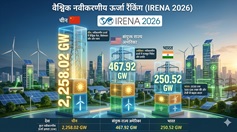
  • The International Renewable Energy Agency (IRENA) has released ‘Renewable Energy Statistics 2026,’ according to which India ranks third—following China and the United States—in terms of renewable energy capacity.

Global Renewable Energy Rankings (IRENA 2026):

Global Standing:

  • China: 2,258.02 GW
  • United States: 467.92 GW
  • India: 250.52 GW

Current Status of Renewable Energy in India:

  • As of March 31, 2026, India's total installed capacity from non-fossil fuel sources stands at 283.46 GW.
  • During the year 2025–26, the country generated 1,845.92 Billion Units (BU) of electricity, with non-fossil sources contributing 29.2% (538.97 BU).
  • Contribution of Renewable Energy: 274.68 GW

Breakdown:

  • Solar Energy: 150.26 GW
  • Wind Energy: 56.09 GW
  • Bioenergy: 11.75 GW
  • Small Hydro: 5.17 GW
  • Large Hydro: 51.41 GW
  • Contribution of Nuclear Energy: 8.78 GW
  • State-wise Concentration: More than 70% of the renewable energy capacity is concentrated in six states: Rajasthan, Maharashtra, Gujarat, Andhra Pradesh, Karnataka, and Madhya Pradesh. Capacity and Production: Installed renewable energy capacity grew at a CAGR of 10.93% (2016–2025), while total electricity generation from renewable sources reached 416,823 GWh in FY 2024–25.
  • Consumption Trends: Per capita energy consumption rose from 15,296 megajoules in 2015–16 to 18,096 megajoules in 2024–25.
  • Efficiency Gains: Transmission and Distribution (T&D) losses declined from 22% in FY 2015–16 to 17% in FY 2024–25.
  • Fossil Fuel Dominance: Coal remains the primary energy source, with its supply projected to increase to 552,315 kilotonnes of oil equivalent (ktoe) in FY 2024–25.
  • Financial Growth: The flow of credit to the energy sector has increased more than sixfold, rising from ₹1,688 crore in 2021 to ₹10,325 crore in 2025.

Panchamrit Goals:

  • The Prime Minister announced five "Amrit" (nectar) elements at COP26 (Glasgow, 2021):
  • Non-Fossil Capacity: To reach a non-fossil energy capacity of 500 GW by 2030.
  • Renewable Energy Share: To meet 50% of its energy requirements through renewable energy by 2030. (India has largely achieved this milestone as early as 2025).
  • Carbon Emission Reduction: To reduce total projected carbon emissions by 1 billion tonnes between now and 2030.
  • Carbon Intensity: To reduce the carbon intensity of its economy by more than 45% by 2030 (from 2005 levels). Net Zero: Achieving the 'Net Zero' (net-zero emissions) target by the year 2070.


Defence News

Joint Exercise Cyclone-IV

  • The fourth edition of the joint exercise 'Cyclone-IV' between India and Egypt is being conducted in Anshas, ​​Egypt.

Key Facts:

  • Type: This is a bilateral military exercise involving the Special Forces of both nations.
  • Participation: The Indian contingent comprises 25 personnel from the Special Forces (Para SF), who will train alongside their Egyptian counterparts.
  • Location: It is being held at the 'Rangers Forces Headquarters' in Anshas, ​​Egypt.
  • Background: This exercise was initiated in the year 2023. The first edition was conducted in Jaisalmer, Rajasthan.
  • Duration: From April 9 to April 17, 2026, in Anshas, ​​Egypt.
  • Previous Edition: The third edition was held in February 2025 at the Mahajan Field Firing Range in Rajasthan.

Other Exercises between India and Egypt:

  • Desert Warrior (Exercise Desert Warrior): An exercise involving the Air Forces of both nations.
  • Bright Star (Exercise Bright Star): A multilateral exercise in which both nations participate.

Awards and Honors

17th Construction Industry Development Council Vishwakarma Awards Ceremony
  • The 17th Construction Industry Development Council Vishwakarma Awards Ceremony was organized in New Delhi and was addressed by the Minister of Road Transport and Highways, Nitin Gadkari.
  • Gadkari stated that the government's objective is to improve the quality of construction across the country and to reduce its cost.
  • He highlighted the potential of India's construction and infrastructure sector as a pillar of the nation's economic development.

‘Lata Deenanath Mangeshkar Award 2026’

  • Nobel Peace Laureate and child rights activist Kailash Satyarthi will be honored with the ‘Lata Deenanath Mangeshkar Award 2026’.
  • This announcement was made on the occasion of the 84th death anniversary of Master Deenanath Mangeshkar, and the award will be presented on April 24, 2026, in Pune.

Related Facts:

  • Award Announcement: Made by Padma Shri Pt. Hridaynath Mangeshkar.
  • Award Presentation Date: April 24, 2026.
  • Venue: Ganesh Kala Krida Manch, Pune.
  • Reason for Award: Global contribution towards child rights and social justice.
  • Chief Guest: Dr. Vishwanath Karad (Founder, MIT World Peace University).

Other Key Recipients for the Year 2026:

  • Music: Mahesh Kale
  • Cinema: Raveena Tandon and Prajakta Mali
  • Drama & Film: Subodh Bhave
  • Literature: Achyut Godbole
  • Dance: Shama Bhate
  • Journalism: Sushil Kulkarni
  • Special Award: Dr. Anand Bhagwat (Social Service)

Lata Deenanath Mangeshkar Award:

  • Establishment: Instituted in the year 2022 in memory of Bharat Ratna Lata Mangeshkar.
  • Organization: This award is conferred by the ‘Master Deenanath Mangeshkar Smruti Pratishthan’.
  • Objective: It is presented to individuals who have made "extraordinary and path-breaking" contributions to the nation, its people, and society.

Previous Recipients:

  • 2022 (First): Prime Minister Narendra Modi
  • 2023: Asha Bhosle
  • 2024: Amitabh Bachchan
  • 2025: Kumar Mangalam Birla

Kailash Satyarthi:

  • A renowned Indian child rights activist.
  • Birth: Born on January 11, 1954, in the Vidisha district of Madhya Pradesh. Original Name: His birth name was Kailash Sharma; however, to convey a message of social equality and opposition to untouchability, he changed his surname to 'Satyarthi' (meaning 'seeker of truth').
  • Bachpan Bachao Andolan (BBA): He founded this organization in 1980, through which more than 100,000 children have been liberated from child labor, trafficking, and slavery to date.
  • Nobel Peace Prize (2014): He was jointly awarded this honor—alongside Pakistan's Malala Yousafzai—for "his struggle against the suppression of children and young people."
  • Autobiography: His autobiography is titled 'Diyaslai,' which chronicles the struggles and inspirations of his life.
  •  

Important Days

‘World Homeopathy Day’

  • ‘World Homeopathy Day’ is observed annually on April 10th to commemorate the birth anniversary of the founder of homeopathy, the German physician Dr. Christian Friedrich Samuel Hahnemann.
  • In India, it was celebrated for the first time in 2005.

Related Facts:

  • Theme for this year (2026): “Homeopathy for Sustainable Health”
  • Samuel Hahnemann (1755–1843) was a German physician who founded homeopathy in the late 18th century. His seminal work, *Organon of Medicine*, guides the practice of homeopathy globally, and his birth anniversary on April 10th is celebrated as World Homeopathy Day.
  • Homeopathy first arrived in India in 1810, when German missionaries began distributing medicines.
  • India currently has 345,000 registered homeopathic practitioners, 8,593 homeopathic dispensaries, 277 homeopathic teaching institutions, and 34 research centers.
  • 1847: One of the earliest homeopathic hospitals was established in Thanjavur, Tamil Nadu.
  • 1973: Establishment of the Central Council of Homeopathy.
  • 1978: Establishment of the Central Council for Research in Homeopathy.


Latest Courses