National News
Decline in West Bengal's Voter List Following SIR

- Following the Special Intensive Revision (SIR) process in West Bengal, the voter list has witnessed a decline of approximately 12%.
- According to data from the Election Commission, the total number of voters has dropped from 7.66 crore to approximately 6.77 crore.
Key Facts:
- Total Names Removed: Throughout the entire revision process, the names of approximately 91 lakh voters were removed from the list across the state.
- In the first phase (up to February 28), about 63 lakh names were removed; these primarily included voters who were deceased, had relocated, or were absent.
- In the second phase, following a review by judicial officers, the names of approximately 27 lakh additional voters were removed.
- Review Process: Judicial officers conducted hearings for cases involving approximately 60 lakh "logical discrepancies"; of these, about 32 lakh voters were deemed valid and retained on the list, while 27.16 lakh were excluded.
Districts with the Highest Reductions:
- Murshidabad: 4,55,137
- North 24 Parganas: 3,25,666
- Malda: 2,39,375
- South 24 Parganas: 2,22,929
- Purba Bardhaman: 2,09,805
Districts with the Lowest Reductions:
- Purba Medinipur: 19,572
- Bankura: 6,533
- Purulia: 5,942
- Kalimpong: 2,407
- Jhargram: 1,240
|
KDA Emphasizes Micro-Languages Over Hindi in Karnataka
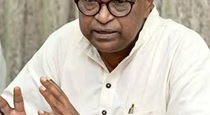
- The Kannada Development Authority (KDA) has decided to recommend the inclusion of 27 minor (minority) languages as the third language in schools across Karnataka.
- They stated, “It is not appropriate to adopt only major languages—including Hindi—as the third language in the state.
- Instead, emphasis should be placed on other micro-languages present within the state.
Relevant Facts:
- If micro-languages in the state are to be allowed to flourish and develop, then at the very least, those languages spoken by more than 10,000 people should be included as a third language.
- Otherwise, these minor languages will face extinction within the next ten years.”
- Currently, third languages such as Hindi (NCERT syllabus), Kannada, English, Arabic, Urdu, Sanskrit, Konkani, Tulu, and Marathi are taught in the state.
- The KDA's new proposal includes provisions to incorporate other minority languages of the state—such as Kodava, Yarava, Badaga, Arebhashe, and Koraga—as third languages, in addition to Tulu and Konkani.
- The Karnataka Agriculture Department (KDA) has conducted a study on the micro-languages prevalent in the state and has prepared a report.
- According to the report, there are 290 micro-languages in Karnataka. Of these, 27 languages are spoken by more than 10,000 people.
- The number of Kannada speakers in the state stands at 40,622,836, while the number of Tulu speakers is 192,915, Kodava speakers is 110,508, and approximately 26,536 people speak the Yarava language.
|
Indigenous Prototype Fast Breeder Reactor
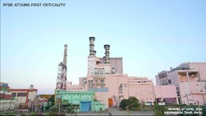
- India's 500 MWe indigenous Prototype Fast Breeder Reactor (PFBR), located at Kalpakkam in Tamil Nadu, has achieved criticality for the first time.
Key Facts:
- Location: Kalpakkam, Tamil Nadu
- Operator: Bharatiya Nabhikiya Vidyut Nigam Limited (BHAVINI), a PSU under the Department of Atomic Energy (DAE).
- Significance: This reactor utilizes plutonium fuel to harness India's vast reserves of thorium and produces (breeds) more fuel than the electricity it generates.
- The design of this reactor was developed by the Indira Gandhi Centre for Atomic Research (IGCAR), and it was constructed by the Bharatiya Nabhikiya Vidyut Nigam Limited (BHAVINI); both entities operate under the Department of Atomic Energy.
- India's nuclear program is structured in three stages.
- The first stage utilizes Pressurized Heavy Water Reactors (PHWRs) powered by natural uranium.
- The second stage—which includes the PFBR—focuses on Fast Breeder Reactors that generate more fissile material.
- The third stage aims to utilize thorium—a resource available in abundance in India—by converting Thorium-232 into Uranium-233 for use in advanced reactors.
|
International News
Fuel Subsidies Announced in Sri Lanka
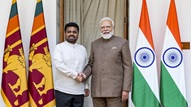
- Sri Lanka has announced substantial subsidies on fuel prices amidst the conflict in West Asia, providing a reduction of ₹100 per liter on diesel and ₹20 per liter on petrol.
- This scheme, which also covers the electricity, gas, and fertilizer sectors, aims to provide relief to the general public and is expected to impose a monthly burden of approximately 20 billion Sri Lankan rupees on the government.
Sri Lanka:
- Official Name: Democratic Socialist Republic of Sri Lanka
- An island nation located in the Indian Ocean
- Capital: The legislative capital is Sri Jayawardenepura Kotte, while Colombo is the commercial capital and largest city
- Main Languages: Sinhala and Tamil are the official languages
- Former Capital/Name: Until 1972, it was known as 'Ceylon'
- President: Anura Kumara Dissanayake
- Currency: Sri Lankan Rupee (LKR)
- Palk Strait: This narrow sea channel separates Sri Lanka from India
- Highest Peak: Pidurutalagala (also known as Mount Pedro) is Sri Lanka's highest peak (Height: 2,524 meters)
- Longest River: The Mahaweli Ganga is Sri Lanka's longest river, with a length of approximately 335 kilometers
- Independence Day: February 4, 1948 (from British rule)
- Shape of the Island: It is referred to as the 'Teardrop of India' or the 'Pearl of the Indian Ocean'
- Famous Temple: The Temple of the Sacred Tooth Relic is located in Kandy
- Festivals: Vesak (Buddha Purnima), Kandy Esala Perahera
- Hambantota Port: Located in the south of Sri Lanka (often a subject of discussion)
- National Sport: Volleyball
- National Bird: Ceylon Junglefowl
- National Tree: Ceylon Ironwood
|
Economy and Banking
Consideration of a Credit Guarantee Scheme

- The Central Government is considering a credit guarantee scheme worth ₹2.5 lakh crore to provide relief to MSMEs and other industries affected by the ongoing geopolitical tensions in West Asia and the US-Iran conflict.
- Under this scheme, a 90% guarantee will be provided on loans of up to ₹100 crore, with the aim of offering financial assistance to businesses impacted by supply chain disruptions and rising costs.
- This scheme will serve as an extension of the Emergency Credit Line Guarantee Scheme (ECLGS) framework—which was originally launched in 2020 to support MSMEs during the COVID-19 pandemic.
Micro, Small, and Medium Enterprises (MSMEs):
- They constitute the backbone of India's economy, contributing over 30% to the GDP and approximately 45–48% to exports.
Definition of MSMEs:
- Micro: Investment of less than ₹2.5 crore and turnover of less than ₹10 crore.
- Small: Investment of less than ₹25 crore and turnover of less than ₹100 crore.
- Medium: Investment of less than ₹125 crore and turnover of less than ₹500 crore.
|
India's General Government Debt-to-GDP Ratio

- According to Finance Minister Nirmala Sitharaman, the International Monetary Fund (IMF) estimates that India's General Government Debt-to-GDP ratio will decline from its current level of approximately 81% to 75.8% by 2030.
- This decline will be the result of shifts in India's fiscal policy and a productive investment-led consolidation.
Gross Domestic Product (GDP):
- The total monetary value of all final goods and services produced within a country's borders during a specific period (typically one year) is known as GDP.
- Significance: It reflects the health of the economy, its pace of growth, and its productive capacity.
- Modern Concept: It was developed in 1934 by the American economist Simon Kuznets.
- Formula for GDP Calculation (Expenditure Method): GDP = C + I + G + (X − M)
- C = Consumption
- I = Investment
- G = Government Spending
- X − M = Net Exports (Exports − Imports)
Main Types:
- Nominal GDP: This is based on current market prices and does not account for inflation.
- Real GDP: This is based on prices from a base year, with the effects of inflation removed. It is a more accurate measure for comparing economic growth.
- GDP Per Capita: Obtained by dividing the total GDP by the country's population; it serves as an indicator of the standard of living.
- In India, GDP figures are released by the Central Statistics Office (CSO) under the Ministry of Statistics and Programme Implementation (MoSPI).
- The Services sector, Industry, and Agriculture contribute the most to India's GDP.
- With a GDP of US$ 4.18 trillion, India has surpassed Japan to become the world's fourth-largest economy.
|
Launch of the Annual Survey of Corporate Service Sector Enterprises

- The National Statistical Office (NSO), under the Ministry of Statistics and Programme Implementation (MoSPI), has launched the Annual Survey of Corporate Service Sector Enterprises (ASISSE) starting from April 2026.
- This is the first detailed survey of service sector companies in the country (registered under the Companies Act 1956/2013 or the LLP Act 2008), aimed at creating a comprehensive database for the year 2024-25.
Key Facts:
- Reference Period: Financial Year 2024-25
- Significance: This survey, in conjunction with the ASI (Annual Survey of Industries) and ASUSE (Annual Survey of Unorganized Sector Enterprises), will provide a complete picture of the non-agricultural economy.
- The GSTN database has been utilized as the sampling frame for this survey.
- Over 1.21 lakh enterprises will be surveyed under ASISSE.
- The NSO has published "Know Your Survey: A User Guide for the Annual Survey of Corporate Service Sector Enterprises (ASISSE)," which forms part of MoSPI's broader outreach efforts aimed at engaging with users and communicating survey processes in a more transparent and user-friendly manner.
|
CDS Limits for FPIs Notified
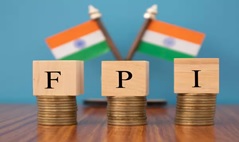
- The Reserve Bank of India (RBI) has notified the debt investment and Credit Default Swap (CDS) limits for Foreign Portfolio Investors (FPIs) for the financial year 2026-27.
Key Highlights:
- According to this new blueprint prepared for the financial year 2026-27, the overall investment limit has been increased to ₹16.32 lakh crore.
- The existing rules for domestic investors will remain unchanged; this is referred to as the 'General Route'.
- Government Securities (G-Secs): Foreign investors are permitted to invest up to 6% of the total market in this category.
- State Government Securities (SGSs): Foreign participation in state government bonds has been capped at 2%.
- Corporate Bonds: The limit for bonds issued by both private and public sector companies remains unchanged at 15%.
|
Revision in the Classification of Banking Correspondents
- The Reserve Bank of India (RBI) has proposed a revised classification for Banking Correspondents (BCs) with the aim of streamlining their operations and bringing uniformity to their remuneration.
Two-Tier Classification:
- BC-Banking Outlet (BC-BO): These will provide more comprehensive services, such as account opening, cash transactions, KYC updates, and fund transfers.
- BC-Banking Touchpoint (BC-BT): These will be limited to small-value transactions.
|
PMMY Completes 11 Years
- The Pradhan Mantri Mudra Yojana (PMMY)—launched on April 8, 2015, with the objective of providing financing to micro-enterprises and small businesses—has completed 11 years.
Key Facts:
- Launch Date: April 8, 2015
- Main Objective: To provide institutional credit to micro and small industries, enabling them to establish and expand their businesses.
- Type: Central Sector Scheme
- Financing Provision: Under this scheme, loans are disbursed through Member Lending Institutions (MLIs), such as Scheduled Commercial Banks, RRBs, NBFCs, and MFIs.
- Refinancing: This is managed by MUDRA Ltd. (Micro Units Development and Refinance Agency), which provides refinancing to MLIs but does not extend direct loans to borrowers.
- Credit Guarantee: Provided through the Credit Guarantee Fund for Micro Units (CGFMU), established in 2015.
- The scheme offers loans across four categories: Shishu (up to ₹50,000), Kishore (₹50,000 to ₹5 lakh), Tarun (₹5 lakh to ₹10 lakh), and Tarun Plus (₹10 lakh to ₹20 lakh).
|
First Bi-monthly Monetary Policy for the Current Financial Year 2026-27
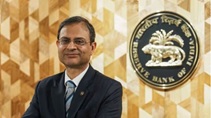
- The Reserve Bank of India (RBI) has announced the first bi-monthly monetary policy for the current financial year 2026-27, maintaining the policy repo rate at a steady 5.25% for the consecutive time.
- Chaired by Governor Sanjay Malhotra, the committee has continued to maintain a 'neutral' stance to ensure economic stability.
Key Highlights:
- The Standing Deposit Facility (SDF) rate has been retained at 5%, while the Marginal Standing Facility (MSF) rate and the Bank Rate have been kept unchanged at 5.5%.
- GDP growth is projected at 7.6% for the previous financial year and 6.9% for the current financial year.
- Inflation, based on the Consumer Price Index (CPI), is estimated to stand at 4.6% for the current financial year.
- Rising energy prices—driven by the conflict in West Asia—and the potential onset of El Niño conditions pose a risk of escalating inflation.
- Despite strong macroeconomic fundamentals, the Indian Rupee has depreciated further in the year 2025-26 compared to the average levels observed in previous years.
|
Science and Technology
Discovery of 2 New Species of Marine Nematodes off the Tamil Nadu Coast
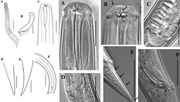
- Researchers from the Zoological Survey of India (ZSI) have discovered two new species of free-living marine nematodes (microscopic worms) in the marine sediments off the coast of Tamil Nadu.
- Published in Zootaxa, this research names these microscopic organisms *Corononema dhriti* and Epacanthion indica—species that play a crucial role in ocean health and nutrient recycling.
Key Features:
|
Corononema dhriti:
- It has been named in honor of Dr. Dhriti Banerjee, the first female Director of the ZSI.
- Globally, it is only the fourth known species of this genus.
- Previously, species of this genus had been observed only in Australia, Thailand, and Vietnam.
Epacanthion indica:
- It has been named after India.
- It is known for its complex anatomical structure.
- It possesses specialized jaws and tooth-like structures, which make it a microscopic predator.
- This research team was led by researchers Ritika Dutta and Anjum Rizvi.
|
Environmental News
'Tar-Balls Management Rules, 2026'

- The Ministry of Environment has notified the draft of the 'Tar-Balls Management Rules, 2026' to prevent marine pollution caused by the toxic residues of oil spills (known as tar-balls).
- These rules are based on the "Polluter Pays" principle, which holds oil companies and ship operators accountable for the safe disposal of these residues.
Key Highlights:
- Accountability: Ports and oil companies will be held responsible for the cleanup and scientific disposal of these residues.
- Monitoring: Coastal states are mandated to regularly monitor their beaches.
- Penalties: The rules provide for strict penalties in cases of violation or negligence.
- Environmental Protection: The primary objective is to protect marine life and tourist destinations from toxic oil waste.
- Disaster Declaration: In severe cases, the rules mandate monitoring, reporting, and the declaration of a 'State Disaster'.
- Tar-Balls:
- These are dark-colored, sticky, and semi-solid spheres of crude oil that form in the ocean due to oil spills or waste discharged from ships.
- When oil spreads in the ocean, the action of wind and waves breaks it down into smaller fragments; these fragments then coalesce with marine debris (such as sand and microplastics) to form spherical balls.
- Formation: They are formed through a process known as "weathering," wherein the lighter components of the oil evaporate, leaving behind the heavier hydrocarbons.
- Size: Their size can range from as small as a coin to as large as a basketball.
- Impact on India: These accumulate in large quantities along India's western coast (stretching from Gujarat to Goa) during the monsoon season (April to September).
|


 Don't Have an Account?