15 April, 2026
India Leads Globally in Issuing IRCC
Wed 01 Apr, 2026
Context :
- Under the Nagoya Protocol (ABS), India has secured the top position globally in issuing Internationally Recognized Certificates of Compliance (IRCC).
Key Points :
- India achieved this milestone through effective implementation of the Biological Diversity Act, 2002, surpassing countries like France in compliance.
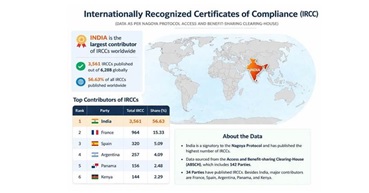
- Leading Position: India has issued 3,561 out of 6,311 global IRCCs, accounting for more than 56% of all certificates.
- ABS Clearing-House: Out of 142 registered countries, only 34 have issued IRCCs, with India leading the list.
- Impact: These certificates ensure fair and equitable sharing of benefits arising from the use of genetic resources.
- Implementation: The National Biodiversity Authority (NBA), in coordination with State Boards, has strengthened the processes.
- Status of Other Countries: After India, France (964 certificates) ranks second, followed by Spain (320), Argentina (257), Panama (156), and Kenya (144).
- India’s success is the result of effective implementation of the Biological Diversity Act, 2002 and streamlined processes by the National Biodiversity Authority (NBA).
- This achievement highlights India's active role in global biodiversity governance and its sustained efforts to promote the fair and equitable sharing of benefits arising from the utilization of biological resources.
- It also aligns with international goals related to biodiversity conservation and sustainable use, thereby further strengthening India's position as a key player in the implementation of global environmental agreements.
Nagoya Protocol :
- The Nagoya Protocol (2010) is a supplementary agreement to the Convention on Biological Diversity (CBD), ensuring fair and equitable sharing of benefits arising from the use of genetic resources (ABS).
- Supplementary Agreement: Part of the Convention on Biological Diversity (CBD)
- Adopted: 29 October 2010, Nagoya (Japan) at COP-10
- Entered into Force: October 2014
- India’s Status: India implemented it in 2014 and assigned responsibility to the National Biodiversity Authority (NBA).
- Objectives: Regulate access to genetic resources, ensure fair and equitable benefit sharing, protect traditional knowledge and local communities, and ensure transparency in research and development
Key Provisions :
- Access and Benefit Sharing (ABS): Access to resources only with permission and prior consent; benefits must be shared with local communities
- IRCC (Internationally Recognized Certificate of Compliance): Certifies that access to resources is legal and approved; India is the global leader in issuing IRCCs
- National Implementation: In India through the Biological Diversity Act, 2002 and the National Biodiversity Authority (NBA)