GK Update
 
  • Mobile Menu
HOME BUY MAGAZINEnew course icon
LOG IN SIGN UP

Sign-Up IcanDon't Have an Account?


SIGN UP


Login Icon

Have an Account?


LOG IN
 

or
By clicking on Register, you are agreeing to our Terms & Conditions.


or


GK Update

Wed 01 Apr, 2026

National News

Launch of AI Chatbot "Nyay Setu"

  • The Ministry of Law and Justice has launched the "Nyay Setu" AI chatbot—along with its official mascot, "Dishika"—as a significant digital initiative aimed at empowering citizens and making legal aid more accessible.
  • This initiative has been primarily introduced to provide the general public with free legal information and advice, 24/7, from the comfort of their homes.

Key Details:

  • Program: The DISHA program, organized by the Department of Justice.
  • Launched by: Vice President C.P. Radhakrishnan and the Minister of State (Independent Charge) for Law and Justice, Arjun Ram Meghwal.
  • Nyay Setu is a voice-first, multimodal, and multilingual AI-powered legal assistant.
  • Developed by: The Digital India Bhashini Division (DIBD).

Potential Benefits:

  • Access to Justice: Citizens residing in rural and remote areas will also be able to access legal information.
  • Alignment with Digital India: Digitization of judicial services.
  • Reduction of Judicial Burden: Common queries will be answered by the chatbot.
  • Transparency and Awareness: Citizens will receive clear information regarding their rights and legal procedures.

Inauguration of Semiconductor OSAT Plant

  • Prime Minister Narendra Modi inaugurated Kaynes Semicon's ₹3,300 crore semiconductor OSAT plant at the Sanand GIDC in Gujarat.

Key Facts:

  • Project Cost: This plant has been established with an investment of approximately ₹3,300 crore.
  • Production Capacity: This facility is capable of producing approximately 6 to 6.3 million chips per day.
  • Target Market: A significant portion of the chips manufactured here is earmarked for export (particularly to the USA), thereby reinforcing the vision of 'Make in India, Make for the World.'

Strict Warning Issued Regarding GLP-1 Medications

  • The Union Ministry of Health and the Central Drugs Standard Control Organization (CDSCO) have issued a comprehensive advisory in light of the increasing misuse of GLP-1 (Glucagon-like Peptide-1) medications.
  • While these medications are primarily intended for the treatment of Type 2 diabetes and obesity, the government has issued a stern warning regarding their unsafe use for the sole purpose of weight loss.

Key Facts:

  • Prescription by Specialist Doctors Only: These medications may be prescribed exclusively by Endocrinologists, Internal Medicine specialists, or—in certain cases—Cardiologists.
  • Ban on OTC Sales: These medications cannot be purchased 'over-the-counter' (without a prescription). The purchase and sale of these drugs—whether from medical stores, online platforms, or wellness clinics—without a valid prescription are strictly prohibited.

Diabetes:

  • A chronic health condition that affects how your body converts food into energy. This condition arises when the level of sugar (glucose) in your blood becomes excessively high.
  • Main Types: There are two primary types of diabetes.
  • Type 1 Diabetes: Type 1 diabetes is characterized by the inadequate production of insulin by the pancreas. Patients with Type 1 diabetes require daily doses of insulin throughout their lives.
  • Type 2 Diabetes: Type 2 diabetes prevents the body from utilizing insulin effectively. A hereditary predisposition to diabetes, obesity or being overweight, and a lack of exercise (insufficient physical activity) increase the risk of developing Type 2 diabetes.
  • Obesity is a chronic disease caused by an excessive accumulation of body fat.
  • A Body Mass Index (BMI) of 25 kg/m² or higher is defined as obesity, whereas a BMI between 23.00 and 24.99 kg/m² is considered overweight. BMI is a metric calculated based on an individual's height and weight.
  • GLP-1 Medications Available in the Market: The first GLP-1 medication was approved by the United States Food and Drug Administration in 2005; however, in recent years, several new medications have become highly popular for the treatment of patients with diabetes and obesity.
  • Some of the major GLP-1 medications currently available in the market include: Semaglutide injection, Semaglutide tablets, Liraglutide, Tirzepatide, Dulaglutide, Exenatide, and Exenatide Extended-Release.
  • Most of these medications are administered via pre-filled injection pens, although some (such as oral Semaglutide) are also available in tablet form.

Record 219 Advance Pricing Agreements Signed

  • The Central Board of Direct Taxes (CBDT) has concluded a record 219 Advance Pricing Agreements (APAs) in the financial year 2025-26, pushing the total number of agreements past the 1,000 mark (totaling 1,034).
  • This initiative represents a major milestone in promoting 'Ease of Doing Business' and tax certainty in India, while simultaneously reducing tax disputes and attracting foreign investment.

Key Highlights:

  • Total Agreements: 219 (breaking the previous year's record of 174)
  • Bilateral APAs (BAPAs): 84 (with 13 treaty partners)—the highest number recorded to date
  • New Beginnings: First-ever Bilateral APAs signed with France, Indonesia, Ireland, and Sweden
  • Overall Progress: Since the inception of the program, a total of 1,034 APAs have been signed, surpassing the 1,000-agreement milestone.

₹15 Lakhs for Rural Development Across 6 States

  • On March 31, 2026, the Central Government released an amount exceeding ₹1,500 crore as grants under the 15th Finance Commission (XV-FC).
  • This amount has been provided to empower Panchayati Raj Institutions (PRIs) and Rural Local Bodies (RLBs) across six states.

Key Facts:

  • These grants will benefit Panchayati Raj Institutions in Telangana, Rajasthan, Maharashtra, Uttarakhand, Mizoram, and Meghalaya.
  • For Telangana, ₹247.94 crore has been released as the first installment of the unconditional grant for the financial year 2025-26, benefiting 12,600 Gram Panchayats.
  • Uttarakhand has received ₹91.31 crore as the second installment of the unconditional grant, providing assistance to all 13 District Panchayats, 95 Block Panchayats, and 7,784 eligible Gram Panchayats.
  • Additionally, a previously withheld amount of ₹1.84 crore has been released to 216 additional Gram Panchayats.
  • Rajasthan has received ₹315.61 crore as the second installment of the unconditional grant for the financial year 2025-26, covering all 33 District Panchayats, 352 Block Panchayats, and 3,857 Gram Panchayats. Furthermore, an additional amount of ₹12.57 crore, which had been withheld for nine District Panchayats and 13 Block Panchayats, has also been released.
  • Meghalaya has received ₹27 crore as the second installment of the unconditional grant for the financial year 2021-22, benefiting its three Autonomous District Councils—Khasi, Garo, and Jaintia. The state has also received a conditional grant of ₹22.20 crore for 816 Village Councils located within the Autonomous District Council areas. Maharashtra received several installments of withheld grant funds for both the financial years 2024-25 and 2025-26.

State News

Utkal Divas

  • Odisha Divas (Utkal Divas) is celebrated annually on April 1st to commemorate the formation of Odisha as an independent state, following its separation from the Bihar-Odisha province on a linguistic basis.
  • On April 1, 2026, Odisha is celebrating its 91st Foundation Day.

Related Facts:

  • Prior to 1936, Odisha was part of the Bengal Presidency, along with Bihar and Jharkhand.
  • On April 1, 1936, the British government officially separated Odisha from the Bihar and Odisha province.
  • Odisha was the first state to be formed on a linguistic basis.
  • Notable leaders of the statehood movement included 'Utkal Gaurav' Madhusudan Das, 'Utkal Mani' Gopabandhu Das, Fakir Mohan Senapati, Pandit Nilakantha Das, and many others.
  • The state government is organizing a 14-day 'Odia Fortnight' (Odia Pakhwada), commencing today.
  • This event will place a special emphasis on culture, heritage, and traditional attire.
  • Additionally, extensive community programs and a "Heritage Run" are also being organized.

India's First National Repository for Deep-Sea Fauna

  • The 'Bhavasagara' Referral Centre—located at the Centre for Marine Living Resources and Ecology (CMLRE) in Kochi, Kerala—has been officially designated by the Ministry of Environment, Forest and Climate Change (MoEFCC) as India's first National Repository for Deep-Sea Fauna.

Key Facts:

  • Institute: CMLRE (Centre for Marine Living Resources & Ecology), Kochi (under the Ministry of Earth Sciences).
  • Designated Centre: 'Bhavasagara' Referral Centre.
  • Statutory Basis: This designation has been made under Section 39 of the Biological Diversity Act, 2002.
  • Objective: To serve as a national facility for the conservation, documentation, and study of India's deep-sea biodiversity.
  • Holdings: Currently, the facility houses over 3,500 taxonomically identified and geo-referenced voucher specimens, comprising both marine invertebrates and vertebrates.
  • Significance: This initiative will provide impetus to India's 'Blue Economy' goals and the 'Deep Ocean Mission'.

'20 Cities Towards Zero Waste'

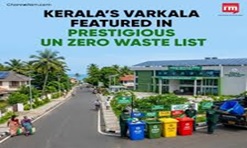
  • Varkala, a city in Kerala, has been included in the United Nations' '20 Cities Towards Zero Waste' initiative.
  • This achievement makes Varkala the only city from India—and a global frontrunner—to be featured on this list, recognizing its efforts in sustainable waste management, recycling, and environmental conservation.

Related Facts:

  • Leadership of the Initiative: The '20 Cities Towards Zero Waste' initiative is being led by the UN Secretary-General's Zero Waste Advisory Board, in collaboration with UN-Habitat and the United Nations Environment Programme (UNEP).
  • Objective: The primary objective of this initiative is to recognize cities that are making concrete efforts toward waste reduction, promoting a circular economy, managing organic waste, and minimizing single-use plastics.
  • Global Recognition: Varkala's selection establishes it globally as a "Zero Waste" model.
  • Sustainable Development Goals (SDGs): This initiative contributes specifically to SDG 11 (Sustainable Cities and Communities), SDG 12 (Responsible Consumption and Production), and SDG 13 (Climate Action).
  • Efforts: Varkala has made significant improvements in waste-to-energy initiatives, community participation, and waste segregation—efforts that have earned it this distinction.

Defence News

Mountain Radar Systems

  • The Ministry of Defence has signed a contract worth ₹1,950 crore with Bharat Electronics Limited (BEL) for two indigenously developed Mountain Radar Systems for the Indian Air Force.
  • Under this agreement, two advanced Mountain Radar Systems—indigenously developed by the DRDO's LRDE and manufactured by BEL—will be procured.
  • This project, undertaken within the framework of the 'Atmanirbhar Bharat' (Self-Reliant India) and 'Make in India' initiatives, will significantly enhance surveillance capabilities in mountainous terrains.

Key Facts:

  • Contract Category: This deal has been concluded under the 'Buy (Indian-IDDM)' category (Indigenously Designed, Developed, and Manufactured).
  • Design and Development: These radar systems have been indigenously designed and developed by the Electronics and Radar Development Establishment (LRDE)—a Bengaluru-based laboratory of the Defence Research and Development Organisation (DRDO).
  • Manufacturing: They will be manufactured by the Public Sector Undertaking (PSU), Bharat Electronics Limited (BEL).
  • Primary Objective: The objective is to bolster the Air Force's surveillance capabilities in high-altitude mountainous regions and to reduce reliance on foreign equipment.
  • Mountain Radar Systems:
  • These are surveillance devices specifically designed to address the unique challenges posed by high-altitude mountainous terrains and inaccessible regions (such as the Himalayas).
  • Compared to standard radar systems, they incorporate several technical modifications tailored to these specific environments.

INS Sanshodhak

  • On March 30, 2026, the Indian Navy received its fourth and final Survey Vessel (Large)—'Sanshodhak' (INS Sanshodhak)—thereby successfully concluding this four-ship project.

Project Details (SVL Project):

  • This project was steered by the Indian Navy's 'Warship Design Bureau' and was constructed by Garden Reach Shipbuilders and Engineers (GRSE), Kolkata. The contract for these four vessels was signed on October 30, 2018.

The Four Vessels Built Under the Project:

  • INS Sandhayak: Commissioned on February 3, 2024.
  • INS Nirdeshak: Commissioned on December 18, 2024.
  • INS Ikshak: Commissioned on November 6, 2025.
  • INS Sanshodhak: Handed over to the Navy on March 30, 2026.
  • Indigenous Capability: 'Sanshodhak' incorporates over 80% indigenous content (by cost), thereby giving a boost to the 'Aatmanirbhar Bharat' (Self-Reliant India) campaign.
  • Primary Role: This vessel is capable of conducting full-scale hydrographic surveys—both near ports and in deep waters—and assisting in the determination of maritime routes.
  • Technology: It is equipped with state-of-the-art equipment, including Autonomous Underwater Vehicles (AUVs), Remotely Operated Vehicles (ROVs), Digital Side Scan Sonars, and advanced data processing systems.
  • Other Applications: In addition to collecting oceanographic data for both defense and civilian applications, the vessel can also be utilized as a Hospital Ship during times of war or emergency.

INS Dunagiri

  • On March 30, 2026, the Indian Navy received 'Dunagiri' (INS Dunagiri)—the fifth indigenous stealth frigate built under Project 17A—at Garden Reach Shipbuilders and Engineers Limited (GRSE) in Kolkata.

Key Facts:

  • What is Project 17A?: Under this project, a total of seven Nilgiri-class guided-missile stealth frigates are being constructed. 'Dunagiri' is the fifth ship of this class.
  • Indigenous Construction: It was designed by the Warship Design Bureau (WDB) and constructed by the Kolkata-based Garden Reach Shipbuilders and Engineers (GRSE).
  • Technology and Stealth: It features advanced stealth characteristics, such as a reduced radar signature and low acoustic noise, which help it evade enemy radar and sonar.
  • Weapon Systems: The ship is equipped with BrahMos surface-to-surface missiles, Barak-8 (LRSAM), torpedoes, and a modern indigenous sonar system.
  • Propulsion: It is based on the CODOG (Combined Diesel or Gas) system, utilizing diesel engines for low-speed operations and gas turbines for high-speed operations.
  • Historical Context: It is named after a mountain range in Uttarakhand. It serves as the modern iteration of the erstwhile INS Dunagiri (Leander-class), which served from 1977 to 2010.

Other Ships of Project 17A:

  • INS Nilgiri (First ship, built by MDL)
  • INS Himgiri (Built by GRSE)
  • INS Udaygiri (Built by MDL)
  • INS Taragiri (Built by MDL)
  • INS Vindhyagiri
  • INS Mahendragiri

INS Trikand

  • The Indian Navy's frontline guided-missile frigate, INS Trikand, successfully completed its three-day port call at the Port of Maputo, Mozambique, from March 26 to 29, 2026.
  • This visit was part of India's operational deployment in the South-West Indian Ocean Region (SWIOR).

Awards and Honors

Booker Prize 2026

  • Padma Viswanathan—an Indian-origin Canadian-American author and translator—has been shortlisted for the International Booker Prize 2026.
  • She has received this recognition for her English translation of the novel On Earth as It Is Beneath by the Brazilian author Ana Paula Maia.

Related Facts:

  • Formerly known as the Man Booker International Prize, this honor is awarded annually to a work of fiction originally written in a language other than English, which has subsequently been translated into English and published in the UK or Ireland.
  • The winner of this award will receive a prize sum of £50,000, which will be shared equally between the winning author and the translator. The winner will be announced on May 19 at a ceremony held at the Tate Modern in London.

Economy and Banking

RBI Imposes Penalty on Airtel Payments Bank
  • The Reserve Bank of India (RBI) has imposed a penalty of ₹31.8 lakh on Airtel Payments Bank for violating disclosure norms.

Key Facts:

  • Penalty: ₹31.80 lakh.
  • Reason: Non-compliance with the RBI's directives regarding disclosures in financial statements.
  • Investigation: This action was taken following the 'Statutory Inspection and Supervisory Evaluation' (ISE 2025) conducted with reference to the financial position as of March 31, 2025.
  • Legal Basis: The penalty has been imposed under Section 47A(1)(c) and Section 46(4)(i) of the Banking Regulation Act, 1949.

Books and Authors

'Tides of Time'

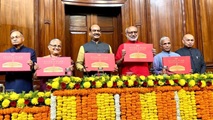
  • Vice President C.P. Radhakrishnan released the book 'Tides of Time', authored by Rajya Sabha MP Sudha Murty.

Related Facts:

  • Publisher: This book is a publication of the Lok Sabha Secretariat.
  • Subject: The book chronicles India's civilizational journey and democratic heritage through 58 murals located within the Parliament House (Samvidhan Sadan).
  • Vice President's Address: Speaking at the launch event, Mr. Radhakrishnan stated that these murals are not merely artworks, but living testimonies to India's ancient democratic traditions. He highlighted India as the "Mother of Democracy."


Latest Courses