National News
Finance Commission Grants Worth ₹2,461 Crore Released to 8 States
- The Central Government has released ₹2,461.35 crore as grants from the 15th Finance Commission (XV-FC) for Rural Local Bodies (RLBs) across eight states.
Key Facts:
- Amount Released: ₹2,461 crore+
- Commission: 15th Finance Commission (XV-FC)
- Beneficiary States: This amount has been distributed to Chhattisgarh, Gujarat, Madhya Pradesh, Punjab, Sikkim, Himachal Pradesh, Odisha, and Tripura.
Type of Grants:
- Tied Grants: Tied grants for the financial year 2025-26 have been released to Chhattisgarh, Gujarat, Madhya Pradesh, Punjab, and Sikkim.
- Withheld Portions: The withheld portions of both Tied and Untied grants have been released for Himachal Pradesh, Odisha, Sikkim, and Tripura.
- Distribution of Funds: An amount exceeding ₹945 crore has been released to Madhya Pradesh; over ₹764 crore to Gujarat; approximately ₹387 crore to Chhattisgarh; over ₹332 crore to Punjab; over ₹35 crore to Odisha; approximately ₹14 crore to Himachal Pradesh; over ₹10 crore to Sikkim; and over ₹68 lakh to Tripura.
- Institutional Framework: These grants are recommended by the Ministry of Panchayati Raj and the Ministry of Jal Shakti (Department of Drinking Water and Sanitation) and are released by the Ministry of Finance.
15th Finance Commission:
- Date of Constitution: November 27, 2017
- Period: 2021–2026
- Chairman: N.K. Singh (Former IAS Officer)
Key Recommendations (2021–26):
- States' Share in Taxes: 41% (lower than the 42% recommended by the 14th Finance Commission); the states' share was reduced following the reorganization of Jammu and Kashmir.
|
Approval Granted for Proposals for Record Procurement of Pulses and Oilseed Crops
- Union Minister of Agriculture and Farmers Welfare, Shivraj Singh Chouhan, has approved proposals for the record procurement of pulses and oilseed crops at the Minimum Support Price (MSP) in Haryana, Uttar Pradesh, and Karnataka for the Rabi Marketing Season 2025-26.
- This procurement will be undertaken under the Price Support Scheme (PSS), with a total value exceeding ₹11,698 crore.
Key Highlights:
- Objective: To ensure a fair price for crops to farmers and to prevent distress sales at low market rates.
- Uttar Pradesh (UP): Holds the largest share (over 80%), involving the substantial procurement of Gram (224,000 MT), Masur (677,000 MT), and Mustard (530,000 MT), valued at approximately ₹9,341 crore.
- Haryana: Approval has been granted for the procurement of 13,082 MT of Gram and 360,528 MT of Mustard, with a total MSP value exceeding ₹2,312 crore.
- Karnataka: Approval has been granted for the procurement of 6,923 MT of Safflower (representing 25% of the state's proposal), with a total value of ₹45.27 crore.
Minimum Support Price (MSP):
- MSP is the minimum price at which the government guarantees to purchase crops from farmers.
- Declaring Authority: The Central Government declares the MSP based on the recommendations of the Commission for Agricultural Costs and Prices (CACP). The final decision is taken by the Ministry of Agriculture and Farmers Welfare. Scope of Crops: The government recommends Minimum Support Price (MSP) for 22 mandated crops and Fair and Remunerative Price (FRP) for sugarcane.
- 14 Kharif Crops: Paddy, Jowar, Bajra, Maize, Ragi, Arhar, Moong, Urad, Cotton, Groundnut, Sunflower, Soybean, Sesamum, Nigerseed
- 6 Rabi Crops: Wheat, Barley, Gram, Masur, Mustard, Safflower
- 2 Other Commercial Crops: Jute, Coconut (Copra)
|
Foundation Stone Laying for Various Development Projects in Vav-Tharad
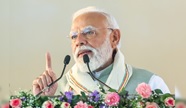
- On March 31, 2026, Prime Minister Narendra Modi inaugurated and laid the foundation stones for various development projects worth over ₹19,806 crore in Vav-Tharad (Banaskantha), Gujarat.
Key Projects and Details:
- Total Investment: Approximately ₹19,806.9 crore (Joint projects of the Central and State Governments).
- Central Government Projects: An investment of approximately ₹10,921 crore, comprising works related to the Ministries of Power, Road Transport & Highways, and Railways.
- Gujarat Government Projects: An investment of approximately ₹8,886 crore, comprising works under the Urban Development, Water Supply, GIDC, Health, and Tourism departments.
- Major Developments: These include expressways, railway expansion, water supply projects, and homes constructed under the PM Awas Yojana in rural areas.
- Gandhinagar (Koba): On the occasion of Mahavir Jayanti, the 'Samrat Samprati Museum' was inaugurated; it is dedicated to Jain heritage and the principles of non-violence.
- Sanand (Semiconductor Hub): Kaynes Semicon's 'Outsourced Semiconductor Assembly and Test' (OSAT) plant was inaugurated, marking a significant step forward in India's Semiconductor Mission.
|
First Phase of the Census
- The Government of India has notified a questionnaire comprising 33 questions for the first phase (House-listing and Housing) of the upcoming Census 2027, which is scheduled to run from April 1, 2026, to September 30, 2026.
- This door-to-door exercise will gather information regarding the condition of houses, available amenities (LPG, water, internet), and socio-economic status; notably, for the first time, it includes a provision to treat live-in couples as married couples.
Relevant Facts:
|
Key Highlights:
- Two Phases: The census will be conducted in two phases; the first phase is House-listing.
- Duration: To be conducted over a 45-day period between April 1, 2026, and September 30, 2026.
- 33 Questions: Pertaining to house construction materials, house ownership, water supply, toilet facilities, cooking fuel, and assets (vehicles, TV, internet).
- Digital Initiative: A 'Self-Enumeration Portal' will be made available in 16 languages.
- Specific Questions: The primary cereal consumed in the household and the number of married couples residing therein.
The 16th Census:
- The Cabinet has approved a budget of ₹11,718.24 crore for India's 16th Census (Census of India 2027), which will be the first fully digital census.
- House-listing and Housing Census (April–September 2026): This phase will collect information regarding houses and living conditions.
- Population Enumeration (February 2027): This phase will gather information related to each citizen's age, gender, education, caste, language, employment status, etc.
- First Phase in Four Regions: Uttarakhand, Himachal Pradesh, Ladakh, and Jammu & Kashmir.
- The census is conducted by the Office of the Registrar General and Census Commissioner. This office functions under the aegis of the Union Ministry of Home Affairs.
- The 2027 Census will be the 16th census since 1872 and the 8th census since India's independence. The government has decided to collect data for the upcoming census, the caste-based enumeration, and the National Population Register (NPR) simultaneously.
|
Agreement between DGCA and GSV
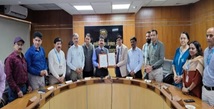
- A Memorandum of Understanding (MoU) was signed between the Directorate General of Civil Aviation (DGCA) and Gati Shakti Vishwavidyalaya (GSV) to develop a skilled workforce in the aviation sector.
Key Highlights:
- Objective: To provide scientific and technical training to youth in the fields of aviation technology, management, and aircraft maintenance (Maintenance, Repair, and Overhaul – MRO).
- New Course: A three-year B.Sc. program in Aircraft Maintenance Engineering (AME) will be introduced starting from the academic session 2026-27 (August 2026).
- Pilot Project: Initially, this program will be implemented at select institutions such as the Air India AME Academy and the GMR School of Aviation.
- Centre of Excellence: Railway Minister Ashwini Vaishnaw proposed the establishment of a Centre of Excellence for Manufacturing Technologies at the university, which will train approximately 1,000 students annually.
Directorate General of Civil Aviation (DGCA):
- It is a statutory body of the Government of India.
- Primary Function: To address safety-related issues.
- Headquarters: New Delhi
|
Agreement between CCRAS and 'Anuvadini AI'
- The Central Council for Research in Ayurvedic Sciences (CCRAS) has signed a Memorandum of Understanding (MoU) with the 'Anuvadini AI' platform, which was developed by the All India Council for Technical Education (AICTE) under the Ministry of Education.
Key Highlights:
- Translation into 13 Languages: CCRAS's research findings, books, documents, videos, website content, and other educational materials will be translated into 13 regional languages.
- Evidence-Based Ayurveda: This initiative will make evidence-based Ayurvedic knowledge accessible to the public by overcoming linguistic barriers, thereby helping to mitigate misinformation.
- Signatories: The MoU was signed between the Director General of CCRAS, Prof. (Vaidya) Rabinarayan Acharya, and the CEO of the Anuvadini Foundation, Dr. Buddha Chandrashekhar.
'Anuvadini AI':
- It is a 'Make in India' Artificial Intelligence-based translation tool developed by the AICTE (All India Council for Technical Education).
- This tool is primarily designed to make educational content accessible in Indian languages and to overcome linguistic barriers.
|
Achievements of the PM SVANIDHI Scheme
- Tokhan Sahu, the Minister of State for Housing and Urban Affairs, informed the Rajya Sabha that under the PM SVANIDHI scheme, loans amounting to over ₹17,115 crore have been disbursed to more than 1 crore street vendors.
- He stated that street vendors are being provided with loans of ₹15,000 in the first tranche and ₹25,000 in the second tranche.
PM SVANIDHI Scheme:
- Full Form: 'Prime Minister Street Vendor's AtmaNirbhar Nidhi'
- Launch: June 2020
- Type: Central Sector Scheme
- Main Objective: To provide affordable, collateral-free working capital loans to street vendors affected by COVID-19 and to promote digital transactions.
Tranches:
- First Tranche: Up to ₹15,000 (previously ₹10,000)
- Second Tranche: Up to ₹25,000 (previously ₹20,000) — following the timely repayment of the first tranche
- Third Tranche: Up to ₹50,000
- Interest Subsidy: An interest subsidy at the rate of 7% per annum is provided on the timely or early repayment of the loan, which is credited directly into the beneficiary's bank account.
- Digital Transaction Incentive: Vendors receive cashback of up to ₹100 per month (maximum ₹1,200 per year) for adopting digital transactions.
- Extension of Deadline: The Union Cabinet has extended this scheme until March 31, 2030.
- Implementing Agency: Small Industries Development Bank of India (SIDBI)
|
The Reach of Banking Facilities in the Country
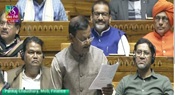
- Minister of State for Finance Pankaj Chaudhary informed the Lok Sabha that banking facilities are available within a radius of 5 kilometers in 99.92% of the country's villages.
- Banking facilities are also present in 100% of the villages in the Union Territories of Dadra and Nagar Haveli.
- He stated that the primary hurdles in expanding banking infrastructure are a lack of connectivity and infrastructure, as well as the unavailability of suitable premises.
Equitable Distribution of LPG
- Suresh Gopi, the Minister of State for Petroleum and Natural Gas, informed the Rajya Sabha that Oil Marketing Companies have constituted a three-member committee at the Executive Director level to ensure the equitable distribution of commercial LPG across the states.
Related Facts:
- He stated that India imports approximately 60% of its LPG requirements.
- Of this, about 90% passes through the Strait of Hormuz.
- He added that the government has taken several measures to ensure stability in LPG supply.
- He further mentioned that the government has increased the allocation of commercial LPG to the states by an additional 20%, thereby raising the total allocation to 70 percent of pre-crisis levels.
|
Approval Granted for Establishing 7 Mega Textile Parks
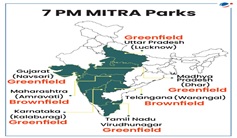
- The Central Government has approved the establishment of 7 Mega Textile Parks across 7 states under the PM MITRA scheme.
- These parks will be set up in Tamil Nadu (Virudhunagar), Telangana (Warangal), Gujarat (Navsari), Karnataka (Kalaburagi), Madhya Pradesh (Dhar), Uttar Pradesh (Lucknow), and Maharashtra (Amravati).
- The government has clarified that, currently, there is no proposal to establish new textile parks under the PM MITRA scheme.
Related Facts:
- The establishment of new Mega Textile Parks under a "Challenge Mode" was announced in the Budget for 2026-27.
- A process of consultation with states and other relevant stakeholders has been initiated to facilitate the speedy implementation of this scheme.
- The government is currently implementing several schemes across the country for the development of the handloom sector and artisans. These include the National Handloom Development Programme and the Raw Material Supply Scheme.
- In the 2026 Budget, the government also announced an "Integrated Textiles Programme," which encompasses the Textile Expansion and Employment Scheme (TEEM). Its objective is to modernize traditional textile clusters and boost employment generation.
PM MITRA Scheme (Prime Minister Mega Integrated Textile Region and Apparel):
- This is a flagship initiative of the Ministry of Textiles, launched with an outlay of ₹4,445 crore for the period spanning from 2021-22 to 2027-28.
- Objective: The scheme aims to establish large-scale textile manufacturing hubs equipped with world-class infrastructure and facilities. In the year 2023, seven sites across India were identified for this purpose.
|
International News
India Leads Globally in Issuing IRCCs

- Playing a leading role in Access and Benefit-Sharing (ABS) under the Nagoya Protocol, India has achieved the distinction of issuing the highest number of internationally recognized certificates of compliance (IRCCs) globally.
Related Facts:
- This accounts for more than 56 percent of all certificates issued.
- Out of the 142 countries registered on this platform, only 34 have issued IRCCs so far.
- France ranks second after India, with 964 certificates.
- Meanwhile, Spain, Argentina, Panama, and Kenya trail behind.
Nagoya Protocol:
- The Nagoya Protocol (2010) is a supplementary agreement to the Convention on Biological Diversity (CBD), which ensures the fair and equitable sharing of benefits (ABS) arising from the utilization of genetic resources.
- Supplementary Agreement: Part of the Convention on Biological Diversity (CBD)
- Adopted: October 29, 2010, at COP-10 in Nagoya (Japan)
- Entry into Force: October 2014
- India's Status: India implemented the Protocol in 2014 and entrusted the responsibility for its implementation to the National Biodiversity Authority (NBA).
- Objectives: To regulate access to genetic resources; ensure the fair and equitable sharing of benefits arising from their utilization; protect traditional knowledge and the rights of local communities; and ensure transparency in research and development.
Key Provisions:
- Access and Benefit Sharing (ABS): Access to resources is permitted only with prior permission and consent, and a share of the benefits must reach the local communities.
- IRCC (Internationally Recognized Certificate of Compliance): This certificate attests that access to the resources is legal and authorized. India is a global leader in issuing IRCCs.
- National-Level Implementation: In India, implementation is governed by the Biological Diversity Act, 2002, and the National Biodiversity Authority (NBA).
|
Economy and Banking
RBI's New Investment-Related Norms
- The Reserve Bank of India (RBI) has deferred the implementation of its new norms regarding investments in the capital market by three months.
- The revised deadline is now July 1, 2026, instead of April 1.
- The revised guidelines were originally issued in February of this year.
Key Facts:
- Decision: The RBI has extended the deadline for implementing the new norms regarding investments in the capital market.
- Deferment Period: 3 months.
- Reason: To provide market participants with additional time to understand and adapt to the new regulations, ensuring that no sudden pressure is placed on investors and financial institutions.
- Impact: Investors will receive relief as they gain time to adjust their strategies to comply with the regulations. Stability in the capital market will be maintained, preventing sudden fluctuations.
Key Provisions of the New Norms:
- These norms were originally issued on February 13, 2026.
- Acquisition Financing: Regulations have been relaxed to facilitate acquisitions by Indian companies; this now includes mergers and amalgamations.
- Lending Limits: The limits on individual loans against shares, REITs, and InvIT units have been rationalized. The limit for IPO financing for individual investors has also been revised.
- Risk Weight: The risk weight applicable to capital market investments has been fixed at 125%.
- Capital Adequacy: Capital adequacy norms have been relaxed for banks issuing payment commitments to stock exchange clearing corporations.
- Principles-based Framework: A more principles-based approach has been adopted for lending to Capital Market Intermediaries (CMIs).
|
Electronic Component Manufacturing Scheme
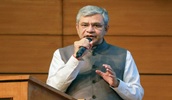
- Electronics and IT Minister Ashwini Vaishnaw has announced that the government has approved 75 projects involving a total investment of over ₹61,000 crore under the Electronic Component Manufacturing Scheme (ECMS).
- This move marks a significant milestone towards establishing India as a global hub for electronics manufacturing.
Key Facts:
- Approved Investment: Total ₹61,671 crore (75 projects).
- Employment Generation: Over 65,000 direct jobs.
- Fourth Phase (Latest Approvals): 29 new proposals have been approved, covering 16 product categories such as display modules, capacitors, connectors, lithium-ion cells, resistors, and flexible PCBs.
ECMS:
- This scheme is being implemented by the Ministry of Electronics and Information Technology (MeitY) and provides capital expenditure (Capex) and turnover-based incentives to boost domestic production capabilities. The scheme is part of the National Electronics Policy and operates in conjunction with the India Semiconductor Mission (ISM).
|
Launch of the MyPNG-D Portal
- The Ministry of Petroleum and Natural Gas has launched the MyPNG-D portal, which enables PNG consumers to surrender their LPG connections from the comfort of their homes.
- This digital initiative is designed for consumers who have already switched to Piped Natural Gas (PNG) and now wish to surrender their old LPG connections remotely.
|
Mandatory Requirement: Under the 'Natural Gas and Petroleum Products Distribution Order, 2026,' it has been made mandatory for consumers in areas where a PNG network is available to surrender their LPG connections within three months. If consumers fail to respond, their LPG supply will be discontinued.
|
Person In News
Chandrikapersad Santokhi
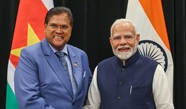
- Chandrikapersad Santokhi, the former President of the South American nation of Suriname, has passed away at the age of 67.
- He served as the President of Suriname from 2020 to 2025 and held the position of Minister of Justice from 2005 to 2010.
- Of Indian origin, Santokhi was known for strengthening India-Suriname relations and for his economic reforms.
Suriname:
- Official Name: Republic of Suriname
- Capital and Largest City: Paramaribo
- Former Name: Dutch Guiana (formerly a colony of the Netherlands)
- Independence: Gained independence from the Netherlands on November 25, 1975
- Borders: Bounded by French Guiana to the east, Guyana to the west, Brazil to the south, and the Atlantic Ocean to the north
- Over 27% of the country's population is of Indian origin
- Currency: Surinamese Dollar (SRD)
- Name of Parliament: National Assembly
|
Awards and Honors
'Para Archer of the Year 2025'

- Indian archer Sheetal Devi has been named the 'Para Archer of the Year 2025' by World Archery.
Related Facts:
- 19-year-old Sheetal Devi from Jammu and Kashmir achieved the distinction of becoming the first and only armless female archer to win a gold medal, doing so in the Women's Compound Individual event at the World Para Archery Championships held last year in Gwangju, South Korea.
- She also secured a complete set of medals at the World Championships, including a silver medal in the Women's Team event and a bronze medal in the Mixed Team event.
- In addition to the gold medal at the World Championships, Sheetal's accolades include a bronze medal in the Mixed Team event at the Paris Paralympics, as well as individual silver medals at the 2022 Asian Para Games and the 2023 Asian Championships held in Bangkok.
- Established in 2011, the 2025 World Archery Awards honor excellence and outstanding contributions to the sport, and recognize the athletes who have defined the international archery season.
- This year, awards were presented across eight categories, including 'Archer of the Year,' which was awarded to Emircan Haney of Turkey.
- The 'Young Archer of the Year' award was presented to Baptiste Addis of France, while the title of 'Team of the Year' was won by Korea's Recurve Men's Team.
|
Sports News
Miami Open 2026

- The Miami Open 2026 was held from 17 to 29 March, 2026 at Hard Rock Stadium, Miami Gardens, Florida.
- It is a professional hardcourt tennis tournament.
Major Winners :
| Category |
Winner |
Runner-up |
| Men’s Singles |
Jannik Sinner (ITA) |
Jiří Lehečka (CZE) |
| Women’s Singles |
Aryna Sabalenka |
Coco Gauff (USA) |
| Men’s Doubles |
Simone Bolelli and Andrea Vavassori |
Harri Heliövaara and Henry Patten |
| Women’s Doubles |
Kateřina Siniaková and Taylor Townsend |
Sara Errani and Jasmine Paolini |
Los Angeles Olympics 2028

- The International Olympic Committee (IOC) has prohibited transgender women from competing in the women's category at the Los Angeles Olympics 2028 and in future Games.
- To verify their gender, athletes will be required to undergo a one-time genetic test.
- This test can be conducted using saliva, blood samples, or cheek swabs.
- Athletes who were female at birth and now identify as transgender will be eligible to participate in women's events.
International Olympic Committee (IOC):
- Established: June 23, 1894, in Paris
- Founder: Pierre de Coubertin
- Headquarters: Lausanne, Switzerland
- Supreme Authority: It is the supreme governing body of the Olympic Movement
- President: Kirsty Coventry (Zimbabwe). She is the first female and the first African President of the IOC, having succeeded Thomas Bach on June 23, 2025
- Members: Currently, there are 106 members, with Nita Ambani representing India
|
Science and Technology
Two New Polymer Materials Developed
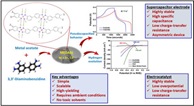
- Scientists from the Centre for Nano and Soft Matter Sciences (CeNS) and Christ University, Bengaluru, have developed two new polymer materials named Zn(DAB) and Cd(DAB), which could make energy storage and green hydrogen production more efficient.
Key Highlights:
- Energy Storage: These materials function in supercapacitors with exceptionally high energy and power densities, retaining their capacity for up to 5,000 charge-discharge cycles.
- Green Hydrogen Production: Through the electrocatalytic splitting of water, these materials can produce hydrogen at low overpotentials of 263 mV (Zn-DAB) and 209 mV (Cd-DAB).
- Ease of Synthesis: They can be synthesized at ambient temperatures using a simple process, making them a viable option for industrial-scale production.
- Applications: This research holds the potential to advance clean energy, sustainable energy storage, and cost-effective hydrogen production.
|
Important Days
2625th Birth Anniversary of Lord Mahavir

- The 2625th birth anniversary of Lord Mahavir, the 24th and final Tirthankara of Jainism, was celebrated on March 31, 2026.
Lord Mahavir Swami:
- Biography: Born in 599 BCE (at Kundagram, near Vaishali); Father: Siddhartha (of the Jnatrika clan); Mother: Trishala (of the Lichchhavi clan).
- Marriage: He was married to Yashoda.
- Renunciation and Enlightenment: At the age of 30, he renounced his home. After 12 years of rigorous asceticism, he attained *Kaivalya* (supreme knowledge) on the banks of the Rijupalika River, near Jrimbhikagrama.
Philosophical Contributions (Philosophy):
- Anekantavada: Truth has multiple facets (a multi-dimensional perspective).
- Syadvada: The doctrine of the relativity of knowledge (perhaps, from a certain perspective).
|
- Pancha Mahavrata: Ahimsa (Non-violence), Satya (Truthfulness), Asteya (Non-stealing), Aparigraha (Non-possession), and Brahmacharya (Celibacy).
- Teachings: Emphasis on the concepts of the Soul and Matter (Jiva and Ajiva), Equality, and Sense Control.
- Establishment of the Sangha: He established a four-fold community (Chaturvidha Sangha) comprising monks, nuns, laymen, and laywomen.
- Nirvana: Attained Moksha at the age of 72 in Pavapuri (Bihar).
- Triratna (Three Jewels): Right Faith, Right Knowledge, and Right Conduct.
- Nirvana: He attained Nirvana at the age of 72 in Pavapuri (Bihar).
|
Reports and Indices
The Lancet Report (2023)
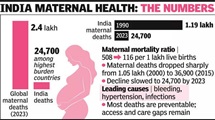
- According to a report published in *The Lancet* journal, India ranks among the countries with the highest maternal mortality rates in the world.
- In 2023, India was among the nations with the highest Maternal Mortality Rate (MMR) globally, recording approximately 24,700 deaths annually—constituting a significant share of the global total.
Key Facts:
- Total Deaths: Approximately 24,700 maternal deaths were recorded in India in 2023.
- Maternal Mortality Ratio (MMR): According to the report, India's MMR stands at 116 per 100,000 live births; however, according to national statistics (SRS 2021–23), this figure is 88.
- Primary Causes: Excessive bleeding during childbirth, infections, and hypertension are identified as the leading causes.
- Other Factors: Lack of timely access to medical facilities, disparities between rural and urban healthcare services, and nutritional deficiencies.
- Slow Progress: The pace of improvement in the maternal mortality rate has slowed down since 2015.
- Regional Disparities: The situation in certain states (particularly UP, Bihar, and MP) is more concerning compared to others.
- SDG Target: India aims to reduce its MMR to below 70 by 2030 (Sustainable Development Goal 3).
|
'Global Education Monitoring Report 2026'
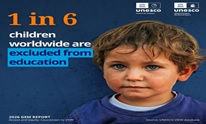
- According to UNESCO's 'Global Education Monitoring Report 2026', one in six school-age children worldwide is deprived of education.
Key Facts:
- Out-of-School Children: In 2024, 273 million children, adolescents, and youth were out of school. This data does not include an estimated 13 million additional children from the 10 countries most affected by conflict.
- Secondary Education: Despite being a declared objective under Sustainable Development Goal 4 (SDG-4), practically no country has achieved the target of universal secondary education completion for its youth.
- Access to Education vs. Learning Outcomes: While access to education leads to improvements in learning outcomes in the short term, it is not always considered a guarantee of quality learning. In other words, school enrollment does not necessarily mean that children are truly learning with deep understanding.
|


 Don't Have an Account?